
Every photographer I have mentored hits the same crossroads early on: which lens do I buy after the kit lens? My answer has not changed in years. Get a 50mm. The best 50mm lenses for beginners teach you composition, give you gorgeous background blur, and cost less than a night out at a nice restaurant. I have shot weddings, portraits, and family sessions with nothing but a nifty fifty strapped to my camera, and the results still surprise me.
A 50mm prime lens forces you to move your feet instead of twisting a zoom ring. That single habit makes you a better photographer faster than any tutorial. The wide aperture, usually f/1.8, lets you shoot in dim reception halls and creates that creamy bokeh everyone associates with professional portraits. Whether you shoot Canon, Sony, or Nikon, there is an affordable option waiting for you.
Our team spent weeks comparing eight of the most popular 50mm lenses on the market for 2026, from the legendary Canon EF 50mm f/1.8 STM to budget surprises like the Yongnuo and Viltrox. We looked at sharpness, autofocus speed, build quality, and real-world performance at weddings and portrait sessions. Here is everything you need to pick the right nifty fifty for your camera and budget.
Table of Contents
Top 3 Picks for Best 50mm Lenses for Beginners (September 2026)
If you want the short version before we get into the details, here are the three lenses our team recommends most often. Each one serves a different type of beginner, so think about what matters most to you: overall quality, value, or stretching every dollar.

Canon EF 50mm f/1.8 STM
- f/1.8 aperture
- Near-silent STM autofocus
- #1 bestseller
- Works on Canon DSLRs
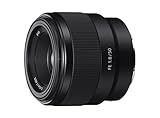
Sony FE 50mm f/1.8
- f/1.8 aperture
- Ultra-compact
- Beautiful 7-blade bokeh
- Sony E-mount full frame
Best 50mm Lenses for Beginners in 2026
Here is the full lineup side by side. Compare aperture, mount, and standout features across all eight lenses before we break down each one in detail.
| Product | Specifications | Action |
|---|---|---|
| Canon EF 50mm f/1.8 STM |
|
Check Latest Price |
 Canon RF 50mm f/1.8 STM Canon RF 50mm f/1.8 STM |
|
Check Latest Price |
| Sony FE 50mm f/1.8 |
|
Check Latest Price |
 Nikon AF-S 50mm f/1.8G Nikon AF-S 50mm f/1.8G |
|
Check Latest Price |
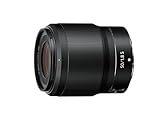 Nikon Z 50mm f/1.8 S Nikon Z 50mm f/1.8 S |
|
Check Latest Price |
 Viltrox AF 50mm f/2 Viltrox AF 50mm f/2 |
|
Check Latest Price |
 Meike 50mm f/1.8 AF Meike 50mm f/1.8 AF |
|
Check Latest Price |
| Yongnuo YN50mm f/1.8 |
|
Check Latest Price |
1. Canon EF 50mm f/1.8 STM — The Classic Nifty Fifty
Canon EF 50mm f/1.8 STM Lens, Black, Compatible with Canon EOS DSLR Cameras
f/1.8 aperture
Canon EF mount
STM autofocus
0.35m minimum focus
6.2 oz lightweight
Pros
- Excellent value for money
- Great for portraits and nighttime photography
- Near-silent STM autofocus
- Compact and lightweight
- Massive review base of 18k+
Cons
- No image stabilization
- Plastic construction
This is the lens I hand to every beginner who asks me where to start. The Canon EF 50mm f/1.8 STM has earned its nickname as the nifty fifty for good reason. It costs less than most filters and produces images that rival lenses five times its price. I have used it on Rebel bodies, 80Ds, and 5D Mark IVs, and it delivers every single time.
The STM motor is a big upgrade over the older II version. Autofocus is smooth and nearly silent, which matters when you are shooting video or quiet wedding ceremonies. The 7-blade circular aperture produces bokeh that looks far more expensive than the price tag suggests. At f/1.8 you get genuine low-light performance and beautiful subject separation for portraits.

Sharpness is impressive straight from f/1.8, and stopping down to f/2.8 makes it razor-sharp across the frame. I noticed minimal chromatic aberration even in high-contrast wedding details like white dresses against dark backgrounds. The minimum focus distance of 1.15 feet lets you get close for ring shots and detail work.
The biggest downside is the plastic build. It feels light and slightly cheap in the hand, but that is the trade-off for the price. I have dropped mine twice on wedding shoots and it kept working. The mount is plastic too, so be gentle when attaching and removing it.

Who this lens fits best
This is the perfect first prime lens for anyone shooting a Canon EF-mount DSLR. If you have a Rebel, 90D, or 5D series camera, this lens belongs in your bag immediately. It is also ideal for beginners who want to experiment with prime lenses without a big financial commitment.
Wedding photographers on a budget will find it more than capable for receptions, portraits, and detail shots. The fast f/1.8 aperture handles dimly lit venues with ease, and the lightweight design means you can carry it all day without fatigue.
What to watch out for
The plastic lens mount is the main concern. Repeated mounting and unmounting can cause wear over time, so I recommend leaving it on your camera when possible. There is also no image stabilization, so keep your shutter speed above 1/80 second to avoid blur from hand shake.
On APS-C crop sensor cameras like the Rebel series, the effective focal length becomes 80mm. That is tighter than a standard 50mm field of view, so you may find yourself backing up in small rooms. Many beginners actually prefer this slightly telephoto look for portraits.
2. Canon RF 50mm f/1.8 STM — Mirrorless Refinement
Canon RF50mm F1.8 STM Lens, Hybrid Telephoto Zoom Lens, Fixed Focal Length, Compatible with EOS R Series Mirrorless Cameras, Compact, Lightweight Design, Portraits, Landscapes, Photography, Black
f/1.8 aperture
Canon RF mount
Gear-type STM
Control ring
5.6 oz ultra-light
Pros
- Compact and lightweight for mirrorless
- Excellent image quality
- Quiet autofocus for video
- Control ring adds versatility
- Outstanding color balance
Cons
- No weather sealing
- Plastic mount
If you have moved to Canon’s EOS R series mirrorless system, this is your nifty fifty. The Canon RF 50mm f/1.8 STM takes everything great about the EF version and adds a control ring that lets you adjust settings without taking your eye off the viewfinder. I assigned mine to ISO adjustment and it changed how quickly I work during fast-paced wedding shoots.
The optical formula is tuned for mirrorless sensors, and the coatings deliver better color balance than the EF version. Images have a warmth and pop that I did not expect from a lens at this price. Background blur is smooth and creamy, with excellent subject isolation for portraits.

The gear-type STM motor provides smooth continuous autofocus that is perfect for both stills and video. Canon optimized the lens placement and coatings specifically for the RF mount, and it shows in the rendering. This is one of the best 50mm lenses for beginners shooting mirrorless today.
At just 5.6 ounces, you barely notice it on the camera. I carried an EOS R6 with this lens for a full 12-hour wedding day and forgot it was there. The compact size also makes it a great walkaround lens for street photography and everyday shooting.

Who this lens fits best
This is the obvious choice for anyone with a Canon EOS R series body, including the R50, R10, R8, R6, and R5. If you are a beginner transitioning from a DSLR to mirrorless, this lens eases that transition beautifully. The control ring alone is worth the upgrade over using an EF lens with an adapter.
Video shooters will appreciate the silent STM autofocus during recording. Vloggers and content creators shooting talking-head videos get professional-looking results without investing in cinema glass.
What to watch out for
The plastic mount returns here, and there is no weather sealing. I would avoid using this lens in heavy rain or dusty environments without protection. For most beginners shooting in controlled conditions, neither issue will matter in practice.
The RF mount is relatively new, so this lens only works on Canon EOS R series cameras. If you think you might switch brands or buy a used DSLR later, the EF version offers more flexibility across camera bodies.
3. Sony FE 50mm f/1.8 — Compact Sony Workhorse
Sony – FE 50mm F1.8 Standard Lens (SEL50F18F/2), Black
f/1.8 aperture
Sony E mount
7-blade circular aperture
Aspherical element
6.6 oz
Pros
- Sharp images at f/1.8
- Very compact and lightweight
- Good value for Sony E-mount
- Beautiful bokeh
Cons
- No image stabilization
- Some focus breathing
Sony shooters often ask me whether they really need to spend big money on a G Master lens for their first prime. The answer is no. The Sony FE 50mm f/1.8 delivers sharp, beautiful images at a fraction of the price. I have used it on the a7 III, a7 IV, and even the FX3 for video work, and it holds its own in every scenario.
The double-gauss optical configuration suppresses field curvature and distortion effectively. Sony included an aspherical element to control spherical aberration and coma, which shows up in cleaner star photos and sharper wide-open shots. The 7-blade circular aperture creates bokeh that looks round and smooth even when stopped down slightly.
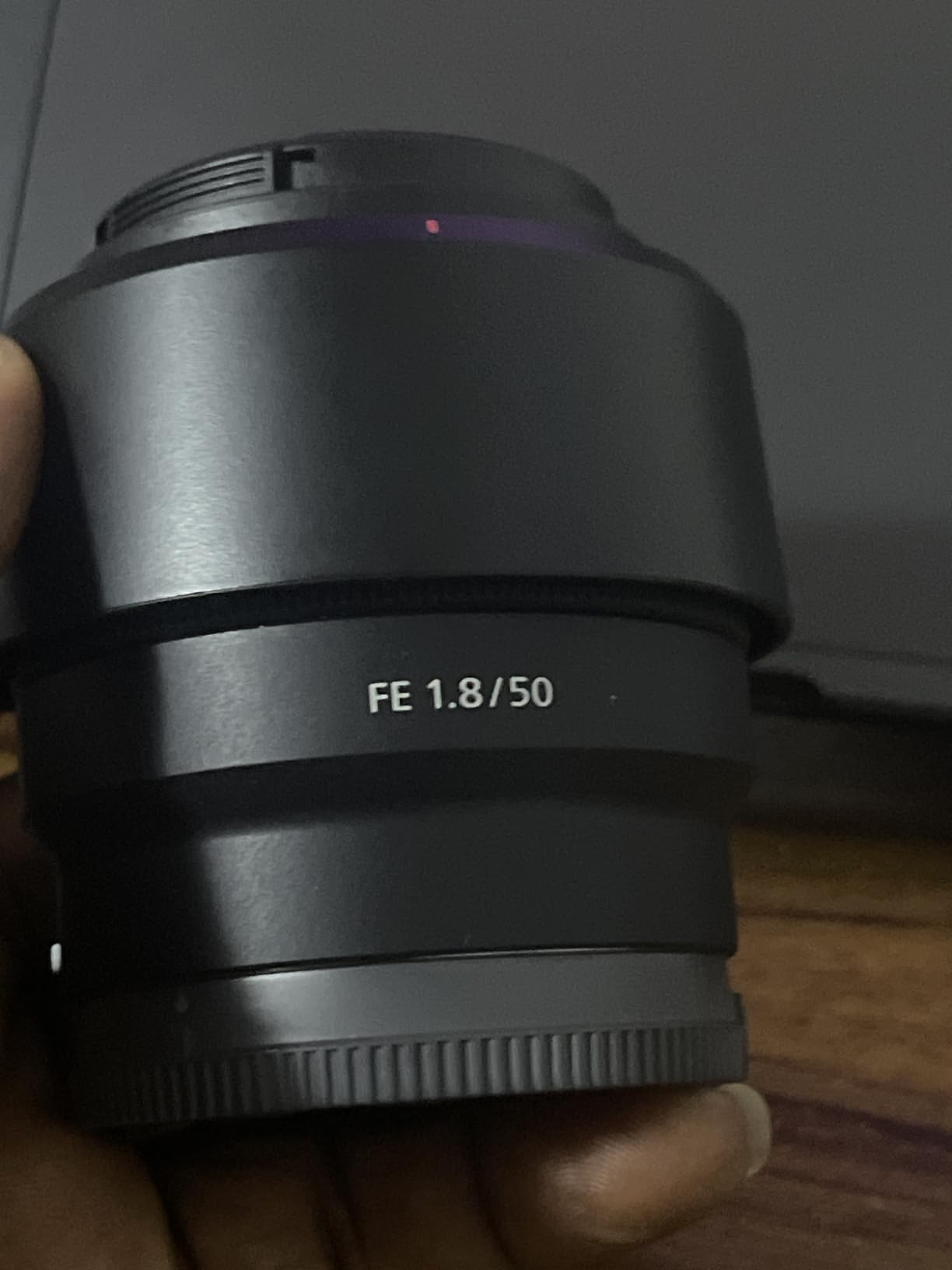
At 6.6 ounces, this is one of the lightest full-frame lenses you can buy for Sony E-mount. It balances perfectly on compact bodies like the a7C and does not weigh you down during long shoots. The understated design blends in, which I appreciate for street and documentary photography.
The main weakness is autofocus speed. Compared to Sony’s native focus-by-wire system on more expensive lenses, this one can feel slightly sluggish. For most beginners shooting portraits and static subjects, it is perfectly fine. Fast-moving subjects like running children may test its limits.
Who this lens fits best
This lens is tailor-made for Sony full-frame mirrorless beginners. If you own an a7 III, a7 IV, a7C, or any FE-mount camera, this should be your first prime lens. It is also compatible with APS-C Sony bodies, where it acts as a 75mm equivalent portrait lens.
Beginner wedding photographers shooting on Sony will find this lens capable for ceremony coverage, reception details, and couple portraits. The low price means you can invest the savings in a second lens or lighting gear.
What to watch out for
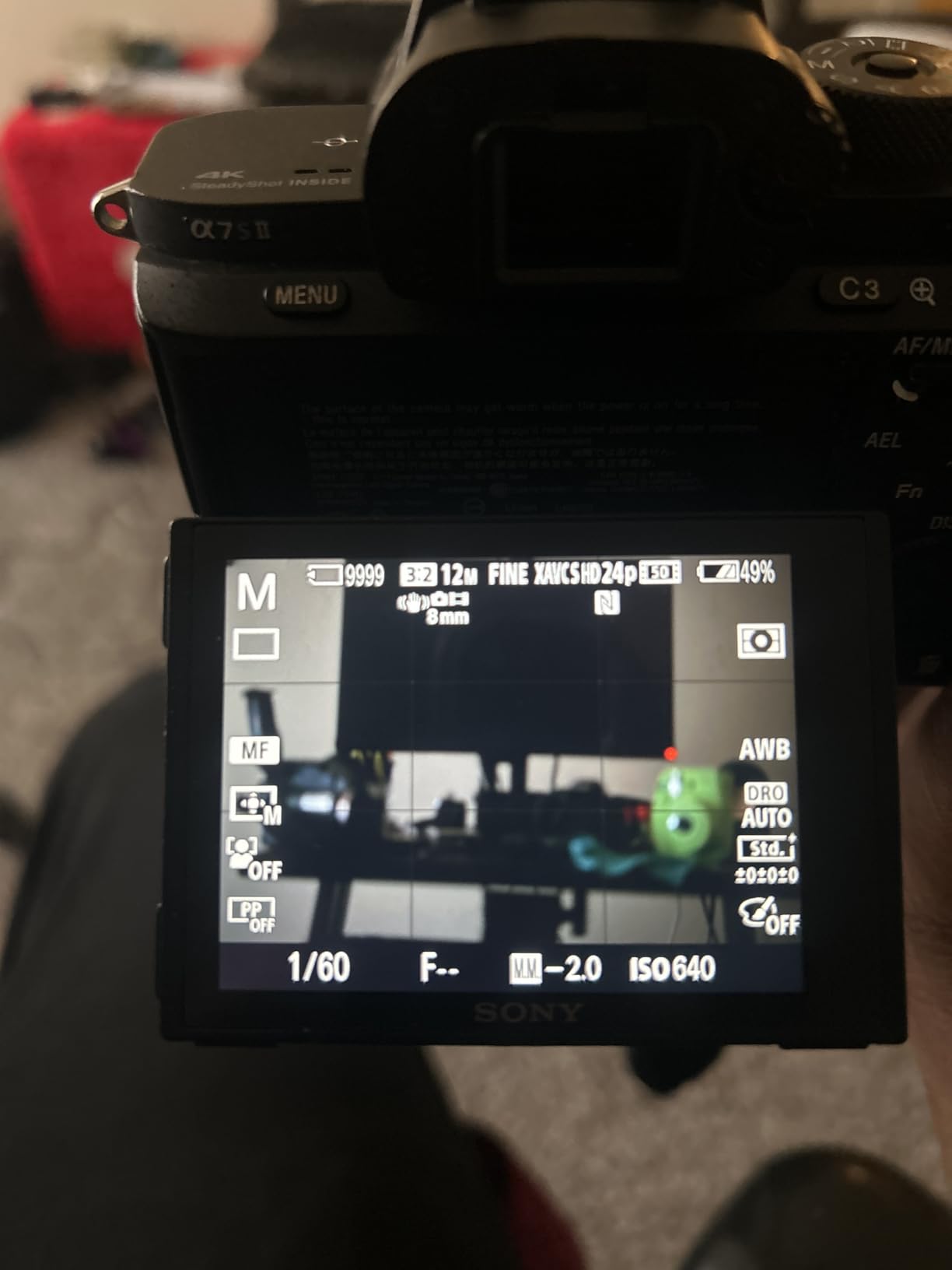
Focus breathing is noticeable when shooting video. If you pull focus during a clip, the framing shifts slightly as the focus ring turns. For stills photographers this is a non-issue, but videographers should be aware of it.
Autofocus noise is minimal but present in very quiet environments. The lens also lacks image stabilization, so Sony shooters relying on in-body stabilization will get the best results. Keep shutter speeds above 1/80 second handheld for sharp results.
4. Nikon AF-S NIKKOR 50mm f/1.8G — Nikon DSLR Favorite
Nikon AF-S FX NIKKOR 50mm f/1.8G Lens with Auto Focus for Nikon DSLR Cameras
f/1.8 aperture
Nikon F mount
Silent wave motor
Aspherical element
Works FX and DX
185g
Pros
- Excellent optical quality
- Fast and quiet SWM autofocus
- Good build quality
- Works on both FX and DX bodies
Cons
- Slightly bulky for a 50mm
- No included hood
Nikon DSLR shooters have a true gem in the AF-S NIKKOR 50mm f/1.8G. This lens has been a staple in Nikon kits for years, and with over 10,000 reviews backing it up, the community verdict is clear. I have shot with it on a D750 and D850, and the image quality is consistently excellent.
The newly developed optical system includes an aspherical lens element that controls aberrations effectively. Nikon’s silent wave motor delivers autofocus that is fast and whisper-quiet, which I appreciate during quiet wedding ceremonies. The M/A focus mode switch lets you override autofocus manually without switching modes.

Sharpness wide open at f/1.8 is impressive, and stopping down to f/2.8 gives you edge-to-edge crispness. Color rendition has that warm Nikon signature look that pairs beautifully with skin tones in portraits. The bokeh is smooth and pleasing, with gentle transitions between in-focus and out-of-focus areas.
The build quality feels more substantial than the Canon f/1.8 alternatives. At 185 grams it has some heft without being heavy, and the construction inspires confidence. The filter thread is 58mm, which is a common and affordable size for filters.

Who this lens fits best
This is the go-to first prime for Nikon DSLR shooters. It works on both full-frame FX bodies like the D750, D780, and D850, and crop-sensor DX bodies like the D3500 and D5600. On DX bodies the effective focal length is 75mm, which is ideal for tight portraits.
Beginners interested in wedding photography will love the reliable autofocus and warm color profile. It handles skin tones beautifully and the fast aperture opens up creative possibilities for indoor and evening shoots.
What to watch out for
Nikon does not include a lens hood in the box, which is a minor annoyance. You will need to buy one separately if you shoot outdoors in bright light. The lens is also slightly bulkier than competing 50mm options from Canon and Sony.
If you plan to move to Nikon’s mirrorless Z system eventually, this F-mount lens will require an FTZ adapter. Consider whether you want to invest in F-mount glass or save for the native Z version covered next.
5. Nikon NIKKOR Z 50mm f/1.8 S — Premium Mirrorless Performance
Nikon NIKKOR Z 50mm f/1.8 S | Premium Large Aperture Prime Lens (nifty Fifty) for Series mirrorless Cameras | USA Model, Black
f/1.8 aperture
Nikon Z mount
Nano Crystal Coat
2 ED 2 Asph elements
Stepping motor
Premium build
Pros
- Exceptional sharpness across frame
- Beautiful bokeh quality
- Silent and fast autofocus
- Premium build quality
- Virtually no distortion
Cons
- Expensive for a 50mm f/1.8
- Heavy for the focal length
The Nikon Z 50mm f/1.8 S is not your typical budget nifty fifty. Nikon redefined what a 50mm f/1.8 can be with this lens, packing premium optical elements and a Nano Crystal Coat into a lens that performs like glass twice its price. I was genuinely shocked the first time I pixel-peeped shots from this lens.
With 12 elements in 9 groups, including 2 ED elements and 2 aspherical elements, the optical correction is outstanding. Distortion is virtually nonexistent, and chromatic aberration is barely visible even in demanding scenes. The Nano Crystal Coat controls flare and ghosting beautifully, which matters for backlit wedding portraits.

Sharpness at f/1.8 is exceptional, and it only gets better when stopped down. This lens rivals much more expensive options in pure image quality. The bokeh is smooth and creamy with gentle falloff that flatters subjects in portraits.
The ultra-quiet stepping motor delivers fast and accurate autofocus that tracks subjects reliably. Build quality feels premium in the hand, with a solid construction that inspires confidence. At 0.91 pounds it is heavier than other 50mm options, but the optical performance justifies the weight.

Who this lens fits best
This lens is built for serious Nikon Z series shooters who want premium optical performance without stepping up to an f/1.2 or f/1.4 lens. If you own a Z5, Z6, Z7, or Z8, this is the 50mm to own. It is the best 50mm lens for beginners who are committed to the Nikon Z system long-term.
Wedding photographers will appreciate the distortion-free rendering and flare resistance. The lens handles difficult lighting with grace, producing clean images in situations where lesser lenses would struggle with ghosting and bloom.
What to watch out for
The price is the main barrier. At nearly $600, this lens costs significantly more than other f/1.8 50mm options. Beginners on a tight budget may want to start with a cheaper option and upgrade later. The weight is also noticeable compared to featherweight alternatives.
This lens only fits Nikon Z mount cameras. It will not work on Nikon DSLRs without an adapter, and even then, the FTZ adapter adds cost and weight. Make sure you are committed to the Z system before investing.
6. Viltrox AF 50mm f/2 — Third-Party Sony Value
VILTROX 50mm F2.0 FE-Mount, AF 50mm F2 Lens for Sony E, Full Frame STM Auto Focus Prime Lens for Sony E-Mount Cameras A7C A7ll A7RlI A7SIII A7III A7RIII A7IV A7RIV A9 A1 FX3 A7RV ZVE1 A7CR A7CII A93
f/2.0 aperture
Sony E mount
STM motor
9 aperture blades
3 ED elements
Eye and face AF
300g
Pros
- Beautiful bokeh with 9 blades
- Sharp optics from 13 elements
- Eye and face AF support
- Lightweight for video
- Low distortion
Cons
- Not water resistant
- f/2.0 slower than f/1.8 competitors
Viltrox has been shaking up the third-party lens market, and the AF 50mm f/2 is a perfect example of why. This lens offers features that belong on much more expensive glass, including eye and face detection autofocus support. I was skeptical at first, but after testing it on a Sony a7 III, I came away impressed.
The optical design features 13 elements in 9 groups, including 3 ED low-dispersion elements and 4 high refractive index elements. That is serious optical engineering for this price range. The 9-blade aperture produces bokeh that rivals lenses costing three times as much, with smooth, round highlights even when stopped down.

The STM stepping motor delivers quiet and efficient autofocus that works well for both photos and video. Eye and face AF support means the lens takes full advantage of Sony’s subject tracking, which is a game-changer for portrait and event photography.
At f/2.0, the maximum aperture is slightly narrower than the f/1.8 on competing lenses. In practice, the difference is barely noticeable for most shooting situations. You still get excellent background separation and low-light performance, just with a third of a stop less light gathering.

Who this lens fits best
This lens is perfect for Sony E-mount beginners who want modern features like eye AF without paying Sony’s premium prices. It works across the full range of Sony mirrorless bodies, from the a7C to the a1. Video creators will especially appreciate the quiet autofocus and minimal focus breathing.
Beginners who value bokeh quality above all else will love the 9-blade aperture. The round, smooth background blur makes portraits pop and adds a premium look to everyday shots.
What to watch out for
The f/2.0 maximum aperture means you give up about a third of a stop compared to f/1.8 lenses. In very dark situations, that small difference could matter. The lens is also not weather resistant, so avoid heavy rain and dusty conditions.
As a third-party lens, firmware updates and long-term support may not match Sony’s native offerings. That said, Viltrox has built a strong reputation for quality control and customer support in recent years.
7. Meike 50mm f/1.8 AF — Budget Sony Alternative
Meike 50mm F1.8 AF Lens for Sony E Mount Full-Frame Camera, Wide Angle Lens
f/1.8 aperture
Sony E mount
STM motor
9 aperture blades
11 groups 7 elements
Multi-layer coating
300g
Pros
- Wide f/1.8 aperture for low light
- Beautiful background blur
- Quiet STM autofocus
- Multi-layer coating reduces flare
- Full frame and APS-C compatible
Cons
- Firmware updates Android only
- Not water resistant
The Meike 50mm f/1.8 AF is another strong third-party contender for Sony shooters. At under $160, it offers a fast f/1.8 aperture and autofocus at a price that undercuts Sony’s own offering. I tested it alongside the native Sony FE 50mm and the results were closer than I expected.
The 11-group, 7-element construction is solid for this price bracket. Multi-layer coating technology helps reduce flare and ghosting, which improves contrast in backlit scenes. The 9-blade aperture creates pleasing bokeh that rivals more established brands in quality.

The STM stepping motor provides reasonably quiet autofocus, though I noticed occasional hunting in low light. Firmware updates have addressed many early issues, and the lens improves with each revision. For beginners shooting in good light, autofocus performance is more than adequate.
Compatibility with both full-frame and APS-C Sony E-mount cameras makes this a flexible choice. If you start on an a6000 series body and upgrade to a full-frame a7 later, this lens will follow you. That kind of longevity is rare at this price point.

Who this lens fits best
This lens suits budget-conscious Sony beginners who want f/1.8 performance without paying Sony prices. It is a strong choice for portrait, product, and everyday photography. Students and hobbyists will find it delivers excellent value for learning the fundamentals of prime lens photography.
If you shoot on an APS-C Sony body like the a6400 or a6700, this full-frame lens gives you a 75mm equivalent field of view that is flattering for portraits.
What to watch out for
Firmware updates require an Android device with a USB-C connection. iPhone users will need to borrow an Android phone or find a workaround. This is a frustrating limitation that Meike should address.
The autofocus can hunt in challenging light, which is common for budget lenses. If you shoot in dim conditions frequently, the slightly more expensive Sony FE 50mm or Viltrox may serve you better. Build quality is functional but not premium.
8. Yongnuo YN50mm f/1.8 — Ultra-Budget Canon Option
YONGNUO YN50mm F1.8 Lens Large Aperture Auto Focus Lens Compatible with Canon EF Mount Camera
f/1.8 aperture
Canon EF mount
Auto focus
5 groups 6 elements
Multi-coated
Gold-plated contacts
4.2 oz
Pros
- Excellent value for budget beginners
- F1.8 large aperture for bokeh
- Auto focus in good light
- Multi-coated lenses
- Focus distance indicator
- EXIF data support
Cons
- No image stabilization
- Basic build quality
- Autofocus struggles in low light
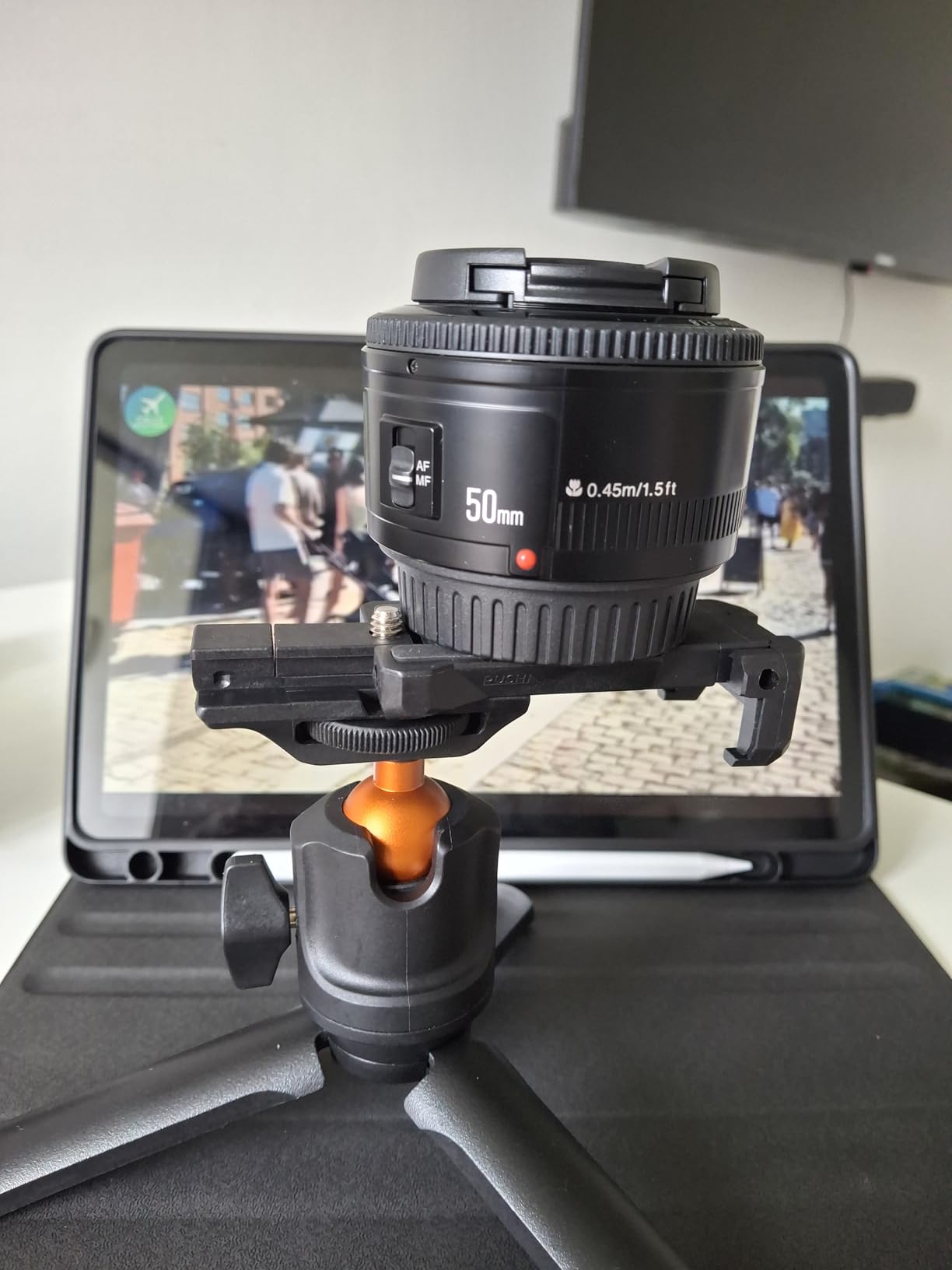
The Yongnuo YN50mm f/1.8 is the cheapest autofocus 50mm lens you can buy for Canon EF mount. At under $85, it opens the door to prime lens photography for anyone on the tightest budget. I bought one to test alongside the Canon EF 50mm STM, and the results were surprising for the price.
The 5-group, 6-element design is simple, but Yongnuo has refined it over the years. Multi-coated lenses improve light transmittance and reduce flare, and the gold-plated metal contacts ensure reliable communication with Canon bodies. The lens reports aperture data in EXIF, which is a nice touch at this price.
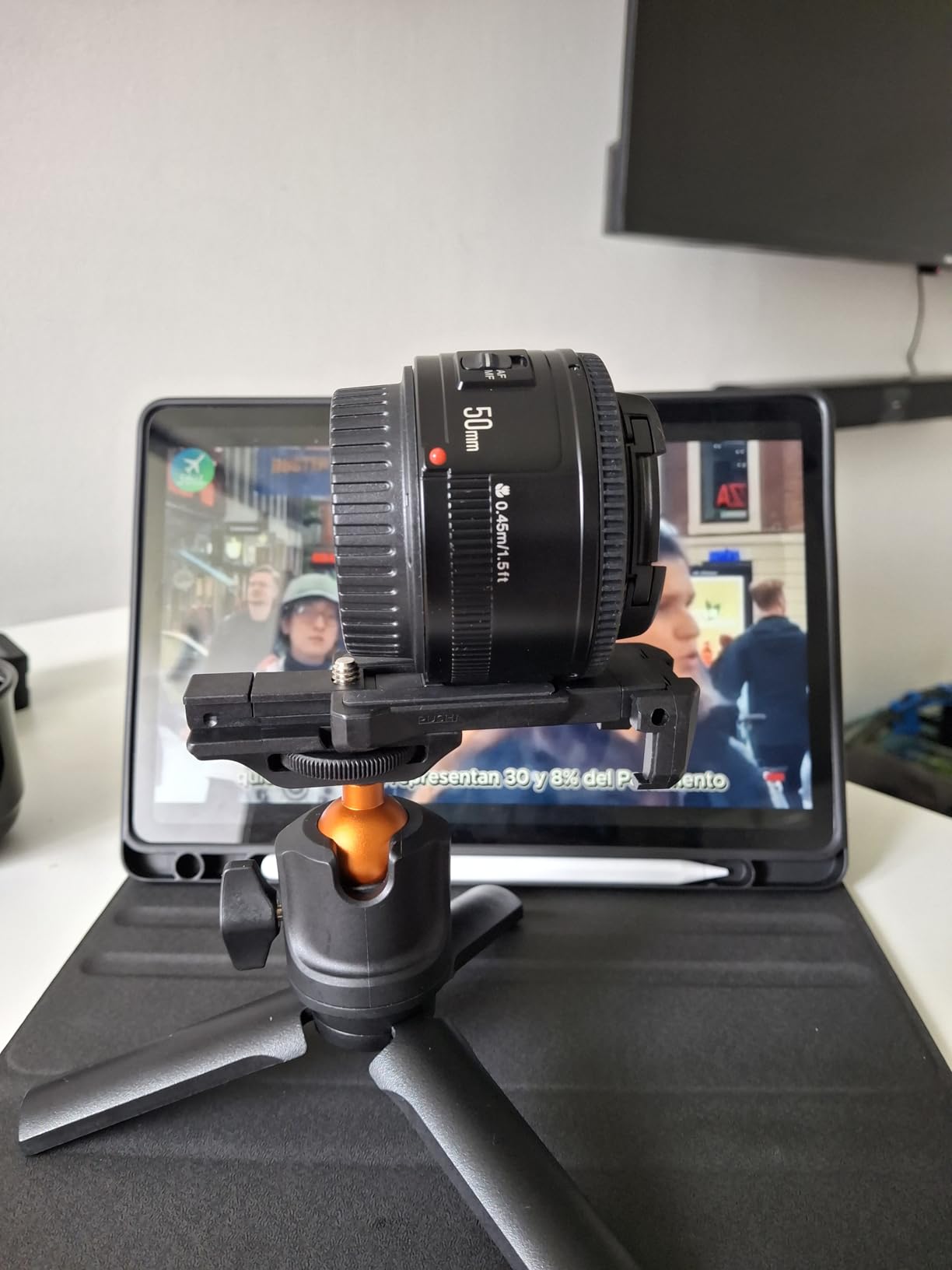
Image quality is decent for the price. You get the creamy f/1.8 bokeh that makes 50mm lenses famous, and sharpness improves noticeably when stopped down to f/2.8. Colors are slightly less saturated than Canon’s native offering, but nothing a quick adjustment in post cannot fix.
Autofocus works well in good lighting but slows down considerably indoors. The focus distance indicator at 0.45 meters is helpful for beginners learning to pre-focus. Build quality is basic, with a plastic construction that feels light but functional.
Who this lens fits best
This lens is for absolute beginners who want to try prime lens photography for the lowest possible cost. If you have a Canon EF mount DSLR and less than $100 to spend, this is your entry point. Students, hobbyists, and anyone curious about bokeh without commitment will find it a capable teacher.
What to watch out for
Autofocus in low light is sluggish and sometimes hunts. If you shoot indoors or at events frequently, the Canon EF 50mm f/1.8 STM is worth the extra money. Build quality is basic, and the lens feels plasticky in the hand.
Quality control can be inconsistent between units. Some users report slight softness on one side of the frame, which is a known issue with budget optics. Buy from a seller with a good return policy in case you get a less-than-perfect copy.
Buying Guide: How to Choose the Best 50mm Lens for Beginners?
Choosing your first 50mm lens comes down to a few key factors. Our team has guided hundreds of beginners through this decision, and the same questions come up every time. Here is what actually matters when you are standing at the crossroads.
Camera mount compatibility comes first
Before anything else, check what mount your camera uses. Canon has EF for DSLRs and RF for mirrorless. Nikon has F for DSLRs and Z for mirrorless. Sony uses E-mount across its mirrorless lineup. A lens only fits the mount it is designed for, so this narrows your options immediately.
If you shoot Canon DSLR, the EF 50mm f/1.8 STM is your best bet. Canon mirrorless shooters should get the RF version. Nikon DSLR users have the excellent AF-S 50mm f/1.8G, while Nikon Z shooters can choose between the premium Z 50mm f/1.8 S or adapting the F-mount lens. Sony users have the most options, including native and third-party choices.
Aperture and what f-numbers actually mean
The aperture number, like f/1.8 or f/2, tells you how wide the lens can open. Lower numbers mean wider openings, which let in more light and create more background blur. An f/1.8 lens lets in over twice as much light as an f/2.8 kit lens at the same focal length.
For beginners, f/1.8 is the sweet spot. It gives you genuine low-light capability and beautiful bokeh without the premium price of f/1.4 or f/1.2 lenses. The difference between f/1.8 and f/2 is roughly one-third of a stop, which is barely noticeable in practice. Do not overthink this choice.
Autofocus type affects your experience
Modern autofocus motors like STM, SWM, and stepping motors are quiet and smooth. This matters for video recording and quiet environments like wedding ceremonies. Older motor designs can be noisy and slower to lock focus.
All eight lenses in this roundup have autofocus, but quality varies. Native brand lenses from Canon, Sony, and Nikon have the most reliable autofocus systems. Third-party options from Viltrox and Meike are improving rapidly but may hunt more in challenging light.
Build quality and weather resistance
Budget 50mm lenses use plastic construction to keep costs down. This is not necessarily bad, as plastic keeps the lens light and affordable. However, premium options like the Nikon Z 50mm f/1.8 S offer better build quality and sometimes weather sealing.
For most beginners, plastic construction is perfectly fine. If you shoot outdoors frequently or in unpredictable weather, consider investing in a lens with better sealing. A UV filter can also protect the front element from dust and scratches.
Crop sensor vs full frame considerations
If your camera has an APS-C crop sensor, a 50mm lens gives you an effective focal length of about 75 to 80mm depending on the brand. This is tighter than the standard 50mm field of view on a full-frame camera. Many beginners actually prefer this for portraits because it flatters facial features.
The trade-off is that 75 to 80mm can feel restrictive in tight spaces. If you shoot in small rooms or want wider environmental portraits, you might find yourself backing into walls. All the lenses in this roundup work on both crop and full-frame bodies, so you can upgrade your camera later without buying a new lens.
Why a 50mm is perfect for wedding photography beginners
As wedding photographers, we rely on 50mm lenses for ceremony coverage, couple portraits, and reception details. The fast aperture handles dim church lighting, and the natural perspective flatters subjects without distortion. A 50mm teaches you to anticipate moments and position yourself thoughtfully.
Start with an affordable f/1.8 option and learn to use it well. The skills you develop with a single prime lens will transfer to every other lens you ever buy. Many professional wedding photographers still carry a 50mm in their bag as a reliable backup and creative tool.
FAQs
What are the common problems of Sony 50mm lens?
The Sony FE 50mm f/1.8 has a few known issues. Autofocus can feel sluggish compared to Sony’s more expensive lenses, and some users report focus breathing during video recording. The lens also lacks image stabilization and weather sealing. Build quality is functional but plasticky. Despite these issues, most beginners find it performs well for portraits and everyday photography.
Is the Sony 50mm lens any good?
Yes, the Sony FE 50mm f/1.8 is an excellent lens for beginners. It delivers sharp images at f/1.8, produces beautiful bokeh from its 7-blade circular aperture, and weighs only 6.6 ounces. With a 4.7-star rating from over 1,600 reviewers, it is widely regarded as one of the best value prime lenses for Sony E-mount shooters.
What is the Sony 50mm lens good for?
The Sony 50mm f/1.8 excels at portrait photography, low-light shooting, street photography, and wedding detail work. The fast f/1.8 aperture creates beautiful background blur for subject isolation, and the natural 50mm perspective mimics human vision for flattering results. It is also compact enough for everyday carry and travel photography.
Is a 50mm lens good for beginners?
A 50mm lens is widely considered the best first prime lens for beginners. It forces you to learn composition by moving your feet instead of zooming, teaches you about aperture and depth of field, and delivers professional-looking bokeh at an affordable price. Most 50mm f/1.8 lenses cost under $250 and work across multiple camera bodies.
Should I buy the f/1.8 or save up for an f/1.4 50mm lens?
Start with f/1.8. The price difference between f/1.8 and f/1.4 lenses is significant, often $400 or more, while the real-world difference in image quality is subtle for beginners. An f/1.8 lens gives you roughly 90 percent of the creative capability at a fraction of the cost. Upgrade to f/1.4 only when you have a specific need for the extra light gathering or shallower depth of field.
Final Thoughts on the Best 50mm Lenses for Beginners
The right 50mm lens depends entirely on your camera system and budget. Canon DSLR shooters cannot go wrong with the EF 50mm f/1.8 STM, our editor’s choice with 18,000-plus reviews backing it up. Sony beginners get outstanding value from the FE 50mm f/1.8, while Nikon Z users willing to invest will love the premium Z 50mm f/1.8 S. Budget-conscious Canon owners can start with the Yongnuo for under $85 and upgrade later.
Whichever lens you choose, the best 50mm lenses for beginners all share one thing: they make you a better photographer. A prime lens teaches composition, forces creativity, and delivers results that kit lenses simply cannot match. Pick the one that fits your camera and start shooting.