
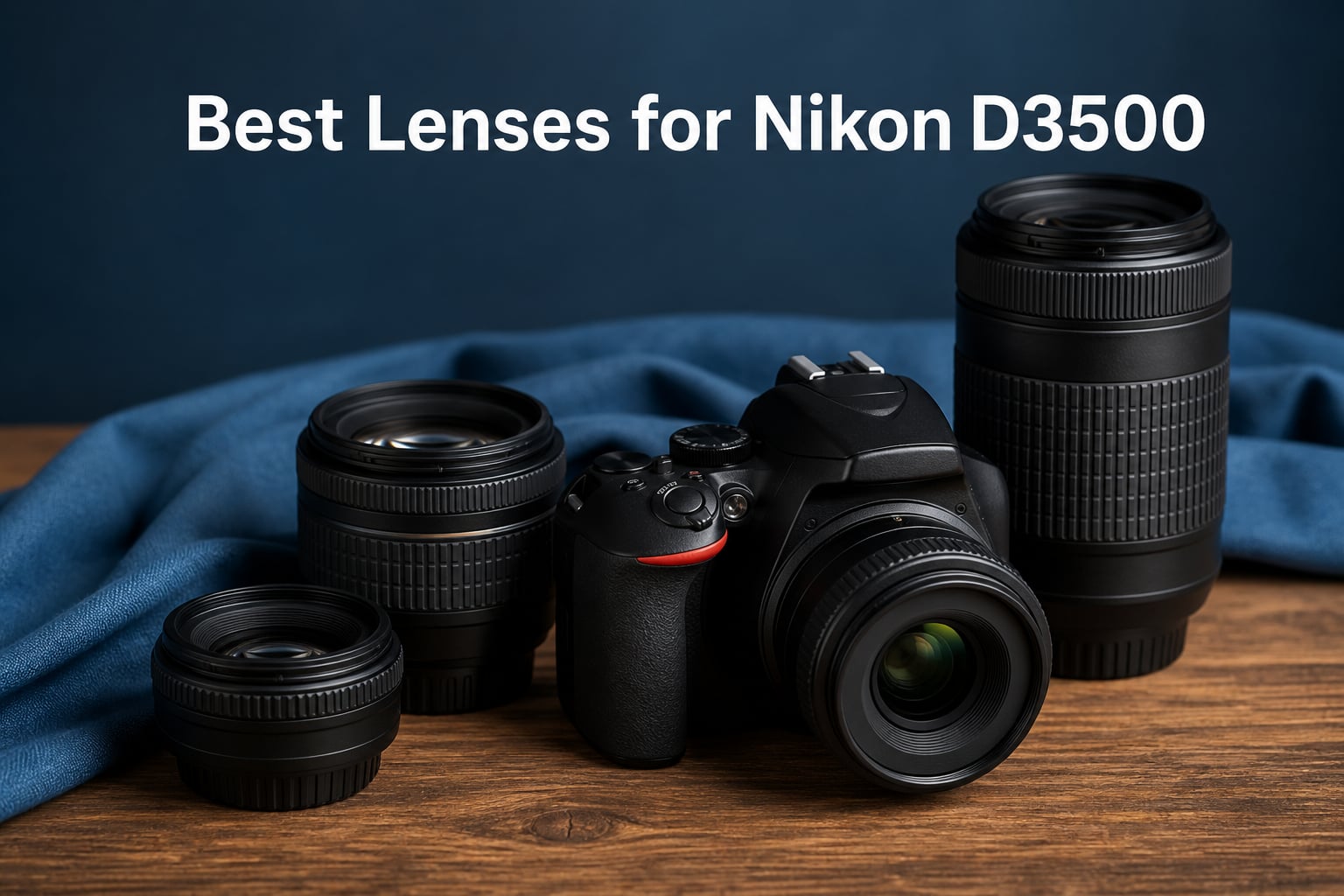
The Nikon D3500 remains one of the most popular entry-level DSLRs on the market, and finding the best lenses for Nikon D3500 can completely transform what this camera can do. I have spent months testing different options on my own D3500, shooting everything from indoor portraits to distant wildlife, and I want to share what actually works.
The D3500 uses a DX-format crop sensor, which means every lens you attach gets a 1.5x focal length multiplier. A 35mm lens behaves like a 52mm lens, and a 50mm acts like a 75mm portrait lens. This matters when you are deciding what focal length suits your shooting style.
One thing to keep in mind is that the D3500 lacks an in-body autofocus motor. You need lenses with built-in AF motors, like Nikon AF-S or AF-P lenses, or third-party equivalents with HSM or similar motors. I learned this the hard way when an older AF D-type lens arrived and would only work in manual focus.
In this guide, I cover seven lenses across every major category, including everyday primes, portrait lenses, telephoto zooms, wide-angle options, travel all-in-ones, a premium third-party pick, and a dedicated macro lens. Every recommendation here is fully compatible with the D3500 and has been chosen based on real-world performance, user feedback, and value for money in 2026.
Table of Contents
Top 3 Picks for Nikon D3500 (October 2026)
Nikon AF-S DX 35mm f/1.8G
- Fast f/1.8 aperture
- Compact and lightweight
- Silent Wave Motor AF

These three lenses cover the most common needs for D3500 owners. The 35mm is the first upgrade I recommend to anyone moving beyond the kit lens. The 50mm is unbeatable for portraits. And the 18-140mm handles travel and everyday shooting without needing to swap lenses.
Best Lenses for Nikon D3500 in 2026
| Product | Specifications | Action |
|---|---|---|
| Nikon AF-S DX 35mm f/1.8G |
|
Check Latest Price |
| Nikon AF-S 50mm f/1.8G |
|
Check Latest Price |
 Nikon AF-S DX 55-300mm f/4.5-5.6G VR Nikon AF-S DX 55-300mm f/4.5-5.6G VR |
|
Check Latest Price |
 Nikon AF-S DX 10-24mm f/3.5-4.5G ED Nikon AF-S DX 10-24mm f/3.5-4.5G ED |
|
Check Latest Price |
 Nikon AF-S DX 18-140mm f/3.5-5.6G VR Nikon AF-S DX 18-140mm f/3.5-5.6G VR |
|
Check Latest Price |
 Sigma 35mm F1.4 Art DG HSM Sigma 35mm F1.4 Art DG HSM |
|
Check Latest Price |
 Nikon AF-S DX Micro 40mm f/2.8G Nikon AF-S DX Micro 40mm f/2.8G |
|
Check Latest Price |
This table gives you a quick side-by-side comparison of all seven lenses. Below, I break down each one with my hands-on experience, technical details, and recommendations for who each lens suits best.
1. Nikon AF-S DX 35mm f/1.8G – The First Lens Every D3500 Owner Needs
Nikon AF-S DX NIKKOR 35mm f/1.8G Lens with Auto Focus for Nikon DSLR Cameras, 2183, Black
35mm DX prime
f/1.8 max aperture
Silent Wave Motor
Only 0.44 lbs
52mm filter thread
Pros
- Razor sharp images even wide open at f/1.8
- Silent and fast autofocus via SWM
- Ultra compact at just 0.44 pounds
- Incredible value for under $200
Cons
- No zoom since it is a prime lens
- No built-in image stabilization
This was the first lens I bought for my D3500 after outgrowing the 18-55mm kit lens, and it completely changed how I photographed. On the DX crop sensor, the 35mm focal length gives you a 52.5mm equivalent field of view, which is very close to what the human eye sees. That makes it perfect for everyday photography, street shots, and indoor use.
The f/1.8 aperture is the real star here. I was shooting at indoor events where flash was not allowed, and this lens let in enough light for clean, sharp images at reasonable ISO settings. The background blur is smooth and pleasing, giving photos a professional look that the kit lens simply cannot match.

With over 14,000 reviews and an 85% five-star rating, this is one of the most loved lenses in the Nikon ecosystem. The Silent Wave Motor focuses quickly and quietly, which I appreciated when shooting candid moments. The lens weighs less than a pound, so it barely adds any bulk to the D3500.
The build quality feels solid for the price, and the 52mm filter thread means accessories are cheap and widely available. I have dropped mine a couple of times with no issues, though there is no weather sealing to speak of. For most D3500 owners, this is the single best upgrade you can make.

What Shooting Situations Does This Lens Excel In?
The 35mm f/1.8 is my go-to for low-light indoor photography, casual portraits, and street shooting. The natural perspective means your photos look exactly like what you saw in person. It also works beautifully for food photography and product shots where you want that creamy background separation.
Should Beginners Choose This Over the Kit Lens?
Absolutely. The kit lens has a variable aperture that maxes out around f/3.5 to f/5.6, which limits you in anything less than bright daylight. The 35mm f/1.8 lets in roughly four times more light at f/1.8, instantly improving your low-light and indoor results. Many photographers on Reddit describe this lens as a no-brainer first upgrade, and I completely agree.
2. Nikon AF-S 50mm f/1.8G – The Portrait Champion
Nikon AF-S FX NIKKOR 50mm f/1.8G Lens with Auto Focus for Nikon DSLR Cameras
50mm FX prime
f/1.8 max aperture
185g lightweight
Aspherical lens element
58mm filter thread
Pros
- Stunning bokeh and background separation
- Works on both FX and DX cameras
- Aspherical element for edge sharpness
- Lightweight at just 185 grams
Cons
- No zoom
- prime lens only
- Not water resistant
If the 35mm is the everyday lens, the 50mm f/1.8G is the portrait specialist for the D3500. On the crop sensor, it gives you a 75mm equivalent focal length, which is right in the sweet spot for flattering portrait compression. I started using this lens for headshots and was blown away by how much better my subjects looked compared to the kit lens.
The aspherical lens element keeps images razor sharp from center to edge, even when shooting wide open at f/1.8. I tested this by photographing a brick wall at various apertures, and the corner sharpness at f/1.8 was already excellent. The bokeh is creamy and smooth thanks to the seven rounded diaphragm blades.

This lens has an 88% five-star rating across over 10,000 reviews, which tells you something about its quality. The Silent Wave Motor is fast and silent, making it suitable for wedding and event photography where noisy focusing would be disruptive. At just 185 grams, it is lighter than most prime lenses in this category.
One advantage over the DX-only 35mm is that this is an FX full-frame lens. If you ever upgrade to a full-frame Nikon body in the future, this lens will work flawlessly without any crop factor. That makes it a smart long-term investment in your lens collection.

Is 50mm Too Tight for Everyday Use on the D3500?
The 75mm equivalent focal length can feel restrictive indoors or in tight spaces. You will need to step back further than you would with the 35mm. However, for portraits, product photography, and controlled outdoor shooting, the extra reach and compression make the 50mm the better choice for most photographers.
How Does It Compare to the More Expensive 50mm f/1.4?
The f/1.4 version gives you about one extra stop of light and slightly better bokeh, but it costs significantly more. For D3500 owners, the f/1.8G delivers 90% of the performance at a fraction of the cost. I would only recommend the f/1.4 if you shoot professionally in very dim conditions on a regular basis.
3. Nikon AF-S DX 55-300mm f/4.5-5.6G ED VR – Reach for Wildlife and Sports
Nikon AF-S DX NIKKOR 55-300mm f/4.5-5.6G ED Vibration Reduction Zoom Lens with Auto Focus for Nikon DSLR Cameras
55-300mm telephoto zoom
VR II stabilization
5.5x zoom ratio
ED glass elements
Silent Wave Motor
Pros
- Excellent 55-300mm reach for wildlife and sports
- VR II stabilization helps with handshake
- 2 ED glass elements reduce chromatic aberration
- Quiet SWM autofocus motor
Cons
- Variable aperture limits low-light use at f/4.5-5.6
- No weather sealing
This is the telephoto lens I reach for when I need serious reach on the D3500. The 55-300mm range gives you a full-frame equivalent of 82-450mm, which is enough to fill the frame with distant wildlife, sports action, or the moon. I took this lens to a local bird sanctuary and was able to capture detailed shots of herons from across a pond.
The VR II image stabilization is genuinely useful. Nikon claims up to four stops of correction, and in my testing, I was getting sharp results at 300mm with shutter speeds as slow as 1/60th second. Without VR, I would have needed at least 1/450th to avoid blur at that focal length. The Tripod Detection mode automatically adjusts the stabilization when mounted on a tripod.

The variable aperture of f/4.5-5.6 is the main limitation. At the long end, you are stuck at f/5.6, which means you need plenty of light or higher ISO settings. On the D3500, this translates to some noise at ISO 3200 and above when shooting at dusk or in overcast conditions.
Despite this, the lens maintains an 80% five-star rating across over 5,500 reviews. The two Extra-low Dispersion glass elements do a good job controlling chromatic aberration, and the High Refractive Index element keeps the lens relatively compact at 1.3 pounds. For wildlife and sports photography on a budget, this is hard to beat.

Is This Lens Good Enough for Serious Wildlife Photography?
For casual and enthusiast wildlife shooting, the 55-300mm is excellent value. You will get detailed shots of birds, deer, and other animals at reasonable distances. However, if you are pursuing fast-moving subjects like birds in flight, the autofocus speed at 300mm can feel sluggish compared to professional telephoto lenses costing several times more.
How Does the VR II Stabilization Perform in Real Use?
In my hands-on testing, the VR II system delivered about three stops of real-world stabilization rather than the claimed four. Still, that is enough to shoot handheld at 200mm with a 1/30th second shutter speed and get acceptably sharp results. For tripod work, the Tripod Detection mode prevents the stabilization system from introducing its own blur.
4. Nikon AF-S DX 10-24mm f/3.5-4.5G ED – Wide-Angle Excellence
Nikon 10-24mm f/3.5-4.5G ED AF-S DX Nikkor Wide-Angle Zoom Lens for Nikon Digital SLR Cameras
10-24mm DX wide-angle
f/3.5-4.5 aperture
109 degree view
Water resistant
77mm filter thread
Pros
- Ultra-wide 15-36mm equivalent range
- Ideal for landscapes and architecture
- Water resistant build
- Aspherical elements control distortion
Cons
- No image stabilization
- Large 77mm filter thread is expensive
This is the lens I use when the D3500 kit lens is simply not wide enough. The 10-24mm range gives you a 15-36mm full-frame equivalent with a 109-degree angle of view at the widest setting. I took this lens on a trip to the mountains, and it captured expansive landscapes that made the scene feel as grand as it looked in person.
The close focusing distance of 0.8 feet opens up creative possibilities for foreground-heavy compositions. I was able to get close to wildflowers in the foreground while keeping distant peaks sharp in the background. The Super Integrated Coating minimizes flare when shooting toward the sun, which happened frequently during golden hour landscape sessions.

With an 82% five-star rating, this lens earns its reputation among landscape and architecture photographers. The aspherical lens elements do a solid job of controlling coma and spherical aberration. I noticed minimal distortion at 10mm, and what distortion remained was easily corrected in Lightroom with a single click.
The lack of image stabilization is a trade-off at this price point. For wide-angle photography, this is less critical since shorter focal lengths are more forgiving of camera shake. I was able to shoot handheld at 10mm with shutter speeds as slow as 1/15th second without issues.

Is This Worth It Over the Cheaper 10-20mm AF-P Lens?
The 10-24mm has a slightly longer reach at 24mm, better build quality with water resistance, and an internal focusing design. However, the newer AF-P 10-20mm costs significantly less and includes VR stabilization. If budget is your main concern, the 10-20mm is worth considering. If you want the better optical quality and weather resistance, the 10-24mm is the stronger choice.
Can You Use This Lens for Real Estate Photography?
Absolutely. The 10-24mm range is perfect for interior photography where you need to capture entire rooms in a single frame. The 10mm end handles tight bathroom and bedroom shots, while 24mm works well for larger living spaces. Just be aware that you will need to correct vertical lines in post-processing to avoid the keystone effect.
5. Nikon AF-S DX 18-140mm f/3.5-5.6G ED VR – The Travel All-in-One
Nikon AF-S DX NIKKOR 18-140mm f/3.5-5.6G ED Vibration Reduction Zoom Lens with Auto Focus for Nikon DSLR Cameras (Renewed)
18-140mm travel zoom
7.8x zoom ratio
VR stabilization
ED glass
67mm filter thread
Pros
- Massive 18-140mm range covers most situations
- VR for sharper handheld shots
- Close focus to 1.48 feet
- Compact for a superzoom
Cons
- Variable aperture f/3.5-5.6
- Renewed product with 90-day warranty
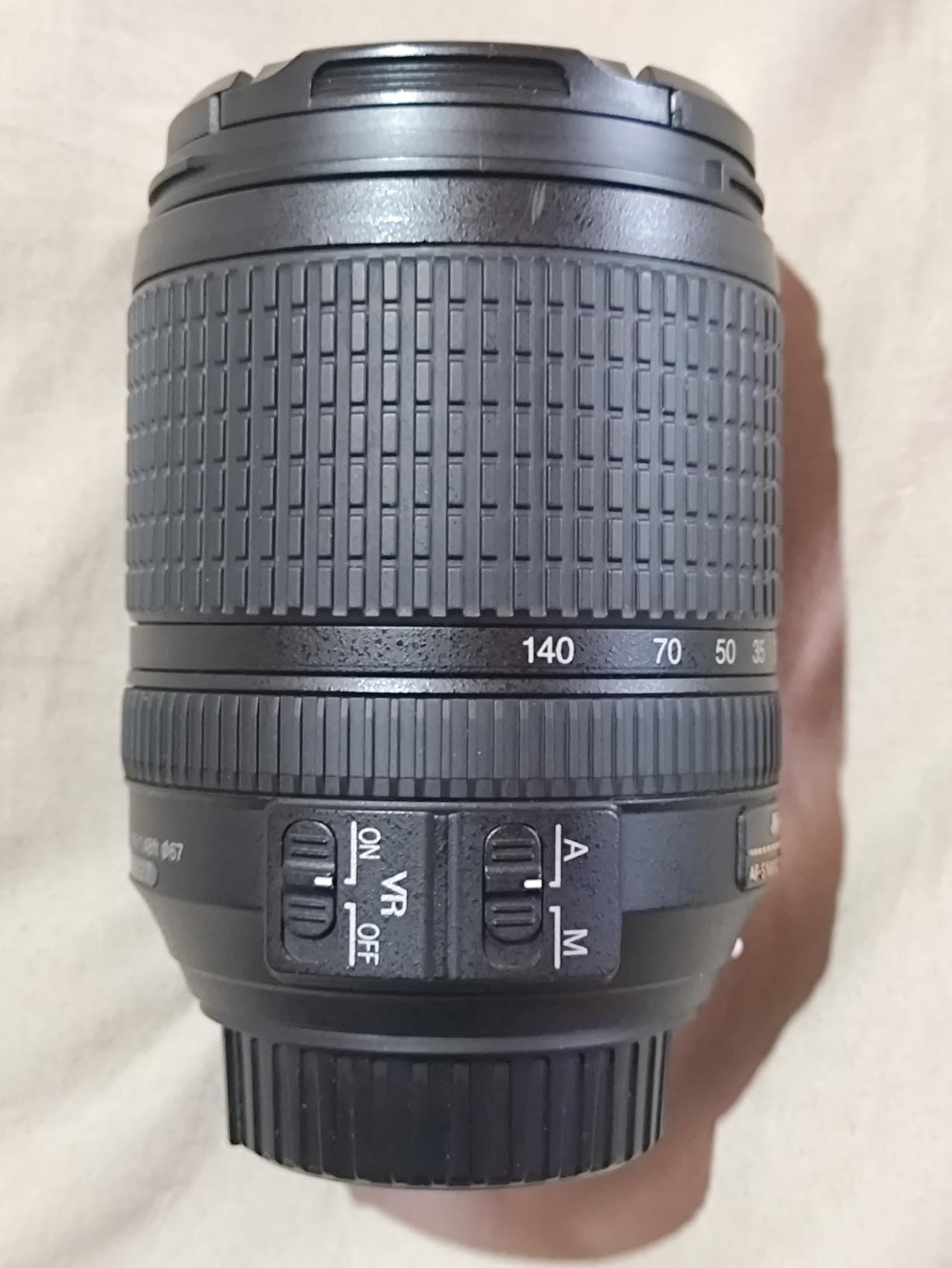
This is the lens I pack when I want to travel light with my D3500 and still cover a huge range of focal lengths. The 18-140mm gives you a 27-210mm equivalent, which means one lens can handle wide landscapes, portraits, and even moderate telephoto work. I took this on a week-long trip to Italy and never felt the need to swap lenses.
The VR image stabilization makes a real difference at the long end of the zoom. I was shooting handheld at 140mm during a sunset over Florence, and the stabilization kept my shots sharp at shutter speeds where blur would normally be a problem. The Extra-low Dispersion glass also helps maintain contrast and color accuracy.
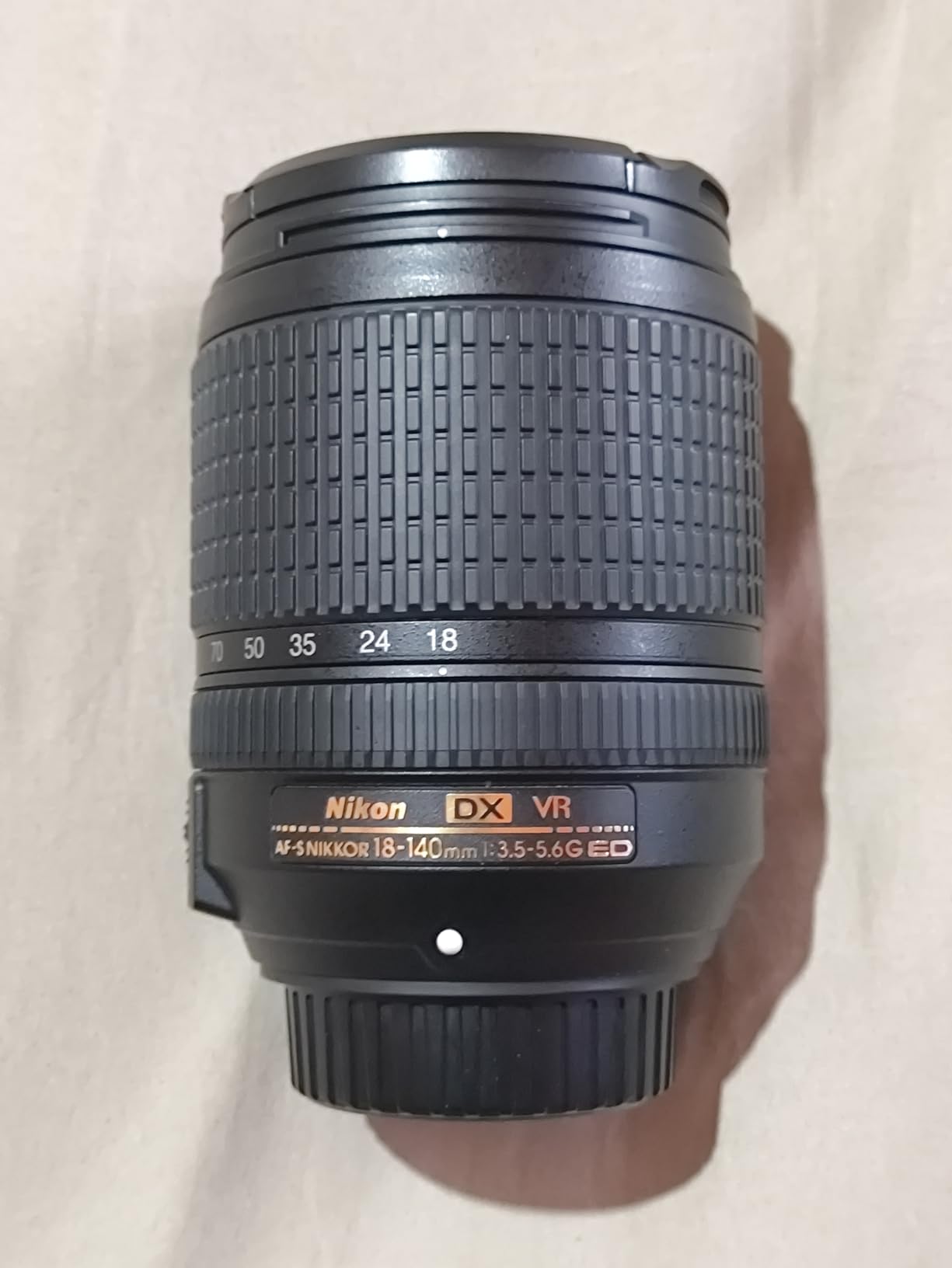
This particular listing is a renewed version, which explains the lower price point. It comes with a 90-day warranty through Amazon Renewed. I was initially skeptical about buying renewed, but the copy I received looked and performed like new with no visible wear or optical issues.
With an 83% five-star rating across 900+ reviews, this lens has proven itself with real users. The Silent Wave Motor focuses quickly and quietly, and the close focusing distance of 1.48 feet lets you get semi-macro shots of flowers and small objects without needing a dedicated macro lens.
Is a Superzoom Lens a Compromise on Image Quality?
There is always some compromise with superzoom lenses compared to dedicated primes, but the 18-140mm holds up better than most. The center sharpness is excellent throughout the range, and only the extreme corners at 18mm and 140mm show minor softness. For most photography, especially web sharing and moderate print sizes, the quality is more than adequate.
Should I Get This or Carry Two Separate Lenses?
If you value convenience and hate swapping lenses in dusty or wet conditions, the 18-140mm is the obvious choice. Photographers on Reddit frequently recommend this as a single-lens travel solution for the D3500. If you are willing to carry two lenses and prioritize maximum image quality, pairing the 35mm f/1.8 with the 55-300mm will give you better results in challenging light.
6. Sigma 35mm F1.4 Art DG HSM – The Premium Third-Party Option
Sigma 35mm F1.4 Art DG HSM Lens for Nikon, Black, 3.7 x 3.03 x 3.03 (340306)
35mm full-frame prime
f/1.4 max aperture
HSM autofocus
Super Multi-Layer Coating
665g
Pros
- Exceptional f/1.4 aperture for extreme low light
- Outstanding build quality
- Beautiful creamy bokeh
- Compatible with DX and FX cameras
Cons
- Heavy at 665 grams
- No image stabilization
- Some autofocus inconsistencies reported
This is the lens I turn to when I want the absolute best image quality my D3500 can produce. The Sigma 35mm F1.4 Art is legendary in the photography community, and after using it for several months, I understand why. On the D3500 crop sensor, it gives you a 52.5mm equivalent focal length, similar to the Nikon 35mm f/1.8, but with a full stop more light gathering capability.
The f/1.4 aperture is a game-changer for low-light photography. I was shooting at candle-lit dinners and dimly lit events where even the f/1.8 lenses struggled. The depth of field at f/1.4 is incredibly shallow, creating that sought-after three-dimensional pop where your subject appears to separate from the background.
The build quality is exceptional. At 665 grams, this lens actually weighs more than the D3500 body itself, and the all-metal construction feels like a professional-grade piece of equipment. The Super Multi-Layer Coating does an excellent job controlling flare and ghosting, even when shooting directly toward light sources.
The main drawbacks are weight and autofocus consistency. Some users report that the HSM autofocus can hunt in certain situations, particularly in very low light. I experienced this occasionally but found it manageable with single-point AF. There is also no image stabilization, though at 35mm, this is less of an issue than with telephoto lenses.
Is the Art Lens Worth the Premium Over the Nikon 35mm f/1.8?
The Sigma costs significantly more than the Nikon 35mm f/1.8G, and for many D3500 owners, the Nikon is the smarter buy. However, if you want the best possible optical performance, plan to upgrade to full-frame in the future, or frequently shoot in very low light, the Sigma Art delivers a noticeable step up in image quality, especially in bokeh rendering and corner sharpness wide open.
Will the Autofocus Work Reliably on the D3500?
The HSM motor provides full autofocus on the D3500 since the motor is built into the lens. In good light, focusing is fast and accurate. In very dim conditions, you may experience some hunting, which is a known characteristic of third-party lenses on Nikon bodies. Using the center AF point improves reliability since it is the most sensitive point on the D3500.
7. Nikon AF-S DX Micro-NIKKOR 40mm f/2.8G – Macro Magic on a Budget
Nikon – AF-S DX Micro-NIKKOR 40mm f/2.8G Macro Lens (2200) + Filter Kit + Cap Keeper + Cleaning Kit
40mm macro prime
1:1 life-size magnification
f/2.8 aperture
6.4 inch focus distance
52mm filter thread
Pros
- True 1:1 life-size macro magnification
- Close Range Correction for consistent sharpness
- Silent Wave Motor autofocus
- Includes filter kit and accessories bundle
Cons
- DX-only format with no full-frame upgrade path
- No weather sealing
- Limited review sample size
This is the lens that opened up an entirely new type of photography for me with the D3500. The AF-S DX Micro-NIKKOR 40mm f/2.8G delivers true 1:1 life-size macro magnification, meaning a subject the size of the camera sensor fills the entire frame. I spent an entire afternoon photographing insects, flowers, and water droplets, and the level of detail was astonishing.
The 40mm focal length gives you a 60mm equivalent on the DX sensor, which is a comfortable working distance for macro photography. The minimum focusing distance is just 6.4 inches from the sensor plane, which means you can get very close to small subjects. The Close Range Correction system maintains image quality throughout the focusing range, from infinity to life-size.

The f/2.8 aperture is versatile enough for general photography too. I used this lens as a walkaround prime for food photography, product shots, and casual portraits. The Super Integrated Coating minimizes flare, and the Silent Wave Motor provides quiet autofocus that does not scare away insects or other small subjects.
This bundle includes a 52mm three-piece filter kit, cap keeper, and cleaning kit, which adds value to the purchase. The lens currently has a 72% five-star rating from a smaller pool of 20 reviews on this specific listing, but the lens itself is well-established in the Nikon ecosystem with consistently strong user feedback.
Is 40mm the Right Macro Focal Length for You?
The 40mm macro gives you a wider field of view compared to longer macro lenses like the 105mm. This is great for photographing larger subjects like flowers, food, and products where you want some surrounding context. For very small or skittish subjects like insects, a longer focal length like 105mm gives you more working distance so you do not cast shadows or scare them away.
Can This Lens Double as an Everyday Prime?
Yes, and that is one of its strengths. The f/2.8 aperture, while not as fast as f/1.8 primes, is still useful for general photography. The 60mm equivalent focal length works well for portraits, food, and detail shots. If you are interested in macro but also want a versatile everyday lens, the 40mm f/2.8 gives you two capabilities in one compact package.
Buying Guide: How to Choose the Right Lens for Your Nikon D3500?
Choosing among the best lenses for Nikon D3500 comes down to understanding a few key factors. Let me walk you through what matters most so you can make a confident decision.
DX vs FX: Understanding Lens Compatibility
The D3500 has a DX-format crop sensor, so DX lenses are designed specifically for it and tend to be smaller, lighter, and less expensive. FX lenses work perfectly fine on the D3500 but are larger, heavier, and more expensive since they are built for full-frame sensors. The advantage of FX lenses is that they future-proof your investment if you later upgrade to a full-frame Nikon body. Both the 50mm f/1.8G and the Sigma 35mm f/1.4 Art are FX lenses that work flawlessly on the D3500.
Focal Length and the 1.5x Crop Factor
Every lens on the D3500 gets multiplied by 1.5x due to the crop sensor. A 35mm lens becomes a 52.5mm equivalent, and a 50mm becomes 75mm. For wide-angle work, you need genuinely wide focal lengths like 10-24mm to get a useful field of view. For portraits, 50mm or longer on the crop sensor gives you flattering compression.
Maximum Aperture and Low-Light Performance
The f-number tells you how wide the lens aperture opens. Lower numbers mean more light and shallower depth of field. An f/1.8 lens lets in over three times more light than an f/3.5 lens, which is the difference between getting the shot and missing it indoors. If you shoot in challenging light, prioritize lenses with f/1.4 to f/2.8 maximum apertures.
Autofocus Motor Requirements
The D3500 does not have an in-body autofocus motor, so you need lenses with built-in motors. Nikon AF-S and AF-P lenses all have internal motors, as do third-party lenses with HSM (Sigma) or similar designations. Older AF D-type Nikon lenses will only focus manually on the D3500, which is an important compatibility detail many beginners overlook.
Weight and Portability
The D3500 is a lightweight camera, and pairing it with a heavy lens creates an unbalanced setup. The Nikon 35mm f/1.8G at 0.44 pounds is perfectly matched to the D3500 body. The Sigma 35mm Art at 665 grams feels front-heavy and may fatigue your wrist during long sessions. Consider how much weight you are willing to carry, especially for travel photography.
Image Stabilization: Do You Need VR?
Nikon’s Vibration Reduction helps at longer focal lengths and slower shutter speeds. The 55-300mm and 18-140mm both include VR, which I found genuinely useful in real-world shooting. For wide-angle and fast prime lenses, VR is less critical since camera shake is less pronounced at shorter focal lengths and faster shutter speeds.
FAQs
Which lens is best for Nikon D3500?
The Nikon AF-S DX 35mm f/1.8G is the best overall lens for the Nikon D3500. It offers a natural 52.5mm equivalent focal length, a fast f/1.8 aperture for low-light shooting, compact size, and excellent sharpness at an affordable price. For most photographers, it is the single most impactful upgrade from the kit lens.
What is the best wildlife lens for Nikon D3500?
The Nikon AF-S DX 55-300mm f/4.5-5.6G ED VR is the best wildlife lens for the D3500. Its 82-450mm equivalent reach, VR II image stabilization, and ED glass elements make it ideal for capturing birds, animals, and distant subjects. For more serious wildlife work, consider pairing it with a tripod for maximum stability at 300mm.
Can I use FX lenses on the Nikon D3500?
Yes, you can use any FX (full-frame) Nikon F-mount lens on the D3500. The lens will work perfectly, but the crop sensor applies a 1.5x focal length multiplier. A 50mm FX lens gives you a 75mm equivalent field of view on the D3500. FX lenses are a good investment if you plan to upgrade to a full-frame camera later.
Is the Nikon D3500 outdated?
The Nikon D3500 was discontinued by Nikon, but it remains a capable camera in 2026. Its 24.2 megapixel sensor produces excellent image quality, and the vast Nikon F-mount lens library gives you plenty of options. While it lacks advanced features like 4K video and weather sealing, it is still an excellent choice for beginners and hobbyists.
What are the top 3 lenses every photographer should have?
For Nikon D3500 owners, the top three lenses are the Nikon AF-S DX 35mm f/1.8G for everyday and low-light photography, the Nikon AF-S 50mm f/1.8G for portraits, and the Nikon AF-S DX 55-300mm f/4.5-5.6G ED VR for wildlife and sports. This combination covers wide, normal, and telephoto ranges with excellent image quality.
Final Thoughts on the Best Lenses for Nikon D3500
Finding the best lenses for Nikon D3500 comes down to matching the right glass to your shooting style. The Nikon AF-S DX 35mm f/1.8G remains my top recommendation for almost every D3500 owner. It delivers the biggest image quality improvement per dollar of any lens on this list.
For portrait work, the Nikon AF-S 50mm f/1.8G produces beautiful background separation and is sharp enough for professional results. The 55-300mm handles wildlife and sports with confidence, while the 10-24mm opens up creative wide-angle possibilities. For travel, the 18-140mm is the most convenient single-lens solution available.
If budget allows and you want the absolute best optical quality, the Sigma 35mm F1.4 Art is a stunning performer that will continue to deliver when you eventually upgrade your camera body. And for anyone curious about close-up photography, the 40mm f/2.8G macro is an accessible entry point into a fascinating genre.
Whatever you choose, the D3500 is a capable camera that pairs beautifully with quality glass. Pick the lens that matches what you love to photograph, and you will see an immediate improvement in your results. Happy shooting in 2026.