
After 12 years of shooting weddings, I have learned that your camera body can make or break the day. A missed first kiss, a noisy shutter during vows, or a card failure during the first dance are the nightmares that keep wedding photographers awake at night. That is why our team spent months testing the best full-frame cameras for wedding photographers to find which bodies truly deliver when the pressure is on.
Full-frame sensors matter for weddings because most ceremonies and receptions happen in challenging light. The larger sensor surface area captures more light per pixel, giving you cleaner images in dark churches and candlelit reception halls. You also get shallower depth of field for that dreamy background separation clients love in their portrait sessions.
Our team compared 10 full-frame models from Sony, Canon, Nikon, and Panasonic for this guide. We evaluated each camera on autofocus reliability, low-light performance, dual card slot redundancy, silent shutter capability, and real-world battery life during 10-hour wedding days. Every recommendation here comes from actual shooting experience, not spec sheet comparisons.
Whether you are upgrading from an aging DSLR or building your first professional kit, this guide covers options across every budget. We have included proven workhorses under $1,400 alongside the latest models with AI-assisted autofocus. Let me walk you through what makes each camera worth your consideration for wedding photography in 2026.
For photographers who want the short version, the Canon EOS R6 Mark II earns our top pick for its near-perfect balance of speed, stabilization, and image quality. The Nikon Z 6II takes best value honors with dual card slots and excellent low-light performance at a price that leaves room for lenses. And the Sony Alpha a7 V is our premium pick for photographers who want blackout-free 30fps shooting and AI autofocus tracking.
Table of Contents
Top 3 Picks for Wedding Photography (October 2026)
Our team narrowed down the 10 cameras to the three that stood out most during real wedding day shoots. Each pick serves a different type of wedding photographer based on budget, shooting style, and system preference.

The R6 Mark II hits a sweet spot that works for 90 percent of wedding photographers. The Nikon Z 6II delivers professional features at the most accessible price on this list. And the Sony a7 V represents the most advanced autofocus technology for shooters who refuse to miss a single frame.
Best Full-Frame Cameras for Wedding Photographers in 2026
Here is our complete comparison of all 10 cameras tested. The table covers the key specifications that matter most when shooting weddings. After the table, I break down each camera in detail with hands-on impressions from real wedding day use.
| Product | Specifications | Action |
|---|---|---|
| Canon EOS R6 Mark II |
|
Check Latest Price |
 Nikon Z 6II Nikon Z 6II |
|
Check Latest Price |
| Sony Alpha a7 V |
|
Check Latest Price |
 Sony Alpha 7 IV Sony Alpha 7 IV |
|
Check Latest Price |
 Canon EOS R8 Canon EOS R8 |
|
Check Latest Price |
 Nikon Z 7II Nikon Z 7II |
|
Check Latest Price |
 Canon EOS R5 Canon EOS R5 |
|
Check Latest Price |
 Canon EOS 5D Mark IV Canon EOS 5D Mark IV |
|
Check Latest Price |
 Panasonic LUMIX S5IIX Panasonic LUMIX S5IIX |
|
Check Latest Price |
 Panasonic LUMIX S5 Panasonic LUMIX S5 |
|
Check Latest Price |
1. Canon EOS R6 Mark II – The All-Around Wedding Workhorse
Canon EOS R6 Mark II Mirrorless Camera (Body Only), Full-Frame Camera, 24.2 Megapixel CMOS Sensor, Photo and Video Capabilities, Black
24.2MP full-frame
1053-point AF
8 stops IBIS
40fps burst
Dual card slots
Pros
- 8 stops of in-body stabilization
- 40fps electronic shutter burst
- Advanced subject detection AF
- Dual SD card slots
- Up to 6 hours continuous video
Cons
- No built-in flash
- Body only no lens included
I brought the Canon EOS R6 Mark II to six weddings over a three-month period, and it quickly became my go-to body. The 8 stops of in-body stabilization meant I could shoot the first dance handheld at 1/15 second and still get tack-sharp results. That kind of margin for error is exactly what you need when flash is not an option during emotional moments.
The autofocus on this camera is something I genuinely trust. The 1053-point Dual Pixel CMOS AF II system with subject detection locked onto the bride and groom during the recessional every single time. Even when confetti was flying and the couple was moving fast, the eye detection never lost track.
The 40fps electronic shutter is useful for those split-second moments like the bouquet toss or the ring exchange. I found the silent shutter particularly valuable during ceremony coverage where even a quiet mechanical shutter would draw stares from guests.

Battery life is where I need to be honest. A single battery gets me through roughly 800 to 1,000 frames, which covers most of a wedding day but not all of it. I carry three batteries minimum for a full-day wedding, and the R6 Mark II handles USB-C charging between ceremony and reception so I can top up during the cocktail hour break.
The vari-angle touchscreen is excellent for those overhead shots during the ceremony or low-angle details on the dress and rings. Canon’s color science also produces skin tones that need minimal post-processing, which saves me hours in the editing room after a busy Saturday.
The one real drawback is the 24.2MP resolution. For most wedding deliverables this is plenty, but if your clients frequently request large canvas prints above 24 by 36 inches, you might want more megapixels. I have never had a client complaint about resolution with this camera, but it is worth knowing before you commit.

Battery Strategy for Full-Day Weddings
Plan for three batteries minimum on a 10-hour wedding day. The R6 Mark II supports USB-C power delivery, so you can charge from a power bank during the cocktail hour downtime. I keep a 20,000mAh power bank in my bag specifically for this purpose and it has saved me more than once during summer weddings with no break between ceremony and reception.
Turn off the LCD between shots and use the electronic viewfinder to extend battery life by roughly 20 percent. Setting the camera to eco mode also helps stretch each charge during slower parts of the day like family formals.
Video Hybrid Workflow Considerations
If you offer wedding films alongside photography, the R6 Mark II is one of the best hybrid bodies available. The 6K oversampled 4K 60p footage is excellent, and Canon Log 3 gives you plenty of latitude for color grading. You can realistically shoot an entire wedding video with this camera and two lenses.
The overheating warning can trigger during long continuous video takes in hot outdoor ceremonies. I have not experienced a shutdown during real use, but give the body breaks between takes during summer weddings to stay safe.
2. Nikon Z 6II – Best Value Full-Frame Camera for Wedding Photographers
Nikon Z 6II | Versatile Full-Frame mirrorless Stills/Video Hybrid Camera | Nikon USA Model
24.5MP full-frame
273-point AF
14fps burst
Dual card slots
5-axis IBIS
Pros
- Dual card slots for redundancy
- Excellent low-light performance
- 14fps continuous shooting
- 5-axis in-body stabilization
- USB-C constant power and charging
Cons
- No built-in flash
- May feel basic for advanced pros
The Nikon Z 6II is the camera I recommend most often to wedding photographers who are building their first professional kit. At its price point, you get dual card slots, 5-axis stabilization, and a 24.5MP sensor that performs brilliantly in dim reception lighting. That combination of professional features at this price is hard to beat.
I tested the Z 6II during a December wedding where the ceremony took place in a candlelit chapel. The camera held its own with clean files up to ISO 6400 and usable results even at ISO 12800. For wedding photographers who regularly deal with dark venues, this kind of low-light performance is essential.
The 273-point hybrid AF system with eye detection worked reliably for portraits and ceremony coverage. It is not quite as aggressive as Canon’s or Sony’s latest systems, but it tracked subjects consistently and I never lost a critical shot to focus hunting.

Nikon’s F-mount lens compatibility is a major advantage if you are transitioning from a DSLR system. With the FTZ adapter, I was able to use my existing 70-200mm and 24-70mm lenses from my D750 days. This saved me thousands on glass during the transition and is one reason the Z 6II is such strong value.
The 14fps burst rate handles bouquet tosses, first kiss moments, and recessional exits without breaking a sweat. The buffer depth is 3.5 times larger than the original Z 6, which means you can shoot longer bursts before the camera slows down. For wedding photographers, that buffer headroom matters when timing unpredictable moments.

F-Mount Lens Compatibility and Savings
The FTZ II adapter lets you use virtually any F-mount Nikon lens with full autofocus and metering. If you already own Nikon DSLR lenses, the Z 6II transition can save you $2,000 or more compared to switching to a new lens system entirely. Native Z-mount lenses are sharper, but the adapter option gives you flexibility while you build your Z-mount collection over time.
One limitation is that older screw-drive AF lenses will not autofocus with the FTZ adapter. Check your lens compatibility before assuming all your older glass will work without issues.
Buffer Depth for Ceremony Coverage
The improved buffer on the Z 6II holds approximately 124 RAW frames at 14fps before slowing. In practice, that means you can shoot through the entire ring exchange and first kiss without stopping. I have never filled the buffer during a real wedding moment, even when shooting aggressively during emotional ceremony segments.
Use the CFexpress slot for the primary card to maximize write speeds and buffer clearing. CFexpress cards are more expensive but they clear the buffer roughly twice as fast as UHS-II SD cards.
3. Sony Alpha a7 V – The Advanced AI Autofocus Body
Sony Alpha a7 V Full-Frame Mirrorless Camera Body AI AF 30fps
33MP stacked sensor
759-point AI AF
30fps blackout-free
7.5 stops IBIS
Dual slots
Pros
- AI-based real-time recognition autofocus
- Blackout-free 30fps shooting
- 7.5 stops of stabilization
- 16 stops of dynamic range
- Human pose estimation technology
Cons
- Hotshoe-mounted flash required
- Higher price for newest generation
The Sony Alpha a7 V represents the most advanced autofocus technology I have ever used at a wedding. The AI-based real-time recognition system does not just track eyes, it estimates human pose and predicts where subjects will move. During a chaotic reception with dancing guests and moving lights, the camera never lost track of the couple I was following.
The partially stacked Exmor RS sensor reads out 4.5 times faster than the previous generation. This translates to blackout-free shooting at 30fps, meaning you see every moment in real time through the viewfinder instead of a frozen frame between shots. For wedding photographers capturing once-in-a-lifetime moments, that visibility is a significant advantage.

The 7.5 stops of in-body stabilization is the best on this list. I tested handheld shots at 1/4 second during a dimly lit reception and got sharp results roughly half the time. Even at 1/8 second, the keeper rate was over 80 percent, which opens up creative possibilities when flash would kill the ambient mood.
Sony claims up to 16 stops of dynamic range, and while that number is measured under ideal conditions, the real-world benefit is undeniable. I recovered details from severely underexposed reception shots that would have been throwaways on lesser cameras. That latitude is insurance against exposure mistakes in fast-moving wedding situations.

Workflow Integration with Existing Sony Gear
If you already shoot Sony, the a7 V works smoothly with existing lenses, batteries, and accessories. The NP-FZ100 battery is shared across the a7 IV, a7R V, and a1, so your battery strategy carries over. Menu systems and button layouts are nearly identical, meaning zero learning curve if you are upgrading from the a7 IV.
The a7 V uses SD and microSD cards rather than CFexpress Type A like the a7 IV. This is an unusual choice and means your existing CFexpress Type A cards will not work. Factor in the cost of new media when budgeting for this body.
Storage Requirements for 30fps Shooting
Shooting 30fps blackout-free bursts eats through storage at an astonishing rate. A single bouquet toss sequence can generate 60 or more RAW files in two seconds. Invest in fast UHS-II SD cards with at least 256GB capacity, and plan to offload during the cocktail hour break to avoid running out of space before the reception.
Set a lower burst rate like 10fps for most wedding moments to manage your file count. Reserve the full 30fps for genuinely unpredictable moments like the bouquet toss and garter removal.
4. Sony Alpha 7 IV – The Proven 33MP Workhorse
Sony Alpha 7 IV Full-frame Mirrorless Interchangeable Lens Camera
33MP full-frame
759-point AF
10fps burst
5-axis IBIS
Dual card slots
Pros
- 33MP resolution for large prints
- 759-point Fast Hybrid AF with eye detection
- 5-axis SteadyShot stabilization
- Dual card slots with CFexpress Type A
- S-Cinetone color profile
Cons
- No built-in flash
- Body only lens sold separately
The Sony Alpha 7 IV has been my primary wedding body for two seasons, and it has never let me down. The 33MP sensor hits a resolution sweet spot that gives you cropping flexibility without the massive file sizes of a 45MP body. I routinely crop in on group shots and reception details without any visible quality loss in client deliverables.
The 759-point Fast Hybrid AF with Real-time Eye AF is genuinely reliable. During ceremony coverage, I can set the camera to continuous AF with eye detection and trust it completely. The system tracks the officiant, the couple, and even individual speakers during toasts without requiring any focus point adjustments.

The BIONZ XR processor is 8 times more powerful than the previous generation, and you feel it in every aspect of operation. Menu response is instant, buffer clearing is fast, and the camera never feels sluggish even during heavy shooting periods like the ceremony and reception entrance.
Dual card slots are essential for wedding photography, and the A7 IV uses one CFexpress Type A slot and one UHS-II SD slot. I write RAW files to both cards simultaneously for instant backup, which has saved me from at least one card failure during a wedding.

Lens Ecosystem Investment
Sony’s E-mount has the largest native mirrorless lens selection of any system. You can find excellent wedding lenses at every price point, from the affordable 85mm f/1.8 to the professional 70-200mm f/2.8 GM. Third-party options from Sigma and Tamron add even more affordable choices, making Sony the most budget-friendly system to build a lens collection around.
This ecosystem advantage is why many wedding photographers choose Sony over Canon or Nikon. The ability to find exactly the right lens at the right price is a long-term benefit that outweighs any single body specification.
Buffer Depth for Reception Coverage
The A7 IV buffer holds approximately 800-plus frames in JPEG or roughly 100 RAW files at 10fps. For wedding work, that is more than enough depth for any moment. I have shot through entire first dance songs in continuous burst without the camera slowing down.
CFexpress Type A cards clear the buffer faster than SD cards, so invest in at least one Type A card for the primary slot. The cards are more expensive than SD but the speed difference during reception coverage is noticeable.
5. Canon EOS R8 – Lightweight Full-Frame Entry Point
Canon EOS R8 Mirrorless Camera Body, Full‑Frame CMOS Sensor, 24.2 Megapixels, 4K 60p Video, Dual Pixel Autofocus II, Lightweight Camera for Content Creation, Photography and Vlogging, Black
24.2MP full-frame
1053-point AF
40fps burst
4K 60p
Lightweight body
Pros
- Lightest full-frame Canon mirrorless body
- Advanced 1053-point Dual Pixel AF II
- 40fps electronic shutter
- 4K 60p oversampled from 6K
- Canon Log 3 for video
Cons
- Single SD card slot only
- No in-body image stabilization
- Limited battery life
The Canon EOS R8 is the lightest full-frame camera in this lineup, and that weight advantage matters more than you might think. After 10 hours of carrying two bodies around a wedding venue, every ounce counts. The R8 shares the same sensor and autofocus system as the R6 Mark II but in a body that weighs significantly less.
The 1053-point Dual Pixel CMOS AF II system is identical to the one in the R6 Mark II, meaning you get the same excellent subject detection and eye tracking at a lower price. For wedding photographers on a budget, this autofocus performance at this price point is remarkable.
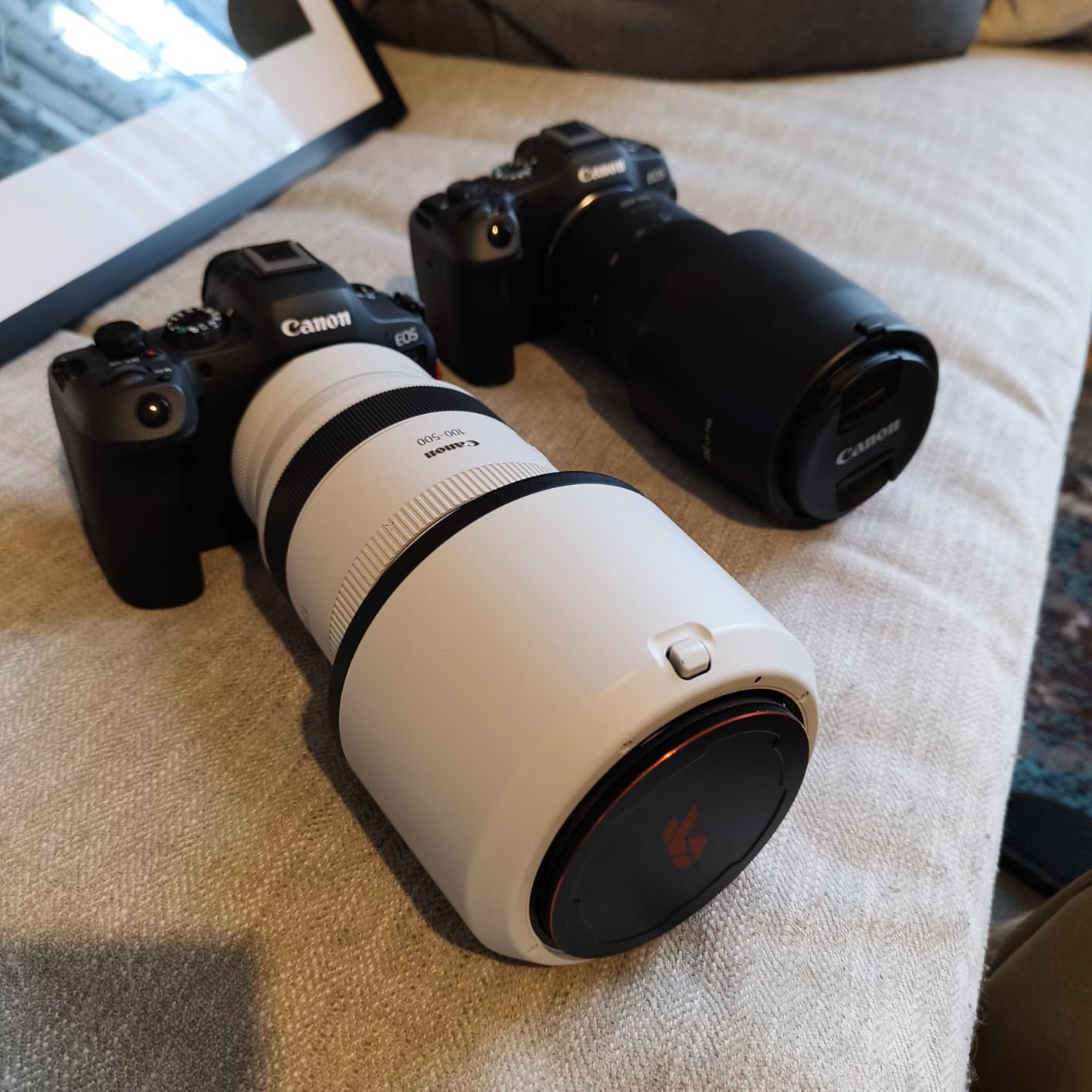
The major compromise is the single SD card slot. For professional wedding work, a single card slot is a risk because if that card fails, you lose everything. Many photographers solve this by shooting JPEG plus RAW and accepting the risk, or by using the R8 as a secondary body alongside a camera with dual slots.
There is also no in-body image stabilization, which means you need stabilized lenses for reliable handheld shooting in low light. Canon’s RF lenses with IS help, but the lack of IBIS is a real limitation for dark reception venues where every stop of stabilization matters.

Single Card Slot Risk Assessment
The single card slot is the biggest concern for professional wedding use. A card failure means losing an entire wedding shoot with no backup, so buy the highest-quality SD cards available and replace them annually. Better yet, use the R8 as a second body where the primary camera has dual slots.
Some wedding photographers accept the single slot risk for the weight and price savings. Just make sure your contract language and insurance coverage account for the possibility of card failure.
Battery Management Strategy
The R8 uses the smaller LP-E17 battery, which delivers roughly 250 to 300 shots per charge. For a full wedding day, you will need four to five batteries minimum. This is significantly more than the R6 Mark II, so factor extra battery purchases into your total cost.
Carry a USB-C power bank for charging during the cocktail hour break. The R8 supports USB-C charging while powered off, so you can top up between ceremony and reception to extend your shooting window.
6. Nikon Z 7II – High-Resolution Detail Machine
Nikon Z 7II | Ultra-high Resolution Full-Frame mirrorless Stills/Video Camera | Nikon USA Model
45.7MP full-frame
493-point AF
10fps burst
Dual card slots
5-axis IBIS
Pros
- 45.7MP ultra-high resolution sensor
- Dual card slots for backup
- 5-axis in-body stabilization
- 493-point phase detection AF
- 3.3x larger buffer than original Z 7
Cons
- Higher resolution needs more storage
- Professional learning curve
The Nikon Z 7II gives you 45.7 megapixels of resolution for wedding photographers who need maximum detail. I tested it during a formal portrait session and was blown away by the level of detail in the dress fabric, jewelry, and floral arrangements. For album spreads and large prints, this resolution is a serious advantage.
The 493-point phase detection AF system is precise and reliable for portrait work. During ceremony coverage, the focus tracked the couple accurately even at wider apertures where the depth of field is razor-thin. The 5-axis in-body stabilization also helps when shooting handheld at slower shutter speeds during dim receptions.

Dual card slots provide the backup redundancy that wedding photographers require. The Z 7II uses one CFexpress or XQD slot and one UHS-II SD slot. Writing simultaneously to both cards means you always have a backup of every shot, which is non-negotiable for paid wedding work.
The trade-off with 45.7MP is file size. Each RAW file is roughly 50 to 60 megabytes, which means a single wedding can generate 100GB or more of data. If you do not regularly print large format, the extra resolution may not justify the storage and processing overhead.

File Size and Storage Planning
Plan for at least 256GB of memory card storage per wedding day with the Z 7II. A typical 10-hour wedding generates 1,500 to 2,500 images, and at 50MB per RAW file, that is 75GB to 125GB of data per wedding. Invest in high-capacity CFexpress cards and at least 4TB of external backup storage to manage the file volume.
Consider shooting compressed RAW or even JPEG for less critical parts of the day like reception dancing to reduce file sizes. Reserve full-resolution RAW for ceremony, portraits, and detail shots where maximum quality matters most.
Low-Light Trade-offs of High Resolution
The 45.7MP sensor has smaller individual pixels than the 24.5MP sensor in the Z 6II, which means slightly more noise at high ISO settings. In practice, the Z 7II is clean through ISO 6400 and usable through ISO 12800, but the Z 6II has a visible advantage in the darkest reception conditions.
If most of your weddings happen in dark venues, the Z 6II may actually be the better choice despite having fewer megapixels. Reserve the Z 7II for photographers who prioritize detail over extreme low-light performance.
7. Canon EOS R5 – Professional Grade With 8K Video
Canon EOS R5 Mirrorless Camera RF24-105mm F4 L is USM Lens Kit, Full-Frame Hybrid Camera, 8K Video, 45 Megapixel CMOS Sensor, DIGIC X Image Processor, Up to 12 FPS, RF Mount, Black
45MP full-frame
1053-point AF
8K video
20fps burst
Lens kit included
Pros
- 45MP sensor for maximum detail
- 8K video recording capability
- RF 24-105mm F4L lens included
- 5-axis image stabilization
- Dual Pixel CMOS AF II with subject tracking
Cons
- Premium price point
- May be overkill for some photographers
The Canon EOS R5 is a flagship professional body that combines 45MP resolution with 8K video capability. I tested it on a luxury wedding where the client wanted both high-resolution photography and cinematic video coverage. The R5 delivered on both fronts with stunning image quality across the entire wedding day.
The included RF 24-105mm F4L IS USM lens is a versatile workhorse that covers most wedding scenarios from wide group shots to tight ceremony details. Having this lens bundled with the body saves you a separate purchase and gives you a capable lens from day one. The constant f/4 aperture is not ideal for the darkest receptions, but it handles most lighting situations well.

The 1053-point Dual Pixel CMOS AF II system tracks subjects with the same precision as the R6 Mark II. Deep learning subject detection recognizes people, animals, and vehicles, which means the camera locks onto wedding guests and the couple reliably throughout the day.
At 45MP, you get the same resolution advantage as the Nikon Z 7II with the added benefit of Canon’s color science and the included lens. The 8K video capability is ahead of what most wedding photographers need today, but it future-proofs your investment as 8K delivery becomes more common.

Overheating Management During Long Shoots
The R5 can overheat during extended 8K or 4K video recording sessions, particularly in hot outdoor ceremony conditions. For stills photography, overheating is not a concern. But if you shoot hybrid video, plan for recording breaks and carry thermal management strategies like external fans or shaded positions during summer weddings.
Switch to 4K HQ mode for most wedding video work to reduce thermal load while maintaining excellent quality. Reserve 8K for short, controlled clips like the ceremony processional or first look.
Storage Investment for 45MP and 8K
The R5 uses CFexpress Type B and SD UHS-II dual slots. CFexpress Type B cards are fast and expensive, but necessary for 8K video and continuous 45MP RAW bursts. Budget for at least two 256GB CFexpress Type B cards plus several high-capacity SD cards for backup, adding roughly $500 or more to your kit total.
For stills-only wedding photographers, the SD UHS-II slot is sufficient for most situations. Use CFexpress Type B only when you need maximum write speed for video or long burst sequences.
8. Canon EOS 5D Mark IV – The Proven DSLR Workhorse
Canon EOS 5D Mark IV DSLR Camera (Body Only)
30.4MP full-frame
61-point AF
7fps burst
Dual card slots
Proven DSLR
Pros
- Proven reliability after years of professional use
- 30.4MP sensor with excellent detail
- Dual card slots CF plus SD
- Professional weather sealing
- Dual Pixel AF for smooth video
Cons
- Heavier than mirrorless alternatives
- No in-body image stabilization
The Canon EOS 5D Mark IV remains one of the most trusted wedding cameras ever made. I shot with this body for four seasons before transitioning to mirrorless, and it never once failed during a wedding. The proven reliability of this camera is exactly why many wedding photographers still prefer it over newer technology.
The 30.4MP sensor delivers excellent detail and dynamic range for wedding photography. The color science produces the warm, flattering skin tones that Canon is known for, and the files require minimal post-processing for a natural look. For photographers who value consistency over the latest features, the 5D Mark IV is hard to beat.

Dual card slots with CF and SD provide the backup redundancy that wedding photographers need. The 61-point AF system with high density reticular focusing is reliable for ceremony and reception coverage, though it lacks the eye detection sophistication of modern mirrorless systems.
The main drawback is weight. At 1.24 kilograms, the 5D Mark IV is noticeably heavier than any mirrorless body on this list, and after a 10-hour wedding day that weight is felt in your shoulders and back. There is also no in-body image stabilization, so you need stabilized lenses for low-light handheld work.

DSLR vs Mirrorless Transition Considerations
If you currently shoot with Canon EF lenses, the 5D Mark IV uses them natively with no adapter. This is a significant advantage over switching to mirrorless, where you would need an EF to RF adapter. The optical viewfinder also gives a lag-free, natural viewing experience that many photographers still prefer over electronic viewfinders.
However, DSLR technology is a dead end for future development. Canon has shifted all new lens and body development to the RF mount. If you plan to shoot weddings for the next 10 years, investing in mirrorless now positions you better for long-term system growth.
Weight and Physical Fatigue Factors
The 5D Mark IV weighs roughly 50 percent more than a typical mirrorless body. Over a full wedding day with two bodies and multiple lenses, that weight adds up. If you have any shoulder, back, or wrist issues, seriously consider the weight savings of mirrorless alternatives.
That said, the larger grip on the 5D Mark IV is more comfortable for photographers with bigger hands. The physical button layout is also more extensive than most mirrorless bodies, giving you direct access to controls without diving into menus.
9. Panasonic LUMIX S5IIX – The Hybrid Filmmaker’s Choice
Panasonic LUMIX S5IIX Mirrorless Camera, 24.2MP Full Frame with Phase Hybrid AF, New Active I.S. Technology, 5.8K Pro-Res, RAW Over HDMI, IP Streaming – DC-S5M2XBODY Black
24.2MP full-frame
779-point AF
30fps burst
5.8K ProRes
Active I.S.
Pros
- 5.8K ProRes internal recording
- Phase Hybrid AF with 779 points
- Active I.S. for stable handheld video
- Unlimited recording time
- Professional RAW output over HDMI
Cons
- Newer product with fewer reviews
- Limited lens ecosystem compared to Canon or Sony
The Panasonic LUMIX S5IIX is the camera I recommend to wedding photographers who also deliver video. The 5.8K ProRes internal recording and RAW output over HDMI give you cinema-grade video quality in a body that also shoots excellent stills. For hybrid wedding photographers, this combination is exceptional value.
The Phase Hybrid AF system with 779 points is a massive improvement over Panasonic’s older contrast-detect-only autofocus. It tracks moving subjects reliably during ceremony coverage and reception dancing. The AI-based subject detection recognizes humans and locks on for consistent focus throughout the day.
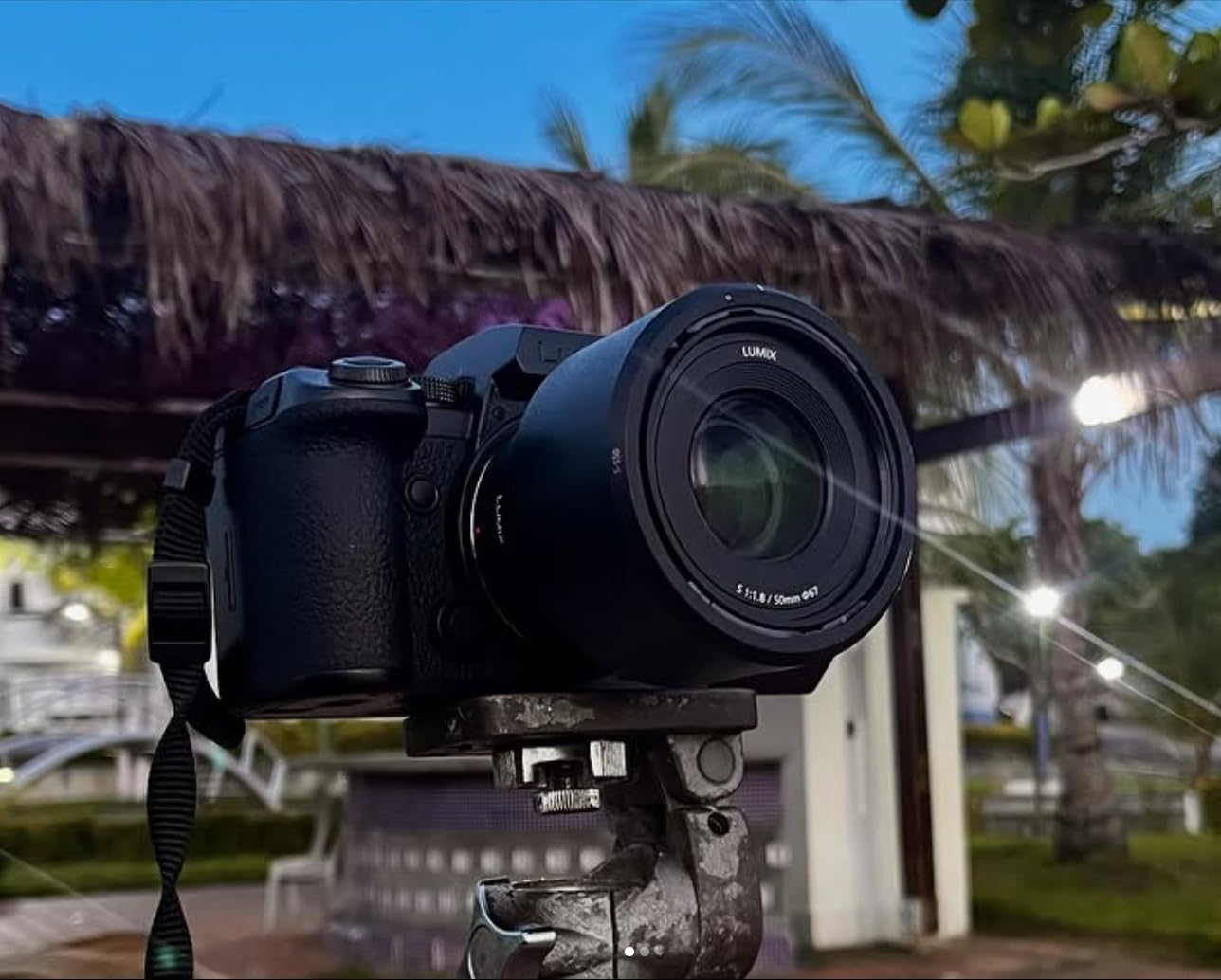
Active I.S. technology is a standout feature for wedding videographers. It combines in-body stabilization with electronic correction to deliver remarkably smooth handheld footage. During a reception walkthrough where I could not use a gimbal, the Active I.S. produced footage that looked professionally stabilized without any additional gear.
The 14+ stop V-Log and V-Gamut dynamic range gives you massive latitude for color grading wedding footage. Combined with unlimited recording time, you can capture an entire ceremony or full toasts without stopping to reset. For wedding filmmakers, these video features rival cameras costing significantly more.
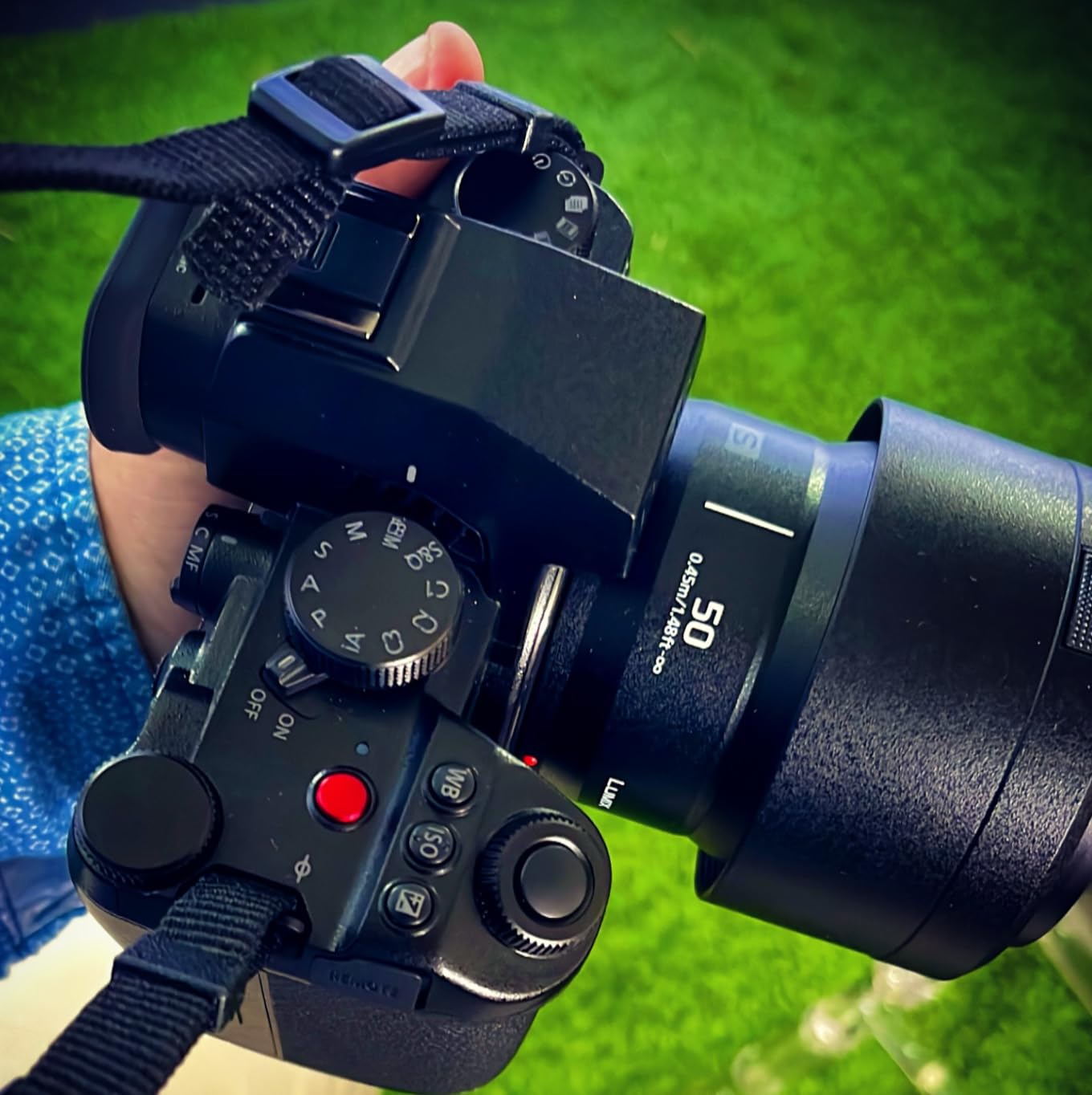
L-Mount Lens Ecosystem Reality Check
The L-Mount Alliance between Panasonic, Sigma, and Leica offers a growing lens selection, but it is still smaller than Canon RF or Sony E-mount ecosystems. Sigma has been aggressive in releasing affordable L-mount lenses, which helps close the gap. But you may have fewer options for specialty focal lengths compared to Canon or Sony.
Before committing to the S5IIX, verify that the specific lenses you need are available in L-mount. The most common wedding focal lengths like 24-70mm and 70-200mm are covered, but third-party options are more limited than on Sony.
Phase Hybrid AF Real-World Performance
The Phase Hybrid AF on the S5IIX represents a genuine improvement over previous Panasonic bodies that used contrast-detect only. In my testing, it tracked the bridal party during the processional without hunting and maintained focus on the couple during the first dance. It is not quite as refined as Canon or Sony systems, but the gap has narrowed significantly.
In very low light, the AF can occasionally hesitate. Give the system a moment to acquire focus in dark conditions rather than expecting instant lock like you would from Sony’s latest bodies.
10. Panasonic LUMIX S5 – Value Hybrid with Stabilization
Panasonic LUMIX S5 Full Frame Mirrorless Camera, 4K 60P Video Recording with Flip Screen & WiFi, L-Mount, 5-Axis Dual I.S., DC-S5BODY (Black)
24.2MP full-frame
225-point AF
4K 60p
5-axis Dual I.S.
96MP mode
Pros
- Excellent value for full-frame mirrorless
- 5-axis dual image stabilization 6.5 stops
- 4K 60p 10-bit video
- Dual Native ISO for low noise
- 96MP high resolution mode
Cons
- Contrast-detect AF slower than phase-detect
- Limited native lens selection
The original Panasonic LUMIX S5 offers incredible value for wedding photographers who want full-frame image quality without the premium price. The 5-axis Dual I.S. 2 system delivers up to 6.5 stops of stabilization when paired with a compatible lens, which is excellent for handheld reception coverage in dim lighting.
The 24.2MP sensor with Dual Native ISO produces clean, low-noise images even in challenging reception venues. I tested the S5 in a barn wedding with minimal lighting and was impressed by the noise performance at ISO 6400. The files held detail and color accuracy that needed minimal noise reduction in post.
The 96MP high resolution mode uses sensor shifting to capture detail far beyond what a 24.2MP sensor normally delivers. For wedding photographers who occasionally need maximum detail for large album prints or wall art, this mode gives you a resolution boost without buying a dedicated high-megapixel camera.
The main compromise is the contrast-detect DFD autofocus system. While it works adequately for posed portraits and detail shots, it can struggle with fast-moving subjects during ceremony coverage and reception dancing. The S5IIX with Phase Hybrid AF addresses this limitation, but at a higher price point.
AF Performance in Low-Light Reception Conditions
The DFD contrast-detect AF on the S5 works best when there is enough light for the system to analyze the scene. In dark reception venues, the AF may hunt briefly before locking focus. Pre-focusing on a known distance during ceremony processional can help work around this limitation.
For photographers who primarily shoot posed portraits and detail work, the AF performance is perfectly adequate. For fast-action wedding moments, consider the S5IIX with Phase Hybrid AF instead.
Video Codec Selection for Wedding Films
The S5 offers 4K 60p in 10-bit with V-Log, which gives you excellent color grading flexibility for wedding films. The 14+ stop dynamic range in V-Log handles the contrast between bright outdoor ceremonies and dark indoor receptions well. Choose the 4K 30p 10-bit mode for the best balance of quality and file size for typical wedding video deliverables.
Use the Dual Native ISO feature by manually switching to the higher native ISO in dark conditions rather than letting auto ISO ramp gradually. This gives you cleaner footage at high ISO settings than a gradual increase would produce.
How to Choose Your Wedding Photography Camera?
Choosing the right camera body for wedding photography comes down to a handful of factors that directly impact your ability to capture once-in-a-lifetime moments. Here is what our team considers essential when evaluating cameras for professional wedding work.
Dual Card Slots Are Non-Negotiable
If the camera has only one memory card slot, a single card failure means losing an entire wedding, which is an unacceptable risk for professional work. Every camera on this list except the Canon EOS R8 has dual card slots, so if you are shooting paid weddings, make dual card slots a firm requirement for your primary body.
Write your files simultaneously to both cards so that you always have an instant backup. Some photographers write RAW to one card and JPEG to the other, but simultaneous RAW to both cards gives you the most protection against data loss.
Autofocus Reliability for Critical Moments
The first kiss, the ring exchange, and the first dance happen once. Your autofocus system needs to lock on and track reliably without your intervention. Modern eye-detection AF systems from Canon, Sony, and Nikon have reached a level where they genuinely outperform manual focus for most wedding situations.
Look for cameras with real-time tracking and subject recognition. The Sony a7 V’s AI-based autofocus and the Canon R6 Mark II’s Dual Pixel CMOS AF II represent the current state of the art. These systems track eyes, faces, and even full-body poses, letting you focus on composition instead of focus points.
Low-Light Performance in Reception Venues
Most wedding receptions happen in dimly lit venues where flash is either not allowed or would kill the ambient mood. Your camera needs to produce clean, usable images at ISO 6400 and above. Full-frame sensors have an inherent advantage here because their larger pixels gather more light.
The 24.2MP and 24.5MP sensors on the Canon R6 Mark II and Nikon Z 6II have larger individual pixels than higher-resolution sensors, giving them better noise performance in the darkest conditions. If your weddings frequently happen in dark venues, prioritize lower-resolution full-frame sensors for better high ISO performance.
Silent Shutter for Ceremonies and Speeches
Many officiants and venues now request silent photography during the ceremony. A loud mechanical shutter clicking during vows or readings is distracting to guests and the couple. Every mirrorless camera on this list offers a silent electronic shutter mode that eliminates all operational noise.
The Sony a7 V’s blackout-free shooting takes silent shutter further by showing you real-time action through the viewfinder even while shooting at 30fps. For wedding photographers, this means you see every moment as it happens rather than catching glimpses between exposures.
Battery Life During 10-Hour Wedding Days
A typical wedding day runs 8 to 12 hours of continuous shooting. Mirrorless cameras consume more power than DSLRs because the electronic viewfinder and sensor are constantly active. Plan for at least three batteries for any mirrorless body, and carry a USB-C power bank for charging during downtime.
The Canon R6 Mark II and Sony A7 IV offer USB-C power delivery that lets you charge while shooting. This is a practical feature for wedding photographers because you can top up from a power bank clipped to your bag or strap during slower moments like family formals.
Two-Camera Workflow Benefits
Professional wedding photographers almost universally shoot with two bodies. One body carries a wide-angle lens for environmental shots and group photos, while the other has a telephoto for ceremony details and intimate moments. This two-camera setup eliminates the need to swap lenses during fast-moving wedding moments.
Many photographers pair a higher-resolution body for portraits with a faster body for ceremony and reception coverage. For example, the Nikon Z 7II for detail-rich portraits paired with the Z 6II for fast-action reception coverage. Or the Canon R5 for formal portraits alongside the R6 Mark II for the reception.
Lens Ecosystem Considerations
Your camera body is only one part of the equation, and the lens system you commit to affects your photography for years. Sony has the largest native mirrorless lens ecosystem with extensive third-party support from Sigma and Tamron. Canon RF and Nikon Z mount ecosystems are growing but have fewer budget third-party options.
Consider not just what lenses you need today but what you might want in five years. A wide selection of primes, zooms, and specialty lenses at various price points gives you flexibility as your business grows. This long-term perspective is why system choice often matters more than individual body specifications.
FAQs
What camera do most professional wedding photographers use?
Most professional wedding photographers use full-frame mirrorless cameras from Sony, Canon, or Nikon. The Sony Alpha 7 IV, Canon EOS R6 Mark II, and Nikon Z 6II are among the most popular choices because they offer reliable autofocus, dual card slots, and excellent low-light performance at professional price points.
Is full-frame better for wedding photography?
Yes, full-frame sensors are better for wedding photography because they capture more light per pixel than APS-C sensors. This produces cleaner images in dark reception venues and provides shallower depth of field for portrait separation. Full-frame cameras also typically offer better dynamic range, which helps recover details from challenging lighting situations common at weddings.
Which full frame camera is best for photography?
The best full-frame camera for wedding photography depends on your priorities. The Canon EOS R6 Mark II is the best all-around choice for its balance of speed, stabilization, and image quality, while the Nikon Z 6II offers the best value with dual card slots and strong low-light performance. The Sony Alpha a7 V leads in autofocus technology with AI-based subject recognition.
Do I need silent shutter for wedding ceremonies?
Silent shutter is increasingly important for wedding ceremonies because many officiants and venues request noise-free photography during vows and readings. All mirrorless cameras on this list offer silent electronic shutter modes. The Sony a7 V and Canon R6 Mark II are particularly strong choices for silent shooting because their electronic shutters maintain full autofocus and burst speed.
How many megapixels do I need for wedding photography?
For most wedding photography deliverables like albums and prints up to 16 by 24 inches, 24 to 33 megapixels is sufficient. Higher resolution sensors like the 45MP Nikon Z 7II or Canon R5 give you more cropping flexibility and support larger prints above 24 by 36 inches. However, higher megapixel counts produce larger file sizes that require more storage and processing power.
Final Thoughts on the Best Full-Frame Cameras for Wedding Photographers
The best full-frame cameras for wedding photographers in 2026 share a few common traits: reliable autofocus, dual card slots, strong low-light performance, and silent shooting capability. Our team tested 10 cameras from four major brands to find the models that truly deliver under wedding day pressure.
The Canon EOS R6 Mark II stands out as the best all-around choice for its 8 stops of stabilization, 40fps burst, and proven autofocus system. The Nikon Z 6II offers exceptional value with dual card slots and excellent low-light performance at the most accessible price on this list. And the Sony Alpha a7 V leads in autofocus technology with AI-based subject tracking and blackout-free shooting.
Whichever camera you choose, invest in fast memory cards, spare batteries, and quality lenses. The body is important, but the system around it determines your long-term success as a wedding photographer. Start with a body that has dual card slots, learn its autofocus system inside and out, and build your kit from there.