
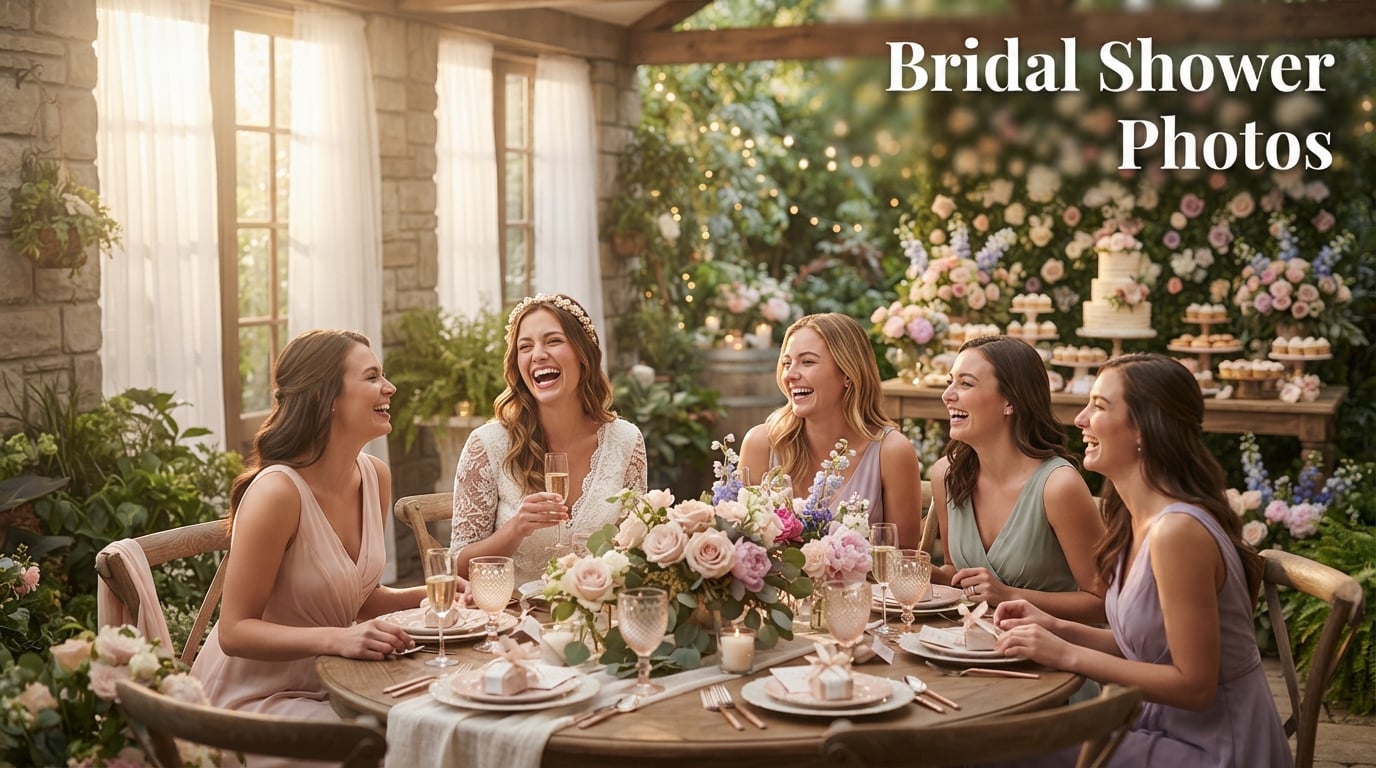
A bridal shower is one of the most emotion-filled events on the wedding calendar. Laughter, happy tears, surprises, and the bride-to-be surrounded by her closest people — these moments deserve more than a few phone snapshots. Great bridal shower photos preserve a once-in-a-lifetime celebration that the bride will look back on for decades.
Our team has shot dozens of bridal showers, from intimate backyard gatherings to formal country club luncheons. Along the way we have refined a shot list, a workflow, and a set of technical habits that consistently produce images clients love. This guide shares everything we have learned so that whether you are a bride planning your day, a friend helping out, or a professional adding bridal showers to your services, you walk in prepared.
You will find a categorized must-have shot list, posing ideas for groups and the bride, lighting and camera settings that work in real-world venues, a recommended coverage timeline, the trends shaping 2026 showers, and answers to the questions brides and photographers ask us most. By the end, you will know exactly how to take bridal shower photos that tell the full story of the day.
Table of Contents
Essential Bridal Shower Photos: Your Must-Have Shot List
The best bridal shower photos tell a complete story, from the quiet details before guests arrive to the last hug goodbye. A structured shot list keeps you organized on a fast-moving day and guarantees nothing important slips through the cracks.
Here is the bridal shower photo checklist our team works from on every event:
Detail Shots (capture before guests arrive)
- The invitation, program, and any signage at the entrance
- Full room overview showing the theme and decor
- Table settings, place cards, and centerpieces
- The cake, dessert table, and any signature drink station
- Favors, ribbons, and themed props
- The bride-to-be sash, crown, or chair decoration
People Shots
- Bride alone, full length and portrait
- Bride with her mother and future mother-in-law
- Bride with bridesmaids as a group and in smaller clusters
- Bride with the host or hosts of the shower
- Bride with each set of grandparents
- Couples or family groupings among the guests
Action and Storytelling Shots
- Guests arriving and greeting the bride
- The toast or speech, including the speaker and reactions
- Games and activities with mid-laughter expressions
- Gift opening, with reaction shots and close-ups of tags and wrapping
- The bride holding up a favorite gift
- Cake cutting or dessert moment
- Group photo of all guests with the bride
Print this list or save it to your phone before the event. Checking items off as you go frees your attention for the candid moments that no list can predict. These are the bridal shower photos every gallery should include, and they form the backbone of any coverage package.
Preparation Tips Before the Event
Great bridal shower photography starts days before the actual shower. The photographers who consistently deliver strong galleries are the ones who show up prepared, not the ones winging it on the day.
Have a Real Conversation With the Bride or Host
Ask the host about the schedule, the must-capture moments, any family dynamics to be aware of, and what the bride is most excited about. A 10-minute call reveals the shots that matter most to this particular bride. Find out who the VIPs are — usually mothers, grandmothers, and the bridal party — and make sure they appear in multiple frames.
Build and Share a Shot List
Send the bride a short checklist a week ahead and ask her to mark the groups she wants photographed. Having her input ahead of time means you are not chasing down a shy grandmother mid-event. It also gives the host a chance to mention groupings you would never have known about, like college roommates or a beloved aunt flying in from out of state.
Scout the Venue (Even Virtually)
If you cannot visit in person, ask the host for photos of the space and note the window locations, ceiling height, and wall colors. Ceiling height matters because it determines whether you can bounce flash. Wall color matters because a green or yellow wall will tint your bounced light. Knowing this in advance shapes your gear choices.
Pack a Gear Checklist
Our standard bridal shower kit includes two camera bodies, a 24-70mm f/2.8 as the workhorse, a 70-200mm for candids from across the room, a fast 35mm or 50mm prime for detail shots, two flash units, extra batteries and memory cards, a reflector, and lens-cleaning supplies. Pack the night before, charge everything, and format your cards. Running out of battery 20 minutes into gift opening is a mistake you only make once.
Capturing Details and Decor
Detail shots are the warm-up of every bridal shower shoot, and they are also the images brides pin, share, and send to vendors. Arrive 30 to 45 minutes before guests to photograph the room while it is still pristine. Once the party starts, the decor gets messy fast.
Work quickly and methodically. Start wide with overall room shots that show the full theme. Then move in for medium shots of each table, the dessert spread, and the gift area. Finally, get tight macro-style shots of the small touches — the place cards, the favor tags, the ribbon on the bride’s chair.
Natural window light is your best friend for details. Position items near a window and shoot at f/2.8 to f/4 to softly blur the background. Use a small reflector or a piece of white foam board to bounce light back into shadowed sides. Avoid on-camera flash for details — it flattens textures and kills the soft, magazine-style look brides love.
Vary your angles. Shoot the cake straight on, from a 45-degree angle, and from above. Photograph the place settings both flat lay style and from the side. Different angles give you options during editing and let the bride choose the framing that matches her aesthetic.
Group Photos and Posing Guide
Group shots are the images most likely to be framed, so invest time in getting them right. The good news is that bridal shower groups are usually smaller and more relaxed than wedding-day formals, which gives you room to play with posing.
Bride With Bridesmaids
Start with a clean standing pose: bride in the center, bridesmaids in a soft V on either side, slightly staggered so everyone’s face is visible. Then loosen it up. Have the bridesmaids link arms with the bride, or have them all turn and look at her while she laughs. The “everyone looking at the bride” shot almost always beats the staged smile version.
Bride With Mother and Grandmothers
These are emotional frames that families treasure. Pose the bride seated with her mother standing behind her, hand on her shoulder. For grandmothers, get a seated three-generation shot if possible. Use a longer lens and a wider aperture to soften the background and keep the focus on the faces.
The Full Guest Group Photo
This is the shot nobody wants to mess up. Use a wide angle, find elevated ground (a staircase, a balcony, or a sturdy chair) so you can shoot down slightly and see every face, and take at least five frames. Count to three out loud, but also fire a frame right before you say three — that is often the one with the most natural smiles.
Casual Pairs and Small Clusters
Not every group shot needs to be formal. Pull friends aside for two- and three-person casual shots during mingling time. Pose them close, arms around each other, looking at the camera and then at each other. These smaller groupings are usually a bride’s favorites because they capture real friendships.
Candid Moment Photography
Candids are the heartbeat of any bridal shower gallery. They capture the personality of the day in a way posed shots cannot. The challenge is being present enough to catch them without being intrusive enough to kill them.
Use a longer lens for candid work. A 70-200mm lets you shoot across the room and stay invisible, which produces the most genuine expressions. Wide-angle candid work has its place too, especially during high-energy moments like games, but it tends to make people self-conscious.
Anticipate the moment. Watch for the buildup — the bride’s face as she starts opening a gift, the friend raising her glass before a toast, the grandmother leaning in to whisper something. Press the shutter a beat before you think you need to. By the time the obvious moment happens, you already have the frames leading up to it.
Shoot in bursts. Genuine reactions last a fraction of a second, and the difference between a great smile and an awkward blink is often one frame. Three or four frames per moment gives you something usable every time.
Move quietly and dress the part. Dark, neutral clothing helps you blend in. Avoid standing front and center during emotional moments. Find a corner, work the edges of the room, and let the action come to you.
Reddit photographers consistently note that getting genuine reactions versus posed smiles is one of their biggest challenges. The fix is patience. Stay with a moment longer than feels comfortable, and the real emotion will surface once people forget the camera is there.
Gift Opening Photography Tips
Gift opening is the longest single activity at most bridal showers, and it produces some of the most memorable bridal shower photos of the day. It is also the hardest part to photograph well, because the bride is usually seated, distracted, and looking down.
Position yourself for two angles. Shoot over the bride’s shoulder to capture the gift and her reaction in the same frame, then move to the front to get her face as she opens it. Rotate between the two throughout the session.
Pay attention to the gift givers. The reaction of the person who gave the gift is often as powerful as the bride’s. Frame both faces when possible, or shoot the giver watching the bride open their gift — that anticipation shot is gold.
Capture the details. Get close-ups of the wrapping paper, the ribbons, the tags, and the cards. Many brides keep these and love having photos of them. The bouquet of bows the bride often makes is a fun final shot.
Use continuous light or bounce flash rather than direct flash. The bride is looking down into shadowed wrapping paper, so you need light, but direct flash creates ugly highlights on glossy paper and kills the warmth of the moment. Bounce off the ceiling or a nearby wall to soften the source.
Finally, shoot the reactions of the audience. The grandmothers, the bridesmaids, the mothers — they are all watching and reacting. Some of our most-shared gift-opening shots are not of the bride at all but of her grandmother laughing at a gag gift.
Technical Tips for Bridal Shower Photography
Bridal showers throw a wide range of lighting situations at you in a single afternoon. Mastering a few core technical habits will get you consistently clean images regardless of the venue.
Master the Light You Have
Window light is the most flattering light source at most showers. Position subjects so the window is to their side or slightly behind you, never directly behind them. If you have to shoot into a window, expose for the faces and let the background blow out — the bright, airy look is popular and forgiving.
When natural light is not enough, bounce flash is the move. Aim your flash head at a white ceiling or a nearby white wall at a 45-degree angle. The bounced light arrives soft and directional, mimicking window light. Practice this at home before the event — bounce flash takes some trial and error to dial in.
Avoid direct on-camera flash whenever possible. It produces flat, harsh light, red-eye, and unflattering shadows behind your subjects. If you have no bounce surface, use a small softbox diffuser or angle the flash up and use a bounce card.
Camera Settings That Work
For most of the day, shoot in RAW format. RAW gives you the latitude to recover highlights and shadows during editing, which matters when you are working in tricky mixed light. JPEG is fine if you are an amateur shooting for fun, but for client work, RAW is non-negotiable.
A solid starting exposure is aperture priority at f/2.8 to f/4, auto ISO capped at 6400, and a minimum shutter speed of 1/125 for posed work and 1/250 or faster for candids. Open up to f/1.8 or f/2 on a prime lens for detail shots and portraits where you want that buttery background blur.
Set a custom white balance or shoot a gray card at the start of the event. Indoor lighting is often a mix of daylight from windows and warm tungsten from fixtures, which can produce ugly color casts. Getting white balance right in-camera saves hours of editing later.
Lenses and Gear Recommendations
The 24-70mm f/2.8 is the workhorse lens for bridal shower photography. It covers wide group shots at 24mm and tight portraits at 70mm without forcing a lens change. If you only bring one lens, this is the one.
Add a 70-200mm f/2.8 for candids. The compression and reach let you work unobtrusively across the room, and the shallow depth of field at f/2.8 produces beautiful separation between subject and background.
A fast prime like a 35mm f/1.4 or 50mm f/1.8 is perfect for detail shots and intimate portraits. The wider aperture lets you shoot in lower light and produces the soft bokeh that makes detail shots look editorial.
Bring two flash units if your venue needs them, plus a reflector for bouncing fill light onto faces during posed portraits. Spare batteries, extra memory cards, and lens-cleaning cloths round out the kit.
Bridal Shower Photography Trends for 2026
Bridal shower aesthetics evolve every year, and the trends shaping 2026 showers create fresh photo opportunities that older guides do not cover. Knowing the trends helps you anticipate shots and gives brides images that feel current.
Cottagecore and garden-party themes remain popular. Think wildflower arrangements, vintage china, outdoor settings, and a soft pastel palette. These showers beg for natural light, wide environmental shots, and detail photography that captures the romantic, lived-in styling.
Mediterranean and coastal themes are on the rise, with lemon and olive accents, blue-and-white ceramics, and lots of texture. Lean into bright, sun-drenched exposures and capture the layered tablescapes that define this look.
Palm Springs and retro desert themes bring bold colors, geometric shapes, and poolside settings. These showers handle saturated color and high contrast well. Embrace hard light for part of the day — it suits the aesthetic.
The Disco Bride aesthetic is a fun, high-energy trend with metallics, mirror balls, and statement glamour. This is the moment for dramatic lighting, reflections, and playful candids during dancing.
Beyond theme trends, photo delivery is shifting too. Brides expect fast turnaround for social sharing, with sneak peeks within 24 to 48 hours and full galleries within two to three weeks. Offering a quick preview gallery is now table stakes, not a premium add-on.
Bridal Shower Photography Timeline
Most bridal showers run two to four hours, and a clear timeline ensures you cover every part of the story without burning out. Here is the coverage structure our team uses for a typical three-hour shower.
45 minutes before start: Arrive, scout the light, and shoot all detail and decor shots while the room is pristine. Photograph the bride getting ready if she is open to it.
First 30 minutes: Capture arrivals and greetings. These are candid gold. Shoot wide environmental shots of the room filling up and tight portraits of guests hugging the bride.
Middle of the event: Cover the toast, games, and any planned activities. This is when group shots are easiest because everyone is gathered. Pull the bride aside for portraits and small group shots between activities.
Final hour: Gift opening is usually the longest stretch. Rotate angles throughout, capture giver reactions, and shoot the details of each gift. Close with the full group photo before guests start leaving.
Last 15 minutes: Goodbye hugs, the bride with the leftover cake or favors, and any final portraits in the now-empty room. These quiet ending shots bookend the gallery beautifully.
Tips for Amateur Photographers
Many bridal showers are photographed by a friend or family member rather than a professional. If that is you, these practical tips will help you produce photos the bride will genuinely treasure.
Charge everything the night before and bring spares. Bring more memory cards than you think you need. A dead battery or a full card 30 minutes in is the most common amateur mistake.
Shoot in RAW if your camera allows it, or at least the highest-quality JPEG setting. Do not worry about getting every setting perfect in-camera — modern editing software can rescue a lot, but only if you give it quality files to work with.
Work the shot list from earlier in this guide. Having a checklist keeps you from freezing up when the action starts. Print it, keep it in your pocket, and check things off as you go.
Natural light beats flash almost every time. Position yourself so windows are behind you or to your side. If you must use flash, bounce it off a white ceiling rather than firing it straight at your subjects.
Take more frames than feels reasonable. Memory is cheap; missed moments are not. Shoot in burst mode during emotional moments like the toast and gift opening.
Finally, remember you are also a guest. The bride asked you because she trusts your eye and your presence. Be present, enjoy the shower, and capture what moves you. Some of the best amateur bridal shower photos come from someone who simply cares about the people in the room.
Common Bridal Shower Photography Mistakes to Avoid
Even experienced photographers slip into these traps. Awareness is half the battle.
- Skipping the detail shots. Once guests arrive, the room changes forever. Arrive early or you will miss the decor images brides want most.
- Shooting only from the front. The bride’s face during gift opening is great, but so is the reaction of the giver and the audience. Move around.
- Using direct flash. It flattens faces and creates harsh shadows. Bounce whenever possible, or move subjects toward window light.
- Forgetting the group photo. It is the one shot every guest wants. Do it early while everyone is fresh, not at the end when people have left.
- Ignoring family dynamics. Ask the bride ahead of time about divorced parents, estranged relatives, or anyone who should not be posed together. Sensitivity here saves awkward moments later.
- Not backing up cards during the event. Copy images to a laptop or cloud backup at the first break. A lost or corrupted card is a disaster you cannot fix.
- Over-editing. Bridal shower galleries look best with clean, natural editing. Heavy filters and oversaturated skin tones age badly.
Frequently Asked Questions About Bridal Shower Photos
Do you display photos at a bridal shower?
Yes, displaying engagement or childhood photos at a bridal shower is a popular tradition. Many brides set up a memory table with framed photos of the couple, or string printed photos along a banner or clothesline as decor. Engagement photos are the most common choice, but childhood and family photos also work well. Keep displays tasteful and coordinated with the shower theme.
What are the bridal shower trends for 2026?
The top 2026 bridal shower trends include cottagecore garden-party themes with wildflowers and vintage china, Mediterranean and coastal aesthetics with lemon and olive accents, retro Palm Springs desert styling with bold colors, and the disco bride look featuring metallics and mirror balls. Couples showers, activity-based showers like cooking classes or spa days, and quick social-ready sneak peek photo delivery are also trending.
How many hours is a bridal shower usually?
Most bridal showers run two to four hours, with three hours being the average. Plan for photography coverage to start about 45 minutes before guests arrive for detail and decor shots, and to continue through gift opening, which typically takes the final hour of the event.
What is the current trend for bridal showers?
The current trend blends personalization with experience-driven events. Couples showers where both partners attend are growing, themed showers built around activities like floral arranging or wine tasting are popular, and aesthetics like cottagecore, Mediterranean, and Palm Springs dominate 2026 styling. Fast photo delivery for social sharing is also now expected.
Should I hire a professional photographer for a bridal shower?
Hiring a professional ensures consistent quality, complete coverage of the shot list, and a polished final gallery. For brides who want to fully enjoy the day without worrying about photos, a professional is worth the investment. For budget-conscious celebrations, a trusted friend or family member with a good camera and a shot list can produce lovely results, especially for smaller, casual showers.
How much does bridal shower photography typically cost?
Bridal shower photography pricing varies widely by region, experience level, and coverage length. Amateur or hobbyist photographers often charge in the $100 to $300 range for a few hours, while established professionals typically charge $500 to $1,500 or more for full coverage with editing and an online gallery. Pricing reflects the photographer’s experience, deliverables, and local market.
Final Thoughts on Bridal Shower Photos
Beautiful bridal shower photos come down to preparation, presence, and a willingness to anticipate moments rather than chase them. A solid shot list, the right gear, comfortable lighting habits, and a clear timeline will carry you through any venue and any theme.
The trends may shift from cottagecore to disco bride to whatever comes next, but the human moments at the center of every shower never change. The bride laughing with her mother, the grandmother watching the gift opening, the friends squeezed together for a group shot — these are the frames that matter. Use this guide as your starting point, then bring your own eye and heart to the day.
Whether you are shooting your first bridal shower or your fiftieth, the goal is the same: tell the story of a celebration that happens once. Show up prepared, stay present, and let the day unfold. The bridal shower photos that result will be treasured for a lifetime.