
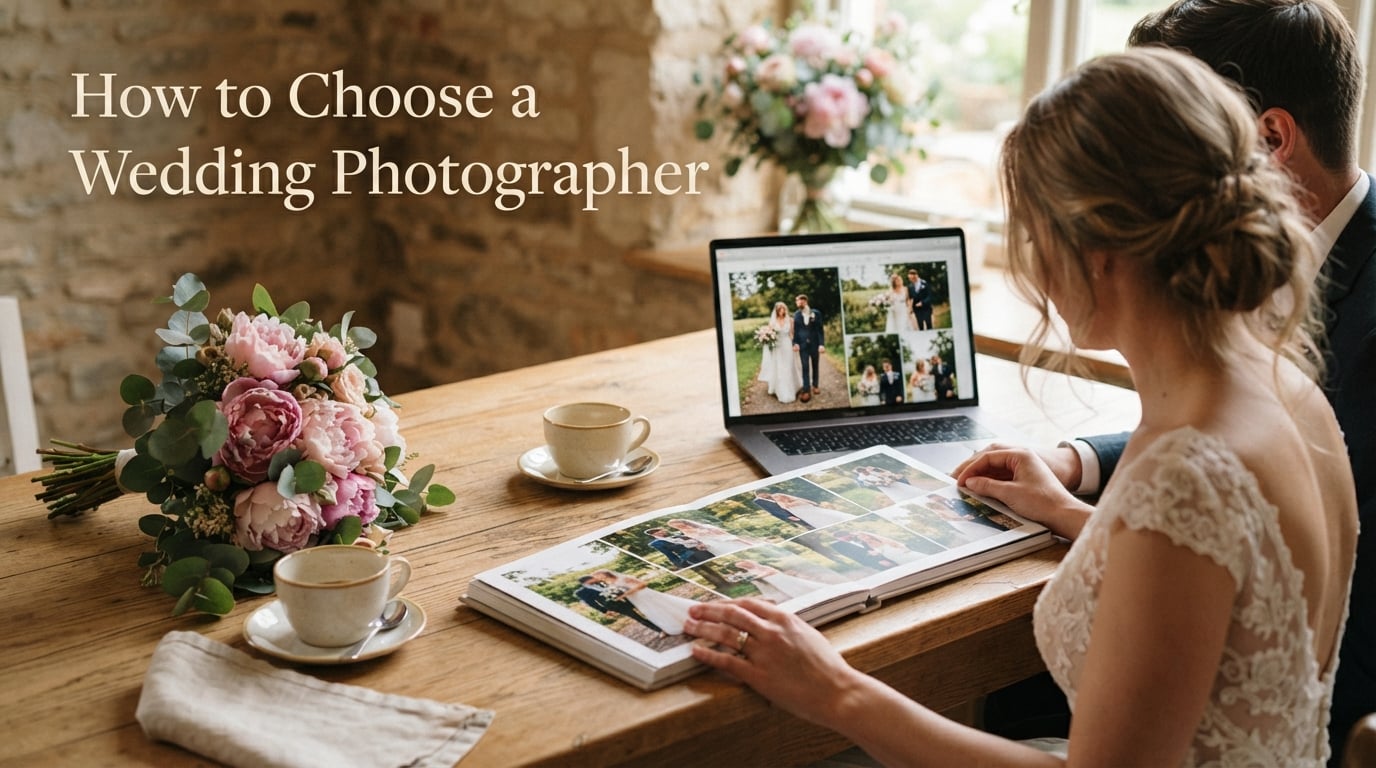
Picking the right wedding photographer feels overwhelming when you first start looking. You’ll see dozens of beautiful portfolios, get referrals from friends, scroll through vendor directories, and still feel unsure about who to trust with documenting one of the most important days of your life.
I’ve helped hundreds of couples through this exact decision, and I can tell you this: the photographer you choose matters more than almost any other vendor. Your flowers wilt within days, the cake gets eaten, but your wedding photos are what you’ll show your kids and grandkids decades from now.
This guide walks you through how to choose a wedding photographer with confidence. We’ll cover photography styles, portfolio evaluation, pricing expectations, the questions you should ask, and the warning signs that should send you running. By the end, you’ll have a clear framework for comparing your options and picking someone whose work you’ll love forever.
Table of Contents
Understanding the Main Wedding Photography Styles
Before you can choose the right photographer, you need to know what kind of photography you actually want. Most wedding photographers specialize in one or two styles, and these styles produce wildly different looking galleries. Picking a style you love is the foundation of how to choose a wedding photographer you’ll be happy with.
Light and Airy Photography
Light and airy photography features bright, soft, pastel-toned images with lots of natural light and gentle shadows. Colors lean toward whites, creams, soft pinks, and warm neutrals.
This style works beautifully for outdoor ceremonies, garden weddings, and couples who want a romantic, dreamy feel. The editing tends to lift shadows and create an ethereal atmosphere that feels timeless and uplifting.
Dark and Moody Photography
Dark and moody photography embraces deeper shadows, rich colors, and dramatic contrast. The aesthetic feels cinematic and emotional, with blacks that look deep and colors that feel saturated.
This style suits fall and winter weddings, indoor venues with character, and couples who want their gallery to feel artistic and bold. If you love film photography or editorial magazines, this is likely your style.
Classic and True-to-Life Photography
Classic wedding photography captures moments with accurate colors, balanced exposure, and minimal heavy editing. Skin tones look natural, whites look white, and the photos reflect what your day actually looked like.
Choose this style if you want a gallery that ages well and feels true to memory. It’s a popular choice for traditional ceremonies and couples who prefer timeless images over trendy editing.
Documentary and Photojournalistic Photography
Documentary wedding photography focuses on candid moments, real emotions, and storytelling rather than posed shots. The photographer acts as an observer, capturing what unfolds naturally throughout your day.
This style works for couples who feel awkward in front of the camera or who value authentic moments over perfectly posed portraits. Expect fewer family-formal setups and more tear-filled glances, dancing grandparents, and genuine laughter.
Fine Art Wedding Photography
Fine art photography combines intentional composition, thoughtful posing, and curated editing to create images that look like they belong in a magazine. The photographer directs scenes carefully and edits with a distinctive artistic vision.
This style suits couples planning styled weddings with intentional details, fashion-forward attire, or venues with strong architectural elements. The resulting gallery feels curated and cohesive.
How to Evaluate a Wedding Photographer’s Portfolio
Once you know your preferred style, you need to evaluate whether a photographer actually delivers that style consistently. This step separates good photographers from great ones and is critical when learning how to choose a wedding photographer who will produce the results you want.
Request Full Wedding Galleries
Every photographer’s website shows their best 50 images. That’s not enough to evaluate their real performance. Ask to see two or three full, unedited wedding galleries from recent weddings similar to yours in size, venue type, and lighting conditions.
A full wedding gallery typically contains 400 to 800 images covering everything from getting ready through the reception. Look at how the photographer handles tricky lighting, group photos, dancing, and quiet moments. Consistency across a full day matters far more than a curated highlight reel.
Look for Consistency Across Lighting Conditions
Wedding venues present a brutal mix of lighting challenges: dark churches, bright outdoor ceremonies, dim reception halls, and colorful reception lighting. A strong wedding photographer navigates all of these without losing image quality.
When reviewing galleries, pay attention to indoor ceremony shots, sunset portraits, and dance floor images. If those look as polished as the outdoor portraits, you’ve found someone with real technical skill.
Examine Composition and Emotion
Technical quality gets you in the door, but composition and emotion are what make a gallery unforgettable. Look for creative angles, intentional framing, and moments that capture genuine feeling rather than forced smiles.
The best wedding photographers anticipate moments before they happen. You’ll see this in how they capture a father’s expression during the first look or a grandmother tearing up during the vows. If those moments appear throughout the gallery, you’ve found a photographer with real storytelling ability.
Budget and Pricing: What to Expect
Wedding photography pricing varies wildly based on location, experience, and what’s included. Knowing the typical range helps you set realistic expectations and avoid overpaying or underinvesting.
Average Wedding Photographer Pricing
In 2026, most couples spend between $2,500 and $6,000 on wedding photography. In major metro areas like New York, Los Angeles, or Chicago, expect to pay $4,000 to $10,000 or more for an experienced wedding photographer. Smaller markets and rural areas often range from $1,800 to $4,000.
This typically covers 8 to 10 hours of coverage, a second shooter, an edited digital gallery, and print release. Albums, engagement sessions, and additional hours usually cost extra.
What Affects Photographer Pricing
Several factors influence what photographers charge. Experience plays a major role: photographers with 10+ years and full wedding portfolios command premium rates. Location matters too, since cost of living and market demand affect pricing significantly.
Package inclusions also affect cost. A photographer who delivers 800 edited images, an engagement session, a second shooter, and a wedding album charges more than someone delivering 400 images and digital files only. Higher price doesn’t always mean better photos, but it often reflects more comprehensive service.
Questions to Ask a Wedding Photographer Before Booking
The right questions reveal whether a photographer is experienced, professional, and a good fit for your day. Skipping this step is one of the biggest mistakes couples make when learning how to choose a wedding photographer.
Availability and Logistics Questions
Start by confirming their availability for your specific date. Popular wedding photographers book 12 to 18 months in advance, especially for Saturday weddings in peak season.
Ask who will actually photograph your wedding. Some studios have multiple photographers, and the person you meet might not be the one shooting your day. Confirm you’ll have the lead photographer you hired, not a lesser-experienced associate.
Style and Experience Questions
Ask how many weddings they’ve photographed in the past year. A photographer shooting 40+ weddings annually has real wedding experience; someone shooting 5 weddings a year may still be developing their skills.
Request examples of weddings at venues similar to yours. A photographer who excels at outdoor garden weddings may struggle in a dark cathedral. Venue-specific experience matters more than general experience.
Package and Delivery Questions
Ask how many edited images you’ll receive and the typical delivery timeline. Most photographers deliver 50 to 100 images per hour of coverage within 8 to 12 weeks after the wedding.
Clarify what’s included in the package: hours of coverage, number of photographers, engagement session, digital files, print release, album, and travel fees. Get everything in writing before signing.
Red Flags to Watch For When Hiring a Wedding Photographer
Knowing the warning signs saves you from disappointment, broken contracts, and lost memories. These red flags appear often enough that every couple should know what to look for.
Lack of Full Galleries
If a photographer refuses to show full wedding galleries or only sends curated highlights, that’s a serious red flag. It usually means their actual work doesn’t match what they display on their website.
A confident, experienced photographer will gladly share full galleries because they trust their consistency. Hesitation or excuses at this stage should send you elsewhere.
Poor Contract Terms
A vague or missing contract is a deal-breaker. Your contract should clearly state the date, hours of coverage, number of photographers, deliverables, timeline, cancellation policy, and what happens if the photographer can’t perform due to illness or emergency.
Photographers without backup plans or who won’t commit to specific terms in writing create unnecessary risk for your wedding day.
Unprofessional Communication
Slow responses, missed calls, or vague answers during the booking process predict how they’ll communicate during your wedding planning. If they’re hard to reach now, imagine how frustrated you’ll feel six months before your wedding.
Pay attention to how they handle your initial inquiry. Responsive, organized communication early on suggests they’ll be reliable when it matters most.
When to Book Your Wedding Photographer
Booking timing affects both availability and pricing. Waiting too long limits your options or forces you into premium rush rates.
Standard Booking Timeline
Most couples book their wedding photographer 9 to 12 months before the wedding. Popular photographers book 12 to 18 months ahead, especially for Saturday weddings during May through October.
If your wedding is less than 6 months away, expect limited availability. Last-minute bookings often cost more because photographers have to shuffle schedules or turn down other clients.
Peak Season Considerations
Spring, summer, and fall Saturdays book fastest. Winter weddings and Friday or Sunday weddings often have more photographer availability and sometimes lower rates.
If you have flexibility on your wedding date, consider an off-peak season or weekday celebration. You’ll have access to top photographers who might otherwise be booked solid.
How to Compare Multiple Wedding Photographers Side by Side
Most couples meet with 3 to 5 photographers before making a decision. Without a clear comparison framework, those conversations blur together and leave you more confused than when you started.
Building a Comparison Spreadsheet
Create a simple spreadsheet with each photographer as a column and evaluation criteria as rows. Include: price, hours of coverage, number of shooters, image count, delivery timeline, album included, engagement session, print release, and contract terms.
Add a personal notes row where you record your gut feeling after meeting each photographer. That column often becomes the deciding factor once the numbers are equal.
Personality and Connection Importance
Your wedding photographer spends more time with you on your wedding day than almost anyone except your partner. Chemistry matters.
You’ll be sharing vulnerable moments, taking direction during portraits, and trusting them to navigate family dynamics. A photographer whose personality rubs you the wrong way will create awkward photos and a stressful experience, even if their portfolio is gorgeous.
Schedule in-person or video consultations with your top 2 or 3 candidates. Pay attention to how they listen, how they respond to your ideas, and whether you feel at ease around them. That comfort translates directly into more natural, relaxed photos.
Understanding Package Inclusions
Comparing package details is where most couples get tripped up. A $3,000 package with an engagement session, album, and second shooter delivers more value than a $3,000 package with digital files only.
Calculate the actual value of each inclusion. An engagement session alone might be worth $500. A wedding album could be worth $1,000. A second shooter adds coverage of two perspectives simultaneously, which can be invaluable during the ceremony and reception.
Ask photographers to itemize their packages so you can compare apples to apples. The cheapest base price often excludes the features that matter most.
Frequently Asked Questions About Choosing a Wedding Photographer
How much should I expect to spend on a wedding photographer?
Most couples spend between $2,500 and $6,000 on wedding photography in 2026. Major metro areas often run $4,000 to $10,000, while smaller markets typically range from $1,800 to $4,000. This usually covers 8 to 10 hours of coverage, a second shooter, edited digital files, and print release. Engagement sessions, albums, and additional coverage hours are usually add-ons.
How early should I book my wedding photographer?
Book your wedding photographer 9 to 12 months before your wedding date. Popular photographers book 12 to 18 months in advance, especially for Saturday weddings during peak season from May through October. If your wedding is less than 6 months away, expect limited availability and potentially higher rush rates.
What is the difference between a highlight reel and a full wedding gallery?
A highlight reel is a curated selection of 30 to 80 best images from a wedding, carefully chosen to showcase the photographer’s strongest work. A full wedding gallery contains 400 to 800+ images covering every moment of the day from getting ready through the reception. Full galleries reveal consistency, technical skill across lighting conditions, and what you’ll actually receive as a client.
Should I include a second shooter in my wedding package?
Yes, a second shooter is valuable for most weddings with 80 or more guests. They capture simultaneous moments like the bride walking down the aisle while the groom reacts, or two angles of the first dance. Second shooters also provide backup if equipment fails and help cover both getting-ready locations efficiently. The added coverage usually justifies the additional $500 to $1,500 cost.
What should I look for in a wedding photographer’s contract?
Your contract should specify the wedding date, hours of coverage, number of photographers, exact deliverables (image count, album, digital files), delivery timeline, cancellation and rescheduling policies, backup photographer provisions, and what happens if the photographer cannot perform. Vague contracts or missing terms are red flags. Read every detail before signing and ask questions about anything unclear.
Final Thoughts on How to Choose a Wedding Photographer
Choosing a wedding photographer comes down to three things: loving their style, trusting their experience, and feeling comfortable with them as a person. The portfolio shows you what they can create, full galleries prove they can deliver consistently, and your in-person meeting confirms they’re someone you want alongside you during one of the most meaningful days of your life.
Start by defining your preferred photography style, then research photographers whose work matches that style. Request full galleries, ask the right questions, and compare packages carefully. Trust your gut when comparing your final two or three options. The photographer whose work you love and whose personality feels like a good fit is almost always the right choice. Your wedding photos will be how you remember this day forever, so invest the time to choose someone whose work will make you smile for decades to come.