
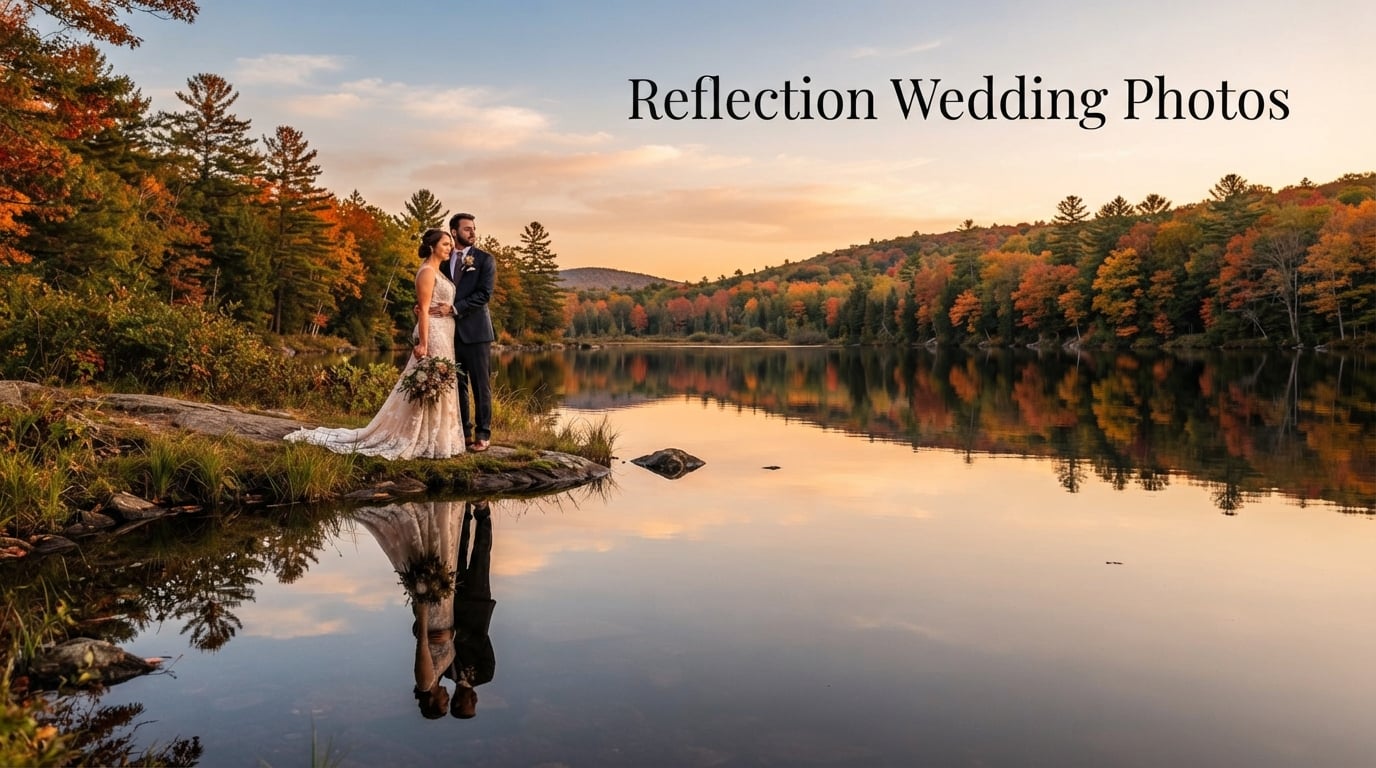
Reflection wedding photos are the kind of images couples frame and treasure for years. I have spent over a decade capturing brides, grooms, and venues across the country, and the shots that consistently stop my couples in their tracks almost always include a mirror, a puddle, or a window.
Inside this guide, you will learn what reflection wedding photos are, the surfaces that work best, and exactly how to capture them in-camera. I will also share smartphone tricks that most photographers miss and the lighting conditions that turn an average reflection into something cinematic.
If you are planning a wedding and want images with depth, romance, and a touch of magic, this is for you. Photographers, you will find a step-by-step shooting plan plus the common mistakes I learned the hard way.
Table of Contents
What Are Reflection Wedding Photos and Why Couples Love Them
Reflection wedding photos are images built around a reflective surface like a mirror, calm water, glass, or polished metal. The reflection becomes a second subject that adds symmetry and depth to the frame, often doubling the storytelling in a single shot.
Couples love these images because they feel different from standard portraits. A quiet lake at golden hour or a vintage mirror in the bridal suite can transform a simple portrait into something emotionally layered. According to forum discussions on r/WeddingPhotography, couples consistently rate reflective shots among the top three images they print and hang.
The best part: you do not need expensive gear to start. Avenues from rustic barns to city rooftops all have at least one reflective surface. You just need to know where to look and how to position yourself.
Mirror Reflections: Getting Ready Photos That Sparkle
Mirrors are the most accessible reflective surface on a wedding day, and they shine brightest during getting ready moments. A bride pinning her veil in a vanity mirror or a groom adjusting his tie in a floor-length hotel mirror creates instant intimacy in the frame.
When I shoot mirror reflection wedding photos, I look for three details before raising the camera. First, I confirm the room has soft window light so the reflection is not lost in shadows. Second, I angle myself so I am hidden from the reflection, often by crouching slightly to the side. Third, I keep my lens wide enough to capture both subject and full mirror edge.
Triple-mirror vanities are gold. They give you a wraparound effect that looks complex but only takes a minute to set up. Place the subject slightly off-center and you get depth, layers, and natural leading lines without any editing.
Water Reflections: Lakes, Ponds, Puddles, and Fountains
Water is the most cinematic reflective surface you will find. A still pond doubles your couple into a symmetrical scene that looks like it belongs in a film. Even a rainy-day puddle on the venue’s front walkway can become a storytelling moment.
The secret to clean water reflections is calm water. Wind ruins reflections faster than anything else. I plan my outdoor portrait time around dawn or dusk when air is still, and I always scout the venue the day before to find the calmest pockets of water.
Getting low changes everything. Lowering your camera to within a few inches of the water surface eliminates distractions and turns the reflection into the hero of the photo. A shallow depth of field on a 50mm or 85mm lens will blur the background while keeping both subject and reflection crisp.
Puddles after rain are an underrated resource. They appear suddenly and disappear quickly, so I always keep my camera ready if the forecast even hints at moisture. Fountains and reflection pools at reception venues double as built-in studios.
Glass and Window Reflections for Creative Compositions
Glass reflections add a layer of storytelling that mirrors and water cannot match. A bride seen through a window pane while her bridesmaids move behind the glass creates layered emotion. Storefront windows in downtown venues reflect entire city blocks into a single image.
For the best glass reflections, shoot during the blue hour or on overcast days. Harsh midday sun turns glass into a mirror you cannot shoot through, but soft light lets you combine interior and exterior reflections without one blowing out the other.
The double reflection technique places the subject between two parallel reflective surfaces, like two large windows facing each other. You capture the subject once in each pane, creating an endless-loop effect that feels editorial and high-end. I have used this trick in hotel lobbies and modern museums, and it never fails to impress.
How to Create Reflection Wedding Photos In-Camera: Step-by-Step
Use this five-step process to capture reflection wedding photos that look polished straight out of camera.
Scout your reflective surface early. Walk the venue with your couple the day before or arrive 90 minutes before portraits. Note every mirror, puddle, fountain, and window.
Position the subject, then the camera. Place the couple at the natural angle to the reflection first, then move yourself until their eyes align with the surface line.
Get low or shoot from an unusual angle. Water reflections demand a near-ground perspective. Mirror shots feel more dynamic from a slight side angle than straight-on.
Use a polarizing filter for water. Rotate the filter until glare disappears and the reflection pops. This single accessory saves your water shots 90% of the time.
Bracket your exposures. Reflections in bright sun often fool your meter. Take one shot at meter reading, then plus and minus one stop to be safe.
Following these steps consistently gives me publication-quality reflection wedding photos with minimal editing. The discipline is in setup, not post-production.
Smartphone Reflection Tricks Most Photographers Miss
Smartphones double as portable reflective surfaces, and few photographers use them on purpose. A turned-off phone screen acts like a small mirror. Hold it at an angle below the couple’s chin and you can reflect their clasped hands, bouquet, or wedding rings in an otherwise boring portrait.
Tablet screens create even larger reflections for full-face double exposure effects during the reception. I keep a small handheld mirror in my camera bag for the same reason. Both tools let me build a reflection when the venue has none.
For couples, the smartphone trick is even simpler. If your photographer is not using reflections yet, ask them to try the phone-screen technique during portraits or detail shots. It costs nothing and adds an unexpected moment to the gallery.
Lighting and Weather Tips for Stronger Reflections
Light controls reflection quality more than camera settings. Overcast skies produce the softest, most even reflections because there is no harsh glare competing with the surface. I prefer cloudy mornings for mirror shots inside the bridal suite for this reason.
Golden hour is unbeatable for outdoor water reflections. The low warm sun grazes the water at an angle that boosts color without crushing the reflection. Plan your portrait session at least 60 minutes before official sunset for the richest tones.
Wind is the enemy. I reschedule outdoor reflection portraits when wind picks up above 8 mph, because choppy water destroys the mirror effect entirely. Calm air after rain is the best-kept secret in wedding photography: still surfaces, soft light, and zero harsh shadows.
Common Reflection Photography Mistakes to Avoid
The most common mistake is the photographer appearing in the reflection. Always check your reflection surface for stray arms, hands, or tripods before pressing the shutter. A quick glance saves hours in Photoshop.
Second, watch for unwanted glare. Bright reflections from off-camera lights or phone screens inside pockets can ruin a clean frame. Turn off your own review screen and ask guests to put phones face-down during formal reflection portraits.
Third, do not over-edit. Saturation and contrast that look good on standard portraits turn reflection shots muddy and fake. Keep your edits gentle and let the reflection speak for itself.
Frequently Asked Questions
What is an example of a reflection photo?
A reflection photo uses a mirrored surface like glass, water, or polished metal as a key part of the composition. A bride captured in a vanity mirror, a couple standing at the edge of a still pond, or a portrait shot through a rain-covered window are all classic examples of reflection photos used in weddings.
What is an example of a reflection in photography?
Common examples include portraits in mirrors, couples reflected in lakes or ponds, subjects seen through storefront glass, rings or bouquets reflected in phone screens, and architectural details echoed in polished floors. Each relies on positioning the camera so that the reflection forms a meaningful part of the image rather than an accidental flare.
How do you create reflections in-camera for wedding photography?
Find your reflective surface, position the subject to face it directly, then lower your camera to the surface level. Use a polarizing filter on water and shoot during golden hour or overcast conditions for the cleanest result. Always check the frame for your own reflection, and bracket exposures if the surface creates strong glare.
Final Thoughts on Reflection Wedding Photos
Reflection wedding photos turn ordinary wedding moments into images that feel pulled from a film. Once you train your eye to spot mirrors, puddles, and glass around every venue, you will never run out of fresh ideas for couples to cherish.
Start with one surface on your next wedding or shoot. Master mirror reflections during getting ready. Add water reflections at golden hour. Then experiment with glass and smartphone tricks. Within a few sessions, reflection shots will be the signature style your clients ask for by name, and they remain some of the most rewarding images in any photographer’s portfolio in 2026.