
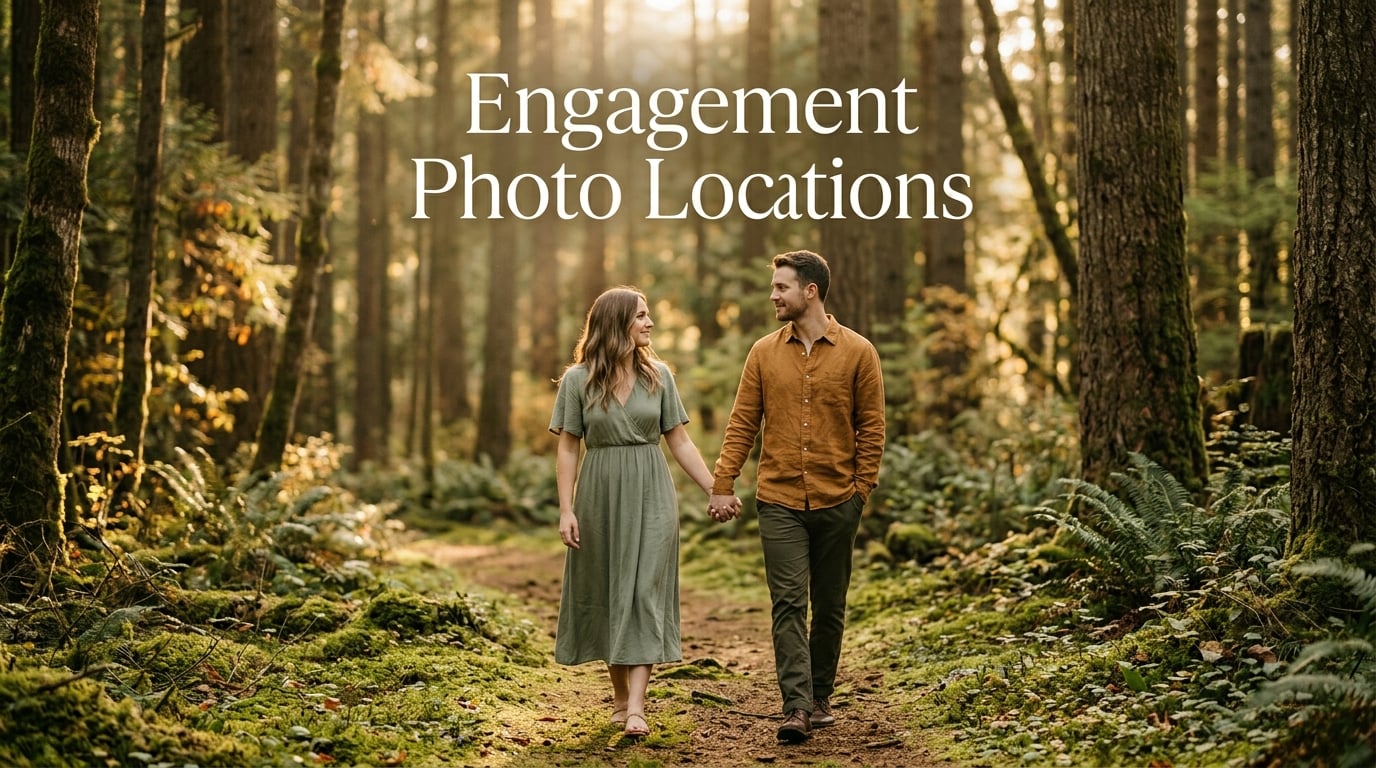
Engagement photo locations are the scenic spots where couples have their pre-wedding photos taken to announce their engagement and celebrate their relationship. They set the visual tone for everything that follows: your save-the-dates, your wedding website, your social media announcement, and the framed prints on your parents’ walls.
Pick the right spot and your photos feel like you. Pick the wrong one and even the best photographer struggles to make it work. We have shot engagement sessions at beaches, mountain overlooks, downtown alleys, public gardens, vineyards, and backyard porches over the years, and the location almost always leaves a bigger fingerprint on the final gallery than the camera does.
This guide walks through the best engagement photo locations by category, explains how to choose one that fits your style, and answers the practical questions most couples forget to ask until the week of the shoot. We cover nature spots, urban settings, gardens, seasonal timing, permit and fee expectations, what to wear, weather backup plans, accessibility, and how to combine multiple locations in a single session.
By the end you will have a shortlist of engagement photo spots worth visiting, a plan for lighting and timing, and a checklist for the practical details that turn a good location into a great shoot. Everything here is based on what we have learned shooting real couples, plus what recently engaged people on Reddit wedding forums say actually worked for them.
Table of Contents
Quick Picks: The Engagement Photo Locations Couples Love Most
If you only have a minute, here are the engagement photo locations we recommend most often, broken into categories that almost every couple can find within driving distance.
Nature locations – forests, waterfalls, mountain overlooks, beaches, and wildflower meadows. Romantic, timeless, and the most popular choice nationwide.
Urban locations – downtown streets, skyline rooftops, colorful murals, alleys, and bridges. Modern, edgy, and great for couples who live in or near a city.
Garden and park locations – botanical gardens, arboretums, city parks, and lakeside trails. Low-stress, scenic, and usually easy to access.
Rustic locations – vineyards, farms, barns, orchards, and open fields. Warm, textured, and perfect for fall or late summer shoots.
Historic and architectural locations – historic districts, courtyards, libraries, and landmarks. Elegant, structured, and full of interesting backdrops.
Cozy at-home locations – your living room, kitchen, backyard, or a favorite coffee shop. Personal, relaxed, and increasingly popular in 2026.
Meaningful locations – where you met, where you got engaged, your first-date spot, or a place you travel to together. Emotional and one-of-a-kind.
Most couples choose one or two of these categories. Trying to do all of them in a single session usually means rushed photos and tired faces. Pick what feels like you, then let the photographer figure out how to make it shine.
How to Choose the Perfect Engagement Photo Location
Choosing an engagement photo location comes down to four things: your personal style, the lighting you want, the logistics of getting there, and the permits or crowds involved. Get all four right and the shoot almost runs itself.
Match the Location to Your Style
Start with how you want the photos to feel. If you imagine moody, romantic, storybook images, look at forests, waterfalls, and overcast coastal cliffs. If you want bright, clean, and modern, gardens and beaches with open sky tend to win. If you lean edgy and editorial, urban alleys, murals, and rooftop skyline views are hard to beat.
Look at your photographer’s portfolio before you pick. Their shooting style often suits certain location types better than others, and a mismatch is the most common reason engagement galleries fall flat.
Consider Lighting and Time of Day
Lighting matters more than the location itself. Golden hour, the hour after sunrise or before sunset, gives you soft, warm, directional light that flatters skin and adds depth. Midday sun creates harsh shadows, blown-out highlights, and squinting subjects.
Most engagement sessions run 60 to 90 minutes during the last hour or two before sunset. Sunrise sessions are an option if you want empty locations and softer crowds, but they require an early alarm and a willing photographer.
Ask your photographer about the sunset time for your shoot date and plan to arrive 30 minutes early. Buffer time saves you from rushing, fighting traffic, and starting the session stressed.
Think About Accessibility and Parking
Some of the most photogenic spots require a hike, paid parking, or a long walk from the car. That is fine if you both love the outdoors, but it becomes a problem if you are in heels, carrying outfit changes, or shooting with family members who have mobility limitations.
Always check the parking situation before booking. Popular beaches, mountain trailheads, and downtown landmarks often fill up fast, especially on weekends. Arriving without a plan is the most common stress point couples mention on wedding forums.
Plan for Crowds and Permits
Iconic locations attract crowds. If your dream spot is a famous overlook, public garden, or city landmark, expect strangers in the background unless you arrive at sunrise or shoot on a weekday. Some couples do not mind. Others find it stressful and end up wishing they had chosen a quieter alternative.
Permits are the other wildcard. Many state parks, botanical gardens, and historic sites require a photography permit for engagement sessions, and fees range from free to several hundred dollars. We cover the specifics in the practical planning section below.
Best Nature Engagement Photo Locations
Nature spots are the most popular engagement photo locations across the country, and for good reason. They offer natural texture, soft light filtering through trees, and a sense of escape that cities cannot match. Here is how to think about each type.
Forests and Wooded Trails
Forests are the moody, romantic workhorses of engagement photography. Tall trees filter harsh light into a soft, even glow that flatters every skin tone. Look for trails with a mix of pine, oak, or old-growth trees and a clear path wide enough for two people walking side by side.
The best forest engagement photo spots have variation: open clearings, dense canopy, and a stream or fallen log for sitting poses. Popular picks include Pacific Northwest rainforests, Appalachian mountain trails, and any local state park with mature trees and minimal understory brush.
Watch for muddy ground after rain, poison ivy in warmer months, and ticks in late spring through early fall. Closed-toe shoes for the walk in are non-negotiable, even if you change into heels for the photos themselves.
Lakes, Rivers, and Waterfalls
Water adds movement and reflection to engagement photos that nothing else can. Calm lakes give you glassy mirror reflections at sunrise. Rivers add leading lines and a sense of motion. Waterfalls bring energy and a natural soundtrack that helps couples relax into the moment.
Waterfall locations are crowd favorites but often require a short hike and sometimes a permit. Check whether the trail is open year-round, since many close after heavy rain or during freeze-thaw cycles in shoulder seasons. rocky paths and slippery rocks mean you want grippy shoes and a slow, careful approach.
Lakeside and riverside shoots tend to be more accessible. Look for public boat launches, fishing piers, or lakeside parks where you can park close and walk a short, flat distance to the water.
Mountains and Scenic Overlooks
Mountain overlooks deliver dramatic scale. A couple framed against a sweeping valley or distant ridge instantly looks cinematic. Popular picks include Rocky Mountain National Park overlooks near Denver, the Blue Ridge Parkway in North Carolina and Virginia, and Mount Hood viewpoints outside Portland.
The catch is elevation and weather. Mountain weather changes fast, and a clear afternoon can turn into fog or thunderstorms within an hour. Build in flexibility, check the forecast the morning of, and have a backup location at lower elevation.
Plan around sunset. The light dropping behind a mountain ridge is one of the most photogenic moments you can capture, but the window is short and the temperature drops fast once the sun is gone.
Beaches and Coastal Cliffs
Beaches are timeless engagement photo locations. Wide sand, crashing waves, and open sky give photographers room to work and couples a relaxed, barefoot vibe. Coastal cliffs add drama for couples who want something more striking than flat sand.
Tide timing matters more than anything else on a beach shoot. Check local tide charts and aim for low tide or the hour around it. High tide shrinks the usable beach and can trap you against cliffs or sea walls.
Wind is the other factor. Coastal wind picks up in the late afternoon, which can either add motion to dresses and hair or turn into a frustration. Bring clips, hair ties, and a layer in case the temperature drops after sunset.
Wildflower Fields and Open Meadows
Wildflower fields are short-lived but stunning. Depending on where you live, peak bloom runs from late spring through mid-summer. Texas bluebonnets in April, Colorado wildflowers in July, and Pacific Northwest meadows in June all draw couples willing to plan around a two-to-three-week window.
Open meadows without flowers also work beautifully. Tall grass catches golden hour light and adds soft texture, especially in late summer and fall. Look for agricultural land with public access, restored prairie preserves, or the edges of state parks.
Stay on marked paths and never trample blooms for a photo. Many wildflower areas are protected, and photographers who respect the land get invited back.
Urban Engagement Photo Locations Worth Exploring
City locations give engagement photos a modern, editorial feel that nature cannot match. They also offer weather backup options, since you can duck into a lobby, café, or covered arcade if rain rolls in. Here are the urban engagement photo locations worth considering.
Downtown Streets and Skyline Views
Downtown streets with tall buildings, clean architecture, and interesting storefronts create a polished, contemporary look. Look for areas with consistent building heights, minimal signage clutter, and wide sidewalks so your photographer has room to back up.
Skyline views come from rooftops, parking garages, and elevated parks. Some require permission or a fee, but the open sky behind you and the city lights below are worth the effort for a session that ends after sunset.
Shoot on weekday mornings or Sunday evenings to avoid foot traffic. Downtown crosswalks and bus stops get busy fast, and waiting for crowds to clear eats into your session time.
Murals, Alleys, and Rooftops
Murals add color and personality to engagement galleries. Cities like Houston, Austin, Portland, and San Francisco have entire neighborhoods known for street art, and local photographers usually have a mental map of the best ones.
Alleys sound unglamorous but produce some of the most striking urban photos. Brick walls, fire escapes, string lights, and vintage signage all add texture. They also offer shade during bright afternoon hours, which extends your shooting window.
Rooftops require advance planning. Many require permission from the building owner or a paid venue fee, but the unobstructed skyline backdrop is one of the most requested urban looks in 2026.
Bridges and Waterfront Walkways
Bridges frame couples against water and skyline, and most cities have at least one photogenic option. Pedestrian bridges work better than vehicle bridges because you avoid exhaust, noise, and traffic danger. Look for converted rail bridges, footbridges over rivers, and waterfront esplanades.
Waterfront walkways combine the best of urban and natural settings. Wide paths, skyline views, and water reflections in one location give your photographer variety without making you drive between spots.
Plan around sunset here too. The light hitting a city skyline across the water at golden hour is one of the most reliable urban photo setups you can find.
Historic Districts and Architecture
Historic districts offer stone facades, wrought-iron balconies, cobblestone streets, and architectural detail you do not get in modern construction. They feel timeless without looking dated, which is exactly what most couples want for engagement photos that will still look good in twenty years.
Look for areas with brick or stone buildings, narrow streets, and consistent historic character. Courtyards, hidden passageways, and old libraries all add a sense of place that plain modern buildings cannot match.
Check for photography rules before you shoot. Some historic districts require permits, and a few prohibit tripods or commercial photography entirely.
Garden, Park, and Rustic Engagement Photo Locations
Gardens, parks, and rustic venues sit between nature and urban settings. They are usually accessible, well maintained, and full of variety. For couples who want beauty without the logistical stress of a remote trail or busy downtown, this category is often the sweet spot.
Botanical Gardens and Arboretums
Botanical gardens are designed for visual variety. You get curated flower beds, themed sections, water features, and mature trees in one location, which means more backdrop options per minute of shooting than almost anywhere else.
Most botanical gardens charge a small admission fee and many require a separate photography permit for engagement sessions. Fees typically run from $25 to $150, and booking in advance guarantees your time slot. Call ahead, since popular gardens fill up on weekends during peak bloom.
Arboretums focus on trees rather than flowers and stay photogenic longer through the season. They are a smart pick if your shoot falls outside peak bloom or you want a more woodsy, less formal look.
Vineyards and Farms
Vineyards deliver rows of vines, warm light filtering through leaves, and a relaxed wine-country vibe. They are especially popular in California, Oregon, Virginia, Texas, and upstate New York, but smaller wineries exist in almost every state.
Farms and orchards offer a similar rustic charm. Apple orchards in fall, lavender farms in summer, and sunflower fields in late summer all give couples a seasonal hook that feels specific and personal.
Almost all working vineyards and farms require advance booking and charge a location fee. Expect $100 to $500 depending on the venue, and plan to shoot during business hours or by special arrangement.
City Parks and Lakeside Trails
City parks are the most accessible engagement photo locations on this list. They are usually free, close to parking, and offer open lawns, mature trees, and often a pond or fountain for variety.
The trade-off is crowds. Popular city parks fill up on weekends, especially in spring and fall. Weekday mornings and sunset on weeknights are your best bet for fewer strangers in the background.
Lakeside trails within city parks are an underrated option. You get the accessibility of a city park with the soft, reflective quality of water. Look for paved loop trails with multiple entry points so you can hop in and out of the best sections.
Seasonal Timing for Engagement Photo Locations
The same location looks completely different depending on when you shoot it. Seasonal timing is one of the biggest levers you have, and planning around it can turn an average spot into a standout one.
Spring Blooms vs Summer Greens
Spring brings cherry blossoms, tulips, dogwoods, and fresh green growth. It is the most popular season for engagement photos in most of the country, which also means the most crowded locations. Book early, expect to share popular spots, and consider weekday sessions.
Summer offers lush, full greenery and longer days. The downside is heat, humidity, and harsh midday light. Plan for late sunset sessions, bring water, and choose locations with shade. Summer also coincides with peak wedding season, so photographer availability may be tighter.
Fall Foliage Windows
Fall is the second-most-popular engagement season, and the foliage window is short. Peak color lasts roughly two to three weeks depending on your latitude, with northern states peaking in late September through October and southern states peaking in November.
Book fall sessions six to eight weeks in advance. Photographers fill up fast, and popular foliage spots like New England, the Smokies, and the Rockies see heavy demand. Have a backup location in case storms strip the leaves early.
Winter Snow and Moody Light
Winter engagement photos are underrated. Bare trees create clean, minimalist compositions. Snow adds a soft, reflective quality that brightens skin and simplifies busy backgrounds. Overcast winter days give you even, flattering light all day long.
The trade-off is cold. Short sessions, hand warmers, layered outfits you can remove between shots, and a warm car or coffee shop nearby all make winter shoots work. Avoid locations that require long outdoor waits.
Engagement Photo Locations: Choosing, Permits, and Practical Planning Guide
This is where most engagement photo location guides stop, and it is exactly where couples need the most help. Permits, wardrobe, weather, multi-location logistics, and accessibility are the practical details that separate a smooth session from a stressful one.
Permits and Fee Expectations
Photography permits exist to manage impact on public and private spaces. State and national parks, botanical gardens, historic sites, and some city parks all require them for engagement sessions, even when general visitors do not need one.
Free locations include most city parks, public beaches, streets and sidewalks, and many state wildlife areas. Paid locations range from $25 for a basic city park permit to $500 or more for private venues, botanical gardens during peak bloom, and historic landmark sites.
Always confirm permit requirements with the managing agency two to four weeks before your shoot. Fees and rules change, and showing up without paperwork can get your session shut down mid-shoot.
What to Wear for Each Location Type
Wardrobe should complement the location, not fight it. The goal is to look polished and like yourselves, without wearing anything that clashes with the setting or disappears into it.
For nature locations, earth tones, soft neutrals, and muted jewel tones work well. Avoid bright neon and busy patterns that pull focus from the landscape. Long dresses and flowy fabrics catch movement in wind and add romance to forest, meadow, and beach settings.
For urban locations, structured outfits in solid colors photograph best. Think blazers, fitted dresses, dark denim, leather jackets, and clean footwear that can handle concrete. Avoid all-white outfits if you will be leaning against brick or sitting on sidewalks.
For gardens and rustic venues, soft textures and warm tones complement the surroundings. Linen, cotton, and flowing silhouettes feel natural without looking too casual. Bring one backup outfit in case of stains or weather changes.
Most couples bring two outfits: one dressy and one casual. Coordinate colors without matching exactly, avoid logos and large text, and iron or steam everything before the shoot.
Weather Contingency Plans
Weather is the single biggest variable for outdoor engagement photo locations, and most couples do not plan for it until the day before. Have a conversation with your photographer about backup options when you book.
Rain does not automatically cancel a shoot. Overcast skies give you soft, even light that many photographers actually prefer. Light drizzle can work if you bring clear umbrellas, water-resistant footwear, and towels. Heavy rain, lightning, and high wind are reschedule triggers.
Urban locations make the best weather backups because they offer covered areas, lobbies, and indoor alternatives. Forests with thick canopies provide natural rain cover. Open beaches and mountain overlooks are the most weather-exposed and least flexible.
Build a backup location into your plan from the start. Pick something within 30 minutes of your primary spot so you can pivot quickly without losing the entire session.
Combining Multiple Locations in One Shoot
Combining two locations in one engagement session is one of the most common requests we get, and it works well when you plan for it. The goal is variety without burnout.
Choose locations within 15 to 20 minutes of each other by car. Anything farther eats into your shooting time, especially during golden hour when the light changes minute by minute. Pick locations with contrasting vibes, such as a forest followed by an urban rooftop, or a beach followed by a downtown street.
Plan for one outfit change between locations. Two outfits per location is doable but tight. Three locations in one session almost always feels rushed and we rarely recommend it.
Factor in travel, parking, walking, and a few minutes to settle into each new spot. A 90-minute session realistically gives you about 35 to 40 minutes of actual shooting time at each of two locations.
Accessibility Considerations
Not every beautiful location is accessible to every couple, and accessibility is one of the most overlooked topics in engagement photo location guides. If you or your partner have mobility limitations, or if family members will join part of the shoot, plan around it from the start.
Look for locations with paved or graded paths, nearby parking, benches or seating areas, and accessible restrooms. Botanical gardens, city parks, waterfront esplanades, and historic districts with sidewalk access tend to be the most accommodating.
Avoid locations that require hiking, scrambling over rocks, walking on loose gravel, or climbing stairs without railings. Your photographer can suggest accessible spots with the same visual payoff if you raise the topic early.
Talk openly with your photographer about any accessibility needs before booking. The best photographers adjust location suggestions, pose choices, and session flow to make sure everyone is comfortable and the photos still look stunning.
Frequently Asked Questions
How far in advance should you get engagement photos?
Most couples book engagement photos 6 to 12 months before the wedding, often right after sending save-the-dates. For seasonal locations like wildflower fields or fall foliage spots, book 2 to 3 months ahead to lock in peak timing.
Where is the best place to take engagement photos?
The best engagement photo locations are forests and wooded trails, beaches and coastal cliffs, botanical gardens, urban murals and downtown streets, mountain overlooks, vineyards, and meaningful spots like where you met or got engaged. Choose based on your personal style and the vibe you want.
How much should I expect to pay for engagement photos?
Engagement photo sessions typically range from $300 to $1,500 depending on your location, photographer experience, session length, and number of edited images included. Premium photographers in major cities may charge $2,000 or more.
Is $500 a lot for engagement photos?
No, $500 is on the lower end for a professional engagement session in most markets. It usually covers a shorter session of 45 to 60 minutes with a limited number of edited photos. Expect to pay more for longer sessions, multiple locations, or experienced photographers.
What time of day is best for engagement photos?
The hour before sunset, known as golden hour, is the best time for engagement photos because the light is soft, warm, and flattering. Sunrise is the second-best option and offers empty locations, while midday should be avoided due to harsh shadows.
How do I pick the right engagement photo location?
Match the location to your personal style, check lighting and time of day, confirm parking and accessibility, and verify permit requirements. Look at your photographer’s portfolio to see which location types suit their shooting style best.
Final Thoughts on Engagement Photo Locations
The best engagement photo locations are the ones that feel true to who you are as a couple. Nature spots, urban settings, gardens, rustic venues, and meaningful places all have their strengths, and the right choice is the one that matches your style, schedule, and budget.
Pick a location that fits your vibe, plan around golden hour, confirm permits and parking, build in a weather backup, and talk openly with your photographer about logistics and accessibility. Do those five things and your engagement gallery will look like you on your best day.
When you are ready to book your engagement session, send us a note. We help couples choose the right engagement photo locations every week, and we would love to help you find the perfect spot for yours.