
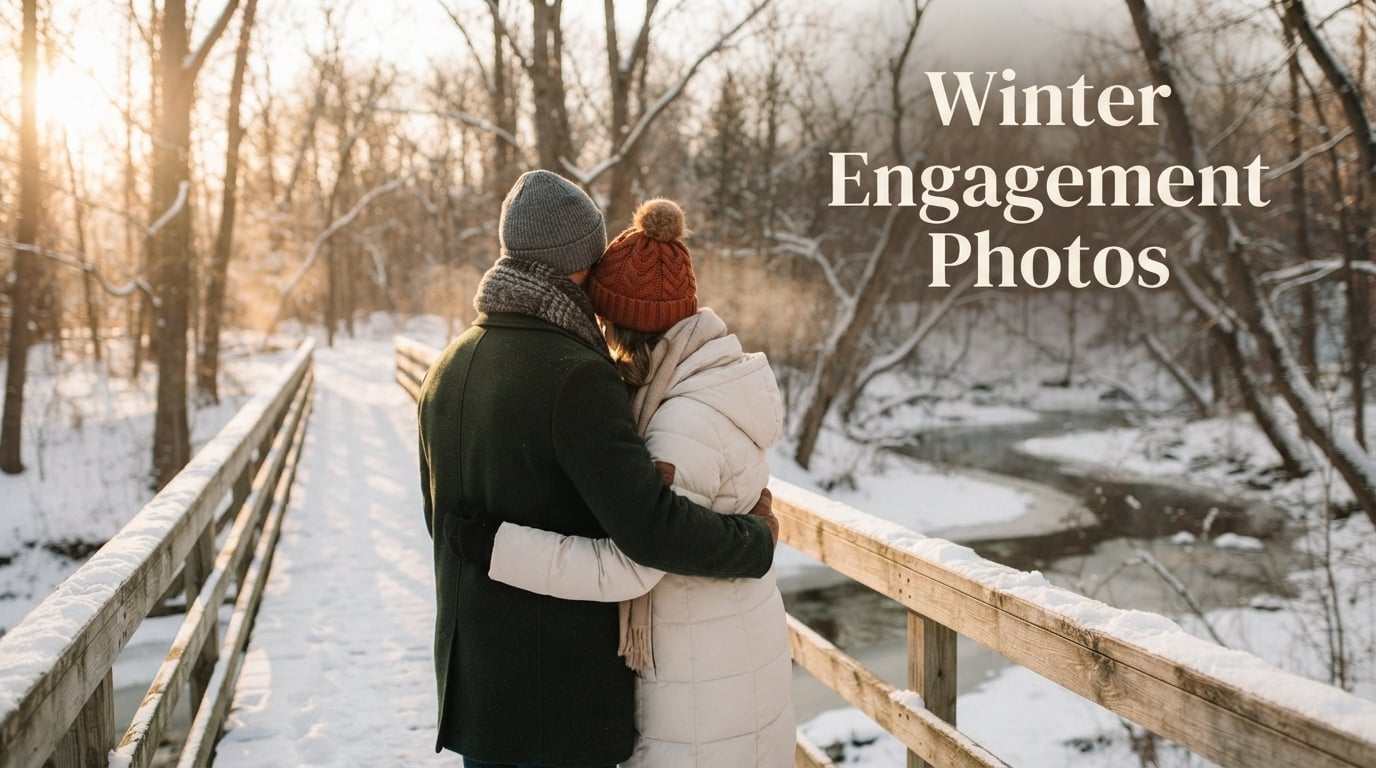
Winter engagement photos capture something no other season can. The soft light, the hush of fresh snow, the way you lean into each other just a little closer when the air turns crisp.
I’ve been photographing couples through cold-weather sessions for over a decade, and I can tell you this: winter shoots produce some of the most emotionally honest images of the year. Couples stop trying to pose perfectly and start actually snuggling up. The chill becomes part of the story.
This guide walks you through everything I share with my own couples when they book a winter engagement session. We’ll cover what to wear, how to stay warm, where to go, when to shoot, and how to keep the whole experience relaxed. By the end, you’ll know exactly how to plan winter engagement photos you’ll love for decades.
Table of Contents
Why Winter Engagement Photos Are Worth Considering
Winter engagement photos stand out because the season itself does half the creative work for you.
The light is softer and warmer than at any other time of year. Winter sunsets sit lower on the horizon, which means a longer stretch of that golden, cinematic glow photographers chase all year. Even on overcast days, the sky acts like a giant softbox, flattering every skin tone.
Crowds thin out at popular locations once the temperatures drop. That popular park or downtown spot you couldn’t get to in October suddenly feels private. You get the iconic view without a hundred tourists in the background.
There’s also a built-in intimacy to winter. Hand-in-hand walks, steam rising from coffee cups, breath visible in the cold air. These are details you simply can’t manufacture in July. The season gives your photos a story you can feel.
The Emotional Pull of a Cold-Weather Session
Something shifts when a couple steps outside in winter layers. The barriers come down. People stop performing and start connecting.
I’ve watched reserved couples loosen up within ten minutes of a winter session because they’re laughing about how cold their noses are. That warmth shows in the photos.
What to Wear for Winter Engagement Photos
For winter engagement photos, treat your coat as the outfit and layer everything underneath so you can adjust on the fly.
The single biggest mistake I see couples make is dressing for a fall session and hoping a jacket will carry them through January. Plan your entire look around the weather, not around the photo you saw on Pinterest. Cozy knits, structured wool coats, and a thick scarf will look better than any formal dress.
Build Your Look Around Layering
Start with a thermal base layer you won’t see, then add a sweater or button-down, then your statement coat. This setup lets you shed the outer coat for some shots and put it back on for others without freezing between takes.
Textured fabrics photograph beautifully in winter. Chunky cable knits, boucle, wool, suede, and velvet all catch the soft winter light in ways that cotton cannot. They also look intentional and seasonal rather than thrown together.
Colors That Pop Against Winter
Deep jewel tones are your friends. Navy blue, dark plum, burgundy, forest green, and rich camel all shine against snow and gray skies. Avoid pure black on both partners, since it can look flat in soft light.
Add one color moment. A red beanie, a mustard scarf, or jewel-toned boots give your eyes somewhere to land and tie the whole look together.
Don’t Forget the Details
Boots need to be warm and waterproof. You’ll be standing in snow for portions of the session, and wet feet end the shoot faster than anything else.
Gloves and hats are fair game. Knit beanies, leather gloves, and oversized scarves all photograph well. They also keep you comfortable enough to enjoy the session.
Tips for Staying Warm During Your Session
The best way to stay warm during winter engagement photos is to keep moving, take short breaks, and treat warmth as part of your plan, not an afterthought.
Cold couples make stiff photos. The moment you stop feeling comfortable, your shoulders hike up, your smile tightens, and the natural chemistry disappears. I plan every winter session around preventing that exact moment.
Pack a Survival Kit
Bring a small bag with hand warmers, a thermos of something hot, lip balm, tissues, and an extra pair of socks. Hand warmers tucked into your pockets are a quiet game changer. You can hold them between shots without anyone noticing.
A thermos of hot tea, cider, or cocoa does double duty. It warms your hands and creates some of the best candid moments of the session. Steam rising from a shared cup is one of my favorite winter shots.
Keep the Pace Moving
I build winter sessions around movement. Walking shots, twirling, hugging while walking, lifting your partner. Movement generates body heat and creates natural-looking photos. Standing still is when the cold bites.
I plan three to five locations per session, each with five to ten minutes of shooting. We rotate, we walk between spots, and the pace keeps everyone warm and energized.
Build In Warm-Up Breaks
If your route passes a coffee shop or heated indoor space, plan a stop. Even ten minutes inside can reset your comfort level for the next round of photos.
For longer sessions, I sometimes build in a full indoor segment. A cafe, bookstore, or your own home all work. We’ll get cozy shots there and give your body a break before heading back out.
Best Locations for Winter Engagement Photos
The best locations for winter engagement photos balance seasonal scenery with practical access, and they should feel meaningful to you.
Meaning matters more than trend. A park you visited on your first date will always produce better photos than a generic pretty backdrop. Winter is the season where personal meaning shines brightest.
Outdoor Locations That Shine in Winter
Snow-covered parks and forests are obvious choices, and they deliver. Bare trees create beautiful natural architecture, and fresh snow adds a soft, dreamy quality to every frame.
Urban downtowns work year-round but feel extra magical in winter. Twinkling holiday lights, empty plazas, snow-dusted storefronts, and steam rising from subway grates give city shoots a cinematic edge.
Waterfronts and lakefronts produce stunning winter images. Just bundle up and watch for icy patches. Safety comes first.
Indoor Locations Worth Considering
Indoor locations aren’t just backup plans. They can carry the entire session.
Cozy cafes and bookstores create warm, intimate portraits. Window light in a quiet cafe with two mugs of coffee is hard to beat.
Your own home is one of the most overlooked locations. Curling up on your couch, cooking together, dancing in your kitchen. These shots will mean the most in twenty years.
Hotels with character, libraries, museums, and small boutiques can all work as paid or permitted indoor locations if you want something with a bit more visual interest.
Where to Skip
Wide-open fields with no shelter become brutal in winter wind. Wind chill can drop the effective temperature by 20 degrees or more.
Beaches without snow lose their magic in winter and rarely produce flattering color palettes. Save those for a summer session or a destination wedding.
When to Schedule Your Winter Session
Schedule your winter engagement photos during golden hour, ideally one to three hours before sunset, for the best light and most flattering temperatures.
Golden hour in winter is shorter than summer but more concentrated. That hour or so before sunset delivers the warmest, softest light of the day. Sessions that start at noon under a flat gray sky rarely produce the same emotional impact.
Best Time of Day
Sunset sessions work in fall and early winter when the sun sets early enough to keep dinner plans intact. By February and March, sunset pushes later, and we shift more sessions toward sunrise.
Sunrise sessions are underused but powerful in deep winter. Cold, empty, and quiet, sunrise delivers the kind of golden light most photographers only dream about.
How Far Ahead of the Wedding
Most couples schedule engagement photos six to nine months before the wedding. This gives you time to receive the gallery, choose prints, and use the images for save-the-dates, wedding websites, and guest books.
Winter engagement sessions can happen any time after you book your photographer. Some couples shoot the season before their wedding. Others wait until the off-season to save money and lock in availability.
Build Weather Flexibility Into Your Plan
Pick a date with one or two backup dates. Winter weather changes fast, and a single day of flexibility often makes the difference between an okay session and a magical one.
I keep a buffer week around every winter session for exactly this reason. If a storm rolls in on shoot day, we shift. Snowfall on the new date often turns out better than the original plan.
Winter Engagement Photo Ideas and Activities
The best winter engagement photo ideas use activities to generate natural warmth, motion, and laughter.
Posed standing shots will always have a place, but winter is the season for action. When your hands are full and your breath is visible, you stop thinking about the camera.
Outdoor Activities That Double as Photo Moments
Snowball fights are a classic for good reason. They create movement, laughter, and pure joy. I’ll set up a wide shot and let you go at it. Some of the best winter engagement photos come from these moments.
Sledding, building a snowman together, ice skating, and cross-country skiing all work the same way. Pick an activity you already enjoy, and the photos will follow.
Indoor Activities Worth the Setup
Cooking a meal together in your kitchen produces intimate, real-life images. Baking cookies, pouring wine, dancing to one song while something burns. These are the photos your kids will look at one day.
Hot drinks by a fireplace, board games, reading together on the couch. None of these need props or special locations. They just need you and your partner.
Common Mistakes to Avoid in Winter Sessions
The most common winter engagement photo mistake is underestimating the cold and skipping the warm-up plan.
I’ve made and watched every winter mistake there is. Here are the ones that matter most.
Forgetting About Wind Chill
Temperature on the thermometer isn’t what you feel. A 25-degree day with 15 mph wind feels like single digits. Plan for the wind chill, not the air temperature.
Scheduling Too Tight
Winter sessions need buffer time. You will warm up, change a layer, fix a scarf, take a hot drink break. Build a 20-minute cushion into your schedule so nothing feels rushed.
Skipping the Communication Step
Talk with your photographer before the session about expectations, backup dates, and what happens if the weather doesn’t cooperate. Clear expectations reduce anxiety and make the whole day smoother.
Frequently Asked Questions
What to wear for engagement photos in winter?
For winter engagement photos, layer a thermal base under a textured sweater or button-down, top it with a structured wool coat as your statement piece, and add warm boots plus accessories like knit beanies and leather gloves. Deep jewel tones like navy, burgundy, plum, and forest green photograph beautifully against snow and gray skies. Avoid pure black on both partners and prioritize warmth above trend so you stay comfortable enough to look relaxed.
How to take engagement photos in the winter?
Plan winter engagement photos around golden hour light, build a 20-minute buffer into the schedule, and pack hand warmers plus a thermos of something hot. Choose three to five locations with short shooting bursts at each, and weave in an indoor warm-up stop if the session runs long. Most importantly, pick a primary date plus one or two backup dates so weather shifts don’t derail the plan.
How many months before a wedding to do engagement photos?
Most couples schedule engagement photos six to nine months before the wedding. This gives you time to receive the finished gallery, order prints, and use the images for save-the-dates, wedding websites, and guest books. Winter sessions can happen any time after booking your photographer, and many couples use the off-season to lock in availability and stretch their photography budget further.
What to wear when getting engaged in winter?
When getting engaged in winter, wear something that balances warmth with style so you feel comfortable in the moment and look great in the photos. A cozy knit dress with tights and boots works for many proposals, while a tailored wool coat over a turtleneck and trousers reads polished for outdoor settings. Bring hand warmers, lip balm, and a backup pair of gloves so the proposal stays joyful instead of rushed.
Final Thoughts on Planning Winter Engagement Photos
Winter engagement photos are not a compromise. They are a deliberate choice that delivers soft light, quiet locations, and an emotional honesty you can’t fake.
Plan around the cold instead of fighting it. Layer with intention, pack warmth supplies, build in flexibility, and let the season shape the story. Your photographer will guide you through the rest, and the images you walk away with will hold up for the rest of your life.
If you’re ready to start planning your winter engagement photos, reach out and we’ll talk through locations, timing, and what your vision looks like. I’d love to capture this season for you.