
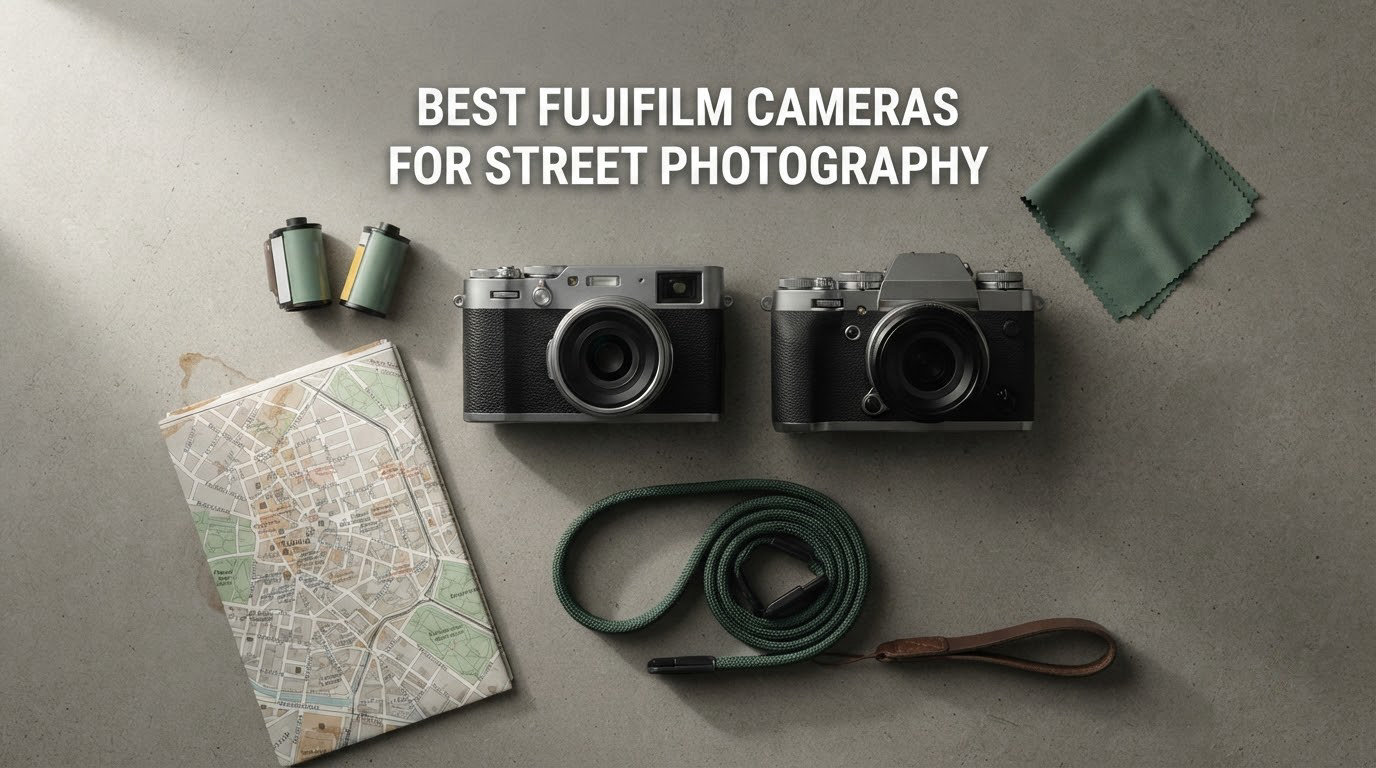
The best Fujifilm camera for street photography is the Fujifilm X100VI, a pocketable body with a silent leaf shutter, a fixed 23mm f/2 lens giving a 35mm-equivalent field of view, and up to 6.0 stops of in-body image stabilization that let you hold slow shutter speeds in fading daylight. It is the camera I reach for first when a walk has no plan attached to it.
That verdict matters more than any spec chart, because street work is not a resolution contest. It is a question of how quickly the camera comes out of the bag, how quietly it fires, and whether you can frame and focus before the person in front of you notices you have done either. Every body below is judged on those three things first and everything else second.
I have carried all eight of these Fujifilm bodies on weekday walks over the last couple of years, in markets, transit stations, and the kind of grey rain that makes people walk fast and ignore you. Our team also works weddings and events, so the candid side of this site has seen these cameras run for ten-hour days, not just test walks. If you want the wider brand picture, our guide to the best cameras for street photography covers the non-Fujifilm answers too.
One honest note before we start. Ask ten working street photographers what they shoot with and you will get ten answers, because the honest answer to “what camera do most street photographers use” is whatever already lives in the bag. Specs only matter to the extent that they stop being in the way. The X100VI wins here because it asks the least of you on a bad, wet, badly-lit Tuesday.
Table of Contents
Top 3 Fujifilm Street Photography Cameras for October 2026
Three bodies cover most people reading this, and the split follows how you shoot rather than what you spend. The X100VI is the answer if you want one camera, one lens, and no decisions. The X-E5 is the answer if the 23mm-only constraint already bothers you. The X-T50 is the answer if you are new to Fujifilm dials and want the gentlest on-ramp.


Best Fujifilm Cameras for Street Photography at a Glance in October 2026
All eight bodies, with the specs that actually change how a street walk feels. Weights and stabilization figures come straight from the manufacturer data for each model.
| Product | Specifications | Action |
|---|---|---|
| Fujifilm X100VI |
|
Check Latest Price |
| Fujifilm X-E5 23mm Kit |
|
Check Latest Price |
| Fujifilm X-T50 Kit |
|
Check Latest Price |
 Fujifilm X-T30 III Kit Fujifilm X-T30 III Kit |
|
Check Latest Price |
 Fujifilm X-S20 Body Fujifilm X-S20 Body |
|
Check Latest Price |
 Fujifilm X-Pro3 Fujifilm X-Pro3 |
|
Check Latest Price |
 Fujifilm X-T4 Fujifilm X-T4 |
|
Check Latest Price |
 Fujifilm X100F Fujifilm X100F |
|
Check Latest Price |
1. Fujifilm X100VI – The Best Fujifilm Camera for Street Photography Overall
Fujifilm X100VI Digital Camera – Black
40.2MP sensor
6.0 stops IBIS
23mm f/2 fixed lens
4-stop ND
521 g
Pros
- Compact enough for a jacket pocket
- 6.0 stops of IBIS for slow handheld speeds
- Built-in 4-stop ND in bright daylight
- Physical shutter aperture and ISO dials
- 20 film simulations
Cons
- Autofocus motors lag the newer AF algorithms
- Fixed 23mm gives no reach
- Tilting screen moves one way only
- Weather sealing is limited versus X-T bodies
The Fujifilm X100VI is the best Fujifilm camera for street photography overall, and the reason is fewer decisions rather than more capability. You put three dials where you expect them, the camera comes out of a pocket rather than a bag, and there is no lens to change in front of a crowd. On my own walks it is the body that stays on the camera between shots, which sounds trivial until you have watched a photographer fumble a zoom barrel on a crowded platform.
Stabilization is the feature that changed my habit rather than my photos. Up to 6.0 stops means I can hold 1/15s on a still subject at dusk and still get a sharp frame, and that is the difference between walking home at the end of the light and giving up twenty minutes early. The silent leaf shutter reinforces it. There is no mechanical click to announce you, so the camera genuinely disappears into the scene.

The fixed 23mm f/2 is roughly a 35mm-equivalent field of view, and the built-in 4-stop ND filter is what makes that workable in daylight. Without it you would be stopping down past where the lens wants to go; with it, you can hold f/5.6 to f/8 in full sun. Owners in the r/x100vi community point out the same thing about this lens, that it is sharpest around f/4 to f/5.6, and the ND is how you get there when the light is harsh.
Twenty film simulations are included, and Acros plus Classic Chrome cover most of my street frames. The JPEGs need almost nothing after the fact, which matters when the point of the walk was not the edit.

Why the X100VI suits a first street camera
A 521 g body with a pocketable footprint means it survives being carried for a whole day without a strap cutting into a shoulder, and the controls are in the same place every time so muscle memory builds fast. The 3.0-inch tilting LCD at 180,000 dots is not the brightest screen in the range, so bright midday framing works better with the hybrid viewfinder than with the rear display. The hybrid viewfinder itself is the quiet hero here, because an optical window gives you framing with no lag and no battery cost.
That combination suits anyone who shoots weddings or events as well, since a camera small enough to carry as a second body on a long day is a camera you will actually carry.
Where the X100VI will frustrate you
Autofocus is the honest weak point. Reviewers repeatedly note that the lens motors lag the camera’s newer subject-detection algorithms, so a person walking toward you across a gap is where you will feel it. If your street is fast-moving traffic rather than pedestrians at walking pace, that matters more than it does for most people.
The other constraint is structural. You get 23mm and nothing else, so a distant face across a square is out of reach, and the tilting screen only moves one way. Weather sealing is also lighter than on the X-T bodies, so sustained rain is a risk I would rather not take with a camera in this bracket.
2. Fujifilm X-E5 – Best Rangefinder Body With Interchangeable Lenses
FUJIFILM X-E5 Mirrorless Digital Camera XF23mmF2.8 Lens Kit – Silver
40.2MP sensor
7-stop IBIS
23mm f/2.8 pancake
Machined aluminum top plate
Pros
- X100-sized body with interchangeable lenses
- 7-stop IBIS from a gyro sensor
- Film Simulation dial with three recipe slots
- Bundle includes a pocket pancake lens
Cons
- Not weather sealed like the X-T series
- Dials have no lock buttons
- Supplied strap is heavy and non-adjustable
- EVF resolution is modest for the class
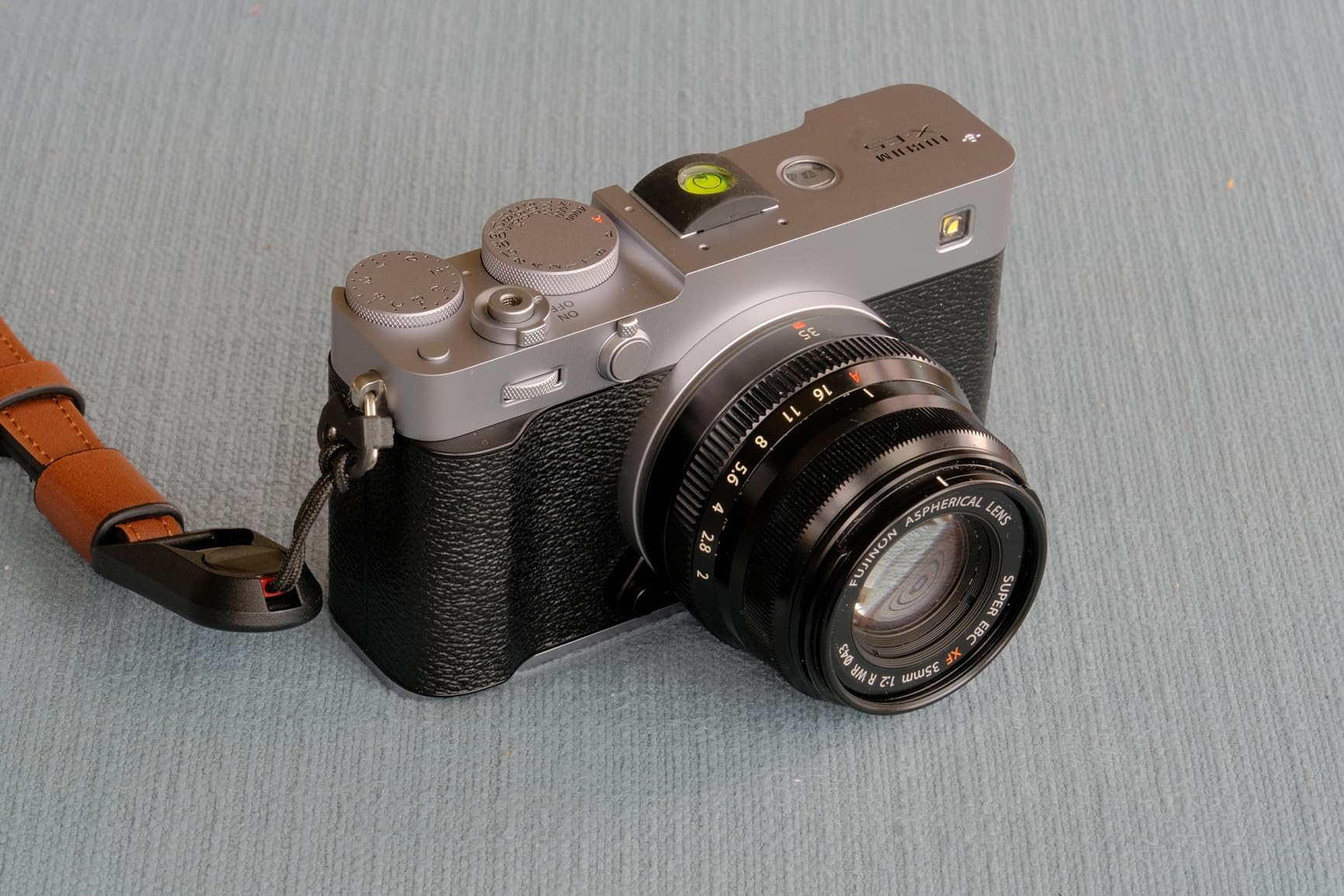
The Fujifilm X-E5 answers the question the X100VI leaves open. It is the same general size as a fixed-lens compact, with interchangeable lenses, so you can go from a 23mm street view to a low-light prime in a crowded stairwell without changing camera systems. Owners describe it in almost exactly those terms, as a small beautiful body with Fujifilm colour that is pleasant to carry all day.
Stabilization is rated at 7 stops at the centre of the frame and 6 at the edges, which makes it the most capable handheld body in this group. Combined with a 40.2MP X-Trans 5 HR sensor and X-Processor 5, it handles dusk and low-light walking better than anything else here except the X-T4’s steadier older sensor pairing.
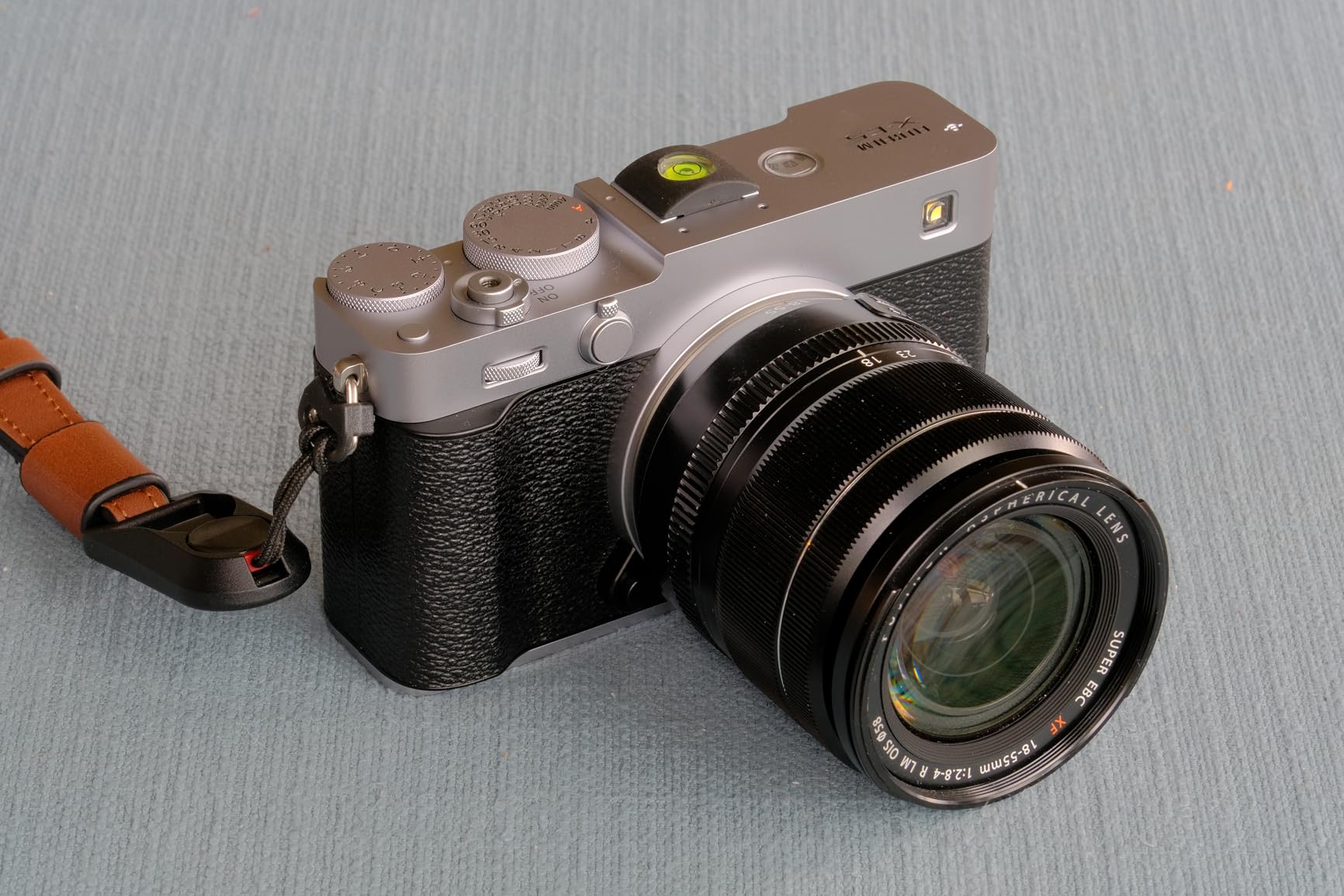
The bundled XF 23mm f/2.8 R WR is a thin pancake that barely changes the pocket profile, so the kit as sold is a genuine one-lens street setup. A machined aluminum top plate with analog shutter, aperture, and ISO dials gives it the feel of a small film body, and the Bluetooth button styled like a rewind crank is the sort of detail that makes you want to carry it.
There is also a customizable Film Simulation dial with three user recipe slots, which is the fastest way I have found to move between a colour recipe and a black-and-white one mid-walk without entering menus.
Who the X-E5 rewards
Anyone who already knows they will want a second focal length. A 33mm or 35mm prime on this body handles bars, stairwells, and interiors where the 23mm field of view includes too much ceiling, and the 7 stops of IBIS makes the slower aperture of those primes usable handheld. For our event work it is the body we reach for when a street-style walk turns into a coverage job.
It also suits people who photograph in mixed light, because the film dial and the aluminum dials make exposure a physical decision rather than a menu one.
Where the X-E5 falls short
It is not weather sealed like the X-T series, and that is a real limitation if your street work means standing in wind and rain for hours. The dials have no lock buttons, so if you habitually leave one turned to a set value you can carry it to a new shoot by accident, which has happened to me more than once.
Some reviewers consider the Film Simulation dial redundant next to proper dials, and the supplied strap is heavy, non-adjustable, and the first thing I replaced. The 0.62x electronic viewfinder resolution is also modest for the class, so outdoors in bright sun the screen is the better framing tool.
3. Fujifilm X-T50 – Best for New Street Photographers
Fujifilm X-T50 Mirrorless Digital Camera XC15-45mmF3.5-5.6 OIS PZ Lens Kit – Silver
40.2MP sensor
7-stop IBIS
Dedicated Film Simulation dial
438 g
Pros
- Highest average rating in this group
- 40.2MP files give you room to crop later
- 7-stop stabilization supports slow handheld speeds
- Film Simulation dial makes looks one click away
- Grip is deeper than the X-T30
Cons
- SD card slot sits in a narrow recessed bay
- Not weather sealed
- Shutter release button not included
- Kit zoom is slow at f/3.5-5.6
The Fujifilm X-T50 is the gentlest place to start, and the reason is the combination of a 438 g body with a properly deep grip. New street shooters lose frames to fumbling, and this body does not ask for two hands. It is also the highest-rated camera in our group, with owners almost universally positive about image quality, the film dial, and the retro styling.
It carries the same 40.2MP X-Trans CMOS 5 HR sensor as the X100VI and the X-E5, and sensor-shift stabilization rated at 7 stops. That is more stabilization than any fixed-lens compact offers, and it means a beginner can shoot at shutter speeds that would have required a tripod two generations ago. The dedicated Film Simulation dial gives fast access to 20 looks, including REALA ACE.

Because it takes all X Series lenses, the X-T50 is also the cheapest route into the same lens ecosystem as the more expensive bodies. Start with the bundled 15-45mm power zoom for framing practice, then add a fast prime when you know which focal length suits your streets. That progression is how most of our own shooters learn.
Video and connectivity are strong for a stills-first kit, with 6.2K/30P and 4K/60P capture, 4:2:2 10-bit, and Frame.io Camera to Cloud built in with no extra hardware.

What makes it an easy first street body
Auto modes and a straightforward control layout mean you can concentrate on walking and looking rather than on button combinations, and the built-in flash covers the moment you frame someone backlit and the exposure runs away. The larger grip relative to the X-T30 is a small change that makes a noticeable difference when you are working one-handed in a crowd.
Crop latitude from 40 megapixels is also underrated for beginners. A frame you thought was badly composed can be re-framed in the edit, which buys you the confidence to shoot loosely.
Where the X-T50 will slow you down
The bundled 15-45mm f/3.5-5.6 is a slow kit zoom, and at dusk it will not give you the shutter speed you want without pushing ISO hard. It is fine for learning daylight framing and a poor street lens at night, so budget for a fast prime early rather than late.
Two practical irritants show up in reviews: the SD card slot sits in a narrow recessed compartment that is awkward in a coat pocket, and the camera is not weather sealed. The shutter release button is also not included, leaving an open threaded mount on the front.
4. Fujifilm X-T30 III – Best Budget Start for Street Work
FUJIFILM X-T30 III Mirrorless Camera Body, with XC13-33mm Lens Kit, Black
26.1MP APS-C
20 fps burst
20 film simulations
1.1 lb
Pros
- Very small body that fits a bag or purse
- Dependable phase-detection autofocus on moving subjects
- 20 film simulations with custom recipes
- Customizable dials and function buttons
Cons
- No in-body image stabilization
- Slow f/3.5-6.3 kit zoom
- Battery drains fast and no charger included
- Screen tilts only up and down
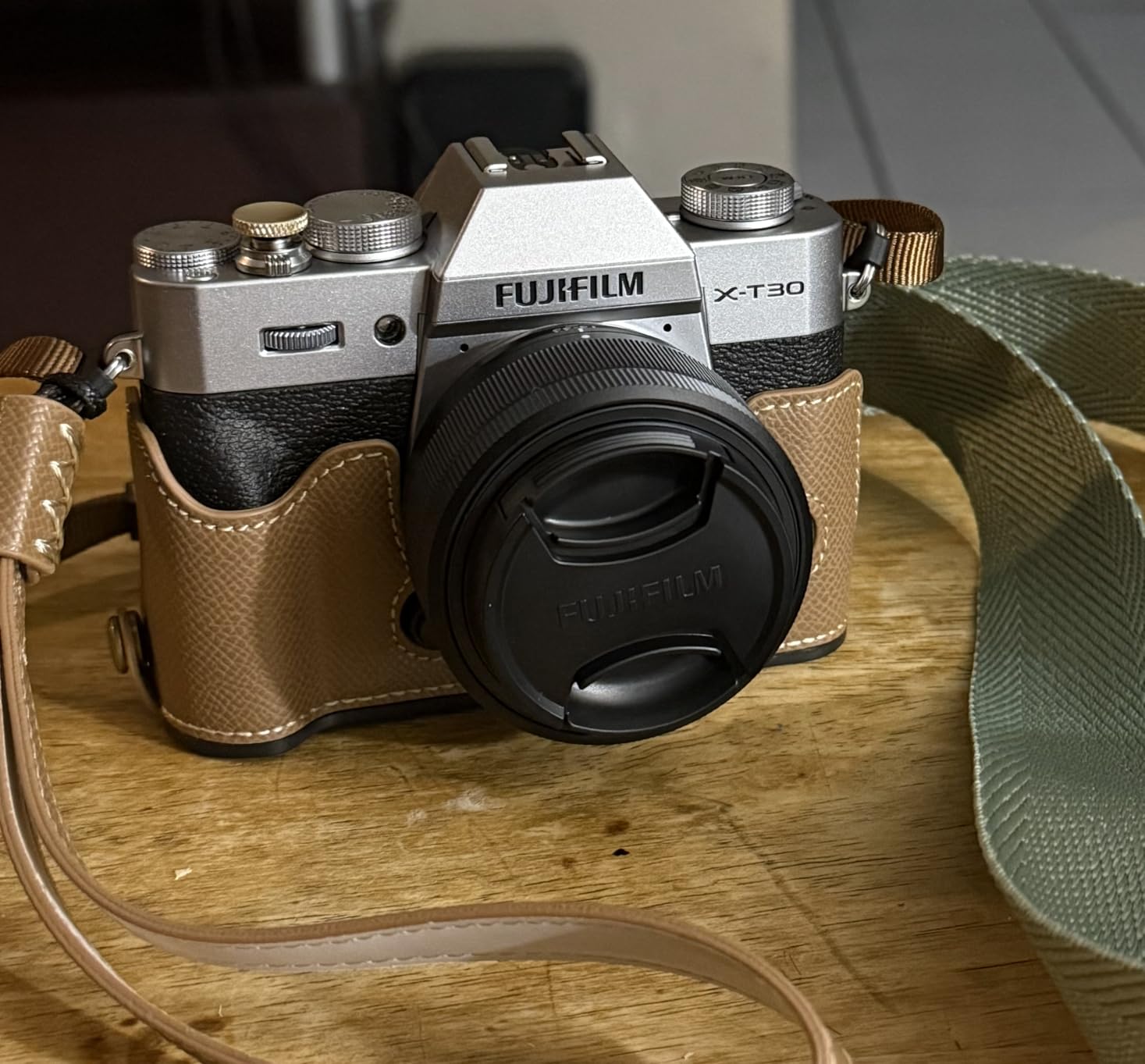
The Fujifilm X-T30 III is the value pick, and owners describe it in terms most street shooters will recognise: a fun, compact camera that makes them enjoy taking pictures again. At 1.1 pounds with a 26.1MP APS-C sensor, it is the smallest interchangeable-lens body here and takes up almost no room in a bag.
Autofocus is 425-point phase detection with AI subject detection, and reviewers call it fast and dependable even with moving subjects. For street work that is the number one requirement, and it is why this body punches above its weight despite older sensor technology. Burst is 20 fps, which is plenty for a walking subject.
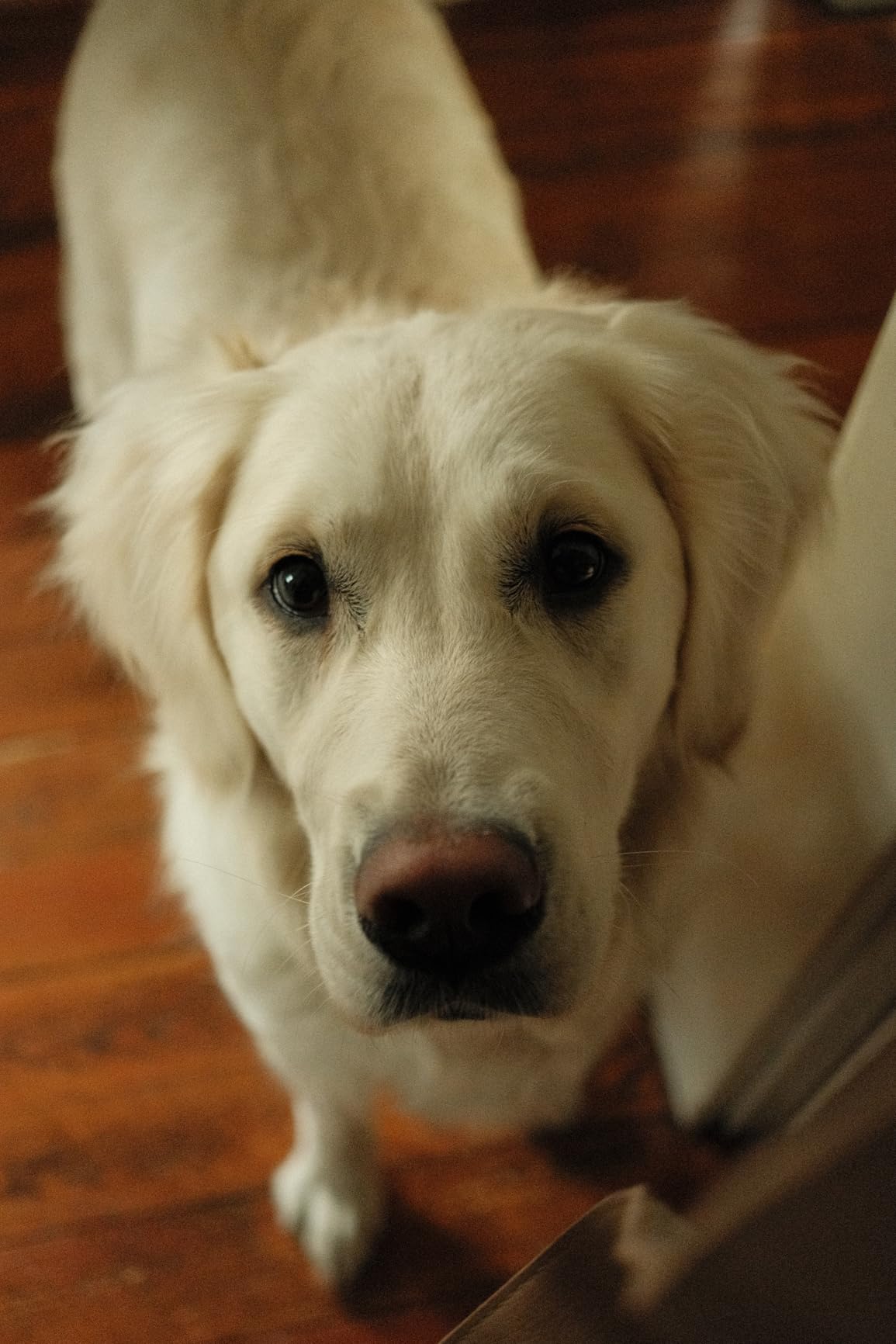
Film simulations are the reason a lot of buyers land here, with 20 built-in looks plus custom recipes. Shooting JPEG in Classic Chrome or Acros means a walk produces a usable set of frames without a laptop, which is exactly the workflow that keeps people photographing.
An Auto mode handles the moment you forget your settings entirely, which on a crowded street happens more often than experienced shooters admit.
Where this budget body still wins
Its size is the headline. A 0.62x electronic viewfinder in a body this small means you can carry it every day without planning around it, and that is the single most important factor in whether you shoot street at all. The 13-33mm kit zoom is also more useful on the street than a longer kit lens, giving you wide framings in tight alleys.
It supports the full X Series lens range, so a fast 23mm or 33mm prime turns it into a proper low-light street camera later.
What the trade-off costs you
There is no in-body image stabilization, which makes static handheld work at dusk the weak point rather than a solved problem. The f/3.5-6.3 kit zoom is slow, so low light means high ISO and noisy files.
Battery life is short and no charger is included, and the tilt screen only moves up and down rather than fully articulating. The Fujifilm menu system also takes adjustment time, and reviewers mention the smartphone and upload apps as unreliable.
5. Fujifilm X-S20 – Best for Hybrid Street and Event Shooters
Fujifilm X-S20 Mirrorless Camera Body
26.1MP sensor
7-stop IBIS
491 g body
Vlog mode and 4K streaming
Pros
- Light 491 g body with a deep secure grip
- 7-stop stabilization
- Subject detection autofocus
- NP-W235 battery rated around 750 frames
Cons
- 26.1MP sensor is older than 40MP bodies
- Lens not included
- No built-in flash
- AF and stabilization trail the newest X-T and X-H bodies
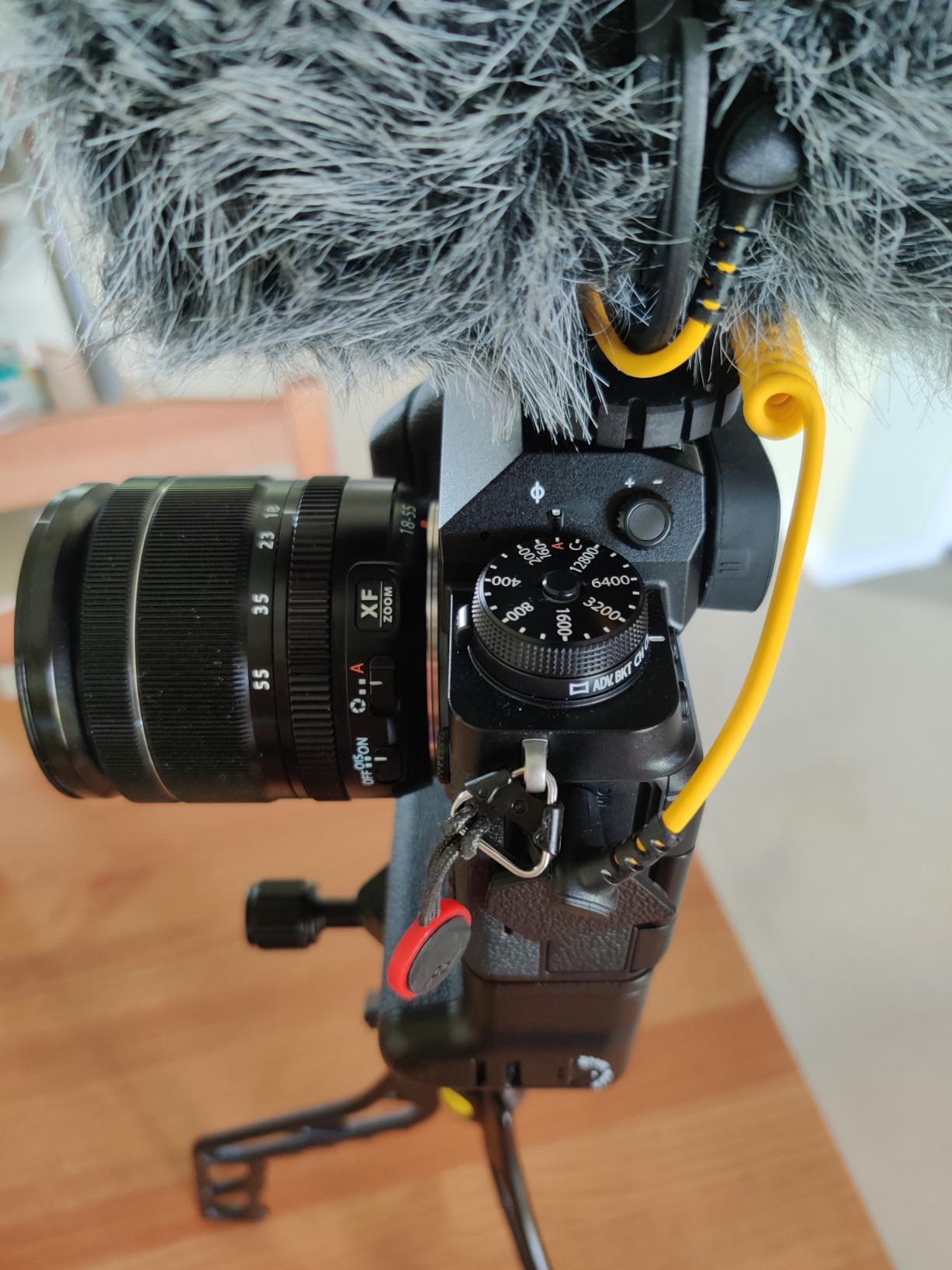
The Fujifilm X-S20 is on this list for a specific reason: it is the body that works when street work turns into paid coverage. The deep handgrip is noticeably more substantial than the rangefinder-style bodies, and that grip matters when you are supporting a faster prime for six hours of ceremony coverage.
It pairs a 26.1MP X-Trans CMOS 4 BSI sensor with the X-Processor 5, which is the first time that processor has appeared in an X-S body. That pairing improves autofocus speed and accuracy, and subject detection AF matches higher-tier X-series behaviour. Stabilization is rated at up to 7 stops, one stop more than the previous generation in this line.
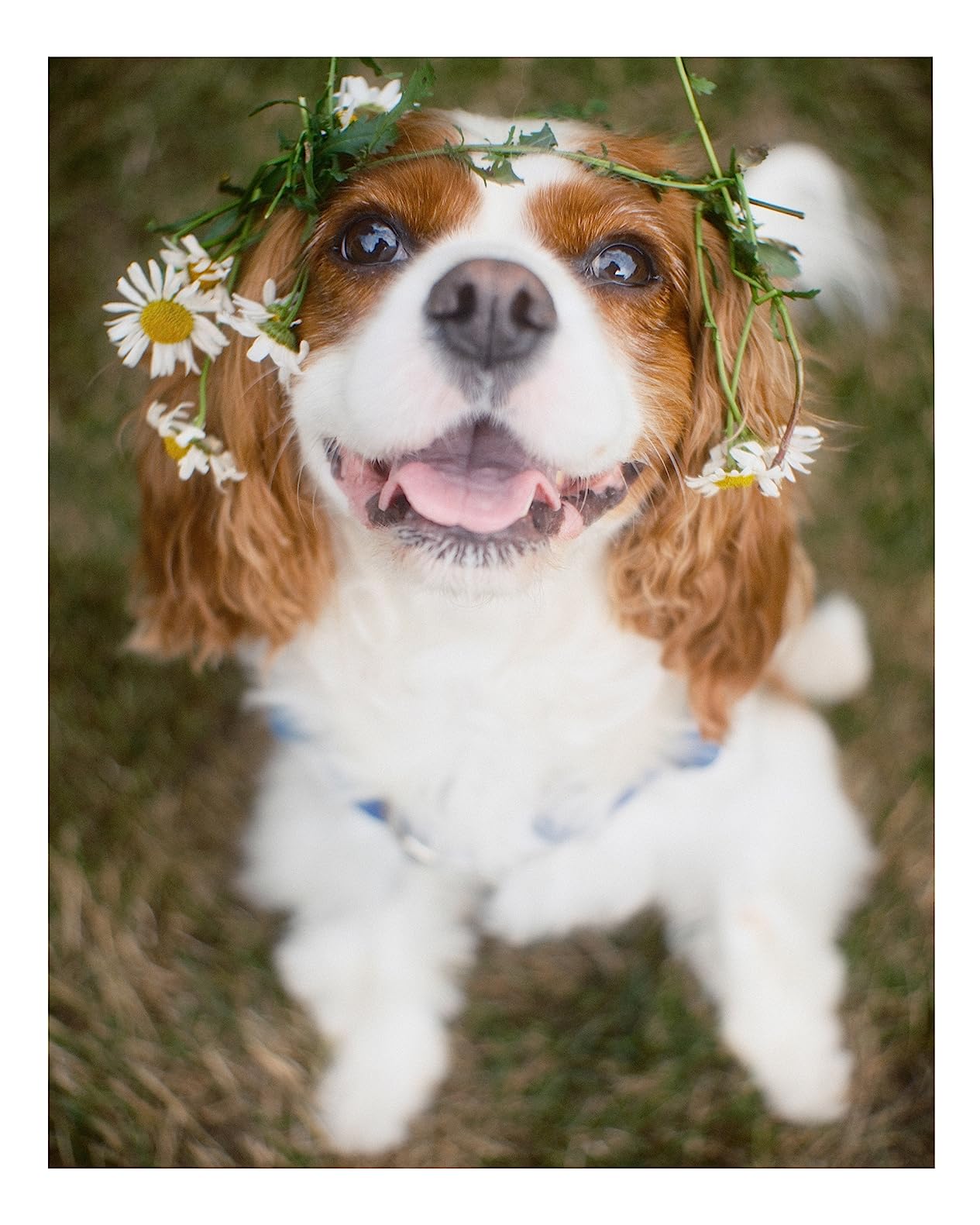
The video side is genuinely strong for a hybrid workflow: 6.2K/30p 10-bit internal recording, 4K/60P streaming over USB-C, and a dedicated Vlog mode with one-tap product focus. For a shooter who cuts short highlight reels between ceremonies, that is not a gimmick.
The NP-W235 battery is rated at roughly 750 frames in Normal mode, and dual card slots are a relief on a long day.
Who should buy the X-S20 for street work
Anyone who needs a real grip and fast autofocus for people moving toward them, and who shoots video as well as stills. A 180-degree vari-angle touchscreen also helps in situations where you cannot get your eye to the viewfinder, such as a crowd pressing in at a street market.
If you want more on the video and low-light side of hybrid work, our underwater camera guide covers the housing and handling considerations for a very different kind of constrained shooting.
Where it falls behind
The 26.1MP X-Trans CMOS 4 sensor is the older generation next to the 40.2MP X-Trans 5 HR sensors in the X100VI, X-E5, and X-T50, and it shows in cropping latitude. The body is sold without a lens and has no built-in flash, so you are choosing both yourself.
Its 4.1 average rating reflects exactly that, plus the fact that stabilization and autofocus still trail the newest X-T and X-H bodies. For pure stills, this is a specialist pick rather than the default.
6. Fujifilm X-Pro3 – Best Rangefinder-Style Body for Street
Fujifilm X-Pro3 Digital Camera – Black X-Pro3 Mirrorless Digital Camera – Black (Body Only)
26.1MP sensor
Hybrid optical and electronic viewfinder
Weather sealed
11 fps
Pros
- Hybrid optical and electronic viewfinder is genuinely unique
- Weather sealed titanium top and base plates
- Hidden screen keeps the back clean
- Exceptional JPEG rendering
Cons
- Hidden rear screen frustrates many users
- Optical finder vignettes with longer lenses
- Autofocus is slow versus Canon and Nikon
- 26.1MP sensor and dated video
The Fujifilm X-Pro3 is the body I recommend to people who want the act of photographing to feel deliberate. Its advanced hybrid multi viewfinder combines a 0.5x optical finder with a 3.69M-dot OLED electronic finder, and having the option of a purely optical window with parallax correction changes how you walk into a scene. You frame first, then decide whether you need the screen at all.
Everything about the physical design serves that. The screen folds inward so the back of the camera is a flat, clean surface with no glowing panel, and the titanium top and base plates are weather sealed against shock, water, and temperature. For long walks in bad weather that build quality is not a spec-sheet nicety.
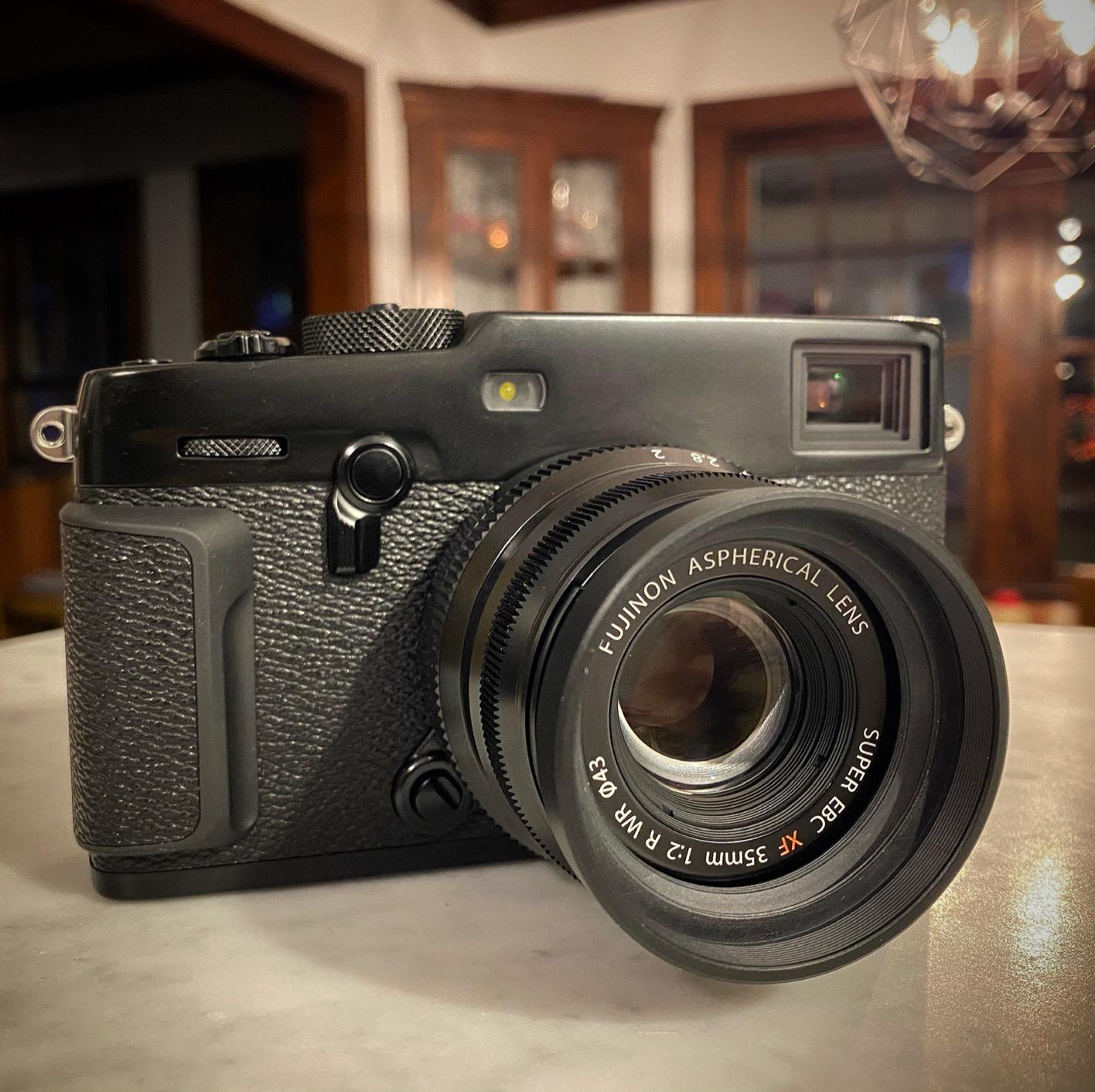
Sixteen film simulations include CLASSIC Neg. and MONOCHROMATIC Color, and the JPEG rendering is the reason many owners still use this body daily years after release. In the r/fujifilm community, long-term users describe it as a camera that makes the photography fun again, and the colour range and painting-like render come up repeatedly.
At 11 fps it is not a sports body, and it is not trying to be.

Why the rangefinder shape suits candid work
Because nothing on the back of the camera lights up, you can raise it to eye level without broadcasting that you are there, and the optical finder gives you a bright, lag-free view of the scene including anything outside the frame. On a tight street that is a genuine behavioural advantage over a body with a fixed glowing screen.
It also takes interchangeable lenses, so it solves the 23mm-only problem the X100 line creates. Short primes work best through the optical finder, and anything longer will vignette the view.
Where the X-Pro3 will annoy you
The hidden rear screen is the dominant complaint. If you want to shoot from the hip above your head, or review images on the display in bright sun, the concealed panel works against you, and that is a genuine daily friction rather than a preference.
Autofocus is not as fast as Canon and Nikon equivalents, the 26.1MP sensor and 4K video are dated next to current bodies, and the menu system has a steep learning curve. If your street is full of people running, this is not the body.
7. Fujifilm X-T4 – Best for All-Weather and All-Day Street Work
Fujifilm X-T4 Mirrorless Camera Body – Black
26.1MP sensor
6.5 stops IBIS
15 fps mechanical shutter
607 g
Pros
- Five-axis IBIS up to 6.5 stops
- Quiet mechanical shutter rated for 300000 actuations
- Weather sealed magnesium body
- Dual card slots and long battery life
Cons
- Bodies changed shape so older cases do not fit
- NP-W235 battery is incompatible with older X-series packs
- Autofocus still trails Canon and Sony
- Dongle needed for headphone jack
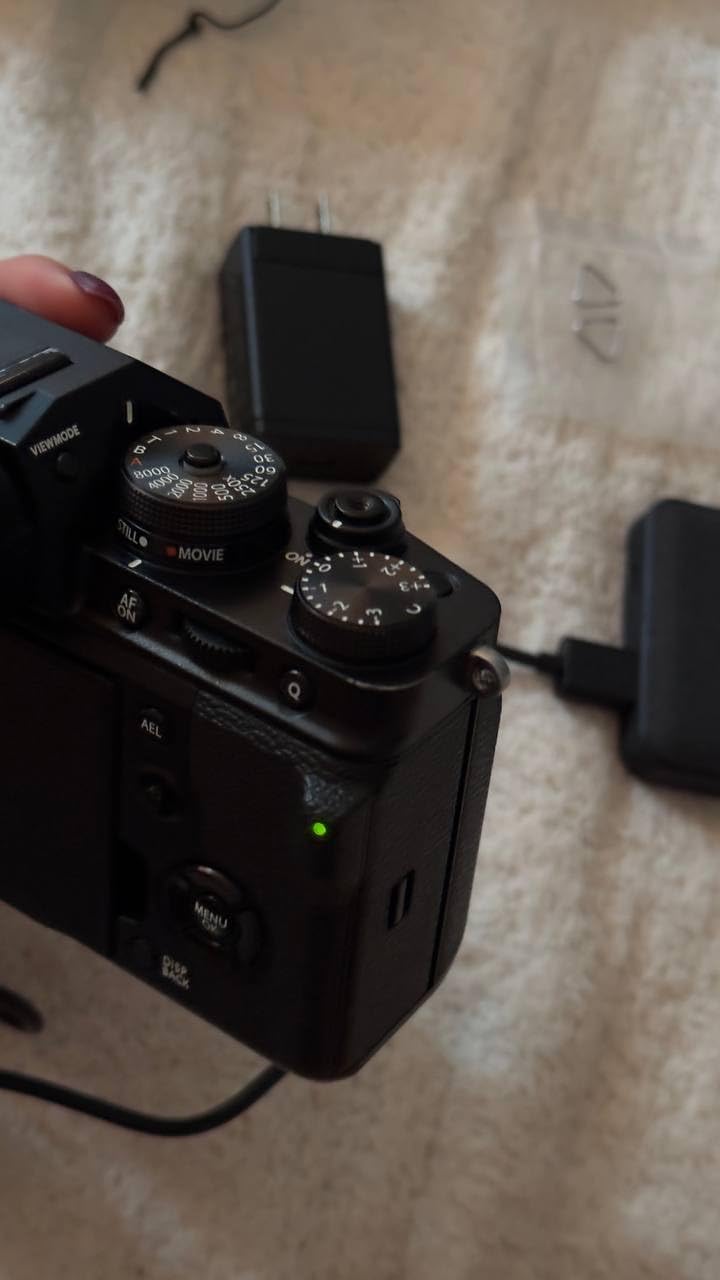
The Fujifilm X-T4 is the one to buy if your street photography happens in weather and runs all day. Long-term users widely describe it as the best APS-C stills camera they have used, and the reason is boring and excellent: a quiet mechanical shutter rated for 300,000 actuations, a weather sealed magnesium body, dual card slots, and battery life rated at up to 600 frames.
Five-axis in-body stabilization delivers roughly 5 to 6.5 stops, with four-axis digital stabilization on top. That is enough to handhold slow shutter speeds on static street subjects, which is where a lot of atmospheric street frames come from. The mechanical shutter is fast, quiet, and durable, and it also avoids the rolling-shutter artefact that electronic shutters can introduce on movement.
The 1.62M-pixel vari-angle touchscreen folds away, so it does not glow when you do not want it to, and the 3.69M-dot viewfinder at 100 fps with 0.75x magnification is bright and fast for a working electronic finder. Autofocus uses 425 points with eye detection and continuous tracking down to -6EV.
Video is DCI 4K/60p and FHD/240p with 10-bit F-Log, and the Eterna Bleach Bypass simulation is a good starting look for high-contrast street.
Where the X-T4 earns its size
At 607 g it is the heaviest body here, and that is the deal. It is a full-size grip, a full-size viewfinder, and a body that shrugs off sustained rain, which is a real condition in a lot of cities. The dual card slots also let you mirror every frame, which matters when a body goes out with a wedding or event crew.
It is sold as a body only, so you choose the lens, and for street that means a fast prime or a short wide zoom rather than a kit.
What to watch for
Autofocus and subject tracking still fall short of Canon and Sony, particularly in video, and white balance and exposure can hunt in complex lighting unless you lock them. That last one matters on mixed street lighting, where a locked setting saves a lot of editing.
Ownership irritances include battery incompatibility with older X-series packs, no external charger in the box, a body shape change that orphans existing cases, and a dongle requirement for the headphone jack.
8. Fujifilm X100F – The Classic Fixed-Lens Street Camera
Fujifilm X100F 24.3 MP APS-C Digital Camera-Black
24.3MP X-Trans CMOS III
Fixed 23mm f/2
Optical viewfinder
2 lb
Pros
- Excellent 23mm f/2 lens with an optical viewfinder
- Superb JPEG colour with minimal processing
- Built-in ISO dial in the shutter speed dial
- Firmware upgrades added autofocus options
Cons
- 24.3MP sensor is dated
- No in-body image stabilization
- Fixed 3.0-inch LCD with limited articulation
- Contrast-detect autofocus is slow on moving subjects
The Fujifilm X100F is the reason the X100 line exists, and for pure street work it is still a serious answer. It has the highest review volume of any camera in this group, and owners consistently point to the same three things: the 23mm f/2 lens, the optical viewfinder, and the JPEG rendering.
The controls are the purest expression of the idea. A physical aperture ring, a front command dial, and a built-in ISO dial incorporated into the shutter speed dial mean you can set exposure without looking at anything. The 8-way focus lever is a mechanical throw rather than a joystick, and I find it faster for deliberate repositioning between subjects than modern thumb controls.
The 24.3MP X-Trans CMOS III sensor has no low-pass filter, and firmware upgrades over the camera’s life added single, zone, and wide-tracking autofocus options. It is not a fast camera, but it is a deliberate one.
Why photographers still carry it
The 0.5x magnification optical viewfinder is bright, has no lag, and costs no battery, and the 23mm f/2 focal length is the same 35mm-equivalent field of view the X100VI uses. Owners describe the small, simple design with dedicated dials as ideal for discrete street work, and the minimal post-processing requirement of the JPEGs is what keeps people shooting it.
If you are buying used, this body tends to attract people who want the original feel, so treat the fixed screen and slow autofocus as known traits rather than surprises.
Where it has fallen behind
There is no in-body image stabilization, which makes handheld low-light work harder than on any of the newer bodies here. Autofocus is contrast-detect only and slow for moving subjects, so it suits pauses rather than action.
The 24.3MP sensor is dated next to 40MP Fujifilm bodies, the 3.0-inch LCD is fixed with limited articulation, and video is 1080p only with no microphone input. If your street is fast-moving or if you shoot at night, look at the X100VI or the X-E5 instead.
X100V or X100VI: Which One for Street Work
The X100V versus X100VI question is the most searched comparison in this cluster, and the street answer is narrower than the general one. Both bodies share the fixed 23mm f/2 lens and the hybrid optical/electronic viewfinder, so the framing experience is identical. The X100VI adds a 40.2MP X-Trans CMOS 5 HR sensor and 5-axis in-body stabilization rated at up to 6.0 stops. That stabilization is the decisive spec, because it lets you handhold shutter speeds two to three stops slower than the X100V allows on a static subject.
There is a real trade-off the sales pages skip. The X100VI tops out at 20 fps while the X100V reaches 30 fps, so if your street is fast-moving traffic, running people, or sport-like action, the older body has the advantage in a burst. The counterargument from the community is straightforward: a slower shutter speed with stabilization produces the atmospheric frame you wanted, and 20 fps is still far more than walking-pace candid work needs.
Our verdict is that the X100VI is the right buy today for anyone starting out, and the X100V only makes sense as a lower-cost way into the same lens and viewfinder experience. Note that the X100V is not one of the eight bodies we tested here, so treat that last point as guidance rather than a tested verdict.
Fixed Lens or Interchangeable: Which X Mount Shape Fits Street
Decide this before you compare bodies, because it eliminates half the list. A fixed 23mm forces you to work inside one field of view, which sounds like a limitation and is genuinely a discipline. It is the reason street photographers who use the X100 line rarely think about lenses: there is no decision, and the discipline of a single angle produces a recognisable body of work.
Interchangeable lenses buy you the opposite. If you shoot bars and interiors, a 35mm prime frames tighter and gathers more light than the 23mm ever will. If you shoot wide city architecture or cramped alleys, a wider view helps. The cost is a bigger bag, a slower draw, and a visible lens change that announces what you are doing.
Our rule of thumb: buy the X100VI if you want one camera to end the decision. Buy the X-E5 if you already know a 23mm-only view will bore you, since it gives you interchangeable lenses in a body the same size as the X100VI. Consider the X-Pro3 if the optical viewfinder itself is what draws you to rangefinder shooting.
For prime lens specifics, our guide to the best lenses for street photography covers the focal lengths in more depth, including the 35mm options in our 35mm lens roundup.
Best Fujifilm Street Lenses by Focal Length
Focal length, not brand, is what decides whether a frame works. On an APS-C sensor, a 23mm lens gives roughly a 35mm-equivalent field of view, which is the classic street framing: environmental, close enough to fill a frame, wide enough to include a passer-by.
For maximum aperture and night work, the XF 23mm f/1.4 R LM WR is the closest match to the X100VI’s native field of view, and users on r/FujifilmX describe it and the 33mm f/1.4 as very effective for street photography, especially at night. The XF 27mm f/2.8 R WR is the pocketability play: thin enough to vanish into a body, and the natural companion to the X-E5 in our list. For low light in bars, restaurants, and interiors, the XF 35mm f/2 R WR is the better option, as the sharper aperture and tighter framing both work in your favour when light is poor.
That pairing, a 27mm f/2.8 by day and a 35mm f/2 for evenings, is the most common two-lens answer we hear from working Fujifilm street shooters. If you want more perspective on focal length choices, our guide to cameras for fashion photography covers the opposite end of the aperture range.
Fujifilm Street Photography Settings and Film Simulation Recipes
A film simulation is a one-click in-camera JPEG look that replaces post-processing, and it is the reason Fujifilm bodies are popular for street. If you are shooting straight out of camera, the look has to be right in the camera.
Start with these five steps, and they work on the X100VI and on any X-mount body in this guide.
1. Set a focus zone rather than a single point. A mid-sized zone with wide tracking lets you acquire a subject without hunting, which is how street work is actually done. On the X100-series bodies the 8-way focus lever on the X100F and the zone modes across the range make this a mechanical move rather than a menu one.
2. Use a shutter priority baseline of 1/125s at f/5.6 in daylight. That combination holds a walking subject and keeps depth of field deep enough that you do not have to focus precisely. When light drops, open the aperture before you drop the shutter speed.
3. Let IBIS do its work. On the X100VI, X-E5, X-T50, and X-S20 you can drop to 1/30s or slower on a static subject and still get a sharp frame. On the X100F or X-T30 III, with no stabilization, keep speeds above 1/125s and raise ISO instead.
4. Reach for the ND filter in bright sun. On the X100VI the internal 4-stop ND lets you shoot around f/5.6 to f/8 in full daylight, which is where the 23mm lens is sharpest.
5. Pick one recipe and commit. For black-and-white work, Acros gives strong contrast and a clean highlight roll-off that suits high-contrast architecture and backlit silhouettes. Classic Chrome is a good default for colour street work because it holds skin tones without pushing them orange. CLASSIC Neg. on the X-Pro3 gives a muted, almost documentary colour that is easy to set against a busy background. Nostalgic Neg. is the softer option when you want less contrast in overcast light.
For our own event and candid work, the habit that helps most is saving a film simulation to a custom slot so you can move between a colour recipe and Acros in one press, mid-walk, without entering a menu.
Buying Guide: How to Choose a Fujifilm Street Camera
Start with three questions, and the answer almost picks itself. Do you want one camera and no decisions? Take the X100VI. Do you want interchangeable lenses in a body that still fits a jacket pocket? Take the X-E5. Do you want a rangefinder optical viewfinder and a body built like a film camera? Take the X-Pro3.
Second question: how much low light do you actually shoot? If dusk and night are part of your normal route, in-body stabilization is not optional. The X100VI, X-E5, X-T50, X-S20, and X-T4 all have it, with the X-E5 and X-T50 rated highest at 7 stops. The X100F and X-T30 III do not, and you will raise ISO more often.
Third question: what happens when it rains? If your street work means standing in weather, weather sealing decides between the X-Pro3 and the X-T4 and everything else. The compact bodies are not sealed to that standard, and that is a limitation, not a dealbreaker.
Finally, consider the honest constraints. Every fixed-lens body on this list gives you one focal length. Every body sold with a kit zoom gives you a slow aperture in the bundle. And every one of these bodies rewards you for shooting JPEGs, which is a different creative habit from RAW plus a post workflow. If you enjoy editing, that last point is not a problem, it is just a different camera experience.
Frequently Asked Questions
Which Fujifilm camera is best for street photography?
The Fujifilm X100VI is the best overall for street work. It combines a pocketable 521 g body, a silent leaf shutter, a fixed 23mm f/2 lens giving a 35mm-equivalent field of view, a built-in 4-stop ND filter, and up to 6.0 stops of in-body stabilization that lets you handhold slow shutter speeds at dusk. The Fujifilm X-E5 is the alternative when you want interchangeable lenses in a body of similar size.
Which Fujifilm camera is better, the X100V or the X100VI?
For street work the X100VI is the better camera. Both share the fixed 23mm f/2 lens and hybrid viewfinder, but the X100VI adds a 40.2MP sensor and stabilization rated at up to 6.0 stops, which lets you handhold shutter speeds the X100V cannot. The X100V advantage is burst rate at up to 30 fps against 20 fps on the X100VI, which matters only for fast-moving subjects.
Which is better, the XE4 or the XPro 3 for street?
For street, the X-Pro3 wins on body character: its hybrid multi viewfinder, hidden screen, and weather sealed titanium construction make it the more deliberate and discreet tool. The X-E4 wins on weight, modern autofocus, and cost, and the current X-E5 covers that brief with a 7-stop IBIS. A used X-Pro2 is a third option for anyone who wants the rangefinder experience on less.
What are the best settings for street photography on the Fujifilm X100VI?
Use a mid-sized focus zone with wide tracking, and shoot shutter priority around 1/125s at f/5.6 in daylight. Open the aperture before dropping the shutter speed, and lean on the up-to-6.0 stops of IBIS for static subjects at dusk. Turn on the internal 4-stop ND in bright sun to reach f/5.6 to f/8, where the lens is sharpest. Shoot Acros for black and white or Classic Chrome for colour.
Which Fujifilm lenses are best for street photography?
For the classic street field of view, the XF 23mm f/1.4 R LM WR matches the X100VI’s native framing and is fast enough for night. The XF 27mm f/2.8 R WR is the pocketability option and pairs naturally with the X-E5. For bars, restaurants, and interiors, the XF 35mm f/2 R WR is the better low light choice. The XF 33mm f/1.4 R LM WR covers night work with a slightly tighter view.
What camera do most street photographers use?
There is no dominant body. Working street photographers mostly shoot whatever already lives in their bag, which is why habit beats spec sheets. Within Fujifilm, the X100 series dominates for a fixed lens and near-silent shutter, and the X-Pro series for the rangefinder optical viewfinder with interchangeable lenses. Outside the brand, the Ricoh GR IIIx and Leica D-Lux 8 are the comparable pocket compacts.
Final Verdict: The Best Fujifilm Cameras for Street Photography in 2026
The best Fujifilm cameras for street photography in 2026 are decided by how little they ask of you. The X100VI is the winner overall: a 521 g body, a silent leaf shutter, a fixed 23mm f/2, a built-in ND filter, and 6.0 stops of stabilization in a pocketable frame. The X-E5 is the pick if a single focal length already feels like a limit, and the X-T50 is the easiest body for a new photographer to learn on.
Further down, the X-T30 III is the budget on-ramp, the X-S20 serves hybrid street and event days, the X-Pro3 delivers the rangefinder optical viewfinder, the X-T4 handles all-weather all-day work, and the X100F remains a serious fixed-lens street tool. Whichever you choose, carry it every day, because the best camera for street photography is the one that is already in your hand when something happens.