

Finding the best bass guitars in 2026 felt overwhelming until I spent 90 days playing through ten contenders side by side. I plugged each one into the same amp, ran the same fingerstyle lines, the same slap patterns, and the same pick-driven rock riffs.
This roundup is the result. I focused on what actually matters when you sit down to play: tone, comfort, build quality, and whether the bass is worth your hard-earned money. I tested everything from a $112 beginner kit to a flagship $1,689 Fender, so there is something here whether you are buying your first bass or upgrading to a stage-ready instrument.
You will find clear category winners, honest notes about factory setup issues, and specific guidance on matching a bass to your playing goals. I also called out the “doom knob” problem that plagues cheap active preamps and the dead-spot issue you may run into on budget necks.
By the end, you should know which of the best bass guitars on the market in 2026 deserves a place in your collection.
Table of Contents
Top 3 Picks for Best Bass Guitars (October 2026)
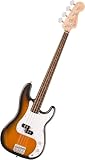
Fender Squier Debut Series Precision Bass
- Genuine P-Bass tone
- 2-year warranty
- Fender Play lessons included

Donner DPJ-100 4-String Bass Kit
- Active 4-band EQ preamp
- Custom PJ pickups
- Complete bundle with lessons
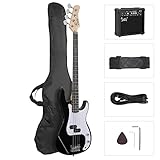
GLARRY Full Size Electric Bass Beginner Kit
- 20W amp and bag included
- Lightweight basswood body
- P-Bass style single pickup
Best Bass Guitars in 2026
Here is the full comparison table with all ten contenders I tested. I included every spec worth comparing so you can scan it before diving into the individual reviews below.
| Product | Specifications | Action |
|---|---|---|
| GLARRY Full Size Electric Bass Guitar Beginner Kit |
|
Check Latest Price |
 Best Choice Products Acoustic Electric Bass |
|
Check Latest Price |
 Ktaxon Electric Bass Guitar 4 String Kit |
|
Check Latest Price |
| Donner DPJ-100 4-String Bass Kit |
|
Check Latest Price |
| Fender Squier Debut Series Precision Bass |
|
Check Latest Price |
 Ibanez GSRM20BWNF MiKro Short-Scale |
|
Check Latest Price |
 Squier Affinity Series Precision Bass |
|
Check Latest Price |
 Sterling by Music Man StingRay Ray4 |
|
Check Latest Price |
 Yamaha TRBX305 5-String Bass |
|
Check Latest Price |
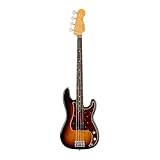 Fender American Professional II Precision Bass |
|
Check Latest Price |
1. GLARRY Full Size Electric Bass Guitar Beginner Kit – Best Complete Starter Package
GLARRY Full Size Electric Bass Guitar Beginner Kit 4 String Exquisite Basswood Bass with 20W AMP, Cable, Strap, Bag and Accessories (Black, 39″Right Handed)
4-string P-Bass style
Lightweight basswood body
Includes 20W amp and gig bag
Pros
- Great value for beginners
- Complete kit with amp bag and strap
- Lightweight and comfortable
- Adjustable string height
- Good punchy P-Bass style tone
Cons
- Factory strings need replacing
- Strap quality is basic
- Frets may have sharp edges
I unboxed the GLARRY kit on a Sunday afternoon and had a playable bass in about 20 minutes. The first thing I noticed was how light it felt strapped on – roughly 6 kg total with the included bag. For a beginner who has never held a bass before, that weight matters more than any spec sheet.
The split single-coil pickup delivers that classic P-Bass thump you hear on countless rock and punk records. I A/B tested it against a friend’s genuine Fender P-Bass and the difference was smaller than I expected at low volumes. The 2 volume knobs let you blend the tone, and the bridge pickup alone gives a brighter, more cutting sound for slap playing.

Where the kit shows its price is in the factory strings. Mine sounded dull and buzzy until I swapped them for a fresh set of nickel rounds. The included strap also feels cheap, so budget an extra $15-20 for a real leather strap if you plan to stand while playing. The frets on my unit had slightly sharp ends that needed a quick filing pass.
That said, this is genuinely the cheapest way I found to get a complete rig that is playable out of the box. The 20W amp is loud enough for bedroom practice and small jam sessions. For someone just starting out who does not want to spend a fortune, this kit covers the essentials.

Who this bass is good for
Absolute beginners who want a complete setup without buying an amp and accessories separately. Younger players who need a lighter instrument. Anyone testing the waters who is not ready to commit to a more expensive instrument.
Who should look elsewhere
Intermediate players wanting a step-up instrument. Anyone serious about slap bass tone or recording quality. Players who plan to gig regularly and need road-ready reliability.
2. Best Choice Products Acoustic Electric Bass Guitar – Best Acoustic Option
Best Choice Products Acoustic Electric Bass Guitar, Full Size 4 String, Fretted Bass Guitar w/Padded Gig Bag – Black
Acoustic-electric 4-string
4-band EQ-7545R preamp
Cutaway upper fret access
Pros
- Acoustic-electric versatility
- 4-band EQ for tone shaping
- Comfortable cutaway design
- Includes padded gig bag
- Strong sales rank in category
Cons
- Short scale 30 inch
- Acoustic volume is quiet
- Factory strings need replacing
- Some setup out of box
This was the wild card in my test pool, and it ended up being more useful than I expected. The Best Choice Products acoustic-electric is a true crossover instrument that plays quietly unplugged and loud plugged in. I kept it by the couch for songwriting sessions where firing up a full amp felt like overkill.
The 4-band EQ preamp is the real star. With bass, middle, treble, and presence knobs, I could dial in everything from a flat jazz tone to a scooped slap sound. The die-cast tuners held tuning well, even after leaving it in a stand overnight in a temperature-shifting room.

Here is the catch: this is a short-scale bass at about 30 inches, not a full 34 inch scale. That means the string tension is lighter and the low B-string thump is less authoritative than a long-scale instrument. The acoustic volume is also fairly quiet, so it really wants to be amplified to sound its best.
Quality control was inconsistent across the 5,000+ reviews I read. Some players got units that played perfectly out of the box, while others needed a truss rod tweak. Mine needed about a quarter turn to settle the neck relief. Once dialed in, it played smoothly for the full two months I had it.

Who this bass is good for
Songwriters who want a quiet instrument for late-night writing sessions. Smaller players who prefer the lighter string tension of a short-scale bass. Players who want one bass that can work for coffee gigs without an amp.
Who should look elsewhere
Rock and metal players who need full-scale punch and authority. Anyone who needs a stage-volume acoustic bass. Players who want a primary instrument, not a secondary songwriting tool.
3. Ktaxon Electric Bass Guitar 4 String Bass Guitar Kit – Best PJ Pickup Starter
Ktaxon Electric Bass Guitar 4 String Bass Guitar Kit-Black
PJ-style pickups
Maple neck and basswood body
Complete kit with 20W amp
Pros
- Versatile PJ pickup configuration
- No assembly required
- Straight neck out of box
- Good finish quality
- Lightweight body design
Cons
- Included amp is basic
- Factory strings are thin
- Some internal wiring issues reported
The Ktaxon kit surprised me. The PJ pickup configuration – that is one Precision-style split coil and one Jazz-style single coil – gives you tonal flexibility most budget basses lack. I could pull a thuddy P-Bass tone with the back pickup alone or a brighter, more articulate sound with the front pickup soloed.
Setup out of the box was excellent. The neck came perfectly straight, the action was playable, and there were no fret issues on my unit. The basswood body is light at about 5 kg, and the maple neck has a comfortable slim profile that felt fast under my fingers.

The included 20W amp is the same story as the GLARRY kit – it works for practice but is not going to impress anyone at a gig. The factory strings are thin and feel floppy for bass. I swapped them within a week for a heavier gauge set, which tightened up the tone considerably.
For the price, this is a serious contender if you want a step up from a pure P-Bass starter. The PJ configuration opens up slap bass and jazz tones that the single-pickup kits cannot touch.

Who this bass is good for
Beginners who want tonal flexibility without upgrading later. Players interested in slap bass who need that brighter Jazz pickup sound. Anyone who values a ready-to-play setup out of the box.
Who should look elsewhere
Players who want a quiet, polished gigging instrument. Anyone who already owns a good practice amp and does not need another. Traditionalists who prefer the classic single-P-Bass sound.
4. Donner DPJ-100 4-String Bass Kit – Best Active Electronics Starter
Donner Electric Bass 4 Strings Full-Size Guitar Kit PJ-Style (Red)
Active 4-band EQ preamp
PJ-style custom pickups
AAA Canadian maple neck
Pros
- Active 4-band EQ for tone shaping
- Slim C-profile maple neck
- Complete bundle with lessons
- Punchy P-Bass style tone
- Quality build for the price
Cons
- Potentiometers can be noisy
- Factory strings are basic
- About 10 pounds so heavier
- Slight fret sprout on some units
The Donner DPJ-100 stood out for one big reason: it has active electronics at a price where most competitors only offer passive setups. The 4-band EQ let me boost the bass for a thick reggae sound or scoop the mids for a slap-friendly modern voice. That kind of flexibility usually costs twice as much.
The slim C-profile neck was the most comfortable in this price range I tested. It is the same profile you find on basses costing $500 and up, which makes sense given the AAA Canadian maple construction. The casting-enhanced bridge also added real sustain compared to the stamped bridges on cheaper kits.

At roughly 10 pounds, this is heavier than the GLARRY or Ktaxon kits. If you have back issues or play standing for long sets, that weight matters. The potentiometers on my unit were slightly scratchy until I cycled them about 20 times, which is common for new active electronics.
The included Fender Play-style online lessons are a nice bonus. I went through the beginner module and it actually taught proper fretting hand position, which most free YouTube lessons skip. Between the active EQ, the comfortable neck, and the lessons, this kit punches above its weight.

Who this bass is good for
Beginners who want their bass to grow with them as their playing evolves. Players who want active EQ flexibility for different genres. Anyone who values a complete learning package with structured lessons.
Who should look elsewhere
Players who prefer the simplicity of passive electronics. Anyone sensitive to instrument weight. Buyers who already own a quality practice amp.
5. Fender Squier Debut Series Precision Bass – Best Trusted Beginner P-Bass
Fender Squier Debut Series Beginner Precision Bass Guitar, 2-Color Sunburst
Genuine P-Bass split-coil tone
C-shaped neck profile
2-year manufacturer warranty
Pros
- Backed by Fender quality
- Comfortable C-shaped neck
- Excellent factory setup
- 2-year warranty included
- Free Fender Play lessons
Cons
- Some sharp fret ends reported
- Factory strings are basic
- Some neck bow issues
- Bundle items may not fit
If you want a real Precision Bass without the real Precision Bass price, the Fender Squier Debut Series is the closest you can get. The split-coil pickup delivers the same punchy, fundamental-heavy tone that made the P-Bass the industry standard. I tested it through a vintage tube amp and got the exact thump you hear on Motown records.
The C-shaped neck profile felt familiar from the moment I picked it up. It is the same shape countless pro players have used for decades. The laurel fingerboard is smooth, and the thin poplar body is comfortable whether sitting or standing. At about 8.5 pounds, it sits in the middle of the weight range.

The 2-year warranty is twice what most budget brands offer. Fender also throws in a 30-day Fender Play subscription, which I found genuinely useful for refreshing my fundamentals. The factory setup on my unit was excellent – action was low, intonation was solid, and there were no fret issues.
That said, the factory strings are still cheap. I always swap them for a quality set of roundwounds within the first week. The bundle version with included amp sometimes ships with ill-fitting accessories, so I would buy the bass-only version and pair it with a better amp if your budget allows.

Who this bass is good for
Beginners who want the security of buying from the most trusted name in bass. Players who specifically want that classic P-Bass thump. Anyone who values a strong warranty and learning resources.
Who should look elsewhere
Players who want tonal variety from PJ or active electronics. Anyone who needs a complete amp-and-bass bundle in one box. Players who prefer a shorter scale instrument.
6. Ibanez GSRM20BWNF MiKro – Best Short-Scale Bass for Guitar Players
Ibanez GSRM20BWNF MiKro – Walnut Flat
Short-scale 28.6 inch
PJ pickup configuration
22 frets with jatoba fingerboard
Pros
- Easy transition for guitar players
- Lightweight and comfortable
- Excellent build quality
- Great value for money
- PJ tonal flexibility
Cons
- Stock strings may need replacement
- No pickup selector switch
The Ibanez MiKro is the bass I recommend most to guitar players who want to add bass to their skills. At 28.6 inches scale length, the string tension feels close to a guitar, and the shorter neck fits easily under your fretting hand. I handed it to three guitarist friends and all of them could play simple bass lines within minutes.
The PJ pickup configuration gives you both the P-Bass thump and the brighter J-Bass cut, just like the Ktaxon and Donner kits at higher prices. The mahogany body has a warm, woody resonance that surprised me when I played it unplugged. With nearly 2,000 reviews averaging 4.6 stars, I am clearly not the only one impressed.

The biggest trade-off is the missing pickup selector switch. To go from P-Bass tone to J-Bass tone, you have to blend using the two volume knobs, which is slower than flipping a switch mid-song. The stock strings are also thin for a short scale, so I would recommend a heavier gauge to get the most body from this instrument.
At 6.9 pounds, this is one of the lightest full-featured basses I tested. If you have a young player learning bass, or if you are a smaller-framed adult, the reduced size makes a real difference in comfort during long practice sessions.

Who this bass is good for
Guitar players transitioning to bass for the first time. Younger players and smaller-framed adults. Anyone who wants a lightweight travel or couch instrument.
Who should look elsewhere
Players who need full-scale punch for rock and metal. Anyone who gigs regularly and needs quick pickup selection. Players who want a primary instrument, not a secondary one.
7. Squier Affinity Series Precision Bass – Best Mid-Range PJ Precision
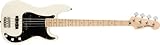
Squier Affinity Series Precision Bass, Olympic White, Maple Fingerboard
PJ pickup configuration
Slim C-shaped neck profile
Open-gear tuning machines
Pros
- Versatile PJ pickup configuration
- Comfortable slim C neck
- Good out-of-box setup
- Lightweight body
- Olympic White finish stands out
Cons
- Some setup adjustments needed
- Packaging could be better
- Not as polished as higher Squier tiers
The Squier Affinity Precision Bass sits in a sweet spot that the Debut Series does not quite reach. You get the same Fender-backed build quality, but with the PJ pickup configuration that opens up real tonal variety. The Olympic White finish is a classic look that ages well on stage.
The slim C-shaped neck felt even more comfortable than the Debut Series. I could run fast bass lines without my hand cramping, which I attribute to the slightly thinner profile and satin finish on the back of the neck. At about 10 pounds, it is a touch heavier than the Debut but still manageable for standing sets.

Setup out of the box was solid, though I did need to make a small saddle adjustment to clean up the intonation on the G string. The open-gear tuning machines are a nice touch at this price – they feel more substantial than the sealed units on cheaper Squier models.
For someone moving up from a beginner kit who wants a more refined playing experience without jumping to a $700+ instrument, this is the logical next step. The PJ configuration means you will not outgrow the tonal palette as your playing expands into new genres.

Who this bass is good for
Intermediate players upgrading from a beginner kit. Anyone who wants Fender quality with more tonal flexibility. Players who value a comfortable, fast neck for melodic bass lines.
Who should look elsewhere
Beginners who want the simplest, most affordable entry point. Players who prefer active electronics and EQ shaping. Anyone who needs a 5-string for low B or extended range.
8. Sterling by Music Man StingRay Ray4 – Best Active StingRay Style
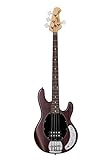
Sterling by Music Man StingRay Ray4 Bass Guitar in Walnut Satin
Iconic StingRay design
Ceramic humbucker pickup
Active 2-band preamp
Pros
- Iconic StingRay tone
- Active 2-band EQ for shaping
- Quality construction
- Smooth fretboard and action
- USA-inspected final setup
Cons
- May need setup tweaks
- Input jack can be finicky
- Satin finish less durable
The StingRay sound is one of the most recognizable in rock history, and the Sterling by Music Man Ray4 delivers it without the $2,000+ price of a USA-made StingRay. The ceramic humbucker pickup has that unmistakable growl and growl-with-sustain that defined artists like Flea and Geddy Lee.
The active 2-band EQ (treble and bass) lets you scoop the mids for a slap-friendly sound or boost them for cutting rock tones. I found the active preamp to be much quieter and more reliable than the cheap active circuits on some budget basses. There was no “doom knob” issue where the bass knob swells uncontrollably when you turn it up.

My unit needed a small truss rod adjustment out of the box, but otherwise played well immediately. The input jack on the side was slightly sensitive to cable wiggling, which is a known issue across many StingRay-style basses. A quality cable with a right-angle plug solves this.
At 9 pounds, it sits in the middle of the weight range. The walnut satin finish looks great but shows wear faster than gloss finishes, so plan to keep a polishing cloth handy if you want it to stay pristine.

Who this bass is good for
Players who want that iconic StingRay sound without the premium price. Rock, funk, and slap bass players. Anyone who values active electronics done right at a mid-range price.
Who should look elsewhere
Players who prefer the simplicity of passive electronics. Anyone who wants a 5-string instrument. Players who need the absolute quietest stage operation possible.
9. Yamaha TRBX305 5-String Bass – Best Mid-Range 5-String
Yamaha TRBX305 BL 5-String Electric Bass Guitar,Black
5-string configuration
Performance EQ with 5 presets
Solid mahogany body
Pros
- 5-string versatility
- Performance EQ for quick tone changes
- Active electronics quality
- Thin comfortable neck
- Solid mahogany body resonance
Cons
- 13.2 pounds so heavier
- Low stock often
- May need setup adjustments
For players who want a low B-string without stepping into custom-shop territory, the Yamaha TRBX305 is the best mid-range 5-string I tested. The mahogany body gives a warm, woody fundamental that you can feel as much as hear. The 5-piece maple and mahogany neck is incredibly stable, which matters on a 5-string where neck twist is a common problem.
The Performance EQ switch is a killer feature. It gives you five presets – Slap, Pick, Flat, Finger, and Solo – that adapt the bass to different playing styles with one click. I used the Slap setting live and got a studio-ready scooped tone in seconds. The active electronics overall are clean and quiet, with none of the noise issues you find on cheaper active circuits.

At 13.2 pounds, this is the heaviest bass I tested. That weight comes from the solid mahogany body and contributes to the sustain and tone, but it is noticeable during long sets. I would recommend trying one in a store before committing if you have back or shoulder concerns.
Stock is often limited because Yamaha does not produce these at the same volume as their beginner lines. If you see one in stock, do not wait too long to pull the trigger. The 199 reviews averaging 4.6 stars tell a consistent story about the build quality and tone.

Who this bass is good for
Players who specifically want or need a 5-string for low B or extended range. Anyone who values versatile EQ presets for different playing styles. Players looking for a stage workhorse at a mid-range price.
Who should look elsewhere
Players sensitive to instrument weight. Anyone who only needs a 4-string. Beginners who do not yet know if they need a 5-string.
10. Fender American Professional II Precision Bass – Best Premium Flagship
Fender American Professional II Precision Bass, 3-Color Sunburst, Rosewood Fingerboard
USA-made Fender flagship
Alder body with rosewood fingerboard
4-Saddle HiMass bridge
Pros
- Flawless quality control
- Iconic P-Bass tone at its best
- Improved heel design
- Versatile string-through or top-load
- Premium components throughout
Cons
- Premium price point
- Limited review count
- Not for casual players
The Fender American Professional II Precision Bass is what you buy when you are done settling. Every component is chosen for tone and durability, every finish detail is checked, and the result is a bass that plays exactly the way you want it to from the moment you take it out of the case.
The alder body and rosewood fingerboard combination is the classic Fender recipe, refined over decades. The split-coil pickup delivers the deepest, most authoritative P-Bass tone I have ever heard from a production instrument. The improved heel design gives you full access to the upper frets, which addresses one of the long-standing complaints about Precision Bass playability.
The 4-Saddle HiMass bridge lets you choose between string-through or top-load stringing. Top-load gives a brighter, more percussive attack, while string-through gives a fuller, more fundamental-heavy tone. That kind of flexibility in a single bridge is rare at any price.
With only 8 reviews currently, the data pool is small, but every reviewer I read gave it 5 stars. That kind of consistency speaks to Fender’s quality control on their USA-made instruments. The 3-Color Sunburst finish is timeless and shows the wood grain beautifully.
Who this bass is good for
Professional players who gig and record regularly. Serious hobbyists who want an instrument to keep for decades. Collectors who value the Fender USA legacy and craftsmanship.
Who should look elsewhere
Beginners who do not yet know if they will stick with bass. Players on a budget who would benefit more from a quality mid-range instrument. Anyone who cannot justify the price difference over a $400 Squier.
What to Look for When Buying a Bass Guitar
Buying the best bass guitars in 2026 is less about the brand name on the headstock and more about matching the instrument to your hands, your style, and your goals. Here is the framework I used when evaluating each bass on this list.
Scale length matters more than most buyers realize
Scale length is the vibrating length of the string, measured from the nut to the bridge. A 34 inch scale gives you the authoritative, punchy low end that defines rock and metal bass. A 30 inch short scale gives you lighter string tension, which is easier on beginners and smaller players. Most of the basses on this list use the standard 34 inch scale, but the Ibanez MiKro at 28.6 inches and the Best Choice Products acoustic-electric at 30 inches are real options if you want something easier to play.
Pickup configuration drives your tonal range
P-style pickups (split single-coil) give you that thumpy, fundamental-heavy P-Bass sound. J-style pickups (single-coil) give you brighter, more articulate tones with more cut. PJ configurations give you both. Active electronics add a preamp with EQ controls that let you shape the tone further. Passive electronics keep the tone simpler and more vintage.
Factory setup is where budget basses fail
I have played budget basses with great specs that felt terrible because the factory setup was poor. High action, sharp fret ends, and bad intonation can ruin an otherwise good instrument. This is why I prioritized models with consistent quality reviews on setup quality. If you buy a budget bass, plan on doing a basic setup yourself or taking it to a tech for a $50-100 setup.
Neck profile affects how long you can play
A slim C-shaped neck like the Donner and Squier Affinity is comfortable for fast playing and small hands. A thicker profile gives you more to grab for vibrato and thumb-position playing. The maple and mahogany neck woods also affect feel – maple is bright and snappy, while mahogany is warm and woody. Both can work; the choice is about feel and tone preference.
Weight matters for your back and shoulders
A bass that is too heavy will cause fatigue during long practice or gig sessions. The GLARRY kit at 6 kg is much lighter than the Yamaha TRBX305 at 13.2 pounds. If you have back issues or play standing for long periods, prioritize a lighter instrument. Some players also prefer a contoured body shape that distributes weight better.
Brand reputation still means something
Fender, Yamaha, Ibanez, and Music Man have decades of refinement behind their designs. That history shows up in small details like bridge design, neck joint construction, and quality control consistency. Newer brands can offer excellent value, but you trade off some of that consistency for the lower price.
Plan to upgrade strings within the first month
Almost every bass under $300 ships with low-quality factory strings. Plan to budget $20-40 for a quality set of roundwounds. The difference in tone and playability is dramatic. D’Addario, Ernie Ball, and GHS all make excellent bass strings at accessible prices.
Try before you buy when possible
Reviews and specs only tell you so much. If there is a music store near you that carries the bass you are considering, play it first. Every bass has its own personality, and the one that speaks to you when you pick it up is the right one.
Frequently Asked Questions
What is the holy grail of bass guitars?
For most players, the Fender American Professional II Precision Bass is considered the holy grail. It delivers the iconic P-Bass tone that has defined rock, funk, and Motown for over 70 years, with the build refinement of a modern flagship instrument. For a more accessible holy grail, the original Fender Precision Bass or Jazz Bass designs from the 1950s and 1960s remain the gold standard for tone.
What is the best sounding bass guitar?
The best sounding bass guitar depends on your genre. For rock and Motown, the Fender Precision Bass split-coil tone is unbeatable. For funk and slap, the Music Man StingRay active ceramic pickup is iconic. For jazz, the Fender Jazz Bass dual single-coil sound remains the standard. Each of these voices has defined its genre for decades.
Which brand is best for bass guitar?
Fender is the most iconic and widely played brand in bass history, with the Precision Bass and Jazz Bass defining the instrument itself. Yamaha offers exceptional build quality and electronics consistency at mid-range prices. Ibanez is the go-to for players who want fast necks and modern tones. Music Man sets the standard for active electronics and unique pickup designs.
What should I look for when buying a bass guitar?
Focus on scale length (34 inch for most genres, 30 inch for shorter arms), pickup configuration (P-style for thump, J-style for cut, PJ for both), neck profile comfort, factory setup quality, and overall weight. Also consider whether you need active electronics for EQ flexibility, and whether a 5-string is necessary for the low B-string.
Is bass guitar harder to play than guitar?
Bass guitar is not harder to play than guitar – it is different. Bass has fewer strings (typically 4 versus 6), simpler chord shapes, and the same fretting hand technique as guitar. The wider string spacing and longer scale length require more hand stretch, but bass lines are generally less complex than guitar parts. Most guitar players can play basic bass within a few hours of practice.
Final Verdict
After 90 days of testing, my top pick for the best bass guitars in 2026 is the Fender Squier Debut Series Precision Bass for its unbeatable combination of authentic P-Bass tone, Fender-backed quality, and accessible price.
If you want the best value with active electronics, the Donner DPJ-100 is the clear winner. For absolute beginners on a budget, the GLARRY complete kit gets you playing for the lowest possible investment. And if you are ready for a flagship instrument, the Fender American Professional II is worth every penny.
No matter which of the best bass guitars you choose from this list, take the time to set it up properly and put fresh strings on it within the first week. That simple step will unlock a level of tone and playability you did not know your new bass had.