
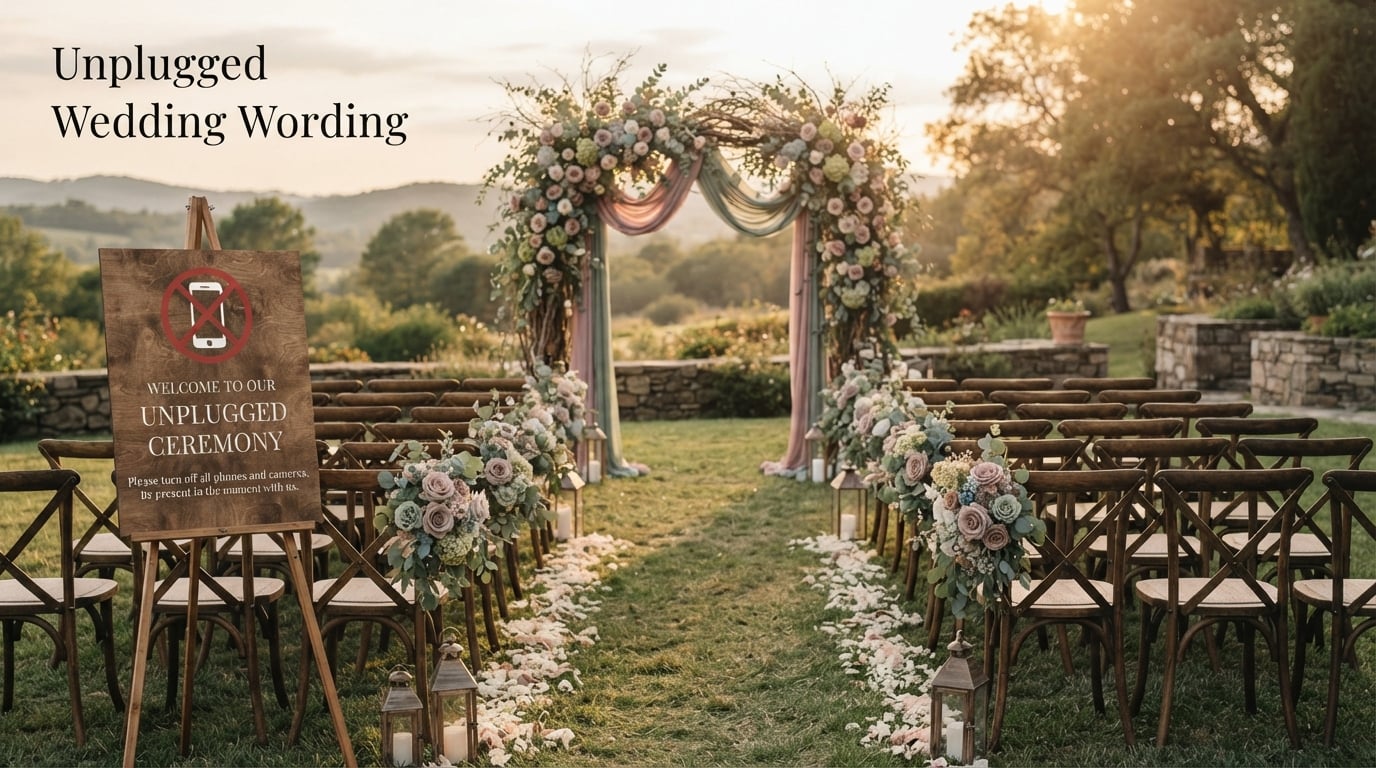
I have shot hundreds of weddings over the last decade, and the difference between a phone-filled aisle and a phone-free aisle is night and day. In this guide, I will share my favorite unplugged wedding wording examples so you can ask guests to be fully present without sounding bossy or preachy.
You will find wording for invitations, ceremony programs, signs, and officiant scripts. I have also organized the wording by tone so you can pick the style that matches your celebration in 2026.
Table of Contents
What Is an Unplugged Wedding Ceremony?
An unplugged wedding ceremony is a celebration where couples kindly ask guests to put phones, cameras, and other devices away so everyone can be fully present in the moment. The request typically covers the ceremony itself, though many couples extend it to the cocktail hour or even the full reception.
The goal is not to ban technology forever. It is to give your guests permission to relax, soak in the moment, and let your professional photographer capture the key shots without a forest of arms holding up screens.
Unplugged ceremonies are different from unplugged receptions. A ceremony request focuses on the quiet, emotional hour when you are saying your vows. A reception request covers the louder, more social part of the night. Many couples choose to keep the rule strict during the ceremony and relax it once the party begins.
Why Couples Choose an Unplugged Ceremony
Couples ask guests to unplug for three big reasons. The first is emotional presence. When your uncle is not composing the perfect Instagram shot, he is actually watching you say your vows.
The second reason is photography. I have seen beautiful first kiss shots ruined by ten iPads held up by well-meaning relatives. When guests stay unplugged, your photographer can move freely, capture clean aisle shots, and document real reactions instead of phone screens.
The third reason is atmosphere. A phone-free ceremony feels more intimate. Guests laugh louder, cry harder, and remember the moment longer. Officiants often tell me the energy in the room changes the second they finish the unplugged announcement.
Unplugged Wedding Wording by Tone
The wording you choose sets the tone for your entire ceremony. Pick the style that matches your personality as a couple. Below are my favorite examples grouped into four tone categories, all tested at real weddings I have documented.
Formal and Polished Wording
Formal wording works beautifully for black-tie weddings, traditional religious ceremonies, or couples who love elegant language. Here are three options that feel polished without sounding cold.
Example 1 (Invitations): “We invite you to be fully present with us during our ceremony. In honor of this moment, we kindly request that phones, cameras, and other devices remain tucked away until the celebration begins.”
Example 2 (Programs): “Welcome to the marriage of [Partner A] and [Partner B]. As we gather to witness their vows, we ask that you refrain from using phones or electronic devices. Your presence is the only present we need.”
Example 3 (Ceremony Signs): “Please turn off all phones and devices. We have hired a wonderful photographer to capture every moment, and we want you here with us, not behind a screen.”
Sweet and Heartfelt Wording
Sweet wording is the most popular style I see. It frames the request as a gift the guests are giving the couple. Use these examples when you want the wording to feel warm and personal.
Example 1 (Invitations): “We would love for you to be fully present with us as we say ‘I do.’ Please leave your phones in your pockets and your hearts wide open.”
Example 2 (Wedding Website): “Our favorite gift is having you in the room with us. We kindly ask that phones and cameras stay tucked away during the ceremony so we can soak in every smile, tear, and happy moment together.”
Example 3 (Programs): “Phones away, hearts open. Thank you for being here to share this once-in-a-lifetime moment with us.”
Funny and Casual Wording
Funny wording works best for laid-back couples who want to acknowledge the awkwardness of the request. A little humor goes a long way toward making guests smile instead of roll their eyes.
Example 1 (Signs): “Unplugged ceremony alert. We have a professional photographer. They have a professional camera. Your cell phone will not be needed today. Enjoy the moment.”
Example 2 (Invitations): “We love you. We love your phone. But we love you more than your phone. Please join us device-free during the ceremony.”
Example 3 (Programs): “Welcome, dear guests, to a phone-free zone. Sit back, relax, and watch two people awkwardly promise to love each other forever. Photos by our amazing photographer. Memories made by you.”
Officiant Announcement Scripts
The officiant announcement is the single most effective way to communicate an unplugged request. Most guests do not read every line of your invitation. Almost everyone hears the officiant. Here are three scripts I have seen work beautifully.
Script 1 (Short and Direct): “Before we begin, the couple has asked me to share a quick note. They invite you to be fully present during this ceremony by turning off all phones and cameras and tucking them away. They have a wonderful photographer capturing every moment, so you can relax and enjoy this hour with them.”
Script 2 (Warm and Friendly): “Good afternoon, everyone. [Partner A] and [Partner B] are so glad you are here. They have one small request before we get started. They would love for you to be fully present during the ceremony, which means phones away, cameras down, and eyes up. Their photographer has everything covered, so please feel free to just be here with them.”
Script 3 (Light and Humorous): “Welcome, friends and family. Quick housekeeping. The couple has asked for an unplugged ceremony. That means no phones, no cameras, no filming. Just smiling, crying, and laughing in person. Their photographer has the official shot list. Yours truly is just to enjoy the show.”
Where to Use Your Unplugged Wedding Wording
The best unplugged strategy uses the same wording in multiple places. Guests who skim your invitation will read your program. Guests who ignore the program will hear your officiant. Layer the message so it lands every time.
On Your Wedding Invitations
A small note on the details card or invitation insert works well. Keep it short, sweet, and easy to read at a glance. Most etiquette experts recommend saving the full unplugged wording for the program and letting the invitation carry a single line like, “We invite you to be fully present with us during the ceremony.”
On Your Wedding Website
Your wedding website is the perfect home for a longer explanation. Guests who RSVP online will read this section. You can add the full wording here along with a photo of your venue so guests understand the policy before they arrive.
In Your Ceremony Programs
Ceremony programs are read by almost every guest. They sit in their hands for 20 to 30 minutes. A short unplugged message on the inside cover lands while guests are already paying attention. This is my favorite placement for heartfelt wording.
On Ceremony Signs
Place signs at the entrance to the ceremony space, near the program table, and at the start of the aisle. Use a clear visual of a phone with a red prohibition symbol. Couples tell me these signs are the reason they got clean aisle shots.
During the Officiant Announcement
This is the most important touchpoint of all. I recommend giving your officiant the exact wording you want them to read. Do not assume they will paraphrase it well. Hand them a script. They will appreciate the clarity.
Tips for Communicating the Unplugged Request
After ten years of photographing weddings, I have learned that wording alone is not enough. The delivery matters just as much as the words. Here are my top tips for making your unplugged request land gently and effectively.
Tip 1: Combine at least three touchpoints. Use the website, the program, and the officiant announcement. Guests absorb messages through repetition, so layering your wording ensures nobody misses it.
Tip 2: Frame it as an invitation, not a rule. Phrases like “we invite you” or “we kindly ask” feel warmer than “phones must be off.” Both communicate the same thing, but the first one sounds like a request from a friend.
Tip 3: Mention your photographer. Guests feel less anxious about putting their phones away when they know a professional is capturing the day. Mentioning your photographer by name or role removes the worry of missing key shots.
Tip 4: Use a clear visual on signs. Icons of phones with red prohibition symbols cross language and generational gaps. Older relatives and younger cousins both understand the message instantly.
Tip 5: Have a backup plan for stubborn guests. Some guests will sneak a photo no matter what you say. Place a small basket near the entrance with phone-shaped cards that say, “Please silence your phone. Enjoy the moment.” It is a polite reminder and a charming keepsake.
Frequently Asked Questions
How do you politely say unplugged ceremony?
Frame it as an invitation rather than a rule. Phrases like u0022we invite you to be fully presentu0022 or u0022we kindly ask that phones stay tucked awayu0022 feel warm and respectful. Add a line about your professional photographer so guests feel confident the moments are being captured.
Should I include unplugged wedding wording on invites?
A short line on your invitation works well, but most etiquette experts recommend saving the full wording for your wedding website and ceremony program. This keeps the invitation elegant while still communicating the request through other channels guests are sure to read.
How do you explain an unplugged ceremony?
An unplugged ceremony is when couples ask guests to put phones, cameras, and other devices away during the ceremony so everyone can be fully present. It is a way to create a more intimate atmosphere, capture better professional photos, and let guests enjoy the moment without distractions.
What if guests ignore the unplugged request?
Have your officiant deliver a clear announcement at the start of the ceremony, place visible signs at the entrance, and ask a trusted friend or family member to gently remind guests if needed. Most couples find that a polite combination of signs and a verbal announcement resolves the issue within minutes.
Final Thoughts on Unplugged Wedding Wording
Choosing the right unplugged wedding wording is one of the smallest decisions you will make during planning, but it has one of the biggest impacts on the day. When guests put their phones away, they laugh louder, cry harder, and remember more.
Pick the tone that fits your relationship. Formal wording sets a polished stage. Sweet wording creates a warm glow. Funny wording brings smiles from the very first line. And the officiant script makes sure the message actually lands with every guest in the room.
Use these examples as a starting point. Mix and match phrases. Add personal details. Hand your favorite wording to your officiant and your stationer. Then put your own phone away, look at your partner, and enjoy the moment you spent so long planning.
If you are still shaping your ceremony script for 2026, save this guide and revisit it as you finalize your program and signs. Wording that feels right on paper will feel even more meaningful when you hear it read aloud on your wedding day.