
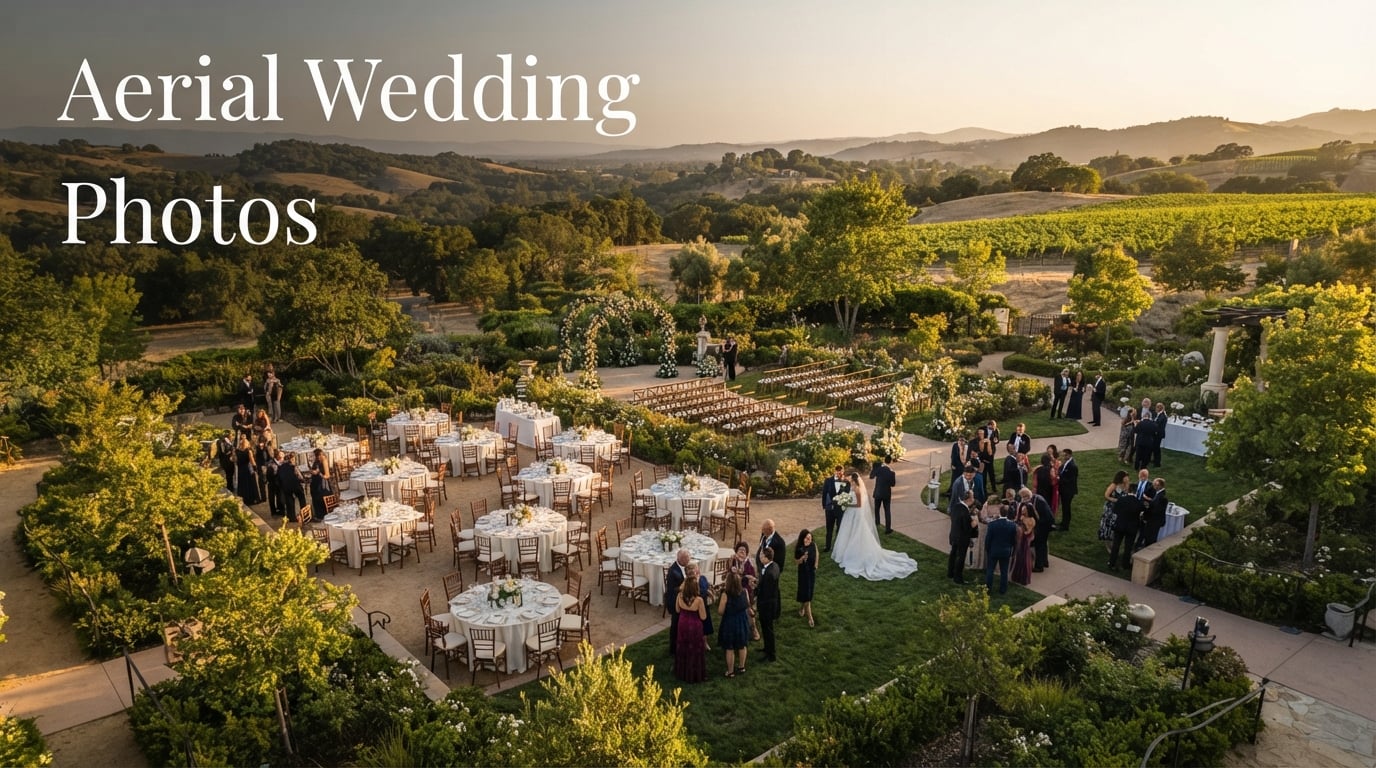
Aerial wedding photos capture your celebration from above using drone technology, giving you perspectives that ground-level cameras simply cannot reach. Over the past several years, we have watched these elevated shots transform from a novelty into a feature that couples actively request for outdoor, destination, and scenic estate weddings. In this guide, you will learn exactly what makes aerial wedding photography worth considering, which specific drone shots deliver the most value, how FAA regulations affect your planning, and what to do when weather or venue restrictions get in the way.
Whether you are planning a mountaintop elopement or a vineyard celebration, understanding how aerial wedding photos fit into your day helps you make confident decisions. We have pulled together insights from working photographers, real wedding experiences, and current FAA guidance to give you a practical, honest resource for 2026.
Table of Contents
What Is Aerial Wedding Photography
Aerial wedding photography is the practice of capturing wedding images from elevated perspectives, most commonly using camera-equipped drones operated by FAA-certified pilots. The term covers any wedding photo taken from above ground level, including overhead ceremony shots, wide-angle venue establishing shots, and creative top-down portraits of the couple or wedding party.
While helicopters and light aircraft were once the only options for aerial photography at weddings, modern drones have made these shots accessible, affordable, and far more flexible. A skilled drone pilot can capture images from 20 feet or 200 feet in the air, adjusting angles in seconds without the cost or noise of a full aircraft.
For couples, the result is a set of images that show the full scope and beauty of a wedding day in a way no ground photographer can match. That bird’s-eye perspective is what separates aerial wedding photos from traditional coverage.
How Drones Help Make Wedding Photos Incredible
Drones add five specific advantages to a wedding photography package that ground-level cameras cannot deliver on their own. Each one addresses a gap that couples and photographers have struggled with for years.
Showcasing the Full Venue
The single biggest benefit of aerial wedding photos is the ability to show an entire venue in one frame. A drone can capture the full estate, vineyard, beachfront, or mountaintop setting that drew you to the location in the first place. Ground photography struggles to convey scale, but an aerial shot immediately communicates the grandeur of your chosen space.
For large properties, this perspective is often the only way to document the complete setting. Couples who book scenic venues specifically because of the surroundings find that aerial shots validate that choice.
Capturing Scale and Context
Aerial wedding photos show the relationship between your celebration and its environment. A wide shot of 150 guests gathered in a garden, the ceremony arch framed against rolling hills, or a reception tent glowing at dusk all tell a richer story than a tight portrait ever could.
This sense of scale is what photographers call context. It tells viewers not just what happened, but where and how grand the moment felt.
Angles That Were Once Impossible
Before drones, capturing a straight-down view of a ceremony in progress or a couple standing in the center of a geometric garden pattern required a helicopter or crane. Neither was practical or affordable for most weddings. Drones make these formerly impossible angles routine.
Top-down shots of ceremony aisles, reception table layouts, and first dance moments are now standard requests for couples who want something beyond traditional coverage.
Adding Cinematic Perspective
Aerial cinematography brings a film-quality feel to wedding galleries that ground footage cannot replicate. The slow rise from a couple’s portrait to reveal a sweeping landscape behind them creates emotional impact. This cinematic quality is one reason drone wedding photography has grown so quickly in popularity.
The Wow Factor
Sometimes the simplest value is the most honest one. Aerial wedding photos give couples and their guests a genuine wow moment. These are the images that get shared, printed large, and remembered years later. For many couples, that emotional payoff alone justifies including drone coverage in their package.
Drone Wedding Shots Worth Taking
Not every drone shot adds value to a wedding gallery. Based on real wedding experience and feedback from working photographers, these five categories consistently produce images worth the effort.
Venue Overview and Establishing Shots
The venue overview is the foundation of any aerial wedding photo collection. This shot captures the entire property from above, showing the ceremony site, reception area, parking, and surrounding landscape in a single frame. Photographers typically take these early in the day before guests arrive, when the setup looks pristine.
The best venue shots balance showing scale with maintaining visual interest. A drone hovering at 100 to 200 feet usually hits the sweet spot for most properties. Too low and you lose the context. Too high and the details disappear into abstraction.
Aerial Couple Portraits
Couple portraits taken from above are among the most popular aerial wedding photos, and for good reason. A top-down shot of you and your partner lying in a field, standing on a cliff edge, or walking hand-in-hand through a vineyard row creates a striking image that stands apart from traditional portraits.
The key to successful aerial couple portraits is composition. Photographers look for natural patterns, symmetry, or negative space in the landscape below. A couple standing in the center of a spiral garden path or at the end of a long pier creates a visual anchor that draws the eye.
Couples often request both standing and lying-down versions of these portraits. Each creates a different mood, and having both gives you more options for albums and wall prints.
Group Aerial Photos
Large group shots are where drones truly outperform ground photography. Trying to fit 100 wedding guests into a single frame from ground level usually means people in the back row are tiny and the composition feels cramped. An elevated drone shot solves this instantly.
The most effective group aerial photos position the wedding party in a deliberate shape, such as a heart, the couple’s initials, or concentric circles around the bride and groom. These take coordination, but the results are memorable and unique to aerial coverage.
Landscape and Setting Shots
Some of the most valuable aerial wedding photos do not include people at all. Wide landscape shots of the venue’s surroundings, nearby mountains, ocean coastlines, or city skylines provide context that enriches the entire gallery. These images work especially well as full-page album spreads.
For destination weddings, landscape aerial shots become even more important. They document the travel experience and the beauty of the location that made the trip worthwhile.
Event-Moment Drone Shots
Capturing live moments from above adds energy to a wedding gallery. The first dance seen from overhead, guests mingling during cocktail hour, or the reception tent glowing against a dark sky all translate beautifully to aerial photography.
Cocktail hour is particularly well suited for drone coverage. Guests are spread out, the lighting is often flattering, and the drone can capture candid interactions without being intrusive. Many photographers consider this the best window for live aerial shots during the reception.
Creative Aerial Wedding Photography Ideas
Beyond the standard shot list, several creative applications of drone technology can make your aerial wedding photos truly distinctive. These ideas require a photographer with experience, but the results set your gallery apart.
The 360-Degree Little World Perspective
One of the most striking creative techniques in aerial wedding photography is the 360-degree panorama, often called the little world or tiny planet effect. The drone captures a full spherical image from above, then the photographer stitches it into a circular composition where the couple appears to stand on a miniature planet.
This technique works best in open spaces with interesting surroundings, such as beaches, fields, or courtyards. It requires careful positioning and post-processing, so discuss it with your photographer in advance if you want this look.
Sparkler Exit Drone Shots
The sparkler send-off is a wedding tradition that aerial photography elevates to another level. Captured from above, a line of guests holding glowing sparklers creates a dramatic pathway of light leading to the departing couple. The contrast between the dark evening and bright sparks produces images that feel cinematic.
For this shot to work, timing and coordination matter. The drone needs to be in position before the sparklers are lit, and the pilot needs to account for wind direction to avoid smoke obscuring the shot.
Cocktail Hour From Above
Cocktail hour offers one of the best opportunities for creative aerial wedding photos. Guests are relaxed and socializing, the formal ceremony is complete, and the lighting during late afternoon golden hour is ideal. An overhead shot of the cocktail area captures the mood and energy of this transition period.
Many photographers use this window to capture candid moments that feel natural rather than posed. The distance of the drone keeps interactions authentic while still documenting the celebration.
Destination and Scenic Applications
Destination weddings benefit from aerial photography more than almost any other setting. Whether you are marrying on a tropical beach, a mountain overlook, or a historic European estate, aerial shots capture the location as a character in your wedding story.
For beach weddings, low-altitude shots along the shoreline create stunning leading lines. For mountain weddings, wide aerial shots place your ceremony against the scale of the surrounding peaks. Vineyard weddings benefit from aerial shots that follow the rows of vines toward the ceremony site.
FAA Regulations and Certifications for Wedding Drone Pilots
Any drone operator flying commercially at a wedding in the United States must hold a Remote Pilot Certificate under FAA Part 107 regulations. This is not optional. Venues increasingly require proof of certification before allowing drone operations on their property, and for good reason.
The Part 107 license requires passing a written exam covering airspace classifications, weather effects, drone performance, and emergency procedures. Photographers who invest in this certification demonstrate professionalism and a commitment to safe operations.
Restricted Airspace and No-Fly Zones
Many wedding venues, especially those near airports, military bases, or urban centers, fall within restricted airspace. Operating a drone in these areas requires FAA authorization through systems like LAANC, which can take time to arrange. Some venues near major airports are effectively no-fly zones for drones regardless of authorization.
This is why checking airspace restrictions is one of the first steps a responsible drone photographer takes when scoping a wedding venue. Couples should ask their photographer about this early in the planning process.
Insurance Requirements
An increasing number of venues require drone operators to carry liability insurance specifically covering aerial operations. Standard photography insurance often does not include drone coverage. A certified professional will have this documentation ready and can provide a certificate of insurance to the venue on request.
Why Experience Matters
Flying a drone safely at a wedding involves navigating crowds, managing battery life, responding to wind changes, and coordinating with the ground photography team. Experience separates pilots who deliver great aerial wedding photos from those who create risks. Always review a photographer’s aerial portfolio and ask about their Part 107 status before booking.
Weather and Location Limitations to Plan For
Aerial wedding photos depend on conditions that ground photography does not. Understanding these limitations helps you set realistic expectations and plan backups.
Wind and Rain Constraints
Most consumer and professional drones used for wedding photography have wind limitations between 15 and 25 miles per hour. Beyond that threshold, the drone becomes difficult to control and image quality suffers from vibration. Rain is a hard stop for nearly all drone operations, as water damages electronics and ruins image clarity.
Photographers monitor forecasts closely in the days leading up to a wedding. If conditions look marginal, they plan for an early-morning or next-day session to capture aerial shots when weather cooperates.
Battery Life Planning
Most wedding drones provide 20 to 30 minutes of flight time per battery. Capturing the full range of aerial shots typically requires multiple batteries and planned flight windows. Experienced photographers bring spare batteries, charge them between sessions, and schedule flights strategically rather than continuously throughout the day.
Indoor Venue Alternatives
Not every wedding venue is suitable for drone photography. Indoor venues, urban rooftops, and properties in restricted airspace may not allow drone flights at all. In these cases, photographers can still achieve elevated perspectives using equipment like motorized masts, cranes, or tall building vantage points.
If you are planning an indoor or urban wedding, discuss alternative elevated photography options with your photographer rather than assuming drone coverage will be available.
Having a Backup Plan
The best approach to aerial wedding photos is to treat them as an enhancement, not the foundation of your coverage. Ground photography remains the core of any wedding gallery. Aerial shots add drama and scale, but the most important moments of your day should never depend solely on conditions outside anyone’s control.
When to Take Drone Wedding Photos in Your Timeline
Timing drone sessions correctly makes the difference between stunning aerial wedding photos and missed opportunities. Most experienced photographers build flight windows into specific parts of the wedding day.
Early in the day, before guests arrive, is ideal for venue establishing shots. The setup is clean, the light is soft, and the drone can operate without worrying about crowds. This window also captures the venue at its most photogenic.
The golden hour, roughly an hour before sunset, is the prime window for couple portraits from above. Warm directional light flatters skin tones and adds depth to landscape shots. This is when the most romantic aerial images come together.
Cocktail hour provides a natural opportunity for event-moment shots without disrupting the flow of the day. Guests are already mingling outdoors, and the lighting is usually cooperative. Sparkler exits and evening reception shots happen after dark and require a drone capable of handling low-light conditions.
Frequently Asked Questions About Aerial Wedding Photos
What is aerial photography called?
Aerial photography is the general term for any image captured from an elevated perspective above ground level. In the wedding industry, aerial wedding photos are most commonly captured using camera-equipped drones operated by FAA-certified pilots. Other terms you may hear include drone wedding photography, elevated photography, and aerial cinematography for video.
How much does drone wedding photography cost?
Drone wedding photography pricing varies widely based on location, experience, and package structure. Some photographers include aerial coverage as part of their standard package, while others charge a separate add-on fee. Pricing depends on the pilot’s certification, equipment quality, flight time, and post-processing requirements. Couples should request a clear breakdown of what aerial coverage includes when comparing photographers.
Do you need a license for drone wedding photography?
Yes. In the United States, any commercial drone operation, including wedding photography, requires the pilot to hold a Remote Pilot Certificate under FAA Part 107 regulations. Venues increasingly ask for proof of this certification before allowing drone flights on their property. An unlicensed pilot operating at a wedding violates federal law and creates liability risks for everyone involved.
When should you take drone wedding photos?
The best times for aerial wedding photos are early morning before guests arrive for venue establishing shots, golden hour before sunset for couple portraits, and cocktail hour for candid event coverage. Sparkler exits and evening reception shots require low-light capable equipment. Your photographer will build flight windows into your timeline based on light conditions and venue logistics.
What happens if the weather is bad on the wedding day?
If wind exceeds roughly 15 to 25 miles per hour or rain is falling, drone flights become unsafe and image quality drops significantly. Most photographers plan backup sessions for early the next morning or find windows during the day when conditions improve. Ground photography remains the core coverage, so your wedding gallery will not depend entirely on drone conditions.
Are drone wedding photos worth it for indoor venues?
For most indoor venues, drone photography is not practical or permitted. However, photographers can still achieve elevated perspectives using motorized masts, tall building vantage points, or specialized equipment. If you are planning an indoor wedding, discuss alternative elevated photography options with your photographer rather than expecting traditional drone coverage.
Bringing It All Together
Aerial wedding photos add a perspective that no other type of coverage can replicate. They showcase your venue, capture the scale of your celebration, and deliver cinematic images that stand out in any gallery. For couples with scenic outdoor venues or destination weddings, drone coverage is often the highlight of the entire collection.
The key is treating aerial shots as an enhancement built on a strong foundation of ground photography. Choose a Part 107-certified photographer with a portfolio that matches your vision, plan around weather and venue restrictions, and communicate your priorities early. When you approach aerial wedding photos this way, the results are well worth the planning.
If you are ready to explore aerial coverage for your wedding, start by asking potential photographers about their certification, equipment, and experience at venues similar to yours. Those conversations will tell you everything you need to know.