
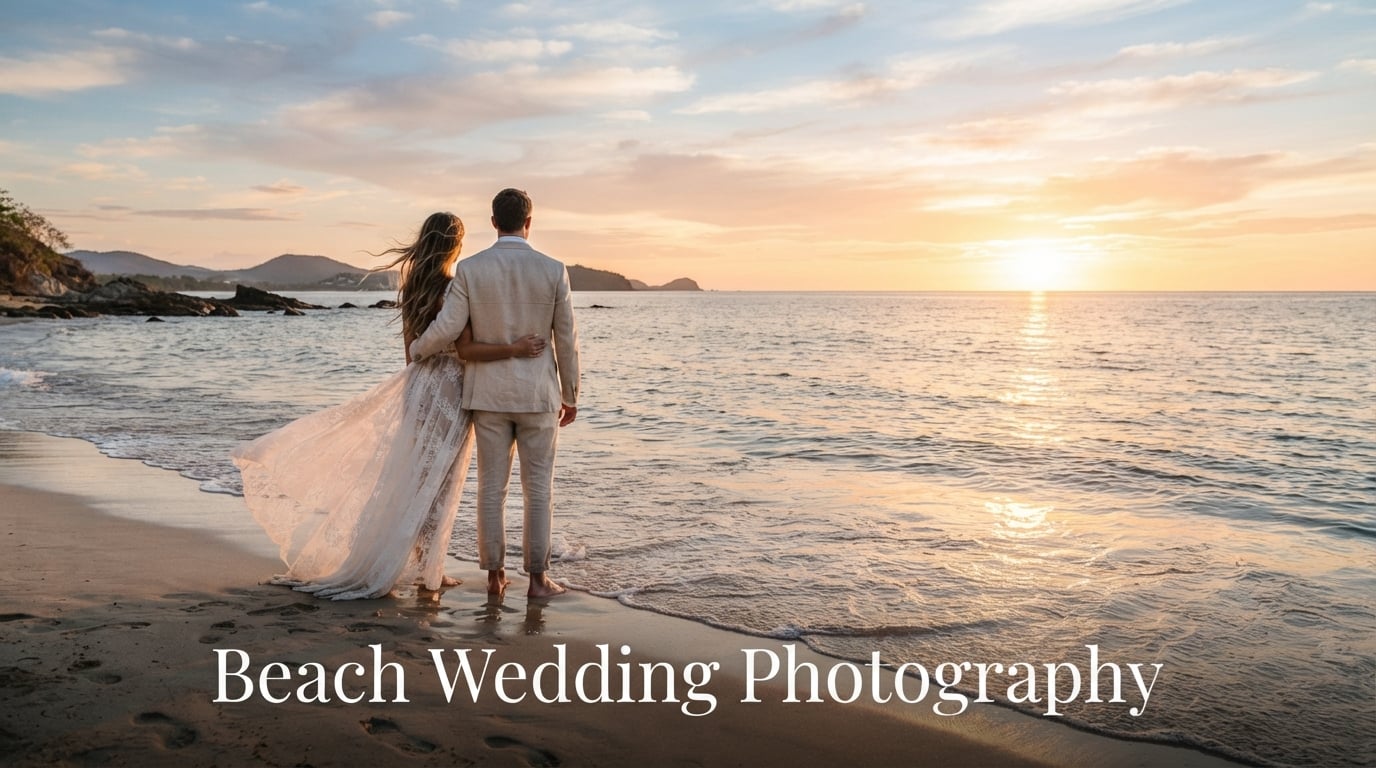
Beach wedding photography captures moments most couples only dream about, and after photographing oceanfront weddings for years, I can tell you that no studio backdrop competes with the ocean. I’ve shot ceremonies in soft morning fog, under blazing noon sun, and during sunset so golden it looked like the couple was glowing from within. This guide pulls together everything our team has learned so you can plan photos that look like they belong in a travel magazine.
In this article, I’ll share what makes beach wedding photography special, when to schedule your portraits, how to handle wind and sun, and the exact shots I always recommend to couples. If you’re planning a coastal celebration, our wedding photography services page covers how we approach every wedding we shoot.
Table of Contents
Why Beach Wedding Photography Is Special
Beach wedding photography stands apart from any other style because the backdrop does half the work for you. The shoreline offers an ever-changing canvas, and tide patterns, cloud formations, and shifting light give every minute a different look. I love shooting beach weddings because no two ceremonies ever look the same.
The natural elements create atmosphere without effort. Waves provide soft ambient sound that loosens couples up in front of the camera. The wide-open horizon makes small groups look grand. Sandy beaches also reflect light back onto subjects, which softens skin tones compared to traditional venues with darker floors.
Couples pick the beach for reasons beyond aesthetics. Many want a relaxed, intimate feel, and sand between bare toes accomplishes that in a way no ballroom dance floor can match. The ocean itself becomes a symbol, representing depth, calm, and the merging of two lives. Our team captures these emotional layers in beach wedding photography because the environment amplifies every gesture.
Best Times for Beach Wedding Photos (Golden Hour)
The single biggest factor in beautiful beach wedding photography is timing, and the best moments happen during golden hour. Golden hour is the hour right after sunrise and the hour right before sunset, when the sun sits low on the horizon and produces warm, soft, diffused light that flatters skin and adds a magical glow to ocean backdrops.
For sunset weddings, I recommend scheduling your couple portraits for one to two hours before the actual sunset time. This gives us time to capture a mix of warm-lit shots plus dramatic silhouettes against the sky. The 30/5 rule applies here: plan for at least 30 minutes of formal portraits plus 5 minutes of quiet, unscripted time for the best candid beach wedding photos.
Midday beach photography works too, but requires different techniques. Harsh overhead sun creates strong shadows under eyes and noses, so I look for any shade available, palm trees, dune grass, or a draped canopy, and position subjects with the sun behind them. Another option is the open shade under a pier or pavilion.
Blue hour photography, the 20-30 minutes after sunset, gives coastal weddings a deep navy sky with the ocean catching the last bit of color. This window is short, so I always plan the timeline to include it.
Quick timing reference:
Golden hour (sunrise): Soft, romantic, less crowded beaches.
Midday: Bright, vibrant colors, requires shade management.
Golden hour (sunset): The most popular, warm tones, dramatic skies.
Blue hour: Moody, deep blues, requires tripod for sharp shots.
Essential Photography Tips for Beach Weddings
After shooting more than 200 coastal ceremonies, here are the core techniques I rely on for beach wedding photography. These tips work whether you’re a photographer or a couple planning your own shoot.
Underexpose by 1-2 stops. Sand and bright sky fool camera meters into overexposing, which washes out wedding dresses and skin tones. I set exposure compensation to negative 1 or negative 2, then recover highlights in post-processing. This single adjustment fixes the most common beach wedding photography mistake.
Use aperture priority mode. Beach weddings have constant light shifts, and aperture priority lets me lock in depth of field while the camera adjusts shutter speed. I usually shoot at f/2.8 to f/4 for portraits to soften the ocean background, and f/8 to f/11 for group shots where everyone needs to be sharp.
Bring a polarizing filter. A circular polarizer cuts glare off water and deepens blue skies. For beach wedding photography under bright conditions, it also helps saturate the ocean without darkening faces. Just be ready to remove it during overcast moments, since polarizers can muddy skies when clouds take over.
Watch the horizon line. Tilting horizons look amateurish, and waves constantly shift the apparent level. I keep the horizon dead level across the center of the frame, and I always check it before pressing the shutter.
Shoot into the sun for backlighting. Placing the sun behind the couple creates a beautiful halo effect on hair and veil. I meter for the faces, dial in positive exposure compensation, and let the sky blow out slightly for an ethereal look.
Dealing with Wind, Sand, and Sun at the Beach
The three biggest headaches in beach wedding photography are wind, sand, and sun. Our team has battle-tested solutions for each one that keep the day on track.
Wind strategy: A gentle breeze adds romance to flowing dresses and veils, but strong gusts ruin hairstyles and blow sand into eyes. For bridal portraits, I schedule a backup hairstyle that holds up in wind, braids, half-up styles, or low buns. I also keep a small towel and brush on hand for quick fixes between shots.
Photographers should bring microfiber cloths and lens hoods. Wind pushes sand onto front lens elements, and a lens hood reduces direct contact. I clean the front element frequently and never change lenses in open beach air.
Sand management: Sand gets everywhere, and there’s no fixing that. I tell couples upfront to embrace it because fighting sand creates stress. Barefoot is the way to go, and I always shoot couples touching the shoreline so the wave action does the storytelling.
For formal group photos, I lay down a clean blanket or rug so guests aren’t sinking into deep sand. This also gives the photographer a defined shooting area with predictable footing.
Sun protection for portraits: Harsh midday sun causes squinting and dark shadows. I find any available shade, then position subjects so the sun is behind them. For group portraits during bright midday, I place the largest group in the shadiest spot and shoot toward the brightest part of the sky.
If the forecast calls for an overcast day on the day of your beach wedding photography session, count it as a bonus. Clouds act as a giant diffuser and produce soft, even light that flatters every skin tone.
Must-Have Beach Wedding Photo List
Couples always ask what shots they should request. Here is the beach wedding photo list I share with every couple I shoot, broken down so nothing gets missed.
Before the ceremony:
Getting ready shots with ocean views in the background.
The dress, shoes, rings, and details styled on driftwood or sand.
First look portraits on the shoreline, if planned.
Parents and wedding party reacting to the bride or groom.
During the ceremony:
Wide shot from behind showing the altar, couple, and ocean horizon.
Groom’s face as the bride walks down the aisle.
Exchange of vows with the horizon in soft focus behind.
Ring exchange close-up with sandy hands clearly visible.
The first kiss silhouetted against the sky.
Walking back down the aisle together as a married couple.
Guest reactions, including barefoot attendees in the sand.
Couple portraits after the ceremony:
Barefoot walk along the waterline.
Sunset silhouettes with waves crashing in front.
Romantic dip with the ocean stretching behind.
Whispered secrets and laughter, captured candid.
Wide-angle establishing shots showing the whole coastline.
Close-up detail shots: hands intertwined, toes in sand, the wedding rings on a shell.
Reception and golden hour:
First dance with sunset light streaming in.
Speeches and toasts with ocean in the background.
Sunset portraits during the first 30 minutes after the ceremony ends.
Sparkler exit or send-off along the beach.
Posing Tips for Natural Beach Wedding Photos
The best beach wedding poses feel effortless even when they require a little direction. I give couples simple prompts instead of stiff poses, and that produces genuine emotion in beach wedding photography.
Walking shots work beautifully. I ask the couple to walk slowly along the shoreline, looking at each other instead of the camera. The motion adds life, and the waves provide natural movement in the frame.
Forehead touches. I have couples stand close, foreheads touching, and breathe together for 30 seconds. The soft intimacy shines through, especially with the ocean behind them.
Pickup shots. A groom lifting his bride near the water creates an iconic beach pose. I shoot it from a low angle to emphasize the sky and capture motion in the dress.
Sitting portraits. Sitting in the sand with legs stretched out toward the waves feels relaxed. I shoot at eye level or slightly above for the most flattering angle.
Back-to-back. This pose works well when one partner feels camera shy. They each look outward, then turn to face each other on my count.
Attire Recommendations for Beach Weddings
What you wear changes the look of beach wedding photography completely. Flowy fabrics, lightweight materials, and softer palettes photograph beautifully in coastal settings.
For brides, I recommend a dress with movement. Chiffon, tulle, and lightweight silk catch the breeze and create dynamic shapes in photos. Heavy satin gowns drag sand and stay stiff.
For grooms, lighter suits like linen or cotton blends breathe well. Tan, light grey, or soft blue tones complement ocean hues. Skip black tuxedos because they absorb too much light and look heavy against bright sand.
Bridal party outfits should follow the venue. Mismatched pastels, sandy neutrals, and coral tones all photograph well. Encourage guests to wear flats or go barefoot.
Creative Beach Wedding Photo Ideas
Beyond the standard shots, here are creative directions I love for beach wedding photography.
Trashing the dress. This session happens separately, often the day after the wedding, with the bride running, swimming, or jumping in the wedding dress. It’s a chance to get dramatic shots without worrying about preserving the gown for the reception.
Aerial beach portraits. Drone shots of couples standing in the surf with the coastline stretching out behind produce striking images. We use a certified drone operator for these and only fly during permitted hours.
Reflection shots. A still tide pool or wet sand acts like a mirror. I crouch low and shoot the couple from the side to catch both their image and their reflection.
Wave crashing compositions. I love timing a wide shot with a wave breaking right at the couple’s feet. The spray catches sunlight beautifully.
Footprint trails. Following footprints in the sand tells a story. I shoot downward as the couple walks ahead, capturing the path they leave behind.
Evening and Star Photography for Beach Weddings
Most photographers pack up after sunset, but beach wedding photography shines in the evening hours, too. Blue hour delivers deep colors, and once the sky goes fully dark, star photography opens up on clear coastal nights.
For star photography, you’ll need a tripod, a camera with manual mode, and a remote shutter or 2-second timer. Settings usually run around ISO 3200 to 6400, f/2.8, and 15-25 second exposures depending on the moon phase.
New moon nights offer the darkest skies and brightest stars, perfect for capturing Milky Way shots over the ocean. A crescent moon adds soft directional light and balances the foreground with the sky.
Even a single constellation or shooting star captured behind a silhouetted couple creates a powerful image. I always recommend couples consider an evening portrait session even after their main coverage ends.
Working with Your Photographer
Strong communication before the wedding day turns good beach wedding photography into great beach wedding photography. Share your must-have shot list, ideal timeline, and any concerns about weather or wind.
I send every couple a planning questionnaire that covers ceremony layout, guest count, family dynamics, and shot priorities. We also do an in-person or virtual walk-through of the beach venue to identify shade spots, tide timing, and backup locations.
Trust your photographer’s creative direction during the shoot. The best images often come from quick prompts or unplanned moments, so relax, enjoy the day, and let your photographer handle the technical side.
Final Thoughts on Beach Wedding Photography in 2026
Beach wedding photography rewards planning, flexibility, and a clear shot list. From golden hour portraits to star-light silhouettes, the ocean gives your photographer every kind of light you could ask for, and your job is to enjoy the moment while they capture it.
If you’re planning a coastal wedding in 2026, start with a timeline that prioritizes the light, prepare a few backup plans for weather, and choose an outfit that flows with the breeze. We’ve put together wedding photography services for couples who want a team that handles all of this end to end.
FAQs
Is paying $1000 for wedding photography too much?
Not for a beach wedding. The cost of $1000 for wedding photography is at the low end for full-day coverage, especially for destination or coastal weddings where travel, gear protection, and lighting challenges add time. Mid-range beach wedding photography packages start around $1500 to $3000 in most US markets, and $1000 often covers elopements or short coverage windows. The price you need depends on hours of coverage, number of photographers, and whether albums or prints are included.
What is the 30 5 rule for weddings?
The 30/5 rule is a photography guideline that recommends budgeting at least 30 minutes for formal portraits plus 5 minutes of unscripted quiet time between major timeline events. For beach wedding photography specifically, I extend the formal portrait window to 45 to 60 minutes because golden hour light shifts quickly on the coast. The 5 minutes of quiet time lets the couple settle into the moment and produces the most genuine candid beach wedding photos.
How much does a beach wedding usually cost?
A beach wedding in 2026 usually costs between $5,000 and $25,000 in the United States depending on guest count, location, and travel. Smaller elopements with a photographer only run $1,500 to $4,000. Adding venue fees, officiant, catering, florals, and attire can push the budget higher. Couples who book weekday or off-season dates often save 20-40 percent on venue costs, leaving more room in the budget for premium beach wedding photography coverage.
Is $200 a good tip for a wedding photographer?
Yes, $200 is a solid tip for a beach wedding photographer who delivered great work. Standard tipping runs 10 to 20 percent of the photography package, so $200 corresponds to a $1,000 to $2,000 booking, which lines up with many mid-range coastal weddings. Tip more for exceptional service, fast turnaround, or extra hours. Many couples also write a thoughtful card or post an online review, which photographers appreciate just as much as cash tips for beach wedding photography.