
Planning a wedding far from home changes everything about how you capture it. Our team has photographed destination weddings on five continents, and we wrote this guide to share what we wish every couple knew before they booked their photographer. You’ll learn what destination wedding photography really involves, how much it costs in 2026, and how to avoid the mistakes that ruin travel-based wedding galleries.
This guide covers the practical side of booking a destination photographer: research, contracts, travel fees, vendor restrictions, and adventure shoots. Read it once before you reach out to any photographer.
Table of Contents
What Is Destination Wedding Photography?
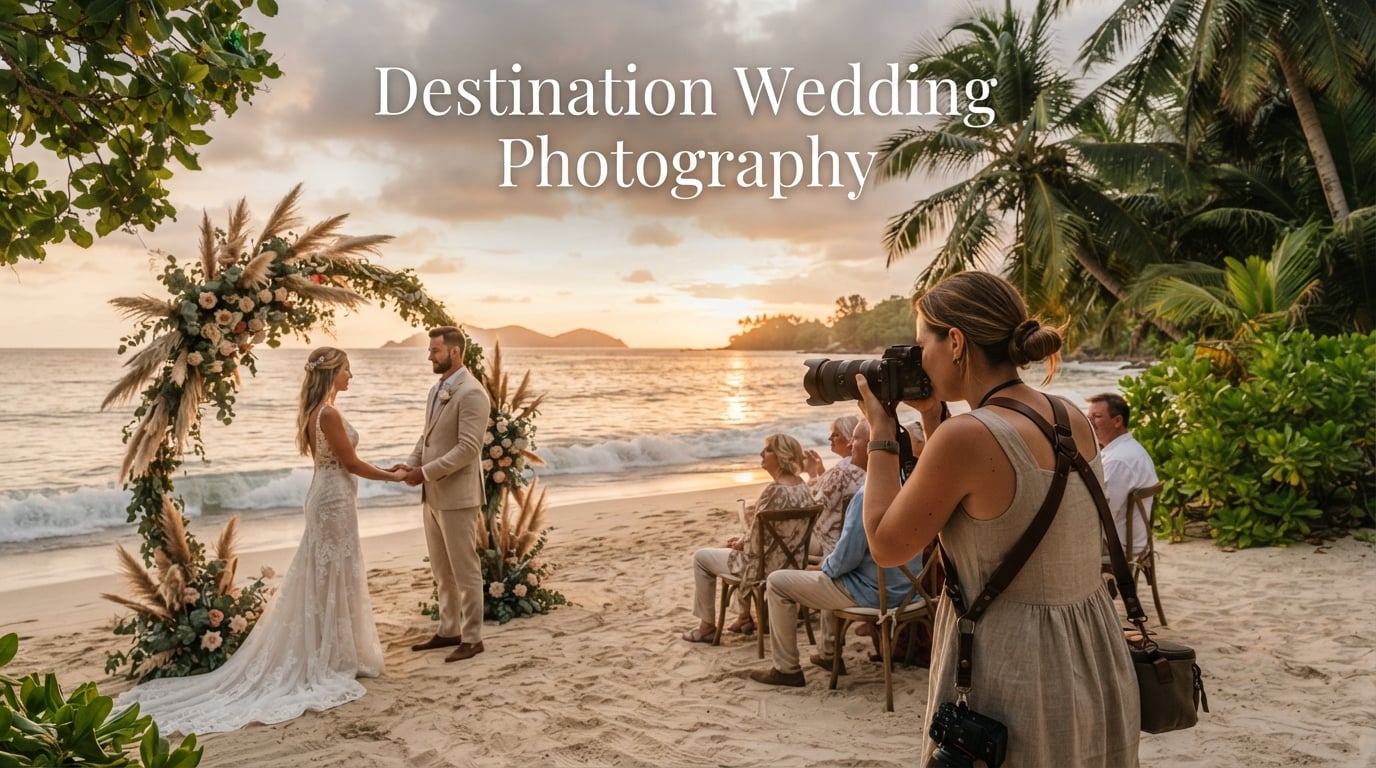
Destination wedding photography is the art of documenting weddings that take place away from the couple’s hometown, often in exotic or travel destinations, requiring photographers to travel and adapt to unfamiliar venues and lighting conditions.
Unlike local wedding coverage, destination photography bundles several pieces: travel logistics, venue scouting, multi-day coverage, and adventure-style portrait sessions. We recently shot a three-day wedding in Tulum where the actual ceremony was only 45 minutes long, but the full gallery captured rehearsal dinner toasts, a sunrise cenote shoot, and a beach reception exit. That level of coverage is what separates a destination photographer from someone who simply agrees to fly somewhere.
Common Types of Destination Wedding Photography
Resort destination weddings – All-inclusive venues in Mexico, the Caribbean, or Hawaii with on-site coordination
International weddings – Couples marrying abroad in Italy, France, Greece, or beyond
Adventure elopements – Small ceremonies in mountains, deserts, or coastlines with heavy outdoor hiking
Multi-day wedding weekends – Two or three days of events including welcome parties, ceremonies, and brunches
Why Couples Choose Destination Wedding Photography
The investment in destination wedding photography pays off when the location becomes part of the story. A vineyard in Tuscany, a clifftop in Santorini, or a cenote in Mexico gives you backdrops you cannot recreate at home. We’ve found that couples who travel for their wedding also tend to host smaller guest counts, which means the photographer spends more time per person and captures more genuine moments.
Another reason is the multi-day format. Most local weddings fit into one day of coverage. Destination weddings often span a full weekend. That extra time lets photographers build a fuller narrative: the welcome dinner, the rehearsal, morning-of prep, the ceremony, the reception, and an adventure shoot the next day. When you look at the final album, you see the whole arc of the celebration instead of just the main event.
The third draw is intimacy. With 30 to 80 guests instead of 150, the photographer can build real rapport. We’ve had couples tell us that their destination wedding gallery felt more personal than any local coverage they’d considered.
How to Find the Right Destination Wedding Photographer
Finding the right photographer for a destination wedding takes more work than booking a local one. You can’t easily visit the studio, look at sample albums in person, or drop in on a consultation. Here’s the workflow we recommend.
Step 1: Decide Between a Local or Travel Photographer
Your first choice is whether to hire a photographer from home who will travel, or someone already based near your venue. Each has trade-offs. Home photographers know your style and preferences, but you pay for their flights and accommodation. Local photographers know the venue lighting, weather patterns, and backup locations, but you have less control over their style. Most of the couples we work with choose a travel photographer so the aesthetic matches the rest of their planning vision.
Step 2: Research Portfolios Fully
Look past Instagram highlight reels. Ask every photographer for two to three full wedding galleries from past destination jobs. A real gallery shows 400 to 800 images with consistent editing, mixed lighting, and candid moments. If the photographer only shares 20 carefully selected photos per wedding, ask why. Our team has always provided full galleries because that’s how couples evaluate our actual work.
Step 3: Read Verified Reviews
Reviews on Google, The Knot, and WeddingWire mean more than follower counts. Look for comments about reliability, communication, and how the photographer handled challenges. Real couples post real experiences.
Step 4: Schedule Video Consultations
A 30-minute video call tells you more than any email exchange. Pay attention to how fast the photographer responds, how clearly they explain their process, and whether they actually listen to your questions. We treat consultations like interviews in both directions. You’re evaluating us, and we’re confirming the wedding fits our style.
Step 5: Verify Travel Experience
Ask specifically about passport readiness, vaccine records if needed, and how many destination weddings they’ve shot. A photographer doing their fifth destination wedding brings different preparation than someone on their first.
What Is an Adventure Shoot and Why You Need One
An adventure shoot is a separate portrait session held the day before or after your wedding, in a dramatic location like a mountaintop, beach, or cenote. Adventure shoots give you wedding-day photos without the time pressure of the ceremony timeline.
The format usually runs two to four hours. You wear your wedding attire (many brides reuse the dress), your photographer guides you through candid poses and natural movement, and you end up with a completely different set of images than the wedding-day shots. In our experience, these sessions produce the most striking photos of the entire wedding weekend. Adventure shoots let us use the best natural light, explore terrain the venue doesn’t offer, and capture the couple at ease rather than rushed.
Pricing for adventure shoots is typically bundled into the wedding package or added as an upgrade. If your photographer doesn’t offer one, ask why. In our book, it’s the single highest-value add-on in destination wedding photography.
Key Questions to Ask Your Destination Wedding Photographer
Before signing a contract, ask every photographer these questions. Their answers reveal how organized they really are.
Travel and Logistics
What does your travel fee cover, and what is it itemized for?
How many days will you arrive before the wedding?
Do you have backup gear shipped ahead in case of airline issues?
What is your contingency if your flight is canceled?
Coverage and Deliverables
How many hours of coverage are included?
Will you bring a second shooter, and what is their experience level?
How long until we receive our edited gallery?
How many final images should we expect?
Do you deliver a print release, or are files watermarked?
Vendor Restrictions and Venue Rules
Have you shot at our venue before, or do you plan a venue walk-through?
What is your policy if the resort charges outside vendor fees?
Are there any limitations on where you can photograph on property?
If a photographer hesitates on any of these or gives vague answers, treat it as a warning sign. The best photographers answer these questions in writing before you ask.
Understanding Destination Wedding Photography Costs and Travel Fees
Destination wedding photography packages in 2026 range widely based on coverage hours, travel distance, and what’s bundled. Most full-weekend coverage from a professional photographer falls between $6,000 and $15,000, with travel fees adding another $1,500 to $4,000 on top. Resort destination weddings in Mexico or the Caribbean sit at the lower end, while international weddings in Europe or Asia run higher because of flight and lodging costs.
The travel fee itself usually covers flights, accommodation for two to four nights, ground transportation, and sometimes a per-diem meal allowance. Some photographers roll travel into the base package, others itemize it. We prefer itemized travel because couples can see what they’re paying for and sometimes negotiate specific line items.
How to Negotiate Travel Rates
Flexibility helps. If your wedding falls in the photographer’s off-season or near existing travel, you can often knock 10 to 20 percent off travel fees. We have discounted travel for couples who book us on weeks we were already traveling to a nearby region, since flights and hotels we had partially booked could be extended. Ask if your wedding date lines up with any planned trips.
Hidden Costs to Watch For
Outside vendor fees are a real expense at many all-inclusive resorts. Some properties charge $1,000 to $3,000 for photographers who are not on their preferred vendor list. We’ve also seen couples caught off guard by cake-cutting fees for photographers, parking fees at venues, or required vendor insurance riders. Ask each venue for a full vendor policy before booking.
Strategy to Avoid Vendor Fees
One workaround couples use is booking the photographer as a paying guest at the resort. If the photographer stays on property for two nights under the couple’s room block, the venue often waives the vendor fee because they’re treated as a regular guest. We have done this multiple times with no impact on coverage quality. It just requires a room arrangement and a quick conversation with the wedding coordinator.
Red Flags to Watch for When Hiring a Destination Photographer
Some warning signs show up before contracts are signed. We tell every couple to walk away if they see any of these.
Slow Response Times Early On
If a photographer takes a week to respond to your initial inquiry, that pace rarely improves. Destination wedding planning requires fast communication across time zones. The signal matters.
Lack of Full Galleries
Photographers who refuse to show full galleries from past weddings are hiding inconsistencies. A real professional is proud to send complete client work.
Vague Travel Costs
If the photographer says “travel is around $3,000” without itemizing flights, hotel, and per-diem, walk away. Travel fees should be transparent and verifiable.
No Backup Plan
Ask what happens if the photographer’s flight is canceled the day before the wedding. A real answer includes a backup photographer on standby or a partner photographer in the same region. “I’ll figure it out” is not a contingency plan.
Inconsistent Portfolio Style
Look at the photographer’s last 10 weddings. If the editing style, color grading, and overall look varies wildly, your final gallery may not match what you saw in their highlight reel. Consistency matters more than any single stunning photo.
We have seen couples book photographers based on a few beautiful images, then receive galleries that look like five different photographers edited them. Avoid this by reviewing full galleries from at least three past weddings.
FAQs
How much does a destination wedding photographer cost on average?
In 2026, a professional destination wedding photographer typically charges $6,000 to $15,000 for full weekend coverage, with travel fees adding $1,500 to $4,000 on top. Resort weddings in Mexico and the Caribbean sit at the lower end, while international weddings in Europe and Asia run higher. Hourly-only destination coverage starts around $300 per hour, but most couples book full-day or weekend packages.
Should we hire a local photographer or bring one from home?
Travel photographers from home match your aesthetic preferences but cost more in flights and lodging. Local photographers already based near your venue know the lighting, weather, and backup locations but require you to trust a new style. Most couples choose a travel photographer for visual consistency. If you go local, ask for two to three full galleries from past weddings at similar venues.
What is an adventure shoot and is it worth adding?
An adventure shoot is a two to four hour portrait session in a dramatic location like a beach, mountain, or cenote, held the day before or after your wedding. It is worth adding because it gives you wedding-day quality photos without the time pressure of the ceremony timeline. Most couples consider it the single highest-value add-on in destination wedding photography, and many wear their wedding attire again for the session.
How do we handle vendor restrictions at our resort?
Ask the venue for a written copy of their vendor policy before booking. If outside vendor fees apply, common workarounds include booking the photographer as a paying guest at the resort for two nights under your room block, which often waives the vendor fee. You can also ask the photographer if they qualify for the resort’s preferred vendor list, which usually removes the fee.
How far in advance should we book a destination wedding photographer?
Book 9 to 14 months before your wedding date. Top destination photographers book peak season dates 12 to 18 months out, especially for fall and summer weddings. Off-season weddings may have shorter lead times, but travel logistics like passport renewal, visa applications, and gear shipping require several months of preparation either way.
Plan Your Destination Wedding Photography With Confidence
Choosing destination wedding photography means trusting someone with one of the most important weekends of your life in a location that may be new to both of you. The right photographer turns logistics into art: handling travel delays, finding backup light, navigating vendor rules, and still capturing the moments you came for.
Start your search at least a year out, ask every question in the checklist above, and request full galleries before you book. If you want to talk through your specific wedding location and timeline, our team at Kingdom Wedding Photography offers complimentary consultations to walk through what’s realistic for your venue, your guest count, and your budget.