
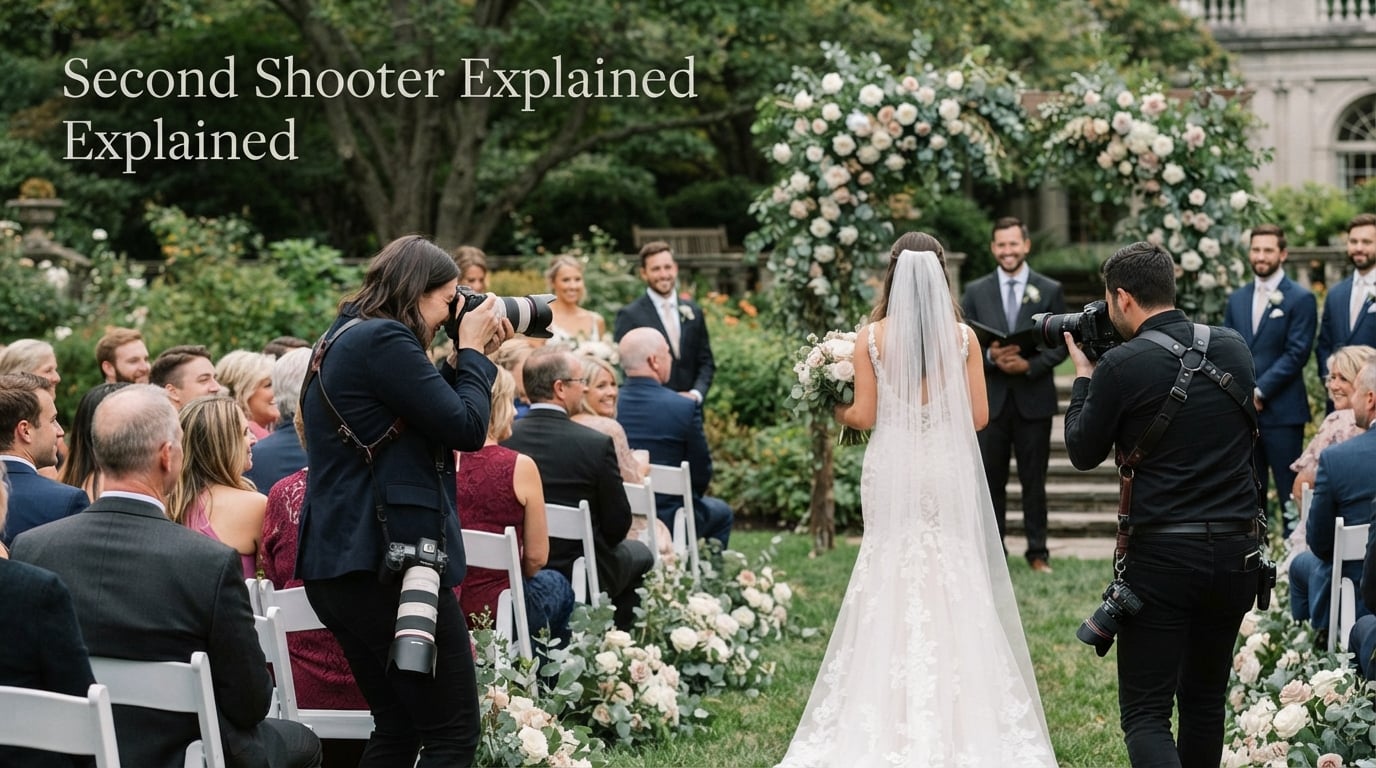
Your wedding day moves fast. From the moment you start getting ready until the last dance ends, important moments happen in two places at once, and no single photographer can be everywhere. That gap is exactly what a second shooter fills.
In this guide, I’ll walk you through what a second shooter is, the seven biggest benefits couples get from hiring one, what they actually capture at each phase of the day, and how to know whether your wedding needs that extra coverage. Whether you are planning a 60-guest backyard wedding or a 250-guest celebration across two venues, you’ll know by the end whether a second shooter makes sense for you.
If you are exploring wedding photography services and weighing your options, this breakdown will help you make a confident decision based on real day-of coverage, not marketing fluff.
Table of Contents
What Is a Second Shooter in Wedding Photography?
A second shooter (sometimes called a second photographer) is an additional professional photographer who works alongside your lead photographer to capture different angles, different moments, and different locations throughout your wedding day. Their job is to expand coverage, not duplicate it.
Think of it this way: your lead photographer is the storyteller in chief. They focus on the primary narrative, like your first look, the ceremony from the main aisle, your couple portraits, and the key reception events. The second shooter moves independently to capture everything happening around that main story, like the groom’s reaction while the lead follows the bride, the wide shot of the ceremony space, the candid laughs during cocktail hour, and the guests dancing when the lead is grabbing a wide of the first dance.
The two photographers are not competing. They are coordinating. A good lead photographer treats the second shooter as a creative partner, while the second shooter treats the lead as the director. The result is a fuller, more complete gallery that no single shooter could produce alone.
The terms “second shooter” and “second photographer” mean the same thing in the wedding industry. Some studios use one label, some use the other, but the role is identical: an experienced photographer hired to support the lead photographer on a single wedding day.
Why Couples Hire a Second Shooter: 7 Key Benefits
A second shooter is more than a luxury add-on. For many weddings, the second shooter is what makes comprehensive coverage possible. Here are the seven benefits our team sees play out most often on real wedding days.
1. Coverage in Two Places at Once
Your photographer cannot teleport. If the bride is getting ready in a hotel suite on the fourth floor and the groom is getting ready in a different building 20 minutes away, one photographer will miss half of those morning moments. A second shooter solves this problem by splitting the coverage so both sides are captured in full.
2. Multiple Perspectives and Angles
A second shooter captures angles the lead cannot. During the ceremony, the lead might shoot down the aisle from behind the couple while the second shooter captures the groom’s face from the side. During your first dance, one shoots wide and the other captures a close-up of your hands. These different angles give your gallery depth and storytelling power.
3. More Candid Moments Captured
Two cameras mean two sets of eyes scanning for natural moments. While the lead is posing the family formals, the second shooter is grabbing candids of the bride’s grandmother dabbing her eye. While the lead is photographing the cake cutting, the second shooter is documenting the kids sneaking extra frosting. Those unposed, in-between moments are often the photos couples treasure most.
4. Faster Group Photos
Group formals are the part of the day couples dread most. With two shooters, the lead can organize the family while the second shooter pulls the next group into place. Photos that would take 45 minutes with one photographer often take 25 minutes with two. That saved time means more of your cocktail hour with your guests and less waiting in the heat.
5. Backup Insurance
Gear fails. Memory cards corrupt. Cameras overheat in summer heat. A second shooter carries backup equipment by definition. If your lead photographer’s camera dies during the first look, your second shooter can keep shooting without missing a beat. This is one of the most underappreciated second shooter benefits and one of the most important.
6. Better Storytelling Across the Day
A single photographer has to choose: am I photographing the mother of the bride’s reaction or the father’s reaction? Two photographers means both. The narrative becomes a complete story rather than a highlight reel of the most obvious moments.
7. Detail Shots Without Sacrificing Main Moments
Your wedding has a thousand small details: the invitation suite, the rings, the shoes, the florals, the place cards. Capturing all of them takes time. A second shooter can grab those detail shots early in the morning while the lead focuses on the bride’s hair and makeup reveals. Nothing gets rushed, and nothing gets skipped in the final gallery.
What a Second Shooter Captures: Coverage Breakdown by Wedding Phase
Here is where a second shooter adds the most value, broken down by what actually happens at each stage of your wedding day and how the second shooter fits into the timeline.
Morning Preparations: Bride and Groom Simultaneously
This is the single biggest reason couples add a second shooter. The bride is getting her makeup done while the groom is lacing his shoes 15 minutes away. The lead photographer must choose one side or bounce between them and lose precious time on the road. The second shooter takes the other side so both preparation stories are captured in full.
Beyond the bride and groom, the second shooter also documents the wedding party hanging out, the parents helping with last-minute details, and the calm before the ceremony begins. Those quiet moments make the final gallery feel complete rather than rushed.
Guest Arrivals: Candid Welcomes
Guests start arriving 20 to 30 minutes before the ceremony. The lead photographer is typically setting up inside the ceremony space or grabbing final detail shots. The second shooter greets the entrance and captures the candid moments: grandparents being escorted to their seats, flower girls fidgeting with their baskets, the ushers shaking hands, and the immediate family beaming as they walk in.
Those arrival shots add a human element to your gallery. You get to see who was there, how they looked, and how excited they were to celebrate with you, even if you never saw them walk in during the day.
Ceremony: Multiple Angles, No Missed Moments
The ceremony is the most important moment to have two shooters. While the lead follows the main action down the aisle, the second shooter captures the groom’s reaction as the bride appears, the parents’ faces during the vows, the ring exchange from a wider angle, and the candid tears from the second row of seats.
A good second shooter also gets the processional and recessional shots from a different angle, the wide establishing shot of the full ceremony space, and the candid guest reactions during the unity candle or sand ceremony. Two photographers means every angle of every important moment is covered, front and back.
Family Formals: Speed and Efficiency
After the ceremony, family formals can eat 30 to 60 minutes of your day. With two shooters, the lead can organize the family lineup while the second shooter shoots the previous grouping. Photos move twice as fast, and your guests spend less time waiting in the sun or hiding from rain.
Plus, the second shooter can grab candid shots of guests mingling while the formal photos happen. You get a wider slice of your day documented without losing focus on the posed portraits your family expects.
Cocktail Hour: Detail and Guest Candids
While you and your partner are off taking couple portraits, the second shooter covers cocktail hour. They document the decor in its full glory, the bar setup, the signature cocktails, the guests laughing over hors d’oeuvres, and the toasts between people who haven’t seen each other in years.
Most couples tell me they barely remember cocktail hour because they were off taking photos. The second shooter makes sure you still get to experience it through images later, full of laughter, hugs, and small moments you would have otherwise missed.
Reception: Speeches, Dancing, and Emotion
During the reception, the lead photographer typically focuses on the main events: the entrance, the first dance, the parent dances, the cake cutting, and the toasts. The second shooter roams the room capturing the candid reactions of guests at their tables, kids dancing, grandparents clapping along, and the spontaneous dance floor moments that happen between scheduled events.
By the end of the night, the second shooter has typically captured 400 to 800 additional images that complete the wedding day story and give you a fuller picture of how your celebration unfolded.
When Do You Need a Second Shooter?
Not every wedding needs a second shooter, but most weddings benefit from one. Here is how to decide based on your specific situation, guest count, and priorities.
Wedding Size Matters
Couples with 80 or more guests almost always benefit from a second shooter. Larger weddings have more happening simultaneously: more guests arriving, bigger family groupings, more table candids, longer receptions, and bigger dance floors. One photographer cannot adequately cover all of it without compromise.
Smaller weddings under 50 guests can often be covered beautifully by a single photographer because there is simply less happening at any given moment. But smaller does not mean simple. If your 40-guest wedding has 12 family groupings, you may still benefit from a second shooter for formals alone.
Multiple Locations Add Complexity
Weddings that move between two or more venues, like a church ceremony followed by a separate reception hall, almost always benefit from a second shooter. The logistics of relocating gear, parking, and setting up eat into photography time. A second shooter covers one location while the lead covers the other, eliminating that pressure.
Extensive Cultural or Religious Traditions
If your wedding includes extended traditions like a tea ceremony, hora, baraat, lasso, or unity candle ritual, a second shooter captures angles the lead cannot. These moments happen in waves and from multiple angles, and you do not want to miss any of them in the final coverage.
Large Wedding Parties
Weddings with 8 or more bridesmaids and groomsmen benefit from a second shooter during the getting-ready phase and the formals. Group portraits of 12+ people take coordination that two photographers handle far more smoothly and quickly than one trying to manage everything alone.
Couples Who Want Comprehensive Candid Coverage
If your photography priority is natural, documentary-style candids over mostly posed portraits, a second shooter is essential. Documentary coverage requires roaming flexibility, and two roaming photographers capture twice as many candid moments as one working the room alone.
Budget Considerations
A second shooter typically adds a few hundred dollars to your photography package, sometimes more depending on your region and the experience level of the second shooter. For most couples, that investment pays for itself in the volume and quality of the final gallery, plus the peace of mind that comes with backup coverage.
How Second Shooter Photos Blend With the Main Gallery
Couples often ask whether second shooter photos will look different from the lead photographer’s work. The short answer: they should not, when done well.
Experienced second shooters match the lead’s style through pre-wedding coordination. The lead typically shares their editing profile, color grading preferences, and shot list with the second shooter ahead of time. After the wedding, the lead photographer culls and edits the entire gallery, including the second shooter’s RAW files, to ensure visual consistency from image one to image final.
The final gallery you receive is curated. You will not see two photographers’ work side by side looking mismatched. Instead, you will see a single, cohesive gallery where every image shares the same tone, color, and feel. The second shooter’s work blends in without disrupting the visual flow.
This is why we always recommend hiring a second shooter who has worked with your lead photographer before, or at least one who shoots in a similar style and tone. Consistency is what separates a true second shooter from someone just filling a slot.
Frequently Asked Questions About Second Shooters
What is a second shooter in wedding photography?
A second shooter is an additional professional photographer who works alongside your lead photographer to capture different angles, different locations, and different moments throughout your wedding day. They expand coverage so no important moment is missed.
Is a second shooter necessary for a wedding?
A second shooter is not strictly necessary for every wedding, but most weddings with 80 or more guests, multiple locations, large wedding parties, or extensive cultural traditions benefit significantly from the additional coverage. Smaller intimate weddings can often be covered beautifully by a single experienced photographer.
How much does a second shooter cost for a wedding?
A second shooter typically adds a few hundred dollars to your photography package. Pricing varies by region and experience level. Most couples find the added coverage and backup insurance well worth the investment when their budget allows.
How do you become a second shooter in wedding photography?
To become a second shooter, build a strong portfolio of consistent wedding-style work, network with lead photographers in your area, assist on a few weddings first to learn the workflow, and pitch yourself as a reliable backup who can match different editing styles. Most second shooters start by assisting established photographers before being hired independently.
Conclusion
A second shooter expands what is possible on your wedding day. They capture the moments your lead photographer cannot physically be present for, from simultaneous getting-ready coverage to multiple ceremony angles to candid guest reactions throughout the reception.
If you are planning a wedding with 80 or more guests, multiple locations, or an extensive list of family formals, a second shooter is one of the smartest investments you can make in your photography coverage. For smaller weddings, the decision depends on how much candid, documentary-style coverage matters to you and your partner.
When you are ready to talk through your wedding day coverage in detail, our team at Kingdom Wedding Photography would love to help. Reach out through our wedding photography services page to start the conversation and find out what coverage makes sense for your celebration.