
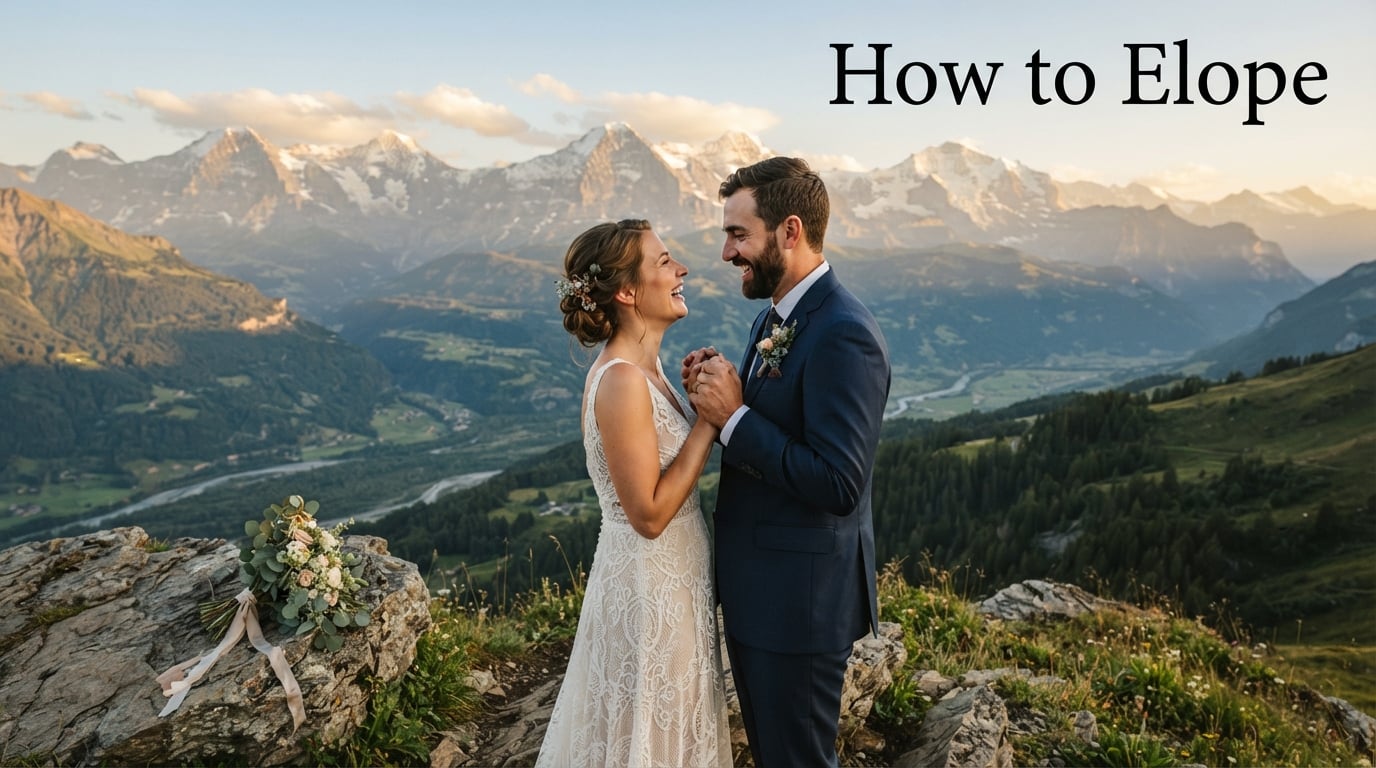
Learning how to elope used to mean sneaking off to Vegas in secret. In 2026, eloping has been completely reinvented. Couples now plan intentional, beautiful ceremonies on mountaintops, beaches, and quiet city halls, often with a few loved ones standing beside them.
I have spent over a decade photographing elopements across the country. I have seen couples trade 200-person productions for sunrise vows above the clouds, two-person ceremonies in red rock canyons, and intimate gatherings in national parks with just parents and a dog. This guide pulls together everything I have learned from hundreds of those days, plus what couples tell me they wish they had known sooner.
If you are wondering how to elope without losing your mind, breaking the law, or starting a family feud, you are in the right place. We will walk through the modern definition, the eight planning steps, the legal must-knows, and the parts no one else covers (like how to actually tell Grandma).
Table of Contents
What Does It Mean to Elope Today?
The modern elope meaning has very little to do with the old definition. Historically, “elope” meant running away in secret to marry without parental consent. Today, eloping simply means choosing an intentional, intimate wedding that prioritizes the couple over the production.
An elopement can still include guests. It can still be planned months in advance. It can still have a venue, attire, florals, and a full vendor team. The only requirement is that the day reflects you, not a checklist someone else wrote.
Old Elopement vs Modern Elopement
The shift in definition matters because it changes everything about planning. Old elopements were reactive, secretive, and often rushed. Modern elopements are proactive, intentional, and designed.
- Old: Sneak away, tell no one, marry quickly, announce later.
- Modern: Decide together, plan intentionally, invite the people who matter, share on your own timeline.
Why Couples Are Choosing to Elope in 2026
Elopement searches have grown steadily for years, and 2026 is on track to be the biggest year yet. Couples tell me the same handful of reasons over and over again.
- They want a day that feels like them, not a performance.
- They want to spend money on the experience, not the seating chart.
- They want to skip the family politics and vendor sales pressure.
- They want a meaningful adventure they can actually remember.
If any of that sounds like you, then the question is no longer “should we elope?” It is “how do we do this well?”
How to Elope: A Step-by-Step Planning Process
Below is the exact framework I walk every couple through when they ask me how to plan an elopement. These eight steps cover everything from the first dream to the last dance, and they are sequenced in the order most couples actually tackle them.
Step 1: Dream Up Your Elopement Vision
Before you book anything or Google a single permit, give yourself permission to dream. What does your perfect day actually look like? A cliffside sunrise with vows and pastries? A city hall appointment followed by a long lunch? A three-day backcountry trip with a photographer hiking beside you?
Write down three to five adjectives that describe how you want the day to feel. Words like “quiet,” “adventurous,” “elegant,” or “cozy.” Let those words guide every decision that follows.
Step 2: Decide If You Want Guests or Witnesses
Most states require at least one witness and an officiant (more on this in the legal section), so you will never be 100% alone. The real question is who else, if anyone, you want standing with you.
- Just us: Your photographer and officiant double as legal witnesses.
- A few loved ones: Parents, siblings, or your closest friends.
- Micro wedding: 10 to 30 guests at an intimate venue.
I have photographed all three versions. There is no wrong answer, only what fits your relationship.
Step 3: Set a Realistic Elopement Budget
An elopement budget is simpler than a traditional wedding budget because there are fewer line items. You are not feeding 180 people or renting a dance floor. Most couples in 2026 spend between $5,000 and $25,000, but you can absolutely do it for less or far more.
Common budget categories to plan around:
- Travel and lodging (flights, hotels, rental car)
- Photography and videography
- Officiant and marriage license fees
- Permits and location fees
- Attire, hair, and makeup
- Florals and small details
- Food and a post-ceremony celebration
Set your total first, then allocate. Reverse-engineering the budget from a Pinterest board is how couples end up stressed and over budget.
Step 4: Choose Your Location and Date
Your location and date are deeply connected. National parks, beaches, and international destinations often have permit lead times of 6 to 12 months. If you want a fall ceremony in Yosemite, you need to act now.
When picking a location, ask three questions:
- Does this place match the adjectives we wrote down in Step 1?
- Can we legally marry here, and what paperwork is required?
- What does this spot look like at the time of day we want to be there?
I always recommend couples visit their location once if possible, or at minimum look at a photographer’s portfolio from that exact spot in the same season.
Step 5: Hire Your Vendor Team
Your vendor team is smaller than a traditional wedding but more important. Each one touches the entire day. Your elopement photographer is with you for 6 to 10 hours. Your officiant sets the emotional tone of the ceremony itself.
Vendors to consider:
- Elopement photographer (top priority for most couples)
- Officiant or celebrant
- Videographer for film memories
- Hair and makeup artist
- Florist for a bouquet or floral arch
- Elopement planner for complex logistics
Book your photographer first. The best elopement photographers book 9 to 18 months out, and they often have the best recommendations for other vendors in your chosen location.
Step 6: Secure Permits and Handle Legal Logistics
If you are eloping on public land, you will almost certainly need a special use permit. National parks, state parks, BLM land, and beaches all have their own rules. Permit fees range from free to several hundred dollars, and processing times vary from a few days to several months.
Do not skip this step. I have seen couples fined and asked to leave mid-ceremony because they did not check local requirements.
For private property (an Airbnb, a family ranch, a vineyard), a permit is usually not required but the owner’s permission absolutely is. Get it in writing.
Step 7: Get Your Marriage License
Your marriage license makes the marriage legal. Everything else (the vows, the photos, the cake) is just celebration. Apply at your local county clerk’s office in the state where you intend to marry, not where you live.
Most states have a waiting period between issuing the license and allowing the ceremony. Some have none. Check your specific state’s rules well in advance, and do not leave this to the week of.
Step 8: Build Your Day-Of Timeline
A relaxed timeline is the single biggest difference between a stressful elopement and a joyful one. Build in buffers. Plan for weather. Leave room to just be together.
A sample eight-hour elopement timeline:
- 8:00 AM – Coffee, getting ready separately
- 10:00 AM – Hair and makeup arrival
- 12:00 PM – First look and private vows
- 2:00 PM – Ceremony at the overlook
- 3:00 PM – Portrait session at golden hour locations
- 6:00 PM – Dinner at a quiet restaurant or picnic
- 8:00 PM – Sunset portraits or stargazing
Adapt this to your day. There is no required order. The goal is a day that breathes.
Legal Requirements for Eloping Legally
The legal side of eloping is the part most couples know the least about, and it is also the part that can ruin everything if ignored. Here is what you need to make the marriage legally binding.
Marriage License Basics
You need a marriage license issued in the state where the ceremony takes place. Both partners usually need to appear in person at the county clerk’s office with valid photo ID. Fees range from $20 to over $100 depending on the state.
The license must be signed by the officiant, the witnesses, and the couple. Your officiant then returns the signed document to the clerk’s office, and you receive your official marriage certificate weeks later.
Witness and Officiant Rules
Most states require an officiant and at least one witness. Some require two. Your photographer can serve as a witness in many states, which is one reason hiring a calm, professional elopement photographer matters.
Officiants do not need to be religious. Judges, retired judges, online-ordained ministers, judges of the peace, and friends ordained through a one-minute online process are all legally recognized in most states.
Self-Solemnization States
A handful of U.S. states allow self-solemnization, meaning no officiant is required. Colorado, Pennsylvania, Wisconsin, and several others let you marry yourselves with no third party.
If self-solemnization appeals to you, double-check the current rules for the specific state where you plan to elope. Rules do change, and the last thing you want is to find out at the courthouse after the fact.
Choosing the Best Elopement Location
Location is where most couples spend the most emotional energy, and for good reason. The setting becomes the backdrop for every photograph and every memory.
Popular Elopement Location Types
Every landscape creates a different kind of day. Here are the most popular options couples choose in 2026.
- Mountain elopements: Colorado, Utah, Washington, and the Pacific Northwest.
- Beach elopements: Hawaii, Florida, the Outer Banks, and Mexico.
- Desert elopements: Sedona, Moab, Joshua Tree, and the Southwest.
- Forest elopements: Pacific Northwest, the Smokies, and New England in fall.
- City hall elopements: San Francisco, New York, and Chicago are favorites.
- National park elopements: Yosemite, Glacier, Acadia, and Zion.
Special Use Permits for Public Lands
Public lands come with rules. Each agency manages its own permit process.
- National parks: Apply through the National Park Service, often 4 to 12 months in advance.
- State parks: Usually faster and cheaper, sometimes just a reservation fee.
- BLM land: Often free or very low cost, with a 30 to 90 day lead time.
- National forests: Permits run through the U.S. Forest Service and vary by district.
Your photographer or planner can usually handle the permit paperwork for you, and most of them do this every week. Lean on their knowledge.
How to Tell Family You Are Eloping
This is the section I wish more guides covered. The legal stuff is easy compared to the conversation with your parents. Here is how to make it go as smoothly as possible.
Before the Conversation
Decide together how much pushback you are willing to absorb. Know your boundaries. Remind each other that you are a team and the decision is already made. You are informing, not asking permission.
Practice the conversation once. Yes, actually say the words out loud. It sounds silly, but it lowers the heart rate when you do it for real.
Scripts and Approaches That Work
Honesty is always better than strategy, but a little framing helps. Here are a few approaches I have seen work beautifully.
- Lead with the relationship: “We have decided that the most meaningful wedding for us is one where we focus entirely on each other, and we wanted you to hear it from us first.”
- Invite them in: “We are eloping, and we would love for you to be there if you want to be.”
- Offer an alternative: “We are planning a small ceremony and a celebration dinner afterward that we would love to host you at.”
- Set the boundary gently: “This is the decision we have made, and we hope you can support us.”
Some family members will be hurt no matter how kindly you frame it. That is okay. Their feelings are valid, and your decision is still valid. Give them time. Most parents come around by the wedding day.
Elopement Attire, Vendors, and Day-Of Details
Once the big decisions are made, the small details bring the day to life. Here are the choices that shape how the day actually feels.
Attire for an Elopement
Elopement attire has loosened up beautifully in recent years. Wear what makes you feel like the most yourself version of you. That can be a full gown, a jumpsuit, a suit, hiking clothes, or anything in between.
Practical tips from the trail:
- Bring a backup pair of shoes for the hike to the ceremony site.
- Steam or hang your outfit the night before, not the morning of.
- Pack an emergency kit with safety pins, fashion tape, and a stain pen.
Vendors to Bring Along
If you are eloping remotely with a photographer and officiant, you are essentially hiring a small crew to spend the day with you. Choose people whose energy you enjoy. The photographer who makes you laugh is the photographer whose photos you will love most.
For multi-day elopements, you can spread the vendor team across the trip. Photographer for day one, videographer for the ceremony only, hair and makeup for the morning of.
Day-Of Stress Reduction
Elopements are supposed to be calm. Here is how to actually keep them that way.
- Have someone you trust handling logistics so you do not have to.
- Eat a real breakfast, even if you are too excited to be hungry.
- Schedule a quiet moment alone together before the ceremony.
- Put your phone on airplane mode for the day.
- Write your vows early, not the morning of, so you can be present.
Celebrating After the Ceremony
The celebration part is optional but wonderful. Some couples throw a reception months later. Others have a private dinner that night. Many plan a honeymoon that doubles as the elopement trip itself.
Our team has photographed couples who celebrated with a quiet dinner for two, a pizza party with friends a week later, a family brunch the morning after, and a year-long delayed reception with everyone they love. There is no right way. Pick what fits your life.
Frequently Asked Questions About How to Elope
What are the rules of eloping?
The rules of eloping are the same legal rules as any other wedding. You must obtain a marriage license from the county clerk in the state where the ceremony takes place, have an authorized officiant (or qualify for self-solemnization), and meet any witness requirements. Beyond the legal basics, the only real rules are the ones you and your partner set together.
Does eloping make you legally married?
Yes. Eloping produces a fully legal marriage as long as you follow your state’s requirements: valid marriage license, authorized officiant, witnesses where required, and a signed license returned to the clerk. The size of your ceremony has no effect on the legal status of your marriage.
What do you need to elope?
You need a marriage license from the county where you will marry, valid photo ID for both partners, an officiant (or a self-solemnization state), any required witnesses, and any location permits if you are marrying on public land. Beyond the legal items, most couples also hire a photographer and plan a timeline for the day.
What do you need to elope in PA?
To elope in Pennsylvania, you need a marriage license from any county clerk’s office, valid photo ID for both partners, and two witnesses aged 18 or older. Pennsylvania is also a self-solemnization state, which means you do not need an officiant. There is a three-day waiting period between license issuance and the ceremony.
Can you elope without guests?
Yes. Eloping without guests is the most traditional form of elopement. You will still need any witnesses required by your state, but your photographer and officiant can often serve in that role. Many couples love the privacy of a just-the-two-of-you ceremony followed by a celebration with friends later.
Is eloping selfish?
Eloping is not selfish. Choosing to prioritize your relationship and your wedding day experience is a healthy boundary, not a selfish act. Many couples find that eloping actually improves family relationships because it removes the pressure, performance, and financial strain of a traditional wedding.
Do you need a permit to elope on public land?
Most public lands require a special use permit for ceremonies, including national parks, state parks, national forests, and BLM land. Permit fees and processing times vary by agency and location. Your photographer or elopement planner can usually handle this paperwork for you in advance.
Final Thoughts on Planning Your Elopement
How to elope is really a question about what kind of marriage you want to begin. The paperwork, the permits, the timeline, and the vendors are all just scaffolding around a much simpler truth: you are choosing each other, and you are choosing to do it in a way that fits your life.
Take your time with the planning, but do not let the planning steal the joy. The best elopements I have ever photographed are the ones where the couple trusted the process, hired people they liked, and showed up ready to be present with each other.
If you are ready to start planning your own day, begin with Step 1. Dream a little. Then come back to the list. The rest will follow.