
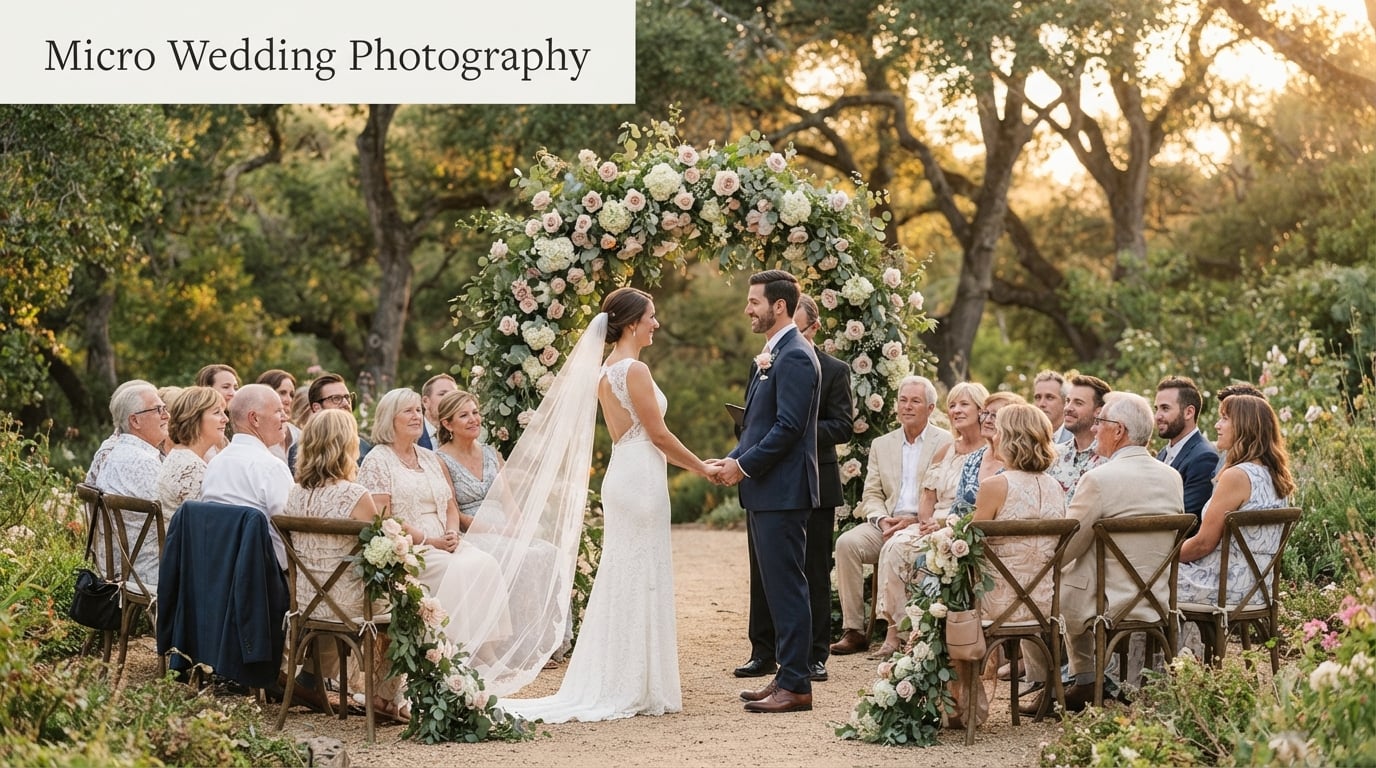
Micro wedding photography has become one of the most rewarding services we offer at Kingdom Wedding Photography. After shooting 40+ intimate weddings over the past three years, I can tell you the smaller guest list changes everything about how I work. More time for portraits, deeper connections with couples, and photos that feel genuinely emotional instead of staged.
This guide covers what a micro wedding actually is, how it differs from an elopement, and the practical photography tips that help couples get unforgettable images. You’ll also find a timeline template, FAQ answers, and the small details that make micro weddings photograph beautifully.
Table of Contents
Quick Definition: What Is a Micro Wedding?
A micro wedding is an intimate celebration with 10 to 50 guests. It keeps the meaningful parts of a traditional wedding (ceremony, vows, reception, dinner, dancing) but on a smaller, more personal scale. Unlike an elopement, a micro wedding still includes a guest list and most of the traditional events.
How Micro Weddings Differ From Elopements
The biggest source of confusion we see from couples is the line between a micro wedding and an elopement. They look similar on paper but feel very different on the ground.
An elopement typically involves just the couple (and maybe a few witnesses). There is no formal reception, no seated dinner, and no guest list to manage. Many elopements happen spontaneously at a courthouse or in a national park with no guests at all.
A micro wedding keeps the structure of a traditional wedding, just compressed. You still have a ceremony, readings, a meal, toasts, and usually a first dance. The 10-50 guests actually attend, sit in chairs, watch the vows, and stay for cake. We’ve photographed backyard micro weddings with 15 guests and destination micro weddings with 48, and both felt like real weddings, just quieter ones.
Here’s the practical difference for photography: elopements usually need 2-4 hours of coverage and focus heavily on the couple. Micro weddings typically need 6-10 hours because of the full event timeline, but the pace is far more relaxed than a 200-guest affair.
There’s also a third category we see often, the minimony. This is a small ceremony (often under 20 people) followed by a larger reception later. We treat it like a micro wedding for the ceremony portion and a traditional wedding for the reception. Couples sometimes split their photography coverage across two dates for this format.
Why Micro Wedding Photography Produces Better Emotional Images
After years of shooting both, our team genuinely prefers micro weddings. The smaller guest count creates a different energy, and that energy shows up in the photos.
More Time for Portraits and Details
Traditional weddings run on tight timelines. Micro weddings give us breathing room. A typical 150-guest wedding might give us 20 minutes for couple portraits between the ceremony and reception. A micro wedding often gives us 60-90 minutes, sometimes more. The difference in the final gallery is enormous. Couples relax, the light shifts, and we capture multiple looks instead of rushing through one.
That extra time also means we can move to a second location for portraits. We might start in the garden where the ceremony happened, then walk five minutes to a nearby park or rooftop for golden hour portraits. Couples get two completely different backgrounds without the stress of a tight schedule.
Deeper Connection With the Couple
When we photograph a micro wedding, we usually spend an engagement session with the couple first and then several hours with them on the wedding day. By the time the ceremony starts, they trust us completely. That trust shows up in the photos. Instead of stiff, posed smiles, we get genuine reactions and natural laughter.
Authentic, Candid Moments
With 20 guests instead of 200, every hug during the ceremony feels real. Grandma’s tears, the best friend’s shaky voice during a reading, the dad’s quiet whisper before walking down the aisle, all of these happen naturally at micro weddings. At larger weddings, these moments get lost in the crowd noise and logistics.
Less Stress, Better Mood
Couples consistently tell us their micro wedding felt calmer than they expected. No seating chart drama, no managing a 12-person bridal party, no worrying about whether the caterer is behind schedule. That calm energy carries into the photos. We see fewer tense shoulders and more relaxed, joyful faces.
Budget Reallocates Toward Photography
This is one of the hidden benefits couples don’t always anticipate. With fewer mouths to feed and fewer tables to decorate, couples often redirect part of their budget toward photography. We’ve seen micro wedding couples invest in a second photographer, an album upgrade, or extra hours of coverage, all of which make the final gallery stronger.
Essential Micro Wedding Photography Tips
Our team has refined these tips across dozens of intimate weddings. They apply whether you’re a photographer or a couple planning the day.
Use Prime Lenses for a Softer Look
For micro weddings, we lean heavily on an 85mm f/1.4 and a 35mm f/1.4. The 85mm gives that creamy background separation that makes portraits feel intimate and personal. The 35mm captures the wider scenes, the ceremony space, the group at dinner. We rarely use zooms during micro weddings because the smaller venue sizes mean we don’t need the range.
Adopt a Documentary-First Approach
With fewer guests and a slower pace, micro weddings reward a photojournalistic style. We let moments unfold and capture them as they happen. The bride reading a handwritten letter from her grandmother. The groom’s younger brother fidgeting with his cufflinks. The two grandmothers holding hands during the vows. These are the images couples tell us they treasure most.
Capture the Small Details
Smaller weddings often have more thoughtful details because couples spend their budget on fewer items, but better ones. We make a point to photograph the handwritten vows, the custom ring box, the family heirloom bouquet wrap, the place cards. A 100mm macro lens is excellent for this work and lets us show the craftsmanship couples put into their day.
Shoot Through Obstacles
With smaller venues, you often can’t move around as freely. We use this constraint to our advantage. Shooting through a doorway frame, between hanging florals, or past a candle adds depth and a sense of place to the image. It’s a small technique that makes micro wedding galleries feel distinctive.
Plan a First Look or First Touch
Many couples choose a private first look at micro weddings because the timeline allows it. We strongly recommend it. A first look gives you 15-20 minutes of quiet couple portraits before the ceremony, when everyone is fresh and the light is often beautiful. It also helps nervous couples settle into the day.
Chase the Light
With fewer guests and more flexibility, micro weddings let us plan around the best light of the day. We’ll suggest a ceremony time that puts the couple in soft, directional light rather than harsh overhead sun. If the timeline allows, we’ll pull the couple out for portraits 30 minutes before sunset when the light turns golden and forgiving. This is something we almost never have time to do at large weddings.
Location Considerations for Micro Wedding Photography
Micro weddings open up locations that simply don’t work for large guest counts. We’ve shot in backyards, family vineyards, small chapels, Airbnb rooftops, mountain overlooks, and beach coves that hold 30 people at most.
When helping couples choose a location, we look for three things: natural light, a clean background for portraits, and enough space to move around without disrupting guests. A backyard wedding can be magical if the homeowner has trimmed the bushes and mowed the lawn a day before. A destination micro wedding needs a backup plan for weather, especially if you’re traveling far.
Lighting matters more than square footage at a micro wedding. A small, well-lit room with big windows will photograph better than a vast barn with a single overhead bulb. We scout our micro wedding locations the week before whenever possible.
Think about the photo flow as you tour venues. You want getting-ready space, a ceremony spot, and a portrait location all within a short walk of each other. When everything happens in one place, we spend less time in transit and more time behind the camera. Couples who rent a single property for the full day often get the strongest galleries.
Micro Wedding Photography Timeline Template
The most common question we get from couples is how many hours of photography coverage they need. For a micro wedding with full traditional elements, we recommend 6-8 hours. Here’s the breakdown that works for most of our couples.
8-Hour Coverage (Most Popular)
Hour 1: Getting ready details, dress, rings, invitations
Hour 2: Bride and groom prep, candid moments, first look or first touch
Hour 3: Couple portraits, bridal party portraits
Hour 4: Guest arrivals, ceremony setup, candid guest moments
Hour 5: Ceremony coverage, full event documentation
Hour 6: Family portraits, small group photos
Hour 7: Reception, dinner, toasts, candid moments
Hour 8: First dance, cake cutting, sparkler exit or golden hour portraits
6-Hour Coverage (Tight Timeline)
Works well for a micro wedding without a full reception or with everything happening in one location. We focus on getting-ready through the first dance, then skip the late-night dancing. This is a smart choice for couples having a private ceremony followed by a casual dinner with close family.
10-Hour Coverage (Destination or Two-Day)
For multi-day destination micro weddings, especially when we cover a welcome dinner the night before or a post-wedding brunch the morning after. This option gives the most complete story and lets couples relive the entire weekend through their gallery.
Whatever coverage length you choose, build in buffer time. The biggest timeline mistake we see is scheduling every minute back-to-back. A 15-minute cushion between family portraits and the ceremony start gives everyone room to breathe, and it gives us a moment to grab a few extra detail shots or candid guest interactions.
Capturing Intimate Moments and Family Dynamics
The most overlooked aspect of micro wedding photography is family dynamics. With only 20-40 guests, every face in every photo is someone the couple knows and loves. That makes the photography more meaningful, but also more sensitive.
We always ask couples ahead of time about any family tensions, divorced parents, or sensitive relationships. This isn’t gossip, it’s preparation. Knowing the dynamics helps us position people thoughtfully during family portraits and capture moments that feel warm instead of awkward.
For introverted couples (a question that came up in our research), a micro wedding is a gift. Less performance, fewer social demands, more time to actually be present. Our photography approach matches that energy. Quiet, observational, and focused on the real moments instead of the staged ones. We’ve found that introverted couples especially love documentary-style coverage because it lets them stay in their own world while we quietly document it.
One practical tip: give grandparents and elderly relatives extra time during portrait sessions. They’re often the most photographed guests at a micro wedding, and a slow, patient approach makes for beautiful, dignified images the family will treasure for generations.
Making a Micro Wedding Feel Luxurious
Luxury at a micro wedding isn’t about spending more. It’s about spending intentionally. When you’re hosting 25 people instead of 250, you can upgrade in ways that would break a traditional wedding budget.
We’ve seen couples splurge on a multi-course plated dinner with wine pairings, hire a live string quartet for the ceremony, or commission a custom floral installation that drapes from the ceiling. These touches photograph beautifully because they’re concentrated rather than spread thin across a giant venue.
From a photography standpoint, luxury shows up in the details. We always photograph the place settings, the menu cards, the signature cocktail, the personalized favors. These images fill out the gallery and tell the full story of the day. If you’re investing in beautiful details, make sure your photographer knows they’re a priority.
Common Micro Wedding Photography Mistakes to Avoid
We’ve seen a few recurring mistakes that are easy to avoid with a little planning.
Skipping family portraits. Some couples assume a small guest list means formal portraits aren’t needed. The opposite is true. When everyone at the wedding is close family or friends, those group photos become some of the most treasured images from the day. We always build in 30 minutes for family combinations.
Underestimating coverage time. Couples sometimes book 4 hours thinking a smaller wedding needs less photography. What they forget is that micro weddings still have all the same key moments: getting ready, ceremony, portraits, reception. Compressing them into 4 hours creates stress that defeats the entire purpose of going small.
Forgetting the candids. It’s easy to get so focused on the couple that you miss the guest experience. We make a point to photograph guests laughing during toasts, kids dancing, friends reconnecting. These images round out the story and are often the ones couples share most on social media.
Frequently Asked Questions
How many hours of photography do I need for a micro wedding?
For a traditional micro wedding with ceremony, portraits, and reception, 6-8 hours of photography coverage is the sweet spot. Shorter weddings without a full reception can work with 4-5 hours, while multi-day destination micro weddings often need 10+ hours.
What is the difference between a micro wedding and an elopement?
A micro wedding has 10-50 guests and includes traditional events like a seated dinner, toasts, and a first dance. An elopement typically involves just the couple (and sometimes a few witnesses) with no guest list, no formal reception, and a much shorter timeline.
What lens is best for micro wedding photography?
An 85mm f/1.4 prime lens is the workhorse for portraits and ceremony moments, and a 35mm f/1.4 covers wider scenes and group shots. A 100mm macro lens is useful for capturing detail shots like rings, invitations, and decor.
How do I make my micro wedding feel luxurious?
Invest in fewer but better details: a single stunning floral installation instead of scattered centerpieces, a handwritten ceremony program, a multi-course plated dinner, and high-quality stationery. The smaller guest count frees up budget for these upgrades.
How is micro wedding photography different from traditional wedding photography?
Micro wedding photography uses a slower, more documentary approach. With fewer guests, photographers have more time for portraits, deeper connections with the couple, and the ability to capture genuine candid moments without the time pressure of a packed timeline.
Final Thoughts on Micro Wedding Photography
Micro wedding photography isn’t just a smaller version of a traditional wedding. It’s a different approach altogether. The smaller guest count, the relaxed timeline, and the personal setting create space for the kind of authentic, emotional images that are hard to capture at a 200-person event.
If you’re planning a micro wedding, invest in a photographer whose style matches the energy you want. Look for someone who values documentary moments over stiff posing, who is comfortable in intimate settings, and who has actually shot micro weddings before (not just traditional weddings they’ve been told to scale down).
The best micro wedding galleries tell a story. They show the couple’s real connection, the warmth of a small guest group, and the details that made the day personal. With the right photographer and a thoughtful timeline, your micro wedding photos will feel like the day itself: intimate, unhurried, and full of meaning.
For more wedding photography guides and tips, visit the Kingdom Wedding Photography homepage. We’ve documented weddings of every size across 2026, and we’d love to help you capture yours.