
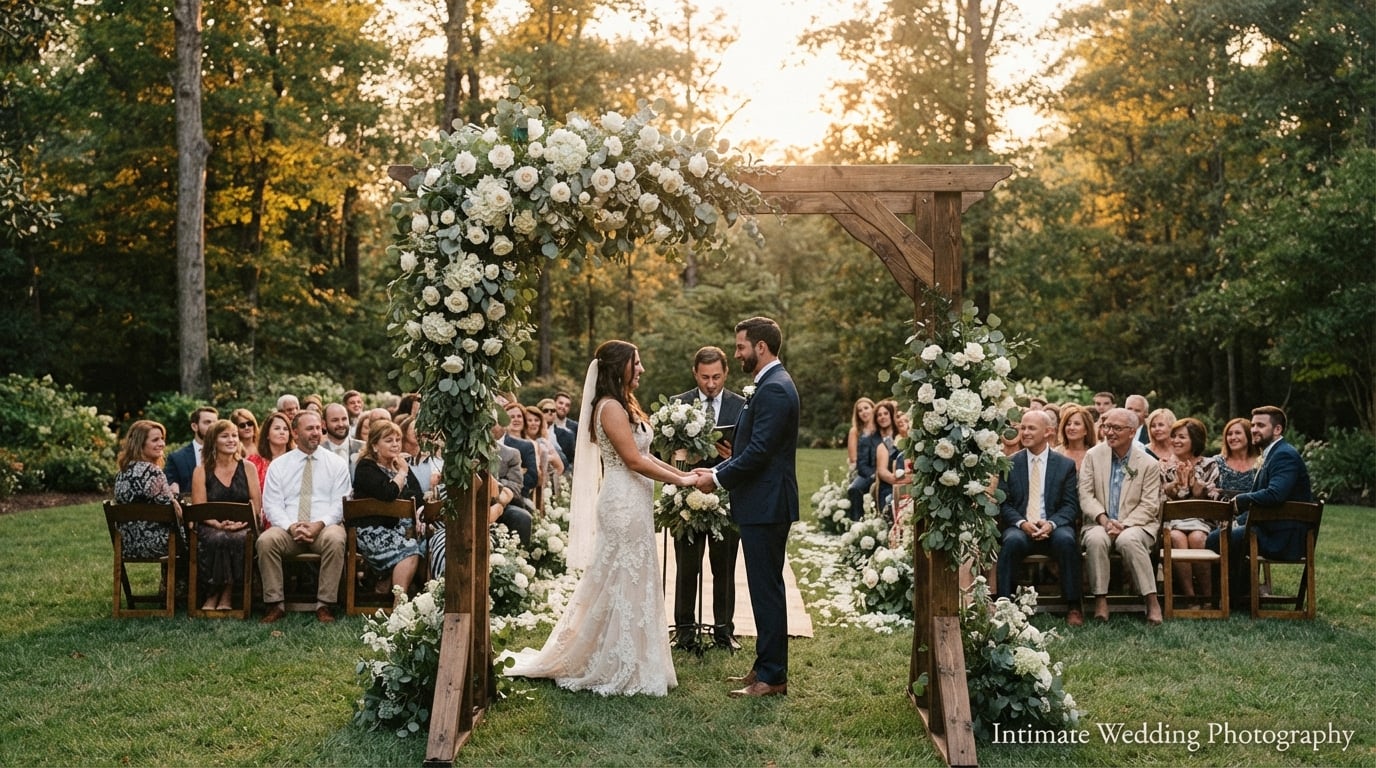
Intimate wedding photography captures the authentic, emotional moments of smaller weddings with typically 25 to 50 guests, focusing on genuine connections and personal storytelling rather than large-scale production. As more couples trade massive guest lists for meaningful celebrations, the demand for photographers who specialize in small ceremonies has grown dramatically.
Our team has spent years documenting intimate weddings, and we’ve noticed something consistent across every couple we work with. The photos from smaller celebrations tend to carry more emotional weight because the photographer can focus on people and feelings instead of crowd management.
This guide walks you through everything you need to understand about intimate wedding photography. We cover definitions, pricing, photographer selection, planning timelines, and the practical differences between micro weddings, intimate weddings, and elopements.
Whether you’re planning a backyard ceremony with 30 close friends or a courthouse elopement with just two witnesses, you’ll find actionable advice here to help you get photos you’ll treasure for decades.
Table of Contents
What Is Intimate Wedding Photography?
Intimate wedding photography is a specialized approach to documenting weddings with smaller guest counts, typically between 25 and 50 people. The focus shifts from capturing every single guest and grand production moments to preserving genuine emotions, quiet interactions, and the details that make your celebration unique.
The emotional value of this approach cannot be overstated. With fewer people to coordinate and less pressure to perform for a crowd, couples relax. They laugh freely, tear up during vows without worrying who’s watching, and actually have time to spend with every guest. A skilled photographer captures those unscripted moments that traditional wedding coverage often misses in the rush.
How It Differs From Traditional Wedding Photography
Traditional wedding photography often revolves around logistics: corralling 150 guests for group shots, coordinating grand entrances, and making sure every table gets documented. The photographer spends significant energy on crowd management.
Intimate wedding photography flips that dynamic. With a smaller group, the photographer becomes a quiet observer who can anticipate moments rather than direct them. They have the flexibility to follow an emotional conversation between the couple and their parents, capture the nervous energy before a first look, or notice the small details like hands shaking during ring exchanges.
Technical differences matter too. Smaller venues often mean tighter spaces and trickier lighting conditions. A photographer experienced with intimate weddings knows how to work in dimly lit restaurants, small chapels, or outdoor backyards without relying on flashy equipment that breaks the mood.
Intimate vs Micro vs Elopement Wedding: Key Differences
One of the most common questions we hear is about the difference between an intimate wedding, a micro wedding, and an elopement. The terms get used interchangeably, but they describe distinct celebration styles with different photography needs.
Guest Count Breakdown
A micro wedding typically includes 10 to 40 guests. An intimate wedding generally runs 25 to 50 guests. An elopement is the smallest of the three, usually involving just the couple and two to ten witnesses. These ranges overlap, which is why the distinction matters less than the intent behind your celebration.
Style and Intent
Micro weddings often feel like scaled-down traditional weddings with a full ceremony, reception, dinner, and dancing. Intimate weddings emphasize connection and intentionality, often with personalized touches like handwritten vows, family-style meals, and meaningful rituals. Elopements strip the day down to its essence, focusing purely on the commitment between two people.
Side-by-Side Comparison
Elopement: 2 to 10 guests, courthouse or scenic location, 2 to 4 hours of photography coverage, focus on the couple only.
Micro Wedding: 10 to 40 guests, small venue or restaurant, 4 to 6 hours of coverage, includes ceremony and light reception.
Intimate Wedding: 25 to 50 guests, dedicated venue or private property, 6 to 8 hours of coverage, full celebration with personal touches.
Understanding these differences helps you communicate your vision to your photographer and plan coverage that matches your day rather than paying for more than you need.
How Many Guests Count as an Intimate Wedding?
Most wedding industry professionals define an intimate wedding as one with 50 or fewer guests, with the sweet spot falling between 30 and 45 attendees. This range allows couples to personally interact with everyone present while still hosting a celebration that feels like a true wedding rather than a private dinner.
From our experience and conversations with couples on wedding planning forums, the definition shifts based on perspective. Couples coming from families that throw 200-person events consider 60 guests intimate. Those used to smaller gatherings might see 30 as the upper limit.
The guest count matters for photography because it directly affects timeline, coverage hours, and the types of shots your photographer can capture. With 30 guests, there’s time for individual portraits with each family group. With 50, your photographer needs to be more strategic about grouping.
Photography Styles That Shine at Intimate Weddings
Not all photography styles translate equally well to small celebrations. Three approaches consistently produce stunning results at intimate weddings, and understanding them helps you choose a photographer whose aesthetic matches your vision.
Documentary Wedding Photography
Documentary style, also called photojournalistic photography, captures moments as they unfold without posing or direction. The photographer becomes a fly on the wall, anticipating interactions and preserving real reactions.
This style works beautifully at intimate weddings because the smaller setting creates more opportunities for unguarded moments. A documentary photographer might capture the bride’s father quietly wiping his eyes during the ceremony, or the spontaneous laughter shared between the couple and their college friends during cocktail hour.
Editorial Style Photography
Editorial wedding photography borrows from fashion magazine aesthetics, with carefully composed shots, dramatic lighting, and artistic flair. Think clean backgrounds, elegant posing guidance, and images that look like they belong in a glossy publication.
For intimate weddings with a styled or designed feel, editorial photography elevates the visual impact. It works especially well for couples who have put thought into every detail, from the floral arrangements to the table settings, and want those elements captured with intention.
Choosing Your Photography Style
Most skilled intimate wedding photographers blend documentary and editorial approaches. They capture candid moments throughout the day but step in for a few directed portraits that give you those frameworthy, polished images.
When reviewing portfolios, look for consistency in how photographers handle emotion versus posing. If their gallery is 80 percent posed shots, they may not capture the spontaneous moments that make intimate weddings special. If everything feels random and uncomposed, you might miss the beautiful portraits you want for your walls.
What to Look for in an Intimate Wedding Photographer
Finding the right photographer for a small wedding requires a different lens than hiring for a large celebration. Here are the criteria that matter most when evaluating candidates.
1. Portfolio Shows Real Intimate Weddings
Ask to see complete galleries from intimate weddings they have shot, not just highlight reels on Instagram. A full gallery reveals how they handle the entire day, from getting ready through the last dance, and whether they can maintain quality throughout.
Look specifically for images taken in small or unconventional spaces. A photographer who only shows grand ballroom shots may struggle in a tight restaurant or backyard setting.
2. Personality That Puts You at Ease
At an intimate wedding, your photographer is one of the closest people to you all day. If their energy feels intrusive or their direction makes you stiff, it will show in every photo. Meet them in person or over video before booking.
Couples on wedding forums consistently mention photographer personality as a top factor in their satisfaction. The best intimate wedding photographers are warm, unobtrusive, and genuinely interested in your story.
3. Experience With Small Spaces and Tricky Lighting
Intimate venues often present lighting challenges: dim restaurants, shaded backyards, or small chapels with limited window light. Ask potential photographers how they handle low-light situations and whether they use flash during ceremonies.
An experienced intimate wedding photographer carries the right equipment and knows how to use natural light to preserve atmosphere without blasting your guests with strobes.
4. Clear Communication About Packages
Many photographers design packages around large weddings with 8 to 10 hours of coverage and 500 edited images. For an intimate celebration, you may only need 5 to 6 hours and a smaller gallery. Look for photographers who offer flexible packages sized for smaller events.
5. Genuine Connection With Your Vision
During your initial conversation, notice whether the photographer asks about your relationship and your reasons for choosing an intimate wedding. Those who take time to understand your story tend to capture it more authentically.
Planning Your Intimate Wedding Photography Timeline
A well-planned timeline ensures your photographer captures every meaningful moment without the day feeling rushed or overproduced. Here is how to structure coverage for an intimate celebration.
How Many Hours of Coverage Do You Need?
For a typical intimate wedding with 30 to 50 guests, plan for 5 to 8 hours of photography coverage. Getting ready shots take about 90 minutes. The ceremony and immediate post-ceremony portraits need 2 hours. Cocktail hour, dinner, and early dancing coverage typically runs another 2 to 3 hours.
Many couples wonder whether they can get away with less coverage to save money. Forum discussions suggest that cutting below 5 hours usually means sacrificing either getting ready moments or the reception energy, both of which couples later wish they had.
Sample Timeline for a 6-Hour Intimate Wedding
Hour 1: Getting ready photos of both partners, including detail shots of rings, dress, and accessories.
Hour 2: First look or pre-ceremony portraits with the wedding party and immediate family.
Hour 3: Ceremony coverage, guest arrivals, and the ceremony itself.
Hour 4: Post-ceremony family portraits and couple portraits while guests enjoy cocktail hour.
Hour 5: Reception coverage including dinner, toasts, and candid guest interactions.
Hour 6: First dance, cake cutting, and early dancing before the photographer departs.
This timeline works for most intimate celebrations. Adjust based on whether you want a first look, how many family formals you need, and whether your photographer stays through the full reception.
Best Locations for Intimate Wedding Photography
The location sets the visual tone for your entire gallery. Intimate weddings open up venue options that would never work for large celebrations, giving you creative freedom.
Backyard Weddings
A backyard wedding offers unmatched personal significance and complete creative control. Your photographer can work with the natural character of the space, whether that means string lights between oak trees or a simple arch against a garden wall.
Plan for lighting carefully. Backyards often have mixed shade and sun, so schedule your ceremony for late afternoon when the light is softest. Your photographer can scout the space ahead of time to identify the best portrait spots.
Courthouse and City Hall Ceremonies
Courthouse weddings have become increasingly popular, and many city halls feature stunning architecture that photographs beautifully. The grand staircases, marble columns, and historic details create an elegant backdrop.
Plan time after the ceremony for portraits around the building and nearby streets. Urban settings offer graphic backgrounds and architectural interest that complement the simplicity of a courthouse elopement.
Destination Intimate Weddings
Beach ceremonies, mountain elopements, and destination weddings in scenic locations produce dramatic, memorable images. The natural surroundings become part of your visual story.
Destination intimate wedding photography requires a photographer comfortable with travel, unpredictable weather, and shooting in varied terrain. Discuss logistics, travel fees, and backup plans for weather before booking.
Intimate Wedding Photography Pricing: What to Expect
Pricing is one of the biggest sources of confusion for couples planning small weddings. Understanding what drives costs helps you budget realistically and avoid surprises.
Typical Price Ranges
Intimate wedding photography in the United States generally ranges from $1,500 to $5,000 depending on coverage hours, location, and photographer experience. Elopement coverage of 2 to 3 hours often runs $800 to $2,500. Full intimate wedding coverage of 6 to 8 hours typically falls between $2,500 and $4,500.
Photographers in major metropolitan areas like New York, Boston, or Los Angeles charge at the higher end. Those in smaller markets or rural areas may offer comparable quality at lower rates.
What Affects the Price
Coverage hours are the biggest factor. Additional services like engagement sessions, second photographers, albums, and print rights add cost. Travel fees apply for destination weddings or venues outside the photographer’s home area.
Experience level also drives pricing. Established photographers with strong portfolios charge more, but their consistency and reliability often justify the investment. Newer photographers may offer lower rates while building their portfolios.
How to Budget Without Sacrificing Quality
Focus your budget on the elements that matter most to you. If candid emotion is your priority, invest in an experienced documentary photographer even if it means fewer coverage hours. If you want a complete story from morning through night, prioritize coverage time.
Ask photographers about custom packages. Many will tailor their offerings for intimate weddings if you explain your needs and budget. Avoid packages designed for large celebrations where you pay for services you will not use.
Frequently Asked Questions
What is intimate wedding photography?
Intimate wedding photography is a specialized approach to documenting weddings with 25 to 50 guests, focusing on authentic emotions, personal connections, and candid storytelling rather than large-scale production. The photographer captures genuine moments in a documentary style while being unobtrusive throughout the day.
How many guests count as an intimate wedding?
An intimate wedding typically includes 25 to 50 guests, with most couples landing between 30 and 45 attendees. A micro wedding is smaller, usually 10 to 40 guests, while an elopement involves 2 to 10 people. The exact number varies based on venue size and personal preference.
How much does intimate wedding photography cost?
Intimate wedding photography in the United States generally ranges from $1,500 to $5,000. Elopement coverage of 2 to 3 hours typically runs $800 to $2,500, while full intimate wedding coverage of 6 to 8 hours falls between $2,500 and $4,500. Pricing varies by location, photographer experience, and included services.
Do I need a photographer who specializes in intimate weddings?
Yes, hiring a photographer experienced with intimate weddings matters because small celebrations present unique challenges. These include working in tight spaces, handling tricky lighting in unconventional venues, and capturing candid emotion rather than directing large groups. A specialist understands how to document the quieter, more personal moments that define intimate celebrations.
How many hours of photography coverage do I need for an intimate wedding?
Most intimate weddings with 30 to 50 guests need 5 to 8 hours of photography coverage. Getting ready shots take about 90 minutes, the ceremony and portraits require 2 hours, and reception coverage runs another 2 to 3 hours. Cutting below 5 hours usually means sacrificing key moments like getting ready or reception energy.
What is the difference between a micro wedding and an intimate wedding?
The main difference is guest count and celebration scope. A micro wedding includes 10 to 40 guests and feels like a scaled-down traditional wedding with ceremony and reception. An intimate wedding includes 25 to 50 guests and emphasizes personal connection with meaningful, intentional touches. Both benefit from photography focused on emotion over logistics.
Final Thoughts on Intimate Wedding Photography
Intimate wedding photography rewards couples who prioritize connection over spectacle. With the right photographer, your small celebration produces images that feel deeply personal and emotionally rich in ways large weddings rarely achieve.
The keys are knowing your guest count and style, choosing a photographer whose portfolio reflects real intimate weddings, planning a timeline that gives coverage room to breathe, and budgeting based on what matters most to you. Take time to review full galleries, meet candidates face to face, and trust your instincts about who will fit naturally into your day.
Your intimate wedding deserves documentation that honors its intentionality. Use this guide as your roadmap, and you’ll walk away with photos that capture not just how your day looked, but how it felt.