
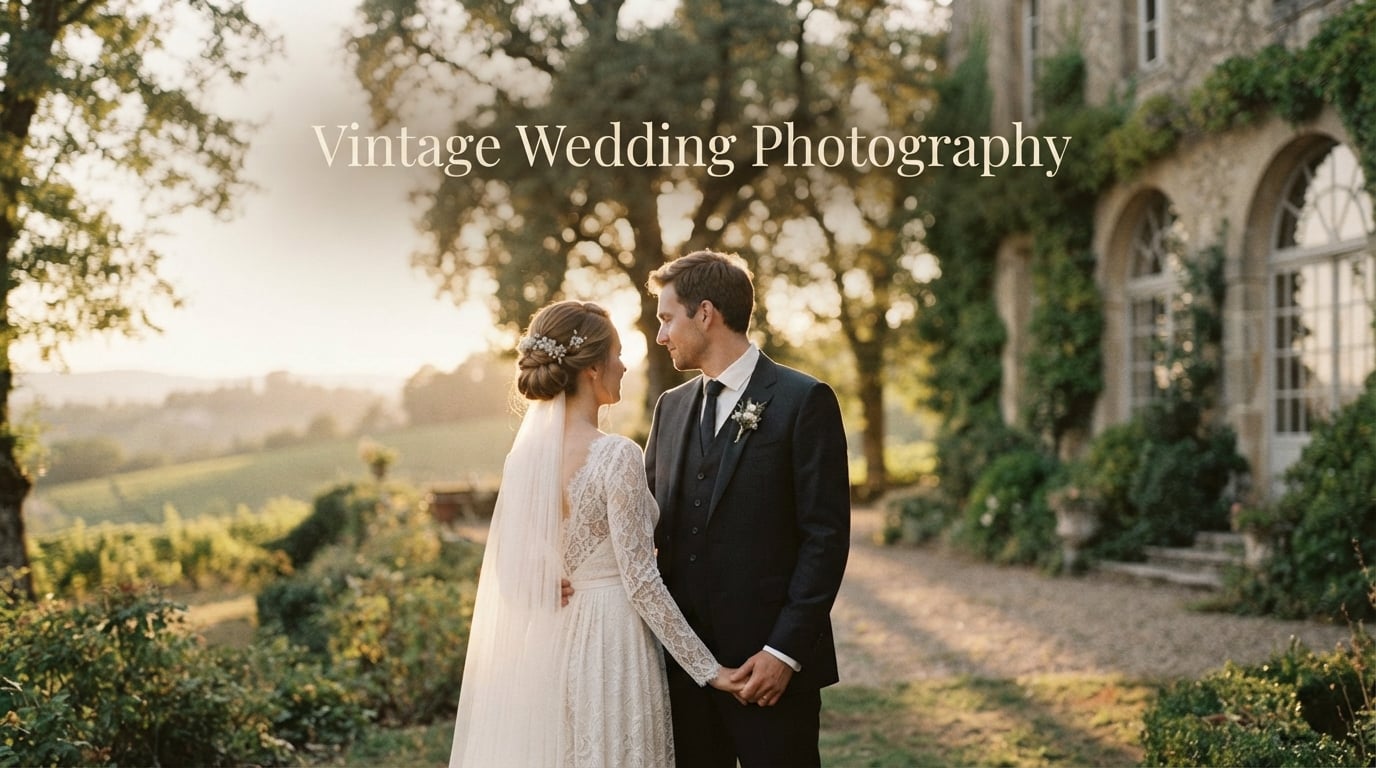
When we look at our parents’ and grandparents’ wedding photos, something magical happens. Those images, printed decades ago on actual film, still carry an emotional weight that many modern digital photos struggle to match. That timeless quality is what vintage wedding photography captures intentionally. This style has surged in popularity among couples who want their wedding memories to feel like treasured heirlooms the moment they leave the ceremony.
Vintage wedding photography is not about pretending your wedding happened in a different era. It is about embracing aesthetic choices that create images with lasting emotional resonance. We have spent years studying how film photography, careful editing, and intentional composition come together to produce images that remain beautiful across decades, not just until the next trend arrives.
Table of Contents
What is Vintage Wedding Photography?
Vintage wedding photography is a style that uses film cameras, specific editing techniques, and nostalgic aesthetics to create images with timeless appeal reminiscent of past eras. This approach prioritizes emotional authenticity over technical perfection, embracing the subtle imperfections that make each photograph unique. The vintage aesthetic draws heavily from mid-century color films, early Kodachrome tones, and the soft romanticism of wedding photography from the 1950s and 1960s.
The key characteristics defining vintage wedding photos include film grain that adds organic texture, warm tones that flatter skin tones, and slightly faded highlights that prevent images from looking too stark or clinical. Light leaks, where light accidentally exposes parts of the frame, appear as happy accidents rather than errors. The colors often lean toward muted earth tones rather than the saturated punch of modern digital processing.
Unlike trendy filter applications that date photos quickly, vintage wedding photography aims for a classic elegance that remains sophisticated for generations. Couples choosing this style often value substance over flash, emotional connection over technical perfection, and memories that feel genuinely timeless rather than fashionably period.
The History of Wedding Photography and Where the Vintage Style Came From
Wedding photography has evolved dramatically since the first wedding photographs emerged in the 1840s using daguerreotype processes. Early wedding photos were stiff, expensive, and reserved for wealthy families who could afford long exposure times. By the 1920s, smaller cameras and film formats made wedding photography more accessible, though it remained formal and posed.
The 1950s and 1960s brought a romantic renaissance to wedding photography. Color film finally reached quality levels suitable for important occasions. Photographers began experimenting with softer lenses, natural light, and more relaxed posing. These images, viewed through decades of nostalgia, now represent the quintessential vintage wedding aesthetic we reference today.
The resurgence of vintage wedding photography in recent years reflects broader cultural appreciation for analog authenticity. As digital images became ubiquitous and often interchangeable, couples increasingly sought something more distinctive. Film photography creates a tangible original negative that cannot be exactly复制ed, adding irreplaceable value to wedding memories. This revival has strengthened considerably in 2026, with more photographers offering film options and couples specifically seeking the vintage aesthetic.
Vintage Wedding Photography Styles: Understanding the Differences
One of the most common points of confusion we hear from couples involves the terminology surrounding wedding photography styles. Vintage, classic, editorial, and film photography often get mixed together, yet they represent distinct approaches. Understanding these differences helps couples communicate effectively with photographers and choose the right style for their vision.
Classic and Traditional Wedding Photography
Classic wedding photography focuses on timeless elegance and formal composition. These images feature clean, properly exposed photographs with traditional poses that flattery every couple. Classic wedding photos age gracefully because they avoid extreme trends in either direction. The editing remains natural with correct color balance, and the emphasis falls on proper lighting and flattering angles rather than stylistic effects.
Traditional photography forms the foundation of most wedding coverage, providing reliable, beautiful images that will never look dated. Many couples appreciate the security of classic wedding photography while supplementing it with more artistic approaches for specific moments.
Analog Film Wedding Photography
Analog film wedding photography uses actual film stock rather than digital sensors. This approach produces images with distinctive grain structure, organic color rendering, and a depth that many photographers argue digital cannot fully replicate. Popular film stocks for wedding photography include Kodak Portra 400, known for its exceptional skin tone rendering and wide exposure latitude. Fujifilm Pro 400H offers a distinctive pastel quality that flatters outdoor ceremonies. Kodak Ektar provides vivid colors with fine grain for couples wanting more saturation.
Film photography requires photographers to be more intentional with each exposure. Without the safety net of instant review, film photographers develop sharper instincts for light, composition, and timing. This deliberation often translates into more thoughtful, emotionally resonant images.
Editorial Vintage Photography
Editorial vintage photography draws inspiration from fashion magazines and high-end editorial spreads. These images feature dramatic lighting, sophisticated compositions, and a polished glamour reminiscent of vintage Vogue covers. Photographers working in this style often use medium format cameras, carefully directed poses, and post-processing that enhances the dramatic aesthetic.
The editorial approach works particularly well for couples who want images that feel both timeless and fashion-forward. This style balances vintage influences with contemporary technique, producing photographs that feel curated and artistic without sacrificing emotional authenticity.
Old Hollywood and Glamour Photography
Old Hollywood vintage photography channels the sophistication of mid-century cinema stars. Think soft focus, elegant poses, and dramatic lighting reminiscent of 1940s and 1950s film stars. This style often incorporates black and white imagery or sepia tones, though color Old Hollywood work emphasizes rich, warm palettes that flatter every skin tone.
Couples drawn to Old Hollywood aesthetics typically appreciate vintage fashion, classic cinema, and elegant simplicity. The approach works beautifully with art deco venues, vintage cars, and classic formal wear.
Film vs. Digital Wedding Photography: What Is the Real Difference?
The choice between film and digital represents one of the most significant decisions for couples considering vintage wedding photography. Understanding the fundamental differences helps couples make informed choices aligned with their priorities and preferences.
Shooting on 35mm Film
35mm film remains the most accessible and versatile format for vintage wedding photography. The small frame size relative to medium format produces more visible grain, which many couples find adds character and texture to their images. 35mm cameras are lighter and more maneuverable, allowing photographers to capture candid moments without drawing excessive attention.
The limited frame count of 35mm film, typically 36 exposures per roll, encourages more intentional photography. Each shot costs money to develop, so photographers and couples become more present in the moment rather than defaulting to spray-and-pray coverage. This scarcity often produces more meaningful images where every frame mattered.
Medium Format Film for Weddings
Medium format film produces significantly larger negatives, resulting in finer detail, smoother tones, and more pronounced depth of field characteristics. Popular medium format systems include the Hasselblad 500C/M, known for its modular design and exceptional optics. The Mamiya RZ67 offers larger negatives with reliable automation. The Contax 645 provides a more compact option without sacrificing image quality.
Medium format wedding photography typically commands premium pricing due to higher equipment costs, increased processing expenses, and the technical skill required. However, the results often justify the investment with images possessing extraordinary clarity and tonal range that scales beautifully for large prints.
Digital Cameras with Film Simulation
Modern digital cameras increasingly offer film simulation modes that approximate the look of classic film stocks. Fujifilm cameras particularly excel in this area with_provnince specific film simulations like Provia, Velvia, and Astia. These options allow photographers to capture the vintage aesthetic digitally while maintaining workflow efficiency and immediate review capabilities.
Digital film simulation works particularly well for couples who want vintage aesthetics without committing to film costs and limitations. High-end mirrorless cameras can produce technically superior images while film simulations add stylistic character. This hybrid approach represents the modern vintage direction increasingly popular in 2026.
Key Characteristics That Define Vintage Wedding Photos
When evaluating whether your wedding photos achieve the vintage aesthetic you envision, several key characteristics distinguish authentic vintage wedding photography from simple vintage filter applications. These elements work together to create cohesive, timeless images rather than superficial nostalgic effects.
Film Grain: Natural grain structure appears throughout genuine film photographs, adding organic texture that prevents images from looking sterile or overly processed. This grain responds differently to light than digital noise, creating a more natural, analog feel.
Warm Tones: Vintage wedding photos typically exhibit warm color temperature with golden or amber undertones. Skin tones appear healthy and radiant rather than cool or clinical. This warmth creates emotional comfort and romantic atmosphere.
Faded Highlights: Rather than the crisp whites of modern digital processing, vintage images show gentle highlight rolloff that feels softer and more romantic. Shadows maintain detail without the extreme contrast range of unmodified digital files.
Muted Saturation: Colors in vintage wedding photos generally appear more muted than life, with less aggressive saturation. This restraint creates cohesive, sophisticated palettes that complement any venue or wedding palette.
Light Leaks: Accidental light exposure creating streaks or fogging appears in film photographs due to imperfect seals or intentional artistic techniques. These “imperfections” contribute significant character and authenticity to vintage images.
Soft Sharpness: Vintage lenses often produce images with gentle falloff at the edges and slightly softer overall sharpness than modern optics. This characteristic flatters portrait subjects and creates dreamlike atmosphere.
Shooting Techniques for Vintage Wedding Photography
Achieving authentic vintage wedding photography requires intentional technique beyond simply applying presets during editing. Successful vintage photographers develop specialized skills in lighting, composition, and timing that produce vintage character in-camera rather than relying entirely on post-processing.
Natural Light Prioritization: Vintage wedding photographers often prioritize natural light situations, avoiding harsh flash photography that creates modern, clinical aesthetics. Soft window light, golden hour sun, and open shade situations produce the most vintage-appropriate results. When supplemental lighting is necessary, diffused, warmer sources maintain the vintage character.
Vintage Lens Selection: Older lenses from the 1970s and 1980s often produce more vintage-appropriate character than modern optics. These lenses frequently show chromatic aberration, barrel distortion, and falloff that contribute to the nostalgic aesthetic. Photographers build collections of vintage glass specifically for this purpose.
Intentional Overexposure: Many vintage film stocks, particularly Kodak Portra, handle overexposure gracefully while punishing underexposure. Photographers often expose for highlights and allow shadows to fall naturally, resulting in brighter, more romantic images with gentle highlight rolloff.
Composition Patience: The vintage aesthetic rewards patient, deliberate composition. Rather than rapid-fire shooting, vintage photographers take time to arrange elements, wait for genuine moments, and ensure each frame contributes to the wedding story. This patience produces fewer but more meaningful images.
Embracing Imperfection: Authentic vintage photography accepts imperfection as character. Slight motion blur, out-of-focus elements, and unexpected compositions often produce the most memorable images. Rigid technical perfection frequently undermines vintage authenticity.
Polaroid and Instax Moments: Including instant film photographs as supplemental coverage adds authentic vintage elements. These small, square instant prints serve as genuine keepsakes while contributing to the overall vintage aesthetic throughout the wedding gallery.
Color Grading and Editing for the Vintage Wedding Look
Post-processing transforms properly captured images into finished vintage wedding photographs. Understanding common editing approaches helps couples communicate their preferences effectively and evaluate whether potential photographers’ editing styles match their visions.
Faded Film Look: This editing approach reduces overall contrast while lifting blacks to create a softer, more airy appearance. The faded film look mimics the slight oxidation that ages actual film negatives, producing images that feel simultaneously timeless and fresh. Editors achieve this by adjusting tone curves, reducing contrast, and carefully managing black levels.
Warm Vintage Tones: Warming color grades shift images toward amber and golden hues while simultaneously cooling shadows with subtle orange or yellow undertones. This approach produces the characteristic warmth associated with vintage wedding photography. Skin tones become peachy and healthy rather than pink or neutral.
Muted Color Channels: Vintage editing typically reduces saturation in specific color channels rather than applying uniform desaturation. Greens become more olive, blues become less vibrant, and reds soften toward coral or terracotta. This targeted approach creates sophisticated, cohesive palettes.
Cross-Processing Effects: Cross-processing involves developing positive slide film in negative chemistry or vice versa, producing unexpected color shifts and increased contrast. Digital photographers simulate these effects through channel mixing and color grading that mimics cross-processed film characteristics.
Grain and Texture: Adding artificial film grain helps digital images achieve more authentic vintage character. However, effective grain application requires subtlety and variation rather than uniform noise patterns. Professional photographers often layer multiple grain textures at varying opacities to simulate genuine analog grain structure.
Popular preset systems for vintage wedding editing include VSCO presets, Mastin Labs film emulation packs, and custom photographer profiles. Each offers distinct approaches to achieving vintage aesthetics. Couples should request full gallery reviews rather than isolated featured images to evaluate how photographers’ editing styles perform across different lighting conditions and wedding moments.
The Modern Vintage: Combining Film and Digital for the Best of Both
The modern vintage approach represents an emerging trend that addresses limitations of purely film or purely digital photography. This hybrid methodology combines the authentic character of film with the practical advantages of digital technology, producing images that honor vintage aesthetics while meeting contemporary wedding photography demands.
Many photographers now offer film-digital hybrid packages where film cameras cover key ceremonial moments while digital cameras handle reception coverage and larger group configurations. This approach provides authentic film character for the most important images while ensuring comprehensive coverage without film costs becoming prohibitive.
Digital post-processing can enhance and extend properly captured digital images to achieve vintage aesthetics without film photography. However, this approach requires significantly more skill and time than simply applying presets. True mastery of digital vintage aesthetics involves understanding color theory, light behavior, and the specific characteristics that make film images distinctive.
The modern vintage direction also incorporates instant film as supplemental coverage. Polaroid and Fujifilm Instax photographs serve as genuine wedding keepsakes while adding authentic vintage elements to the overall gallery. These small, imperfect instant prints often become the most treasured images from the wedding day.
Couples considering modern vintage approaches should discuss specific hybrid strategies with potential photographers. The best modern vintage photographers demonstrate fluency in both film and digital techniques, selecting the appropriate medium for each situation rather than defaulting to single methodology.
Tips for Couples Seeking Vintage Wedding Photography
Choosing vintage wedding photography requires thoughtful consideration beyond simply selecting a photographer whose style appeals visually. Understanding how to evaluate photographers and communicate your vision helps ensure your wedding images achieve the timeless quality you envision.
Review Full Wedding Galleries: Request complete wedding galleries rather than accepting highlight collections. Highlight presentations show only the most flattering images, potentially obscuring inconsistencies across lighting conditions, editing consistency, and coverage comprehensiveness. Full galleries reveal how photographers handle challenging situations like low light, harsh sun, and fast-paced reception environments.
Understand Venue Compatibility: Vintage aesthetics often complement historic venues, gardens, and outdoor locations more naturally than modern hotel ballrooms. Discuss your venue with potential photographers to understand how vintage style will translate. Some venues photograph beautifully with vintage techniques while others require more adaptation.
Schedule Golden Hour Deliberately: Vintage wedding photography frequently benefits from golden hour timing for portrait sessions. Discuss scheduling logistics with your photographer and coordinator to ensure adequate time for vintage-appropriate portrait photography without feeling rushed.
Communicate Style Terminology: Ask potential photographers to explain the differences between vintage, classic, editorial, and film styles before assuming terminology aligns with your vision. Clear communication prevents disappointment when delivered images differ from expectations based on terminology misunderstandings.
Consider Emotional Authenticity: The best vintage wedding photographs balance technical aesthetic with genuine emotional authenticity. Evaluate whether potential photographers capture candid moments and genuine reactions rather than only producing technically beautiful but emotionally sterile images.
Embrace Imperfection Philosophy: Couples drawn to vintage aesthetics typically appreciate authentic moments over manufactured perfection. Embrace the philosophy that slight imperfections contribute character rather than detract from image quality. Rain, tears, laughter, and unexpected moments often produce the most memorable vintage wedding photographs.
Vintage Wedding Photography: Frequently Asked Questions
What is classic wedding photography?
Classic wedding photography refers to a timeless, elegant style that focuses on formal poses, traditional compositions, and enduring beauty. Unlike trendy styles, classic wedding photos remain sophisticated and relevant for decades, often featuring clean editing, proper exposure, and graceful lighting that flatters every couple.
What is the 20-60-20 rule in photography?
The 20-60-20 rule divides wedding day photography into three phases: spend 20% of time on formal group shots, 60% on candid documentary moments, and reserve 20% for creative or artistic images. This balance ensures comprehensive coverage while still capturing unique, memorable photographs.
What is the 30/5 rule for weddings?
The 30/5 rule suggests spending 30 seconds adjusting your composition and lighting before each shot, then 5 minutes actually photographing. This principle encourages photographers to be intentional and methodical, ensuring every frame is carefully considered rather than hastily captured.
Is $4,000 a lot for a wedding photographer?
Wedding photography pricing varies significantly by region, experience level, and coverage scope. While $4,000 represents a mid-range investment for quality wedding photography in many markets, couples should evaluate photographer portfolios and included services rather than price alone when making decisions.
Bringing Vintage Wedding Photography to Your Own Wedding Day
Vintage wedding photography offers couples something increasingly rare in our digital age: images with genuine character, intentional imperfection, and timeless emotional resonance. This approach prioritizes authentic moments captured through thoughtful technique rather than technical perfection that often feels interchangeable.
Whether you embrace pure analog film photography, explore modern digital vintage aesthetics, or combine both approaches in hybrid methodology, vintage wedding photography rewards couples who value substance and emotion over flash and trend. Your wedding photographs will join family albums spanning generations, and vintage aesthetics ensure those images remain as beautiful and meaningful decades from now as they appear today.
When evaluating photographers and planning your wedding day approach, remember that vintage wedding photography works best when couples embrace its underlying philosophy: that authentic moments, thoughtfully captured, create the most treasured memories. Technical perfection matters less than genuine emotion, and the subtle imperfections that make film photography distinctive ultimately make your images more personal and irreplaceable.
Consider how vintage aesthetics align with your venue, your personal style, and your vision for how you want your wedding memories to feel. The best vintage wedding photography emerges from collaboration between photographers who understand the technical craft and couples who appreciate the artistic philosophy. When you find that alignment, your wedding photographs become treasured heirlooms that honor both the moment they capture and the decades of viewing pleasure they will provide.