
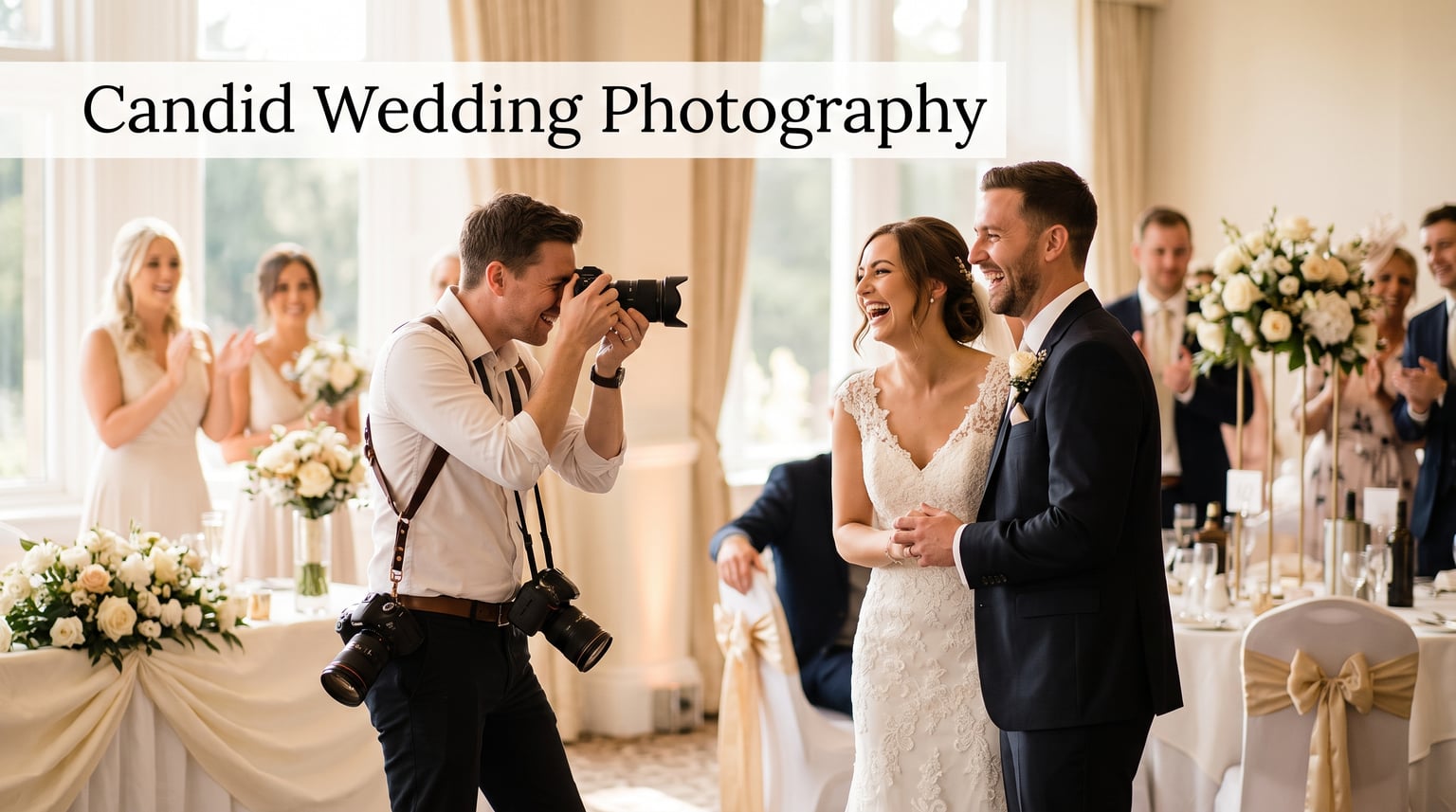
Candid wedding photography has become the most-searched wedding style by couples who want their album to look like the day actually felt. After two decades of photographing weddings, our team has watched the shift happen in real time.
This guide breaks down what candid wedding photography really is, why so many couples prefer it, and how to capture the genuine moments that turn a wedding day into a story worth keeping. You’ll also get our practical tips for working with a candid photographer, the gear pros use, and answers to the questions couples ask us most often.
Table of Contents
What Is Candid Wedding Photography?
Candid wedding photography is a documentary-style approach that captures unscripted, natural moments as they unfold, without staging, directing, or posing subjects. The photographer works like a quiet observer, anticipating genuine emotions and reactions before they happen and pressing the shutter without interrupting the moment.
The style borrows heavily from photojournalism and reportage photography, two traditions that prize truth over perfection. A candid wedding photographer does not pause the ceremony to ask the groom to smile. Instead, they watch for the small breath he takes when his partner walks down the aisle, the squeeze of a father’s hand during the vows, the laugh that breaks out at the reception when the best man’s joke lands.
What makes candid photography different from a quick snapshot is the photographer’s training. They spend years learning to read a room, predict a moment, and adjust settings fast enough to capture low-light scenes without flash disturbing the mood. The goal is not a flawless portrait. The goal is a feeling you can still remember twenty years later.
Couples often call this style a mix of wedding photojournalism and storytelling photography, and that description fits. The end result is a wedding album that reads like a narrative, with a beginning, a middle, and an emotional arc.
Why Couples Choose Candid Wedding Photography
Couples choose candid wedding photography because the images reflect how the day actually felt, not how it was staged to look. After shooting hundreds of weddings, our team has heard the same reason repeated by brides, grooms, and parents: they want to remember their real emotions, not a performance of them.
Several specific benefits keep showing up in our conversations with couples:
Emotional authenticity. Posed portraits tend to look polished but flat. Candid shots catch the crooked smile, the tear sliding down a cheek during vows, the quiet side-glance between partners. Those moments feel more personal when you look back at them.
Lower stress on the day. No one enjoys dragging grandparents away from the cocktail hour for a 45-minute family photo session. Candid coverage lets guests stay present, and it frees couples from spending hours under direction.
Better coverage of the whole day. Posed work takes time, which means a traditional photographer may miss the bouquet toss, the second line, or the impromptu speech. A documentary approach covers everything because the photographer is always watching, not orchestrating.
Stronger storytelling. Candid albums read like a chapter book, with setup, climax, and resolution. The uncle’s joke at dinner leads into the first dance. The first dance flows into the sparkler exit. Each image builds on the last.
Camera-shy couples especially love this approach. After talking with hundreds of brides and grooms who hated being photographed, our team found that the candid method often relaxes people faster than any prompt could. Once they stop performing for the camera, real smiles appear.
Candid vs Traditional vs Editorial Photography
Candid photography captures real moments as they happen, traditional photography relies on posed group portraits and staged scenes, and editorial photography blends both with magazine-style direction and dramatic lighting. Knowing the difference helps you pick a wedding photographer who actually fits your vision.
Here’s how the three styles compare on the points that matter most to couples.
Direction involved. A candid photographer rarely directs. Traditional photographers spend 30 to 40 percent of coverage time arranging family groups and couple portraits. Editorial photographers direct heavily for stylized shots that look like fashion magazine spreads.
Feel of the final album. Candid albums feel honest and emotional. Traditional albums feel formal and orderly. Editorial albums feel polished and dramatic.
Time on the day. Candid coverage lets guests stay engaged with the celebration. Traditional coverage pulls guests into posed photos multiple times. Editorial coverage often blocks off hours for staged setups.
Best fit for couples who want… Candid works for relaxed, intimate weddings and camera-shy couples. Traditional works for large families that need formal portraits. Editorial works for fashion-forward couples planning a styled, magazine-inspired day.
Most couples we work with end up choosing a hybrid. They want candid coverage of the ceremony and reception but still need a few classic portraits with parents and grandparents. A skilled candid wedding photographer blends both approaches without losing the natural feel of the day.
Key Moments Every Candid Wedding Photographer Should Capture
The most powerful candid wedding photos come from a clear shot list organized around the emotional phases of the day. After photographing weddings across twelve states, our team has built a coverage timeline that hits every highlight without missing the quiet beats in between.
Getting Ready
The morning hours are full of small, charged moments that disappear if no one watches for them. The bride’s friend zipping up her dress. The groom adjusting his tie in the mirror. The first look at the wedding dress by a parent who is trying not to cry.
Our team always asks for two angles during prep. One from inside the room to catch reactions, and one from the hallway to grab wide shots of the buzz. Both lenses tell a different side of the same story.
First Look and Portraits
First look moments, when the couple sees each other before the ceremony, often produce the most expressive candid shots of the entire day. The reaction is real because no one has performed it yet.
Portraits after the first look should stay short and gentle. Pose the couple facing each other, then step back. Let them talk, laugh, and forget the camera exists. Most of the best frames come from those thirty seconds of quiet.
Ceremony
Ceremony coverage is the heart of the day. Three lenses usually cover it well. A wide lens for the full scene. A mid lens for the couple. A telephoto for parent reactions during vows and rings.
The moments worth catching include the walk down the aisle, the groom’s expression as his partner appears, the ring exchange, the first kiss, and the recessional. Equally important are the moments other photographers miss: the flower girl spinning, the officiant’s quiet smile, the teary friend in row three.
Family and Group Photos
Group photos still belong on every wedding shot list, even with a candid approach. The trick is keeping them short. Build a list with the couple before the wedding, assign a family member to round people up, and cap group photos at 20 to 30 minutes.
Our team usually runs two setups: a large family group, then the wedding party, then immediate family. After that, we hand the day back to the candid flow.
Reception and Speeches
Speeches are where candids become legendary. A toast from a best friend pulls tears, laughter, and inside jokes that no directed shot could match. Position one photographer at the back of the room for wide coverage and one near the speaker for tight reactions.
Other reception moments worth tracking include the entrance, the cake cutting, the first dance, the parent dances, and the open dance floor. Each one carries emotion if the photographer is patient enough to wait for it.
Send-Off and Late-Night
The last hour of the night often reveals the most candid footage. Sparkler exits, last dances, friends hugging goodbye, and couples stealing quiet time on the venue’s back patio. These are the frames couples tell us they treasure most after the wedding is over.
Candid Wedding Photography Techniques That Work
Strong candid wedding photography depends on anticipation, light handling, and gear choices that let the photographer move fast without drawing attention. After years of trial and error on real wedding days, our team has settled on a set of techniques that consistently deliver.
Stay Quiet and Blend In
The best candid photographers learn to disappear. Soft-soled shoes, dark clothing, and a calm pace all help. So does avoiding flash in dim rooms, since nothing kills a candid moment faster than a strobe in someone’s eyes.
Our team also pre-shoots the venue before the wedding to learn where the loud speakers sit, where the light falls at ceremony time, and which corners of the reception room stay shaded.
Use Natural Light Whenever Possible
Natural light keeps the mood honest and the photos color-rich. Open shade during portraits, golden hour for couple shots, and window light during prep all produce better results than flash.
When the room is too dark, lift ISO instead of reaching for the flash. Modern cameras handle ISO 3200 to 6400 with very little noise, and a slightly grainy intimate shot beats a harshly lit interrupted one every time.
Carry Two Camera Bodies
Two bodies save seconds when moments change quickly. Mount a wide lens on one and a telephoto on the other. Skip the lens cap dance that pulls focus away from the action.
Prime lenses in the 35mm and 50mm range work best for most candid moments. They are fast, sharp, and small enough to stay out of the way.
Anticipate, Don’t React
Reaction shots come from photographers who watch patterns. The best man always reaches for his pocket before the toast. The bride always looks at her mom after the vows. The groom always laughs after the rings slide on.
Once you know the rhythm of a wedding day, you can predict where emotion will land next and be ready when it does.
Listen as Much as You Look
Sound cues trigger great photos. The sudden hush before the bride enters. The burst of laughter after a punchline. The sniffle from the second row. Tuning in to the audio helps frame the moment before it peaks.
Tips for Camera-Shy Couples
Camera-shy couples get the most out of candid wedding photography because the style removes the pressure to perform. From our team’s conversations with hundreds of brides and grooms, three habits help even the most nervous subjects relax.
Schedule an engagement session first. Meeting the photographer before the wedding day removes most of the awkwardness. By the time the wedding arrives, the camera feels familiar.
Give yourselves permission to ignore the camera. The candid photographer will find the real moments. Couples do not need to look for the lens or perform a smile. Their job is to be present with each other.
Pick a wedding timeline that allows for breathing room. Rushed schedules force guests to perform. A relaxed timeline with fifteen-minute buffers lets people settle back into natural interactions between events.
Most couples who worried about feeling awkward tell us after the wedding that they barely noticed the camera at all. That is the highest compliment a candid photographer can earn.
Common Mistakes to Avoid
Even the best candid photography can fail when a few common mistakes creep in. Couples booking this style should watch for these issues before they sign a contract.
Hiring a “candid” photographer who really directs. Some photographers call their work candid but still stop the wedding party every twenty minutes for posed setups. Always ask to see full wedding galleries, not just social media highlights, to confirm the style holds up across an entire day.
Skipping group photos entirely. Pure candid without any family portraits leaves grandparents and parents without the formal keepsakes they often want. A good candid wedding photographer blends both.
Failing to manage family expectations. Some relatives expect long photo sessions and feel left out during a candid day. Brief them ahead of time on the wedding timeline so no one feels ignored.
Choosing a photographer solely on price. Cheap candid coverage often means heavy editing filters or limited experience. Look at full wedding albums from real weddings, not styled shoots, before deciding.
Under-lighting the reception. Venues sometimes dim the reception so low that no candid photographer can save the shots. Discuss lighting with the venue coordinator early in the planning process.
Frequently Asked Questions About Candid Wedding Photography
What is candid wedding photography?
Candid wedding photography is a documentary approach that captures unscripted, natural moments as they unfold, without staging or directing subjects. The photographer works quietly, watching for real emotions, genuine reactions, and storytelling beats throughout the day.
What is the 30 5 rule for weddings?
The 30 5 rule is a wedding planning guideline that suggests spending 30 percent of the budget on the venue and catering combined, while dedicating around 5 percent to photography. Many couples use a slightly higher photography allocation for candid wedding photography because the day only happens once.
What is the 20-60-20 rule in photography?
The 20-60-20 rule divides a wedding photography timeline into three sections: 20 percent for posed family and couple portraits, 60 percent for candid coverage of the actual events, and 20 percent for detail shots, decor, and behind-the-scenes moments. It keeps the day balanced between staged and natural images.
Is paying $1000 for wedding photography too much?
Paying around $1000 for wedding photography is reasonable in many smaller markets but often low in major metro areas. The real question is value, not price. Review full wedding galleries from past clients to confirm the photographer’s candid style actually matches what you want before signing.
How is candid photography different from documentary photography?
Candid photography focuses on capturing natural, unposed moments as they happen, while documentary photography takes a broader approach that may include some staged elements, environmental shots, and detailed storytelling across the entire day. Both styles value authenticity, but documentary photography often covers more narrative ground while candid photography stays focused on emotion.
Final Thoughts on Candid Wedding Photography
Candid wedding photography works because it puts the day back in the couple’s hands. Real smiles. Real tears. Real laughter with friends and family.
Our team recommends that any couple considering this style review full wedding albums from at least three photographers, ask pointed questions about their approach during the consultation, and confirm the wedding timeline gives enough room for natural moments to breathe.
Done well, candid wedding photography delivers an album that feels less like a catalog and more like a memory. For most couples planning a wedding in 2026, that is the goal that matters most.