
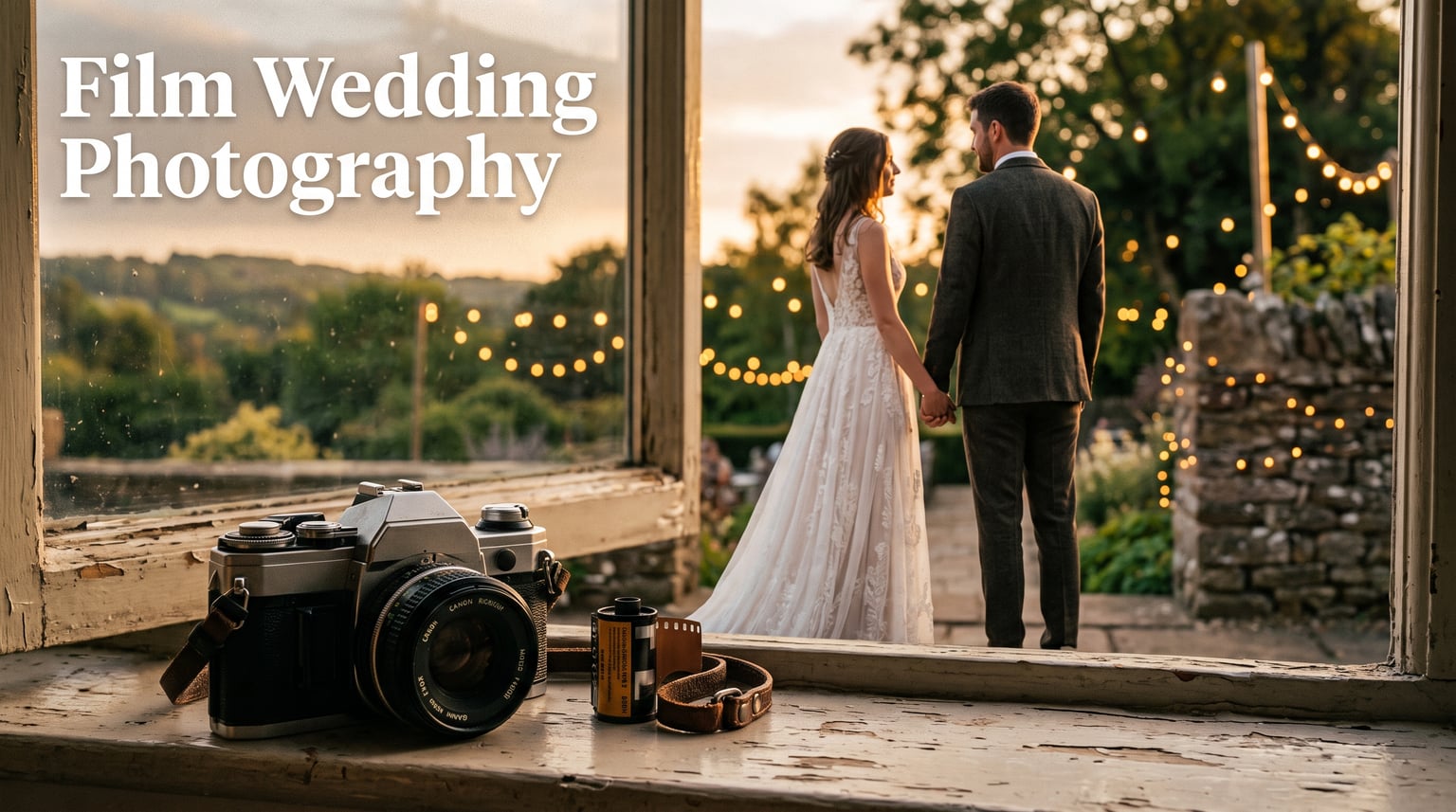
If you’ve been browsing Pinterest boards or scrolling through wedding hashtags lately, you’ve probably noticed something: film wedding photography is everywhere. Couples are choosing analog cameras over digital for that warm, nostalgic look you simply cannot replicate with a sensor.
I’ve shot weddings on film for years, and I still get a little thrill when I drop a fresh roll of Kodak Portra into my camera. There’s a quiet magic to the process that I want to share with you.
In this guide, I’ll walk you through everything you need to know about film wedding photography in 2026. We’ll cover what it actually is, why couples love it, how it compares to digital, and what to expect if you book a film photographer.
Table of Contents
What Is Film Wedding Photography?
Film wedding photography is the practice of capturing wedding images using analog cameras loaded with physical film stock, then developing that film in a lab before scanning it for digital delivery. The result is photographs with distinctive grain, organic color rendition, and a softness that feels both timeless and deeply personal.
The two most common formats are 35mm film and 120 medium format. A 35mm roll holds roughly 36 exposures on a small frame, while 120 medium format film produces larger negatives that capture finer detail and smoother tones.
35mm Film Explained
35mm is the classic small format that dominated photography for most of the 20th century. It is portable, fast to reload, and perfect for candid, photojournalistic coverage. Cameras like the Nikon F, Pentax K1000, and Contax G2 are popular choices for wedding work.
Medium Format Film Explained
Medium format 120 film creates a much larger negative, which translates to creamy backgrounds, gorgeous tonal transitions, and stunning detail in skin and fabric. The tradeoff is fewer exposures per roll, slower handling, and bulkier camera bodies like the Hasselblad 500 series or Bronica SQ-A.
How Film Becomes a Final Image
After the wedding day, your photographer sends exposed rolls to a professional photo lab. The lab develops the film chemically, then scans each frame at high resolution using a dedicated film scanner like a Fuji Frontier or Noritsu. You receive digital files alongside the option of prints from the original negatives.
Why Choose Film Wedding Photography
Couples choose film wedding photography because it produces heirloom-quality images with warmth, depth, and a nostalgic quality that feels emotionally different from digital files. The intentional, slower shooting process also creates a calmer wedding day and more thoughtful compositions.
Here are the most common reasons couples fall in love with film:
- Timeless aesthetic. Film has been around for over a century. Photos shot today on Portra will look just as beautiful 30 years from now as photos shot in 1990 on Portra.
- Organic color rendition. Skin tones glow. Greens are rich. Blues feel cinematic. The colors are slightly muted but somehow more alive than heavily edited digital files.
- Natural grain structure. Film grain adds texture and dimension without looking gritty. It feels like film, not noise.
- Forced intentionality. With only 36 shots per roll, every frame counts. Photographers slow down, think about composition, and capture with purpose.
- Soft, dreamy quality. Highlights roll off gently. Shadows hold detail. The overall look is painterly rather than clinical.
- Heirloom feel. A film photograph printed from a real negative carries a weight that a JPEG on a hard drive simply cannot match.
I’ve noticed that couples who choose film often describe their photos the same way: “They feel like us.” That emotional resonance is what makes analog so special.
Film vs Digital Wedding Photography: A Comparison
Film vs digital wedding photography comes down to aesthetic preference, workflow tolerance, and budget, since both formats produce stunning results in skilled hands. Film offers organic texture and intentionality; digital offers volume, speed, and instant previews.
Here’s how they stack up side by side:
- Aesthetic: Film delivers warm, grainy, timeless images. Digital produces crisp, clean, modern results.
- Shots per roll/battery: Film offers 36 (35mm) or 16 (120) exposures. Digital provides 1,000+ shots on a single charge.
- ISO changes per shot: Film requires a new roll for different ISO settings. Digital allows instant ISO adjustment.
- Preview during event: Film has no preview until developed. Digital shows instant results on screen.
- Turnaround time: Film typically takes 4-8 weeks for development and scanning. Digital usually delivers in 2-6 weeks.
- Extra cost (film + lab): Film adds expense for stock, development, and scanning. Digital generally has no additional costs.
- Backup in-camera: Film photographers recommend two bodies. Digital shooters use multiple memory cards.
Many photographers shoot a hybrid approach, capturing the ceremony and portraits on film while using digital for high-volume reception coverage. This gives couples the film look they want without missing any reception moments.
Popular Film Stocks Used in Wedding Photography
The most popular film stocks used in wedding photography are Kodak Portra 400 and 800 for color, Kodak TMax 400 for black and white, and Kodak Ultramax 400 as a budget-friendly color option. Each stock has its own personality and ideal lighting conditions.
Portra 400 is the workhorse for most film wedding photographers. It handles mixed lighting beautifully, renders skin tones like a dream, and forgives exposure mistakes better than almost any other stock.
Portra 800 shines in lower light like reception venues and candlelit dinners. It has more visible grain, but that grain can actually enhance the romantic, atmospheric feel.
TMax 400 is the go-to black and white film. It has fine grain, broad dynamic range, and works for everything from getting-ready shots to dancing. Many couples request black and white TMax for a portion of their gallery.
What to Expect: Photo Count, Timeline, and Deliverables
Film wedding photographers typically deliver 300 to 600 final edited images for a full-day wedding, depending on the coverage package and whether they shoot hybrid. Expect a turnaround of 4 to 8 weeks because film has to be developed and scanned before any editing begins.
Photo counts run lower than digital-only weddings for one simple reason: film is finite. A 35mm roll gives you 36 shots, and you’ll burn through 8 to 15 rolls during a typical 8-hour wedding day. Medium format rolls deliver only 8 to 16 shots each, but you can only carry so many loaded backs.
Most film wedding photographers use two camera bodies loaded simultaneously with different stocks or formats, which allows them to switch without losing a moment to a rewind.
After the wedding, your photographer sends film to a professional lab for development and high-resolution scanning. From there, they edit the scans and deliver them through an online gallery. Many photographers also offer a film album printed directly from the negatives, which is the most gorgeous way to enjoy film photos.
Common Questions About Film Wedding Photography
Is film wedding photography more expensive than digital?
Film wedding photography costs more than digital because of film stock, development, and scanning fees. The added expense for film, lab processing, and scanning typically adds several hundred dollars to a wedding package compared to digital-only coverage.
Can we have both film and digital photos for our wedding?
Yes, many photographers offer hybrid coverage that combines film and digital in the same package. A second photographer often shoots digital backup, or the lead photographer switches between a film body and a digital body throughout the day.
How do you handle low-light situations with film?
Film photographers handle low light by using fast lenses (f/1.4 or f/2), pushing Portra 800, and using tripods or supplemental lighting when needed. Experienced film shooters plan their settings around the venue lighting conditions before the day begins.
How long will it take to get our film wedding photos back?
Film wedding photos typically take 4 to 8 weeks because film must be developed and scanned before any editing begins. Add a few extra weeks during peak wedding season when labs are busier than usual.
What happens if a film photo doesn’t turn out?
If a film photo has a technical issue, a skilled editor can usually salvage it during the scanning and editing process. Most film photographers shoot with backup cameras and shoot slightly more than needed so a small failure rate does not affect the final gallery.
Will a film photographer miss important moments?
A film wedding photographer is unlikely to miss important moments because they carry multiple bodies loaded simultaneously and plan shots around the timeline. Hybrid coverage with a digital backup camera provides an extra safety net for fast-moving moments.
Choosing Film for Your Wedding Day
Film wedding photography gives you something that is hard to put into words: photographs that feel like memories, not just files. The grain, the warmth, the way Portra renders skin tones, all of it adds up to images you will still love in 30 years.
If you’re considering film, here are a few questions to ask any potential photographer before booking:
- What camera systems and film stocks do you shoot with most often?
- Do you offer hybrid coverage with a digital backup photographer?
- Which lab do you send your film to, and how long does development take?
- How many rolls do you typically shoot for an 8-hour wedding?
- Can I see a full gallery from a recent wedding shot entirely on film?
A great film photographer will answer these with confidence and back them up with consistent, beautiful work.
The best part of film wedding photography is something I did not fully appreciate until my own wedding: the photographs feel honest. They are not filtered, not over-edited, not chasing trends. They are simply a real moment, preserved on a piece of light-sensitive celluloid.
If that resonates with you, film might be exactly what you have been looking for.