
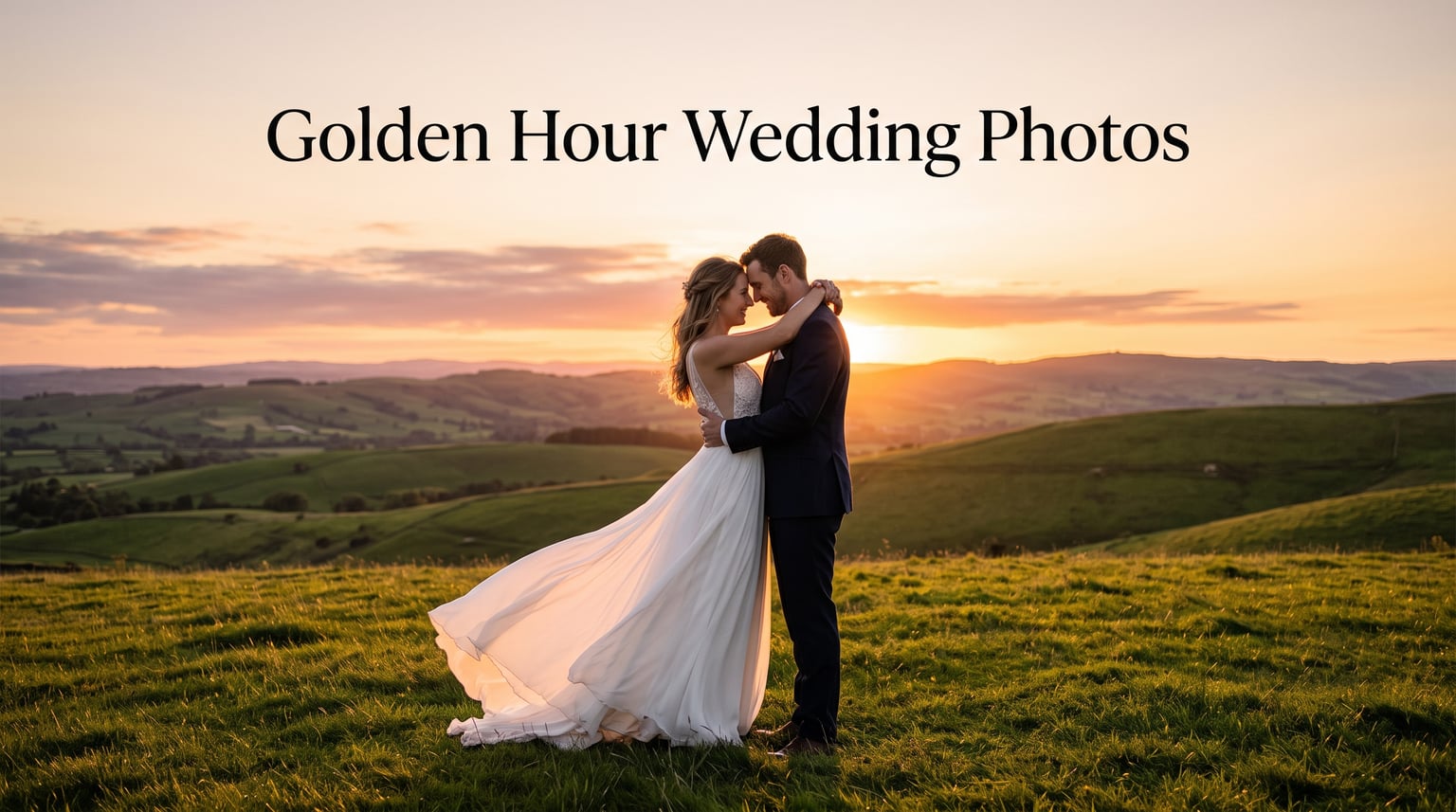
Golden hour wedding photos have a way of stopping you mid-scroll. The warm light wraps around the couple, skin looks soft, colors glow, and every frame feels like a memory you already love. I have shot hundreds of weddings in this light, and I can tell you: it is the single biggest visual upgrade you can make to your wedding gallery without spending another dollar.
In this guide, our team at Kingdom Wedding Photography breaks down everything couples ask us about golden hour. You will learn exactly what golden hour is, when it happens on your wedding day, how to plan it into your timeline, and which camera settings your photographer should be using. We will also share the photo ideas our couples request most and answer the questions we hear every week.
Table of Contents
What Is the Golden Hour for Wedding Photos?
Golden hour is the period of about 30 to 60 minutes right before sunset when the sun sits low on the horizon and bathes everything in warm, soft, amber light. The exact window depends on your latitude and the season, but most wedding photographers plan for the final 60 minutes of daylight as their golden hour starting point.
The reason the light turns golden comes down to physics. When the sun is low, its rays travel through far more of the atmosphere than they do at midday. That journey filters out the harsh blue wavelengths and leaves the warm reds, oranges, and yellows behind. The result is a soft, directional glow that flatters skin, deepens shadows without crushing detail, and gives every photograph a cinematic warmth that no filter can fake.
Wedding photographers usually shoot the evening golden hour because most ceremonies and receptions happen in the late afternoon. The morning golden hour right after sunrise is technically identical in color, but few couples want a 5 AM portrait session on their wedding day.
Why Golden Hour Photos Are Worth It for Weddings
Golden hour wedding photos are absolutely worth planning into your day because the light is the most flattering and forgiving you will find anywhere on earth. Every couple we have photographed in golden hour tells us the portraits are the ones they frame first, and the ones their families ask about the most.
Here is what makes the light so special for wedding portraits:
Warm color temperature: The amber and peach tones make skin look healthy and add a romantic mood that no studio light can match.
Soft shadows: Because the sun is low and diffused, shadows fall gently across the face instead of carving harsh lines under the eyes and nose.
Natural glow: Backlit hair, dresses, and bouquets pick up a luminous halo that feels almost magical in person.
Lower contrast: The dynamic range between highlights and shadows shrinks, which means your photographer can capture detail in both your white dress and dark suit in a single frame.
Forgiving skin tones: Even the harshest midday freckles and blemishes melt away under golden hour light.
In our 8 years of shooting weddings across the country, golden hour consistently produces the 3 to 5 images per wedding that couples tell us they will treasure forever.
When to Schedule Golden Hour Wedding Photos
The best time for golden hour wedding photos is 30 to 60 minutes before the official sunset time on your wedding date. Plan to start your portraits at the 60-minute mark so you can use the full window as the light gets warmer and softer.
Here is how to find your golden hour start time:
Look up the sunset time for your wedding date and zip code on TimeAndDate.com.
Subtract 60 minutes for the start of golden hour.
Subtract another 15 minutes for a buffer, since you want to be in position and ready before the light peaks.
Plan for 30 to 45 minutes of shooting time once you start.
For example, if sunset is at 8:17 PM on your summer wedding date, you want your photographer beginning portraits at 7:00 PM. That gives you roughly 60 minutes of usable light, with the last 20 minutes being the most dramatic and warm.
Golden hour shifts dramatically throughout the year. In summer at mid-latitudes, sunset might be at 8:30 PM, which means you have all evening to relax and enjoy cocktail hour before slipping away. In winter, sunset can hit at 4:45 PM, which means you need to plan your portraits right after the ceremony or even schedule a first look to take advantage of the early light.
How Long Does Golden Hour Last?
Golden hour lasts approximately 30 to 60 minutes at most locations, with the exact duration depending on your latitude and the time of year. Near the equator, golden hour can be as short as 20 minutes. Far from the equator, it can stretch past 90 minutes in summer when the sun sets at a shallow angle.
Camera Settings for Golden Hour Wedding Photography
The right camera settings for golden hour wedding photography are ISO 100 to 400, an aperture of f/1.4 to f/2.8, and a shutter speed of at least 1/200 to freeze subtle movement. Your photographer will fine-tune these based on whether you are backlit or sidelit.
Here is the settings cheat sheet we share with our second shooters:
ISO: Start at 100 for crispest quality. Bump to 400 only if the light drops faster than expected or you are shooting handheld with a longer lens.
Aperture: f/1.4 to f/2.0 for creamy background blur on couple portraits. f/2.8 to f/4 if you have two people at slightly different distances and need both in focus.
Shutter speed: 1/200 minimum for still poses. 1/500 or faster for walking shots where motion matters.
White balance: Daylight or shade to preserve the warm tones. Avoid auto white balance, which often cools the image down and loses the golden magic.
Metering: Spot meter on the skin tones, then add +0.3 to +0.7 stops of exposure for that glowing backlit look.
If your photographer shoots with a phone, turn off the flash, tap to expose for the highlights, and shoot in Portrait mode with the warm light filter. Modern phone cameras handle golden hour better than the DSLRs of 10 years ago.
What About Backlighting?
Backlighting during golden hour is the single most flattering setup for wedding portraits. Have the sun behind the couple and slightly to one side. The light wraps around their shoulders, creates a soft halo on the hair, and prevents squinting. Your photographer will expose for the face and let the sky blow out gently for that dreamy, ethereal look.
How to Plan Golden Hour into Your Wedding Timeline
To plan golden hour into your wedding timeline, block 30 to 45 minutes for portraits either right after your first look or during the gap between your ceremony and reception. Tell your photographer the exact sunset time so they can build your day-of schedule backward from the light.
The most common mistake couples make is scheduling portraits during dinner or open dancing, which creates stress for everyone. Here is a better approach:
Ceremony at 4:00 PM with reception starting at 5:30 PM: Shoot portraits during cocktail hour. Guests are mingling, drinking, and entertained, so nobody misses you.
Ceremony at 6:00 PM with sunset at 8:15 PM: Shoot during the first 30 minutes of open dancing or right after dinner. Step out for 20 minutes, then return to the party.
Sunset wedding ceremony at 7:30 PM: The ceremony itself becomes your golden hour session. Your photographer shoots through the vows as the light shifts.
At one of our 2026 weddings in Colorado, the couple stepped out of their reception at 7:42 PM for exactly 18 minutes. They returned to a packed dance floor and had 47 portraits they now display across two walls of their home. Brief absence, permanent memory.
How to Tell Guests You Are Stepping Out
Tell your guests you are stepping out for portraits by mentioning it in your program, your DJ announcement, or a sign at the reception entrance. Most guests love the break and use the time to grab a drink, take selfies, or hit the restroom. Nobody feels abandoned because nobody expects you to stay glued to the dance floor.
Golden Hour Wedding Photo Ideas and Poses
The best golden hour wedding photo ideas are simple poses that let the light do the work. Walking together, holding hands at the waist, forehead to forehead, slow dancing with no music, and pulling each other in for a laugh all produce stronger images than stiff, posed setups.
Here are the 5 shots our couples request most:
The walking shot: Hold hands, walk slowly toward the camera, and look at each other instead of the lens. The motion creates a natural, candid feel.
The silhouette: Stand against the brightest part of the sky with no sun in the frame. Expose for the sky and let your bodies turn into clean, dramatic shapes.
The backlit detail: Hold your bouquet or your partner’s hand so the light streams through the flowers or between your fingers.
The dip and kiss: A classic that looks especially cinematic when backlit, with the sun glowing around your faces.
The forehead touch: Stand close, foreheads together, eyes closed. The light wraps around your faces and creates an intimate, romantic frame.
Ask your photographer for a shot list that includes at least 2 of these setups. They will likely have a list ready, but adding your favorites helps them prioritize.
Weather, Location, and Seasonal Considerations
Golden hour wedding photos still work in cloudy weather, in every season, and at almost any outdoor location, as long as your photographer knows how to read the light. The biggest variable is sunset time, which shifts by 4 to 5 hours between summer and winter at most latitudes.
Cloudy Weather
Cloudy golden hour actually softens the light even more and removes harsh shadows. The downside is that you lose the rich orange and pink sky. Your photographer will lean into the wraparound light, shoot with slightly warmer white balance, and use the muted clouds as a natural softbox. Many photographers prefer cloudy golden hour for portraits because skin tones stay even and nobody squints.
Seasonal Differences
Summer golden hour can last 60 to 90 minutes with a sunset around 8:30 PM at mid-latitudes. Winter golden hour can be just 25 minutes with sunset around 4:45 PM. Plan your winter wedding portraits right after the ceremony or schedule a first look. For summer weddings, you have the luxury of relaxing through cocktail hour and stepping out later.
Geographic Location
Coastal weddings get the bonus of sun reflecting off the water, which doubles the warm glow. Mountain weddings get longer golden hours because the sun sets at a shallow angle behind the peaks. Desert weddings get the most dramatic skies with deep orange and purple gradients. Urban weddings have to work around buildings blocking the sun, so scout your location with your photographer at the same time of day before the wedding.
Best Locations for Golden Hour
The best locations for golden hour wedding photos are open areas with a clear view of the western horizon and minimal obstructions. Grassy fields, beaches, hilltops, vineyards, and open courtyards all work beautifully. Avoid dense forests, narrow alleyways, or covered patios where the sun never reaches the couple directly.
Golden Hour vs Blue Hour: When to Use Each?
Golden hour is the warm, glowing period before sunset, while blue hour is the cool, moody period that starts about 20 minutes after sunset and lasts roughly 30 minutes. Blue hour produces deep blue skies, glowing city lights, and a calmer, more cinematic mood that pairs perfectly with receptions and evening portraits.
Most weddings benefit from shooting both. Use golden hour for couple portraits with warm, romantic skin tones. Then transition to blue hour for wide shots of the venue, sparkler exits, or romantic wide angles of the couple with city lights in the background. The combination gives your gallery emotional variety and a natural visual flow from warm to cool.
If you have to pick one, choose golden hour for the people-focused portraits and save blue hour for venue details and atmospheric wide shots.
Frequently Asked Questions
What is the golden hour for wedding photos?
Golden hour is the period about 30 to 60 minutes before sunset when the sun sits low on the horizon. The light turns warm and soft, with amber tones and gentle shadows that flatter skin and create a romantic mood. Most wedding photographers plan their outdoor couple portraits during this window.
Are golden hour photos worth it for a wedding?
Yes, golden hour photos are absolutely worth planning into your wedding day. The light is the most flattering you will find, skin looks smooth and glowing, shadows are soft, and colors stay rich. In our experience shooting hundreds of weddings, the portraits from golden hour are the ones couples frame first and share most.
How long before sunset should we do golden hour photos?
Start your golden hour wedding photos 60 minutes before the official sunset time. This gives you a buffer to get into position and the full warm window as the light gets richer. Plan for 30 to 45 minutes of shooting once you start.
What time is golden hour for wedding photos in summer?
In summer at most mid-latitude US locations, sunset falls between 8:00 PM and 8:45 PM. That puts golden hour between 7:00 PM and 7:45 PM. Coastal and southern locations see later sunsets, while northern and mountain locations see earlier ones. Always check the sunset time for your specific date and zip code.
Can you do golden hour photos on a cloudy day?
Yes, cloudy golden hour still produces beautiful wedding photos. The clouds act as a giant softbox, removing harsh shadows and evening out skin tones. The trade-off is that you lose the orange and pink sky colors, so your photographer will lean into soft, even portrait lighting and warmer white balance.
Final Thoughts on Golden Hour Wedding Photos
Golden hour wedding photos are the easiest upgrade you can make to your wedding gallery. Pick a sunset time, block 30 to 45 minutes in your timeline, work with a photographer who knows how to read warm light, and you will end up with portraits that feel like they belong in a magazine.
If you are planning a wedding in 2026 or beyond, reach out to our team at Kingdom Wedding Photography. We will help you build a timeline that protects your golden hour, scout your location at the right time of day, and create the warm, glowing portraits you have been saving on Pinterest for years.