
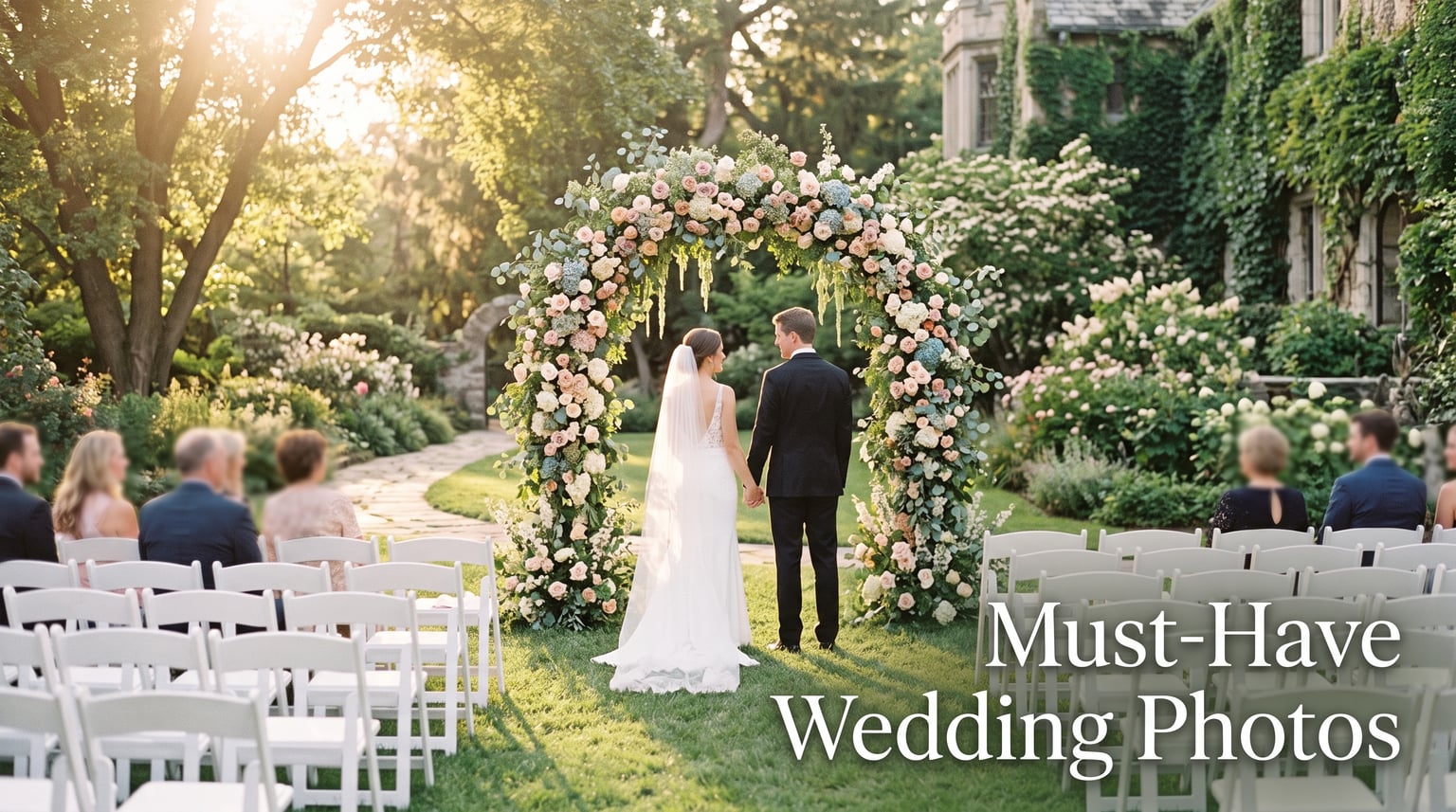
Every couple deserves a wedding album filled with images they will treasure for a lifetime. As a wedding photographer, I have seen how a thoughtful shot list turns wedding day chaos into a calm, intentional photo story.
After covering more than 200 weddings over the past decade, our team at Kingdom Wedding Photography knows exactly which shots couples treasure and which ones get forgotten in the rush. This guide shares those must-have wedding photos, organized by your wedding day timeline so nothing slips through the cracks.
Whether you are building your first wedding photography shot list or refining one for a tight schedule, you will find specific shots, family combinations, and practical tips to communicate your vision to your photographer.
Table of Contents
Our Top 10 Must-Have Wedding Photos at a Glance
When time is tight and choices need to happen fast, these ten essential wedding photos anchor every great wedding album. Print this list, screenshot it, or share it with your photographer before the big day.
Close-up of the wedding rings on the invitation suite
Mother buttoning or zipping the bride’s dress
First look between the couple, capturing both reactions
Wide shot of the ceremony space before guests arrive
The groom’s face as the bride walks down the aisle
Exchange of vows, photographed from a low angle
The first kiss as a married couple
Family formal with both sets of parents and siblings
First dance under soft reception lighting
Grand exit with sparklers or confetti
These ten shots form the spine of any comprehensive wedding photo checklist. The sections below add the supporting moments that turn a good album into an unforgettable one.
Pre-Ceremony and Detail Shots Every Wedding Needs
Pre-ceremony coverage builds the opening chapter of your wedding story. These shots capture anticipation, family bonds, and the small details you spent months planning.
Getting-Ready Moments for the Bride
The bride’s getting-ready suite is filled with emotion, laughter, and last-minute nerves. I always schedule 60 to 90 minutes for these moments, because rushing them shows in the photos.
Start with hair and makeup in progress, then move to the dress being lowered over the head or buttoned into place. Capture the bride’s reflection in a mirror, the bridesmaids gathered around her, and the moment she looks at herself fully dressed for the first time.
Do not skip the shot of the bride with her mother, grandmother, or maid of honor right before she leaves the suite. These quiet, unscripted moments often become the most cherished prints.
Getting-Ready Moments for the Groom
Grooms often get less photo coverage during preparation, but these shots balance your album beautifully. A groom adjusting his tie, fastening cufflinks, or sharing a toast with his groomsmen tells the other half of the story.
Capture the groom reading a handwritten letter from his partner, his father helping with a boutonniere, and the wedding party gathered for a candid group moment. If you planned a first look with the father of the bride or your own parents, schedule it here.
Wide shots of the groom’s suite tell a story too, especially when you have personalized details like engraved flasks, custom cufflinks, or favorite sports memorabilia.
The Detail Flat Lay
Your wedding detail flat lay is a styled arrangement of every meaningful item you prepared for the day. Stationery, rings, shoes, perfume, jewelry, garter, and florals all belong in this overhead shot.
Use a neutral surface like linen, marble, or wood and arrange items organically rather than rigidly. Include both wide overhead shots and tight close-ups of individual details like monogrammed envelopes or heirloom rings.
Your photographer should also capture these items in their actual setting: invitations on the entryway table, programs stacked near the ceremony door, and place cards arranged at reception tables.
First Look and Emotional Reaction Photos
First look photos capture raw, unrehearsed emotion that rarely appears elsewhere in the day. Whether you choose a private first look with your partner or surprise reveals with parents and wedding party members, these moments are essential wedding photos.
Partner First Look
The private first look between partners has become one of the most requested shots in modern weddings. It gives couples an intimate, pressure-free moment to see each other before the ceremony.
Position both partners facing away from each other in a quiet, scenic location. Have your photographer capture three reactions: anticipation on the partner’s face, the turning moment, and the embrace that follows.
Include wide shots showing the setting, medium shots of the couple together, and tight close-ups of hands, faces, and tears. Many couples use this quiet time to exchange private gifts or notes before joining the wedding party.
Parent First Looks
A parent first look captures the moment a mother or father sees their child in full wedding attire for the first time. These shots often produce the most emotional tears of the entire day.
Schedule 10 to 15 minutes per parent reveal. Have the parent stand with their back turned while the child approaches, then capture the turn-around reaction. A quiet corner, a private hallway, or a garden walkway all work beautifully.
Beyond the reveal, capture a candid embrace and a few posed portraits together. Many parents tell me years later that these images are their absolute favorites from the wedding.
Wedding Party Reveals
The bridesmaids’ first look at the bride and the groomsmen’s first look at the groom are playful, high-energy moments worth capturing. They typically happen right after getting-ready coverage wraps.
For the bridesmaids reveal, line up the wedding party with backs turned. Have the bride tap each person on the shoulder, one at a time, while your photographer captures each reaction. The collective group hug at the end makes a stunning wide shot.
For the groomsmen reveal, capture the group adjusting each other’s ties, sharing a pre-ceremony toast, and breaking into laughter. Candid moments between the guys often produce the most genuine images.
Wedding Ceremony Photos You Cannot Skip
Your wedding ceremony is the heart of your day. These shots document the sacred moments you will revisit again and again throughout your marriage.
Processional and Recessional Shots
The processional captures the energy of your wedding day building to its peak. Wide shots show your ceremony space in full bloom, while medium shots follow each family member and wedding party member down the aisle.
The single most important ceremony shot is the groom’s reaction as the bride enters. Position your photographer to capture this moment from a three-quarter angle so both the bride’s approach and the groom’s expression appear in the frame.
The recessional captures the joy immediately after you are pronounced married. Photograph the newlyweds walking back down the aisle, the wedding party cheering, and guests standing in celebration.
Vows, Rings, and the Kiss
Your vow exchange deserves multiple angles and tight close-ups. Photograph the bride’s hands holding her vows, the groom’s face as he listens, and the moment your hands meet during the ring exchange.
Detail shots of the rings as they are placed on each finger, the officiant speaking, and tearful parents in the front row round out the ceremony coverage. Ask your photographer about using two cameras so no angle is missed.
The first kiss as a married couple is non-negotiable. Capture it from the front, from a low angle looking up, and from the side as you walk back down the aisle together. The recessional kiss at the ceremony’s end makes a great bonus frame.
Must-Have Family Formal Photos and Combinations
Family formal photos often feel rushed, but with a clear list of combinations, you can finish in 30 to 45 minutes. These organized groupings ensure every meaningful relationship gets captured.
Bride’s Side Family Combinations
Standard bride’s side combinations include the bride with her parents, the bride with her siblings, the bride with each parent individually, the bride with her grandparents, and the bride with her immediate family.
Add any specific combinations that matter to your family, like the bride with her grandmother, the bride with her flower girl and ring bearer, or a multi-generational shot with both grandmothers.
Send these combinations to your photographer at least two weeks before the wedding. Print the list and give one copy to a family member who can help gather people efficiently.
Groom’s Side Family Combinations
Mirror the bride’s side list for the groom’s family. Include the groom with his parents, siblings, grandparents, and any individual parent shots that matter to your family.
Many couples forget the simple two-person shots like groom with mom and groom with dad. These quiet, single-subject images become cherished prints for parents and grandparents alike.
If your family includes stepparents, blended families, or chosen family members, list those combinations explicitly. Photographers appreciate clarity and want to honor every relationship you want documented.
Combined Family Photos
Combined family shots close out the formal photo session. Standard combinations include both sets of parents together, all siblings on both sides, the couple with both families, and the couple with the entire immediate family.
Keep these combinations tight to avoid running over time. Most photographers recommend capping family formals at 10 to 12 groupings, with each taking 2 to 3 minutes to photograph.
If your guest list includes elderly relatives, schedule those shots first while energy is high. Have a seated area ready for anyone who needs to rest between combinations.
Couple Portraits and Wedding Party Group Photos
Couple portraits are the images you will frame, print on canvas, and feature in anniversary albums. Wedding party photos add personality, fun, and friendship to your visual story.
Posed Couple Portraits
Schedule at least 45 minutes for posed couple portraits, ideally during golden hour for the best natural light. Plan a primary location and one backup location in case of weather changes.
Classic poses include the couple facing each other, walking hand in hand, the groom dipping the bride, an embrace with foreheads touching, and the couple looking off into the distance together. Mix posed shots with directional prompts to keep the gallery feeling fresh.
Wide shots establish the setting, medium shots show connection, and close-ups capture detail like intertwined hands, the bride’s veil, and wedding bands. Ask for both color and black-and-white treatments of your favorites.
Candid Couple Moments
Beyond posed portraits, candid couple moments bring your gallery to life. Walk together between photo locations, share a quiet whisper, or laugh at an inside joke while your photographer shoots from a distance.
These directional candid shots often become favorites because they feel natural rather than staged. They also capture your genuine personality as a couple.
Many photographers recommend a “sunset session” of 10 to 15 minutes around the time the light turns golden. These stolen moments produce some of the most romantic images in your final gallery.
Wedding Party Groupings
Wedding party group photos include the full bridal party, individual bridesmaid or groomsman shots, bride with bridesmaids, groom with groomsmen, and any smaller subgroup combinations.
Creative groupings like all bridesmaids lifting the bride, the wedding party jumping together, or the guys celebrating with the groom in motion add variety and energy to your gallery.
Keep the formal portion of wedding party shots to 15 minutes, then let the candid, fun shots flow during the rest of the day. Your photographer can grab group candids during cocktail hour and reception entrances.
Reception Highlights Worth Capturing
Reception photos capture the celebration, joy, and community that surround your marriage. These shots turn your wedding album into the full story of the day.
Entrance, First Dance, and Toasts
The grand entrance sets the tone for your reception. Photograph the wedding party entering, the couple’s grand entrance, and the immediate energy as the MC introduces you to your guests.
Your first dance should be photographed from multiple angles, including wide shots showing the dance floor, medium shots of the couple together, and close-ups of hands, faces, and the rings catching the light.
Toasts from the father of the bride, maid of honor, and best man produce some of the most emotional moments of the evening. Photograph the speaker at the microphone, the couple’s reactions, and the parents’ tears.
Cake Cutting and Parent Dances
The cake cutting is a classic reception moment. Capture the couple’s hands together on the knife, the bite or feed moment, and the laughter that follows. Include wide shots showing the cake design and detail close-ups of any custom decorations.
Parent dances, including the father-daughter dance and mother-son dance, deserve dedicated coverage. Photograph each dance from the floor and from above if your venue has a balcony or second level.
During the open dance, capture wide shots of the packed dance floor, candid guest moments, and any special performances or surprises planned by your wedding party.
Candid Guest Moments
Candid reception shots bring your gallery to life. Focus on grandparents watching from the side, children dancing, friends laughing at their tables, and quiet moments between guests who traveled far to be there.
Weddings and funerals are often the only times all generations of a family gather in one place. Document these gatherings with wide shots of the room, table group photos, and individual portraits of important guests.
Spark send-off ideas to guests ahead of time so they are prepared to participate in group photos during the reception. Mention specific shots you want during dinner, speeches, and dancing so your photographer can move quickly.
Grand Exit and Send-Off Photos
The grand exit is your album’s closing frame. It deserves the same attention and planning as the rest of your coverage.
Sparkler exits are dramatic and visually striking. Have two people light each sparkler, brief guests on safety, and ask them to form a tunnel for the couple to walk through. Photograph the couple from the front walking toward the camera and from behind with the tunnel of light behind them.
Other exit options include confetti tosses, ribbon wands, glow stick exits, and getaway car send-offs with vintage vehicles or decorated trunks. Each style has its own lighting and timing requirements, so plan with your photographer in advance.
End your coverage with one final image of the couple alone, walking away from the celebration. This closing shot brings your wedding photo story full circle.
How to Communicate Your Wedding Shot List to Your Photographer”?
A great shot list only works if it reaches your photographer clearly and on time. These communication tips turn your list from a forgotten document into a working plan for your wedding day.
Building Your Shot List Step by Step
Start your shot list three to four months before the wedding. Begin with the must-haves covered in this guide, then add personal shots specific to your family, venue, and traditions.
Organize your list by timeline phase so your photographer can scan it quickly during the day. Include family formal combinations on a separate page so a family helper can assist with gathering.
Send your final shot list to your photographer at least two weeks before the wedding. Confirm receipt and ask if they have any questions. A quick phone call clears up details that email might miss.
Common Mistakes Couples Make With Their Shot List
The biggest mistake is creating a list so long it cannot be completed in your timeline. Be realistic about how many shots fit your day. A 100-shot list for a six-hour wedding is impossible, but a focused 50-shot list is achievable.
Another common mistake is failing to prioritize. Mark your absolute essentials with stars or color-coding so your photographer knows which shots to prioritize if time runs short. Family formals and ceremony coverage should always rank highest.
Couples also forget to update their shot list after venue changes, vendor swaps, or timeline shifts. Review your list the week before the wedding and adjust for any last-minute changes. Print a fresh copy for your photographer on the morning of.
What to Do When Your Timeline Runs Tight
If your timeline gets compressed, prioritize shots in this order: ceremony coverage, immediate family formals, couple portraits, reception entrances and first dances, then everything else.
Talk to your photographer about a “greatest hits” backup list of 15 to 20 shots that absolutely must happen regardless of timing. These become the non-negotiable frames when the schedule slips.
Build buffer time into your timeline from the start. Fifteen extra minutes between major phases gives your photographer room to finish each section properly rather than rushing to the next location.
Frequently Asked Questions About Must-Have Wedding Photos
What are the must-have wedding photos every couple needs?
The must-have wedding photos every couple needs include detail shots of rings and invitations, getting-ready moments with family, the first look reaction, the processional and recessional, the vows and first kiss, immediate family formal combinations, couple portraits during golden hour, the first dance, parent dances, cake cutting, candid guest moments, and a grand exit shot. Organize these into your wedding photo checklist by timeline phase so nothing is missed.
What shots should be on a wedding photography shot list?
A complete wedding photography shot list includes pre-ceremony detail shots, getting-ready coverage for both partners, partner and parent first looks, ceremony wide shots, the vow exchange, ring exchange, first kiss, recessional, family formal combinations, wedding party groupings, posed couple portraits, candid couple moments, reception entrance, first dance, toasts, cake cutting, parent dances, candid guest reactions, and the grand exit. Tailor the list to your venue, family, and traditions.
What are the must-have family formal photos at a wedding?
Must-have family formal photos at a wedding include the bride with her parents, the groom with his parents, both sets of parents together, the bride with her siblings, the groom with his siblings, both sets of siblings together, the couple with each set of grandparents, the couple with the entire immediate family, and any blended family or chosen family combinations that matter to you. Plan these in advance and assign a family helper to gather everyone efficiently.
How do I create a wedding photo shot list?
To create a wedding photo shot list, start with the essential categories (pre-ceremony, ceremony, family, portraits, reception, exit) and list specific shots in each category. Add personal family combinations, venue-specific shots, and any traditions you want documented. Organize by timeline phase, prioritize your top 20 to 30 shots, and send the final list to your photographer at least two weeks before the wedding. Confirm receipt and walk through the list on a call.
What are the most important wedding photos to get?
The most important wedding photos to get are the groom’s reaction during the processional, the vow exchange, the first kiss, immediate family formals, golden hour couple portraits, the first dance, parent dances, and the grand exit. If your timeline is tight, prioritize these moments over detail shots, decorative photos, or extended wedding party combinations. Quality coverage of these core moments matters more than a long shot list.
Final Thoughts on Building Your Must-Have Wedding Photo List
Your must-have wedding photos list is the roadmap to a wedding album you will love for decades. Start with the essentials covered in this guide, then add personal touches that reflect your family, venue, and traditions.
Communicate your list clearly to your photographer, prioritize your top moments, and build buffer time into your timeline. With thoughtful preparation, your wedding day photos will tell the complete story of your celebration for generations to come.