
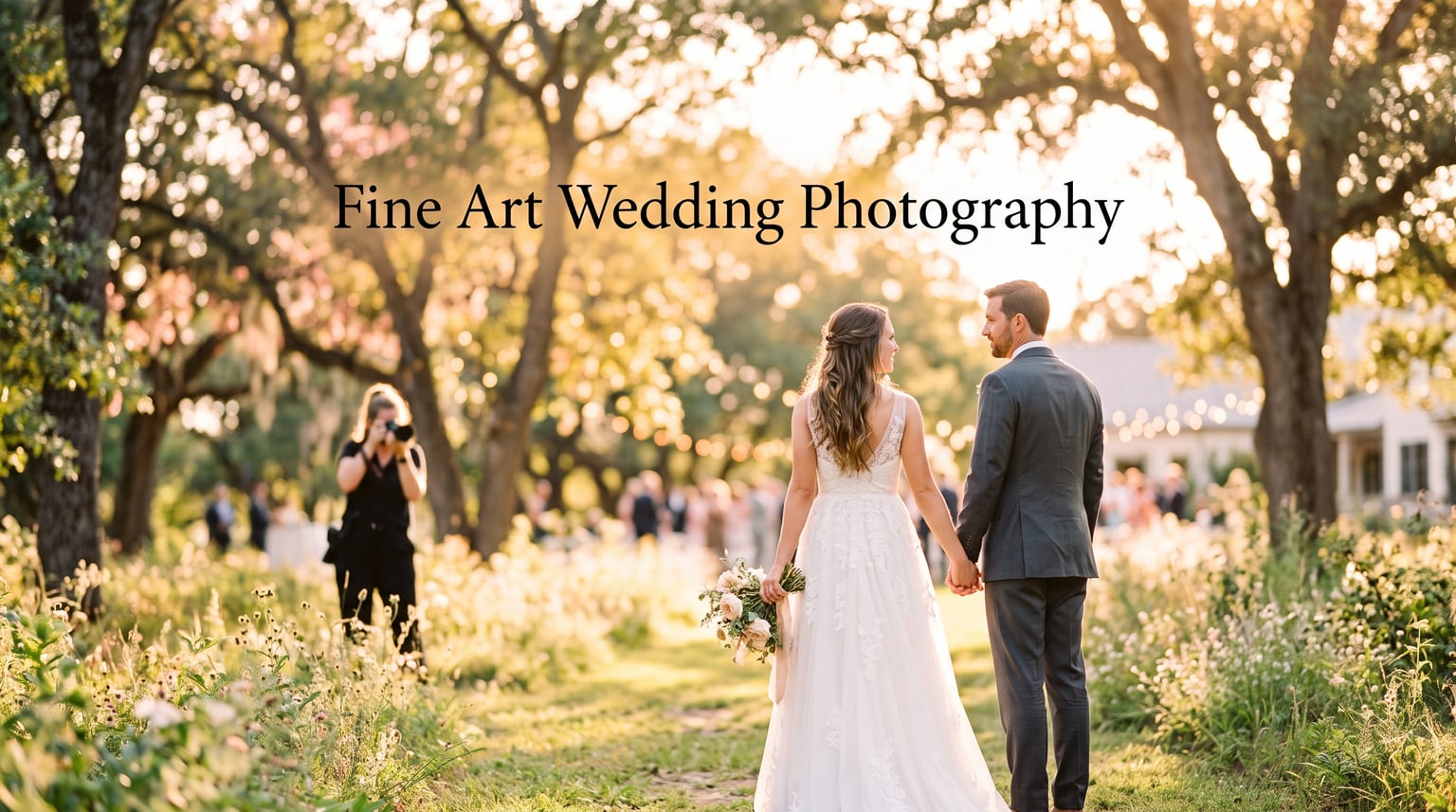
Fine art wedding photography is one of the most desired styles in the wedding industry today — and also one of the most misused labels. Couples encounter the phrase constantly: on photographer websites, in bridal publications, across Instagram feeds. But what does it actually mean when a photographer calls their work “fine art”? And how can you tell if you’re genuinely getting it?
At Kingdom Wedding Photography, we’ve spent years working in this style and talking with couples who are trying to separate real substance from marketing language. This guide walks you through exactly what fine art wedding photography is, what characteristics define it, how it differs from other approaches, and how to find a photographer who truly delivers on the promise.
Table of Contents
What Is Fine Art Wedding Photography?
Fine art wedding photography is an intentional approach to capturing your wedding day that prioritizes artistic vision, deliberate composition, and timeless imagery over straightforward documentation. The photographs are designed to feel like something from a curated gallery — soft, refined, and emotionally resonant.
The clearest way to understand fine art photography is through the intent behind it. A fine art photographer doesn’t simply document what happens. They actively shape how each moment is captured: where the light falls, how subjects are positioned within the frame, what details are included, and what story the image tells on its own.
Soft natural images, shallow depth of field, pastel tones, and an ethereal quality are all common markers of this style. But beyond technical choices, fine art wedding photography means expressing a consistent, recognizable creative vision across every image from your day.
This differs from other photography approaches precisely because the photographer’s eye and artistic intent are built into every frame — not just the formal portrait moments, but woven throughout the entire wedding story.
Key Characteristics of Fine Art Wedding Photography
Fine art wedding photography shares a set of defining characteristics, though the exact expression varies from one photographer to another. Understanding these qualities helps you recognize the real thing — and separate it from work that simply uses the label.
Soft, Natural Light
Natural light is the foundation of the fine art aesthetic. Fine art photographers seek out the warmth of golden hour, the soft diffusion of open shade, and the delicate glow of backlit scenes. Harsh flash or heavy artificial lighting is typically avoided, or used very sparingly when the natural environment truly demands it.
The relationship with light goes beyond technique. A fine art photographer reads available light and positions subjects within it deliberately, creating images that feel warm, luminous, and naturally beautiful rather than staged under a flash setup. The result is a quality of light that feels like it belongs to the scene rather than imposed upon it.
Shallow Depth of Field
Shallow depth of field — where the subject is sharply rendered and the background softens into a dreamy blur — is one of the most recognized visual qualities of fine art wedding photography. It draws attention to the emotion in a face, the texture of a fabric, or the delicate detail of a floral arrangement while dissolving the environment into a soft wash of color.
This isn’t simply a setting dialed in on a camera. It’s a conscious creative decision that shapes the mood of every image. When applied consistently throughout a wedding day, it gives a portfolio that recognizable, romantic quality that distinguishes genuine fine art work from everything else.
Intentional Composition and Framing
Every frame in fine art wedding photography is composed with purpose. The placement of subjects within the image, the use of negative space, leading lines from architecture or landscape, and natural framing elements like doorways and windows — all of these are choices made by the photographer in real time, not happy accidents.
This level of intentionality is what separates fine art from documentary work. A documentary photographer captures what happens. A fine art photographer shapes how it’s seen.
Consistent Aesthetic and Editing Style
The editing process in fine art photography carries as much weight as the shooting itself. Color grading that leans toward warm, muted tones, lifted shadows, soft highlights, and film-like qualities all contribute to the final aesthetic. Many fine art photographers use film emulation techniques or actually shoot on film to achieve that characteristic warmth and depth.
Consistency is the real test. When you look through a fine art portfolio, every image — regardless of venue, season, or lighting condition — should feel like it belongs to the same visual world. That consistency signals a genuine artistic vision, not simply a collection of individually decent photographs.
Storytelling Through the Day’s Details
Fine art wedding photography doesn’t focus only on people. Detail shots — the stationery flat-lay, the wedding dress hanging against window light, the rings resting on a veil, the florals arranged on a marble surface — are captured with the same care and artistic intent as couple portraits.
These details become part of the larger story of your day. In fine art galleries, context and supporting imagery always matter alongside the main subject. The same logic applies to fine art wedding photography: every element of your wedding becomes part of a cohesive visual narrative rather than an afterthought.
Fine Art vs Photojournalism vs Documentary Wedding Photography
One of the most common points of confusion among couples searching for a photographer is the difference between these styles. They overlap in meaningful ways — most wedding photographers blend elements of several — but they represent genuinely different philosophies about what a wedding photograph should be.
Primary Intent: Artistic expression
Photographer’s Role: Active director and visual author
Visual Aesthetic: Soft, ethereal, curated, timeless
Best For: Couples who want designed, gallery-worthy imagery
Primary Intent: Candid documentation
Photographer’s Role: Invisible observer
Visual Aesthetic: Natural, spontaneous, raw
Best For: Couples who prioritize real, unscripted moments above all else
Primary Intent: Real-life storytelling
Photographer’s Role: Observational storyteller
Visual Aesthetic: Authentic, narrative-driven, honest
Best For: Couples wanting a complete and truthful visual record
Primary Intent: Fashion or brand storytelling
Photographer’s Role: Highly directive stylist
Visual Aesthetic: Polished, styled, magazine-ready
Best For: Styled shoots, brand campaigns, highly designed weddings
Fine art photography is the most authored of these approaches. The photographer’s vision is always present in the frame. Photojournalism takes the opposite stance: the photographer steps back, observes, and captures real moments without intervention. Documentary sits in the middle, prioritizing genuine storytelling without the strongly stylized aesthetic of fine art. Editorial pushes further into the direction of fashion and styling.
This doesn’t mean fine art photographers ignore genuine moments. The best fine art wedding photographers blend real emotion with intentional framing — capturing what actually happens, but with a trained artistic eye for how to make each image as beautiful as possible.
If you value consistent aesthetic beauty and want images that feel designed rather than simply captured, fine art is your style. If you prioritize spontaneous emotion above all else and want an invisible photographer, photojournalism or documentary may serve you better.
Techniques and Approach Used in Fine Art Photography
The distinctive look of fine art wedding photography comes from a combination of technical choices and trained artistic sensibility. Here’s what’s actually happening behind the lens.
Film and Film Emulation
Many fine art wedding photographers shoot on film — particularly medium format film cameras — because the colors, grain structure, and tonal range of film produce a quality that digital cameras have historically struggled to fully replicate. Film images carry a warmth, depth, and organic quality that many couples associate with the finest wedding photography they’ve ever seen.
However, shooting an entire wedding on film is expensive and logistically complex. Many contemporary fine art photographers use high-resolution digital cameras with careful color grading and film emulation techniques that closely replicate the film aesthetic. The result can be nearly indistinguishable — what matters most is the consistency and quality of the final images, not the medium that produced them.
Medium Format Cameras
Medium format cameras — larger sensor cameras like those from Hasselblad or Fujifilm GFX — are prized in fine art photography because of their exceptional detail, tonal richness, and the way they render areas outside the focal plane. The characteristic look of medium format is subtle but meaningful: images carry a three-dimensional depth and a richness in skin tones that smaller-sensor cameras don’t quite replicate.
Not every fine art photographer uses medium format, and using one doesn’t automatically make your work fine art. But it signals serious investment in image quality and is common among genuinely dedicated practitioners of this style.
Natural Light Mastery
Reading and working with natural light in real time is one of the core skills that separates fine art photographers from everyone else. This means understanding direction, quality, and color temperature of light across the entire wedding day — knowing when to position subjects backlit for that golden rim-light glow, when to move into open shade for soft and even illumination, and when to use a reflector to lift shadows without disturbing the natural quality of the scene.
This skill takes years to develop. A photographer who truly masters natural light can produce fine art images in difficult environments — overcast skies, shaded venues, even early evening receptions — because they know how to work with what’s available.
Deliberate Posing and Direction
Fine art photographers direct their couples. This doesn’t mean rigid, formal posing — quite the opposite. Good direction in fine art photography feels natural in the final image: walking together along a path, one partner whispering to the other, a quiet moment gazing across the landscape. The photographer creates the conditions for genuine emotion and natural movement to arise within a beautiful, intentionally framed setting.
Why Invest in Fine Art Wedding Photography
Beyond the aesthetic appeal, there are practical reasons why fine art wedding photography represents a meaningful investment for couples who care deeply about their wedding imagery.
1. Images That Feel Timeless
Trendy editing styles date quickly. Fine art photography uses a refined, classic aesthetic that holds up beautifully over decades. Your photographs from 2026 should still feel current and stunning thirty years from now, not like a relic of a particular editing trend.
2. Heirloom Quality Worthy of Printing
Fine art wedding images are designed to be printed and displayed — not just saved to a hard drive. The tonal depth, color accuracy, and deliberate composition translate beautifully to large prints, fine art albums, and framed artwork. These are images you’ll pass down as family heirlooms.
3. A Cohesive Visual Story
Fine art photographers approach your wedding as a complete narrative — from the morning details to the final reception moments — creating a cohesive visual story rather than a collection of separate, unconnected photographs. The result is a set of images that work together as a whole.
4. Emotional Depth Alongside Technical Beauty
Because fine art photographers are trained to capture both composition and genuine emotion simultaneously, the best images in this style achieve something rare: they’re technically beautiful and emotionally moving at the same time. You don’t have to choose between artistry and feeling.
5. A Photographer Who Cares About Their Craft
Fine art wedding photographers tend to take on fewer clients per year in order to maintain quality. When you book one, you’re working with someone who approaches your wedding with the same seriousness they’d bring to any artistic project — not someone rushing between bookings with no investment in the outcome.
How to Identify an Authentic Fine Art Wedding Photographer
Here’s an uncomfortable truth: the term “fine art” has become widespread enough that many photographers use it without it accurately describing their work. Couples in communities like Reddit’s r/WeddingPhotography regularly share frustration about paying a premium for “fine art” photography that looked like ordinary work once the gallery was delivered.
Here’s how to tell the difference before you book.
Look at their full galleries, not just the highlight portfolio. A curated set of best images tells you very little about consistent quality. Ask to see a complete gallery from a full wedding day. Consistent quality across 600 or more images over 8 to 10 hours is the real test of any fine art photographer’s ability.
Check for aesthetic consistency across multiple weddings. Every image in a photographer’s portfolio, across multiple different weddings, should feel like it belongs to the same visual world. Dramatic differences in color, tone, or style between weddings suggest inconsistency — not a cohesive artistic vision.
Ask about their editing process in detail. A photographer with genuine fine art sensibility can articulate their approach to color grading, their relationship with light, and why they make specific creative choices. Vague, surface-level answers that don’t go beyond “I like a timeless feel” are a warning sign worth taking seriously.
Look for editorial and styled shoot work. Fine art photographers typically invest time in styled shoots and editorial projects to develop and demonstrate their aesthetic outside of wedding commissions. An absence of this kind of work — alongside only standard wedding galleries — can indicate someone using the term for marketing purposes rather than as an accurate description of their approach.
Check whether they offer printed products. True fine art photographers believe in the printed image. If a photographer is genuinely invested in fine art, they will typically offer albums, prints, and fine art products as part of their service — not simply deliver digital files and consider the job done. The printed image is where fine art lives.
Questions to Ask Before Booking a Fine Art Wedding Photographer
When you meet with a potential photographer, these questions help you assess whether their approach genuinely reflects fine art — or whether the term is being used loosely.
- Can I see a complete gallery from a recent wedding, not just the portfolio highlights?
- How would you describe your editing style, and what makes it consistent across different venues and seasons?
- Do you shoot on film, digital, or a combination? What drives that creative decision for you?
- How do you direct couples during portrait sessions without the images feeling staged or stiff?
- What lighting conditions do you prefer to work in, and how do you handle difficult or challenging light?
- How many weddings do you take per year, and is that number an intentional choice?
- Do you offer fine art prints, albums, or other physical products as part of your packages?
- Can you show me examples of your styled shoot or editorial work outside of wedding commissions?
A photographer who answers these questions with depth, enthusiasm, and specificity is genuinely invested in their craft. Hesitation, short answers, or inability to explain their process suggests the “fine art” label may be more marketing than method.
Common Misconceptions About Fine Art Wedding Photography
A few misconceptions come up consistently in conversations with couples who are new to exploring this style.
Misconception 1: Fine art means heavily processed or over-edited images.
Genuine fine art wedding photography tends toward restraint in editing — muted, organic tones and a film-like quality rather than dramatic presets or heavy filters. If images look aggressively processed or obviously digital, that’s a valid stylistic choice, but it doesn’t necessarily reflect the fine art tradition.
Misconception 2: Fine art and documentary are complete opposites.
The strongest fine art wedding photographers shoot a blend of both. They apply artistic vision and intentional direction where it serves the image, while remaining fully present for real, unscripted moments throughout the day. The two approaches are not mutually exclusive.
Misconception 3: High price equals fine art style.
Price alone tells you nothing about photography style. Some excellent documentary photographers charge as much or more than fine art photographers. Always evaluate portfolio quality, aesthetic consistency, and artistic sensibility directly — not just through the price point on a booking page.
What to Expect on Your Fine Art Wedding Day
If you book a photographer who genuinely practices fine art wedding photography, here’s what the experience typically looks and feels like across your day.
During the getting-ready portion, your photographer will work with available light — window light, soft overhead sources, natural light from doorways and skylights — to capture the morning’s details and moments beautifully. They’ll arrange detail shots with care, treating your dress, jewelry, stationery, and florals as still-life subjects rather than quick snapshots to tick off a list.
Portrait sessions will involve gentle, purposeful direction — walking together along a path, quiet moments facing the landscape, interactions your photographer creates conditions for rather than forces. The goal is genuine connection captured within an intentionally beautiful frame, not a series of poses copied from a Pinterest board.
Ceremony and reception coverage will blend directed moments with real-time storytelling. A fine art photographer knows when to step back and let events unfold, and when to position themselves for the best available light and framing. You won’t see constant flash bursts throughout your reception — they’ll work with the available environment wherever possible and use supplemental light only when the image truly requires it.
Frequently Asked Questions
What is fine art wedding photography style?
Fine art wedding photography is a style defined by soft, natural images, shallow depth of field, intentional composition, and a consistent aesthetic that prioritizes artistic vision over simple documentation. The images feel crafted and timeless rather than simply captured, with the photographer’s creative intent visible in every frame.
What does fine art wedding photographer mean?
A fine art wedding photographer is one who brings a deliberate artistic vision to every frame — actively shaping light, composition, and storytelling rather than passively documenting events. Their approach is intentional and consistent across an entire wedding day, not reactive or accidental.
How is fine art different from photojournalism wedding photography?
Photojournalism prioritizes unposed, candid moments captured without intervention — the photographer is an invisible observer. Fine art photography involves active artistic direction, shaping how moments are framed, how subjects interact with light, and how the overall story of the day is told visually. Most skilled fine art photographers blend elements of both.
Is fine art wedding photography worth the investment?
For couples who value timeless, heirloom-quality images designed to be printed and displayed, fine art photography is absolutely worth the investment. The aesthetic holds up over decades rather than dating quickly, and the cohesive storytelling approach creates a more complete and beautiful visual record of your wedding day.
Why is everyone suddenly a fine art wedding photographer?
The term has been widely adopted as a marketing label, which is why many photographers use it without it accurately describing their work or style. Verify any claims by reviewing complete wedding galleries (not just highlights), checking for aesthetic consistency across multiple weddings, and asking specific questions about editing process and artistic approach before booking.
Conclusion
Fine art wedding photography, at its best, is one of the most meaningful investments you can make in your wedding day. It goes beyond documentation to create imagery that functions as genuine art — photographs you’ll display, treasure, and pass down across generations.
But the term requires scrutiny. Ask the right questions, review complete portfolios rather than curated highlights, and look for genuine consistency and artistic depth before committing. When you find a photographer whose work truly reflects fine art wedding photography, the difference is unmistakable — and so is the value.
At Kingdom Wedding Photography, fine art wedding photography is the foundation of everything we create. We’d love to show you what it looks like in practice.