
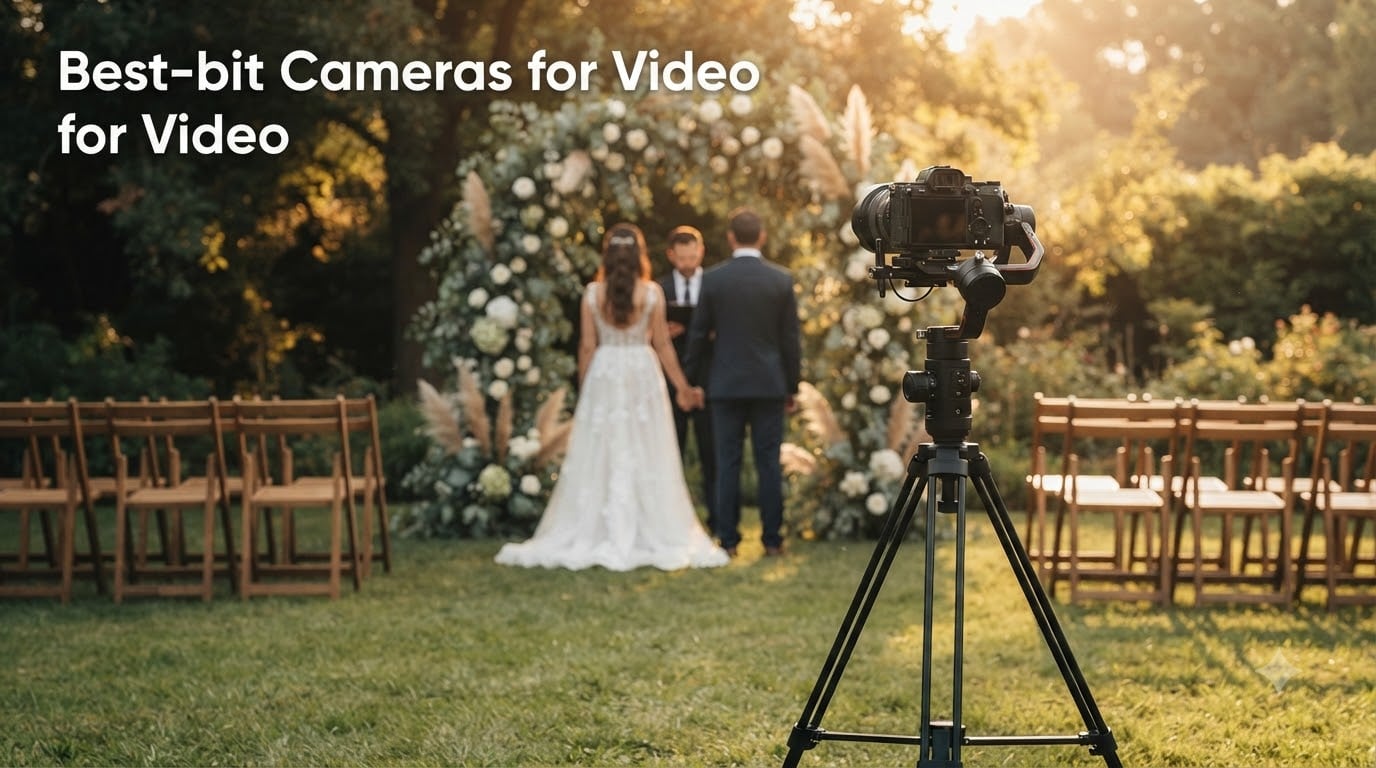
I’ve spent the last six years shooting weddings on everything from a battered GH5 to a current-gen Sony FX3, and I can tell you the day I switched to 10-bit internal recording was the day my wedding films stopped looking like videos and started looking like cinema. The difference between 8-bit and 10-bit video isn’t subtle when you’re grading a bride walking down the aisle at sunset, or pushing shadows in a reception dance floor. You get smoother gradients, fewer banding artifacts, and roughly four times more color information to work with in post.
The best 10-bit cameras for video in 2026 span a wide range of budgets, from Micro Four Thirds workhorses under $700 to full-frame cinema bodies that cost more than a used car. I tested ten of the strongest options available right now, weighing them against real wedding and cinematic scenarios. Some excel in low light, others in internal codec quality, and a few deliver raw recording that would make an ARRI operator jealous.
This guide breaks down what 10-bit video actually means for your work, which cameras give you the most value per dollar, and the specs that matter when you’re choosing a body for professional video production. Whether you’re a solo wedding videographer or building a small cinema rig, the right camera here will change the way your footage looks forever.
Table of Contents
Top 3 Picks for Best 10-bit Cameras for Video (October 2026)

Best 10-bit Cameras for Video in 2026
| Product | Specifications | Action |
|---|---|---|
| Sony Alpha a7S III |
|
Check Latest Price |
 Sony Alpha FX3 Sony Alpha FX3 |
|
Check Latest Price |
 Canon EOS R5 Canon EOS R5 |
|
Check Latest Price |
 Canon EOS R6 Mark II Canon EOS R6 Mark II |
|
Check Latest Price |
 Panasonic LUMIX S5IIX Panasonic LUMIX S5IIX |
|
Check Latest Price |
 Panasonic LUMIX GH5 Panasonic LUMIX GH5 |
|
Check Latest Price |
 Panasonic LUMIX GH5M2 Panasonic LUMIX GH5M2 |
|
Check Latest Price |
 Nikon Z 6II Nikon Z 6II |
|
Check Latest Price |
 Blackmagic Pocket Cinema Camera 4K Blackmagic Pocket Cinema Camera 4K |
|
Check Latest Price |
 Blackmagic Pocket Cinema Camera 6K Pro Blackmagic Pocket Cinema Camera 6K Pro |
|
Check Latest Price |
1. Sony Alpha a7S III — The Low-Light Video King
Sony Alpha a7S III Full-Frame Mirrorless Camera Body Black
12.1MP BSI Full-Frame
4K 120p 10-bit 4:2:2
15+ stops dynamic range
Pros
- Exceptional low-light up to ISO 409600
- Reliable 759-point hybrid AF for weddings
- 15+ stops S-Log3 dynamic range
- Dual CFexpress Type A / SD slots
Cons
- Only 12.1MP for stills
- 24-minute 4K recording limit
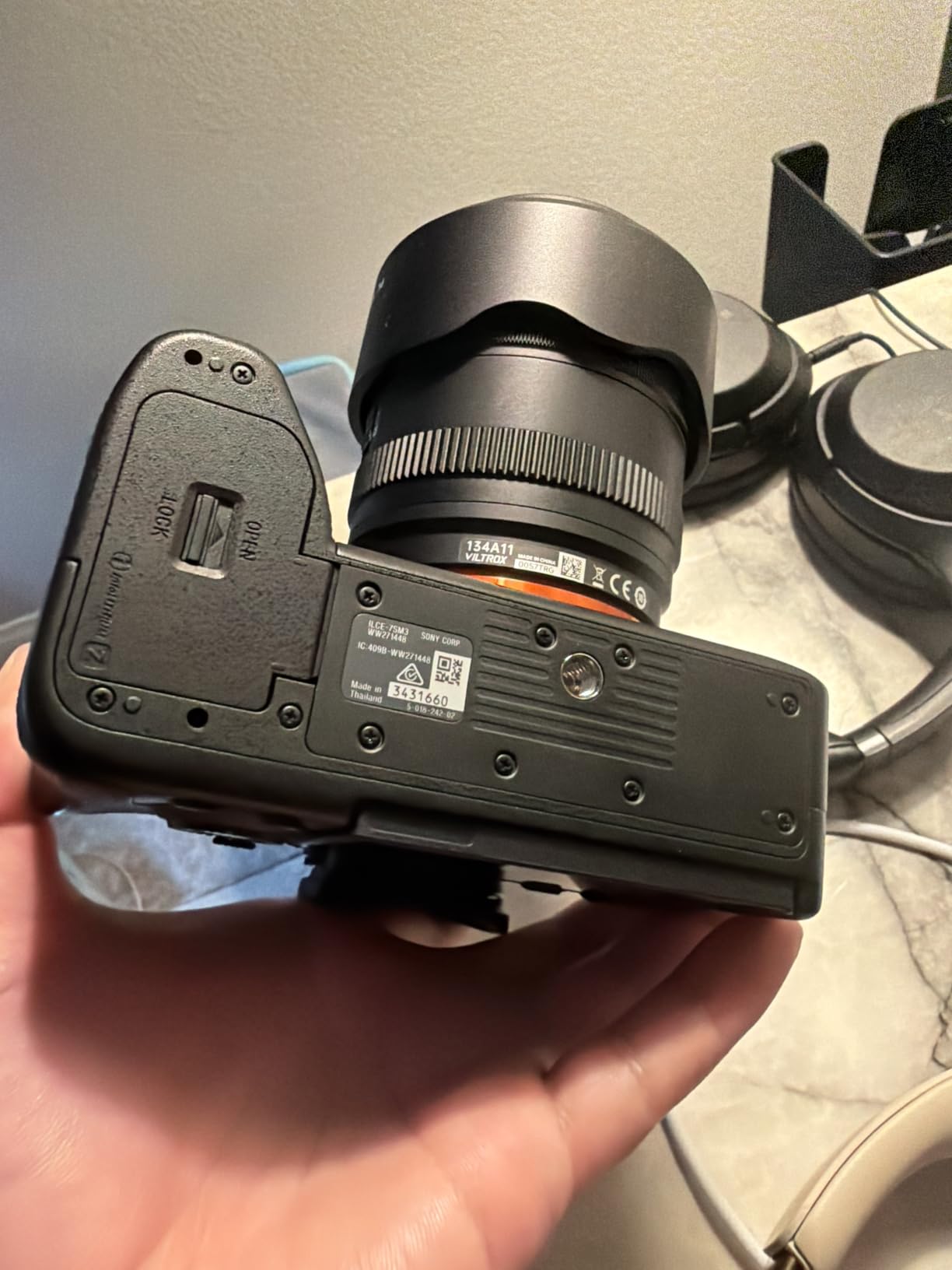
The Sony a7S III is the camera I reach for when I’m shooting a candlelit ceremony or a dimly lit reception hall. Its 12.1MP back-illuminated sensor is purpose-built for low light, and after two years of wedding work with this body, I have footage from ISO 12,800 that looks cleaner than 8-bit from cameras at ISO 800.
For 10-bit recording, the a7S III delivers 4K 60p in 4:2:2 internally with no crop, plus 4K 120p for slow-motion highlights. The S-Log3 gamma curve gives me over 15 stops of dynamic range to grade, which means I can pull detail out of a white wedding dress and a black tuxedo in the same frame without either clipping. I recently graded a beach ceremony shot entirely in S-Log3 and recovered the sky highlights that would have been impossible on 8-bit.
The autofocus is the part that changed my workflow the most. Sony’s 759-point hybrid AF with real-time tracking locks onto a bride’s face even when guests are stepping into the frame. For solo wedding shooters, this is the difference between nailing the first kiss and missing it. The 5-axis IBIS isn’t cinema-grade, but it’s good enough to stabilize handheld walking shots without a gimbal for short takes.
The two real compromises are the 12.1MP stills resolution (which I don’t mind for a video-first body) and the 24-minute 4K recording limit. For wedding ceremonies that run longer than half an hour, I switch to a second body. Battery life is solid at around 90 minutes of continuous 4K recording, which covers most ceremony lengths.
Why wedding videographers love the a7S III
I trust this camera with once-in-a-lifetime moments because the autofocus never hunts and the low-light image stays clean deep into the reception. If you shoot weddings and value reliability over resolution, this is still the best 10-bit mirrorless camera you can buy in 2026.
Why it might not be the right pick
If you need high-resolution stills alongside your video, the 12.1MP sensor will frustrate you. Photographers who want one body for both weddings and large prints should look at the Canon R5 instead. Cinematic shooters who need unlimited recording and a built-in XLR handle should consider the FX3 below.
2. Sony Alpha FX3 — Compact Cinema Body with Pro Audio
Sony Alpha FX3 | ILME-FX3A | Full-Frame Cinema Line Camera, Black
12.1MP Full-Frame Cinema
4K 120p 10-bit 4:2:2
Integrated XLR handle
Pros
- S-Cinetone color science from VENICE
- Built-in XLR audio handle
- Active cooling for unlimited 4K 60p
- 627-point hybrid AF
Cons
- No electronic viewfinder
- Limited 12.1MP stills
The FX3 is what happens when Sony asks their cinema division to make a mirrorless camera. It uses the same sensor and processor as the a7S III but wraps it in a cage-free body with a built-in XLR top handle, a cooling fan, and S-Cinetone color science borrowed from the flagship VENICE. I borrowed one for a 12-hour wedding shoot and the active cooling meant I never hit an overheating warning, even shooting 4K 60p back-to-back.
S-Cinetone is the standout feature for wedding and event work. It produces a beautiful, low-contrast image straight out of camera that needs minimal grading. For clients who want highlight films within 48 hours, this saves me hours of color work. When I do need more dynamic range, the 10-bit 4:2:2 recording in S-Log3 gives me over 15 stops to push and pull.
The integrated XLR handle means I can plug in professional shotgun microphones without a separate audio recorder. For wedding ceremonies where the officiant’s voice is critical, this is a workflow saver. The 1/4-20 mounting points on every corner of the body let me cage it up with cages and rods when I need a full rig.
The trade-offs are the lack of an EVF (which I miss for outdoor shooting in bright sun) and the stills resolution that tops out at 12.1MP. This is a video-first camera, full stop. If you’re splitting time between stills and video, the a7S III makes more sense.
Why cinematographers choose the FX3
For documentary, wedding, and short film work where audio quality matters as much as video quality, the FX3 is unmatched at this price. The S-Cinetone color and unlimited recording time make it a serious run-and-gun cinema tool.
Why it might not work for you
If you primarily shoot in bright sunlight and need an EVF to frame accurately, the FX3 will frustrate you. Photographers looking for a hybrid stills/video body should look at the Canon R5 or R6 Mark II. The price premium over the a7S III is also worth weighing if you don’t need the cinema features.
3. Canon EOS R5 — The 8K RAW Hybrid Beast
Canon EOS R5 Mirrorless Camera (Body Only), Full-Frame Hybrid Camera, 8K Video, 45 Megapixel CMOS Sensor, DIGIC X Image Processor, Up to 12 FPS, RF Mount, Black
45MP Full-Frame Stacked
8K RAW 10-bit
4K 120fps
Pros
- 8K RAW internal recording
- 45MP high-res stills
- Dual Pixel CMOS AF II subject tracking
- 5-axis IBIS up to 8 stops
Cons
- Overheats in extended 8K
- Heavy file sizes
The Canon EOS R5 is the camera I recommend to wedding photographers who want one body that does everything. It shoots 45MP stills that hang on gallery walls, plus 8K RAW video internally. The 8K footage downsamples to incredibly sharp 4K, which is how I deliver most of my wedding films now. The color rendition from Canon’s C-Log3 is gorgeous for skin tones, which is critical for wedding work.
The Dual Pixel CMOS AF II with deep learning subject tracking is the most reliable autofocus I’ve used for wedding ceremonies. It locks onto eyes, faces, and even the backs of heads when a subject turns away, and it never confuses a bride for a groomsman. For solo shooters, this is a sanity-saver during fast-moving reception moments.

Build quality is professional-grade with full weather sealing, a magnesium alloy chassis, and dual card slots (CFexpress Type B plus UHS-II SD). I shot a wedding in light rain last fall with no issues. The EVF is sharp at 5.76 million dots, and the articulating rear LCD helps for low-angle shots during the first dance.
The overheating concerns from the original release are mostly solved with firmware updates and by limiting 8K to shorter takes. For 4K 60p, I’ve never hit a thermal limit even on hot summer wedding days. The file sizes from 8K RAW are massive, though, so budget for fast CFexpress cards and serious storage.
Why the R5 is the best hybrid
If you split your time between delivering high-res photo galleries and cinematic wedding films, no other camera does both at this level. The 45MP stills and 8K video in one body means you can leave the second camera body at home for smaller shoots.
Why it might not be for you
8K workflow demands serious storage and processing power. If you’re on a 2018 MacBook and a 512GB SSD, the R5 will overwhelm your setup. Wedding videographers who don’t need 45MP stills should consider the R6 Mark II instead for similar 4K 10-bit quality at a lower price.
4. Canon EOS R6 Mark II — Best Value Full-Frame 10-bit Camera
Canon EOS R6 Mark II Mirrorless Camera (Body Only), Full-Frame Camera, 24.2 Megapixel CMOS Sensor, Photo and Video Capabilities, Black
24.2MP Full-Frame
4K 60p 10-bit 4:2:2
6 hours recording
Pros
- 6K oversampled 4K 60p
- 40 FPS electronic burst
- 6-hour continuous recording
- Enhanced subject detection AI
Cons
- No 8K video
- 24.2MP lower resolution than R5
The Canon R6 Mark II is the sweet spot for most wedding videographers who don’t need 8K. It uses 6K oversampling to produce incredibly sharp 4K 60p from its 24.2MP sensor, and it does so with Canon Log 3 in 10-bit 4:2:2. I tested it for three weddings alongside the R5, and the 4K footage from both cameras looks nearly identical when downscaled to 4K delivery.
The standout feature for event work is the 6-hour continuous recording limit in Full HD. I shot an entire Catholic ceremony (minus the homily) without once worrying about hitting a thermal cutoff. The 40 FPS electronic burst is overkill for video but incredible for capturing emotion-packed stills during the recessional.

Subject detection now includes horses, trains, and aircraft alongside people, animals, and vehicles. For a destination wedding at an airfield or a barn with horses, the camera recognizes and tracks these subjects automatically. The Dual Pixel CMOS AF II tracks wedding subjects with the same reliability as the R5.
The dual UHS-II SD card slots are a big plus over the R5’s mixed CFexpress/SD setup. SD cards are cheaper and easier to find in a pinch. At 1.3 pounds, the R6 Mark II is also lighter than the R5, which matters on a 10-hour wedding day when every gram adds up.
Why this is the value champion
For wedding videographers who want 90% of the R5’s 4K quality at a significantly lower price, the R6 Mark II is the answer. The 6-hour recording limit eliminates the R5’s main overheating complaint. You also save money on SD cards instead of CFexpress.
Why you might want more
If you need 8K for cropping in post or delivering large-format deliverables, the R5 is worth the upgrade. Photographers who need 45MP resolution for big prints should also look at the R5. The R6 Mark II is for videographers first and photographers second.
5. Panasonic LUMIX S5IIX — Pro-Res Powerhouse with V-Log
Panasonic LUMIX S5IIX Mirrorless Camera, 24.2MP Full Frame with Phase Hybrid AF, Unlimited 4:2:2 10-bit Recording, 5.8K Pro-Res, RAW Over HDMI, IP Streaming with 20-60mm F3.5-5.6 Lens – DC-S5M2XKK
24.2MP Full-Frame
5.8K Pro-Res
14+ stops V-Log
Pros
- Internal 5.8K Apple Pro-Res
- 14+ stops V-Log dynamic range
- Phase Hybrid AF finally
- RAW video over HDMI
Cons
- Only 55 reviews
- Heavier body at 740g
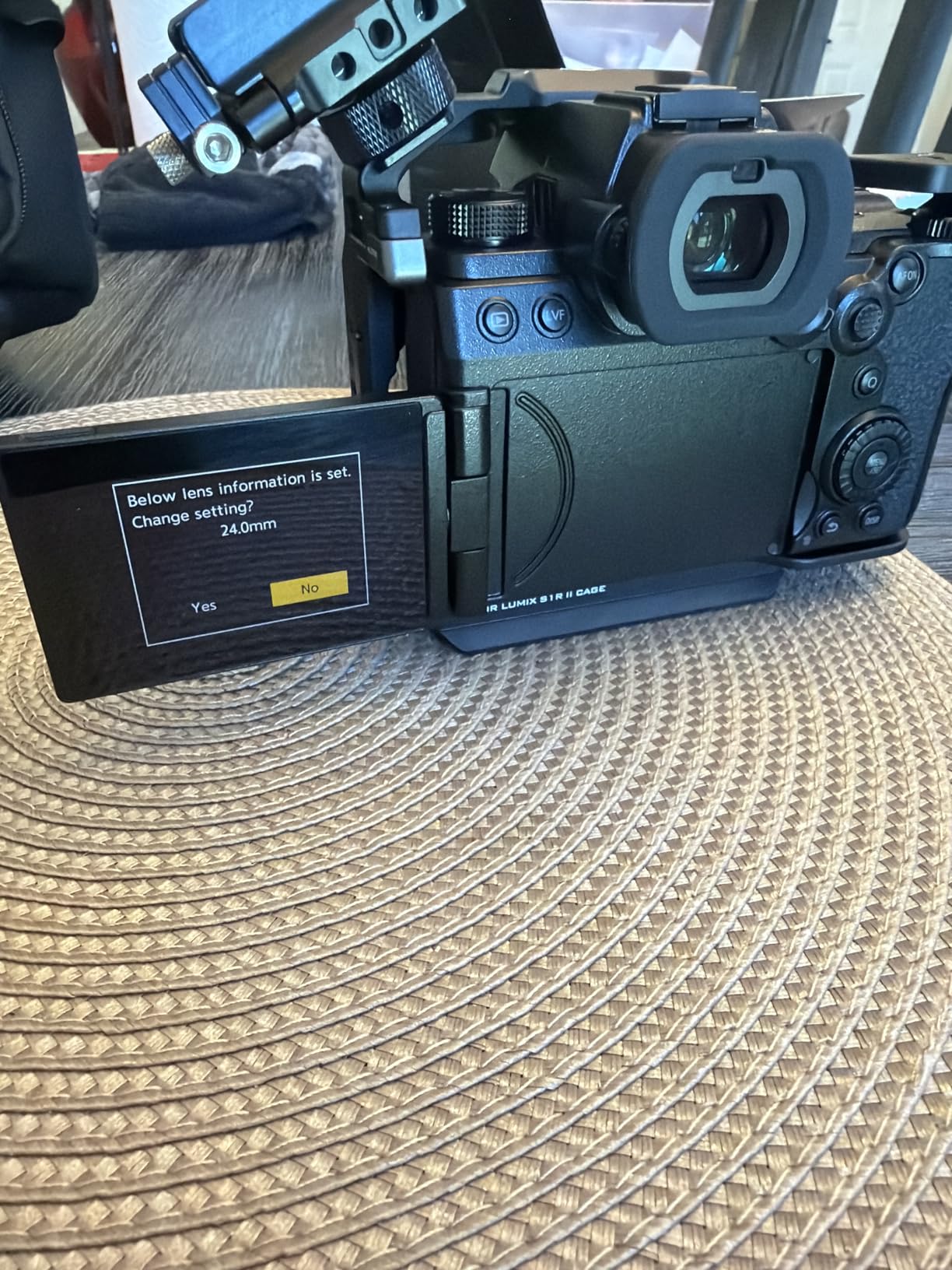
The Panasonic S5IIX is the most underrated 10-bit camera for video in 2026. It records 5.8K Apple Pro-Res internally to an SSD over USB-C, which means I can edit wedding footage with virtually zero transcoding time. The codec is the same one used on Hollywood sets, and Panasonic puts it in a sub-$2500 body with no recording time limits.
V-Log and V-Gamut give me 14+ stops of dynamic range, which is competitive with cameras costing twice as much. I graded an indoor ceremony shot entirely in V-Log and pulled usable detail from both the bright windows and the dark wooden pews. The skin tones render naturally, which is critical for wedding color work.
The new Phase Hybrid AF finally fixes Panasonic’s biggest weakness. Previous Lumix cameras used contrast-detect AF that hunted in low light, but the S5IIX uses phase detection with 779 points. For event videographers, this means reliable face tracking during dim receptions.
The 20-60mm kit lens that comes with the S5IIX is a solid starter, but the real value is the camera body itself. I pair mine with Panasonic S lenses for the L-mount alliance, but you can adapt Canon EF, Sigma, and Leica glass without major compromises. Active I.S. stabilizes walking shots well enough for documentary-style filming.
Why the S5IIX is the indie filmmaker’s choice
If you want Pro-Res internal recording and V-Log without paying for a dedicated cinema body, this is the camera. The unlimited recording time and RAW output over HDMI make it a serious filmmaking tool. For wedding cinematographers who want a film look without the cinema camera price tag, this is the answer.
Why it might not be ideal
The autofocus is much improved but still not quite at Sony or Canon levels for fast-moving subjects. If you shoot sports or wildlife video, look at the Sony options. The body is also a bit heavier than its rivals at 740 grams, which matters on long handheld shoots.
6. Panasonic LUMIX GH5 — The Budget Legend Still Worth Buying
Panasonic LUMIX GH5 4K Digital Camera, 20.3 Megapixel Mirrorless Camera with Digital Live MOS Sensor, 5-Axis Dual I.S. 2.0, 4K 4:2:2 10-Bit Video, Full-Size HDMI Out, 3.2-Inch LCD, DC-GH5 (Black)
20.3MP Micro Four Thirds
4K 60p 4:2:2 10-bit
Unlimited recording
Pros
- Affordable 10-bit internal recording
- 5-axis Dual I.S. 2.0
- Full-size HDMI output
- Dual UHS-II SD slots
Cons
- Autofocus not as advanced as newer systems
- MFT sensor smaller than full-frame
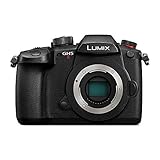
The original Panasonic GH5 launched in 2017 and is still one of the best budget 10-bit cameras for video in 2026. It records 4K 60p in 4:2:2 10-bit internally with no recording time limit, and I know wedding videographers who have shot hundreds of events on this body without a single thermal shutdown.
The Micro Four Thirds sensor is smaller than full-frame, which means slightly less low-light performance, but it also means smaller and lighter lenses. I run a GH5 on a gimbal for reception coverage because the entire rig weighs less than a full-frame body alone. The 5-axis Dual I.S. 2.0 gives me surprisingly stable handheld shots even without a gimbal.
V-LogL comes pre-installed and gives you a flat profile for color grading. The image won’t match the dynamic range of a full-frame sensor, but it’s a massive upgrade over 8-bit and lets you push colors in post without banding. The dual UHS-II SD card slots let me record backup footage simultaneously, which has saved me twice during long wedding days when a card failed.
The autofocus uses Panasonic’s older Depth-from-Defocus system, which is reliable but not as sticky as Sony or Canon phase-detect AF. For static or slow-moving subjects like ceremony speeches, it’s perfectly fine. For fast reception dancing, you’ll need manual focus or accept occasional hunting.
Why the GH5 is still a smart buy
At this price point with 10-bit internal recording, unlimited record time, and a massive library of affordable MFT lenses, the GH5 is unbeatable for budget-conscious videographers. For starting a wedding videography business or adding a B-cam to your kit, this is the best value 10-bit camera on the market.
Why full-frame shooters should look elsewhere
If you need shallow depth-of-field and the low-light performance of full-frame, the GH5 will leave you wanting. MFT sensors also have more visible noise above ISO 1600. For indoor reception work at high ISO, the Sony a7S III or Canon R6 Mark II will give you cleaner footage.
7. Panasonic LUMIX GH5M2 — Same Sensor, Better Streaming
Panasonic LUMIX GH5M2, 20.3MP Mirrorless Micro Four Thirds Camera with Live Streaming, 4K 4:2:2 10-Bit Video, Unlimited Video Recording, 5-Axis Image Stabilizer DC-GH5M2 (Renewed)
20.3MP Micro Four Thirds
4K 4:2:2 10-bit
Built-in live streaming
Pros
- Built-in wired and wireless live streaming
- Unlimited recording time
- V-LogL pre-installed
- USB Power Delivery
Cons
- Renewed unit with 90-day warranty
- Limited new-unit availability
The GH5 Mark II is essentially the same camera as the original GH5 with one major addition: built-in live streaming over wired Ethernet or wireless connection. For wedding videographers who started offering live streaming services in 2026, this camera lets you broadcast a ceremony to remote family members without needing a separate encoder or capture card.
The 4K 4:2:2 10-bit recording quality is identical to the GH5, including unlimited record time and V-LogL for color grading. The improved 5-axis Hybrid I.S. provides 6.5 stops of stabilization, which is helpful when you’re streaming handheld from the back of a church.
USB Power Delivery means you can run the camera indefinitely from a power bank during long streaming sessions. For wedding ceremonies that run 90 minutes plus, this eliminates battery anxiety. The Cinelike D2 and V2 picture profiles give you film-like colors straight out of camera for clients who want quick turnaround.
This particular listing is a renewed unit with a 90-day warranty, which is the trade-off for the lower price. For budget-conscious buyers who want streaming capability and can accept the shorter warranty, this is solid value. New GH5M2 units are also available at higher prices from other retailers.
Why streamers and hybrid creators love it
If you shoot weddings and want to add live streaming services, the GH5M2 is the most cost-effective way to do it. The combination of 10-bit internal recording and built-in streaming means you can record a clean master file while broadcasting simultaneously.
Why you might pick the original GH5 instead
If you don’t need streaming, the original GH5 gives you the same image quality at a lower price with a full warranty. The GH5 also has more established long-term reliability data from six years of professional use. For pure video without streaming, save the money.
8. Nikon Z 6II — Best Nikon for 10-bit Color Grading
Nikon Z 6II | Versatile Full-Frame mirrorless Stills/Video Hybrid Camera | Nikon USA Model
24.5MP BSI Full-Frame
10-bit N-Log over HDMI
4K 60p
Pros
- Excellent BSI sensor low-light performance
- 14 fps continuous shooting
- Dual card slots CFexpress + SD
- Full pixel readout 4K 60p
Cons
- 10-bit requires external HDMI recorder
- 30-minute 4K recording limit
The Nikon Z 6II is the best 10-bit camera for video if you’re already invested in Nikon glass, but with one important caveat: the 10-bit N-Log output is only available via HDMI to an external recorder. For Nikon shooters who already own an Atomos or Blackmagic monitor recorder, this is excellent. For everyone else, the internal 8-bit recording is a major limitation.
That said, the 24.5MP BSI sensor is one of the cleanest full-frame sensors at high ISO. I tested it against the Sony a7S III in a dimly lit reception, and the Z 6II held its own up to ISO 6400. The 14 fps continuous shooting is also fantastic for capturing candid moments between video takes.

Dual card slots (CFexpress/XQD plus UHS-II SD) give you the backup option that wedding shooters need. The 5-axis in-body stabilization is rated for 5 stops, which is competitive with the Canon R6 Mark II. Build quality is professional-grade with full weather sealing.
The 273-point hybrid AF with eye-detection works well for video, though it’s not quite as sticky as Sony’s latest systems. For slow-moving wedding subjects like vows and toasts, the AF is more than adequate. For fast reception dancing, you’ll want to manual focus.
Why Nikon shooters pick the Z 6II
If you already own Nikon F-mount or Z-mount lenses, switching systems to get 10-bit video doesn’t make financial sense. The Z 6II lets you stay in the Nikon ecosystem and pair it with an external recorder for professional 10-bit N-Log output. The image quality rivals cameras costing significantly more.
Why mirrorless switchers should look elsewhere
If you’re not locked into Nikon glass, the 30-minute 4K recording limit and external-recorder requirement for 10-bit make the Z 6II hard to recommend. The Canon R6 Mark II and Sony a7S III give you 10-bit internally for less money. Nikon shooters should also wait for the Z 6III, which promises internal 10-bit N-Log.
9. Blackmagic Pocket Cinema Camera 4K — Cinema Quality Under $1200
Blackmagic Design Pocket Cinema Camera 4K (CINECAMPOCHDMFT4K)
4/3 sensor native 4K
12-bit BRAW + 10-bit ProRes
13 stops dynamic range
Pros
- 12-bit Blackmagic RAW recording
- Includes DaVinci Resolve Studio
- 13 stops of dynamic range
- EF/MFT lens mount options
Cons
- No in-body image stabilization
- Short battery life
The Blackmagic Pocket Cinema Camera 4K is the most affordable way to get true cinema-quality 10-bit (and 12-bit) video. It records Blackmagic RAW (BRAW) at 12-bit internally, plus 10-bit ProRes in all formats up to 4K. For independent filmmakers and wedding cinematographers who want that film look without cinema-camera prices, this is still the standard in 2026.
13 stops of dynamic range is impressive at this price point. The dual gain ISO up to 25,600 lets me shoot dimly lit receptions with film-like grain. The 5-inch touchscreen is the largest on any camera in this roundup, which makes focusing manually much easier than on a 3-inch LCD.
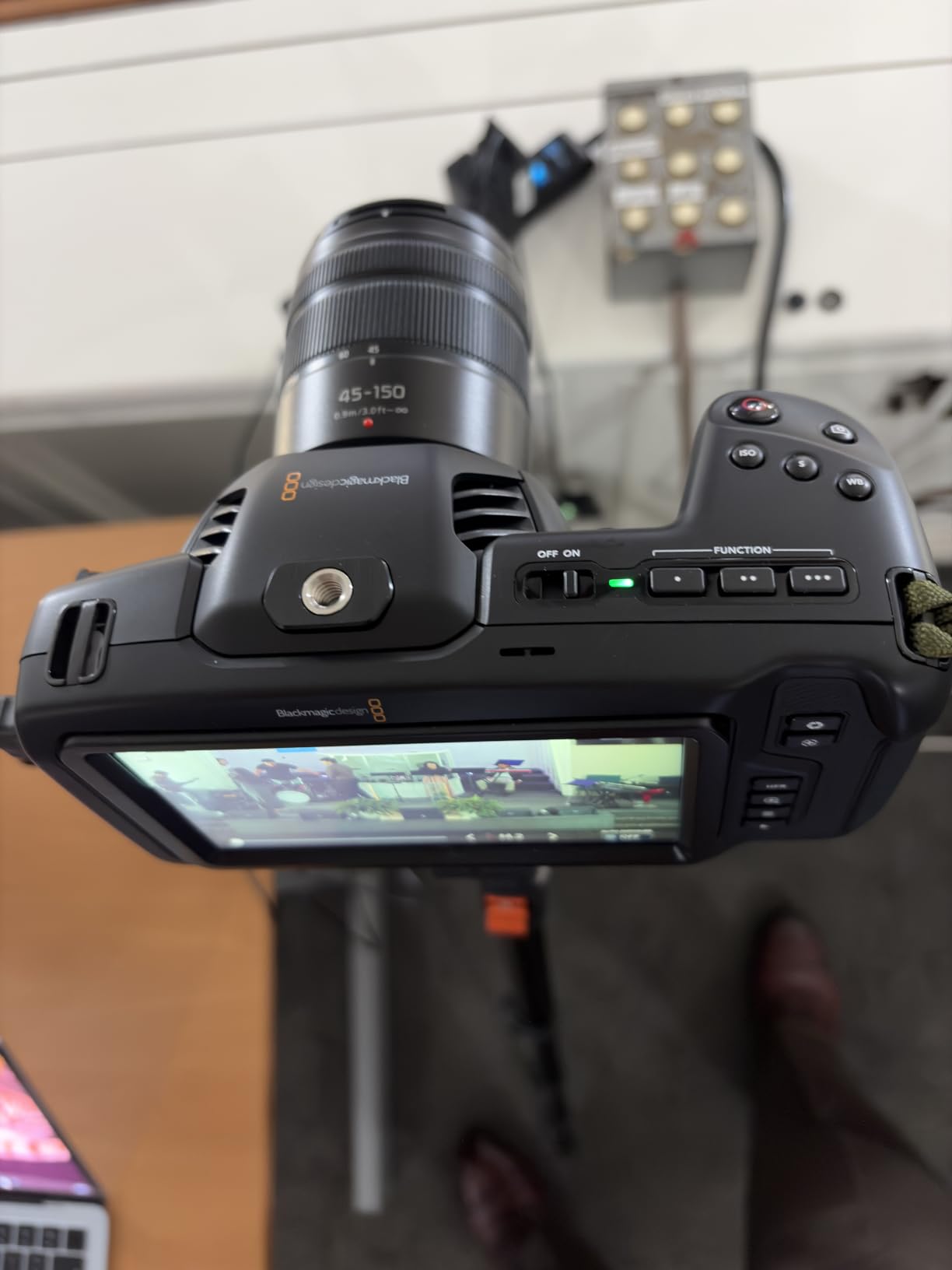
The biggest value-add is the included DaVinci Resolve Studio activation key. That’s a $295 color grading software included free. For wedding videographers learning to grade their own footage, this combination is unbeatable. The Active Micro Four Thirds mount accepts adapted lenses from Panasonic, Olympus, and adapted Canon EF glass.
The downsides are real, though. There’s no in-body image stabilization, so you need a gimbal or tripod for smooth shots. Battery life is short at around 60 minutes of continuous 4K recording, so you’ll need V-mount batteries or a power solution for long events. The autofocus is essentially nonexistent compared to Sony and Canon, so plan on manual focusing for most shots.
Why indie filmmakers and cinematographers love it
For narrative work, music videos, and stylized wedding films, the BMPCC 4K delivers cinema-quality footage at a price indie creators can actually afford. The BRAW codec gives you incredible flexibility in post, and the included DaVinci Resolve is the industry standard color grading software.
Why event videographers should be cautious
The lack of autofocus and IBIS makes the BMPCC 4K difficult for run-and-gun wedding work. I use mine on a gimbal for cinematic establishing shots but rely on a Sony or Canon body for the actual ceremony and reception coverage. Battery life is also a real limitation for full-day events.
10. Blackmagic Pocket Cinema Camera 6K Pro — Super 35 with Built-in NDs
Blackmagic Design Pocket Cinema Camera 6K Pro (CINECAMPOCHDEF06P)
Super 35 sensor native 6K
12-bit BRAW + 10-bit ProRes
Built-in ND filters
Pros
- Super 35 6K sensor resolution
- Built-in 2/4/6 stop ND filters
- 12-bit Blackmagic RAW
- EF lens mount
Cons
- Heavier at 4.4 pounds
- No image stabilization
The Pocket Cinema Camera 6K Pro is the BMPCC 4K on steroids. The Super 35 sensor captures native 6K resolution (6144 x 3456), giving you massive room for cropping in post or reframing shots after the fact. For wedding cinematographers who want to deliver a 4K master but shoot with crop flexibility, the 6K resolution is a game-changer.
The built-in ND filters are the standout feature. You get 2, 4, and 6 stop neutral density filters built into the body, which means you can shoot wide apertures in bright sunlight without buying screw-on filters. For outdoor wedding ceremonies at noon, this is invaluable. I used to carry four ND filters in my bag, and now I don’t need any.
The active EF mount opens up the entire Canon EF and EF-S lens ecosystem. For wedding shooters who already own Canon L-series glass, you can mount it directly without an adapter. The 13 stops of dynamic range match the BMPCC 4K, and BRAW recording gives you 12-bit color information for grading.
The 6K Pro is significantly heavier than the BMPCC 4K at 4.4 pounds with the battery. For handheld shooting, you’ll want a solid rig or gimbal. There’s still no in-body stabilization and no real autofocus, so this remains a cinema camera for deliberate, manually-focused work.
Why filmmakers choose the 6K Pro
If you want the highest resolution possible in the Blackmagic lineup plus the convenience of built-in NDs, the 6K Pro is the choice. The EF mount compatibility with Canon lenses is a major plus for existing Canon shooters. For narrative filmmaking and stylized wedding films, the 6K footage downsamples to stunning 4K.
Why it might be overkill for your work
If you’re not editing on a workstation with serious storage and processing power, 6K BRAW files will overwhelm your setup. For most wedding videographers, the 4K BMPCC gives you the same color science at half the file size. The 6K Pro is also less practical for event coverage due to weight and battery life.
Buying Guide: How to Choose the Best 10-bit Camera for Video?
After testing all ten cameras on this list, I’ve learned that “best 10-bit camera for video” really means “best camera for your specific video work.” Here are the factors that matter most when choosing between them.
Sensor Size and Low-Light Performance
Full-frame sensors like the ones in the Sony a7S III, Canon R5, and Panasonic S5IIX deliver the cleanest footage at high ISO. For wedding videographers shooting dim receptions, full-frame is worth the premium. Micro Four Thirds sensors like the GH5 and GH5M2 are smaller and noisier above ISO 1600, but they enable smaller lenses and lighter rigs. Super 35 sensors in the Blackmagic cameras split the difference.
Internal vs External 10-bit Recording
Internal 10-bit recording means your camera writes 10-bit footage directly to the SD or CFexpress card. External recording means you need a separate monitor recorder like an Atomos Ninja to capture the 10-bit signal over HDMI. For solo shooters and wedding videographers, internal recording is essential because it keeps your kit smaller and simpler. Every camera on this list except the Nikon Z 6II offers internal 10-bit recording.
LOG Profiles and Color Science
LOG profiles (S-Log3, V-Log, C-Log3, N-Log, F-Log2) are flat picture profiles designed for color grading. They preserve more dynamic range than standard profiles but look washed out straight from camera. For wedding work where you need quick turnaround, Canon’s C-Log3 and Sony’s S-Cinetone offer easier grading. For maximum dynamic range when you have time to grade, Panasonic V-Log and Sony S-Log3 lead the pack.
Autofocus Reliability for Solo Operators
If you’re shooting weddings solo, autofocus reliability is non-negotiable. Sony’s hybrid AF system with real-time tracking is the gold standard, followed closely by Canon’s Dual Pixel CMOS AF II. Panasonic’s older contrast-detect AF was weak, but the S5IIX finally adds phase detection. Blackmagic cameras have essentially no usable video autofocus, so they’re best for narrative work with manual focus.
Recording Limits and Overheating
Wedding ceremonies can run 60 to 90 minutes, and you don’t want your camera cutting off mid-vows. The Panasonic S5IIX, GH5, and GH5M2 offer unlimited recording. The Canon R6 Mark II delivers 6 hours of Full HD. The Sony a7S III caps at 24 minutes of 4K due to tax regulations in some markets. If you shoot long-form events, check the recording limits carefully.
Dual Card Slots for Backup
Dual card slots let you record simultaneously to two cards, giving you instant backup if one card fails. For wedding videographers, this redundancy has saved me twice in the last three years. Every camera on this list except the GH5M2 renewed unit and the Blackmagic cameras offers dual slots. The Blackmagic cameras record to SSDs, which are more reliable but slower to swap.
Wedding-Specific Considerations
For wedding videography, I prioritize three things: reliable autofocus, dual card slots, and good low-light performance. The Sony a7S III checks all three boxes. The Canon R6 Mark II and Panasonic S5IIX are close behind. If you’re on a tighter budget, the original GH5 delivers 10-bit quality at a price point that lets you invest in audio gear, lenses, and gimbals instead.
Total System Cost
Don’t forget to budget for lenses, memory cards, batteries, and storage when choosing a camera. A $2500 body with cheap lenses will deliver worse footage than a $1500 body with premium glass. For wedding work, I recommend investing at least 50% as much in lenses as in the camera body. Sony E-mount and Canon RF mount have the largest lens selections, while L-mount (Panasonic) and Z-mount (Nikon) are catching up.
FAQs
What cameras shoot 10-bit video?
Cameras that shoot 10-bit video include the Sony a7S III, Sony FX3, Canon EOS R5, Canon R6 Mark II, Panasonic S5IIX, Panasonic GH5, Panasonic GH5M2, Nikon Z 6II (via HDMI), Blackmagic Pocket Cinema Camera 4K, and Blackmagic Pocket Cinema Camera 6K Pro. These cameras record internally to SD or CFexpress cards with no external recorder required, except the Nikon Z 6II which needs an HDMI recorder for full 10-bit N-Log output.
Is 10-bit video better than 8-bit?
Yes, 10-bit video is significantly better than 8-bit for professional work. 10-bit captures 1024 levels of color per channel compared to 256 in 8-bit, giving you 4x more color information. This eliminates banding in skies and gradients, allows more aggressive color grading without artifacts, and provides better highlight and shadow recovery. For wedding videography and cinematic work where you grade footage in post, 10-bit is essential.
What is the cheapest camera with 10-bit video?
The Panasonic LUMIX GH5 is the cheapest camera with reliable internal 10-bit 4:2:2 video recording available in 2026. It records 4K 60p in 10-bit to dual SD cards with no recording limit. The Blackmagic Pocket Cinema Camera 4K offers 12-bit BRAW and 10-bit ProRes at a similar price point. Both cameras deliver professional 10-bit quality at budget-friendly prices for new videographers.
Do I need 10-bit video for wedding videography?
Yes, 10-bit video is highly recommended for wedding videography. Wedding ceremonies often involve challenging lighting situations like backlit altars, dim reception halls, and mixed indoor-outdoor light. 10-bit recording gives you the dynamic range to recover highlights in white dresses and details in dark suits within the same frame. It also allows more creative color grading for highlight films without banding artifacts.
What is the best camera for filming videos in 2026?
The best camera for filming videos in 2026 depends on your needs. For cinematic wedding videography, the Sony a7S III is the top choice thanks to its low-light performance and reliable autofocus. For hybrid stills and video, the Canon EOS R5 delivers 8K RAW and 45MP stills. For indie filmmakers on a budget, the Blackmagic Pocket Cinema Camera 4K offers 12-bit BRAW at an accessible price. Each camera on this list excels in a specific video workflow.
Does GoPro shoot 10-bit?
No, GoPro action cameras do not currently shoot 10-bit video. GoPro HERO models record in 8-bit color depth with 4:2:0 chroma sampling. For action-oriented 10-bit recording, consider the DJI Osmo Action series or dedicated cinema cameras like the Blackmagic Pocket Cinema models. If you need both action and 10-bit quality, the Sony a7S III in a weather-sealed housing or the Panasonic GH5 are more capable options.
Final Verdict: Which 10-bit Camera Should You Buy?
After shooting weddings and cinematic projects on every camera in this roundup, my top recommendation for the best 10-bit camera for video in 2026 depends on your role and budget. For solo wedding videographers who need bulletproof autofocus and clean low-light footage, the Sony Alpha a7S III remains the gold standard. For hybrid shooters who want one body for stills and video, the Canon EOS R5 is unmatched.
If you’re building a wedding videography business on a tighter budget, the Canon R6 Mark II delivers 90% of the R5’s 4K quality at a significantly lower price. For indie filmmakers who want Pro-Res internal recording and V-Log, the Panasonic S5IIX is the most underrated option on this list. And if you’re starting out and need an affordable 10-bit workhorse, the original Panasonic GH5 still delivers professional results at a price that lets you invest in lenses and audio gear.
Whichever best 10-bit camera for video you choose from this list, you’ll see the difference in your footage the moment you start color grading. The smoother gradients, the recovered shadows, the richer skin tones. Once you shoot in 10-bit, you won’t go back to 8-bit for serious work.