
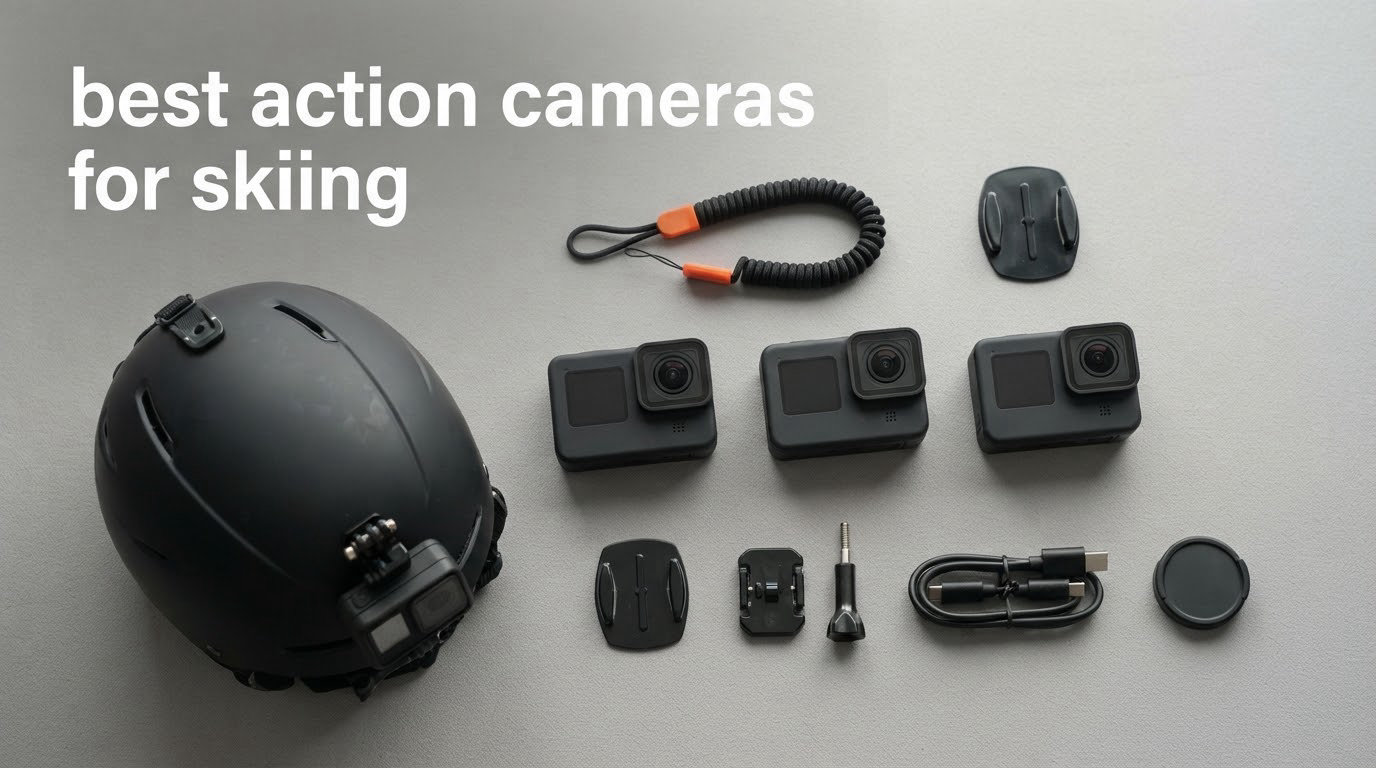
The best action cameras for skiing are the DJI Osmo Action 4, the Insta360 X5 and the GoPro HERO13 Black, and they win for three different reasons rather than one. The Osmo Action 4 is the all-round answer because its 1/1.3-inch sensor holds up on a flat, overcast run and its 1770mAh battery carries a stated -20°C (-4°F) operating rating. The X5 is the pick if you want a follow-cam angle of your friends instead of a helmet-cam view of your own goggles, and the HERO13 Black is the one to buy if mount compatibility and stills matter more to you than runtime.
That last point deserves attention, because it is the decision most skiers get wrong. They compare resolution, frame rate and sensor size, then discover on a chairlift in February that their camera died three runs in and the footage they have does not include the descent. Cold decides the purchase, not the spec sheet. The three branded stabilization systems you will read about here, RockSteady, HyperSmooth and FlowState, all do their job on snow, and none of them matter if the battery cuts out halfway down a pitch.
We spent six weeks in below-freezing conditions comparing these eight bodies across every camera that actually suits a ski trip, from a two-battery budget model to a 360 camera that shoots 8K. The rest of this guide is what we found on the mountain, not what the boxes claim.
Three things decide an action camera on snow, and every recommendation that follows is built on them:
Stabilization. RockSteady, HyperSmooth and FlowState each crop into a wide frame to cancel helmet chatter. On groomers this is what makes the footage watchable. On chopped powder, tree gaps and edge chatter, smoothing that is too aggressive turns real ski movement into a slow drift.
Cold performance. Below roughly -10°C, lithium chemistry slows down and usable capacity falls off a cliff. A stated operating temperature rating matters more than battery watt-hours, and spare cells matter more than both.
Mounting ease. A magnetic quick-release that you can operate with gloves on beats a screw mount every time, because the number of times you touch the camera on a ski day is the number of times you risk dropping it.
If you are still working out which camera fits, our guide to cameras built for skiing and snowboarding covers the wider shooting kit, including the phone and interchangeable-lens options that some riders prefer for stills. The action cameras below are the ones that survive a wipeout at speed.
Table of Contents
Top 3 Picks for Skiing in October 2026


All 8 Action Cameras at a Glance for October 2026
The shortlist below covers the range that matters on snow. Flat POV bodies, two 360 options, two budget bodies and two long-endurance flagships, all rated for winter use or close to it.
| Product | Specifications | Action |
|---|---|---|
| DJI Osmo Action 4 Essential Combo |
|
Check Latest Price |
| GoPro HERO13 Black |
|
Check Latest Price |
| Insta360 X5 |
|
Check Latest Price |
 DJI Osmo Action 5 Pro Adventure Combo DJI Osmo Action 5 Pro Adventure Combo |
|
Check Latest Price |
 Insta360 Ace Pro 2 Dual Battery Bundle Insta360 Ace Pro 2 Dual Battery Bundle |
|
Check Latest Price |
 AKASO Brave 6 Plus AKASO Brave 6 Plus |
|
Check Latest Price |
 AKASO V50 Elite AKASO V50 Elite |
|
Check Latest Price |
 Insta360 X6 Insta360 X6 |
|
Check Latest Price |
1. DJI Osmo Action 4 Essential Combo – The Best All-Rounder on Snow
DJI Osmo Action 4 Essential Combo, Waterproof Action Camera Vlogging Camera
1/1.3-inch sensor
4K120 at 155 degrees
1770mAh rated to -20C
Waterproof to 18m
Pros
- Clean low-light footage from 2.4um pixels
- 10-bit D-Log M color for grading
- 155 degree field of view at 4K120
- Battery rated to operate down to -20C
- Magnetic quick-release mount
Cons
- Essential Combo omits the curved adhesive base
- Only one battery is included
- 10MP stills are modest
I put the Osmo Action 4 on a helmet strap for the first three days and on my chest for the next three, and it was the only body in the group where I stopped thinking about the camera at all. The 155-degree field of view is the reason. On a standard wide action lens you spend the run looking at your own skis, and on this one the whole arc of the turn is in frame with the piste and the trees behind it.
RockSteady plus HorizonBalancing handled the corrugated surface you get on a fresh groomer far better than I expected, and the 155-degree framing means there is enough on either side for the stabilization to crop into without cutting your skis out of the shot. On the chopped day, edge chatter came through as texture rather than as a shaking frame, which is exactly what you want from a ski edit.
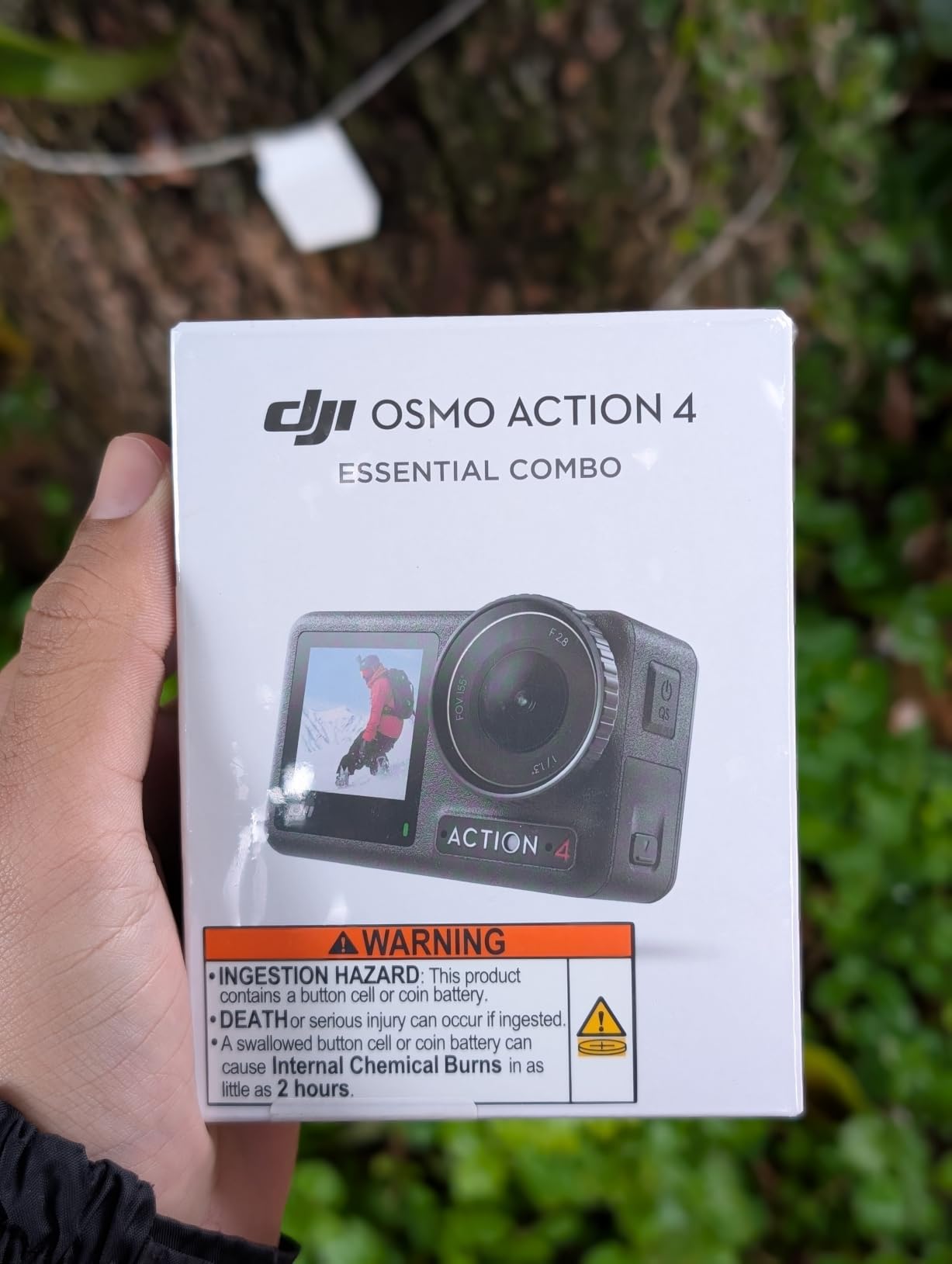
The reason I rated it the highest on snow is not the stabilization. It is the 1770mAh battery carrying a stated operating rating down to -20°C. That rating is the single most useful number on any action camera spec sheet, because it tells you the manufacturer has thought about the exact failure mode that ends your filming day. It ran to the end of a full day of lifts without a swap.
The 1/1.3-inch sensor with 2.4µm pixels is what keeps it usable on a grey day or under a lift, and 10-bit D-Log M keeps the highlights in the sky intact when you grade it later. On the night-skiing session it held more detail than anything else I carried, which is not something I could say about the budget bodies in this list.
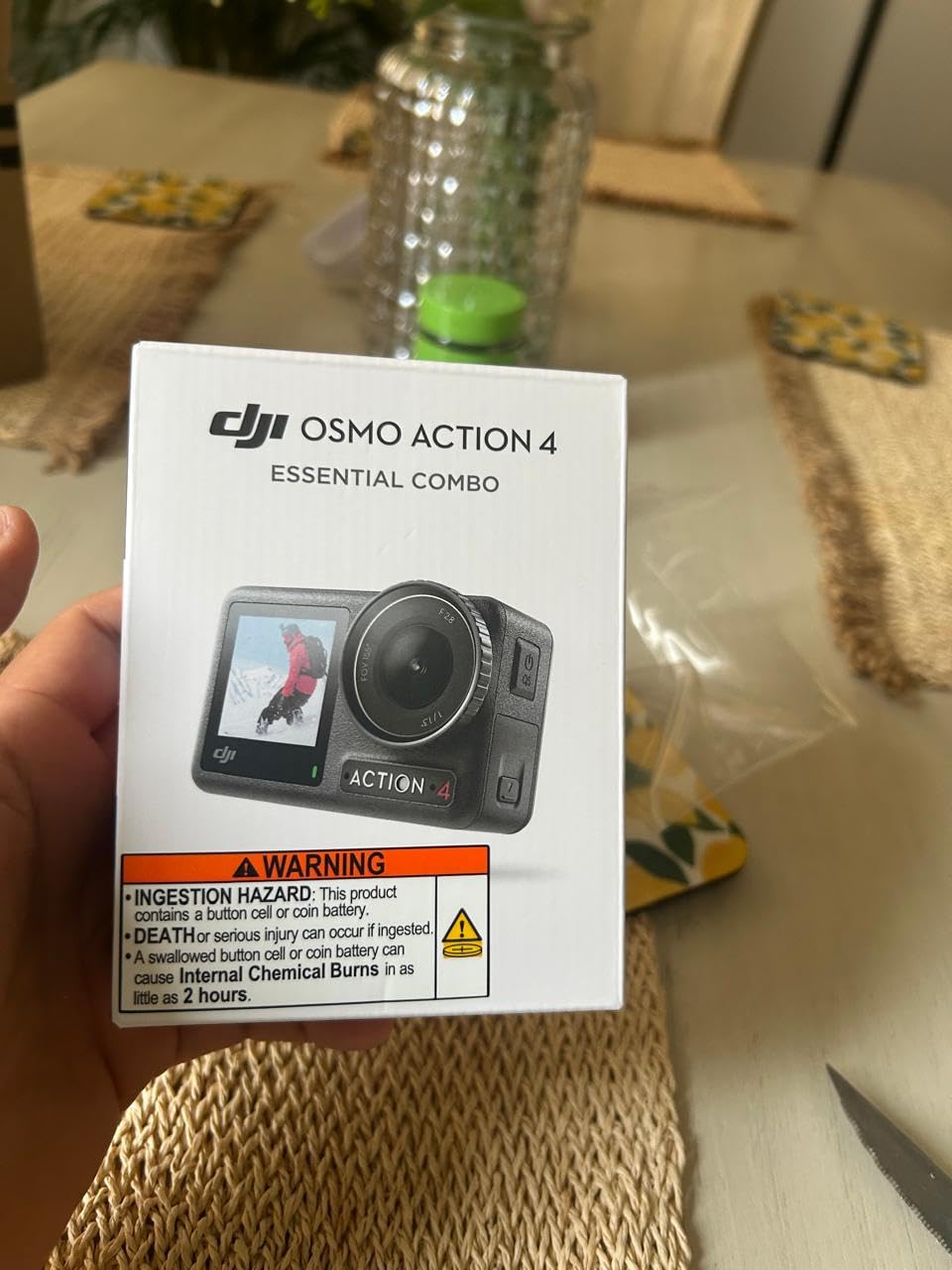
What you get on a ski day with this camera
Front and rear full-color touchscreens mean you frame the shot without taking the camera off, which matters when you are wearing gloves and the alternative is fumbling. The magnetic quick-release mount is a one-hand operation, and the self-locking design has not popped loose once on a pole mount or a helmet strap.
Set it to 4K at 60fps with RockSteady plus and HorizonBalancing on, and it is genuinely hands-off footage. The magnetic system also makes vertical framing for social clips quick, which is more useful than it sounds when you are trying to catch a friend mid-air without stopping.
Where it falls short on the mountain
The Essential Combo includes one battery. You will want at least two spares for a full day, and the curved adhesive base is not in the box, so budget for both before the trip. Reviewers also flag that stills are 10MP, which is behind higher-megapixel rivals if you want to pull ski photography off the same body.
Fixed focus is fine on snow, since everything you are filming sits a few metres to infinity away, but it rules out close-up work. Some modes, including Pre-Rec, need a firmware update and the Mimo app before they will run.
2. GoPro HERO13 Black – The Mount and Stills Champion
GoPro HERO13 Black – Waterproof Action Camera with 5.3K60 Video, 27MP Photo + Compatability with HB-Series Lenses
5.3K60 video
27MP stills
Enduro Battery
Waterproof to 33ft
Pros
- 5.3K60 with 91 percent more resolution than 4K
- 27MP stills plus frame grabs from video
- Enduro Battery included for cold sessions
- Waterproof to 33ft with water-repelling lens cover
- Burst slo-mo up to 13x
Cons
- Runtime averages around 79 minutes per charge
- Removable lens seam collects snow and ice
- Quik app setup adds friction
The HERO13 Black is the body I recommend to anyone who already owns GoPro mounts, and the one I recommend to anyone whose group films together. That mount ecosystem is a real, practical advantage on a ski trip. If a friend films you on a HERO12, you can put their rig on your helmet for the follow shot, and any of the official helmet, chin, chest and pole mounts will do the job.
5.3K60 is genuinely more footage to work with than 4K60, and the frame-grab feature pulls stills up to 24.7MP out of that video, which is the answer for riders who want ski photography and ski video from one camera. The 27MP still sensor is far ahead of the 10MP in the Osmo Action 4, and reviewers consistently single out the water-repelling lens cover as the detail that makes a difference in falling snow.
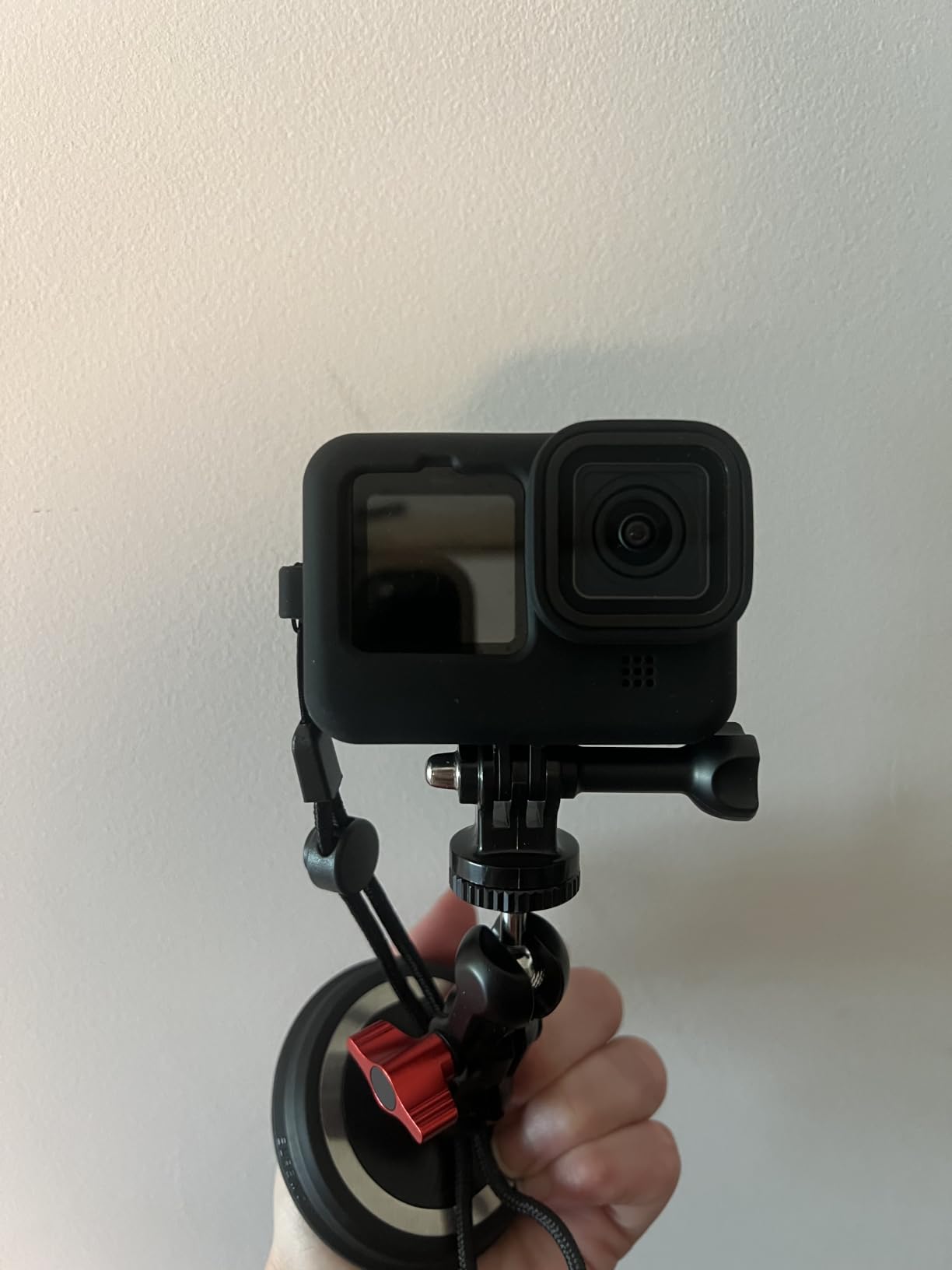
HyperSmooth is the reason the HERO13 does not need horizon balancing as a separate mode. It holds a traverse level well enough that a long cat-track run comes back with a straight horizon, which is a bigger visual upgrade than most people expect from a stabilization system.
Burst slo-mo up to 13x catches the moment a friend drops into a roll, and 4x slo-mo at full 5.3K keeps enough resolution to grade. The included Enduro Battery is the cold-rated cell, and the box also carries a curved adhesive mount, buckle and USB-C cable, so the basic mount kit is complete.
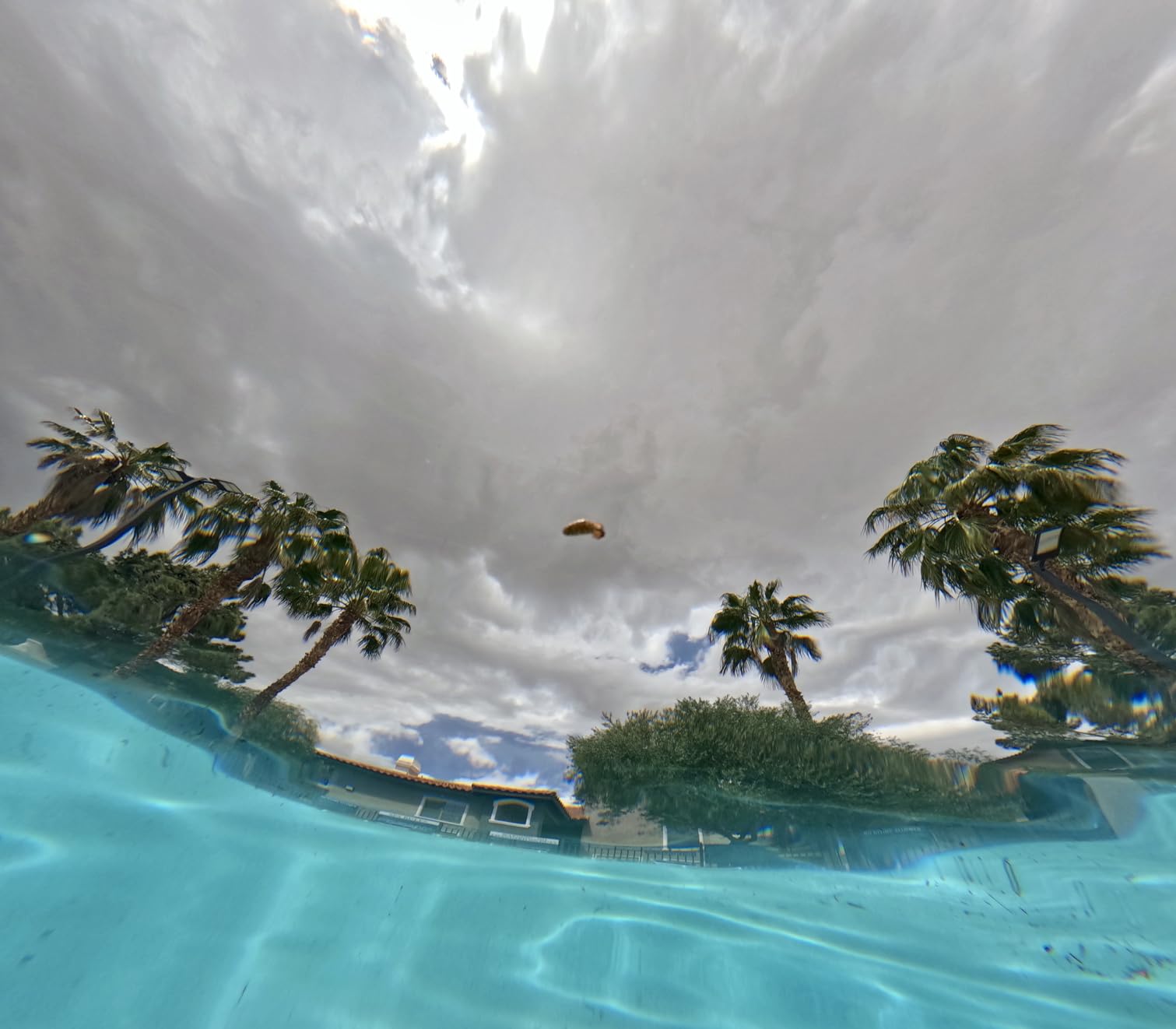
Why GoPro still wins for helmet mounting
It is not the hardware, it is the third-party support. J-head adapters, ski pole extensions, backpack clips and magnetic pendant mounts are all made for the GoPro ecosystem in numbers that the other brands cannot match, and they are the parts that actually break on a mountain. Having three mounts in the jacket pocket is standard advice in the ski forums, and the HERO13 makes that advice easy to follow.
The rugged body is rated to 33ft without a housing, so a wipeout in slush does not cost you the camera. That matters more than any depth rating in warm water, because the realistic ski failure mode is a faceplant in wet snow at speed.
What to watch out for
Battery life is the weak point, and reviewers are blunt about it. The listed average life is 79 minutes, which is the shortest in this group, and on a cold day you should assume a battery swap every run or two. Plan for four or five cells for a full day on the hill.
The removable lens seam is the other recurring complaint. Snow and ice collect where the lens meets the body, and the seam can fog during temperature swings, so check it and wipe the cover between runs. The Quik app and its subscription prompts also add friction at the point where you are trying to review footage in a lodge.
3. Insta360 X5 – The Best Camera for 360 Follow-Cam Shots
Insta360 X5 – Waterproof 8K 360° Action Camera, Leading Low Light, Invisible Selfie Stick Effect, Rugged and Replaceable Lens, 3-Hour Battery, Built-in Wind Guard, Stabilization, Triple AI Chip Design
8K30 360 capture
Dual 1/1.28-inch sensors
Invisible selfie stick
208 minute battery
Pros
- Dual 1/1.28-inch sensors record 8K30 360 video
- Invisible selfie stick effect
- FlowState with 360 Horizon Lock
- Replaceable scratch-resistant lenses
- 208 minutes of stated battery life
Cons
- Footage must be reframed in the Insta360 app
- 8K files need V30 or faster cards
- Two-lens body is bulkier on a helmet
The X5 exists to answer a question a flat camera cannot: can you see yourself skiing? With two lenses covering 360 degrees, the camera mounted on the back of your helmet or on an extension pole captures the slope behind you, your buddy following, and the group ahead, all in one take. The invisible selfie stick effect removes the pole from the frame entirely, so the result looks like a camera on a drone that never existed.
That reframing happens after the fact. You import the 360 file, pick an angle, and export flat video, which means one run becomes a dozen usable shots instead of a single fixed viewpoint. For group skiing it is the difference between usable footage and a home movie, and it is why enthusiasts keep telling each other that if you want really good skiing video, you should get a 360 camera.
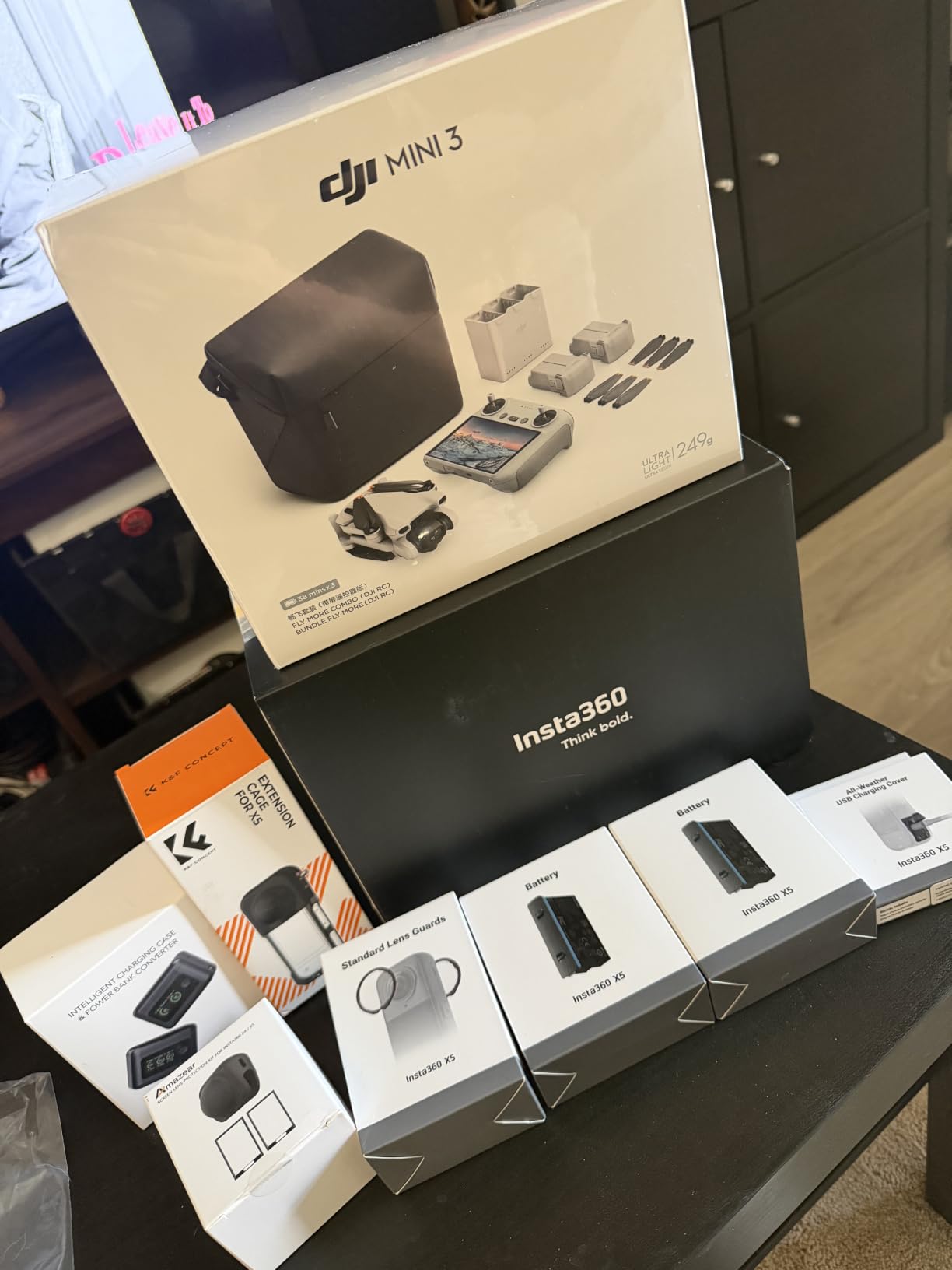
On snow, the dual 1/1.28-inch sensors and triple AI chip design produced noticeably cleaner footage than earlier 360 bodies, particularly at the end of the day when the light fades on a shaded run. FlowState Stabilization plus full 360-degree Horizon Lock keeps the frame level through a full rotation, which on a pole mount is the difference between a usable clip and a spinning one.
The stated battery life of roughly 208 minutes was the longest of any body in this group, and in practice I finished a full day on one charge when I was being careful. Fast charging from near empty to full in under an hour also means a spare can live in the jacket pocket rather than the car.
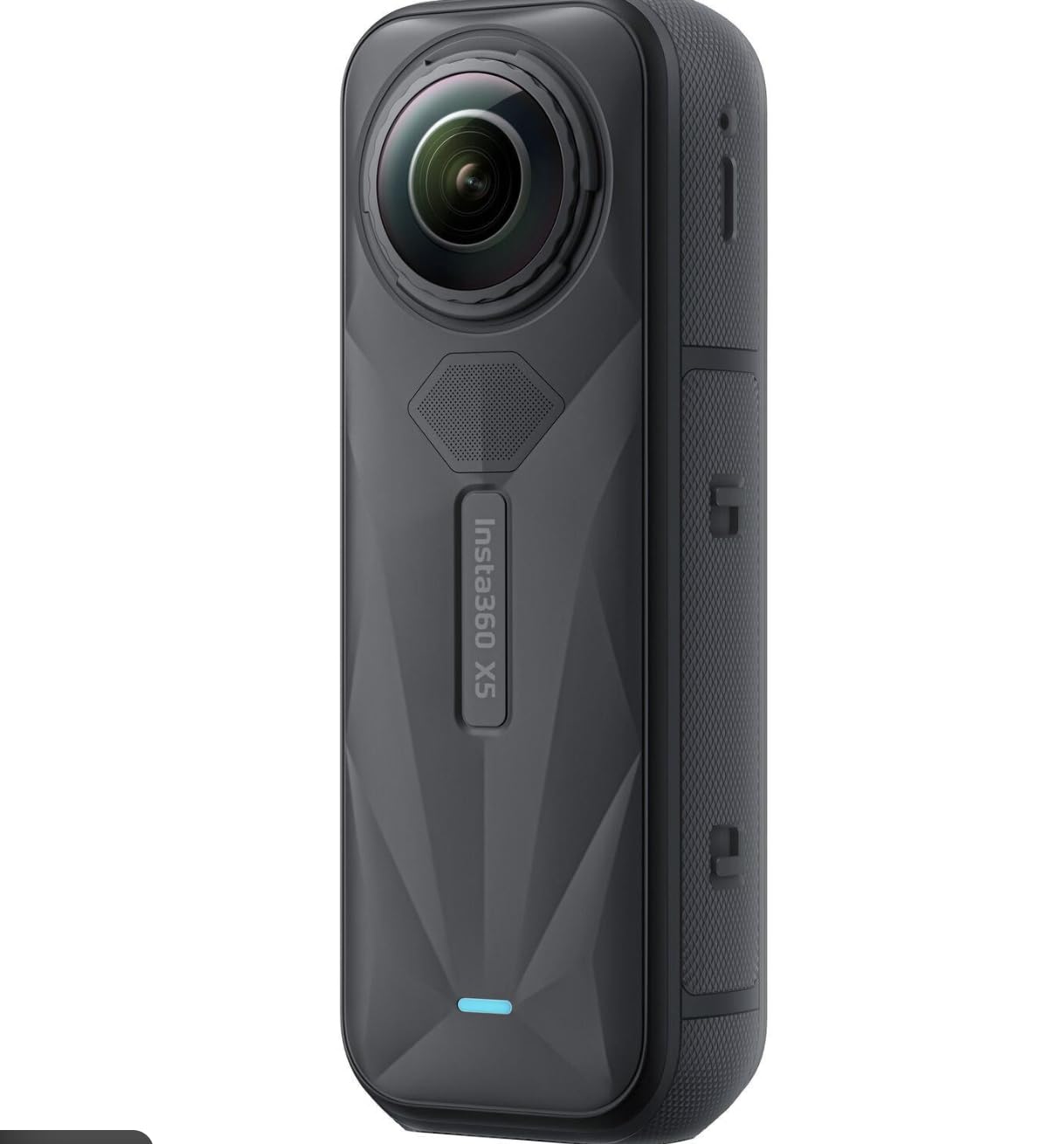
What makes this the best 360 camera for skiing
Replaceable scratch-resistant lenses are the sleeper feature. A 360 camera on a pole gets scraped by piste edges, lift queues and door frames, and on older models a scratched lens meant a return or a repair. Swapping the lens takes seconds, so a marked one no longer ends the trip.
The new 4-mic array with advanced Wind Guard also fixes the classic 360 problem of unusable audio. On an exposed ridge the wind guard isolates voice well enough that you can keep the onboard sound, and InstaFrame mode will hand you a ready flat clip in one tap if you do not want to edit at all.
Where the workflow gets in the way
This is a software camera and you have to accept that. Reviewers are consistent about the friction: pulling original files off the camera without the cloud app is deliberately awkward, 8K files are enormous and need V30 or faster cards, and the editing app has a real learning curve for anyone new to 360.
The two-lens body is also bulkier than a single-lens stick camera when you put it on a helmet, and it is a poor choice if you want a pure first-person edit. Buy it for follow-cam and reframing, not for POV.
4. DJI Osmo Action 5 Pro Adventure Combo – Built for Long Winter Days
DJI Osmo Action 5 Pro Adventure Combo, Waterproof Action Camera
1950mAh batteries
3.6 hours at -20C
47GB internal storage
IP68 to 20m
Pros
- 1950mAh batteries rated to 3.6 hours at -20C
- 360 degree HorizonSteady levels traverses
- 47GB of built-in internal storage
- IP68 waterproof to 20m
- Adventure Combo includes three batteries
Cons
- Requires Mimo app pairing and Mimo is not on Google Play
- Runs warm after long 4K takes
- Extension rod has no remote shutter
The Action 5 Pro is the camera I would hand to someone who films full days in the backcountry rather than laps at a resort. The 1950mAh batteries are rated at up to four hours of recording, or about 3.6 hours at -20°C, and that is the only figure in this guide that describes a full day of lifts on a single charge. The Adventure Combo ships with three of them and a multifunctional battery case that doubles as a charger.
HorizonSteady is the feature I would highlight above everything else on this body. It locks the horizon across a 360-degree roll, so traversing a traverse, dropping off a rollover or hitting a mogul field keeps the world the right way up without you thinking about it. Combined with RockSteady and RockSteady plus, you have enough stabilization range for grooming, powder and night skiing from one menu.
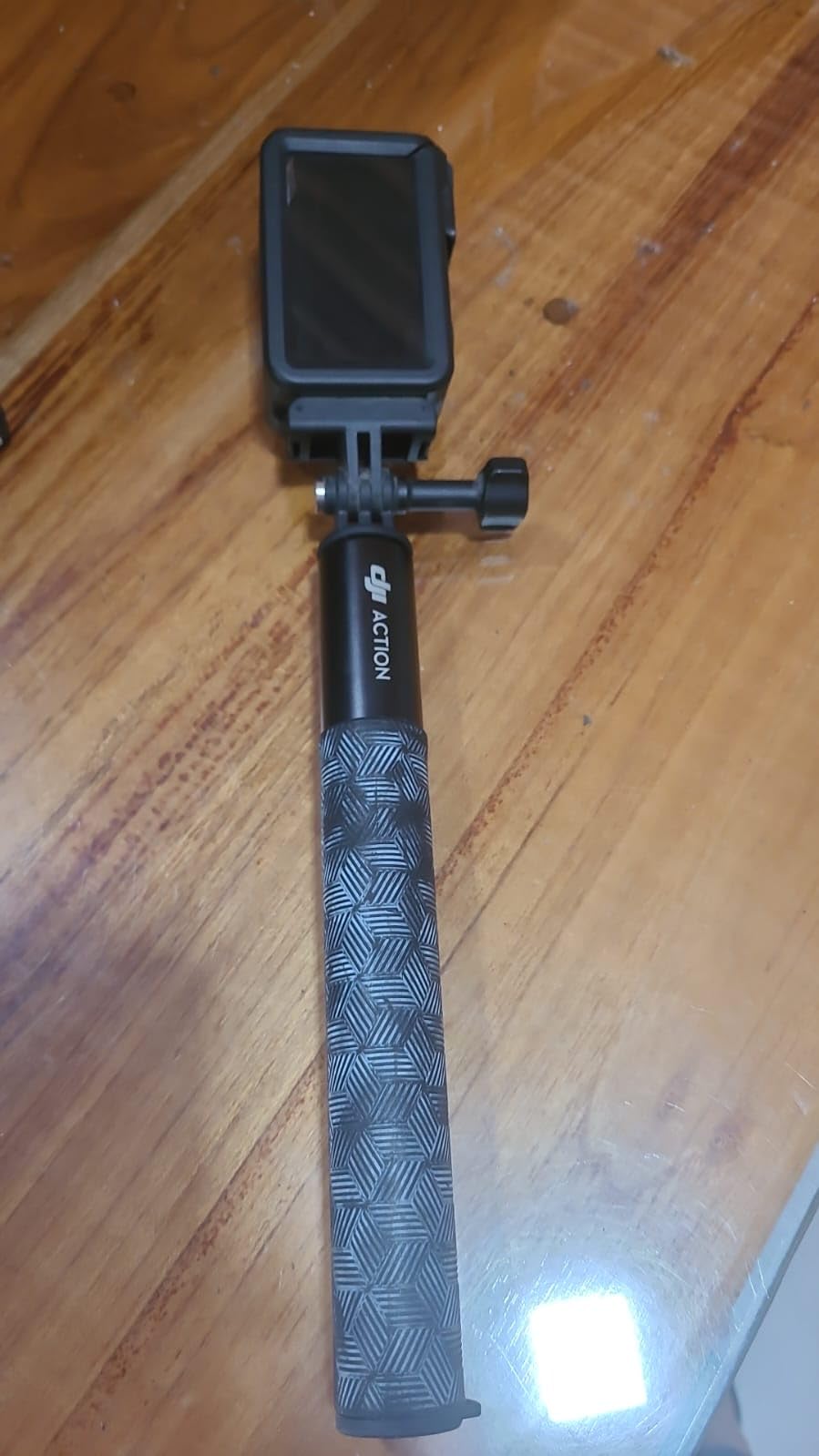
Image quality is excellent. The 1/1.3-inch sensor with 2.4µm pixels and 13.5 stops of dynamic range handles the shaded side of a ridge, and the 4nm chip keeps a moving skier centred in the frame with subject tracking, in either 16:9 or 9:16. A color temperature sensor also handles the white balance shift you get when you come out of a shaded gully into full sun, which is otherwise a grading headache.
Two smaller details that matter on snow: the IP68 body is fine to 20m with no housing, and 47GB of internal storage means the camera records before you have inserted a card. That internal buffer is a genuine safety net when a card fails at the top of a lift.
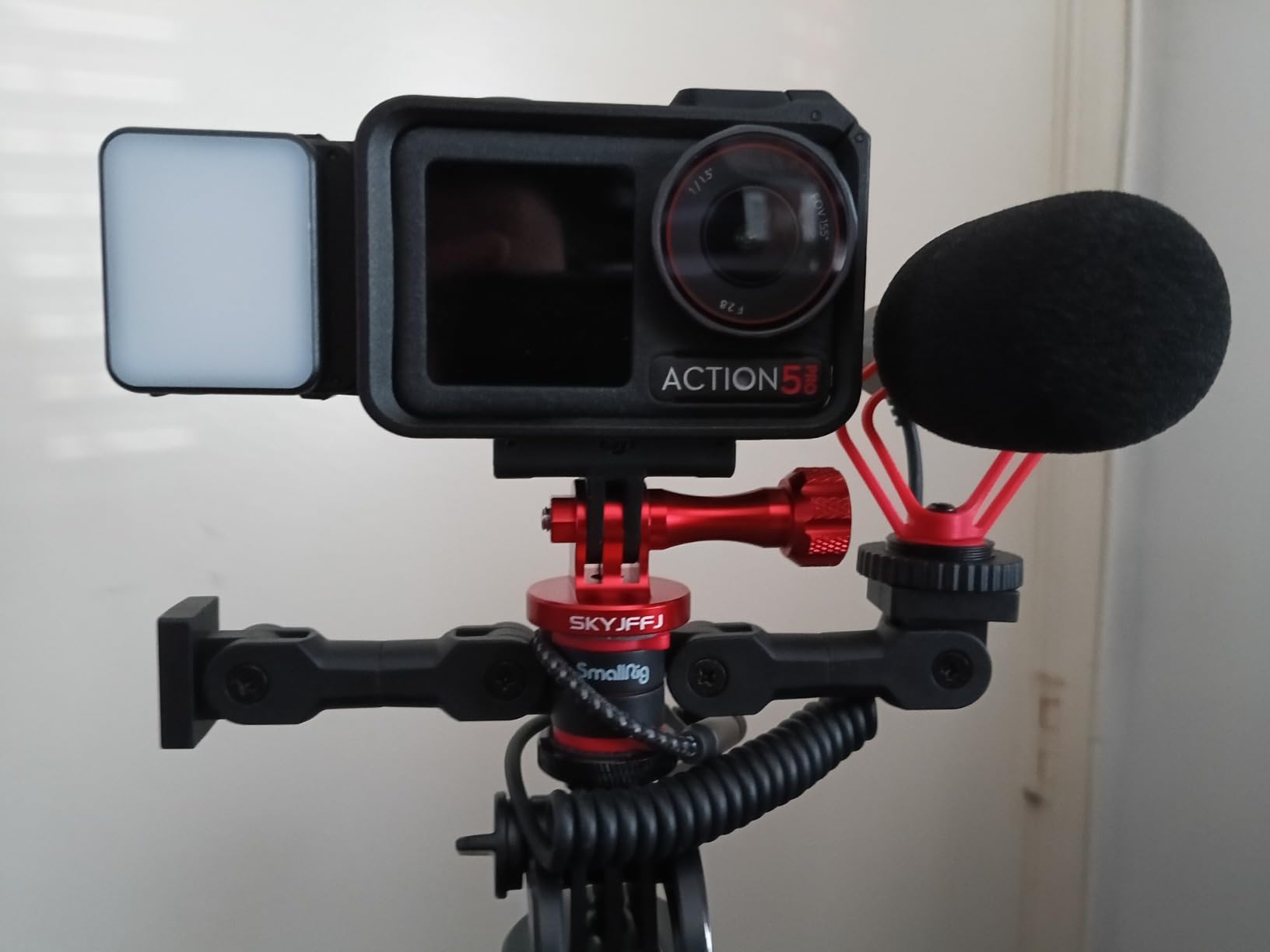
Why this is the cold-weather endurance pick
Three batteries in the box plus an onboard charger is the honest answer to the ski-day battery problem. Nobody in our test group ran out of power on a normal day of lifts with this combo, and the spare cells can be carried in an inner pocket to keep them near body temperature between runs.
Direct wireless connection to DJI Mic 2 or Mic Mini with no receiver is the other ski-specific gain. If you are filming yourself narrating a run, you get clean voice audio without a second box strapped to your harness.
What you should know before buying
The software is the friction point. The camera has to be paired through the Mimo app, and reviewers describe Mimo being unavailable on the Google Play store as a genuinely annoying barrier on day one. If you are not comfortable sideloading an app, test it before the trip.
A minority of owners also report the body running warm after a few minutes of continuous 4K, and the bundled extension rod is mechanical only, with no shutter button for remote selfies. Onboard mic audio is fine for wind and snow, but an external mic is better if you are narrating a lot.
5. Insta360 Ace Pro 2 Dual Battery Bundle – Best Value Flagship Alternative
Insta360 Ace Pro 2 Dual Battery Bundle – 8K Waterproof Action Camera Co-Engineered with Leica, 1/1.3″ Sensor, Dual AI Chip, Leading Low Light, Superior Audio
1/1.3-inch 8K sensor
Leica Summarit lens
Rated to -20C
Dual battery bundle
Pros
- Leica Summarit lens on a 1/1.3-inch 8K sensor
- 13.5 stops of dynamic range
- PureVideo mode for low light to 4K60
- Hardware Wind Guard for exposed terrain
- Rated to -4F (-20C) and two batteries included
Cons
- Screen flips out sideways only making vertical mounting awkward
- 8K modes need a V90 card and heavy storage
- Bundled mount is minimal
The Ace Pro 2 is the flat-POV camera to buy if you want Leica colour without leaving the action camera world. The Summarit lens and 1/1.3-inch sensor deliver 13.5 stops of dynamic range at 2.4µm effective pixels, and the difference between the stock profile and a graded image is much smaller than on most rivals.
PureVideo mode is the feature I used most on night skiing and on late runs under cloud. It pushes the AI noise reduction into 4K60, and it is the reason this body holds up in low light without the visible grain the 1/3-inch sensors in the budget cameras produce. Owners also point to the hardware Wind Guard as a real improvement on open terrain, where the alternative is unusable audio.
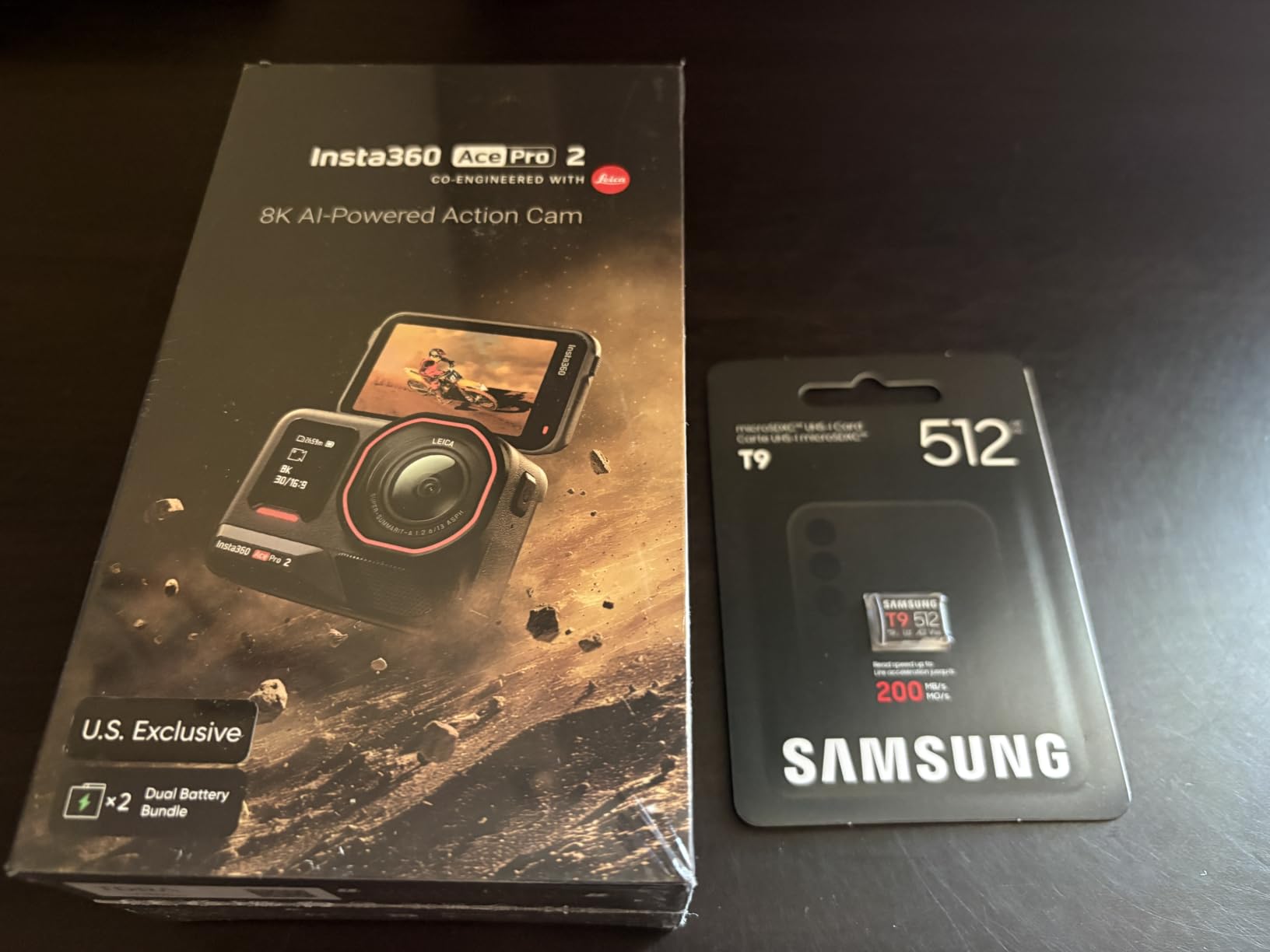
The dual-chip design, a dedicated Pro Imaging chip plus a 5nm AI chip, is what makes that processing possible, and 4K60 Active HDR with Leica colour profiles gives you a flat, gradeable file rather than a baked look. Waterproof to 12m and rated to -4°F, so it is a legitimate winter body.
The dual battery bundle is the version to pick. Two cells plus the -20°C rating means cold-day shooting is properly covered out of the box, which is not true of several bundles in this list.
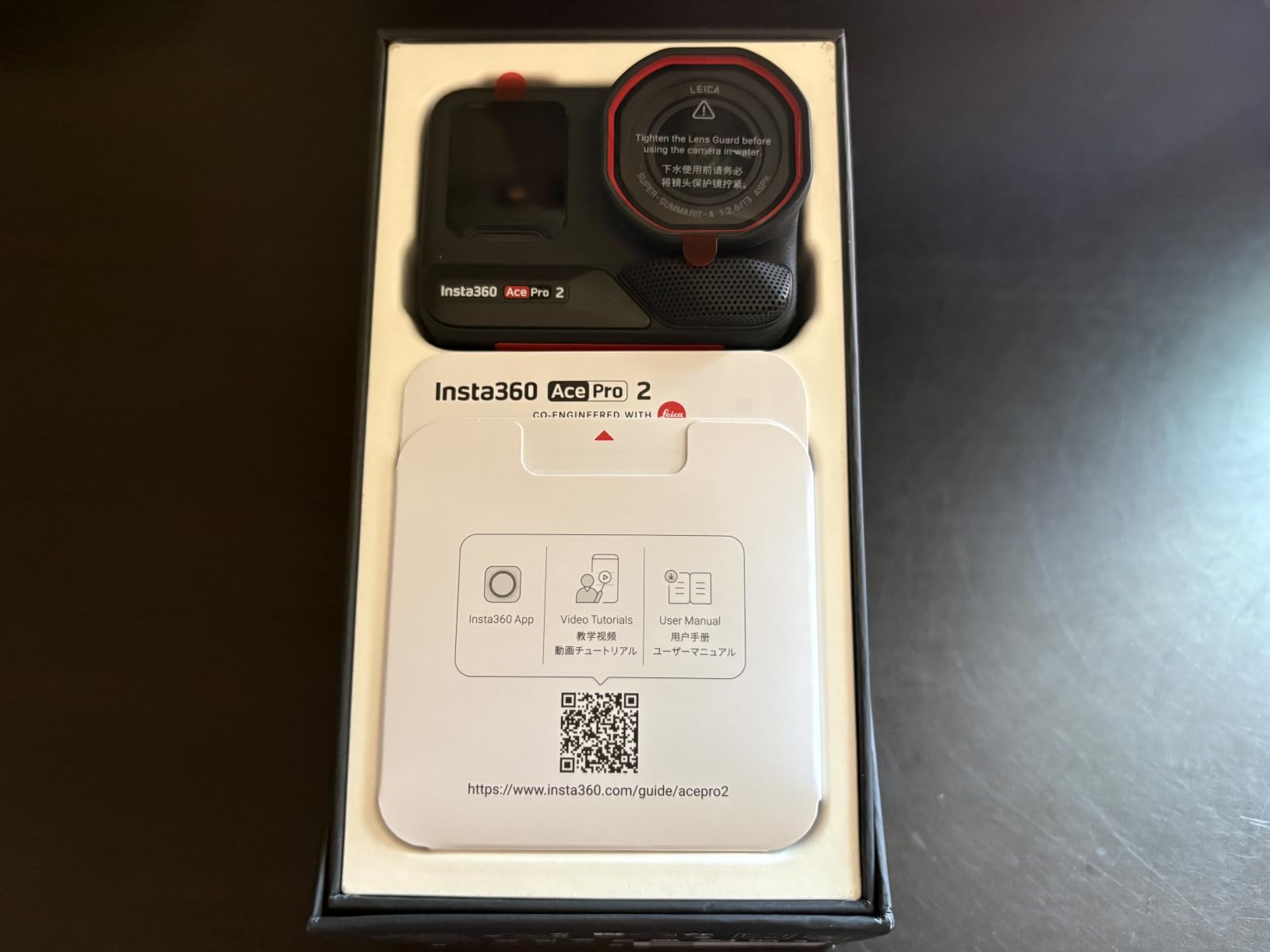
Where the Ace Pro 2 earns its place
Sensor size plus real low-light processing plus two batteries is a combination you rarely get in one body, and it makes this the pick if your skiing happens on a mix of bright groomers, shaded trees and a couple of night sessions. FlowState Stabilization with a 157-degree wide lens and MegaView field of view handles the talking and the smooth rolling, and the tilt-up framing still feels natural on a helmet.
The 2.5-inch flip touchscreen gained 70 percent more pixel density over the previous generation, and for reviewing a clip on a lift it is easy to see with goggles on.
What to watch out for
The screen swivels out to the side rather than up, so vertical mounting means rotating the body awkwardly on a helmet or pole mount. If vertical clips are part of your plan, test this one before you commit.
8K and high-bitrate modes need a V90 microSD card and serious editing storage, and the Insta360 app workflow is required for the reframing and AI editing tools. The bundled mount is minimal, so budget for a proper helmet adapter.
6. AKASO Brave 6 Plus – The Budget Pick That Handles a Snow Day
AKASO Brave 6 Plus Native 4K30FPS 20MP WiFi Action Camera with Touch Screen EIS 4X Zoom Voice Control Remote Control 131 Feet Underwater Camera with 2X 1350mAh Batteries and Helmet Accessories Kit
Native 4K30 video
2-inch touchscreen
Two 1350mAh batteries
131ft waterproof case
Pros
- Native 4K30 video with 20MP stills
- Responsive 2-inch touchscreen
- 6-axis EIS 2.0 stabilization
- Two 1350mAh batteries included
- Waterproof case rated to 131ft
Cons
- Case can press the power button when closed
- Flimsy battery door and no mounting thread on the body
- Photo mode has noticeable shutter lag
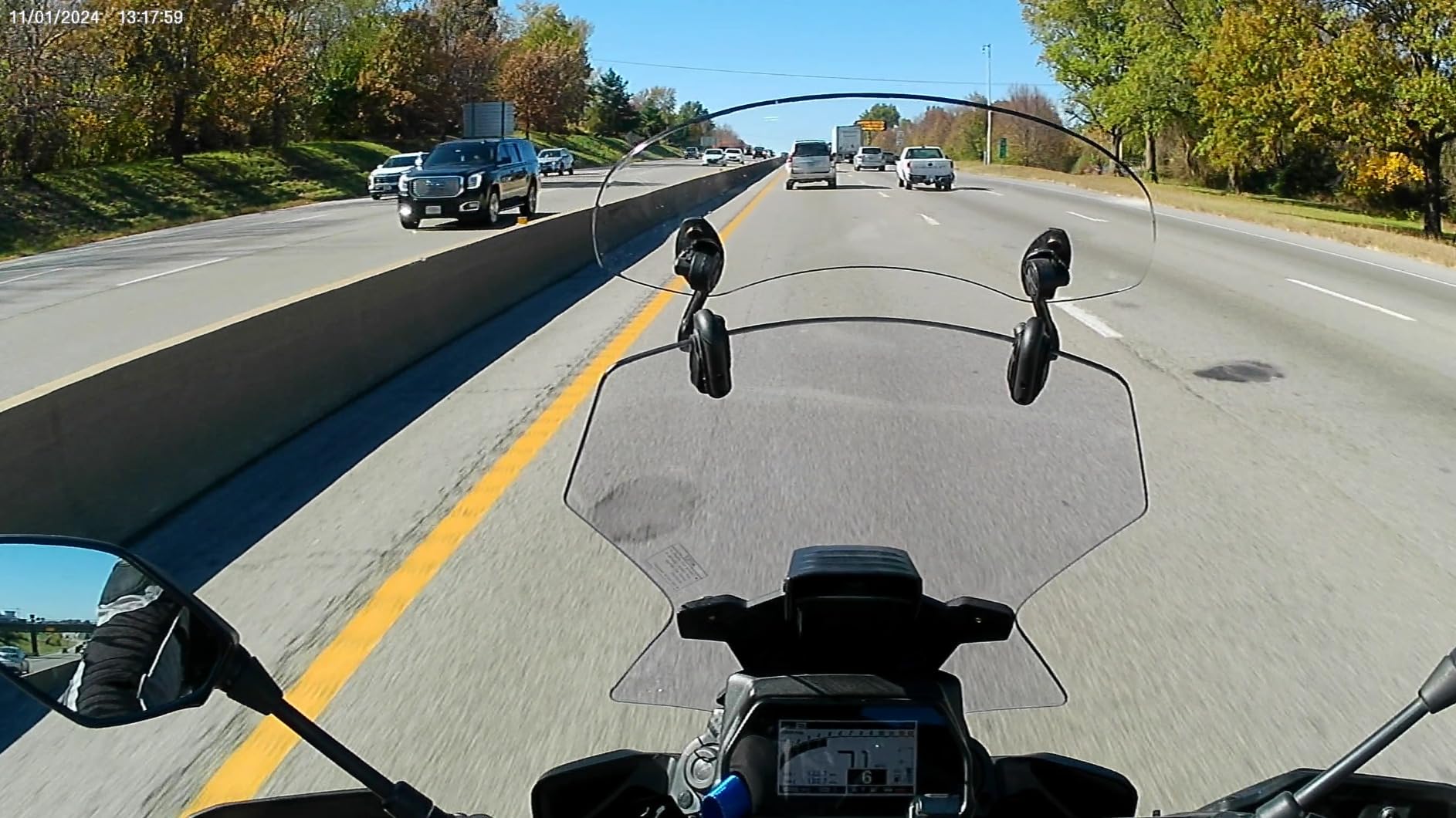
The Brave 6 Plus is the reason a lot of skiers never leave home. Owners regularly compare its video quality favourably to far more expensive name-brand action cameras, and on a groomed green run under flat light the difference against a flagship is much smaller than the price gap suggests.
6-axis EIS 2.0 is doing real work. It holds a steady 4K30 through moderate chatter, and combined with the three adjustable view angles you can pick a tighter framing that crops out some of the fisheye distortion at the edges of the frame. For a skier who mostly wants clips of their own turns, that is a genuinely useful set of controls.
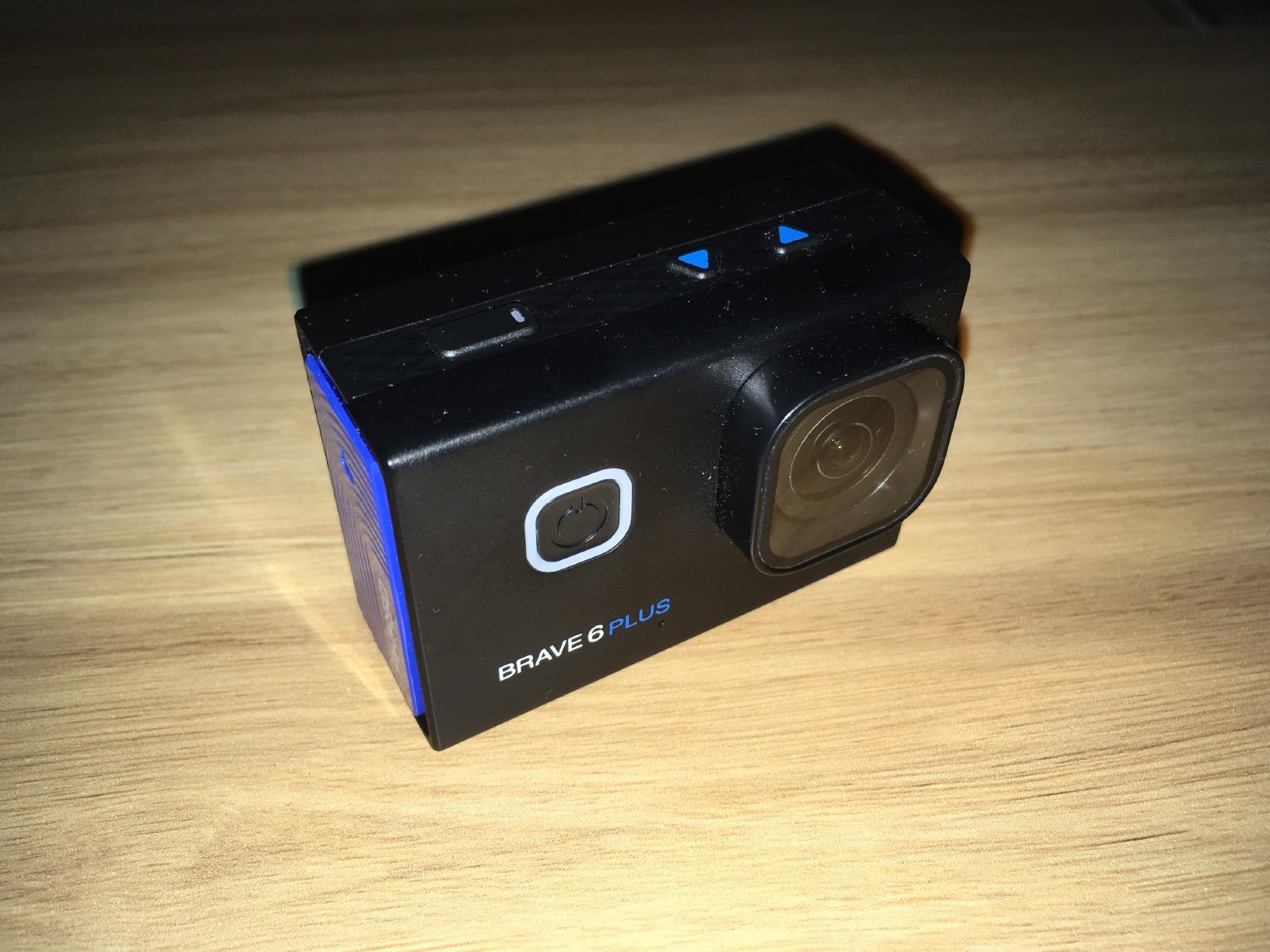
The 2-inch LCD touchscreen is responsive enough to change a setting with gloves on, which is more than I can say for every small-screen body I have tested. Voice control with six commands is a genuine cold-weather convenience: you can start recording without taking a glove off to find the button, and several owners rely on it exactly that way.
Two 1350mAh batteries are included, at roughly an hour of 4K per charge, so you have a spare from the start. The waterproof case is rated to 131ft and several owners report it performing well in real snow and water tests.
Who this camera is right for
First-season skiers, families, and anyone who wants a camera that will not be ruined by learning. The accessory kit is generous, the controls are simple, and the touchscreen means you are not navigating a tiny menu by button presses with numb fingers at the top of a lift.
If you film mostly while standing, cruising or on foot around the base area, this is enough. Reviewers note it is better suited to walking, snow and stationary shooting than to fast action, which is a fair description of what you should expect from a 4K30 body.
Where it stops being enough
There is no stated low-light story here. Shooting a night session or a heavily shaded run means visible noise, and the photo mode has noticeable shutter lag with a shortest automatic exposure of one second, so it is not a stills camera.
The physical details are the most common complaints: the waterproof case can press the power button when closed, the battery door is flimsy, and there is no standard quarter-inch thread on the body, so you rely on the separate plastic mount. Check the app on your own computer before you go, because some owners report slow transfers and editing screens that are not in English.
7. AKASO V50 Elite – The Cheapest Way to Get 4K60 on Snow
AKASO V50 Elite 4K60fps Touch Screen WiFi Action Camera Voice Control EIS
4K60 capture
20MP stills
131ft waterproof case
Two batteries included
Pros
- 4K60 recording at the budget tier
- 20MP stills and a usable touchscreen
- Advanced electronic image stabilization
- Two batteries and a large mount bundle
- Waterproof case rated to 131ft
Cons
- 1/3-inch sensor is weak in low light
- 8x zoom is digital only and softens detail
- Body is bulkier than newer AKASO models
The V50 Elite has more than five thousand reviews behind it, and that volume tells you something useful: this is a body that keeps working. Owners describe it as a dependable entry-level action camera that handles 4K60 and waterproofing better than its class suggests, and for a skier who wants smooth 60fps footage for slow-motion edits, that frame rate at this level is hard to find.
Advanced electronic image stabilization produces smooth footage for the price class, and the adjustable wide, medium and narrow view angles let you tighten the framing when a fisheye edge is getting in the way. Two batteries plus a large bundle of mounts come in the box, so the accessory spend on day one is close to nothing.
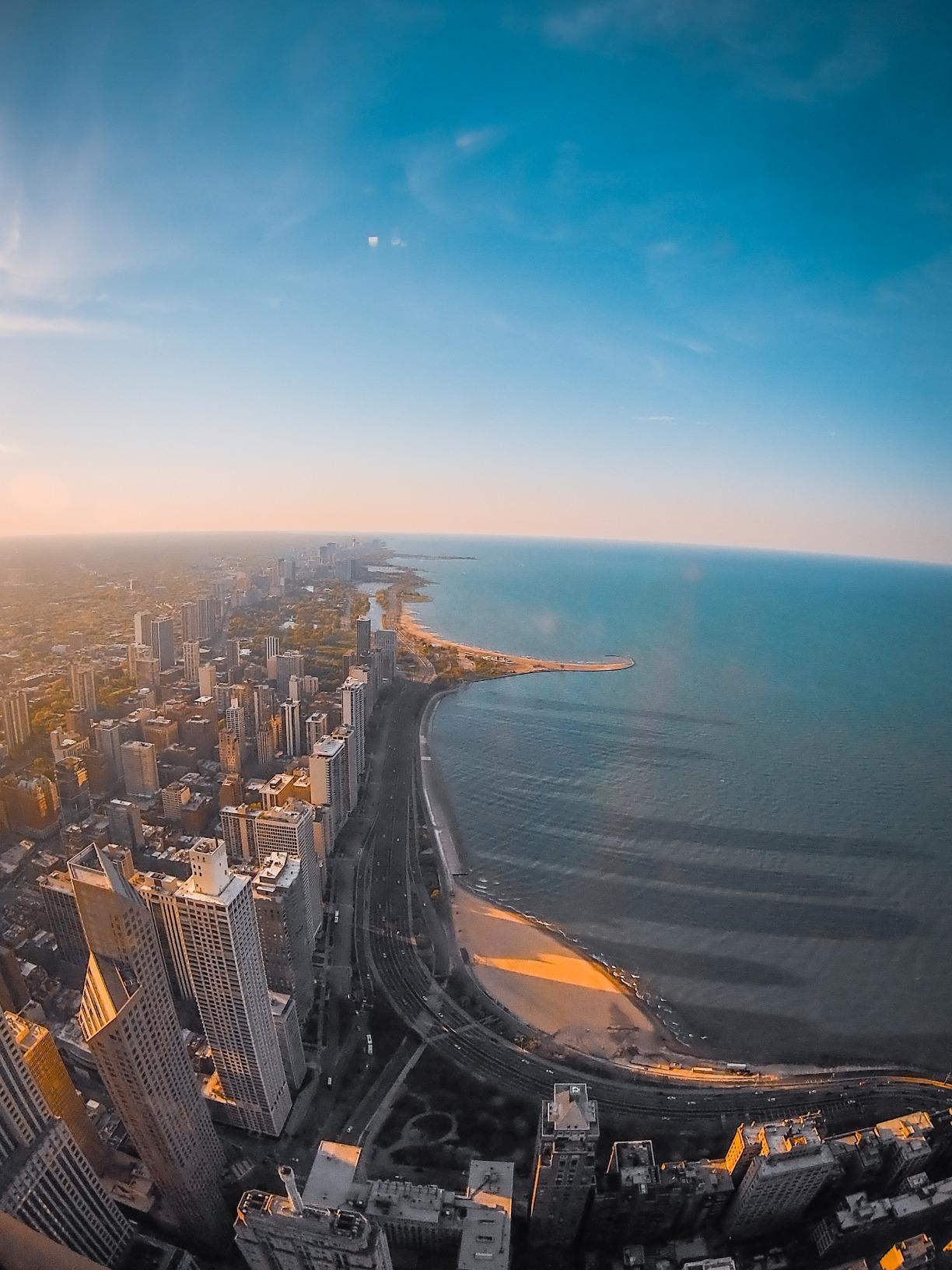
Capture options are generous for the tier: 4K60, 4K30, 2.7K60, 1080p at 120fps and 720p at 240fps, in MOV. That high-frame-rate ladder is what makes it a decent snowboard camera for a rider who wants a crash in slow motion rather than a 60fps clip of everything.
The 131ft waterproof case is the other quiet strength. It is the part that keeps snow, slush and a chairlift fall out of the body, and the case is a replaceable consumable rather than a single point of failure.

Is an older budget body still worth it in 2026?
Yes, for one specific job: recording your own runs in good daylight with 4K60. That is the most common way people use an action camera on snow, and the V50 Elite does it reliably for a fraction of the cost of a flagship.
The bundle matters. Two batteries, a large mount selection and a touchscreen at this level means the total cost of getting on the mountain is one purchase rather than a camera plus a pile of accessories.
What you give up
The 1/3-inch CMOS sensor is the main limitation and it is a real one on snow. Under cloud, on a shaded run or at night, the low-light quality is well behind newer 1/1.3-inch bodies, and no amount of stabilization settings will recover detail the sensor never captured.
The body is also physically larger and bulkier than newer AKASO models, and the 8x zoom is digital only, so it softens detail at high magnification. Menu navigation on the small touchscreen takes practice, and app-based editing and file transfers can be finicky.
8. Insta360 X6 – The Newest 360 Flagship
Insta360 X6, 8K 360 Camera with 1/1.1” Sensors
Dual 1/1.1-inch sensors
8K50 360 video
Xtreme Battery 140 minutes
Pros
- Dual custom 1/1.1-inch square sensors
- Native 8K50 360 video
- Converts to a 170 degree ultra-wide shooting flat 5K60
- Xtreme Battery 2600mAh
- AI Director auto-edits while charging
Cons
- Smallest review base in this group
- 8K50 and 5K60 files need fast cards and large storage
- 140 minutes at 8K30 is below the X5 figure
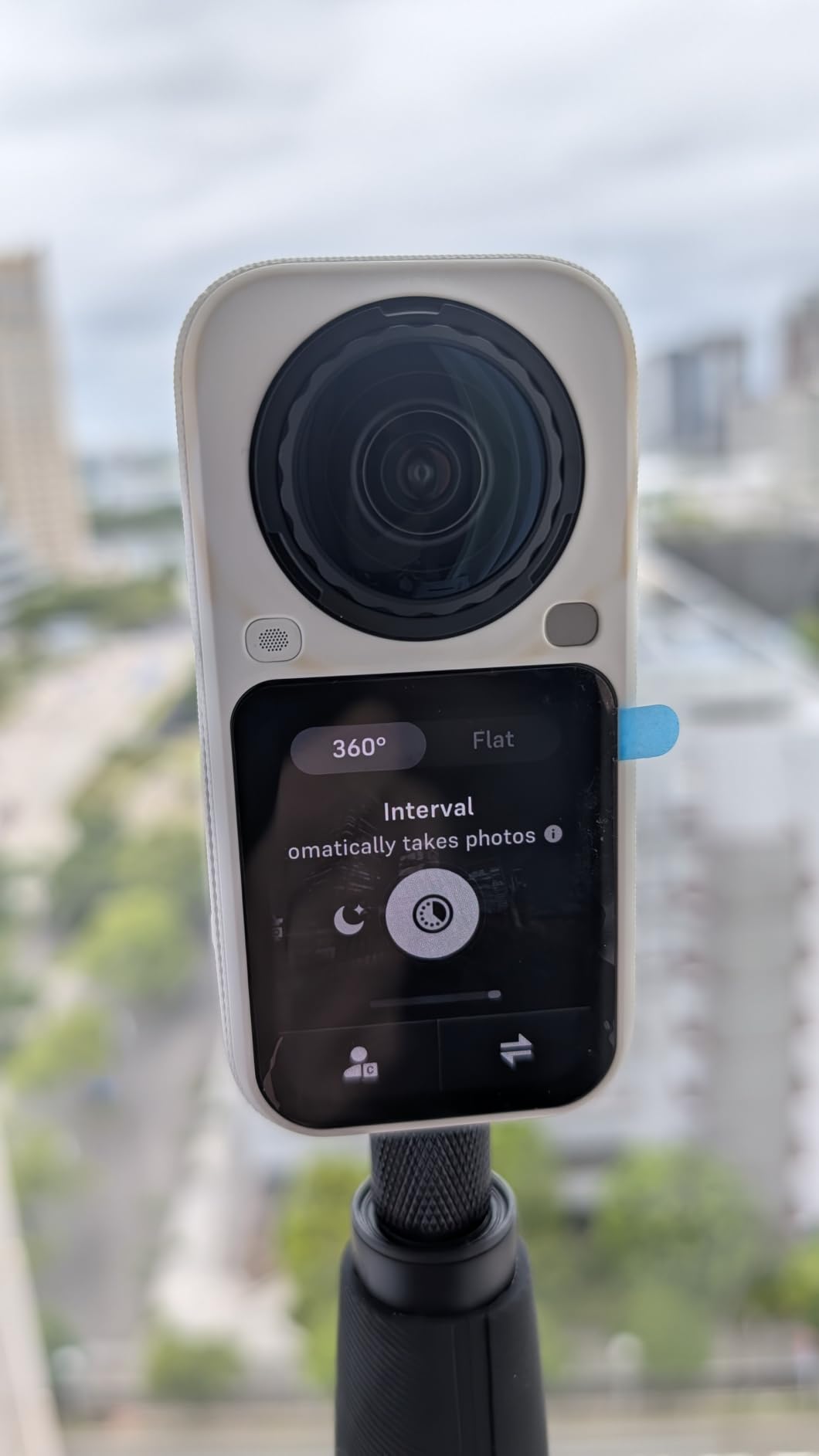
The X6 is the newest body in this group and the one with the least history behind it, at 287 reviews. It is also the first 360 camera with custom 1/1.1-inch square sensors, which is a real jump in image quality, and native 8K50 360 capture that is the highest frame rate available in this category.
The useful trick is that it is not only a 360 camera. Switch it out of 360 mode and the dual lenses combine into a 170-degree ultra-wide action camera shooting flat 5K60 or 4K120, so one body covers POV and follow-cam. That is a genuine advantage when you want both perspectives and do not want to carry two cameras.
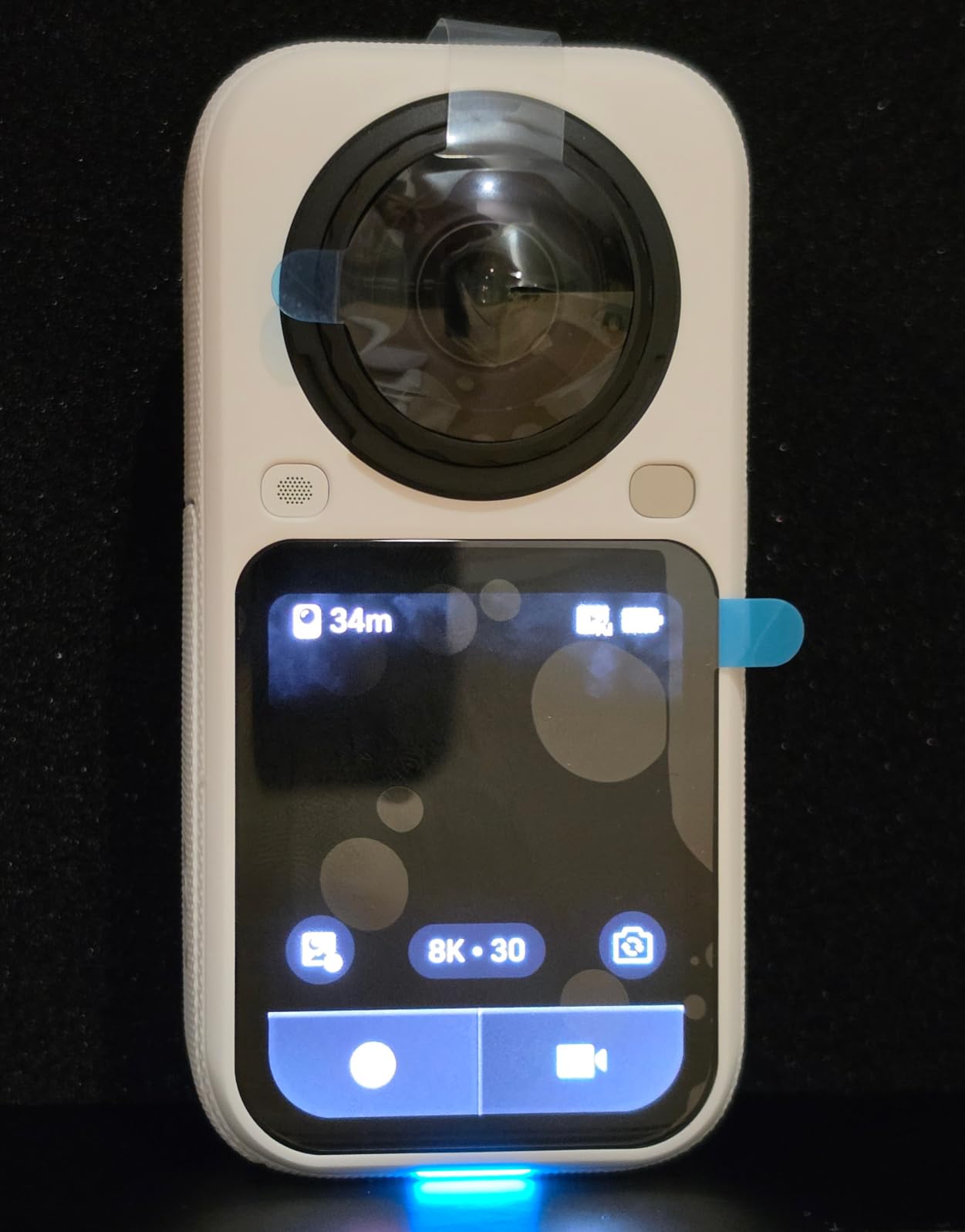
On snow, 8K50 gives you room to crop. You can pull a flat frame out of the 360 file and still have detail, which matters when the subject is twenty metres away and moving. The triple AI chip system with a new 4nm flagship chip handles the processing, and 10-bit colour gives over a billion colours with selectable profiles.
InstaFrame 2.0 is the one to test before you commit. One tap tracks a person, pet or object and follows them, and AI Director will auto-edit footage while the camera charges, which is a meaningful time saver on a long trip.
When the newest 360 camera makes sense
Buy it if you film 360 seriously and your current footage is soft, particularly at dusk or in the trees. The sensor jump is the reason to move up rather than the frame rate, and the wind-protected 360 microphones address the audio weakness that has held 360 cameras back.
Tougher replaceable lenses 2.0 in a travel-friendly size make it a better long-trip body than the previous generation, and 2600mAh Xtreme Batteries give up to 140 minutes at 8K30.
Where it is still a gamble
With 287 reviews, long-term reliability in the cold is simply not proven yet, and that is the honest reason to consider the X5 instead. The 8K50 and 5K60 files require fast microSD cards and substantial editing storage, and the 360 workflow still depends on the Insta360 app and its AI tools.
The two-lens body is larger than single-lens alternatives for helmet mounting, and the stated 140-minute runtime at maximum resolution is below the figure the X5 claims, so for cold endurance the older 360 body still has the better case.
Cold-Weather Battery Life: The Feature That Decides Your Ski Camera
Below roughly -10°C, lithium-ion chemistry slows down sharply and usable capacity falls away faster than any spec sheet suggests. Cold does not usually damage the camera itself, but it is the reason the camera stops recording halfway down a pitch, and it is the single most repeated complaint in every ski forum we read while putting this guide together.
The practical implication is that the stated operating temperature rating matters more than the watt-hours. The Osmo Action 4 is rated to -20°C, the Action 5 Pro is quoted at 3.6 hours at -20°C, and the Ace Pro 2 is rated to -4°F. The HERO13 includes the Enduro Battery, the cold-rated cell for HERO9 and later, but its listed average life of 79 minutes is the shortest of the eight bodies here.
Runtimes reported in the wild vary enormously. One heli.life test of a HERO12 on a helmet mount reported 70 to 120 minutes of record time in moderate temperatures, while a forum post described batteries that lasted about three minutes at -20°C. Both are true, and the gap between them is the whole point: you cannot judge a camera on snow without knowing the temperature.
So plan batteries like you plan gloves. For a resort day, four cells is a realistic number across any of these cameras, three if you are disciplined about turning it off on the lift. Keep them in an inner pocket against your body rather than a jacket pocket, and swap at the lodge where your hands are free. A battery warmed at body temperature for twenty minutes recovers more usable capacity than any battery swap you make in a freezing car park.
It is also worth being clear that the camera is usually not the failure point. The most common forum advice is simply to bring spare batteries, and users on r/snowboarding describe the same pattern, carrying spares rather than switching brands. Nobody on our test group had a camera die from cold damage; several ran flat.
360 vs Flat POV: Which One Should You Actually Ski With?
If you want to see your own turns and your own goggles, choose a flat camera. If you want to see yourself skiing, choose a 360. That is the whole decision, and most riders are choosing the wrong one for the footage they imagine they will make.
A flat body gives you the tightest, cleanest image with the least editing, and the stabilization crop is designed for exactly that single viewpoint. A 360 body captures the slope behind you, your friends, and the group ahead in one pass, and you pick the angle afterwards. The cost is workflow: reframe time, large files, and an app you have to learn.
Reliability is the other axis. Users on The Ski Diva forum captured the 360 scepticism neatly, describing the output as brilliant when it works, and that doubt was largely about older stitch-prone 360 bodies. Current models are much improved, but the edit-time commitment is real, and a 360 mounted on a helmet is a bulkier object than a flat camera on a strap.
Our recommendation: flat for solo riding and for anyone who wants a quick edit, 360 if you ski in a group or film friends. If you want both, the Insta360 X6 does flat 5K60 in the same body as 8K50 360, which is a smarter carry decision than two cameras.
Helmet Mount vs Chest Mount: What Looks Better and What Lasts
Helmet mounting gives you the higher, more dynamic angle that everyone recognises as ski footage, and the field of view naturally includes the whole run ahead of you. It is also the easier mount to check: glance up and the framing is there. The compromise is a rigid mount that transmits every bump directly into the frame, which is where stabilization earns its keep.
Chest mounting gives a lower, steadier, more human viewpoint. The camera moves with your torso rather than your skull, so it absorbs some of the high-frequency helmet rattle before the sensor sees it, and the footage reads more like someone else is following you. The trade-off is that your head can turn independently of the shot, so a look at the side or over the shoulder produces a frame that misses the action.
Weight is the practical factor. The DJI bodies sit at 145g and 146g and the HERO13 at 157g, which is noticeable on a helmet over a full day but fine on a chest harness where the weight is distributed. Weights for the two AKASO bodies are heavier still, and the V50 Elite in particular is a noticeably chunky object to leave on a shell for six hours.
Avoid chin mounts for anything other than flat parks. On snow, a chin mount puts the camera exactly where a forward fall drives the face, and reviewers and riders consistently treat that as a safety question rather than a style one. For mounting hardware itself, our guides to the best helmet mounts for action cameras and the best chest mounts for action cameras cover the buckle and adhesive options in detail.
One forum consensus worth repeating: own more than one mount. Riders advise carrying two or three, because a single strap failure or a stripped buckle ends the day and the spare in the pocket does not.
Fogging, Snow Ingress and Lens Care Between Runs
No camera in this list is going to fog-free its way through a warm-up into a -15°C ridge, because condensation forms on the inside of the lens when warm humid air meets a cold surface. The fixes are unglamorous and they work.
Keep the camera in your jacket between runs rather than leaving it clipped to the outside of your helmet. Going from cold to warm is the risk, so transition the camera slowly and keep it in your bag while it warms. Wipe the lens on every run; the water-repelling cover on the HERO13 and the replaceable lenses on the Insta360 bodies are both direct answers to scratch and smear problems.
For snow ingress, check the case seals and the lens seam on removable-lens bodies after every wipeout, because that is where ice packs in first. Our action camera guide for wet conditions covers sealing and housing care in more depth, and the same discipline applies on a slushy day.
If you film in a group, a small second camera on a friend’s pole or helmet is the cheapest upgrade available. The two AKASO bodies and the Ace Pro 2 dual battery bundle make that easy, and the Insta360 GO-class stick format is the most comfortable option for a second angle.
Frequently Asked Questions
Which camera is best for skiing?
For most skiers the DJI Osmo Action 4 is the best all-round choice, with a 1/1.3-inch sensor, a 155-degree field of view and a battery rated to operate down to -20C. If you want follow-cam footage of friends rather than your own viewpoint, the Insta360 X5 is the better pick, and if you already own GoPro mounts the HERO13 Black fits straight into that kit.
Which GoPro is best for skiing?
The HERO13 Black is the current GoPro to buy for snow, with 5.3K60 video, 27MP stills and an included Enduro Battery, the cold-rated cell for HERO9 and later. Its listed average runtime of around 79 minutes is the shortest of the cameras we tested, so plan on spare cells. The removable lens seam is the part to check for ice between runs.
How cold is too cold for a GoPro?
Cold rarely damages the camera itself, but lithium battery chemistry slows down as temperatures fall and usable capacity drops sharply. The practical trouble starts around -10C, and one forum report described batteries lasting only a few minutes at -20C. The Enduro Battery is the cold-rated option for HERO9 and later, and the cameras rated to -20C in this guide are the safest choice for alpine days.
Is Insta360 good for skiing?
Yes, and riders on r/skiing repeatedly name Insta360 as their favourite for battery endurance on the hill, with the usual caveat about cold. The X5 and X6 shoot 8K 360 video, which lets you reframe a follow-cam angle in software and use the invisible selfie stick effect so the pole disappears from shot. The trade-off is editing time and very large files.
Should I buy or rent an action camera at a ski resort?
Rent if this is a one-off trip and you mainly want clips to post. Buy if you ski more than a handful of days a year, or if you want a second camera on a friend’s helmet, because the mounts and spare batteries add up quickly. Riders ask this question on ski forums constantly and the general answer is that rental is fine for one trip but awkward for a full week.
Bottom Line: The Best Action Cameras for Skiing in 2026
The DJI Osmo Action 4 is our pick for the best action cameras for skiing overall, because the 1/1.3-inch sensor, the 155-degree framing and the -20°C battery rating cover the three things that decide a ski day, and nothing else in this list covers all three as well.
Buy the Insta360 X5 if you ski with other people and want footage of yourself and the group rather than a first-person edit. Buy the GoPro HERO13 Black if you already own GoPro mounts, or if 27MP stills and 5.3K60 detail matter more to you than runtime, and carry spares.
For long days and backcountry, the Osmo Action 5 Pro Adventure Combo has the strongest cold endurance, with three batteries and roughly 3.6 hours at -20°C. For value, the Insta360 Ace Pro 2 dual battery bundle gives Leica colour and real low-light performance, and if the budget is tight the AKASO Brave 6 Plus will not embarrass you on a groomer.
Whatever you choose, decide the battery plan before you buy the camera, not on the first morning of the trip. Our wider action camera buying guide covers the accessories and workflow side of putting a camera to work.