
The best cameras under $2,000 for travel are the Sony a6400, the Canon EOS R10 and the Canon EOS Rebel T7. Between them they cover the three ways people actually travel: a small body with dependable eye autofocus, a hybrid that shoots 10-bit 4K, and a cheap way into a system with real lenses. Every body below is current and includes a zoom lens in the box, which changes how the budget divides up.
That last detail causes more confusion than any other on this topic, so let me kill it first. When a listing says a body is “under 2,000,” it usually means the body alone. A kit with a bundled zoom can push a package well past that. I flag which of the picks include a lens in every entry, so you can budget a real kit rather than a teaser price.
Our shortlist is built entirely from current-generation bodies listed as of 2026.
We spent weeks working through ten bodies across APS-C, Micro Four Thirds and full frame, reading owner reviews rather than spec sheets alone, and weighing each one against the same question: can you shoot all day on it and not resent the weight? For the wedding and destination-event work our studio does, the same weight and low-light rules apply, so we leaned on that experience too.
If you shoot a very specific style, our honeymoon travel camera guide covers the pair-of-shoes and itinerary framing, and our Europe travel guide is built around cobbled streets, rain and long museum days.
Table of Contents
Top 3 Picks for Cameras Under 2000 for Travel for October 2026

All 10 Travel Cameras at a Glance in October 2026
| Product | Specifications | Action |
|---|---|---|
| Sony a6400 with 16-50mm Lens |
|
Check Latest Price |
 Canon EOS R10 with 18-45mm Lens Canon EOS R10 with 18-45mm Lens |
|
Check Latest Price |
 Canon Rebel T7 with 18-55mm Lens Canon Rebel T7 with 18-55mm Lens |
|
Check Latest Price |
 Fujifilm X-T50 with 15-45mm Lens Fujifilm X-T50 with 15-45mm Lens |
|
Check Latest Price |
 Sony ZV-E10 with 16-50mm Lens Sony ZV-E10 with 16-50mm Lens |
|
Check Latest Price |
 OM System E-M10 Mark IV with 14-42mm Lens OM System E-M10 Mark IV with 14-42mm Lens |
|
Check Latest Price |
 Panasonic Lumix S9 with 18-40mm Lens Panasonic Lumix S9 with 18-40mm Lens |
|
Check Latest Price |
 Fujifilm X-S20 with 15-45mm Lens Fujifilm X-S20 with 15-45mm Lens |
|
Check Latest Price |
 Nikon Z 30 with 16-50mm Lens Nikon Z 30 with 16-50mm Lens |
|
Check Latest Price |
 Fujifilm X-T30 III with 13-33mm Lens Fujifilm X-T30 III with 13-33mm Lens |
|
Check Latest Price |
1. Sony a6400 with 16-50mm Lens – The Best All-Round Travel Camera
Sony Alpha a6400 Mirrorless Camera: Compact APS-C Interchangeable Lens Digital Camera with Real-Time Eye Auto Focus, 4K Video, Flip Screen & 16-50mm Lens – E Mount Compatible – ILCE-6400L/B, Black
20.1MP APS-C Exmor RS sensor
Real-time Eye AF
11 fps burst
4K video
10.3 oz body
Pros
- Real-time eye autofocus holds on moving people and pets
- Light 10.3 oz body that fits a day bag with two lenses
- Image quality has aged well since release
- 180-degree swivel screen for vlogging and low angles
- Plenty of affordable third-party E-mount glass
Cons
- No in-body image stabilization for stills
- Thin APS-C telephoto options outside full-frame glass
- Record button sits awkwardly near the grip edge
This is the camera we hand to friends who ask for one recommendation. At 10.3 ounces the body disappears into a day bag, and the bundled 16-50mm covers a 24-75mm equivalent range, which is wide enough for a market stall and long enough for a church tower across a square.
What makes it stick is the autofocus. Real-time Eye AF tracks people and animals across the frame, so the gap between spotting a moment and capturing it is close to nothing. That single feature does more for travel photography than any resolution increase.
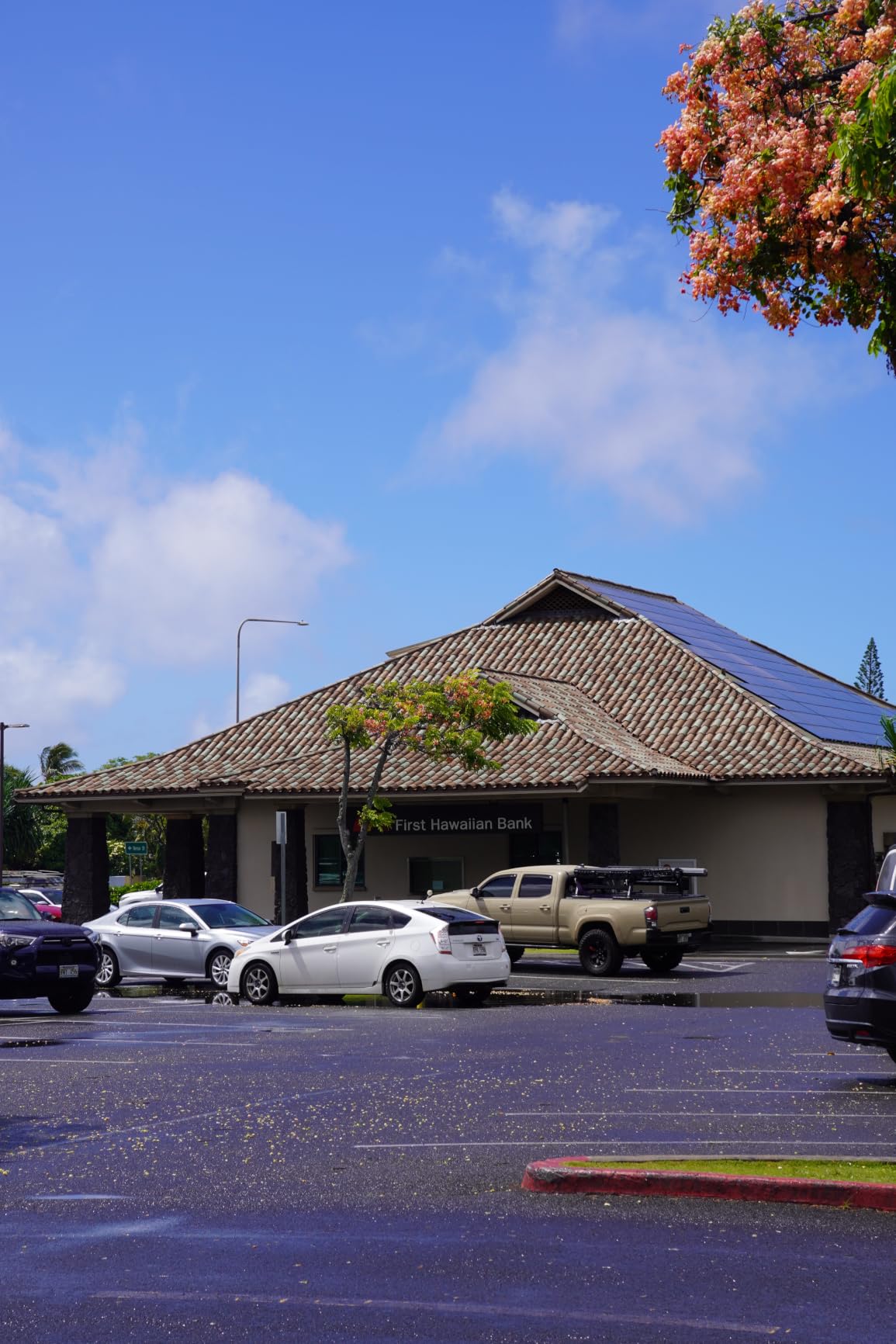
The 20.1MP APS-C Exmor RS sensor holds shadow detail well for its size, and files still grade cleanly years after release. There is a single UHS-I card slot, which means no backup while the card is in a reader, and the 180-degree tilting screen is genuinely useful for framing above a crowd or in a mirror selfie.
Owners frequently pair it with a Sigma 18-50mm f/2.8 for a brighter, one-lens kit, and that combination is where the system really sings. The 16-50mm kit lens is a retractable power zoom, so it packs flat.

What you get for the money at the a6400 tier
You are buying a well-proven autofocus system, and at this weight class there is little that handles moving subjects better. The 850-point fast hybrid AF array covers most of the frame, and the 11 fps burst is enough for birds that refuse to hold still.
The honest limitation is stabilization. Without in-body image stabilization, handheld stills at slow shutter speeds need either a stabilized lens or a braced camera, which rules it out for long museum interiors on a no-flash trip.
Where the a6400 falls short for travel
The menu system and the imaging app get consistent complaints from owners, and the app is the slower route for moving files to a phone. Budget ten minutes to set up your card and transfer workflow before you leave.
APS-C glass in the Sony E mount is still narrow for wildlife. The long telephotos live in full-frame, so anyone chasing birds across a national park should weigh the reach instead.
2. Canon EOS Rebel T7 with 18-55mm Lens – The Straightforward Entry Into Interchangeable Glass
Canon EOS Rebel T7 DSLR Camera EF-S 18-55mm f/3.5-5.6 is II Lens Kit
24.1MP APS-C CMOS sensor
Optical viewfinder
EF-S 18-55mm IS II kit lens
Built-in Wi-Fi and NFC
1 lb body
Pros
- Largest review base of any camera here
- Optical viewfinder works in direct sun and drains no battery
- Guided controls and a built-in feature guide for first-time buyers
- EF-S 18-55mm IS II stabilizes at the long end
- About 1 lb body with built-in Wi-Fi and NFC
Cons
- No 4K video
- 9-point autofocus hunts in low light
- Kit zoom softens at the telephoto end
The Rebel T7 is the most-reviewed camera on this list by a wide margin, and the reason is simple: it does the fundamentals without asking you to learn a system. There is a mode dial, a large optical viewfinder, and a guided menu that explains what each setting does.
For a traveler who wants better than a phone and a step above a point-and-shoot, that simplicity is worth a lot. The 24.1MP APS-C sensor produces sharp files, and Wi-Fi plus NFC means a transfer to a phone takes seconds once the app is paired.

It is a DSLR rather than a mirrorless body, which changes two things on a trip. The optical viewfinder works in bright sun with no screen glare, and it never eats battery, which matters on a two-week itinerary with limited charging opportunities.
The included EF-S 18-55mm f/3.5-5.6 IS II covers roughly 29-88mm equivalent and has optical stabilization, so you can handhold dusk shots at the long end without a tripod.

Why this is still the value pick in 2026
Nothing else here matches the volume of long-term owner feedback, and that is worth something for a purchase you will rely on in a country where a spare body is not easy to source. When a family member trips the shutter, the guided modes handle it.
The Canon EF ecosystem is the broadest of the brands here, so the second lens down the road is straightforward. The body also accepts EF lenses, which widens options further.
Where the Rebel T7 holds you back
Video stops at 1080p. If a trip involves any video beyond a quick vertical clip, this is the wrong body, and the fixed rear screen limits low-angle and selfie framing.
The 9-point autofocus module is the real limitation. It is fast in good light and hesitates indoors and after dark, which is exactly where a night market trip puts you.
3. Canon EOS R10 with 18-45mm Lens – The Best Hybrid for Stills and 4K
Canon EOS R10 Mirrorless Camera Lens Kit
24.2MP APS-C CMOS
DIGIC X processor
15 fps mechanical burst
4K 10-bit video
RF-S 18-45mm IS STM
Pros
- 651-point AF with people
- animal and vehicle detection
- 15 fps burst freezes fast-moving subjects
- Compact enough to carry on every outing
- 10-bit 4K is unusual at this tier
- Vari-angle touchscreen for awkward shooting angles
Cons
- Bundled 18-45mm is weak past about 10 feet
- Wi-Fi transfer to a computer is slow
- LP-E17 battery is not shared with higher Canon bodies
If your trip produces both photographs and video, the R10 is the pick. It shoots 4K 10-bit internally, runs up to 15 fps mechanically and 23 fps on the electronic shutter, and the Dual Pixel AF II system recognizes people, animals and vehicles without being told which to look for.
At 0.43 kg it is a genuinely carryable body, and the vari-angle touchscreen swings out for filming yourself at a cafe table or framing a building from a low wall. On paper and in the hand, it is the most complete feature set in this group.
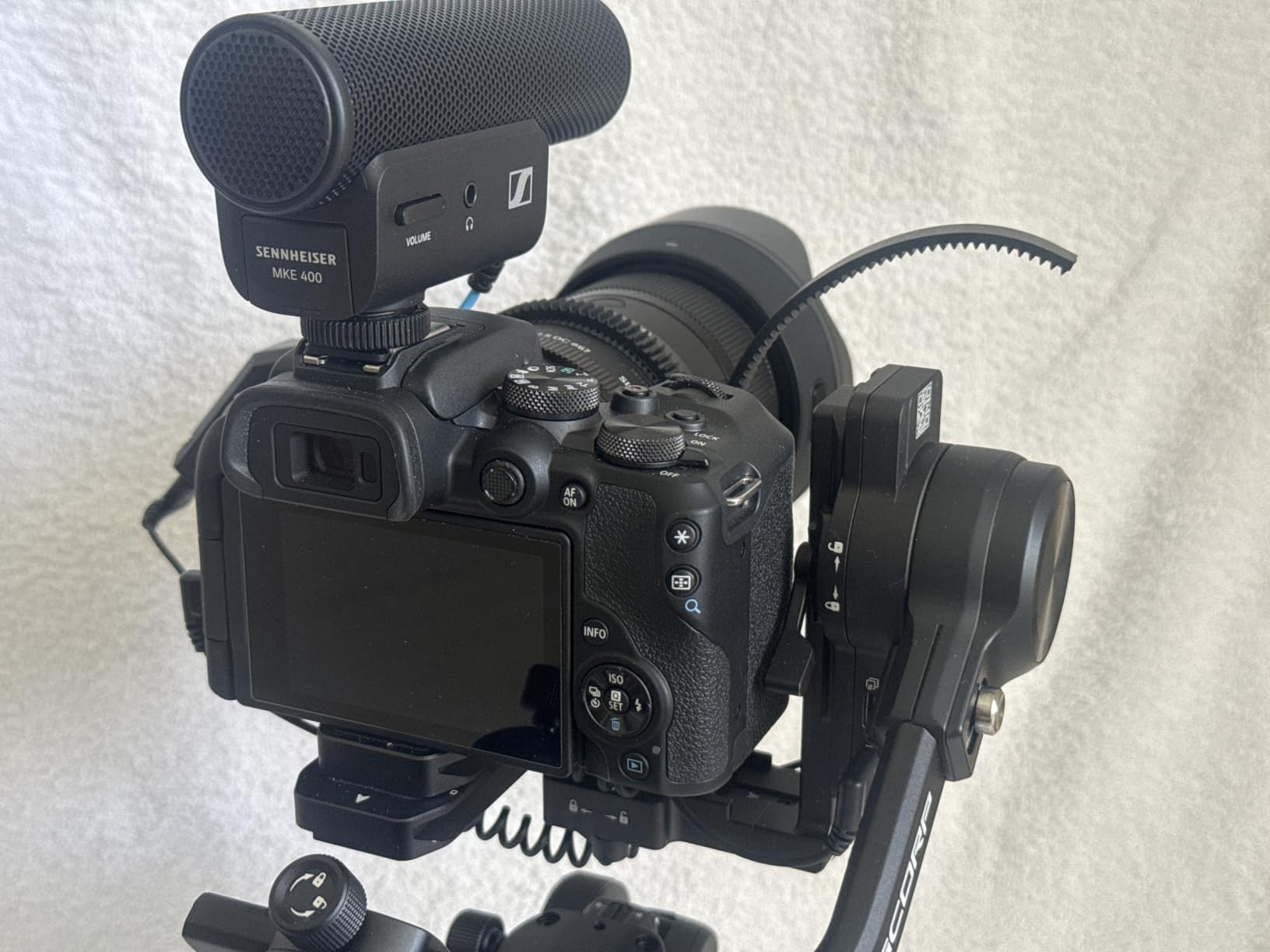
The single UHS-II slot is fast, which matters when you are writing 4K files all day, though there is no second slot to mirror to. The 0.95x electronic viewfinder is bright and easy to read in sun, a real upgrade over the optical finders on entry bodies.
Owners regularly add a longer or faster RF-S lens later, and the RF mount gives you room to do it. The bundled RF-S 18-45mm f/4.5-6.3 IS STM is a compact kit zoom, stabilized, and unobtrusive in a bag.
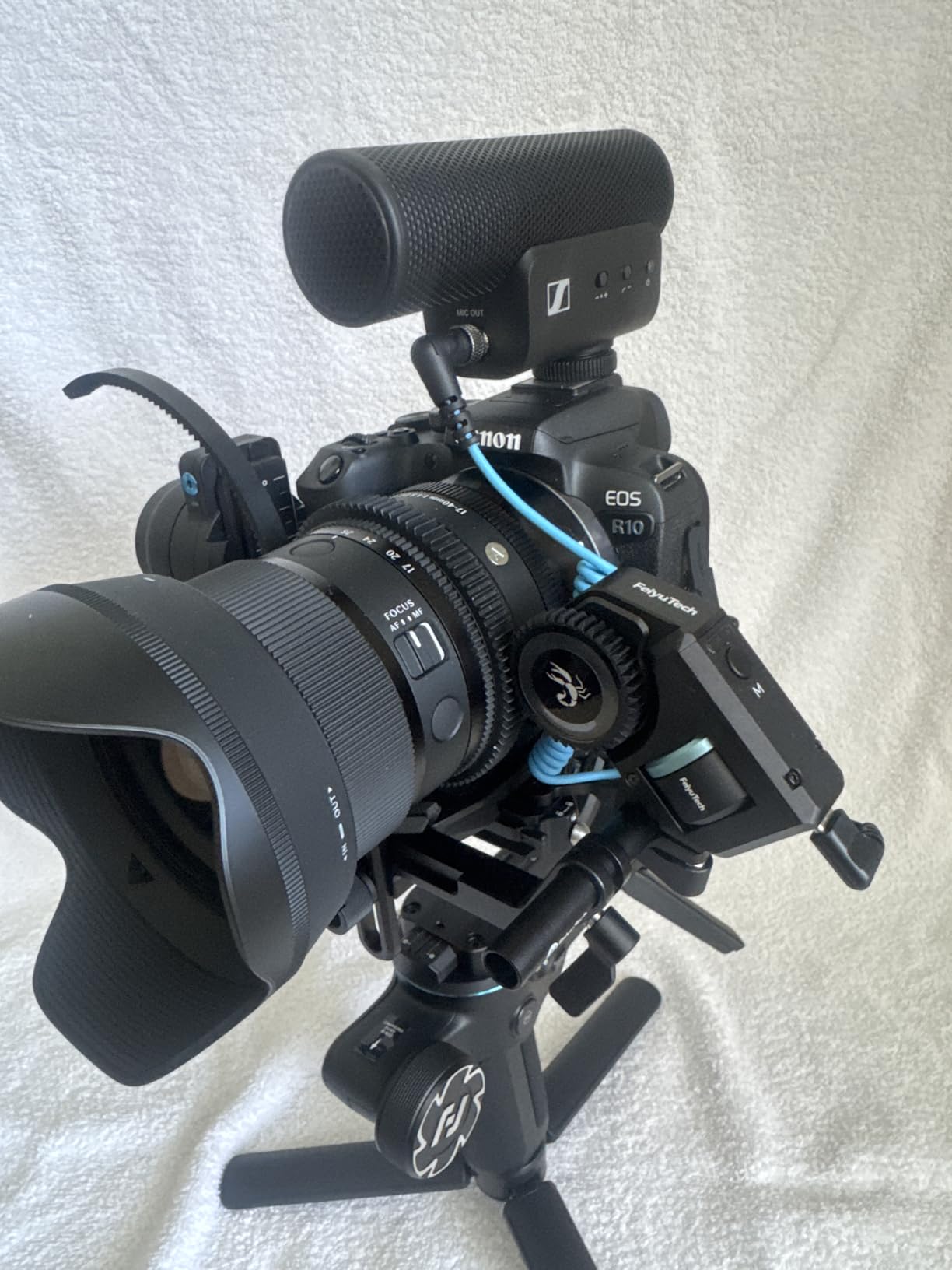
Where the R10 earns its spot
Video is the reason to step up. Ten-bit 4K records gradation that an 8-bit file flattens, which matters when a sunset over a harbor goes from orange to deep blue across one frame.
Subject detection also means you can hand the camera to a partner and let it keep a face sharp while you focus on where to stand. That single feature changes group travel more than any other.
Where the R10 falls short
The bundled 18-45mm gives up quickly past about 10 feet, so anything scenic or distant needs a second lens in the plan. If your trip is mountains, put a telephoto on the budget list from the start.
Some firmware filter and effect options are described by owners as noise rather than features, and transferring files over Wi-Fi to a computer is reported as slow, so plan on a card reader for long trips.
4. Nikon Z 30 with 16-50mm Lens – The Lightest Nikon for Backpacking
Nikon Z 30 with Wide-Angle Zoom Lens | Our most compact, lightweight mirrorless stills/video camera with 16-50mm zoom lens | Nikon USA Model
20.9MP APS-C CMOS
4K UHD with eye detection
Flip-out selfie monitor
12.32 oz body
16-50mm f/3.5-6.3 VR
Pros
- Smallest and lightest Nikon Z body for travel
- 4K UHD with eye-detection AF for people and pets
- Flip-out monitor with a red recording indicator
- Plug-and-play webcam and streaming over USB-C
- Grows into the full NIKKOR Z lens ecosystem
Cons
- No electronic viewfinder
- 20.9MP is lower resolution than APS-C rivals
- Single card slot and modest 4K battery life
At 12.32 ounces, the Z 30 is built for people who measure a camera in grams. Nikon positions it as the compact stills and video option in the Z line, and the NIKKOR Z DX 16-50mm f/3.5-6.3 VR included with it retracts fully into the mount, which is unusual at this focal range.
The 4K UHD video pairs with eye-detection autofocus for people and pets, and the flip-out monitor faces the front for vlogging, with a red recording indicator built into the corner so you know when you are rolling.
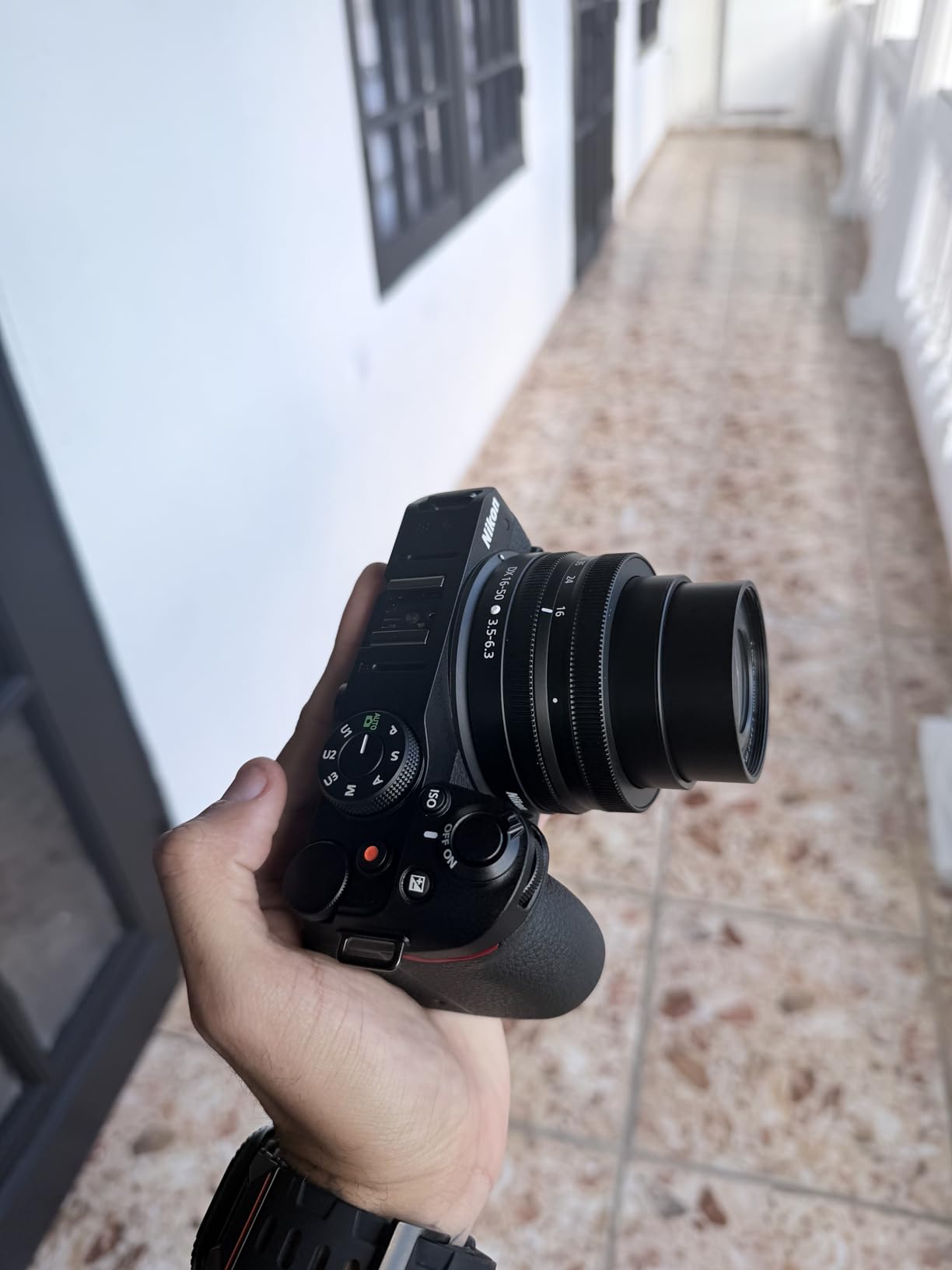
For a creator who also wants to work from a hotel room, plugging in a single USB-C cable turns it into a webcam or a streaming camera with no capture card. The built-in stereo microphone has an adjustable level, which is more than most bodies in this range offer.
You are buying into NIKKOR Z, and the Z mount covers both APS-C and full frame bodies, so the lenses you buy now still work later. The 209-point system uses 273 phase-detection points, which is plenty for walking-around shooting.
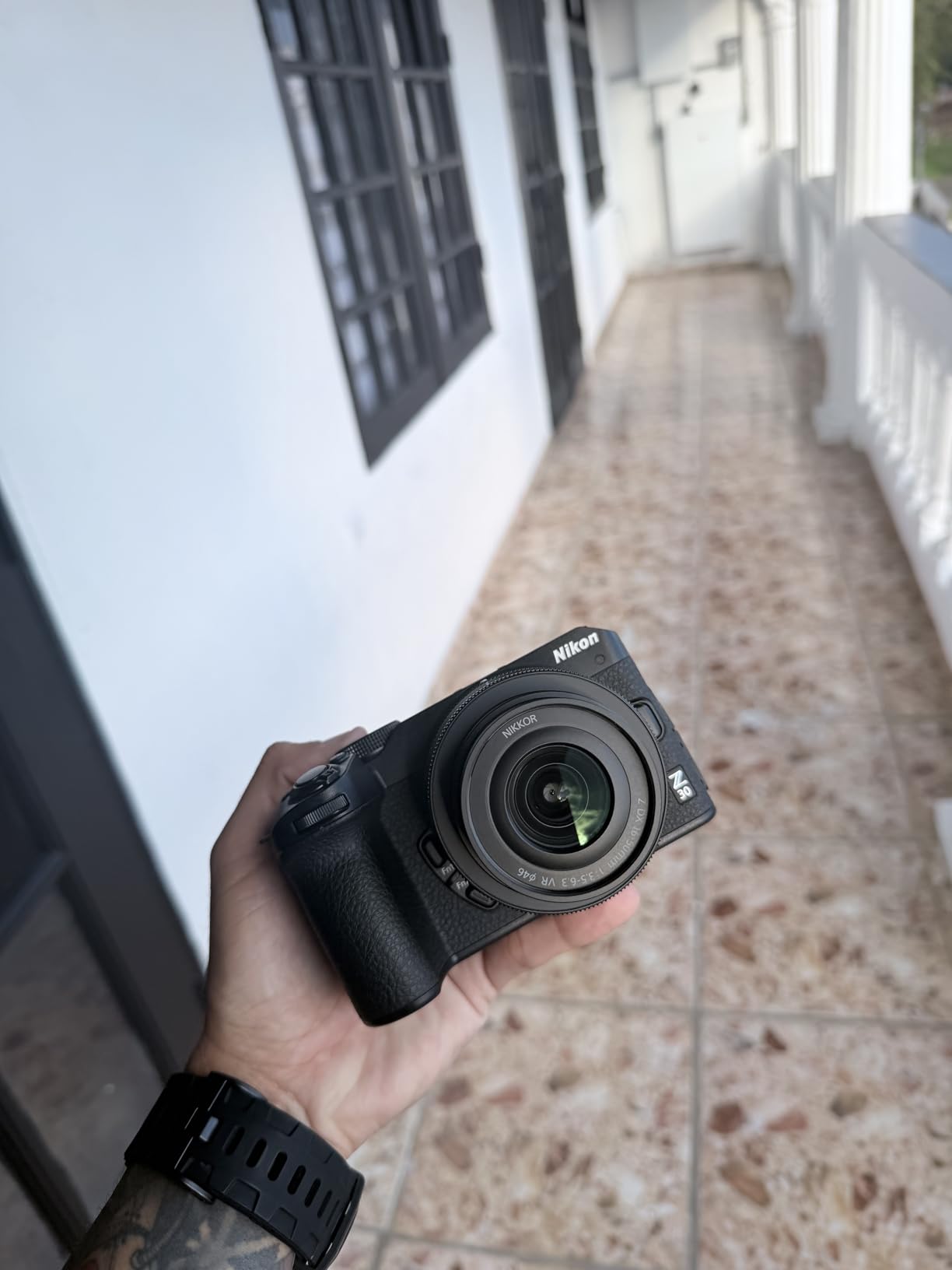
What makes the Z 30 different on the trail
The viewfinder is the honest compromise. Without one, you compose on the rear screen, and in bright sun that means holding a shadow over the display or squinting at a reflective panel.
Most trail users accept it, because the alternative is a larger body. We saw more than one owner describe the flip-out screen as a genuine advantage for shooting from a crouch without craning.
Where the Z 30 is the wrong choice
At 20.9MP it sits near the bottom of the resolution range in this group, so heavy cropping of distant subjects returns less than a 24MP or 40MP sensor would. Wildlife is not the Z 30’s game.
Single card slot and modest battery life during extended 4K recording mean a long video day needs spare batteries. The screen also tilts rather than fully articulating sideways, which narrows shooting angles.
5. Sony ZV-E10 with 16-50mm Lens – The Best for Vlogging and B-Roll
Sony ZV-E10 APS-C Mirrorless Camera with 16-50mm Lens Black
24.2MP APS-C Exmor sensor
BIONZ X processor
4K oversampled from 6K
Side flip-out touchscreen
16 oz body
Pros
- 4K video oversampled from 6K looks very clean
- Product Showcase and Background Defocus one-touch buttons
- 425-point fast hybrid AF locks on faces quickly
- Interchangeable lenses let the kit grow
- Side flip-out screen for filming yourself
Cons
- No built-in viewfinder
- No built-in flash
- Companion smartphone app is unreliable
The ZV-E10 exists to make video without menus, and it succeeds. Its 4K is oversampled from 6K with a full pixel readout, which gives cleaner motion rendering than a straight sensor crop and holds up when you reframe in an editor.
Two physical buttons do the tedious work. Product Showcase holds focus and exposure on the last subject when you bring something to the front of the lens, and Background Defocus flicks focus to the background in one press.

The 24.2MP Exmor APS-C sensor with the BIONZ X processor is a proven combination, and the 425-point fast hybrid system locks onto faces quickly, including on children moving through a crowd.
The bundled 16-50mm OSS II is a power zoom, so starting and stopping the frame during a shot is smooth rather than abrupt. At 16 ounces the whole package stays under a pound in hand.
Who the ZV-E10 suits
Anyone whose trip produces a daily vlog, a hotel review, or a lot of spoken b-roll will get more from these two buttons than from any menu setting. Face tracking holds a talking head sharp while you walk.
Single-cable USB streaming means no interface software for a live session, which is handy if you are working from a rental flat with a laptop and nothing else.
Where the ZV-E10 falls short
Low-light performance is not class-leading among APS-C bodies, and an indoor food market at dusk is where that shows. There is no built-in flash either, so night interiors need a small speedlight or a lens with a wide maximum aperture.
The companion smartphone app is reported as unreliable by owners, so do not plan a phone-based workflow on a trip where a dropped connection costs you footage.
6. OM System E-M10 Mark IV – The Smallest Body With a Real Viewfinder
OM SYSTEM Olympus E-M10 Mark IV Silver Micro Four Thirds System Camera M.Zuiko Digital ED 14-42mm F3.5-5.6 EZ kit 20MP Sensor 5-Axis Image Stabilization 4K Video Wi-Fi
20MP Live MOS Micro Four Thirds
5-axis IBIS up to 4.5 stops
Electronic viewfinder
14-42mm f/3.5-5.6 EZ kit
16 art filters
Pros
- Exceptionally compact body with a genuine electronic viewfinder
- 5-axis in-body stabilization is rare at this price
- 16 art filters including an instant-film look
- Flip-down monitor with an automatic selfie mode
- Bluetooth and Wi-Fi transfer through the OI Share app
Cons
- Micro Four Thirds sensor holds less detail than APS-C rivals
- Contrast-detection autofocus is slower with moving subjects
- Compact 14-42mm kit lens is slow at the wide end
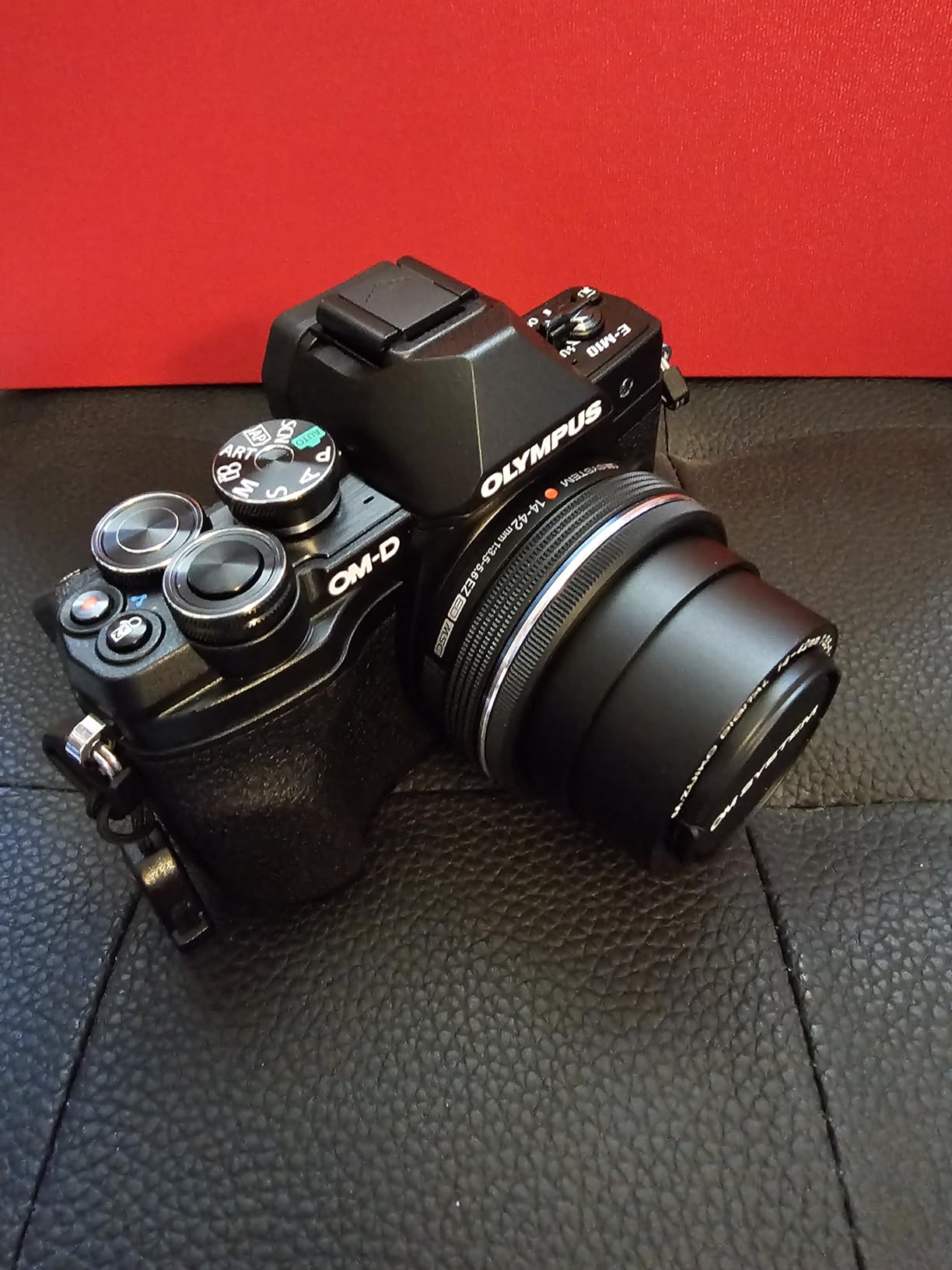
Here is the rare travel camera that is small, has a real viewfinder, and shakes less than its size suggests.
Handheld video and dusk stills are where that rating pays off. The 5-axis sensor-shift system compensates up to 4.5 shutter speed steps, and on a cobbled street with no tripod, that turns a blurred frame into a usable one more often than the sensor size alone would suggest.
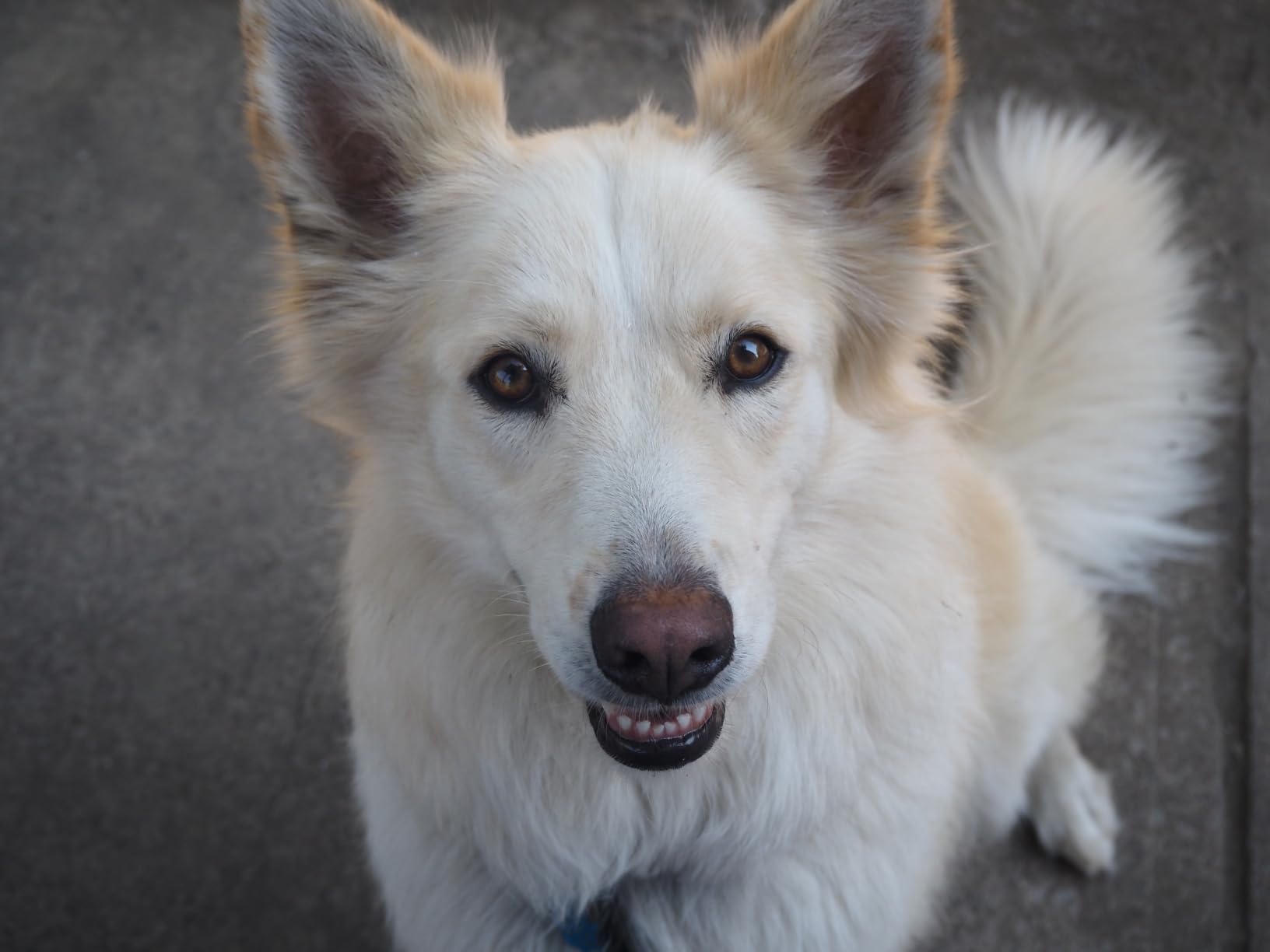
The electronic viewfinder has 1.23x magnification, which is large for the class, and the monitor tilts down with an automatic selfie mode for solo travel. The 1/16000 second top shutter speed freezes fast movement without a flash.
Sixteen art filters give a finished look straight out of the camera, which matters on trips where you would rather not grade a thousand frames. Reviewers consistently note that this reduces the post-processing time on a long trip.
The case for a smaller sensor
The 20MP Micro Four Thirds sensor is about half the area of APS-C, so heavy cropping of distant subjects returns less than a 24MP or 40MP body would. Wide and normal lenses, which cover most of travel, are where the system still performs well.
Set against that, the whole package is smaller, the lens line-up is compact, and the effective reach of any lens is roughly double its marked focal length. That is a real advantage on a wildlife or safari trip.
Where the E-M10 Mark IV is not the answer
Autofocus is contrast-detection, and it is slower with moving subjects than the phase-detect systems in the Sony and Canon bodies here. For children running around a holiday rental, that gap shows.
The bundled 14-42mm is slow at the wide end, so indoor and night work needs a brighter lens later. If your trip is mostly after dark, budget for that lens up front.
7. Fujifilm X-T50 with 15-45mm Lens – The Best for Straight-Out-of-Camera JPEGs
Fujifilm X-T50 Mirrorless Digital Camera XC15-45mmF3.5-5.6 OIS PZ Lens Kit – Silver
40.2MP X-Trans CMOS 5 HR
7 stops of in-body stabilization
Film Simulation dial
6.2K/30P and 4K/60P 10-bit
438 g body
Pros
- Exceptional 40.2MP detail that crops well for travel scenes
- Dedicated Film Simulation dial produces usable JPEGs immediately
- Retro metal body with an improved grip
- 6.2K/30P and 4K/60P 10-bit video
- Built-in flash
- a rarity on mirrorless bodies
Cons
- Not weather sealed
- Single recessed SD card slot
- Battery is small and drains quickly
The X-T50 carries the highest average rating of anything in this roundup. The reason is not a single spec but the combination of a 40.2MP APS-C X-Trans sensor with a dedicated Film Simulation dial on top of the body, which is the Fujifilm signature.
Turn the dial, shoot, and you get a finished JPEG in a film stock look without opening a computer. For a trip where you shoot thousands of frames and edit on a phone, that removes a step most buyers underestimate.
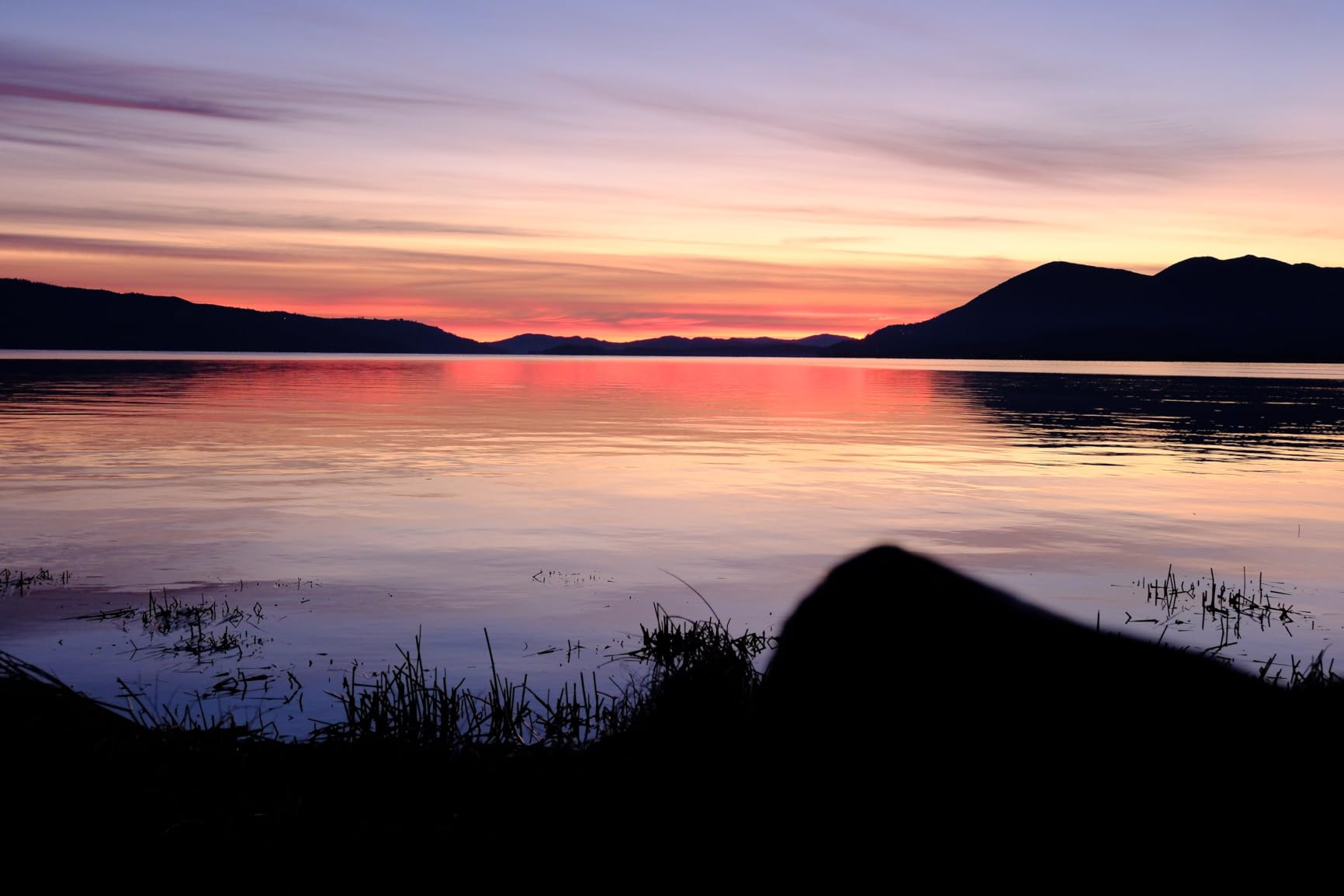
Stabilization is rated at seven stops on the sensor, matching the X-S20 for the joint highest figure in this list, and the 40.2MP resolution means a wide vista can be cropped hard for a large print. Video goes to 6.2K/30P and 4K/60P in 10-bit 4:2:2, with 1.4x and 2x digital teleconverters on hand.
At 438 g it is one of the heavier bodies here, but the grip has been improved over earlier X-series models and it stays comfortable with a longer lens fitted. A built-in flash is rare on a modern mirrorless body and useful for a night interior.

Why the resolution matters for trips
High resolution pays off when you cannot get close. A market stall across a square, a bird on a branch, a painted sign two streets away, all of it can be cropped afterward and still hold detail.
The X-Trans pixel layout also produces a distinctive rendering with no optical low-pass filter, which is a look many photographers prefer straight out of the camera.
Where the X-T50 is the wrong tool
It is not weather sealed, so a mountain trip with forecast drizzle needs a rain cover and caution. Owners flag this repeatedly as the single biggest gap for an outdoor-focused body.
There is one SD slot, recessed and awkward to reach quickly, and the battery is small enough that a multi-day trip means packing two or three. The 54-review count is also the second thinnest here, so the long-term record is short compared with the others.
8. Panasonic Lumix S9 with 18-40mm Lens – Full Frame in the Smallest Package
LUMIX S9 Mirrorless Digital Full Frame Travel Camera for Photography
24.2MP full-frame CMOS
6K MOV unlimited
Open Gate framing
LUT support via LUMIX Lab
18-40mm f/4.5-6.3
Pros
- Full-frame 24.2MP quality in one of the smallest mirrorless bodies
- LUT support and the LUMIX Lab app allow in-camera grading
- Open Gate framing works across multiple aspect ratios
- Retractable zoom lens packs compactly
- Handles adapted L-mount and APS-C glass
Cons
- No electronic viewfinder and no flash hot shoe
- Grip accessory is effectively required
- App connection issues reported by some users
- Weak low-light performance for a full-frame body
The S9 is the only full-frame body in this list, and it is built around a very small package. A 24.2MP full-frame sensor normally demands a grip, a block of glass and a large battery; the LUMIX 18-40mm f/4.5-6.3 retracts into itself and the whole package shrinks accordingly.
The reason to want full frame on a trip is light. A 24.2MP full-frame sensor gathers more light than the APS-C sensors here, and combined with the wider aperture options in the L-mount line, it is the better answer for a night market or a city after dark.

Video is where the S9 was designed. It records 6K MOV with unlimited high-resolution recording, uses Open Gate framing with aspect ratio markers so you can shoot one take and crop it for vertical delivery, and the LUMIX Lab app handles LUT-based grading on the camera itself.
The ISO range runs from 50 to 25600, and stabilization is handled by a combination of sensor-shift and optical systems. The L-mount also adapts APS-C lenses from other brands, which widens what a single body can do.
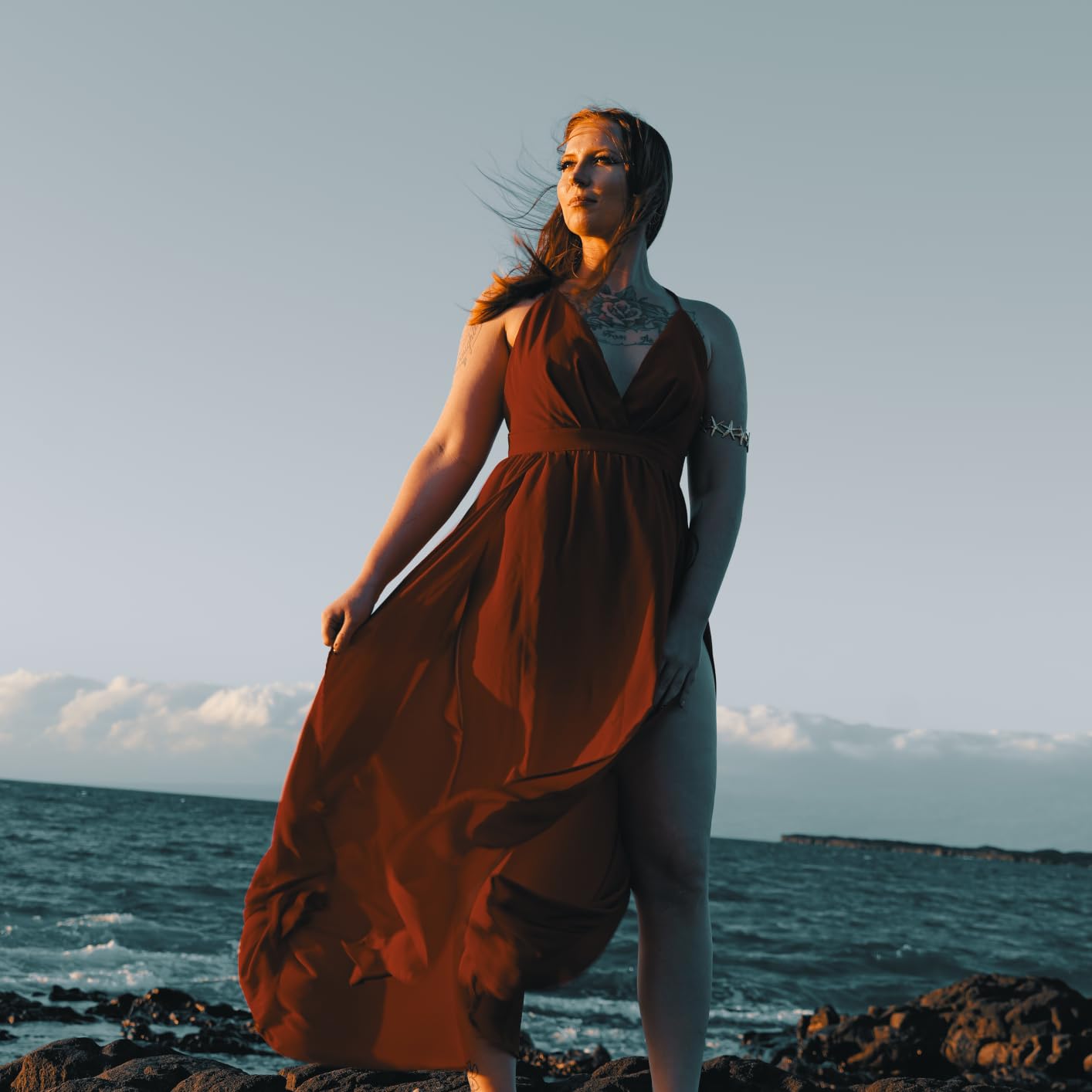
Where full frame earns its keep
Low light and shallow depth of field are the two arguments for full frame. A wide-aperture full-frame lens at a night market gives a background that separates from a face, and the sensor holds more of that scene in the shadows.
For a photographer who edits a proper file at home, the extra latitude in the raw data is the difference between rescuing a dusk frame and not rescuing it.
Where the S9 is a hard sell
There is no electronic viewfinder despite one being listed in some specifications, and reviewers are explicit about it. The fixed 3-inch screen is bright, which helps, but glare in direct sun is a real constraint, and the listed 2.4 lb figure is the heaviest package weight in this group.
Owners report adding a grip accessory for one-handed use, app connection problems, and low-light results that underperform what the sensor should deliver. It also carries one of the lowest average ratings in this roundup, so the enthusiasm is real but narrower.
9. Fujifilm X-T30 III with 13-33mm Lens – The Most Discreet Fujifilm
FUJIFILM X-T30 III Mirrorless Camera Body, with XC13-33mm Lens Kit, Black
26.1MP APS-C X-Trans sensor
AI subject detection AF
20 fps continuous shooting
20 film simulations
Electronic viewfinder
Pros
- Beautiful straight-out-of-camera color and skin tones
- Very compact body that fits a small day bag
- Fast AI subject detection that tracks children
- 20 fps burst for moving subjects
- Built-in flash and 4K video
Cons
- No in-body image stabilization
- Kit lens is slow in low light
- Battery drains quickly and no charger is included
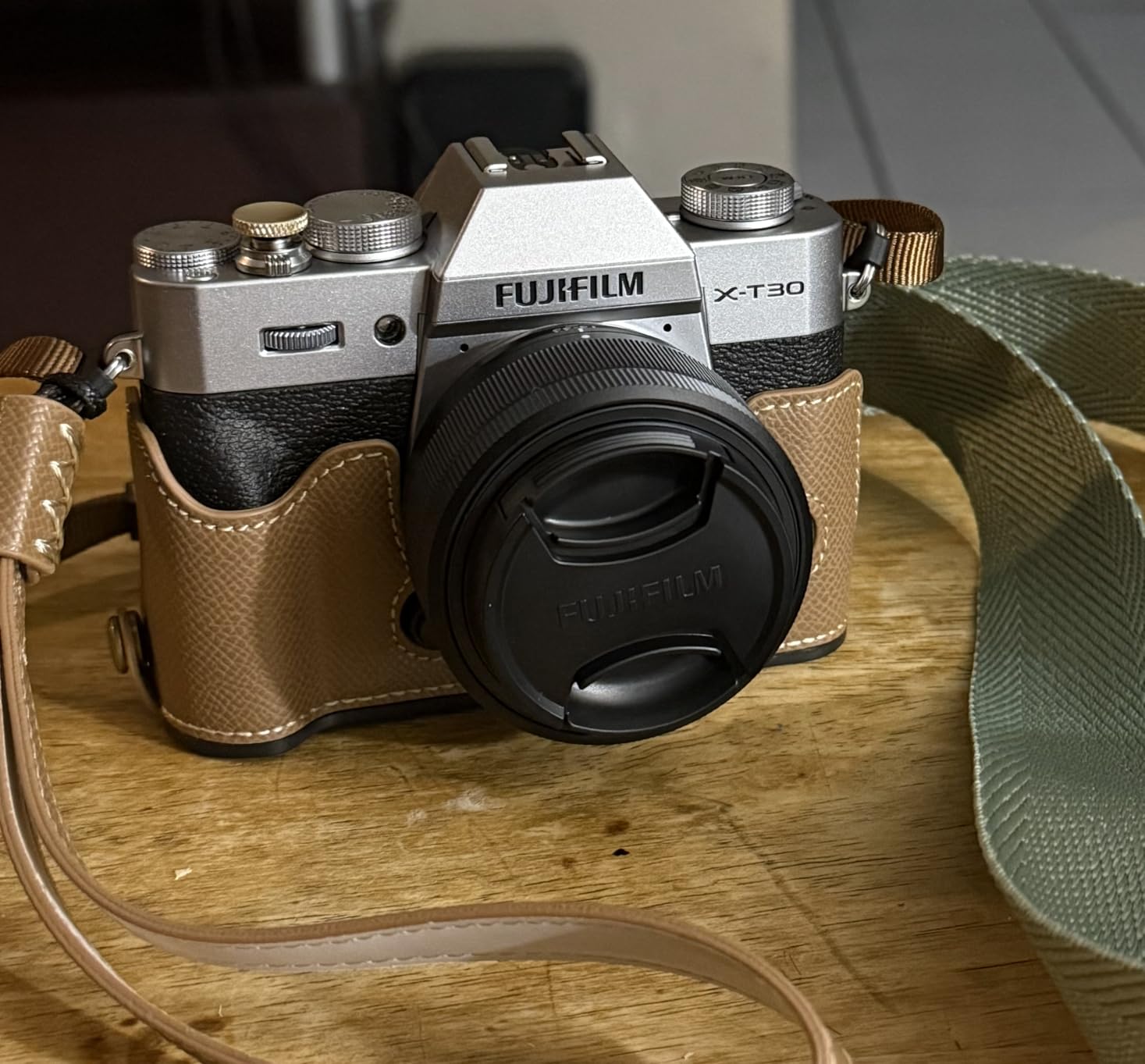
The X-T30 III is the most discreet Fujifilm here, and at 1.1 lb with the compact XC13-33mm f/3.5-6.3 OIS it disappears on a street without drawing attention.
The 26.1MP X-Trans sensor with AI-powered subject detection is a generation ahead on autofocus compared with earlier entry X bodies, and owners specifically call out tracking on moving children, which is the hardest travel subject there is.
The 0.62x electronic viewfinder, 1/32000 second top shutter speed and 20 fps burst cover the situations a fast day creates. The tilting 3-inch screen has 1.62 million dots, which is sharp enough to check focus on a rear display in daylight.
Twenty built-in film simulations mean most trips are shot entirely in JPEG, and the built-in flash fills a night interior without a separate accessory.
Why discretion changes your shots
When the camera is small and quiet, you lift it instead of planning a shot. That is the point in old towns and busy markets where a large body gets left in the hotel.
The dedicated retro styling and the electronic viewfinder make it feel like a serious instrument rather than a gadget, which helps when you are shooting in public for hours.
Where the X-T30 III falls short
There is no in-body image stabilization, so the Fujifilm lens stabilization in the kit zoom is carrying the load at low shutter speeds. On a night street you will still want a brighter lens.
Owners report short battery life and no charger included in the box, which is a trip-planning problem you solve with a spare battery and a small USB charger. Video audio and stabilization also trail the higher-end Fujifilm bodies.
10. Fujifilm X-S20 with 15-45mm Lens – The Best Hybrid for Handheld Work
Fujifilm X-S20 Mirrorless Digital Camera XC15-45mm Lens Kit
26.1MP X-Trans CMOS 4 BSI
5-axis IBIS up to 7 stops
6.2K/30P 10-bit 4:2:2
About 750 frames per charge
491 g body
Pros
- Seven stops of in-body stabilization for handheld stills and video
- 491 g body stays comfortable with larger lenses
- Vlog mode and open-gate 6.2K/30p recording
- About 750 frames per charge
- 26.1MP files with Fujifilm color
Cons
- Not weather sealed and only one card slot
- Autofocus can miss in difficult contrast
- Front and film-simulation dials feel imprecise
The X-S20 is the body we would hand someone shooting a long handheld video sequence on a walking trip. Seven stops of in-body stabilization means you can walk and talk to camera without a gimbal, which removes a bag of equipment from a flight.
It records 6.2K/30p in 10-bit 4:2:2 ALL-I internally, adds a dedicated vlog mode, and streams over USB-C. The 180-degree vari-angle screen turns around for front-facing work.

The 491 g body is the figure that matters for a full day of walking, and owners note it stays comfortable with larger Fujifilm lenses fitted. The battery rating of roughly 750 frames in normal mode means most trips need one charge plus a spare.
Image quality is the 26.1MP X-Trans CMOS 4 BSI sensor with the X-Processor 5, and the 20 fps electronic shutter is fast enough for wildlife at a distance.
Where the X-S20 pulls ahead
Stabilization at seven stops is the headline. Handheld stills at shutter speeds you would normally brace for, and smooth walking video from a single body, are exactly the travel use cases it solves.
The vari-angle screen and vlog mode make it a natural solo-travel or creator camera, and the open-gate recording gives you framing flexibility for vertical delivery.
Where the X-S20 is not for you
It is not weather sealed, has a single SD slot, and owners report the autofocus can miss in difficult contrast such as a backlit street or low light. That 4.2 average rating reflects those opinions honestly.
The body styling is closer to a DSLR than the flat-topped X models, and the dials are described as imprecise by some reviewers. If you want the classic Fujifilm proportions, the X-T30 III is the alternative.
What 2,000 Actually Buys: Body Versus Body Plus Lens
Here is the arithmetic nobody puts on a product page. A body priced near the top of the ceiling leaves only a few hundred in the budget, which does not buy a good travel lens. A kit priced mid-range that includes a zoom leaves well over a thousand for a second lens. The same ceiling produces a completely different camera depending on where you split it.
A worked example for a city trip that mixes food, interiors and people: a kit priced around 1,150 leaves roughly 850 for a fast normal prime. Pair a bright prime with the bundled zoom and you have a setup that handles a candlelit restaurant and a bright market without touching the ISO dial.
For a hiking trip, spend the body budget lower. A kit priced around 500 leaves more than 1,400, and putting a telephoto on that platform means reach without carrying a second body.
For a video-first trip the split inverts again, because stabilization and autofocus matter more than resolution. The ZV-E10 and the X-S20 both put a long stabilization spec at the top of the list for a reason.
One rule we hold to above all the others: never buy a slow kit zoom as your only lens if the trip happens at night, because a narrow aperture costs you light you cannot get back. Treat the second lens as optional in the budget and mandatory in the plan, so the body choice never traps you.
If you also shoot smaller fixed-lens cameras, our compact travel camera guide covers when a 1-inch compact is the smarter answer than any kit on this list.
How to Choose a Travel Camera: Nine Specs That Matter
Weight is the constraint you cannot negotiate
Every other spec on this page can be worked around. Weight cannot. A camera that is uncomfortable at hour two is a camera that stays in the bag, and the shots you do not take are gone forever.
The bodies here start at 10.3 ounces for the Sony a6400 and run up to around 500 g for the Fujifilm X-T50 and X-S20. Weight anxiety came up repeatedly in the buying discussions around this budget, and it is worth being honest with yourself about whether you will carry one all day.
Sensor size: full frame versus APS-C versus Micro Four Thirds
Full frame gathers the most light and gives the shallowest depth of field, which is why the Lumix S9 is on this list. APS-C is the sweet spot for most trips, since the bodies are smaller and the effective reach of every lens is roughly 1.5 times its marked length. Micro Four Thirds is smaller still, with about twice the reach.
Do not over-index on resolution. Community advice in the buying discussions is consistent on this point: dynamic range matters more than megapixels for a traveler shooting in changing light.
In-body image stabilization, explained plainly
IBIS moves the sensor to counter your hands, which lets you shoot at shutter speeds several stops slower than you otherwise could. In practice it means sharp dusk photos without a tripod and steady handheld video without a gimbal.
Among these picks, the OM System E-M10 Mark IV, Fujifilm X-T50, Fujifilm X-S20 and the Lumix S9 have sensor stabilization. The Sony a6400, Fujifilm X-T30 III and Nikon Z 30 do not, so they depend on lens stabilization, which the bundled zooms provide.
Autofocus and subject tracking for moving people
Travel subjects move without warning. Eye detection that recognizes people, pets and vehicles without being told which to look for is the difference between a usable sequence of frames and a folder of near misses.
The Canon R10, Sony a6400 and Fujifilm X-T30 III are the strongest three here. The OM System body is the slowest with moving subjects, and that is the trade for its size and stabilization.
Viewfinder or not: the bright-sun question
No viewfinder means you compose on the rear screen. That is fine in shade and awkward in direct sun, which is most of a midday sightseeing day. The Sony a6400, Canon R10, Canon Rebel T7, OM System E-M10 Mark IV, Fujifilm X-T50 and Fujifilm X-T30 III all give you one.
The Nikon Z 30, Sony ZV-E10 and Lumix S9 do not, and the S9 is the hardest of the three to live without a finder.
Weather sealing, dust and the dry problem
Weather sealing matters in rain, on boats, on beaches and on dusty trails. The Canon R10, Canon Rebel T7, Sony a6400 and Nikon Z 30 are built for that.
Back up your cards before a border crossing regardless of camera, and copy files to a laptop each evening. That habit costs nothing and it has saved more trips than any accessory.
Video: 4K60, 10-bit and the crop caveat
Ten-bit recording holds more gradation than eight-bit, which matters for skies and sunsets. The Canon R10, Fujifilm X-T50 and Fujifilm X-S20 all record 10-bit internally. The Sony ZV-E10 gets 4K oversampled from 6K, which cleans up motion.
Be careful with high frame rates on cropped modes, which quietly narrow your field of view. Check the frame rate list before you assume 4K60 gives you the full sensor width.
Battery life and cards for a multi-day trip
The Fujifilm X-S20 is quoted at roughly 750 frames per charge, one of the stronger endurance figures in this group. The Fujifilm X-T50 and X-T30 III have smaller batteries that drain faster, and the Canon R10 uses an LP-E17 that is not shared with higher Canon bodies.
Our rule for a two-week trip is three batteries per body plus a small USB charger, and a card cleared every two days.
Lens ecosystem and the cost of the second lens
Canon EF and RF offer a very wide range of options, Sony E has strong third-party support, and Fujifilm X has well-regarded compact primes. Nikon Z covers both sensor sizes in one mount, which is the easiest upgrade path on this list.
Whichever you choose, buy the body with a bundled zoom first, learn the system on a trip you know well, and add one lens based on where your frames actually are. That is a more expensive lesson learned at home than abroad.
If your trip is led by a partner filming rather than you, our travel vlogger camera guide goes deeper on video-first bodies, and our couples guide covers shared shooting weight.
Packing Math: Carry-On Weight and Backup Planning
Most international carry-on limits land between 7 and 10 kg, and the camera allowance on a personal item is usually separate but still counted. Add up the body, the kit lens, a second lens, two spare batteries, a charger and a card wallet before you book, because the arithmetic is unforgiving.
A body plus one compact zoom is the easiest configuration to pack, which is an argument for the small APS-C bodies with retractable kit lenses. A body plus a fast prime plus a telephoto pushes you toward a checked bag or a strict weight discipline.
Plan the backup too. Copy each day to a laptop or a drive before you clear a card, keep the card in the body until the copy is verified, and carry a second card rather than a larger one so a failure does not take the day with it.
One more trip-specific item: a rain sleeve. It costs almost nothing and it is the only accessory that matters on an open boat deck, a monsoon street, or a dusty savanna track.
Frequently Asked Questions
What is the best camera under 2,000?
The Sony a6400 with the 16-50mm lens is the strongest all-round answer at this budget, pairing real-time eye autofocus with a 10.3 ounce body. The Canon EOS R10 is the better choice if you shoot meaningful 4K video, and the Canon EOS Rebel T7 is the most straightforward route into a system with real lenses.
What is the best all-around camera for travel?
The Canon EOS R10 with the bundled 18-45mm lens covers the widest set of travel situations: 651-point autofocus with people, animal and vehicle detection, 15 fps bursts, 4K 10-bit video, a bright electronic viewfinder and a body light enough to carry every day. It is our pick for anyone who shoots stills and video on the same trip.
What is the best affordable camera for travel photography?
At the entry end of this range the Canon EOS Rebel T7 and Sony a6400 lead the field. The Rebel T7 gives you a sensor bigger than any phone with an optical viewfinder and a simple guided menu, while the a6400 adds modern eye autofocus and 4K. Moving up further gets you stabilization and subject detection, which matters on moving subjects.
What is the best camera to bring for travel?
The best travel camera is the one you will actually carry. Weight is the constraint you cannot negotiate: the Sony a6400 at 10.3 ounces and the Fujifilm X-T30 III at about 1.1 lb are the easiest to carry all day. Add a bright lens for night work, weather sealing if rain is likely, and one spare battery per trip day as a minimum.
Is 35mm or 50mm better for travel?
A 35mm equivalent is the more flexible travel focal length because it covers a room, a street and a wide view without moving your feet, which is why most kit zooms here start there. A 50mm equivalent gives tighter framing, shallower background and works better indoors and at night, so it pairs well with a 16-35mm on a second lens.
The Verdict: Which Travel Camera Under 2,000 Should You Buy?
The Sony a6400 with the 16-50mm lens is our pick for the best cameras under 2,000 for travel, because reliable eye autofocus in a 10.3 ounce body solves more real trips than any other combination on this list. Buy the Canon EOS R10 if video is a real part of the trip, and the Canon Rebel T7 if the priority is simply reaching a system with real lenses for the least outlay.
Whichever you choose, budget the second lens before you buy the body, and buy the kit that includes a zoom so you have something to shoot on day one. Check the current listing before you order, since pricing and bundles move often.