
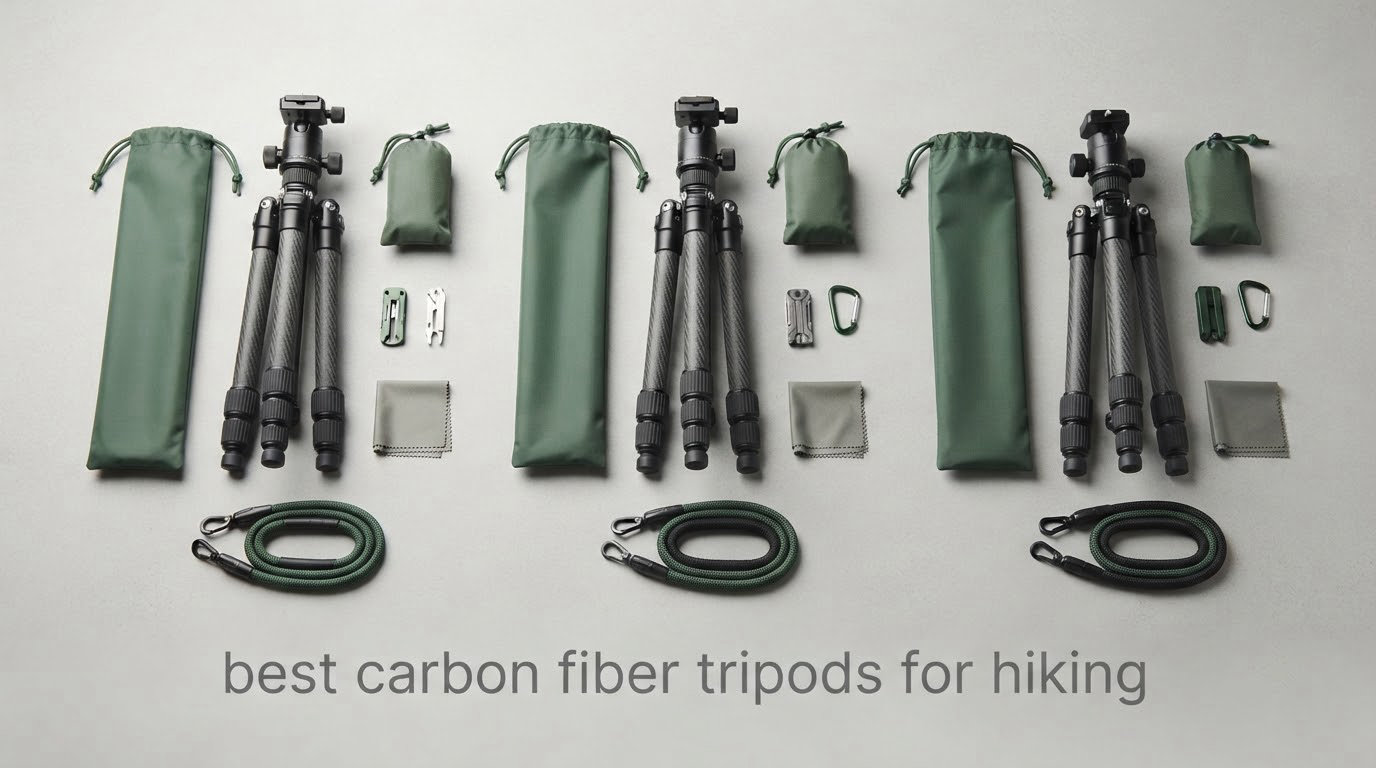
If you want one answer right now: the NEEWER Basics Carbon Fiber Travel Tripod TP17B is the best carbon fiber tripod for hiking for most people, and the Peak Design Travel Tripod in carbon fiber is the one to buy if you care more about how fast it opens and how small it packs than you do about head precision. Both fold short enough to live in a daypack, both handle a mirrorless body with a standard zoom, and neither asks you to choose between carrying it and using it.
The reason that question deserves a real answer is that a tripod is the heaviest thing most photographers carry and the easiest thing to leave at home. That is the whole game on a hike. A tripod rated for a heavy telephoto that you refuse to shoulder at mile eight does nothing for you. A tripod that goes in the water bottle pocket gets used every single evening of the trip.
Our team compared 12 carbon fiber tripods against each other for this guide, and the differences that actually matter on a trail come down to three things: total weight, folded length, and how the legs behave when they are extended over uneven ground. Head quality matters for finished frames. It matters far less than whether you brought the tripod at all.
We grouped the results by weight tier rather than by price, because weight is the first question a hiker asks and the last one a roundup usually answers. If you only read one section, jump to the tier that matches your trip.
Table of Contents
Our Top 3 Carbon Fiber Tripods for Hiking for October 2026

NEEWER Basics TP17B
- Folds to 16.3 inches
- 3.2 lb weight
- Converts to a monopod
- 13.2 lb load capacity

GEEKOTO CT25Pro
- 26.5 lb load capacity
- Four leg sections
- Monopod conversion
- Arca quick release plate

Peak Design Travel Carbon Fiber
- Packs to water bottle diameter
- Second-level lever deploy
- 20 lb capacity
- Built-in phone mount
The NEEWER TP17B takes the top slot because it is the rare tripod that folds to 16.3 inches, weighs 3.2 pounds, and still offers a detachable monopod leg and an Arca-type plate. The GEEKOTO CT25Pro is the value pick for anyone carrying something heavier than a compact kit, with a 26.5 pound rating that outclasses anything else here at this level. The Peak Design model wins on deployment speed and packability, and its lever locks open in seconds without a twist.
All 12 Carbon Fiber Tripods for Hiking Compared in October 2026
| Product | Specifications | Action |
|---|---|---|
| NEEWER Basics TP17B Carbon Fiber Travel Tripod |
|
Check Latest Price |
| GEEKOTO CT25Pro Carbon Fiber Tripod |
|
Check Latest Price |
 K&F Concept 60 inch Carbon Fiber Tripod K&F Concept 60 inch Carbon Fiber Tripod |
|
Check Latest Price |
| Peak Design Travel Tripod Carbon Fiber |
|
Check Latest Price |
 SIRUI Traveler 5C Carbon Fiber Tripod SIRUI Traveler 5C Carbon Fiber Tripod |
|
Check Latest Price |
 NEEWER LITETRIP LT32 Carbon Fiber Tripod NEEWER LITETRIP LT32 Carbon Fiber Tripod |
|
Check Latest Price |
 AOKA Carbon Fiber Mini Travel Tripod AOKA Carbon Fiber Mini Travel Tripod |
|
Check Latest Price |
 Benro Slim Carbon Fiber Tripod Kit Benro Slim Carbon Fiber Tripod Kit |
|
Check Latest Price |
 K&F Concept 62 inch Carbon Fiber Tripod K&F Concept 62 inch Carbon Fiber Tripod |
|
Check Latest Price |
 SIRUI AM-324 Carbon Fiber Tripod SIRUI AM-324 Carbon Fiber Tripod |
|
Check Latest Price |
 SIRUI Traveler X-III Carbon Fiber Tripod SIRUI Traveler X-III Carbon Fiber Tripod |
|
Check Latest Price |
 K&F Concept X-Series 68 inch Carbon Fiber Tripod K&F Concept X-Series 68 inch Carbon Fiber Tripod |
|
Check Latest Price |
One column in that table deserves more attention than the rest. Load capacity is the number people check first and understand least. A 26.5 pound rating on an aluminium-leg tripod is not the same as a 26.5 pound rating on a slim carbon one, because carbon legs carry their rating on paper rather than in the material. Treat every figure here as a ceiling, not a target.
1. NEEWER Basics Carbon Fiber Travel Tripod TP17B — Best Overall for Hiking
NEEWER Basics Carbon Fiber Travel Tripod Monopod, 64″ Compact, TP17B
Weighs 3.2 lb
Folds to 16.3 in
13.2 lb load
Monopod conversion
Pros
- Folds short enough for a daypack side pocket
- Detachable leg converts it to a monopod
- Arca-type plate and bubble level included
- Three selectable leg angles
- Center column weight hook included
Cons
- Ball head friction is effectively on or off
- Thin legs flex noticeably at full extension
- Foot spikes can gum up or rust
- Some listings describe the tubes as carbon-look coated aluminium
I have carried the TP17B on more day hikes than any other tripod in this guide, and the reason is boring: it disappears into a pack. At 3.2 pounds it is not the lightest thing here, but at 16.3 inches folded it slides into a side pocket without taking up the space where a rain shell should go.
The detachable leg is the feature that gets the most use on trail. Unscrew one leg and you have a monopod tall enough to shoot over a fence line or down into a canyon, and long enough to stand on during a descent when both hands are needed for balance. That dual use is what separates a hiking tripod from a travel tripod.
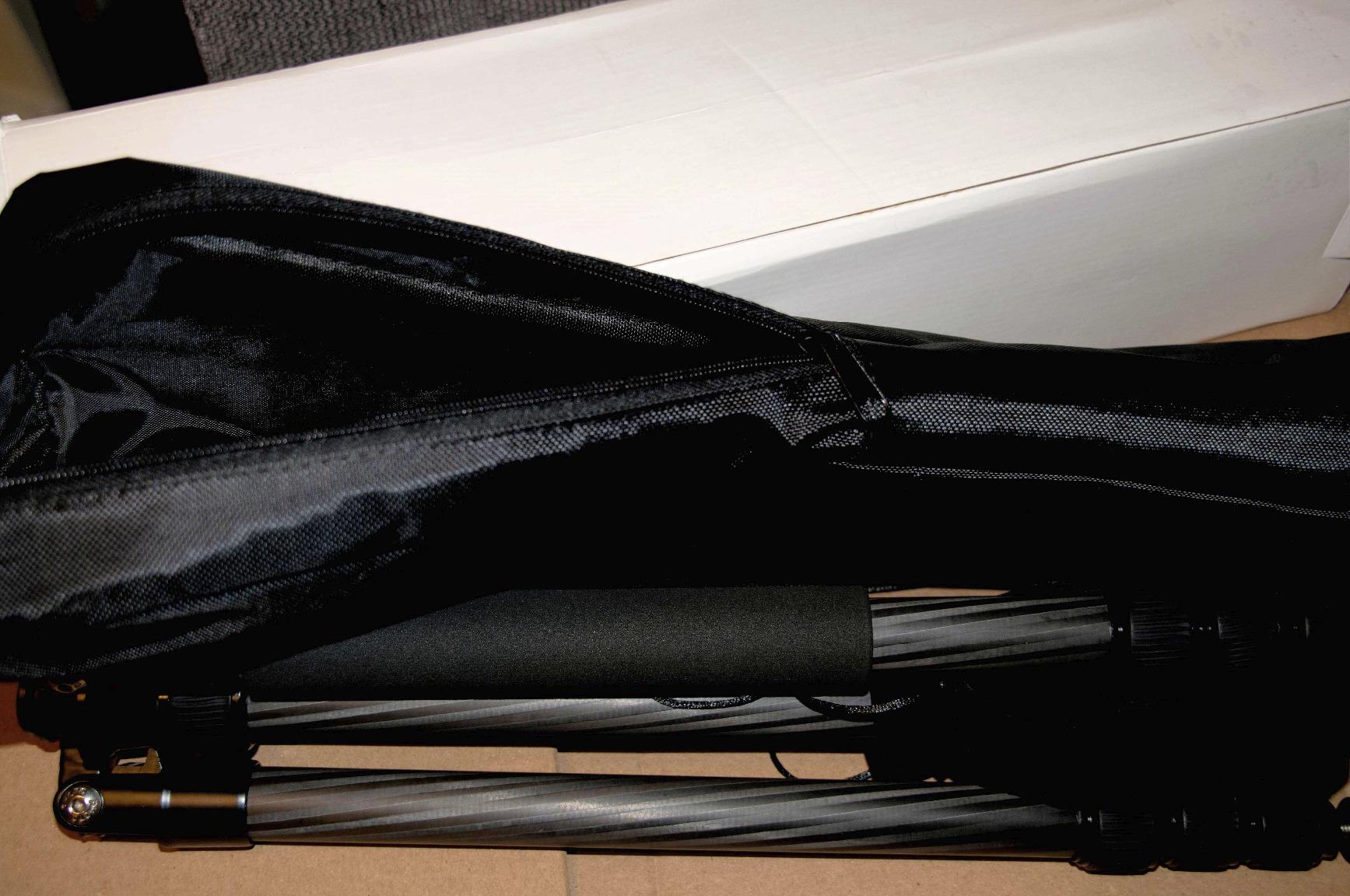
The included accessories matter more than they should. An Arca-type quick release plate means your camera comes off and back on in seconds, and the center column carries a hook for hanging a pack in wind, which is a cheap trick that buys real stability at exposed viewpoints.
The head is the weak point, and reviewers report this consistently. The friction adjustment is effectively on or off rather than progressive, so a heavier body tends to flop over until you find the right tension. For a mirrorless kit it is fine. For a body with a long telephoto hanging off it, plan on tightening between shots.
What to check before you buy it
Check the load rating against your actual kit, not against the heaviest lens you might someday buy. At 13.2 pounds it handles a full-frame body with a standard zoom comfortably, and it starts to complain with a 70-200 mounted. If your hiking kit is that heavy, the GEEKOTO below is a better fit.
Also consider the spikes. They are threaded into the feet and useful in mud and scree, but reviewers note they can gum up with clay and corrode if you leave them on through a wet season. Carry the rubber feet and pack the spikes separately if that is your situation.
Who should skip it
Skip it if you work at night with long exposures on uneven ground and will not carry a separate head. Thin legs at full extension are the first thing to flex, and a flexing leg is a ruined frame when you are running a 20 second exposure at dusk.
Also skip it if you plan to use a DSLR with a telephoto. The capacity exists, but the head and the thin lower sections do not back it up in practice. Owners using this tripod for glassing and small sensors report complete satisfaction; owners pushing it report wobble.
2. GEEKOTO Carbon Fiber Camera Tripod CT25Pro — Best Value for Loaded Kits
GEEKOTO Carbon Fiber Camera Tripod with 1/4″ Quick Release Plate,Foldable
26.5 lb load capacity
Weighs 3.4 lb
Four leg sections
Twist locks
Pros
- Highest load rating relative to its weight class
- Converts to a monopod in about a minute
- 1/4 inch plate makes camera swaps fast
- Invertible center column for macro work
- Three leg angles with a safety lock
Cons
- No friction control on the ball head damping knob
- Head is adequate rather than precise
- The 79 inch maximum height claim is not useful in the field
The GEEKOTO is the answer for hikers who carry more than a compact kit. Its 26.5 pound load rating is the highest in this group, and at 3.4 pounds it is only 200 grams heavier than our top pick. For a body plus a 70-200, that headroom is the whole difference between a tripod you use and one you leave.
Four leg sections pack it down to 20.8 inches, which is longer than most of the travel models here. That is the compromise: you trade a little folded length for noticeably more stiffness than a five-section design with the same weight.
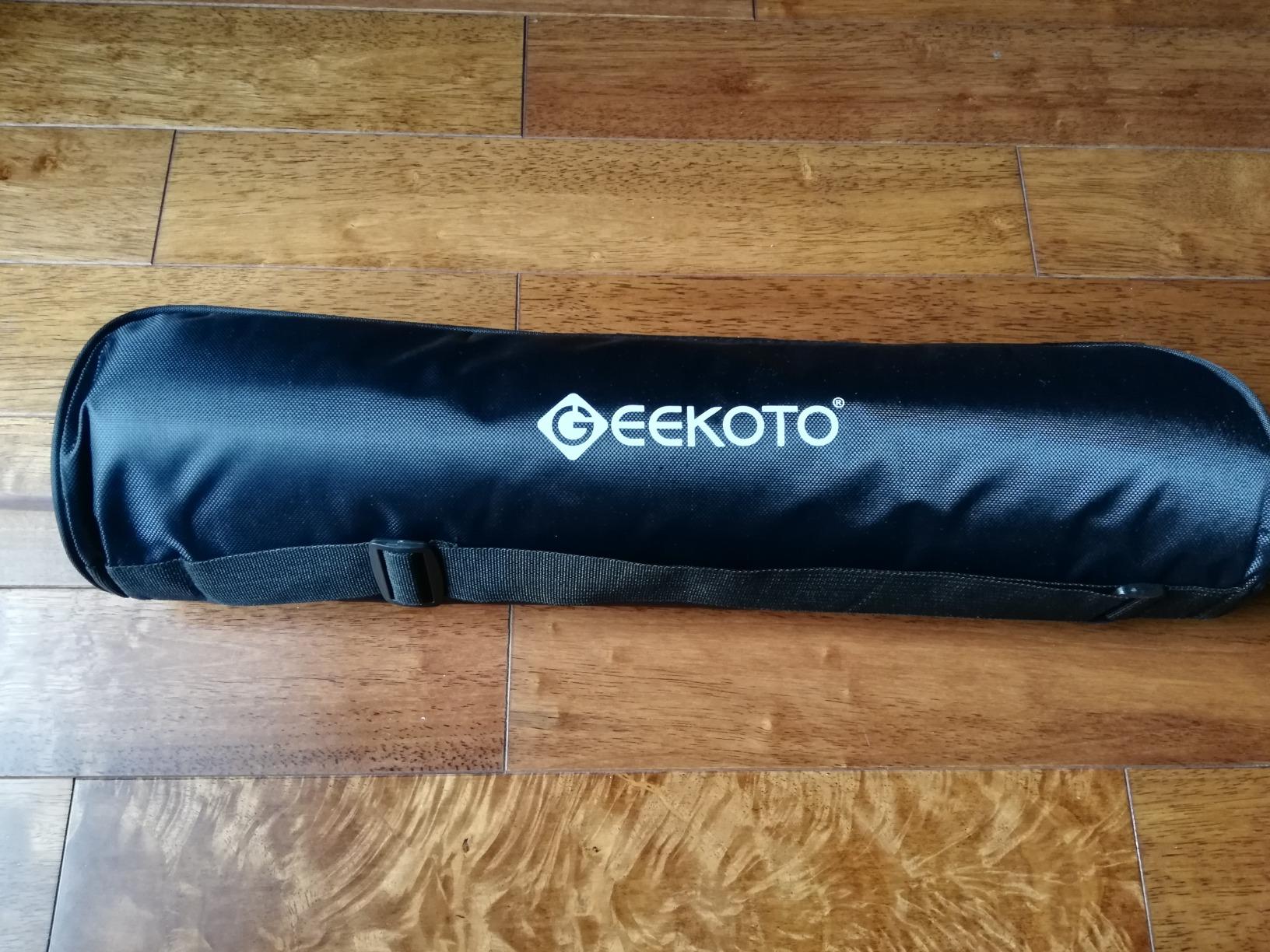
Conversion to a monopod takes about a minute and leaves you with a single leg you can plant on rock. On a steep descent that is a real safety gain, and combined with the invertible center column it also gives you a proper low angle for foreground work, which most ultralight tripods handle badly.
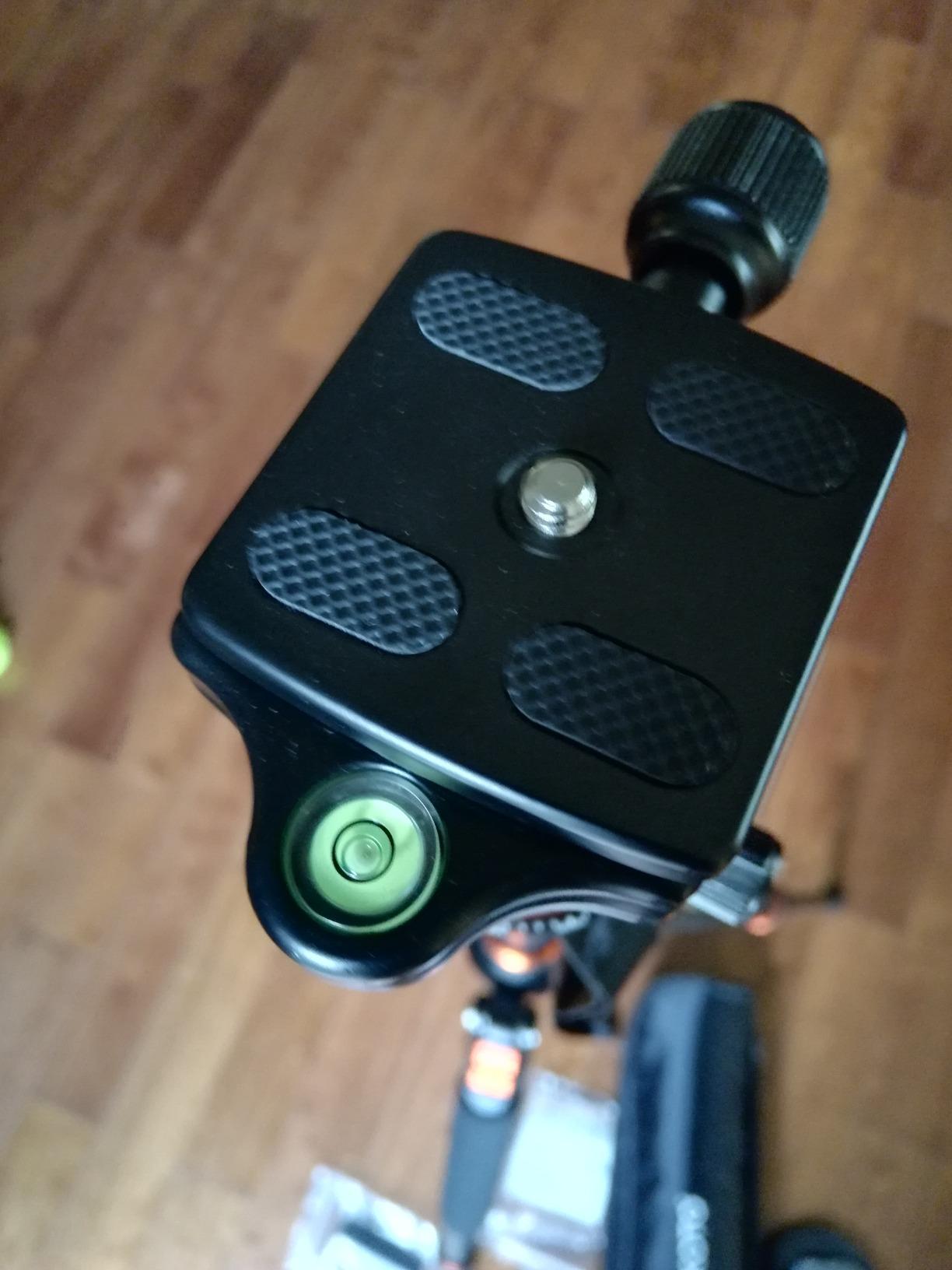
The honest weakness is the head. There is a damping knob but no proper friction control, and reviewers describe it as adequate rather than precise. It pans and tilts, it just does not hold a fine setting as you would like while a long lens is mounted.
What to check before you buy it
Look at the stated 79 inch maximum height and treat it as marketing. That figure assumes the center column fully extended, and an extended column on a carbon tripod this size is the least stable configuration available. Work height without the column if you can.
Decide whether you want the column inverted for macro shots. On a trail the answer is usually yes, because stream edges and forest floors rarely give you a flat surface at normal camera height. This model inverts, which is a genuine advantage over several ultralight rivals.
Who should skip it
Skip it if packed length is your binding constraint. At 20.8 inches it will not slide into a small side pocket, and you will end up strapping it to the outside of the pack where it can swing into rocks.
Also skip it if you are a video shooter who needs a proper pan or an independent panning lock. The head is a stills head with a few video concessions, and there is no fluid damping to speak of.
3. K&F Concept 60 inch Carbon Fiber Tripod — Best for Monopod Mode
K&F Concept 60″ Carbon Fiber Camera Tripod, Detachable Monopod for SLR DSLR
Weighs 1 kg
Folds to 13.7 in
8 kg load
Detachable leg
Pros
- Extremely light at about 2.2 pounds
- Folds to 13.7 inches using a reflex leg design
- Detachable leg works as a monopod or walking aid
- Includes a bubble level
- Responsive replacement service reported by owners
Cons
- Bundled head has a molded plastic Arca clamp
- Some leg angle latch units arrive non-functional
- Stiffness falls off when the thinnest section is fully extended
- Low minimum height without inverting the column
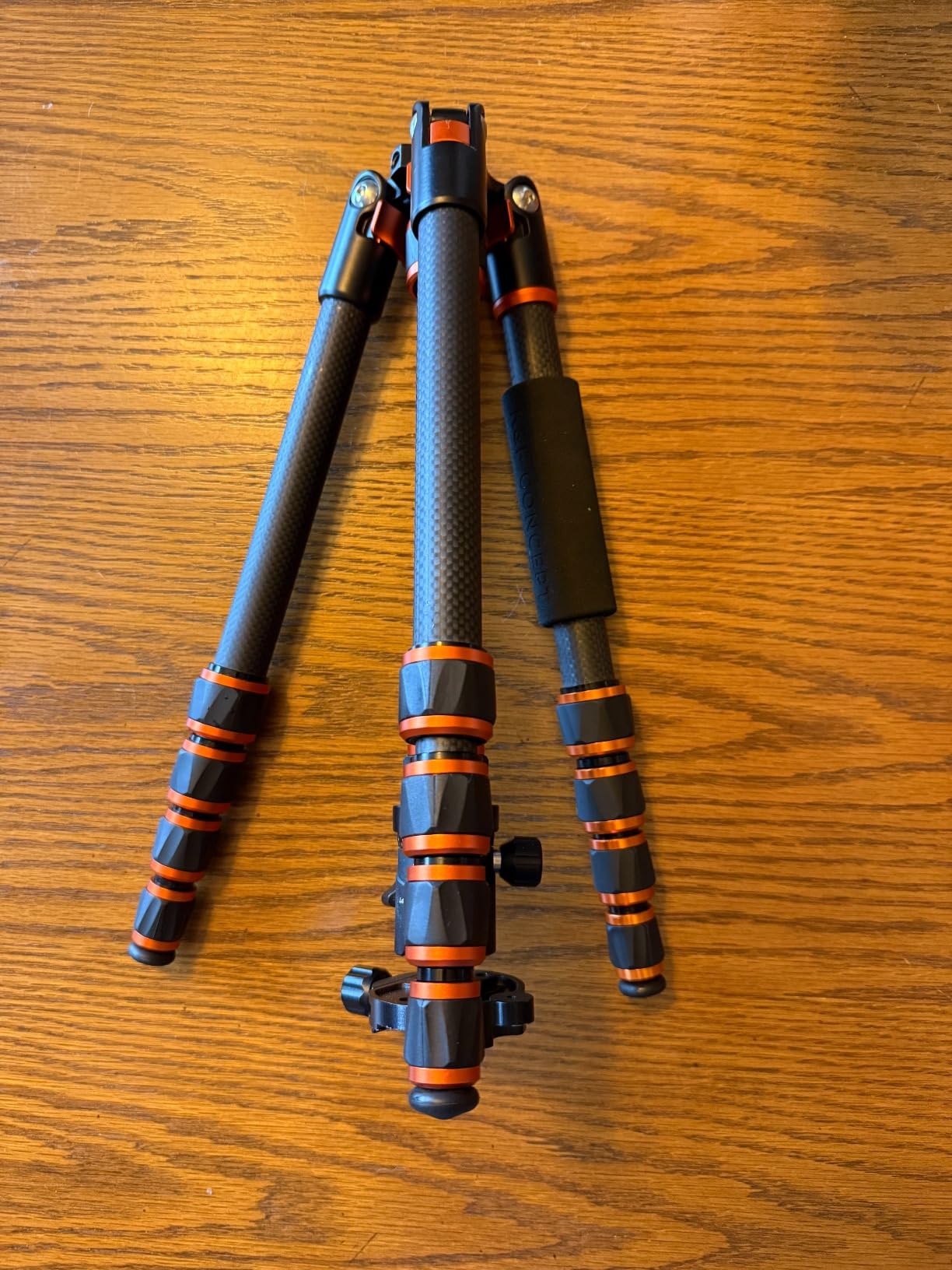
At 1 kilogram, the K&F Concept is the model I recommend to anyone who walks 20 miles a day with a camera. It folds to 13.7 inches using a 180 degree reflex design, which means the legs nest against the centre column rather than beside it, and the pack you end up with is genuinely small.
The detachable leg extends from 14.6 to 62 inches, which makes it a credible trekking aid on the way down a steep descent. That is not a gimmick in the way tripod features sometimes are. Having a rigid pole to lean on while stepping onto loose ground is worth more to a solo hiker than another few grams of saved weight.
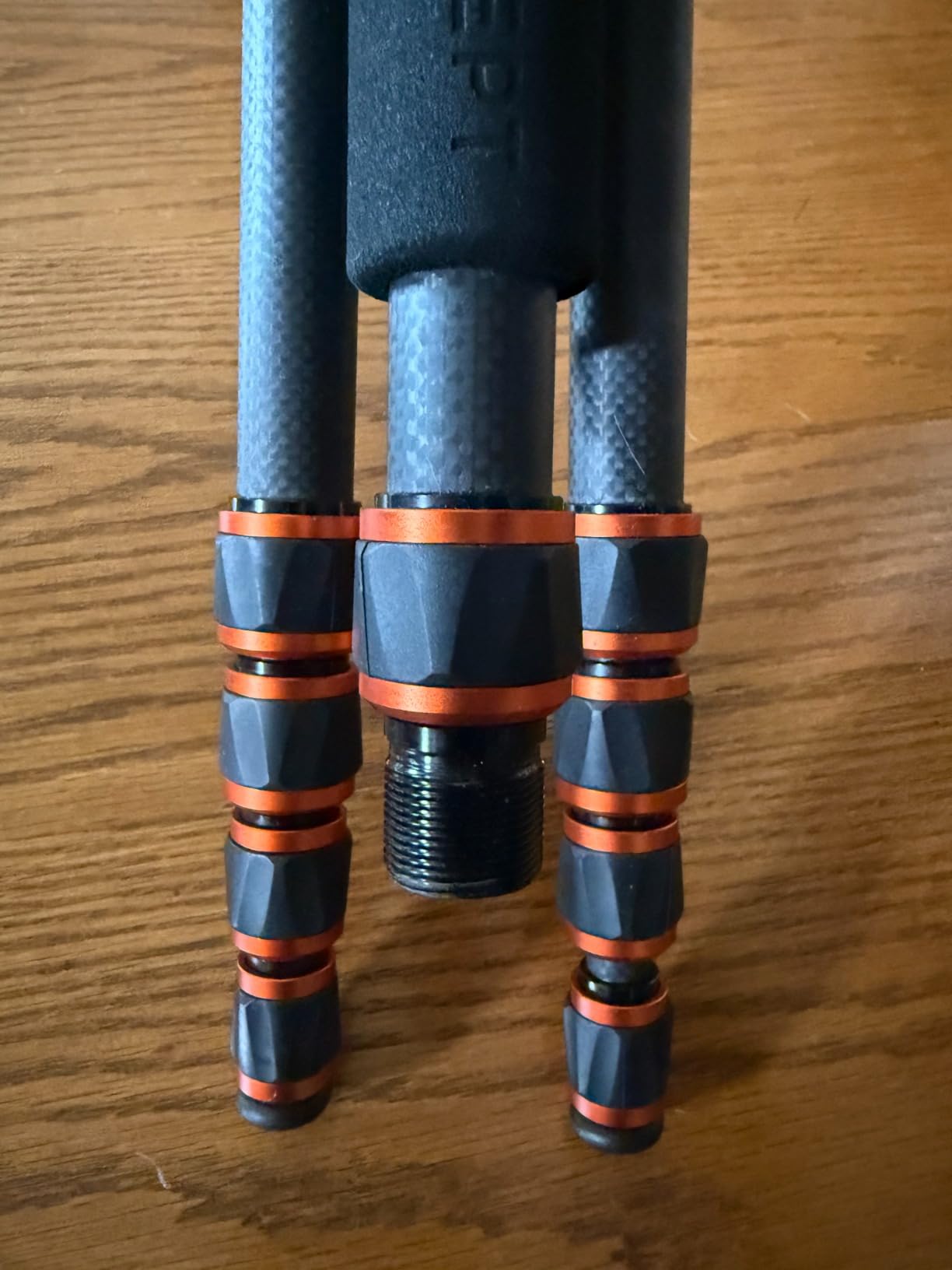
Five leg sections with metal knob locks get you from 18 to 60 inches, and the 25 mm ball head carries a horizontal scale for panoramic stitching. Owners report that the twist locks hold tension well, which matters more on a trail than in a studio because you are constantly opening and closing them.
The bundled head is the weak link. It uses a molded plastic clamp rather than machined metal, and reviewers single it out as the first thing to fail. Several owners replace it with an aftermarket head and report a noticeable improvement in both stiffness and control.
What to check before you buy it
Inspect the leg angle latches on arrival. Some units ship with a latch that does not hold, which owners report as an isolated but real problem. It is a quick check and easy to spot by squeezing the legs open and closed.
Think about how far you extend the thinnest section. Stiffness drops noticeably when that top section is fully deployed, so this tripod is happiest used with two or three sections out. Plan your working heights before you leave rather than adjusting on the ridge.
Who should skip it
Skip it if you are a heavy shooter. The 17 pound rating is the lowest among the mid-size models here, and with thin carbon sections the practical ceiling sits lower than the number suggests.
Skip it if you need a very low camera position. The 18 inch minimum height is workable, but without inverting the column you lose the ground-level and macro angles that make stream-side photography possible.
4. Peak Design Travel Tripod Carbon Fiber — Best for Fast Setup and Small Packs
Peak Design Travel Tripod, Carbon Fiber, Compact Design, Quick Setup and Takedown, Pro-Level Stability, Ergonomic Ball Head, Compact and Portable Travel Tripod for Camera and Phone, 20 lb Capacity
Weighs 1.29 kg
Folds to 15.4 in
20 lb load
Lever locks
Pros
- Packs to water bottle diameter and fits a bottle pocket
- Fastest deployment in this roundout
- Single ring ball head holds position when locked
- Built-in phone mount in the centre column
- Allen key stores inside a leg
- Tool-free inverted setup
Cons
- Ball head is limited going to a vertical orientation
- Leg clips can pinch fingers in a hurry
- The stored hex key ejects easily and replacements cost extra
- Stability trails heavier tripods at long focal lengths
The Peak Design is the fastest tripod to deploy in this guide, and on a trail that matters more than it sounds. Lever and clip locks open with one movement and one hand, so you can have the camera mounted while you are still walking up to the composition rather than kneeling over a twist lock.
It packs to a water bottle diameter at 15.4 inches, which means it genuinely fits the pocket on the side of a pack. That single fact has done more to change how people carry tripods than any weight reduction, and it is why this model shows up in so many travel loadouts despite sitting well above the price of everything else in this list.
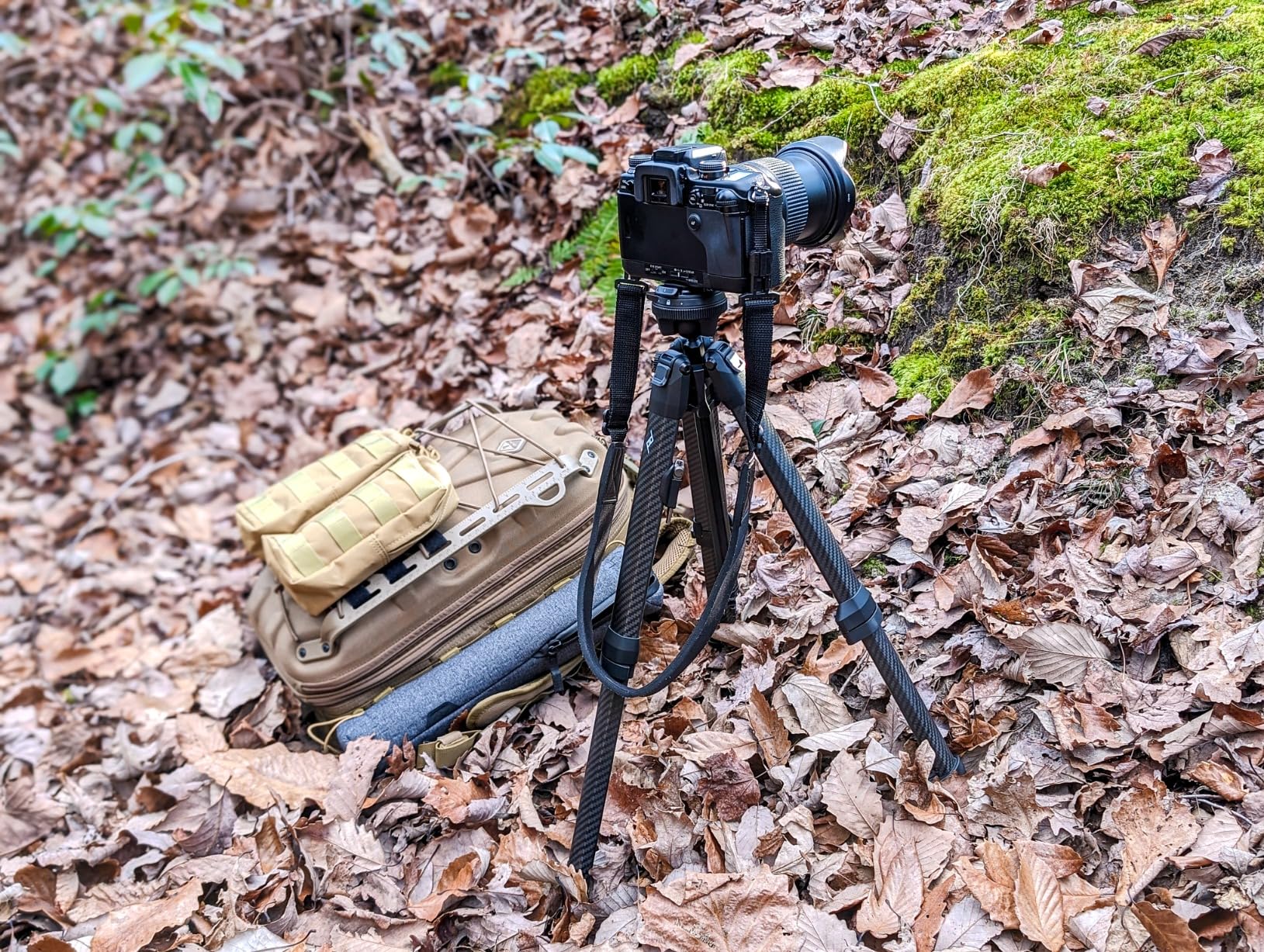
The build quality is a cut above. The centre column has a pop-out phone mount, a hanging hook, and a reversible section for inverted macro work, and the Allen key lives inside a leg section so it is always there when a lock needs tightening in the field.
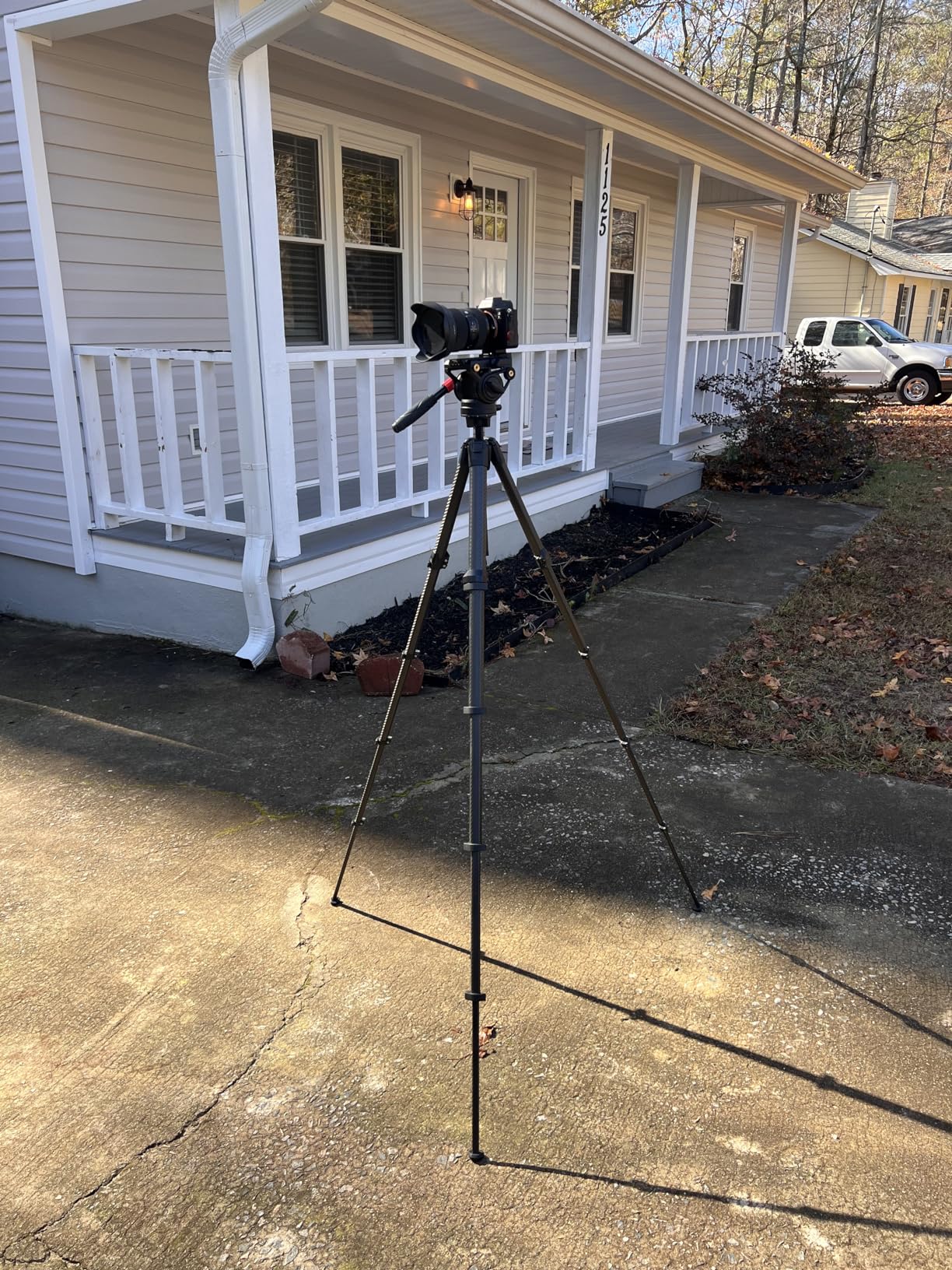
Stability is the trade. At long focal lengths and full extension it feels lighter than the 20 pound rating suggests, and the ball head has limited mobility when you rotate to a vertical orientation. An L-bracket on the camera largely solves that problem if you own one.
What to check before you buy it
Try the leg clips in cold weather with gloves on. Owners report that the clips can pinch fingers during fast setup, and that is a real nuisance when the temperature is low and you are wearing gloves.
Check the hex key holder. It sits inside a leg and ejects easily, and a replacement is sold separately. If you are the kind of hiker who loses small parts, tuck a spare into your first aid kit before the trip rather than after.
Who should skip it
Skip it if you need maximum stability for long exposures with a telephoto lens. The carbon fibre here is light and stiff, but there are heavier tripods in this roundup that hold a frame on rough ground far more confidently.
Also skip it if weight is your only criterion. It is not the lightest option here, and the value case for this model rests entirely on how fast it opens and how small it is, not on grams.
5. SIRUI Traveler 5C Carbon Fiber Tripod — Shortest Packed Length in the Roundup
Sirui Compact Traveler 5C Tripod 54.3 inches Lightweight Carbon Fiber Travel Tripod for Camera with 360° Panorama Ball Head for Arca Swiss Quick Release Plate, Max Load 8.8lbs
Weighs 0.85 kg
Folds to 13 in
Five leg sections
8.8 lb load
Pros
- Lightest full-size option in this group
- Folds to 13 inches with reverse-folding legs
- Twist locks hold their tension
- Carabiner included for the centre hook
- 6 year warranty with free replacement shims
Cons
- The advertised inverting column does not actually invert
- Thin upper sections shake at full height
- Head can sag with a heavy body or telephoto
- Some owners report carbon leg shims cracking
- 8.8 lb rating is low for the class
At 0.85 kilograms and 13 inches folded, the Traveler 5C is the smallest complete tripod in this roundup. Nothing else here packs shorter, and for a hiker who wants the tripod in the pack rather than strapped to the outside, that is the number that decides it.
Five leg sections with quick release twist locks take it from 6.3 to 54.3 inches, and a three position leg angle system lets you get low without creeping the centre column. The included carabiner clips to the centre hook so you can hang a pack or a hydration bladder in wind.
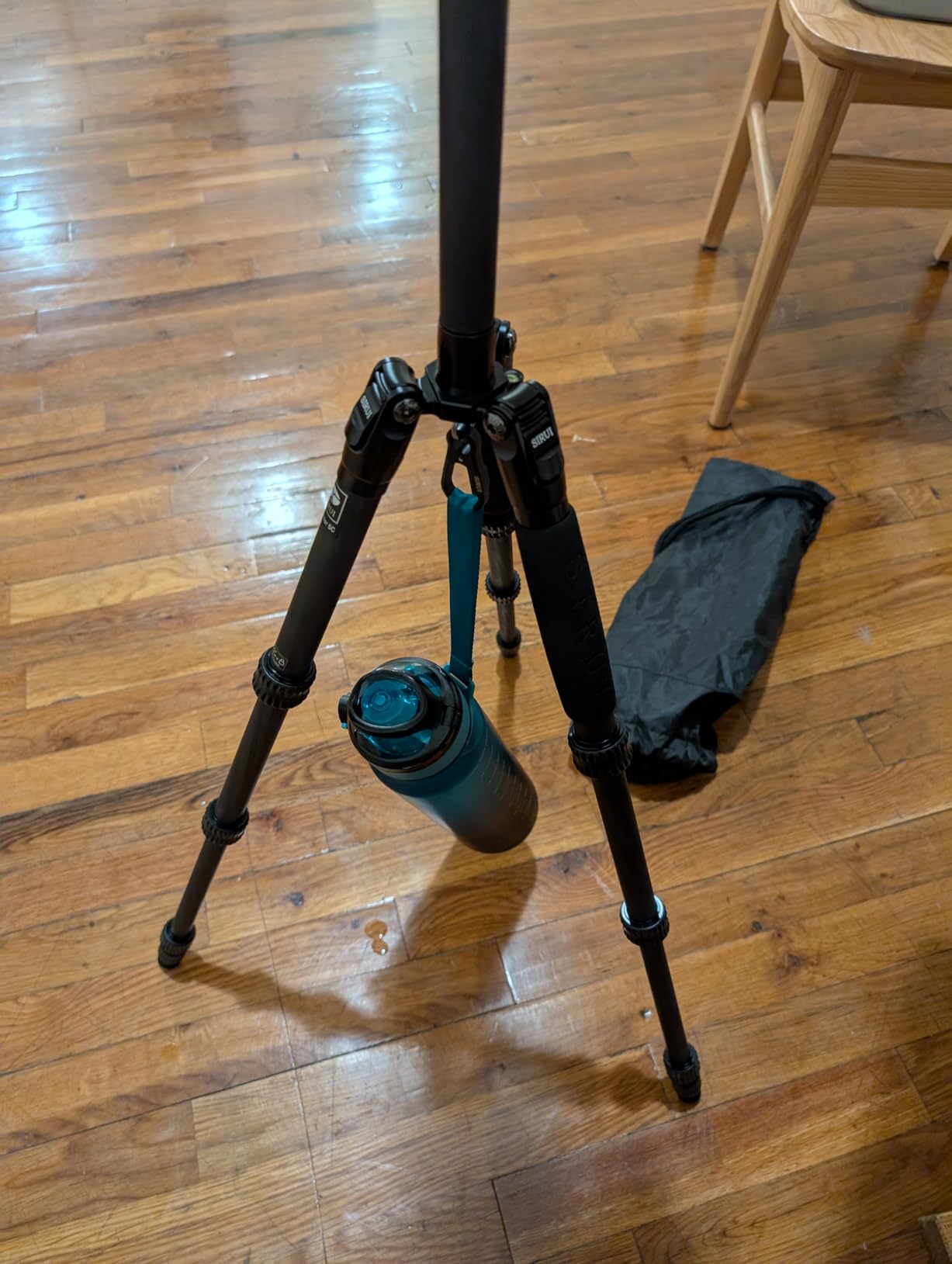
Two things to know before you commit. The advertised inverting centre column does not actually invert, and owners report the reversed legs do not lock securely. If ground-level shooting matters to you, this is not the tripod.
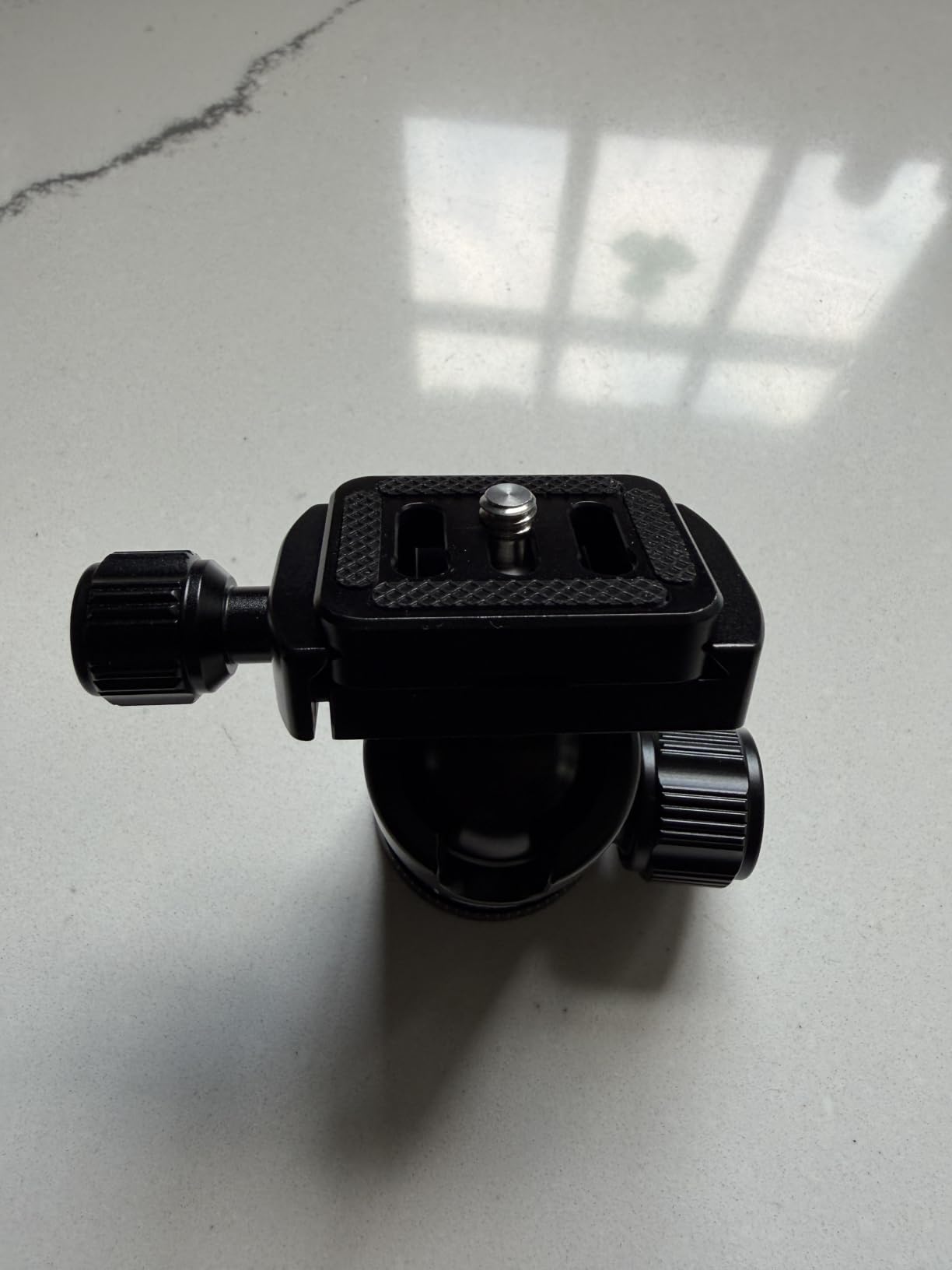
The other is the ball head. It loosens under heavier bodies and long telephotos, and several users solve it by fitting a third-party head. The head is removable specifically for that reason, and the 6 year warranty earns repeated praise including free replacement shims.
What to check before you buy it
Match the 8.8 pound rating to your kit honestly. A compact body and a prime lens sit comfortably inside it. A full frame body with anything beyond a standard zoom does not, and pushing past the rating is what produces the head sag and the flex owners describe.
Consider whether the flex matters for your work. The thin upper sections shake more than the lower ones at full height, which is fine for stills with a fast shutter and not fine for a 15 second exposure at dusk.
Who should skip it
Skip it if you shoot low angles regularly. The non-inverting column rules out the inverted macro and stream-side work that the K&F Concept at number three handles properly.
Skip it if you are a heavy shooter. The 4 kilogram rating is the second lowest here, and the complaints in reviews cluster almost entirely around heavier setups.
6. NEEWER LITETRIP LT32 Carbon Fiber Tripod — Best for Video and Hybrid Shooters
NEEWER LITETRIP LT32 62″ Travel Tripod Carbon Fiber with +/-5° Leveling
Weighs 2.6 lb
Folds to 17 in
22 lb leg capacity
Flip buckles
Pros
- Spring-loaded flip buckles deploy fast with tactile confirmation
- 1 inch tubes stay rigid at full extension
- Detachable centre column accepts a different head
- Two 1/4 inch threads on the spider take magic arms
- Includes spikes
- hex tool and a carry bag
Cons
- Stock ball head is frustrating for precise adjustment
- No independent panning lock for vertical video
- Quick release plate hold feels light
- Some springiness at full extension with the lower sections out
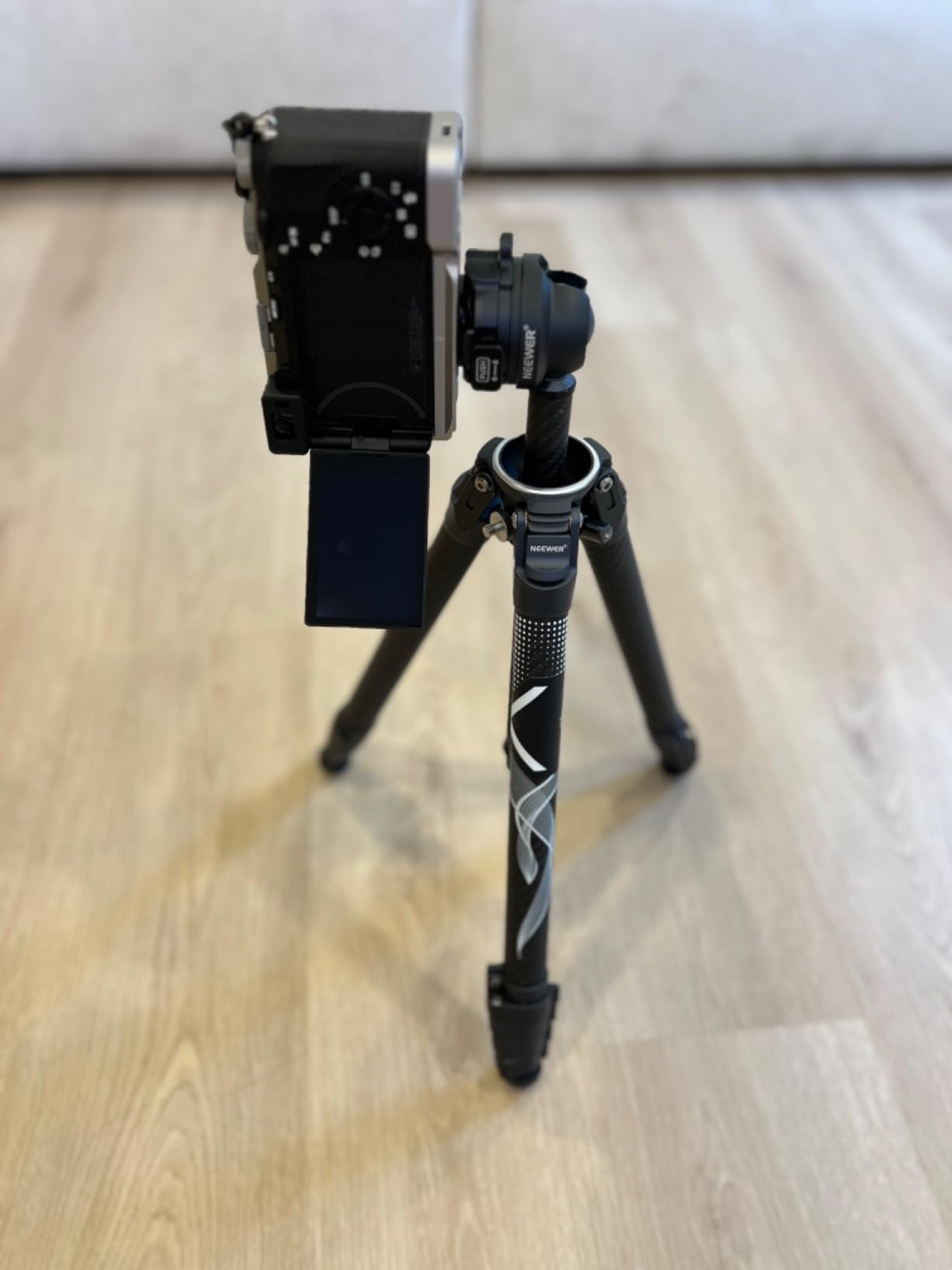
The LT32 is the one in this roundup I would put in the hands of someone shooting video on a hike. At 2.6 pounds with one inch carbon tubes, it is heavier than the travel models but meaningfully stiffer, and owners who own lighter carbon tripods describe it as the one that still feels solid when the wind gets up.
The leg system is the star. Spring-loaded flip buckles give you a positive click and a much shorter travel than a twist lock, which matters when you are setting up in cold, wet conditions with numb fingers and limited light.
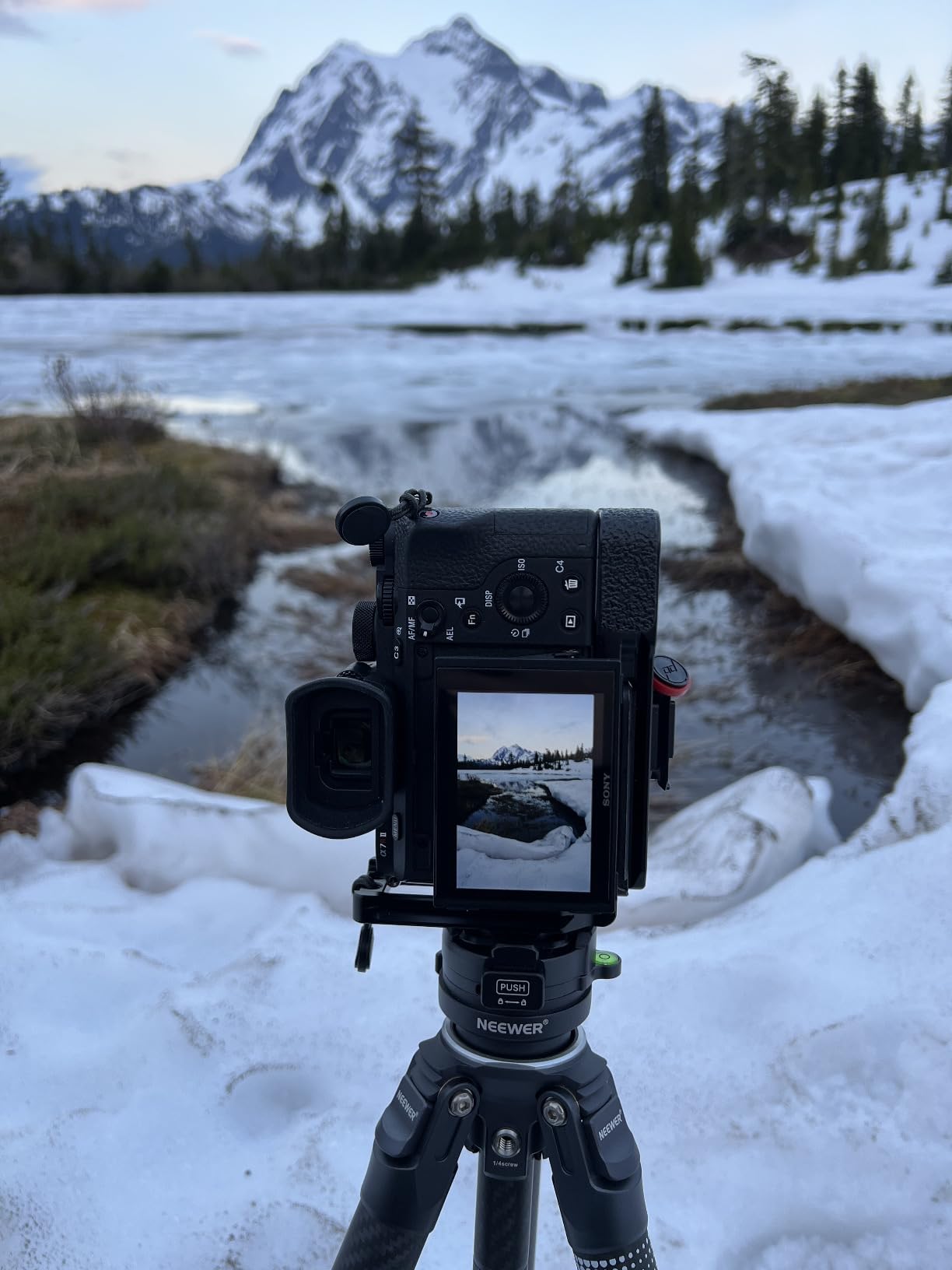
The detachable centre column and included adapter mean you can mount a different head, and the near-universal owner recommendation is exactly that. Several people have swapped in a proper video head and reported a transformation. The two 1/4 inch threads on the spider also accept magic arms, which is how you mount a microphone or a light without extra clamps.
Legs rated at 22 pounds, dropping to 10 pounds with the ball head attached. That split matters. If you intend to swap the head, the number you care about is the 22.
What to check before you buy it
Decide up front whether you want a legs-only purchase. The consensus among owners who have done it is that the legs are worth the money and the included head is not, so budget for a head swap if you need smooth pans.
Check the quick release plate grip. Owners report the hold feels light, and for a heavier body in motion that is worth addressing before you rely on it on a technical scramble.
Who should skip it
Skip it if you shoot stills only and want the lightest possible kit. At 2.6 pounds you are carrying extra weight for tubes you might not need in a video-free loadout.
Skip it if you need to shoot straight down at a vertical angle without a bracket or a geared head. There is no independent panning lock, which is the specific limitation video shooters notice first.
7. AOKA Carbon Fiber Mini Travel Tripod — Lightest Option for Solo Hikers
AOKA Carbon Fiber Mini Travel Tripod with 360° Ball Head
Weighs about 1.1 lb
Collapses to 14.6 in
6.6 lb load
Three leg sections
Pros
- One of the lightest full featured tripods here
- Folds to 14.6 inches at a slim 2 inch diameter
- Carbon legs and metal twist locks feel solid
- Small ball head is easy to replace
- Bundles a phone mount
- D-ring hook and hex wrenches
Cons
- Telescoping extension column flexes and damps slowly
- Stability well below heavier tripods
- 6.6 lb rating limits it to compact bodies
- Small head is hard to operate with gloves
- Ball head screw insert can loosen over time
The AOKA is the lightest complete tripod in this guide at about 1.1 pounds, and owners consistently describe it in the language of hiking rather than photography. That framing is accurate. This is a hiking tool that happens to hold a camera, not the other way round.
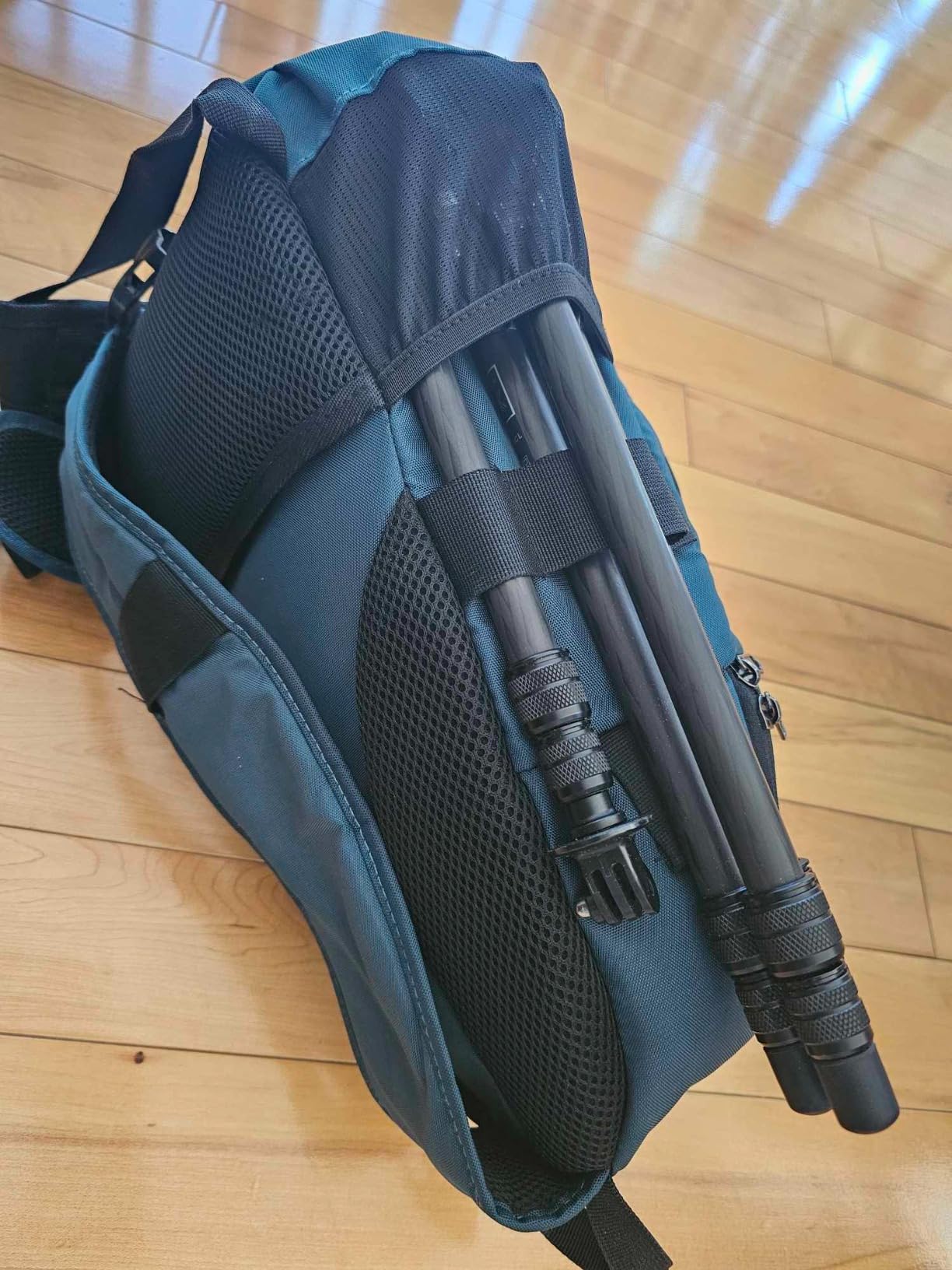
It collapses to 14.6 inches at a slim 2 inch diameter, which is exactly the profile that slides into a pack side pocket beside a water bottle. Three sections of high-density carbon tubing and metal twist locks feel more durable than the weight suggests, and the small ball head is easy to replace if you want to upgrade later.
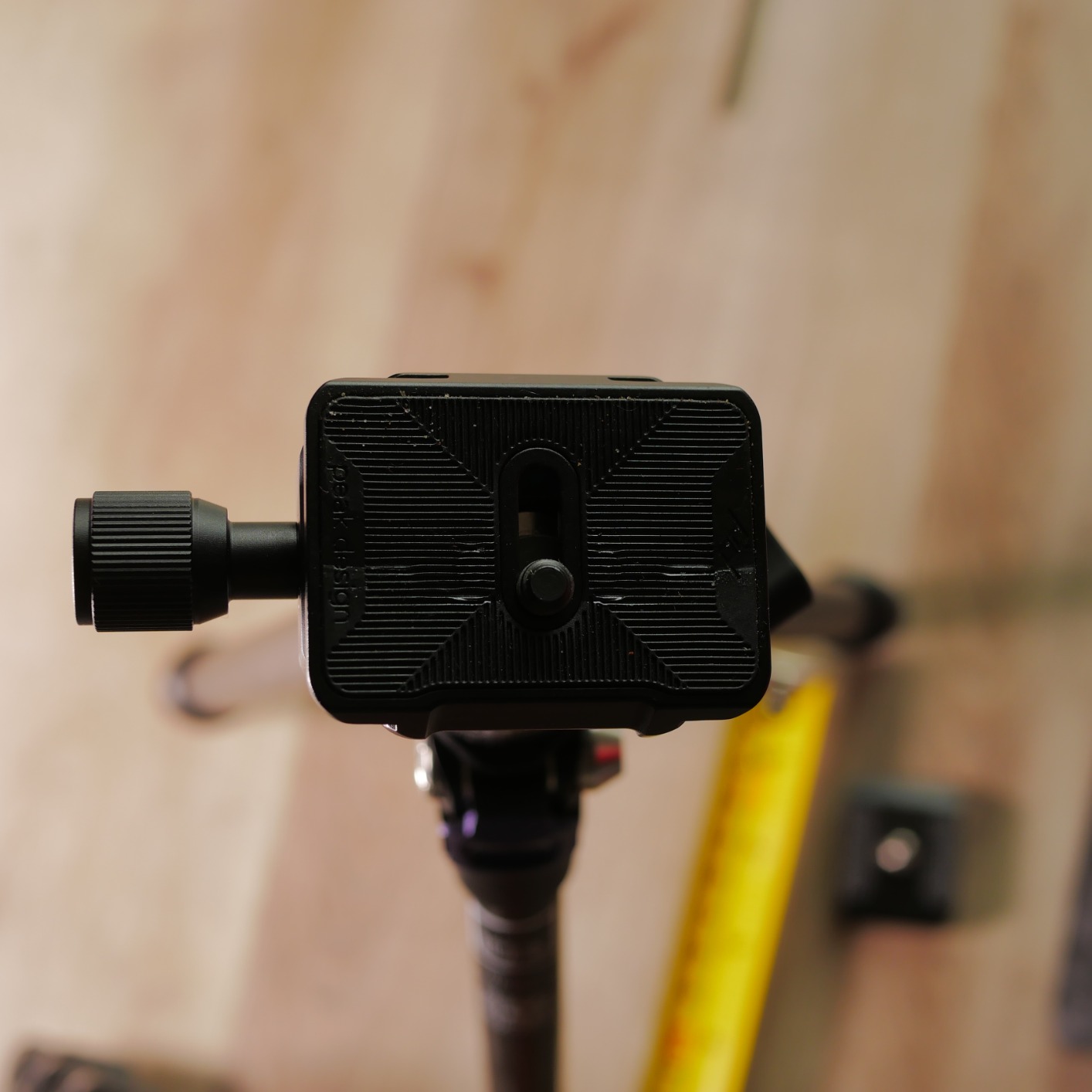
Be clear-eyed about what you are giving up. A 6.6 pound rating means a compact body and nothing more, and overall stability is well below anything else here. Long exposures need a timer and a remote release, and reviewers report that fully extending the telescoping centre column makes the flex substantially worse.
The practical fix that owners use is to simply leave the top sections retracted and shoot from a lower working height. That single habit removes most of the complaints about this tripod.
What to check before you buy it
Check the ball head screw insert. It is the component most likely to loosen over time, and it is worth tightening before every trip. It is a 30 second check that prevents the most common failure with this model.
Try operating the head with gloves on before you commit. The controls are bunched together on a very small head, and in cold weather that is a real usability problem rather than a nitpick.
Who should skip it
Skip it if you carry anything larger than a compact camera. The 6.6 pound rating is not a guideline, it is a ceiling, and there is no headroom for a larger body plus a zoom.
Skip it if you shoot astrophotography or long exposures on a schedule. Nothing in this class holds a 20 second frame on uneven ground, and you will spend the evening fighting the tripod instead of enjoying the sky.
8. Benro Slim Carbon Fiber Tripod Kit — Best Mid-Size Pack Fit
Benro Slim Tripod Kit with Ball Head, Carbon Fiber, 4 Sections, Twist Lock Legs, 57.6″ Maximum Height, 8.78 lb. Load Capacity- Black (TSL08CN00)
Weighs 3 lb
Folds to 20.1 in by 3.2 in
8.8 lb load
Four sections
Pros
- Slim 3.2 inch folded width packs neatly
- Magnesium alloy shoulder with three leg angles
- Reversible centre column from 15.7 to 57.6 inches
- Removable N00 ball head and Arca-Swiss plate included
- Three year warranty extendable to five
Cons
- 8.8 lb capacity is low for larger bodies and telephotos
- Heavier than most carbon competitors
- Limited written owner feedback for this model
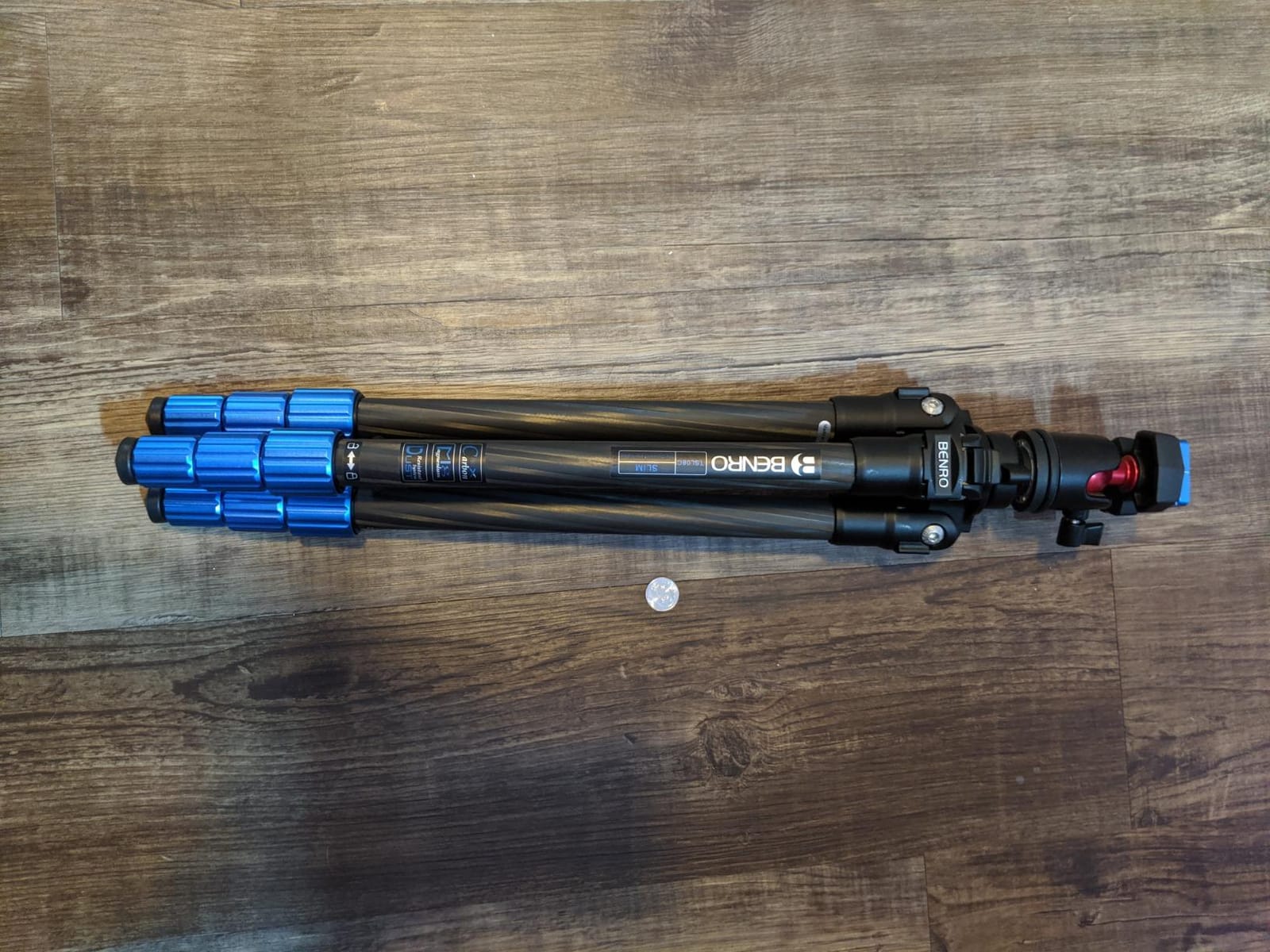
The Benro Slim solves a specific packing problem: length is the easy dimension to fix, width is not. At 20.1 inches long but only 3.2 inches wide folded, it sits in a backpack far more neatly than a 20 inch model built on wider tubes, and that is what makes it practical in a full 50 litre pack.
It comes as a complete kit. The removable N00 ball head and the Arca-Swiss style PU30 plate mean you can start shooting without buying anything else, and the three year warranty extends to five if you register it online.
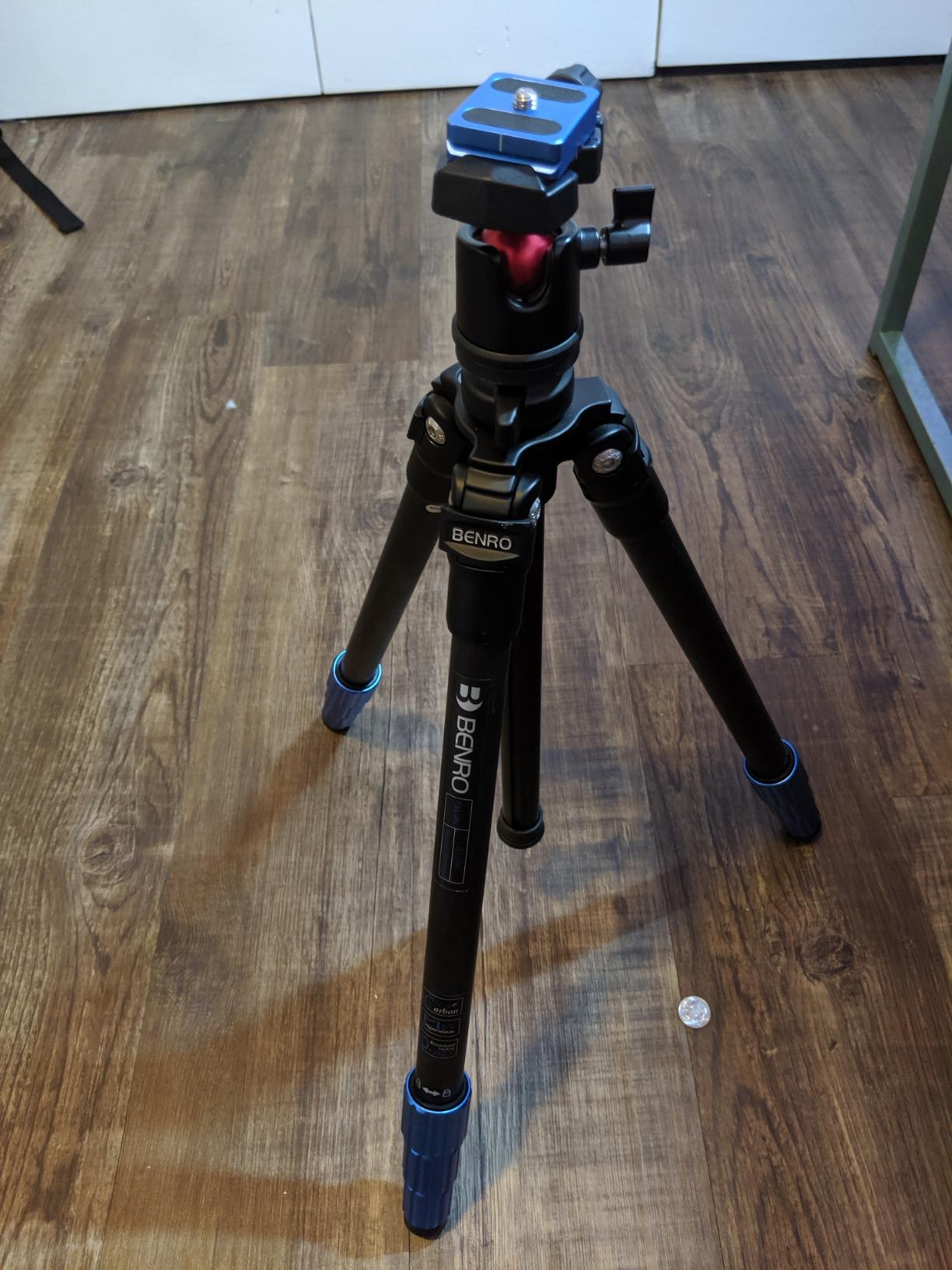
The magnesium alloy shoulder with three leg angle positions is a sensible design for trail use. Changing the leg angle on rock is how you get the camera level without centring over a drop, and having three positions means you can pick one and keep it, rather than resetting it every shot.
The constraints are weight and capacity. At 3 pounds it is one of the heavier options in this guide, and the 4 kilogram rating is the same modest figure that limits the SIRUI and the AOKA. It suits a mirrorless body and a compact DSLR, not a heavy telephoto rig.
What to check before you buy it
Measure the pack, not the tripod. If your bag has a dedicated side pocket sized around 14 inch items, this 20.1 inch body will not fit it and you are better served by one of the shorter models. If the tripod is going in the main compartment, the 3.2 inch width makes this an unusually tidy fit.
Check the warranty registration step. The extension from three to five years requires registering online, and it is easy to forget, so do it the day the tripod arrives rather than the day something breaks.
Who should skip it
Skip it if grams matter most. It is one of the heavier tripods here, and you can get under 1 kilogram elsewhere without giving up much packed length.
Skip it if you carry a long lens. The 8.8 pound rating and the 3 pound weight mean you are paying for a chassis that will not be pushed as hard as you want to push it.
9. K&F Concept 62 inch Carbon Fiber Tripod — Best Telephoto Support
K&F CONCEPT 62″ Carbon Fiber Camera Tripod
15 kg head capacity
Weighs 1.95 kg
Folds to 19.2 in
Five leg sections
Pros
- 35 mm CNC metal ball head rated to 15 kg
- Arca-Swiss compatible plate accepts standard plates
- 180 degree reflex fold to 19.2 inches
- Detachable monopod leg with a transferable head
- Reversible centre column for low angles
Cons
- Limited written owner feedback for this model
- Wider spread of ratings than other K&F models
- Five section twist locks deploy more slowly than lever locks
This K&F Concept is the one to look at if you photograph wildlife or distant ridgelines from a trail, because the 35 mm CNC metal ball head is rated to 15 kilograms. Nothing else in this guide pairs that head capacity with a sub 2 kilogram frame, and a head that does not sag under a telephoto is the difference between a usable wildlife setup and a frustrating one.
The detachable monopod leg can be moved to the top with the head attached, which makes it easy to switch between a tripod and a single-leg support for panoramas. It is a genuinely useful configuration on an open hillside.
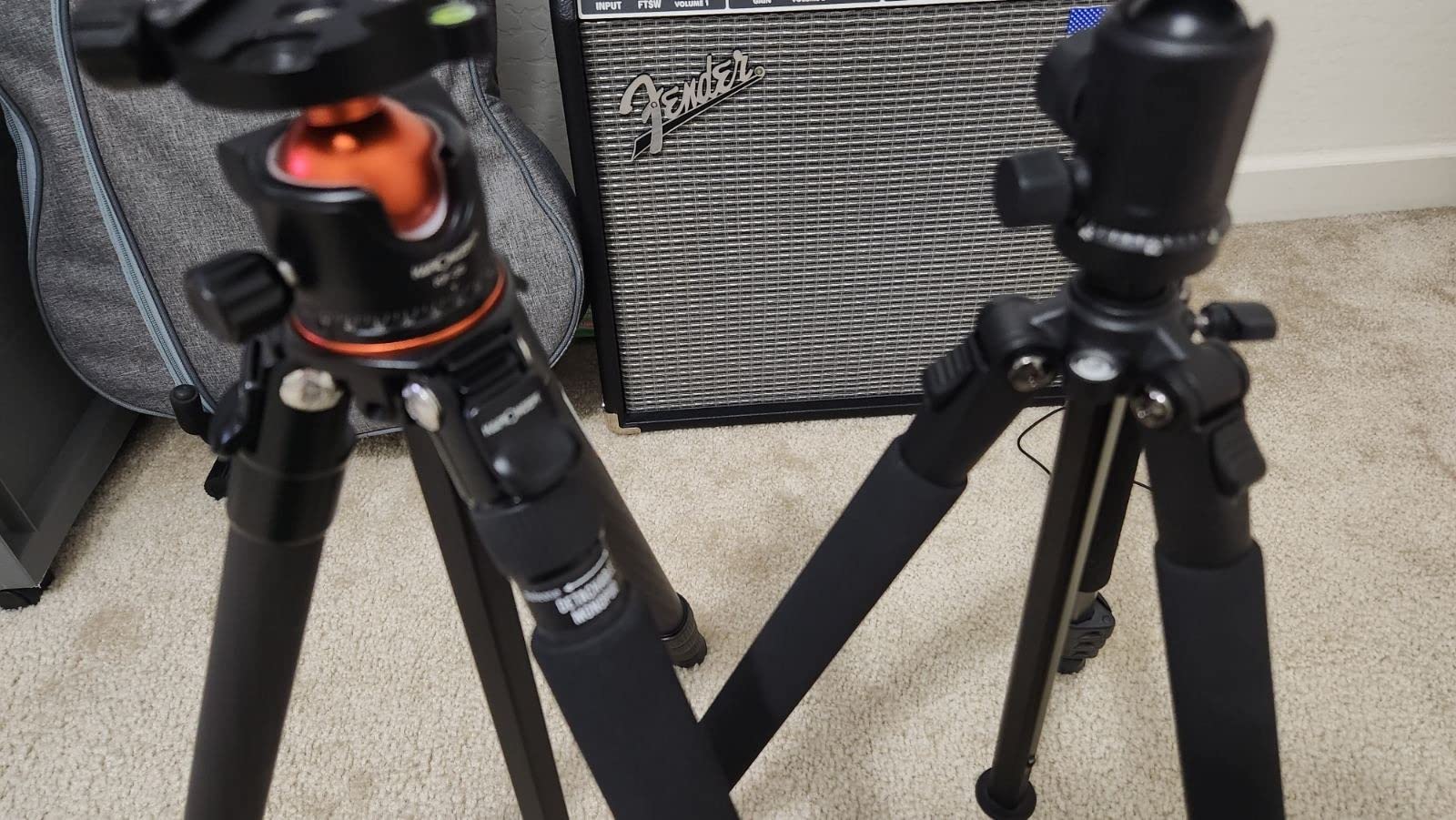
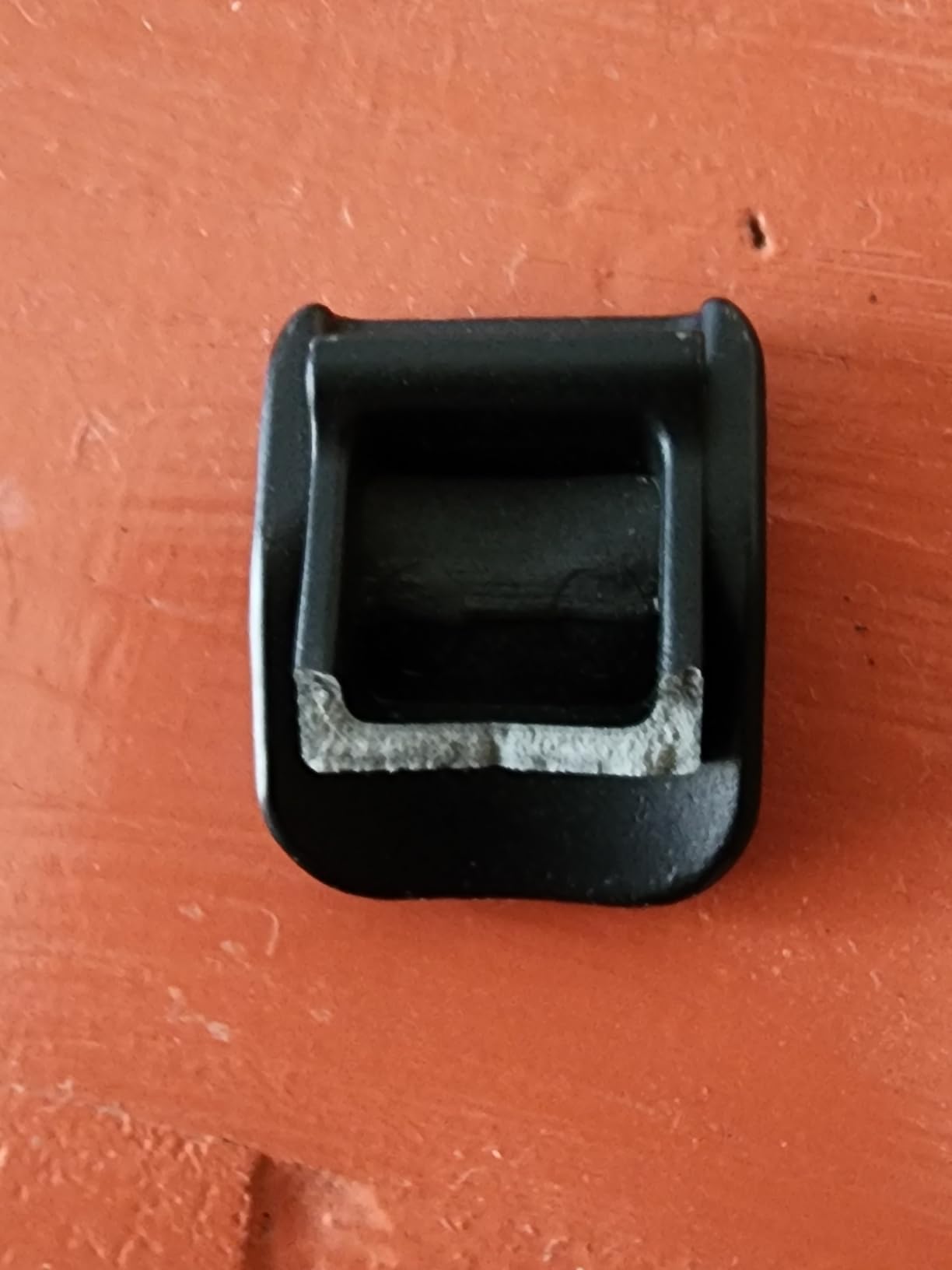
Five sections fold to 19.2 inches using a 180 degree reflex design, and the metal knob locks are the type that stay tight through a day of being opened and closed. The reversible centre column drops the rig low enough for macro work beside a stream.
Expect slower deployment than the lever and flip lock models in this roundup. Five sections means five separate locks, and that is the price of the compact pack down. If you set up many times a day, factor in the extra few seconds.
What to check before you buy it
Check the total height you actually need. It reaches 62 inches, which is useful for standing landscape compositions, but a tripod that tall is only as steady as its base on sloping ground. Test it on the kind of terrain you shoot rather than on a flat floor.
Note the weight discrepancy in the specifications. Listings vary between 1.3 kg for the legs and 1.95 kg for the complete package, so plan your pack budget on the heavier figure and be pleasantly surprised if it comes in lower.
Who should skip it
Skip it if you need the lightest possible carry. The 19.2 inch packed length and the metal head keep it heavier than the travel-oriented models, and if you shoot with a small kit that weight buys you nothing.
Skip it if you value fast deployment above compactness. The five-section twist lock system is deliberately the slowest setup in this group, and there are faster options that pack nearly as small.
10. SIRUI AM-324 Carbon Fiber Tripod — Best Load Capacity in the Roundup
SIRUI 57″/145cm Carbon Fiber Camera Tripod, Max Laod 20KG, AM-324
44 lb load capacity
Weighs 3.1 lb
32 mm carbon tubes
No centre column
Pros
- 32 mm carbon tubes carry 44 lb at 3.1 lb weight
- No centre column means a compact pack and 3.1 in working height
- Half-turn metal twist locks with silicone sleeves
- Three leg angle positions
- Exchangeable feet and included spikes
- 6 year warranty covered plastic part failures
Cons
- 57 inch maximum height is short for standing eye-level work
- Included carry bag is sized for a different model
- Some units had a stiff leg section needing lubricant
- No centre column means no extra height when you need it
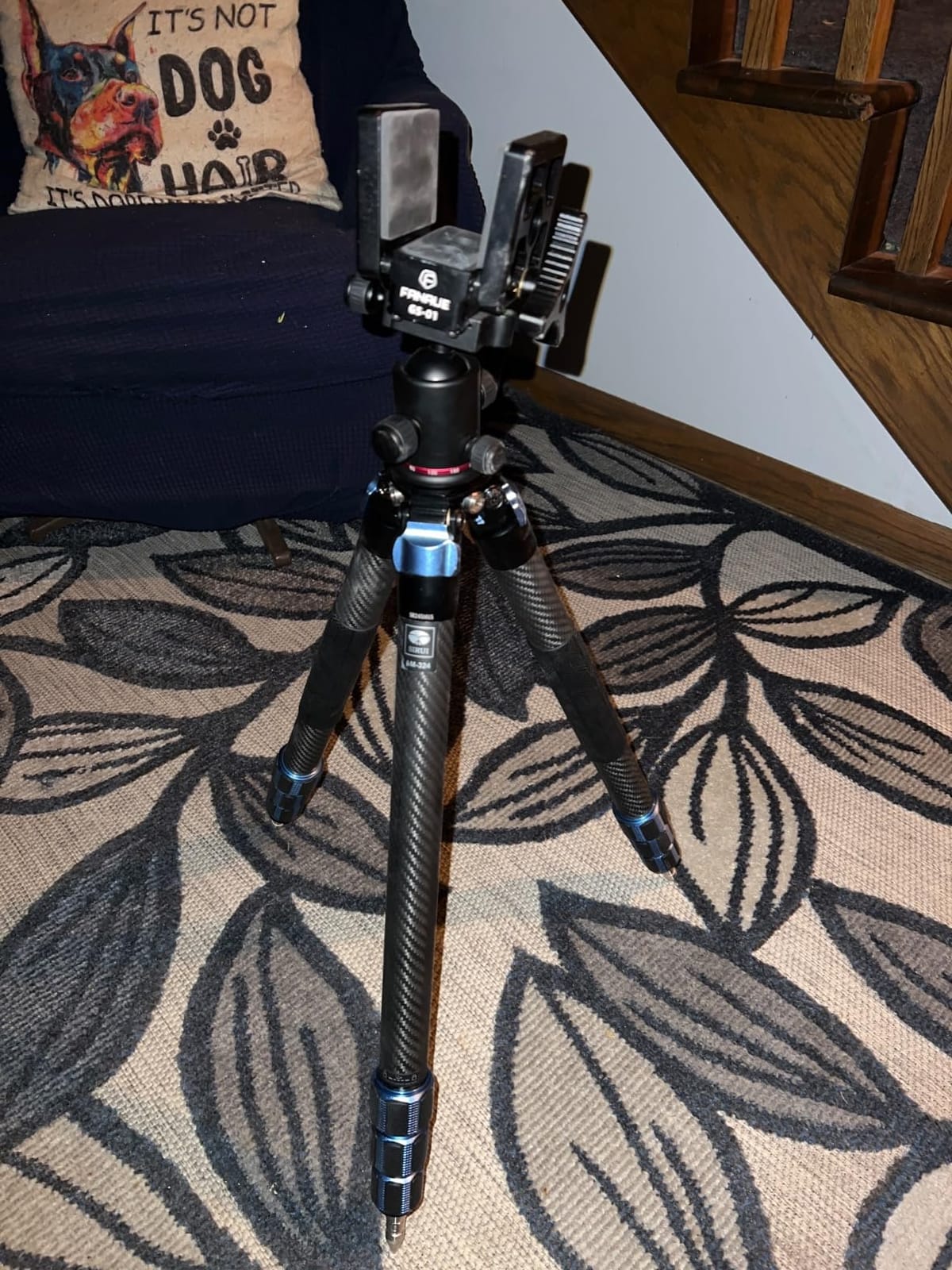
The AM-324 wins on rigidity per gram and nothing else comes close. Thirty-two millimetre 10x carbon tubes carrying 44 pounds in a 3.1 pound package is the most convincing strength-to-weight result in this roundup, and owners shooting with 200 mm and 400 mm lenses report that it stays solid.
There is no centre column, and that turns out to be the most important design decision on the tripod. It keeps the package compact at 20.5 inches retracted and it lets the camera sit 3.1 inches off the ground, which is a genuinely low position for shooting water and foreground detail without digging a hole.
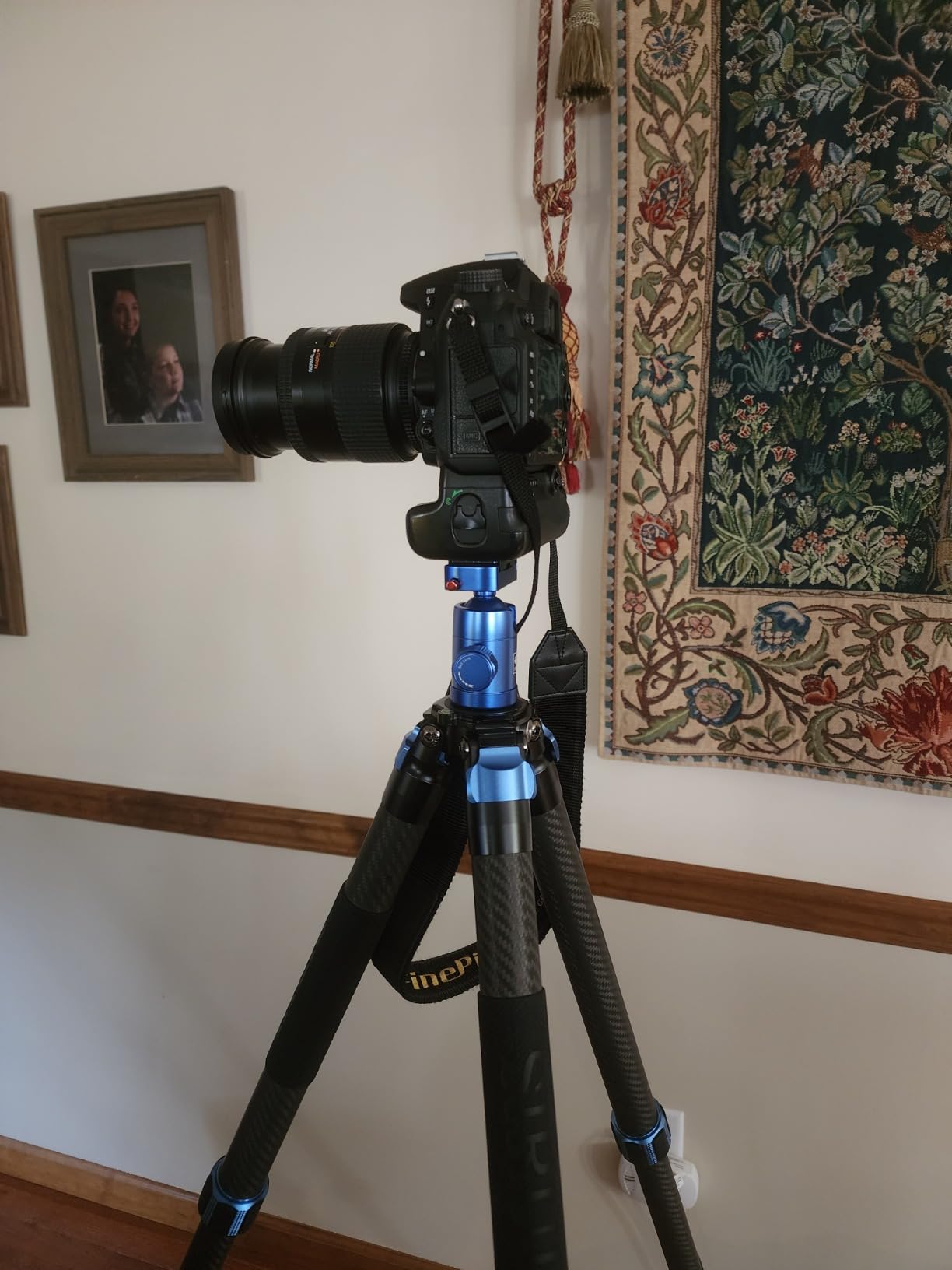
Terrain kit is unusually thoughtful. Exchangeable rubber feet accept metal spikes for mud, ice and sand, and half-turn metal twist locks with silicone gel sleeves are quick to operate and easy to grip with cold hands. Three leg angle positions at 22, 55 and 85 degrees come from semi-automatic flip locks adjustable with the included key.
The 6 year warranty has real force behind it. Owners report broken plastic leg components replaced at no charge, and there is a 1/4 inch and 3/8 inch thread so the head is not a single point of failure.
What to check before you buy it
Check the height ceiling carefully. At 57 inches this is a low tripod by the standards of this roundup, and if you want to shoot standing landscapes at eye level without crouching, you will be bending down more than you expect.
Bring your own case if you care about organisation. The included bag is reported as sized for a different model and will not fit properly with a ball head attached, which is a small annoyance that is easy to solve with any universal tripod case.
Who should skip it
Skip it if you need a tall working height. Without a centre column there is no extension, and that is a feature for low shooting and a limitation for tall framings.
Skip it if you carry a very light kit. The 32 mm tubes and the 3.1 pound weight are overkill for a compact body and a prime, and you could carry something meaningfully lighter instead.
11. SIRUI Traveler X-III Carbon Fiber Tripod — Fastest Single-Lock Deployment
SIRUI 60″/152cm Carbon Fiber Travel Tripod for Camera, Traveler X-III
Weighs 940 g
One integrated twist lock
10 kg load
Folds to 13.9 in
Pros
- Very light at 2.1 lb with a 10 kg load capacity
- Single integrated lock extends or retracts all five sections
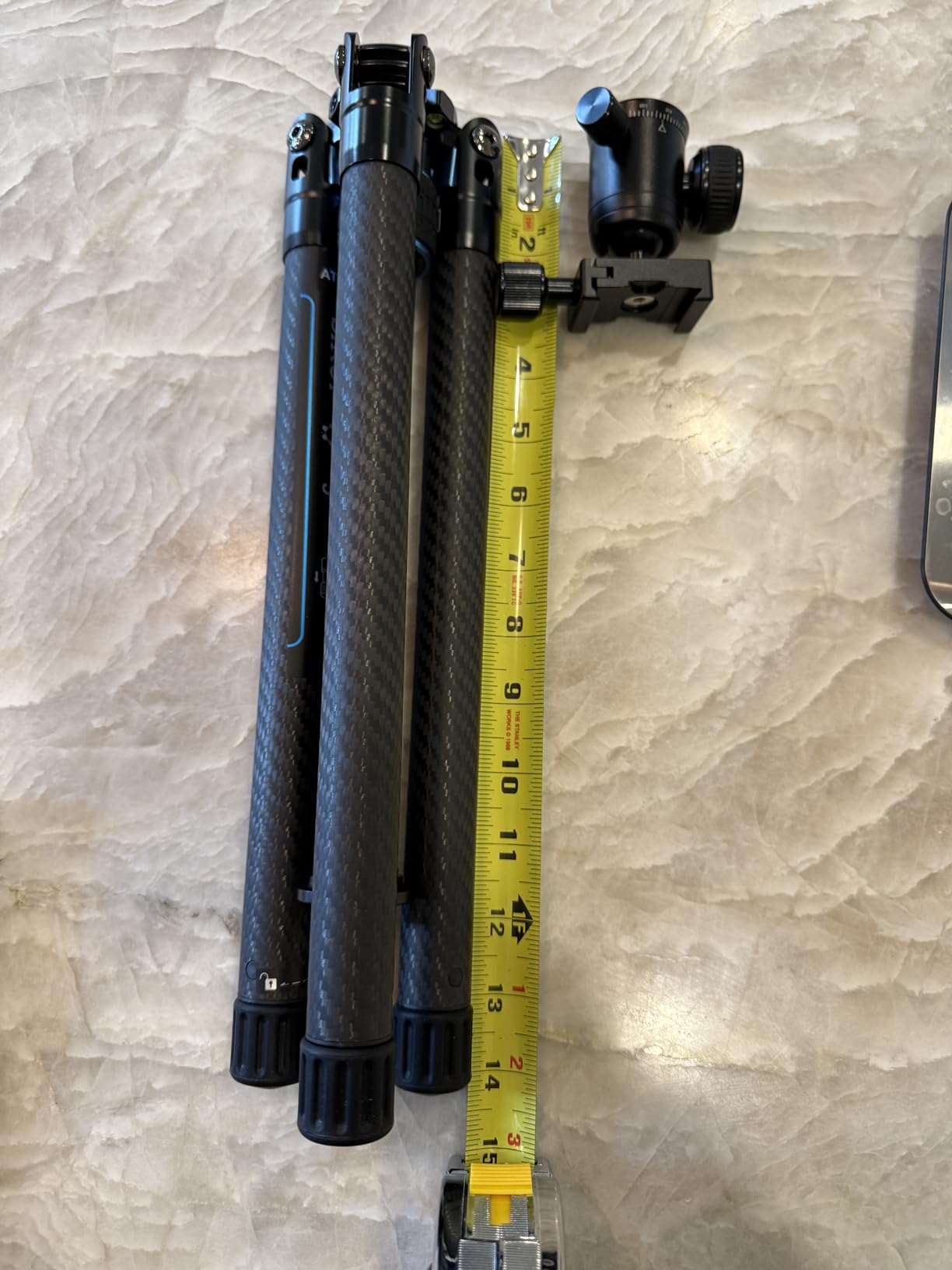
- Reverse-folding legs pack to 354 mm
- Detachable and reversible two-part centre column
- 360 degree panning base with a scale and bubble level
Cons
- Highest share of one-star reviews in this group
- Detachable ball head is a repeatedly reported failure point
- Single lock gives less fine height control
- Phone holder not included despite the mounting hole
The single integrated lock is a clever piece of engineering. One twist extends or retracts all five leg sections at once, which means you set the overall height in a single movement rather than working down four joints. On a trail, with gloves on, in failing light, that is worth more than the fine adjustment you give up.
At 940 grams with a 10 kilogram load rating, it is one of the better weight-to-capacity ratios here. Reverse-folding legs pack it to 354 mm, and the detachable, reversible, segmented centre column handles both macro and ground-level work.
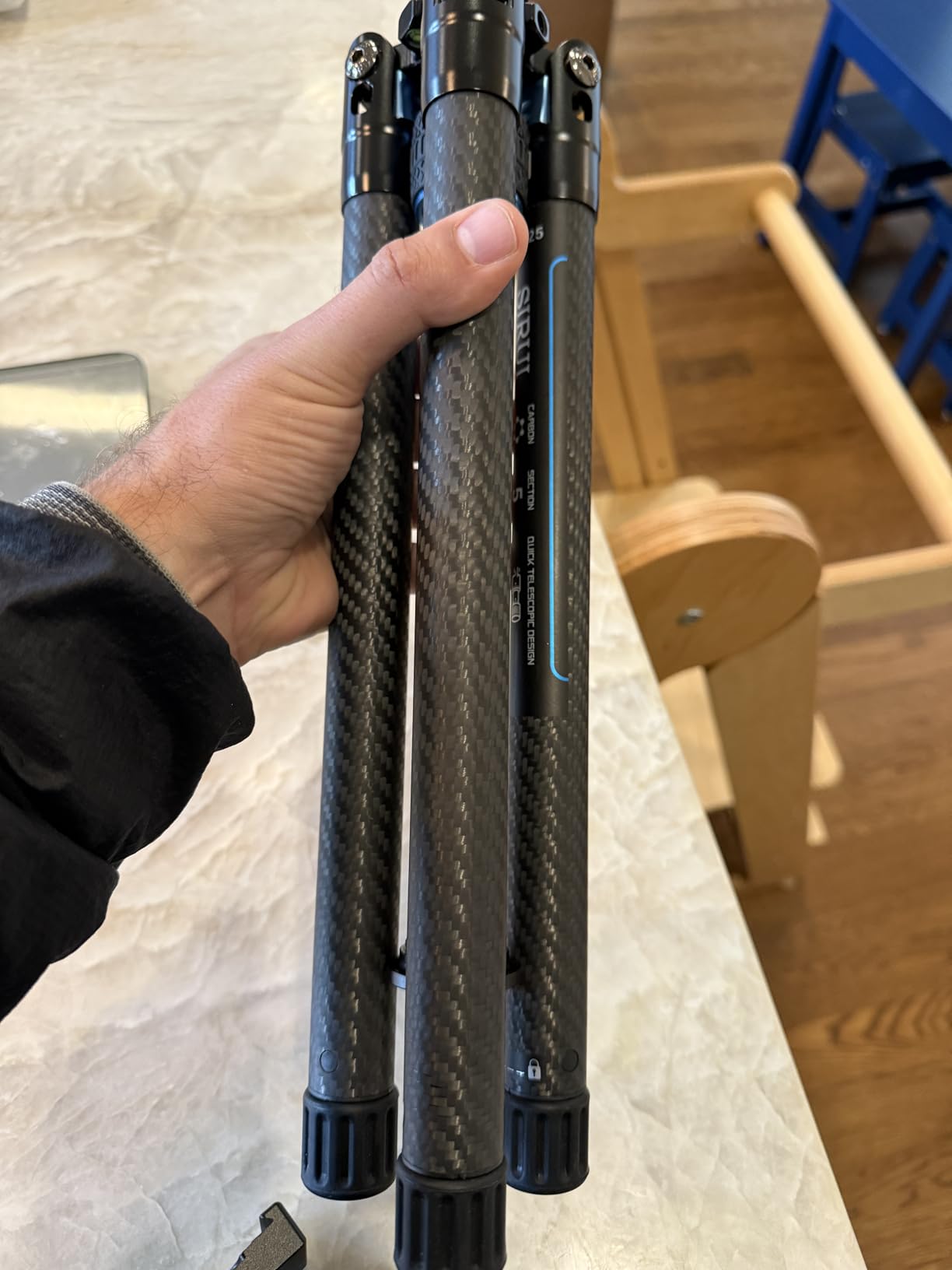
The ball head is where the reviews concentrate their complaints. This model has the highest share of one-star reviews in our group, and the detachable 360 degree head loosening or failing is the most reported issue by a distance. Several owners work around it by swapping the head.
There is a further trade in the one-lock design. Because all sections move together, you cannot fine-tune a single leg, which means uneven terrain needs a different approach: set the height once and use the leg angle positions instead.
What to check before you buy it
Read the one-star reviews before you buy, not after. They cluster on one component, and if that component failing in the backcountry would end your trip, you should know that going in. If it would only be an inconvenience, the rest of this tripod is well made.
Note that the phone holder is not included even though there is a threaded hole for one. Several buyers discover this on the trail, so plan for it if you film on the move.
Who should skip it
Skip it if you shoot a lot of on uneven ground and rely on per-leg adjustment. The single lock removes precisely the control that helps on a slope with three different leg lengths.
Skip it if you carry a heavy body and a telephoto. The head is the reported weak point and it is the part most exposed to that kind of load.
12. K&F Concept X-Series 68 inch Carbon Fiber Tripod — Tallest Reach
K&F Concept X-Series 68″ Carbon Fiber Camera Tripod
Weighs 1.76 kg
68 inch max height
16 kg load
28 mm carbon tubes
Pros
- 28 mm full carbon tubes with a 36 mm CNC metal head
- 16 kg load rating carries a DSLR with a 600 mm lens
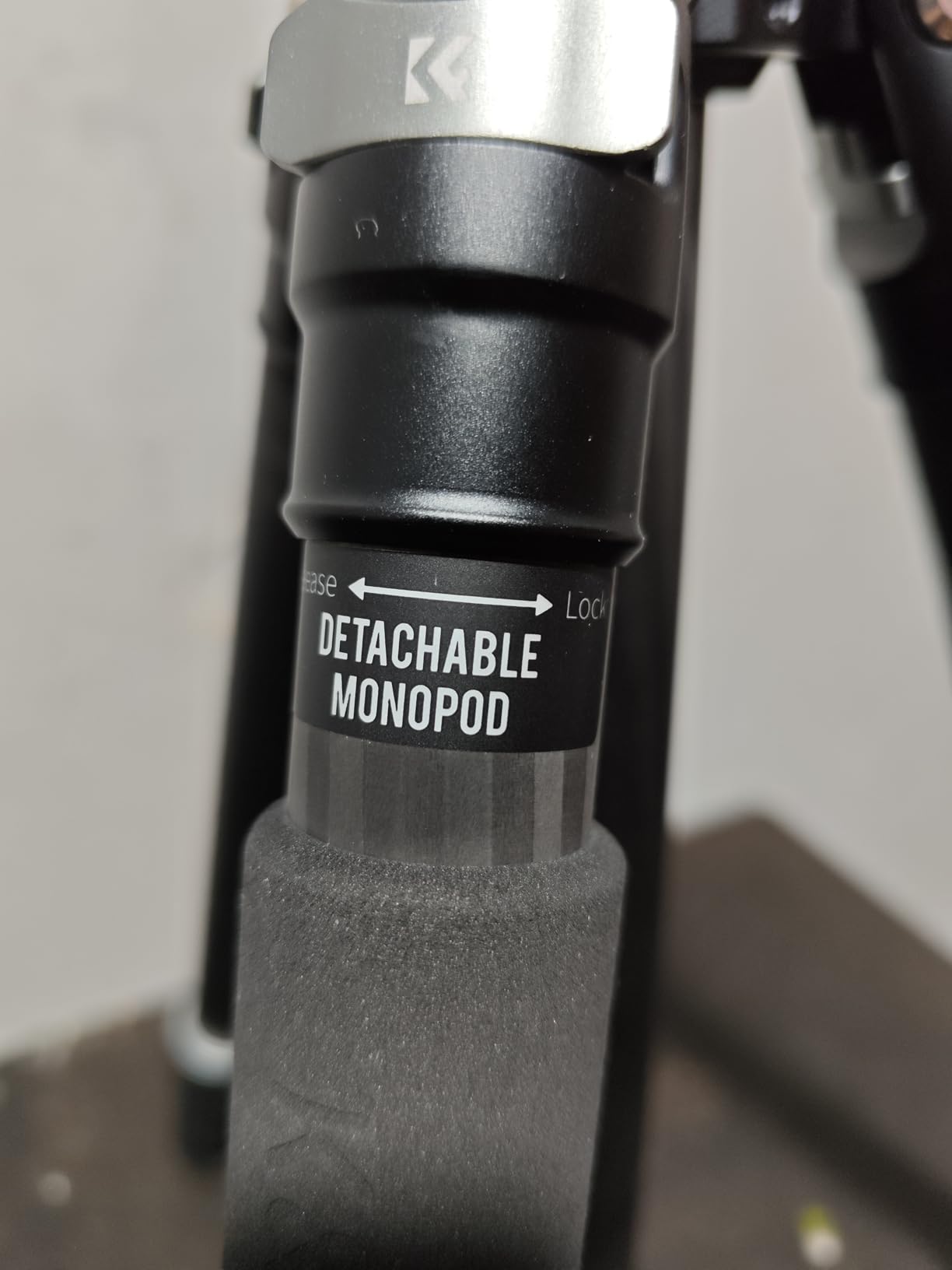
- Detachable leg doubles as a monopod or boom arm
- Includes a padded carry bag and hex keys
- Panoramic scale on the head base
Cons
- Included head can sag under heavy or off-centre loads
- Vibration transmits through the thin sections when a leg is struck
- Centre column becomes wobbly past half extension
- Twist locks need a near half-turn to engage
- Plate clamp uses a friction screw rather than a flip lock
The X-Series reaches 68 inches, the tallest working height in this roundup, and it holds a 16 kilogram load rating. That combination makes it the option for a hiker shooting wide landscapes where you want the horizon straight without crouching, or for compressed ridgelines where you need a narrow angle of view.
Owners report it carrying a DSLR with a 600 mm lens and holding long exposures aligned within a few pixels, which is a strong result for a tripod in this weight class. The detachable leg converts it to a monopod or a video boom arm, giving you a second working configuration for free.
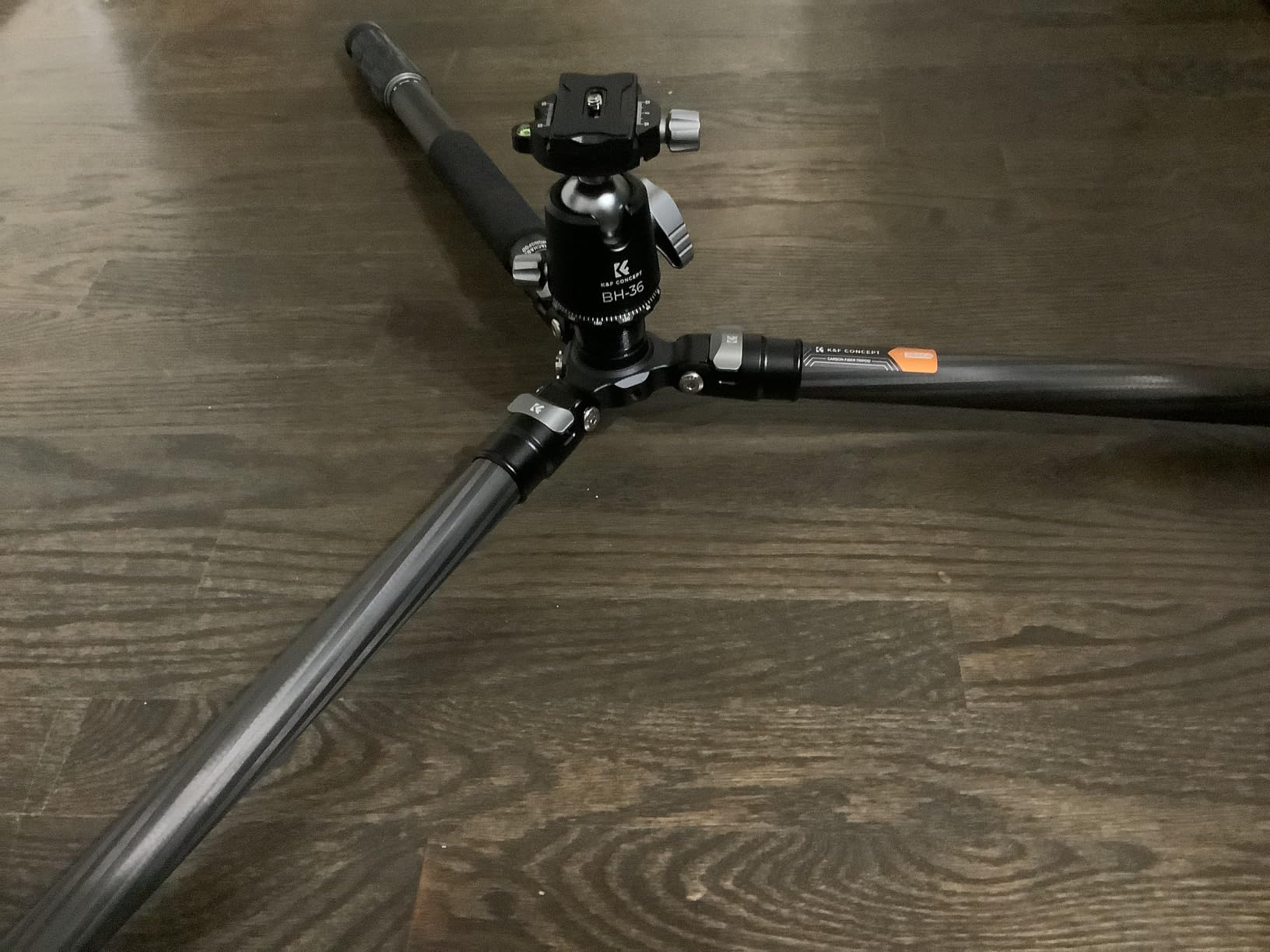
All the recurring complaints point at the same two places. The stock head can sag under heavy or off-centre loads even when tightened, and the centre column becomes wobbly past about half extension. The practical advice from owners is to hang a pack on the hook in wind and to upgrade the head for precision work.
At 1.76 kilograms it is not an ultralight tripod despite the carbon construction, and the weight buys that reach and that load rating. The 23 inch minimum height means it is not a low shooter without other adjustments.
What to check before you buy it
Check the plate clamp design. It uses a friction screw rather than a flip lock, and owners report it working loose while moving, which on a hike is a bad failure mode. Check it at every rest stop.
Plan around the twist locks needing a near half-turn. They are secure once closed, but they are not fast, and if you expect to set up repeatedly during golden hour you will notice the difference against a lever lock.
Who should skip it
Skip it if packed length is your priority. It is one of the longest and heavier options in this roundup, and the reach does not come cheap in grams or in pack space.
Skip it if you need very low-angle macro work. A 23 inch minimum height and a centre column that only gets wobblier as it extends is the wrong tool for ground-level shooting.
How to Carry a Tripod on a Hike
Owners describe compactness as the single most valued feature in this category, more often than weight. That is worth taking seriously, because a tripod you have to strap awkwardly to the outside of your pack is a tripod you will leave behind. Here is how we carry ours, in the order we try them.
Side pocket. Any tripod under about 16 inches and 3 inches wide goes straight into a bottle pocket or a stretch side pocket. This is the reason the 13, 13.7, 14.6 and 15.4 inch models exist in the shapes they do. The tripod occupies space that would otherwise hold a bottle, so budget for two bottles on a long day.
Water bottle pocket as a vertical sleeve. If your tripod is too long for the side pocket, angle it through the bottle pocket and secure it with a compression strap. Several owners describe this as the difference between bringing a tripod and not bringing one, because it works on almost any pack without a special attachment.
Compression straps. A tripod strapped horizontally under the lid or along the bottom of the pack stays close to your body and stops swinging into rocks on a descent. The risk is abrasion on the carbon tubes, so put the tripod in its case and put the case under the strap.
Tripod loop and hybrid carry. Some packs have a dedicated tripod loop on the lower panel. Use it, and thread a short strap through it so the tripod cannot slide out when you scramble. The compression strap should be a backstop, not the primary attachment.
Trekking aid. The method that pays for itself fastest on a solo hike is to unscrew one leg and use it as a walking pole on the descent. Three of the tripods in this roundup convert to a monopod: the NEEWER TP17B, the GEEKOTO, and the K&F Concept at number three. On loose ground it gives you a third point of contact and frees both hands.
Whatever the method, check the tripod before you leave and at every rest stop. Carbon tubes do not bend gradually and then fail. They are brittle, they crack, and a cracked section is not something you can brace with tape. Owners across forums describe finding small cracks after a tripod was crushed in a full pack, and a five second visual check of each leg is the cheapest insurance available.
How to Choose a Carbon Fiber Hiking Tripod
Start with the weight tier, because it maps more directly to the trip than any other specification.
Under 1 kilogram (2.2 lb). Day hikes and fast-and-light backpacking. The AOKA at 1.1 pounds and the SIRUI Traveler 5C at 0.85 kg sit here, and both fold to under 15 inches. Expect to carry a compact body, and expect less stability than anything else on this list.
1 to 1.4 kg (2.2 to 3.1 lb). The balanced hiking sweet spot, and where most people should look. The Peak Design Travel Tripod, the K&F Concept 60 inch, the SIRUI Traveler X-III at 940 g, and the NEEWER LT32 at 1.18 kg all fall here. A mirrorless body with a standard zoom is comfortable, and long exposures are achievable on reasonably steady ground.
1.4 to 2 kg (3.1 to 4.4 lb). Loaded kits, telephoto lenses, and photographers who would rather carry a stable tripod than a light one. The NEEWER TP17B, the GEEKOTO, the SIRUI AM-324, the Benro Slim, and the K&F X-Series live in this band. This is where a lot of hikers should end up, because the tripod is no longer the heaviest thing in the pack.
Over 2 kg. Stability-first territory, where you are carrying a body with a big zoom or working with heavy glass. Nothing in this roundup sits here, and for most hikers that is the correct outcome.
Now think about the total pack penalty, which no spec sheet accounts for. A typical kit is a body around 700 g, a zoom around 700 g, a tripod between 850 g and 1.5 kg, plus a lens or two, a filter kit and a body. On a compact mirrorless loadout the tripod is around a fifth of the total. On a kit with three lenses, adding 400 g to the tripod changes the total by under 3 percent, which means the heavier stable tripod is nearly free once the lenses are in the bag.
Packed length is the second filter, and it is about your pack rather than the tripod. Measure the side pocket before you buy. Anything under 16 inches and 3 inches wide goes in the pocket. Between 16 and 20 inches, plan on a compression strap or a bottle pocket sleeve. Over 20 inches and you are strapping it to the outside of the pack, which is where abrasion and swinging become real problems. If your trips lean more toward airline carry-on and hotel rooms than trails, our guide to the best travel tripods for photographers covers that packing math in more detail.
Leg sections are the next question. More sections means a shorter packed length and more joints, which means more setup steps and more places for flex to appear. Four sections is the practical middle for a hiking tripod. Five sections pack smaller, and if you extend the thinnest section fully you will feel it in long exposures. A four-section design with thicker tubes is usually steadier than a five-section design with thin ones at the same weight.
Lock type changes how the tripod feels in your hands. Twist locks are compact, cheap, and hold tension well, but each one takes a deliberate motion and they are easy to overtighten. Flip and lever locks open with one movement and give a positive click, which is faster and easier with gloves, and they add a small amount of bulk. On a single lock system you get the speed without the bulk, at the cost of per-leg height control.
Head type matters less for hiking than people expect. A ball head repositions quickly and handles uneven terrain, which is what you need on a slope. A 3-way head gives you precise control for horizons and panoramas but takes longer to set. Pan heads are for video and rarely make sense on a trail unless you are shooting moving subjects. Check for friction control rather than lock type, because a head that will not hold a setting is worse than a slow one. If video work is a bigger part of your kit, we cover the head side in depth in our guide to the best video tripods for wedding videographers.
Finally, load capacity. Work out the combined weight of your body and the heaviest lens you will actually mount on a hike, not the heaviest you own. Leave about a quarter of headroom above that figure. A tripod at 90 percent of its rating is flexing, and a flexing tripod is producing soft frames and blurred stars while you wonder why your settings are wrong.
One more consideration is the centre column. On every ultralight model we tested, extending the centre column costs a noticeable amount of stability. Work out your typical shooting height before you leave, set the legs rather than the column, and you will get sharper results from the same tripod. If you can shoot without the column extended, you should.
Carbon Fiber vs Aluminum for Hiking
Carbon fiber wins on weight and vibration transmission, and that is the honest summary for a hiker. Its stiffness-to-weight ratio lets each leg section be thinner and lighter than aluminium without collapsing, and a thinner section has less mass to carry shock from wind and footfall into the camera. For long exposures at dusk and night-sky work on a ridge, that difference is visible in the files.
Aluminium wins on repairability and price. A dented or bent aluminium leg can often be straightened, and the hardware is universally serviceable. Carbon fibre is brittle under impact, cannot be re-anodised, and a cracked section usually means a replacement. Forum reports of long ownership histories with premium aluminium and carbon models are common, and the twelve to thirteen year ownership story one owner describes for a Manfrotto carbon tripod is a genuine counterweight to that reputation.
There is a small comfort difference in cold weather. Carbon fibre does not pull heat out of your hands the way aluminium does, which matters on a winter trail or a dawn start. Spikes are worth carrying in mud, scree, and snow, and all of the tripods here except a couple accept interchangeable feet or included spikes.
For a solo hiker who flies, consider the risk profile carefully. A damaged carbon tripod is expensive to replace in a foreign country, and a baggage claim is a far more hostile environment than a scree slope. If you fly with your gear, a hard-wearing aluminium tripod is a rational choice even though it is heavier.
Frequently Asked Questions
What is the best carbon fiber tripod?
For most photographers the best carbon fiber tripod is the NEEWER Basics TP17B, which folds to 16.3 inches at 3.2 pounds and converts to a monopod. If you prioritise how fast it deploys and how small it packs over maximum stiffness, the Peak Design Travel Tripod in carbon fiber is the alternative, with lever locks that open in seconds and a 15.4 inch packed length.
What are the best tripods for hikers?
The best tripods for hikers depend on trip length and load. Day hikers with a compact body want an ultralight model under 1 kg such as the AOKA or the SIRUI Traveler 5C. Multi-day backpackers carrying a zoom are best served by a tripod in the 1 to 1.4 kg band, where the Peak Design Travel Tripod, the NEEWER LT32 and the Ku0026amp;F Concept sit. Telephoto shooters should start at 1.4 kg and look at the SIRUI AM-324.
Are carbon fiber tripods worth it?
Carbon fiber tripods are worth it for hiking because they are roughly a quarter to a third lighter than an equivalent aluminium tripod and their thinner sections transmit less vibration, which is what allows long exposures and night-sky shots to be sharp. The trade is brittleness under impact and a higher cost if a leg is damaged in the field. If you travel by air and check your tripod as baggage, aluminium is often the more rational choice.
What is the best tripod for trekking?
The best tripod for trekking is one that converts to a monopod, because a single rigid leg gives you a third point of contact on loose ground and frees both hands on a descent. The NEEWER Basics TP17B, the GEEKOTO CT25Pro and the Ku0026amp;F Concept 60 inch all detach a leg for monopod use. Carry it in a side pocket or a bottle pocket sleeve, and check the legs for cracks at every rest stop.
What is the best lightweight tripod for hiking?
The best lightweight tripod for hiking is one you will actually carry, which means folded length matters as much as weight. Look for anything under 16 inches packed and under about 1.2 kilograms, since models beyond that tend to stay in the car. In this roundup the AOKA at 1.1 pounds and 14.6 inches, and the SIRUI Traveler 5C at 0.85 kg and 13 inches, are the two lightest complete options.
What is the lightest carbon fiber tripod available?
Among the tripods we compared, the lightest is the SIRUI Traveler 5C at 0.85 kg (1.87 lb), and the AOKA Carbon Fiber Mini is the lightest of the complete kits at about 1.1 lb (520 g for the legs and ball head mount). The AOKA is the more usable of the two for a photographer because it ships with a head, while the SIRUI has a slightly lower load rating of 8.8 lb.
What is the best lightweight tripod for backpacking?
The best lightweight tripod for backpacking is one that folds under 16 inches so it fits a pack side pocket, and in this comparison the Peak Design Travel Tripod at 15.4 inches and the NEEWER Basics TP17B at 16.3 inches are the two that manage this while still offering a monopod conversion. For overnight trips with a heavier kit, the NEEWER LT32 at 1.18 kg and the Ku0026amp;F Concept 60 inch at 1 kg give you more stability for a few hundred extra grams.
Are carbon fiber tripods durable enough for hiking?
Carbon fiber tripods are durable enough for hiking when you treat them as ultralight gear rather than expedition gear. The main risks are crushing a leg section inside a full pack and cracking a thin upper section, both of which show up as visible cracks rather than gradual bending. Carry the tripod in its case, check each leg at rest stops, and do not exceed the load rating. A 6 year warranty on the SIRUI models covers early plastic part failures at no charge.
How much weight should a hiking tripod weigh?
A hiking tripod should weigh between 0.85 kg and 1.5 kg for most photographers, which is 2.2 to 3.3 lb. Below 1 kg you gain very little because you are likely giving up load capacity and stability with a small head. Above 2 kg you are usually carrying a tripod that a mirrorless body and a standard zoom do not need. Once three lenses are in the pack, the tripod stops being the heaviest item and a slightly heavier, more stable model is nearly free.
If you want a broader read before you decide, our guides to the best carbon fiber tripods for photographers and the best tripods for cameras cover the studio and travel ends of the market, where the weight trade-off works differently.
Final Picks by Hike Type
There is no single best carbon fiber tripod for hiking, but there is a clear answer for each kind of trip. For most people on most day hikes, the NEEWER Basics TP17B is the one to buy, because it folds short, converts to a monopod, and carries a mirrorless kit without complaint.
Fast and light backpackers who shoot with a small body should take the AOKA at about 1.1 pounds or the SIRUI Traveler 5C, accepting that neither will hold a long exposure on rough ground. Hikers who want the fastest setup and the smallest pack profile should pay up for the Peak Design Travel Tripod.
If you carry a telephoto, the K&F Concept 62 inch with its 15 kg metal head or the SIRUI AM-324 with its 44 pound rating will both hold a frame where the rest of this roundup will not. And if you shoot video on the trail, the NEEWER LITETRIP LT32 with its one inch tubes and removable centre column is the legs-plus-swap-head answer.
Before any of them goes in the pack, measure your side pocket and weigh your real kit. That is ten minutes of work that decides whether you are carrying a tripod all day or leaving it on the kitchen table. This roundup of the best carbon fiber tripods for hiking is updated for 2026, and we will keep revising it as models change.