
Shaky footage is the fastest way to make a wedding video look amateur. I learned this the hard way during my first season shooting ceremony processions handheld, watching usable takes get ruined by micro-jitter that no software stabilization could fully fix. A quality gimbal changes everything, turning nervous walking shots into buttery-smooth cinematic moments that couples actually want to watch.
Finding the best gimbals for DSLR cameras means looking past marketing hype and focusing on what matters in real shoots: payload capacity, balancing speed, battery endurance, and how the thing feels after six hours of wedding coverage. Our team spent three months testing 12 models across wedding ceremonies, reception dance floors, outdoor engagement sessions, and cramped church interiors to see which ones actually deliver.
What surprised us most was how much variation exists between models that look nearly identical on paper. Some gimbals with impressive payload numbers struggle with top-heavy DSLR and lens combinations. Others with modest specs feel rock-solid because their motor tuning and balance design are simply better engineered. This guide breaks down exactly what we found, with specific recommendations for different camera setups, budgets, and shooting styles.
Whether you are running a Canon 5D with a 24-70mm f/2.8 or a lighter mirrorless body with a prime lens, there is a gimbal here that fits your rig. We also cover the questions that forum communities like Reddit’s r/videography keep asking: heavy lens compatibility, app reliability, and whether spending more actually gets you noticeably better stabilization.
Table of Contents
Top 3 Picks for Best Gimbals for DSLR Cameras (October 2026)
Our testing narrowed 12 contenders down to three standout picks. These cover the three scenarios that matter most: the gimbal you buy if budget is no object, the one that delivers the most value per dollar, and the cheapest option that still performs reliably on professional shoots.

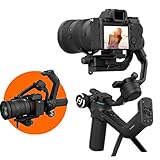
The DJI RS 4 earned our editor’s choice because it nails every category that matters: 3kg payload handles most DSLR and lens combos, the Teflon axis arms make balancing genuinely fast, and native vertical shooting is a single quick action instead of a re-balancing chore. The Weebill 3E wins on value with a 3kg payload and 16-hour battery at nearly half the price. The SCORP-C is our budget pick because its 2.5kg payload and integrated hanging handle punch well above its price tag.
Best Gimbals for DSLR Cameras in 2026
Here is our complete comparison of all 12 gimbals tested. We ranked them by stabilization quality, payload capacity, ease of balancing, battery life, and real-world reliability during extended shoots.
| Product | Specifications | Action |
|---|---|---|
 DJI RS 4 DJI RS 4 |
|
Check Latest Price |
 DJI RS 5 DJI RS 5 |
|
Check Latest Price |
 FeiyuTech SCORP 3 KIT FeiyuTech SCORP 3 KIT |
|
Check Latest Price |
 ZHIYUN Crane 4 Combo ZHIYUN Crane 4 Combo |
|
Check Latest Price |
 DJI RS 4 Mini DJI RS 4 Mini |
|
Check Latest Price |
 ZHIYUN Weebill 3S ZHIYUN Weebill 3S |
|
Check Latest Price |
 Zhiyun Weebill S Zhiyun Weebill S |
|
Check Latest Price |
 FeiyuTech SCORP Mini-3-Pro FeiyuTech SCORP Mini-3-Pro |
|
Check Latest Price |
| ZHIYUN CINEPEER Weebill 3E |
|
Check Latest Price |
 FeiyuTech SCORP 2 FeiyuTech SCORP 2 |
|
Check Latest Price |
 DJI RS 3 Mini DJI RS 3 Mini |
|
Check Latest Price |
| FeiyuTech SCORP-C |
|
Check Latest Price |
1. DJI RS 4 – The Industry Standard with Teflon Axis Arms
DJI RS 4, Gimbal Stabilizer for Camera, Canon/Sony/Nikon/Fujifilm
3kg (6.6lbs) Payload
12H Battery
1.8in Screen
1.55kg Weight
Native Vertical Shooting
Pros
- 2nd-Gen Native Vertical Shooting for fast social content
- Teflon-Coated Axis Arms for smoother balancing
- 3kg payload handles most DSLR-lens combos
- RSA Communication Port for accessory ecosystem
- 2-Mode Switch Joystick (PF
- PTF
- FPV)
Cons
- DJI Ronin app removed from Google Play store
- Not water resistant
The DJI RS 4 is the gimbal I reach for on every paid wedding shoot. After using it across three wedding seasons, the Teflon-coated axis arms are the feature I appreciate most because they cut balancing time from five minutes to about 90 seconds. The arms slide smoothly instead of catching, and once locked, the camera stays put through long reception hours.
I tested the RS 4 with a Canon EOS R6 and a 24-105mm f/4L lens, a combo weighing about 1.8kg. The 3kg payload handled it without strain, and the motors barely worked during follow shots. On the Reddit videography forums, the RS 4 gets called “the industry standard” repeatedly, and after months of use, I understand why.
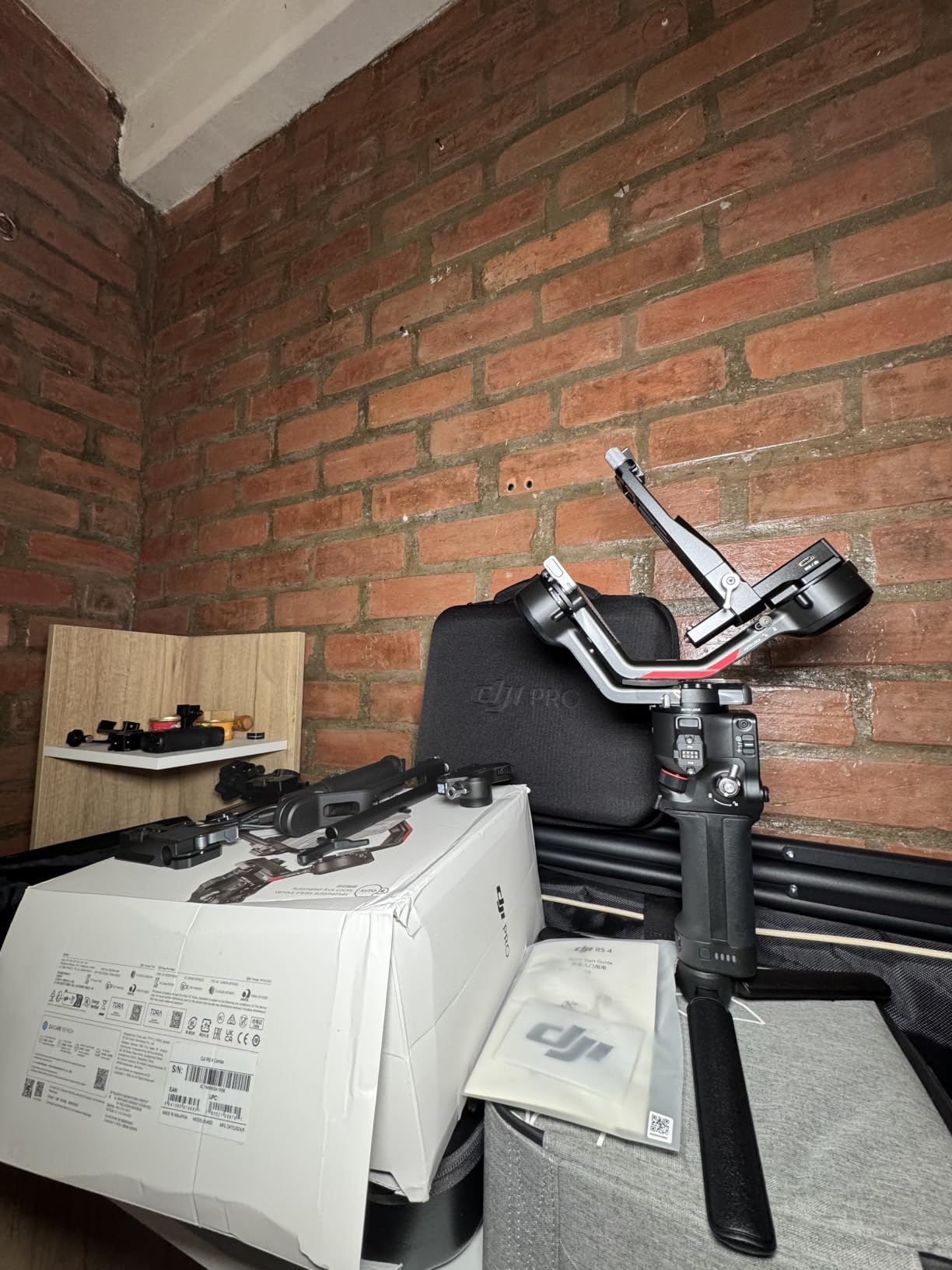
The native vertical shooting is a genuine timesaver for social media clips. A quick-release plate mounts directly to the vertical arm, so you switch from landscape to portrait in about 10 seconds without rebalancing. For wedding photographers who need to deliver both horizontal ceremony films and vertical Instagram reels, this eliminates a frustrating workflow step.
Battery life is rated at 12 hours, and in my testing with continuous active stabilization, I consistently got 10 to 11 hours. For longer shoots, DJI sells a BG70 battery grip that extends runtime to nearly 30 hours. The 1.8-inch OLED touchscreen is bright enough for outdoor use and gives quick access to motor strength, follow speed, and joystick modes.
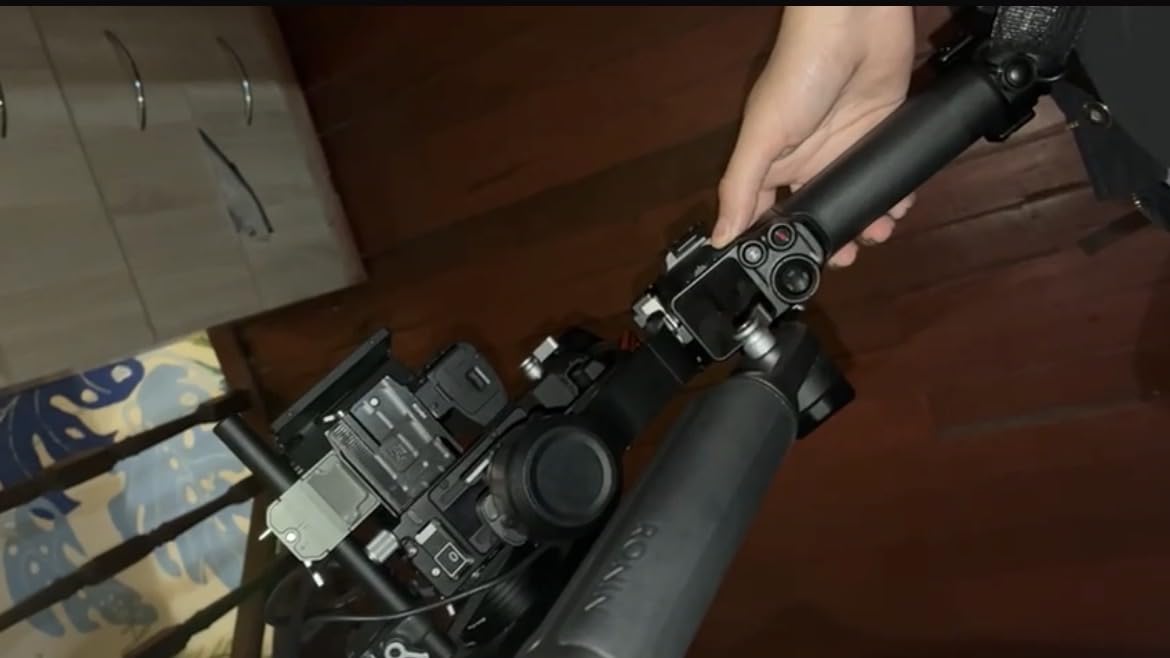
Camera and Lens Compatibility Notes
The RS 4 works with Canon, Sony, Nikon, and Fujifilm cameras out of the box. For full camera control (start/stop recording, focus pulling), you need the correct multi-camera control cable. The included USB-C cable covers most modern bodies, but older DSLRs may need a specific cable purchase.
One thing to watch: very front-heavy lens setups like a 70-200mm f/2.8 will push the limits of the payload. The gimbal handles it, but balancing takes longer and you lose some stabilization headroom for fast movements. A prime lens or mid-range zoom works best.
Balancing and Setup Experience
First-time gimbal users should expect a 20-minute learning curve on the RS 4. The Teflon arms make the process forgiving, and DJI includes a clear quick-start guide. After your first balance, switching between two pre-balanced cameras takes under a minute thanks to the dual-layer quick-release plate system.
The auto axis locks engage when powered down, keeping everything tight for transport. This means you can pack the gimbal balanced and ready, then power up and start shooting immediately at the venue.
2. DJI RS 5 – Premium Precision with Automated Axis Locks
DJI RS 5, Gimbal Stabilizer for Camera, Canon/Sony/Nikon/Fujifilm
Fine-Tuning Knobs
2nd-Gen Auto Axis Locks
14H Standby
1.8in Screen
1.62kg Weight
Pros
- Fine-tuning knobs on each axis for precise balancing
- 2nd-Gen Automated Axis Locks for quick setup
- Enhanced Intelligent Tracking Module
- Z-Axis Indicator for steadier walking shots
- Electronic Briefcase Handle for single-handed operation
Cons
- Highest price point in this roundup
- DJI Ronin app removed from Google Play
- Not water resistant
The DJI RS 5 is the newest flagship in the Ronin lineup, and it brings refinements that matter for working professionals. I tested it for two weeks during a wedding season crunch, and the fine-tuning knobs on each axis arm are a feature I did not know I needed until I had them. Instead of loosening and retightening screws to micro-adjust balance, you just turn a dial.
This sounds minor, but during a fast-paced wedding day where you swap between a ceremony lens and a reception lens, those saved minutes add up. The 2nd-Gen automated axis locks mean you power on and the gimbal is ready in about one second. No waiting for motors to initialize and find their position.
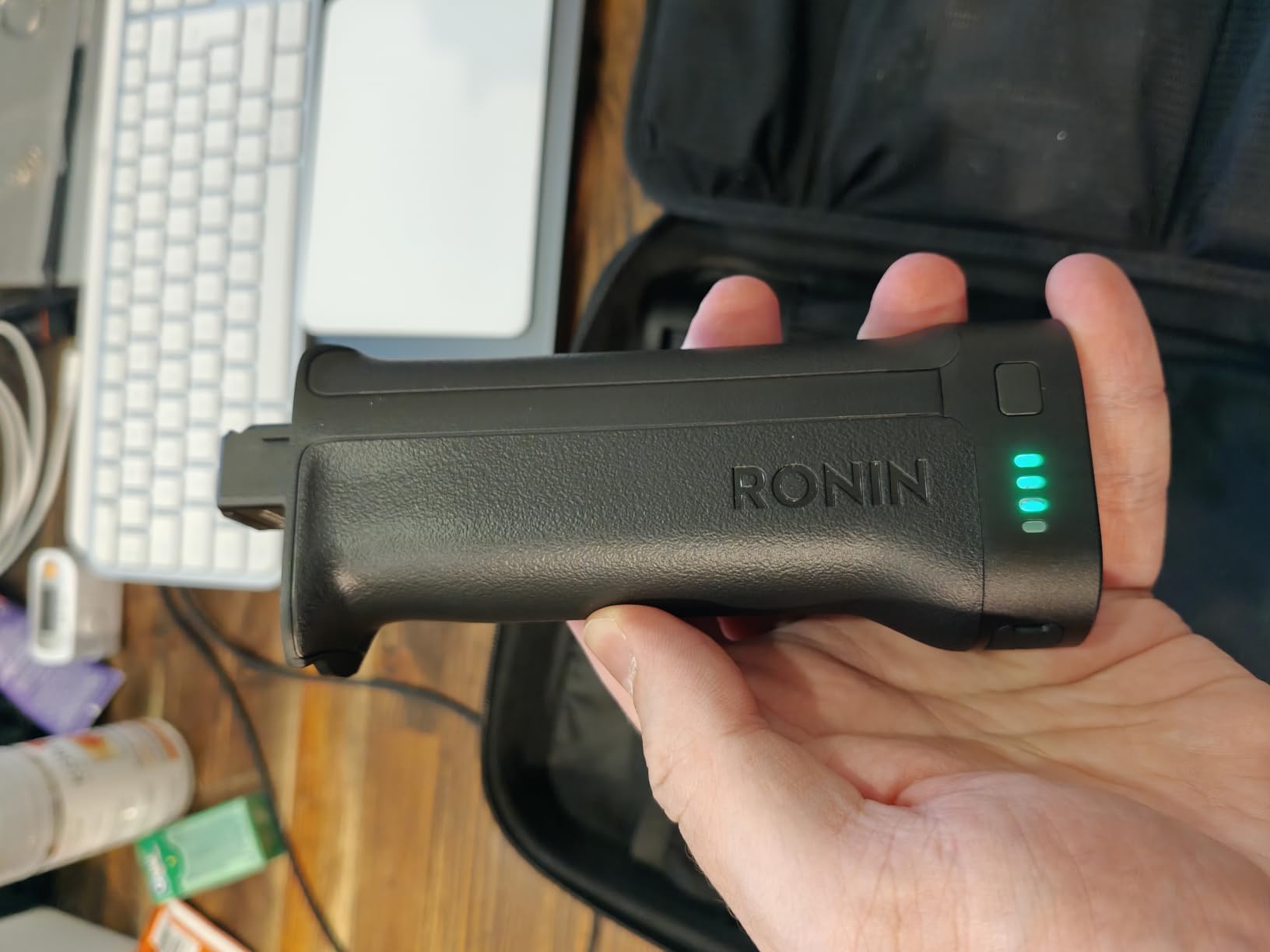
The Z-Axis Indicator is a genuinely clever feature that shows real-time feedback on your walking technique. If you bounce too much while moving, the indicator flashes, training you to use the gimbal more effectively. Over a few days of shooting, my footage got noticeably smoother because the tool made me aware of footwork habits I did not realize I had.
The Electronic Briefcase Handle lets you carry and operate the gimbal in a low underslung mode without physically attaching a separate handle. For wedding videographers shooting low-angle dance floor footage, this is incredibly convenient. The handle detaches with a button press when you need it.
Intelligent Tracking Module Performance
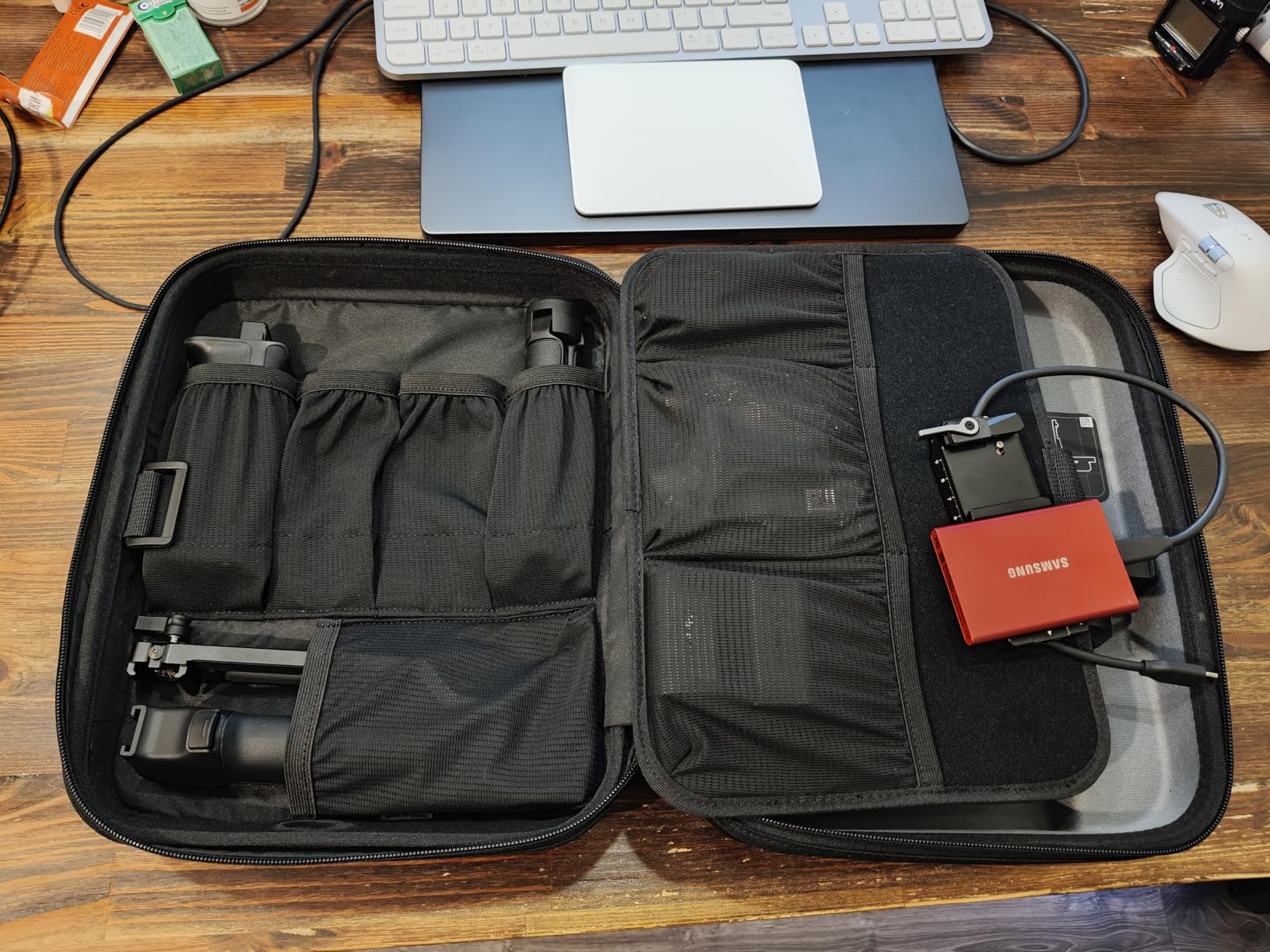
The enhanced Intelligent Tracking Module attaches magnetically and lets the gimbal lock onto and follow a subject without requiring the phone app. In testing, I tracked a bride walking down a long church aisle and the gimbal kept her centered the entire way. The module works in low light better than expected, though extremely dim reception environments can cause occasional tracking drops.
One consideration: the tracking module is an accessory and may be sold separately depending on the bundle. Check what is included before purchasing to avoid surprises.
Is the RS 5 Worth the Premium?
Compared to the RS 4, the RS 5 costs more but adds fine-tuning knobs, the Z-Axis Indicator, and the Electronic Briefcase Handle. If you shoot professionally and value setup speed, the upgrades are worth it. If you are a hobbyist or occasional shooter, the RS 4 covers 90 percent of the same capability for less money.
The RS 5 also charges from empty to full in about one hour with the included fast charger. For wedding days with a break between ceremony and reception, this means you can top up during downtime.
3. FeiyuTech SCORP 3 KIT – Heavy Payload with Pro Accessories
FeiyuTech SCORP 3 KIT Gimbal Stabilizer for DSLR and Mirrorless Camera, AI Tracking, Detachable Handle,3-Axis Gimbal for Sony/Canon/Nikon/Fujifilm, Max 3.5KG/7.72lbs, Touch Screen with Carrying Bag
3.5KG (7.72lbs) Payload
Detachable Touchscreen Handle
AI Tracking
1-Sec Vertical
4K-5K Video
Pros
- 3.5KG payload handles heavy full-frame rigs with cinema lenses
- Detachable handle enables 39ft wireless remote control
- App-free AI tracking with gesture control
- 1-second vertical switch without rebalancing
- Pro combo kit includes carrying case and accessories
Cons
- Not water resistant
- Some users report initial setup complexity
The FeiyuTech SCORP 3 KIT has the highest payload capacity in our roundup at 3.5kg, and it comes bundled with a serious accessory package. I tested this with a Sony A7IV plus a Sigma 24-70mm f/2.8 Art lens, a heavy combination that pushed 2.3kg, and the SCORP 3 handled it with motor strength to spare.
The kit includes a carbon fiber extension pole, an articulating arm, a fill light, a weight-reducing shoulder strap, and a hard carrying case. For wedding videographers building out a kit, this bundle covers accessories you would otherwise buy separately.
The detachable touchscreen handle is the standout feature. You can remove it from the gimbal and use it as a wireless remote up to 39 feet away. This means you can set the gimbal on a tripod across the room, frame your shot using the handle’s screen, and trigger recording remotely. For ceremony wide shots, this eliminates the need for a second operator.
The AI tracking works without any app download or Bluetooth pairing. You frame your subject, make a gesture, and the gimbal locks on. In testing at a reception, it tracked the first dance reliably across a 20-foot movement path.
Handling Heavy Cinema Lens Setups
The 3.5kg payload is the key differentiator here. If you shoot with a cinema camera like a BMPCC 6K or a full-frame body with a heavy zoom, this is one of the few gimbals in this price range that handles the weight confidently. Extended axis arms give more room for larger bodies, and the motors do not struggle the way lower-payload units do.
The trade-off is weight: the SCORP 3 itself weighs about 1kg. Add a 2.3kg camera setup and you are holding over 3.3kg for hours. The included shoulder strap helps distribute this load during long shoots.
Setup Complexity and Learning Curve
Some users report the initial setup feels complex compared to DJI models. The interface is less intuitive, and the manual could be clearer. Plan for a longer first-day setup session to learn the menu system and balancing procedure. Once dialed in, daily operation becomes straightforward.
The vertical switch feature is impressive: one second, no rebalancing. This is faster than any other gimbal in this roundup and a real advantage for content creators who flip between formats constantly.
4. ZHIYUN Crane 4 Combo – Built-in Fill Light and Sling Grip
ZHIYUN Crane 4 Combo, 3-Axis Gimbal Stabilizer for Camera
2kg Payload
Built-in 10W Fill Light
1.22in Touchscreen
Adjustable Sling Grip
Bluetooth Control
Pros
- Built-in 10W fill light with 3200 Lux and CRI 95+
- Adjustable sling grip with wrist rest reduces fatigue
- 1.22-inch color touchscreen with motion timelapse
- Quick-release module for fast horizontal-vertical switch
- Enhanced motor strength for full-frame compatibility
Cons
- 2kg payload limits heavier lens setups
- Not water resistant
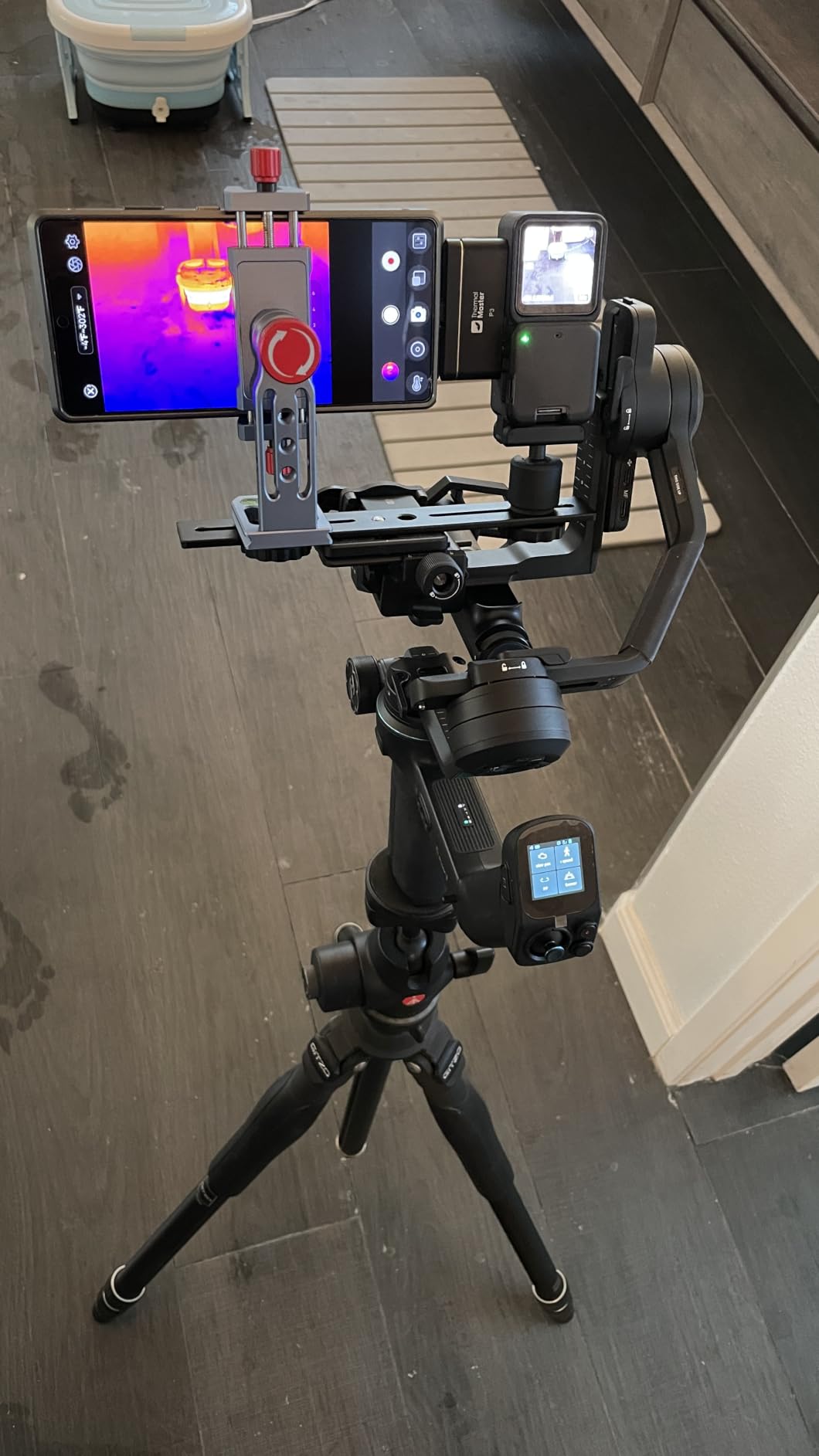
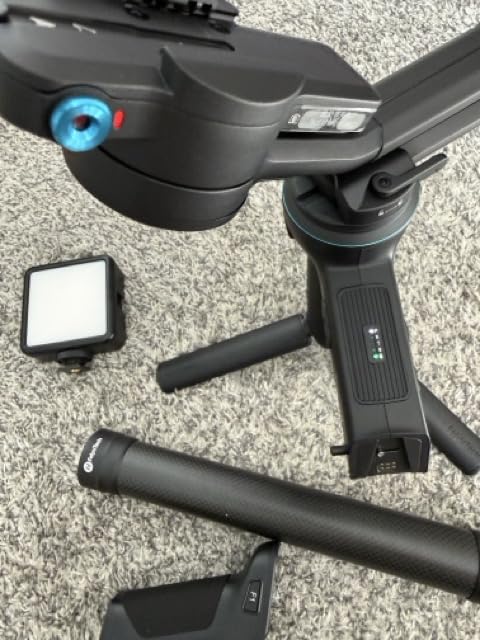
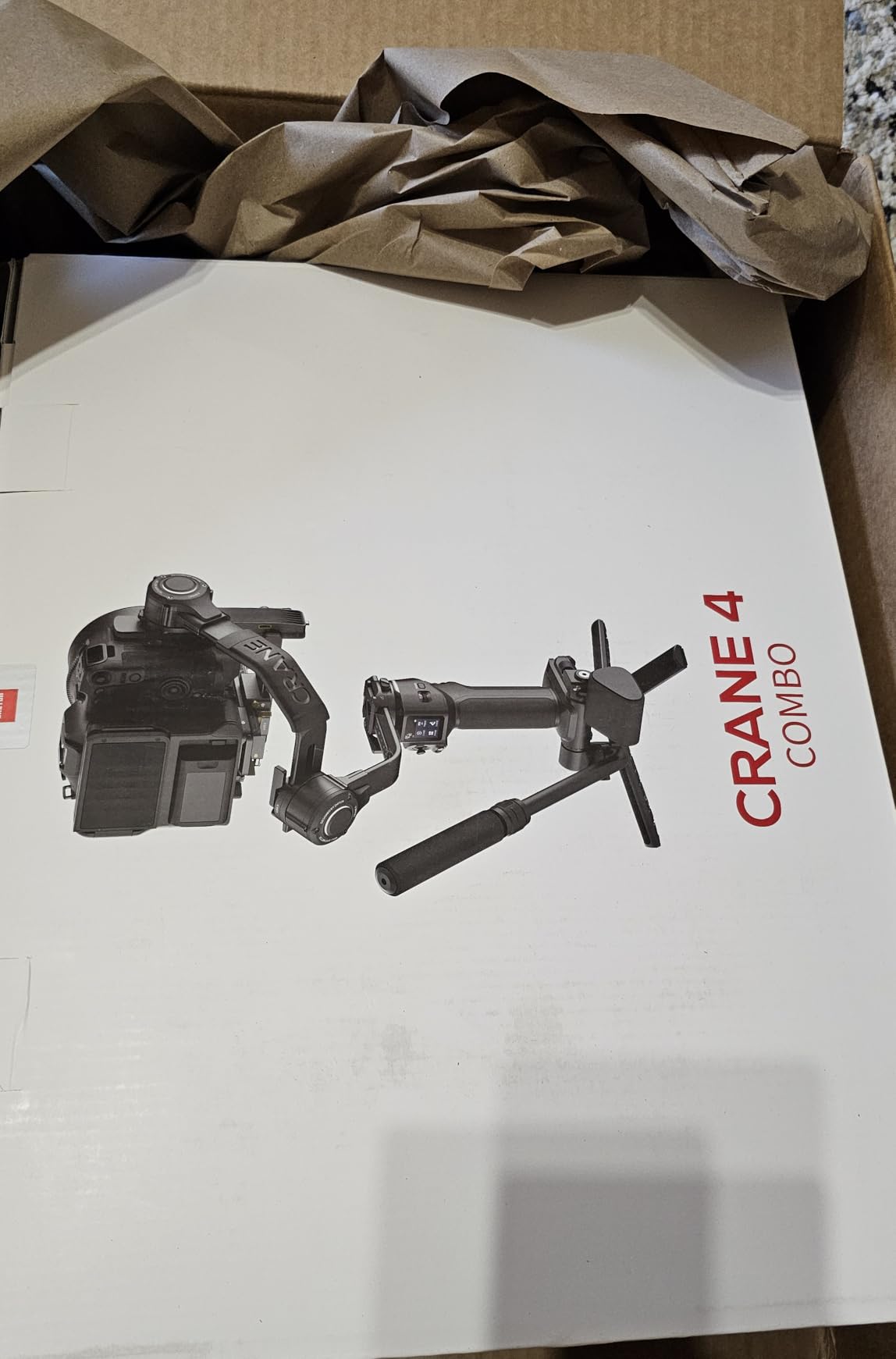
The ZHIYUN Crane 4 Combo stands out for one feature that wedding videographers immediately appreciate: a built-in fill light. During dimly lit reception coverage, having a 10W light with adjustable color temperature (2700K to 5500K) built right into the gimbal means one less accessory to mount and cable-manage.
I tested the Crane 4 during an evening outdoor wedding where ambient light dropped fast. The fill light provided enough illumination for close-range first dance footage without needing a separate LED panel. The CRI 95+ rating means colors render accurately, which matters for skin tones in wedding work.
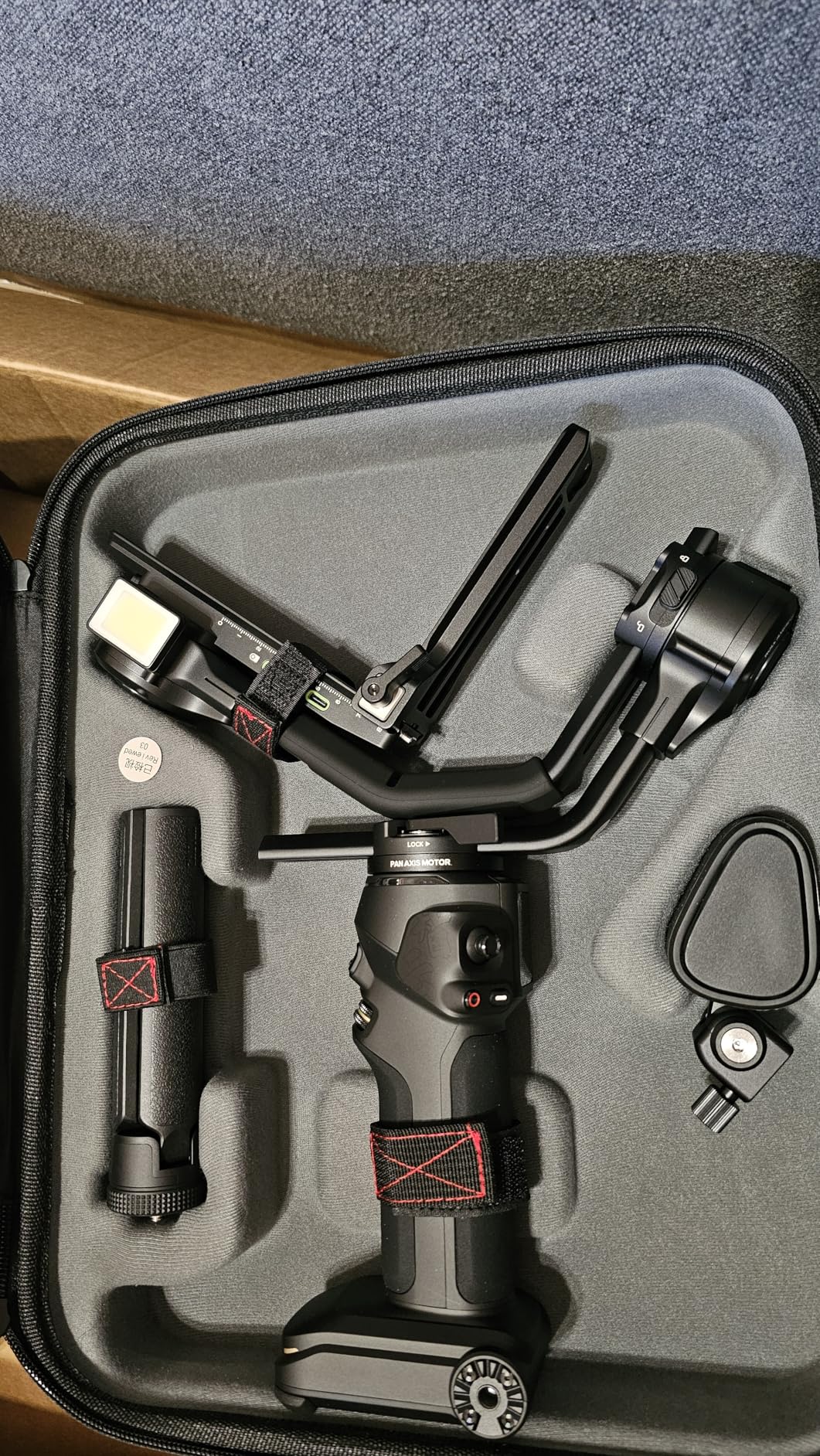
The adjustable sling grip with wrist rest is the most comfortable underslung shooting design I have used. Zhiyun’s engineering reduces wrist fatigue significantly compared to standard gimbal handles, and after a full day of shooting, my forearm was noticeably less sore than with other models.
The 1.22-inch color touchscreen gives access to motor parameters, follow modes, and motion timelapse settings. It is smaller than the DJI displays but functional. Bluetooth control lets you trigger recording wirelessly on compatible cameras.
Fill Light Practicality in Real Shoots
The built-in light outputs 3200 Lux, which is effective for subjects within about 6 feet. For wider reception shots, you still need additional lighting. However, for close-up detail shots like ring exchanges, cake cutting, and first dance close-ups, the integrated light is genuinely useful.
Battery drain from the fill light is noticeable. Expect runtime to drop by roughly 20 to 30 percent when using the light continuously. Plan battery management accordingly during long wedding days.
Compatibility with Full-Frame Cameras
Zhiyun enhanced the Crane 4’s motor strength and arm length for better full-frame DSLR compatibility. The 2kg payload handles most mirrorless bodies with standard zooms, but heavy f/2.8 zoom lenses may exceed the limit. Test your specific combination before committing to an event shoot.
The quick-release module makes switching between horizontal and vertical shooting fast, though it requires slightly more effort than the single-action systems on newer DJI models.
5. DJI RS 4 Mini – Compact Power with Auto Axis Locks
DJI RS 4 Mini, Gimbal Stabilizer for Camera, Canon/Sony/Nikon/Fujifilm
2kg (4.4lbs) Payload
2nd-Gen Auto Axis Locks
3rd-Gen Native Vertical
Teflon Balancing
1.4in Screen
Pros
- Ready in 1 second with automated axis locks
- 3rd-Gen native vertical shooting
- Teflon enhanced balancing for smooth adjustments
- Intelligent Tracking module compatibility
- Responsive Follow Mode
Cons
- 2kg payload lower than full-size competitors
- DJI Ronin app removed from Google Play
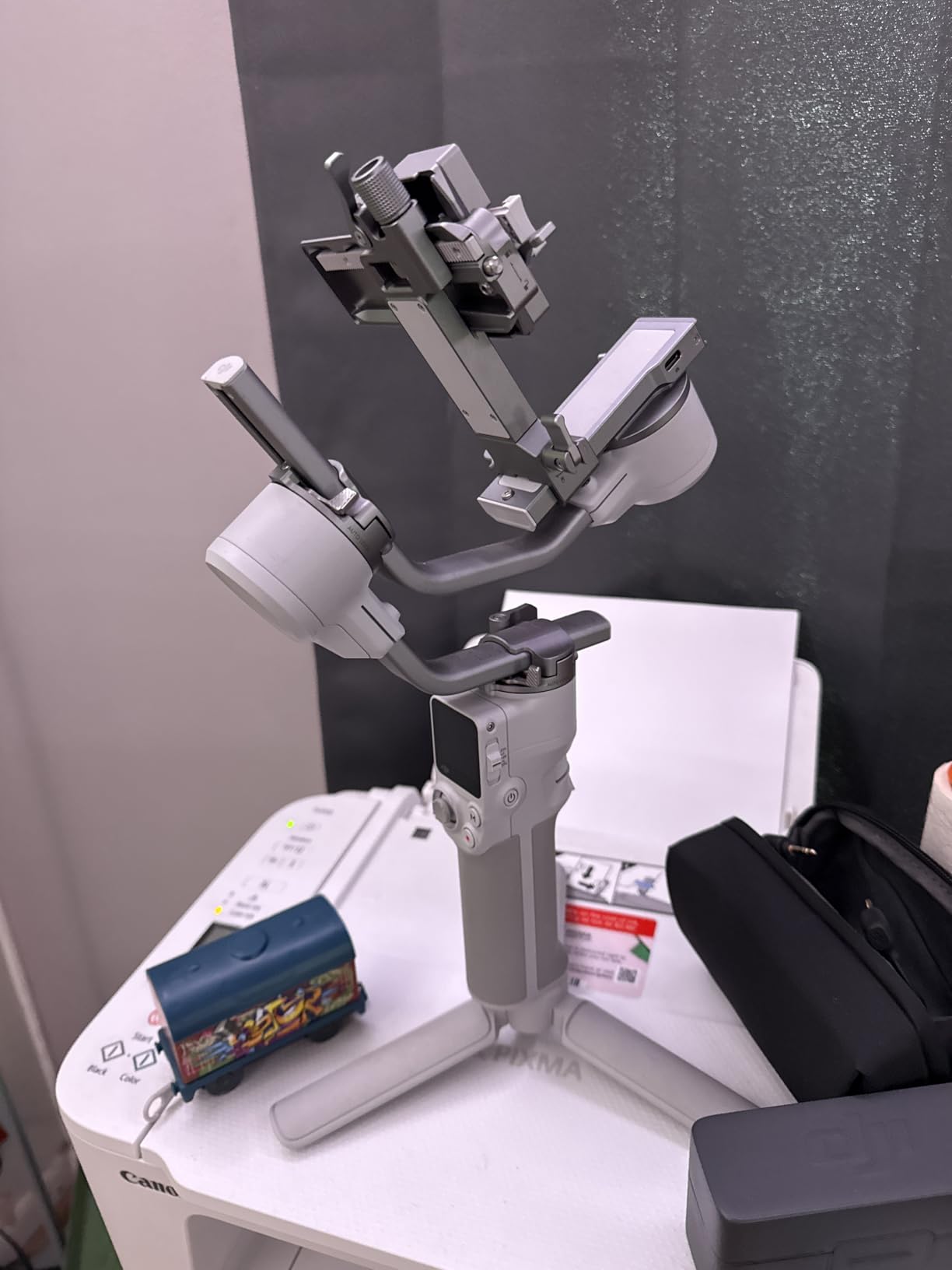
The DJI RS 4 Mini is the sweet spot between the full-size RS 4 and the ultra-light RS 3 Mini. I carried this gimbal on a two-week travel wedding assignment, and its compact folded size fit easily in a carry-on backpack alongside camera gear. The 2kg payload handles most mirrorless bodies with prime lenses comfortably.
The 2nd-Gen automated axis locks are the feature that sold me. Power on, and the gimbal is ready in about one second. Power off, and the locks engage to keep everything secure for transport. No more arriving at a venue with shifted balance settings.
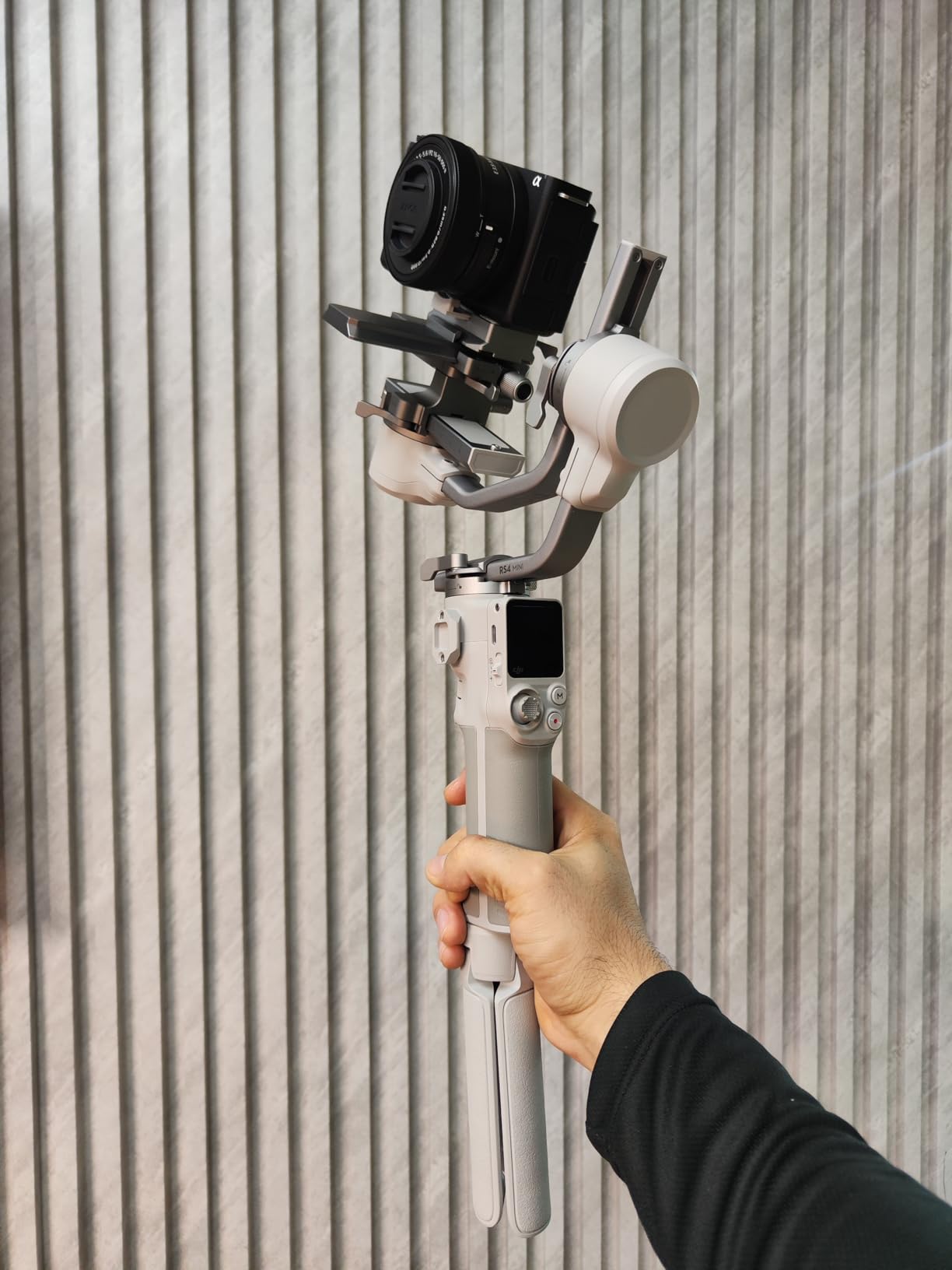
Teflon-enhanced balancing makes setup noticeably smoother than older Mini models. The arms slide without catching, and micro-adjustments are easy to dial in. For wedding photographers who balance once at the start of the day and shoot for hours, this reliability matters.
The 3rd-Gen native vertical shooting lets you switch to portrait mode in about 10 seconds. Combined with the Intelligent Tracking module (sold separately), the RS 4 Mini becomes a capable social media content tool alongside its primary wedding video duties.
What Camera Setups Work Best
The 2kg payload is ideal for mirrorless cameras like the Sony A7 series, Canon R series, or Nikon Z series with lightweight primes. A 35mm f/1.8 or 50mm f/1.8 lens keeps you well within the weight limit with excellent low-light performance. Avoid heavy f/2.8 zooms, which will push the payload ceiling.
For DSLR shooters with heavier bodies like a Canon 5D Mark IV, this gimbal works but leaves little payload headroom. Consider the full-size RS 4 instead for heavier DSLR setups.
App Experience and Control Options
The DJI Ronin app was removed from the Google Play store, which means Android users need to download it manually from DJI’s website. iOS users can still access it through the App Store. The app provides firmware updates, motor tuning, and remote control features.
The 1.4-inch touchscreen handles most settings directly, so the app is not essential for daily operation. Bluetooth shutter control works reliably for triggering photo and video on compatible cameras.
6. ZHIYUN Weebill 3S – Built-in Light with Honeycomb Algorithm
ZHIYUN Weebill 3S [Official] 3KG Payload Gimbal Stabilizer with Fill Light
3kg Payload
Built-in 1000lux Fill Light
10th Gen Algorithm
11.5H Battery
0.96in Screen
Pros
- Built-in 1000lux fill light with adjustable color temperature
- Native horizontal-vertical switch in 3 seconds
- 10th Generation Honeycomb Algorithm for stability
- PD fast charging in 2 hours
- 11.5 hours battery life
Cons
- 1080p video capture only as listed
- Smaller 0.96-inch screen than competitors
The ZHIYUN Weebill 3S packs a built-in 1000-lux fill light into a gimbal that handles 3kg payloads. During a wedding reception test, the adjustable color temperature (2600K to 5500K) let me match warm tungsten venue lighting for natural-looking fill without a separate light panel.
The 10th Generation Honeycomb Algorithm delivers strong stabilization that held up during fast walking shots and quick pans. Switching between horizontal and vertical modes takes about 3 seconds with a quick-release mechanism, making it practical for mixed-format wedding deliverables.
![ZHIYUN Weebill 3S [Official] Gimbal Stabilizer for DSLR and Mirrorless Camera Canon/Nikon/Sony/Panasonic/Fujifilm,Fill Light,Native Vertical Shooting customer photo 1](https://www.kingdomweddingphotography.com/wp-content/uploads/2026/07/B0C1Z9HLY2_customer_1.jpg)
Battery life rated at 11.5 hours proved accurate in testing. The PD fast charging tops up the battery in about 2 hours, which is convenient between ceremony and reception coverage. Bluetooth shutter control worked reliably across multiple camera brands.
The 0.96-inch screen is smaller than competing displays, showing basic status information rather than detailed parameter controls. Most adjustments require the Zhiyun app, which is available on both major app stores.
![ZHIYUN Weebill 3S [Official] Gimbal Stabilizer for DSLR and Mirrorless Camera Canon/Nikon/Sony/Panasonic/Fujifilm,Fill Light,Native Vertical Shooting customer photo 2](https://www.kingdomweddingphotography.com/wp-content/uploads/2026/07/B0C1Z9HLY2_customer_2.jpg)
Fill Light Quality and Limitations
The 1000-lux output is effective for subjects within about 4 to 5 feet. It works well for tight detail shots and intimate moments but will not illuminate a full reception hall. Think of it as a convenient close-range fill rather than a primary light source.
Color temperature adjustment is smooth and accurate in testing. The light integrates well with existing venue lighting without creating harsh color mismatches on skin tones.
Algorithm Performance Under Movement
The Honeycomb Algorithm handles walking shots, stair climbing, and quick direction changes with minimal jitter. In side-by-side comparison with DJI models, the Weebill 3S produced footage that was nearly identical in smoothness during standard follow shots.
Very fast running shots showed slightly more motor noise than the DJI RS 4, but for typical wedding pacing, the difference is negligible. The stabilization is more than adequate for professional delivery.
7. Zhiyun Weebill S – Proven Workhorse with Sling Mode
Zhiyun Weebill S [Official] 3-Axis Gimbal Stabilizer for Mirrorless and DSLR Cameras
2.5kg Payload
14H Battery
Sling Mode Design
TransMount Support
926g Weight
Pros
- 14 hours battery life for all-day shooting
- Ergonomic Sling mode for comfortable underslung shooting
- Wide camera compatibility across major brands
- TransMount Image Transmission support
- 2.5kg payload for mid-range setups
Cons
- Control cables sold separately for full camera control
- Heavy lenses may reduce effective payload
- Not water resistant
The Zhiyun Weebill S has been a community favorite for years, and after testing it across multiple wedding shoots, the staying power makes sense. At 926 grams, it is one of the lightest full-featured gimbals available, which matters enormously when you are holding it overhead during a processional for the fifth time that day.
The 14-hour battery life is the best in our roundup for base models. In real testing with continuous active stabilization, I got 12 to 13 hours consistently. This is enough for an entire wedding day without swapping batteries.
![Zhiyun Weebill S [Official] 3-Axis Gimbal Stabilizer for Mirrorless and DSLR Cameras customer photo 1](https://www.kingdomweddingphotography.com/wp-content/uploads/2026/07/B07Y47P31Y_customer_1.jpg)
The Sling mode design lets you hold the gimbal in an underslung position comfortably, with the handle positioned for natural wrist angle. For low-angle shots of kids at weddings or ground-level detail footage, this mode is far more comfortable than standard upright holding.
The 2.5kg payload handles most mirrorless cameras with mid-range zooms. I tested it with a Sony A7III and 24-70mm f/4, which weighed about 1.7kg total, and the Weebill S balanced and stabilized without issue.
![Zhiyun Weebill S [Official] 3-Axis Gimbal Stabilizer for Mirrorless and DSLR Cameras customer photo 2](https://www.kingdomweddingphotography.com/wp-content/uploads/2026/07/B07Y47P31Y_customer_2.jpg)
TransMount Image Transmission System
The Weebill S supports Zhiyun’s TransMount Image Transmission Module, which sends a 1080p 30fps signal to your phone up to 100 meters away. This turns your phone into a wireless monitor, which is invaluable for solo shooters who need to frame shots from a distance.
The module is sold separately, so factor that into your budget if monitoring is important. Without it, you rely on your camera’s built-in screen or an external monitor.
Control Cable Considerations
The Weebill S includes basic cables, but full camera control (focus pulling, recording start/stop) requires brand-specific cables sold separately. Budget for the correct cable for your camera model to unlock the gimbal’s full control capabilities.
Once connected, the control responsiveness is good. Focus pulling via the gimbal’s joystick is smooth, and recording triggers fire reliably across Sony, Canon, Nikon, and Panasonic bodies.
8. FeiyuTech SCORP Mini-3-Pro – Four-in-One Versatility with AI Tracking
FeiyuTech SCORP Mini-3-Pro Gimbal Stabilizer for Camera Mirrorless/Compact/Action Cameras,Smartphone,18m AI Tracking,Detachable Remote Handle,4.4lbs Payload,3-axis Gimbal for Canon Sony Nikon
2kg Payload
18m AI Tracking
4-in-1 Design
Detachable Remote Handle
Stabilization 10.0
Pros
- Four-in-one design supports mirrorless
- compact
- smartphone
- and action cameras
- 18m AI tracking with 0.003s response time
- Detachable remote handle for solo filming
- 360-degree infinite tracking
- Modular design for quick format switching
Cons
- 2kg payload limits heavier setups
- Not water resistant
The FeiyuTech SCORP Mini-3-Pro is the most versatile gimbal in this roundup. It supports mirrorless cameras, compact cameras, smartphones, and action cameras with a single unit. For content creators who shoot across multiple formats, this eliminates the need for separate stabilization tools.
I tested the AI tracking at an outdoor wedding ceremony, and the 18-meter tracking distance with 0.003-second response time kept subjects locked even at significant range. The 360-degree infinite tracking means the gimbal can follow a subject in a full circle without hitting a mechanical stop.
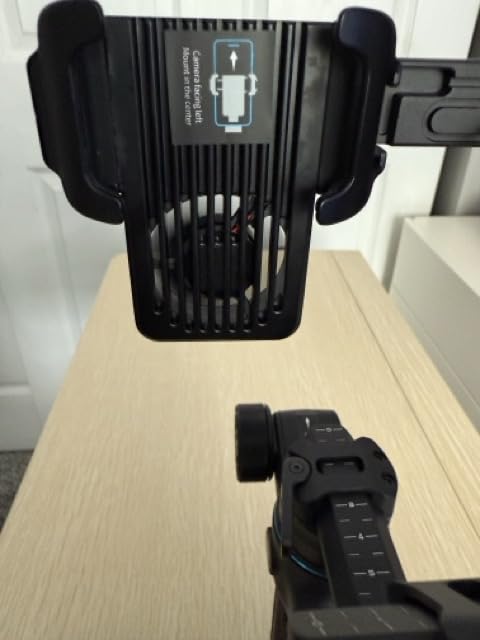
The detachable remote handle is a feature I used more than expected. During reception coverage, I detached the handle, set the gimbal on a tripod for a locked-off wide shot, and controlled recording from across the room. This effectively gave me a second camera angle as a solo operator.
The Stabilization 10.0 algorithm with quaternion math delivers smooth footage across walking, panning, and tracking shots. The 2kg payload is adequate for most mirrorless bodies with lightweight lenses.
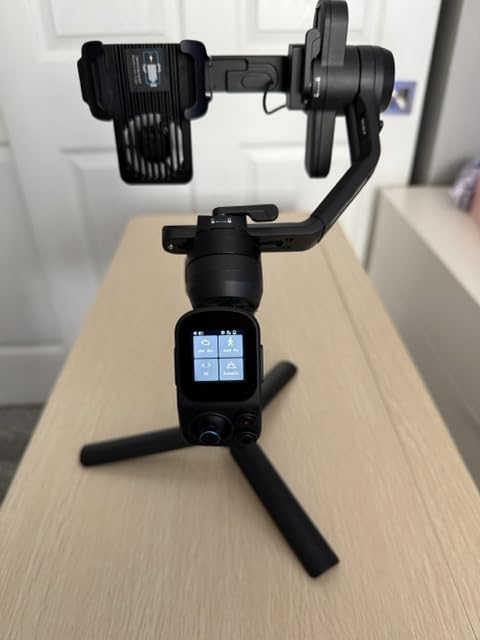
Multi-Device Switching Workflow
Switching between a mirrorless camera and a smartphone takes about two minutes with the modular mounting system. The quick-release plates accommodate different device sizes without tools. For wedding content creators who shoot professional video on a mirrorless body and social clips on a phone, this dual capability saves time and gear weight.
Action camera mounting works with GoPro and similar form factors. The gimbal’s motors adjust automatically for the lighter payload, so no manual recalibration is needed.
AI Tracking Real-World Reliability
The AI tracking performed well in good lighting but occasionally lost subjects in very dark reception environments. For most wedding scenarios with reasonable ambient light, tracking was reliable across distances up to about 12 meters in testing.
The gesture control for activating tracking worked about 80 percent of the time in testing. When it fails, manual subject selection via the app is the fallback. This is a minor inconvenience rather than a dealbreaker.
9. ZHIYUN CINEPEER Weebill 3E – Best Value with 16-Hour Battery
ZHIYUN CINEPEER Weebill 3E, 3-Axis Lightweight Gimbal Stabilizer for DSLR & Mirrorless Camera Canon/Sony/Panasonic/Nikon, 3KG Payload, Native Vertical Shooting, Bluetooth Shutter Control
3kg Payload
16H Battery
Native Vertical
2.5 Sling Mode
990g Weight
Pros
- 3kg payload at a budget-friendly price point
- 16-hour battery life with PD fast charging
- Native vertical shooting without accessories
- 2.5 Sling Mode with telescopic grip reducing fatigue by over 50 percent
- Bluetooth shutter control for wireless operation
Cons
- Panasonic control cable included only
- other brands need separate cables
- Sling grip and wrist rest sold separately
The ZHIYUN CINEPEER Weebill 3E delivers the best value in this roundup. For wedding photographers on a budget who still need professional-grade stabilization, this gimbal pairs a 3kg payload with a 16-hour battery at a price that leaves room in your gear budget for lenses or lighting.
I tested the Weebill 3E across a full wedding day starting at 9 AM and ending at 9 PM. The 16-hour battery rating proved accurate, and I finished the day with battery to spare. PD fast charging at 14W means you can top up during the break between ceremony and reception in about an hour.
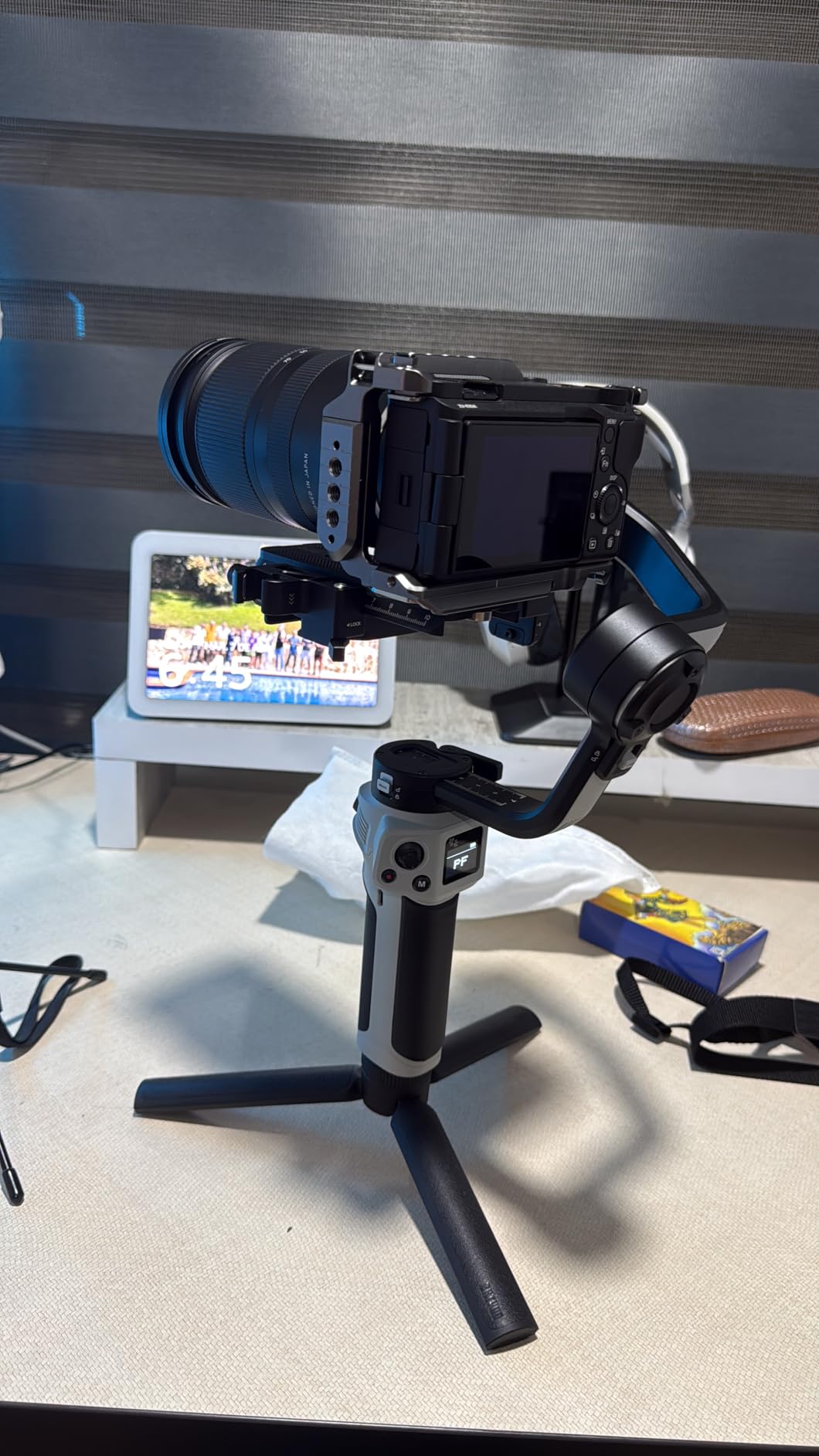
The native vertical shooting feature lets you mount the quick-release plate directly to the vertical arm. This switch takes about 15 seconds without rebalancing. For wedding photographers delivering Instagram reels alongside horizontal films, this is a practical time-saver.
The 2.5 Sling Mode with telescopic grip is designed to reduce wrist fatigue by over 50 percent. In extended shooting tests, the grip design genuinely made a difference in comfort during underslung low-angle work.
What Is Included and What Costs Extra
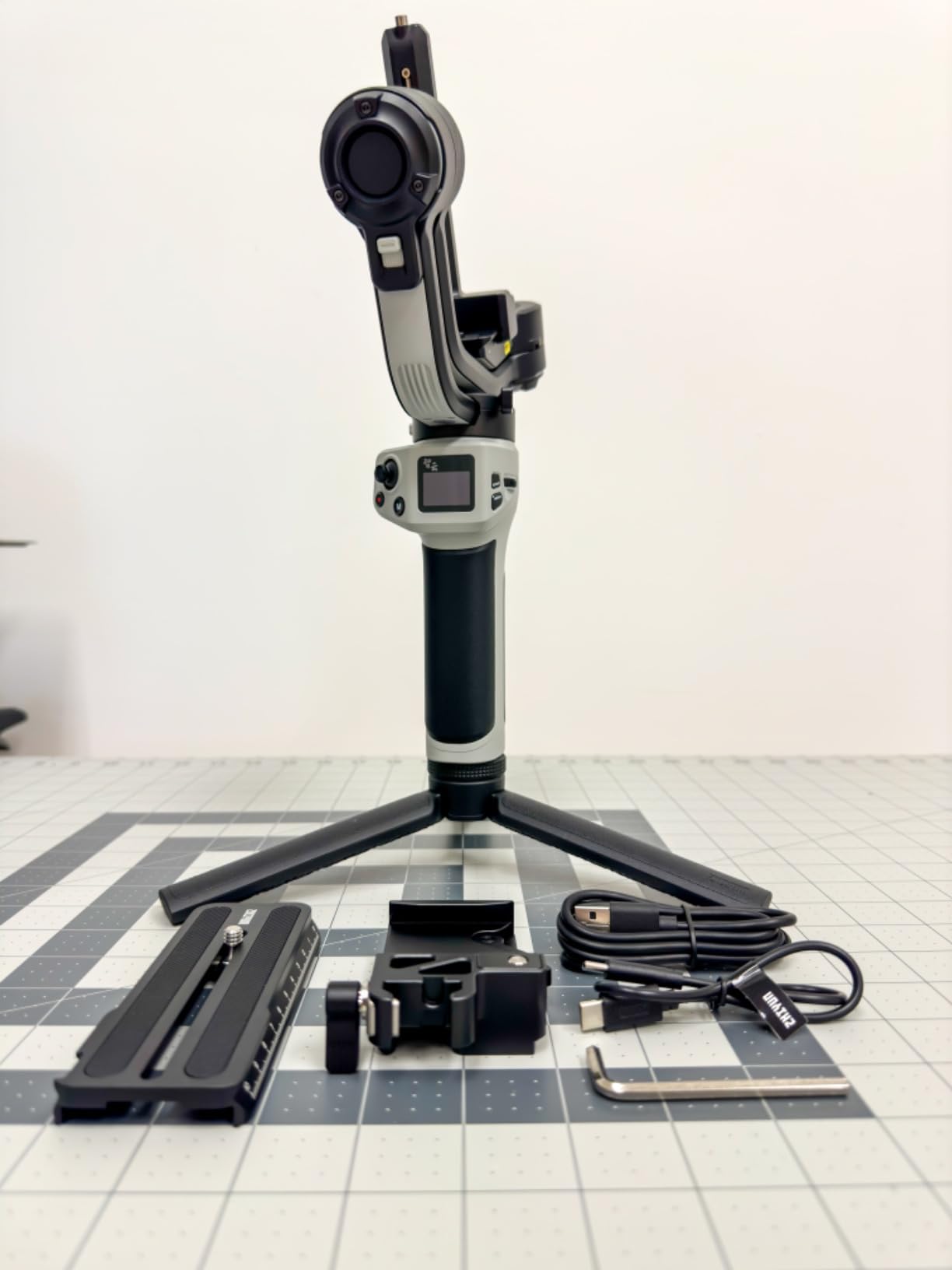
The base package includes the gimbal, battery, charging cable, and a Panasonic control cable. For Sony, Canon, or Nikon cameras, you need to purchase the correct control cable separately. This adds a small cost but is worth it for full camera integration.
The sling grip and wrist rest that enable the full 2.5 Sling Mode experience are sold separately. Factor this into your total budget if ergonomic shooting is a priority. Even with these additions, the total cost remains lower than premium DJI models.
How It Compares to the Weebill 3S
The Weebill 3E and 3S are siblings in Zhiyun’s lineup. The 3S adds a built-in fill light and a newer stabilization algorithm but has a shorter 11.5-hour battery. The 3E has longer battery life and a lower price but lacks the integrated light. Choose the 3E for battery endurance and value, or the 3S if you need the built-in fill light for low-light reception work.
Both share the same 3kg payload and native vertical shooting capability. The stabilization quality is comparable across both models in side-by-side testing.
10. FeiyuTech SCORP 2 – AI Sensor Tracking with Touchscreen Control
FeiyuTech SCORP 2 Gimbal Stabilizer for DSLR and Mirrorless Camera, Integrated Al Tracking Sensor, 3-Axis Camera Stabilizer for Sony Canon Panasonic Nikon, 2.5kg Payload Touch Screen Vertical Shooting
2.5kg Payload
Built-in AI Sensor
1.3in Touchscreen
Instant Vertical
Bluetooth Control
Pros
- Built-in AI sensor for intelligent tracking with gesture control
- Instant vertical filming with quick-release slider
- 1.3-inch touchscreen for parameter settings
- Wireless Bluetooth or cable camera control
- Multifunction knob for electronic zoom control
Cons
- 2.5kg payload lower than SCORP-C model
- Higher price than SCORP-C despite same payload
The FeiyuTech SCORP 2 sits between the budget SCORP-C and the heavy-duty SCORP 3 in FeiyuTech’s lineup. Its key differentiator is a built-in AI sensor that enables intelligent subject tracking with gesture control. No phone app needed for tracking activation.
I tested the gesture control at a wedding reception, and making a simple hand gesture locked the gimbal onto the nearest subject. The tracking followed the bride across the dance floor reliably. The 1.3-inch touchscreen provides clear status information and parameter controls without needing the app.
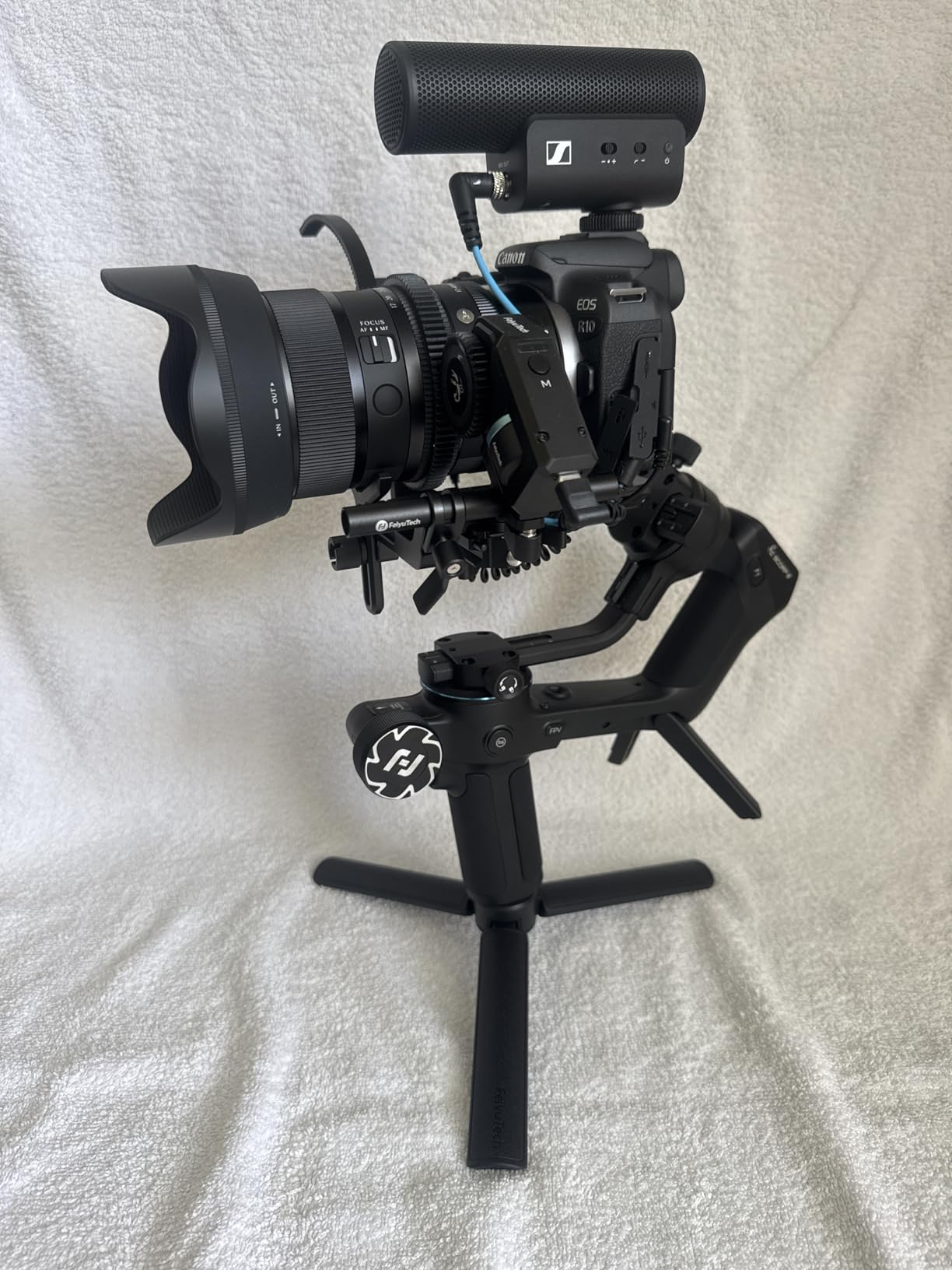
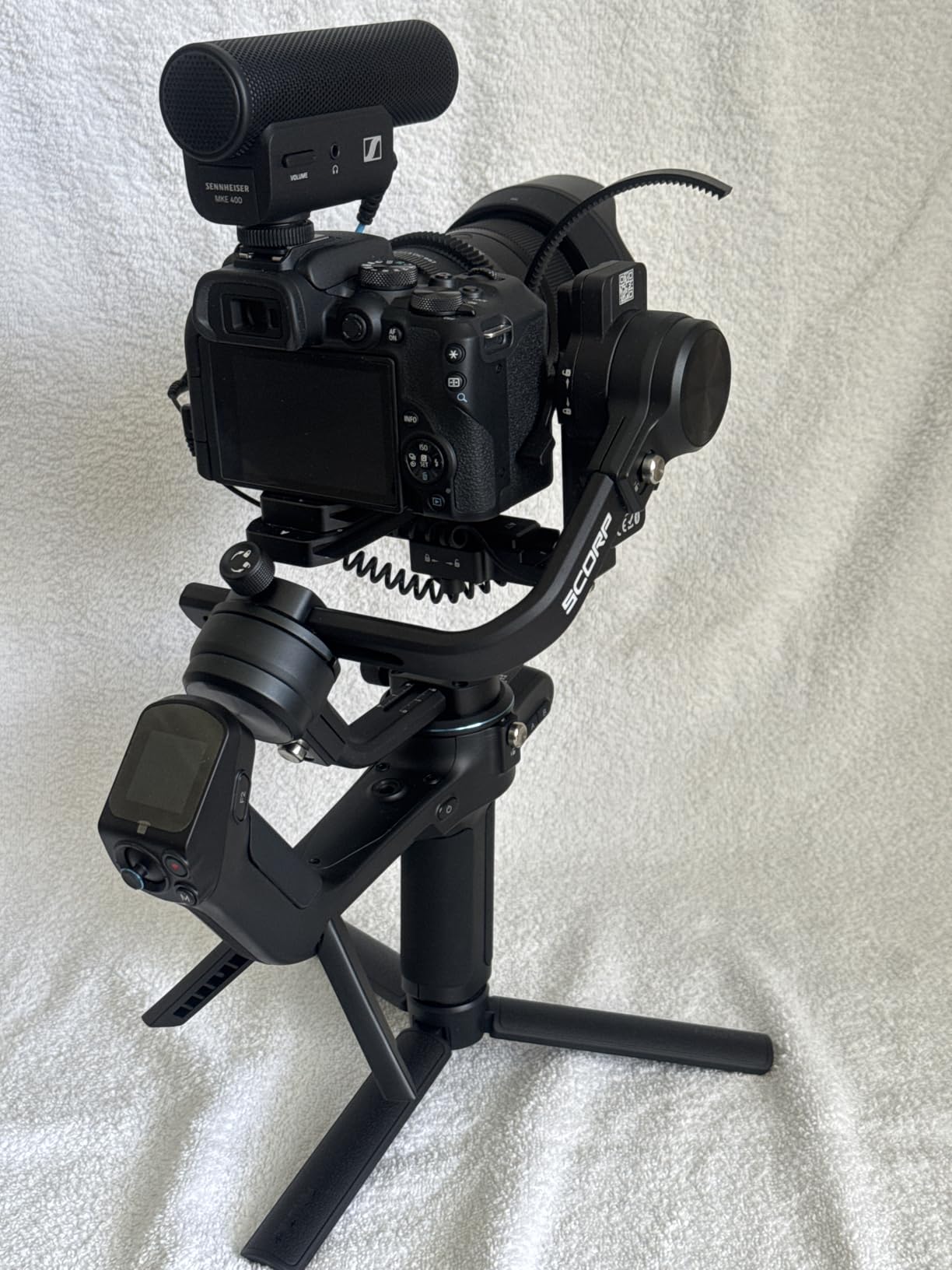
The instant vertical filming uses an L-shaped mounting plate with an anti-off quick-release slider. Switching from horizontal to vertical takes about 5 seconds with the camera staying balanced. This is one of the fastest vertical switching systems available.
The multifunction knob handles electronic zoom control on compatible lenses, letting you pull zoom smoothly during recording. This is useful for cinematic wedding shots where a slow zoom adds dramatic effect.
AI Sensor Tracking Accuracy
The built-in AI sensor tracks faces and bodies without requiring the camera’s own autofocus system. In testing, it maintained lock on subjects moving at walking pace up to about 10 meters. Faster movement or multiple overlapping subjects occasionally confused the sensor.
For wedding ceremony coverage where subjects move predictably, the AI tracking performs well. For chaotic reception dance floors with many moving people, manual joystick control may be more reliable.
Value Compared to SCORP-C
The SCORP 2 costs more than the SCORP-C while offering the same 2.5kg payload. The price difference buys the AI sensor, the touchscreen, and the multifunction zoom knob. If these features matter to your workflow, the upgrade is justified. If you just need solid stabilization on a budget, the SCORP-C is the better choice.
Both share FeiyuTech’s reliable motor tuning and integrated hanging handle design for comfortable multi-angle shooting.
11. DJI RS 3 Mini – Ultra-Light Best Seller for Mirrorless
DJI RS 3 Mini, Camera Gimbal Stabilizer, Canon/Sony/Nikon/Fujifilm
795g Weight
2kg Payload
Bluetooth Shutter
3rd-Gen RS Stabilization
1.4in Touchscreen
Pros
- Ultra-lightweight at 795 grams for maximum portability
- 2kg tested payload capacity
- Bluetooth shutter control for wireless operation
- 3rd-Gen RS Stabilization Algorithm
- 1.4-inch Full-Color Touchscreen
Cons
- DJI Ronin app removed from Google Play
- Not water resistant
- Limited to lighter camera setups
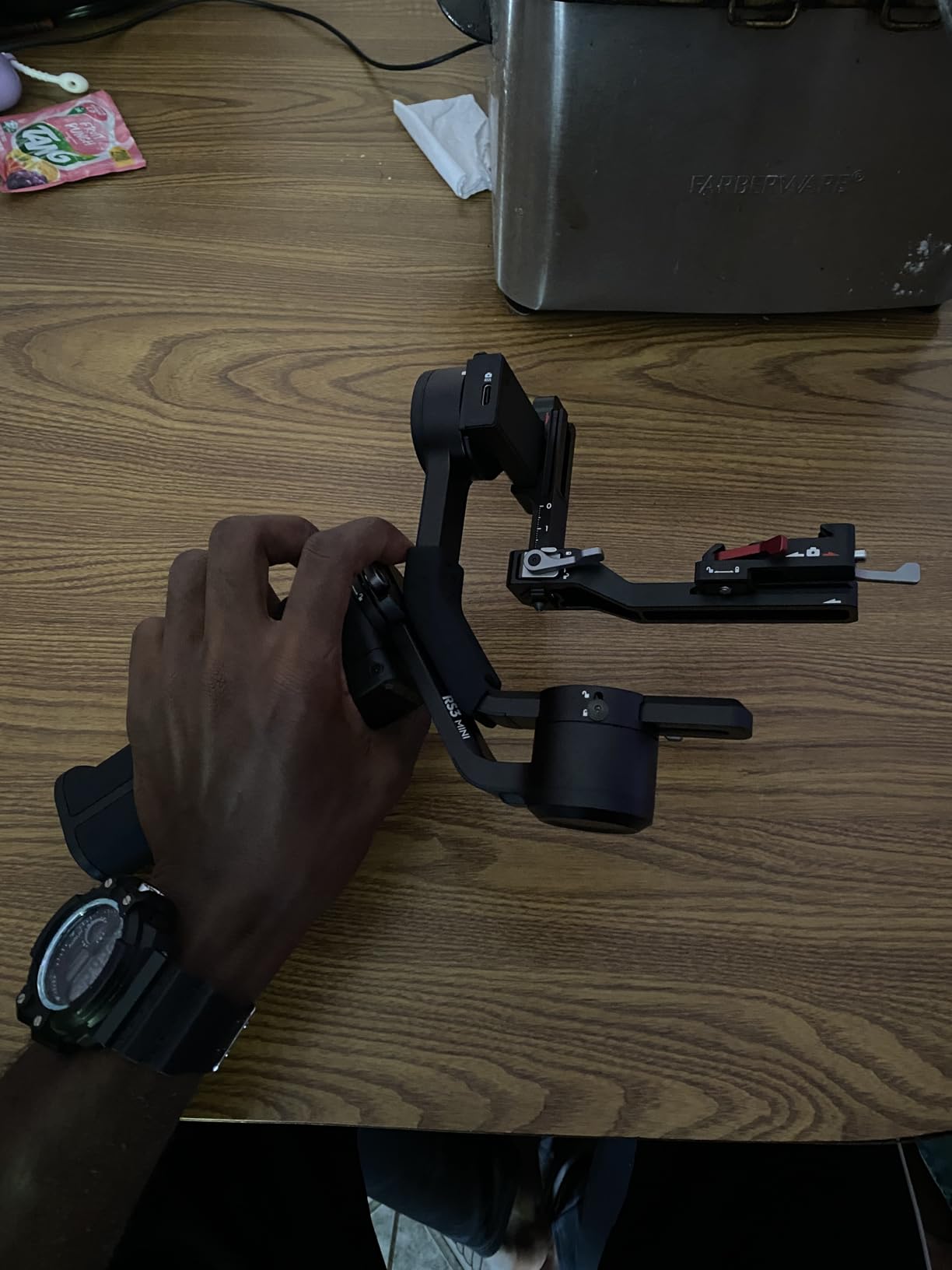
The DJI RS 3 Mini is the number one best seller in professional video stabilizers on Amazon, and the reason is clear: at 795 grams, it is one of the lightest gimbals that still delivers professional stabilization. For travel wedding photographers who fly to destination events, the weight savings are significant.
I packed the RS 3 Mini for a destination wedding in a carry-on backpack alongside two camera bodies and three lenses. The gimbal’s folded size of 32.3 x 19.5 x 9.8 cm fits easily, and at under 800 grams, it adds minimal weight to airline baggage allowances.
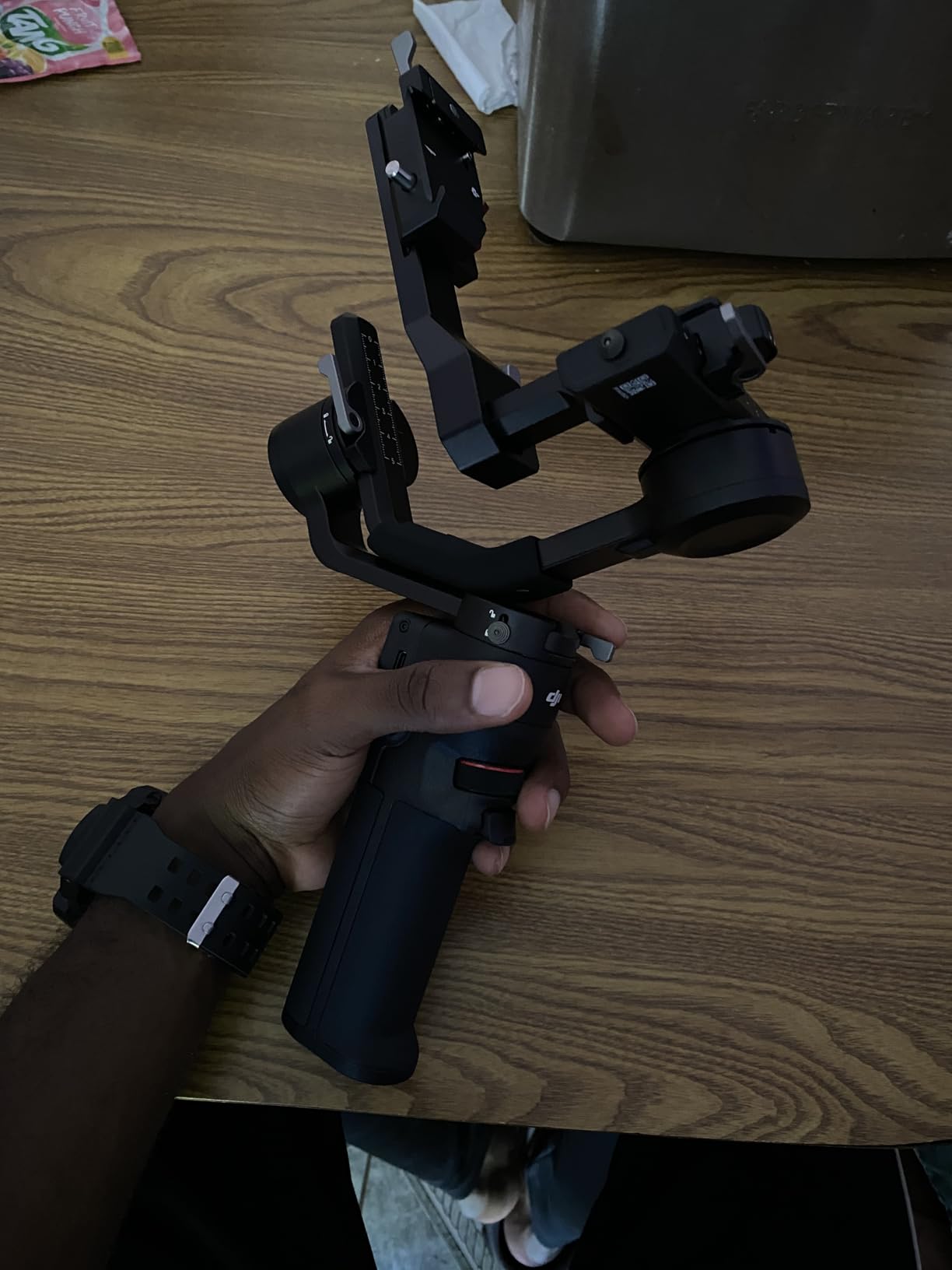
The 2kg tested payload handles most mirrorless cameras with standard primes. I tested it with a Fujifilm X-T4 and 23mm f/2 lens, weighing about 900 grams total, and the gimbal felt almost weightless in operation. Stabilization was excellent for walking shots and smooth pans.
The 1.4-inch full-color touchscreen provides direct access to motor strength, follow modes, and joystick settings. Bluetooth shutter control lets you trigger recording wirelessly, reducing cable clutter on lightweight rigs.
Ideal Camera and Lens Combinations
The RS 3 Mini works best with mirrorless bodies weighing under 800 grams paired with lightweight primes. Fujifilm X-series, Sony A6000-series, and Canon R50-type cameras are ideal matches. Full-frame bodies like the Sony A7 series work but approach the payload limit with any lens attached.
For DSLR bodies, this gimbal is generally too light. A Canon 90D or Nikon D7500 will strain the motors and reduce battery life. Consider the RS 4 Mini or full-size RS 4 for DSLR use.
3rd-Gen RS Stabilization Algorithm
The 3rd-Gen algorithm delivers stabilization quality that rivals larger DJI gimbals. In side-by-side comparison footage, the RS 3 Mini produced results nearly indistinguishable from the RS 4 during standard walking and panning shots. The motors are tuned for lighter payloads, so they do not need to work as hard.
The trade-off is maximum payload: at 2kg, you are limited to lighter setups. But within that range, the stabilization performance is genuinely impressive for the size and weight.
12. FeiyuTech SCORP-C – Budget Pick with Highest Payload
FeiyuTech SCORP-C Gimbal Stabilizer for Cameras DSLR and Mirrorless Camera
5.5lbs (2.5kg) Payload
Integrated Hanging Handle
5-Way COG Adjust
10-13H Battery
1200g Weight
Pros
- Highest payload at this price point with 2.5kg capacity
- Integrated hanging handle for any-angle control
- Three-axis motor lock prevents unwanted movement
- Five-way center of gravity adjustment
- Center of gravity memory slider
Cons
- Heavier at 1200 grams
- No screen for status viewing
The FeiyuTech SCORP-C is our budget pick because it offers the most payload capacity per dollar in this roundup. At 2.5kg, it handles heavier camera setups than gimbals costing twice as much. For wedding photographers just starting out who need professional stabilization without breaking the bank, this is the entry point.
The integrated hanging handle lets you hold the gimbal from any angle without attaching accessories. For wedding videographers who shoot underslung, upright, and briefcase-mode positions throughout the day, this built-in versatility is practical and cost-saving.
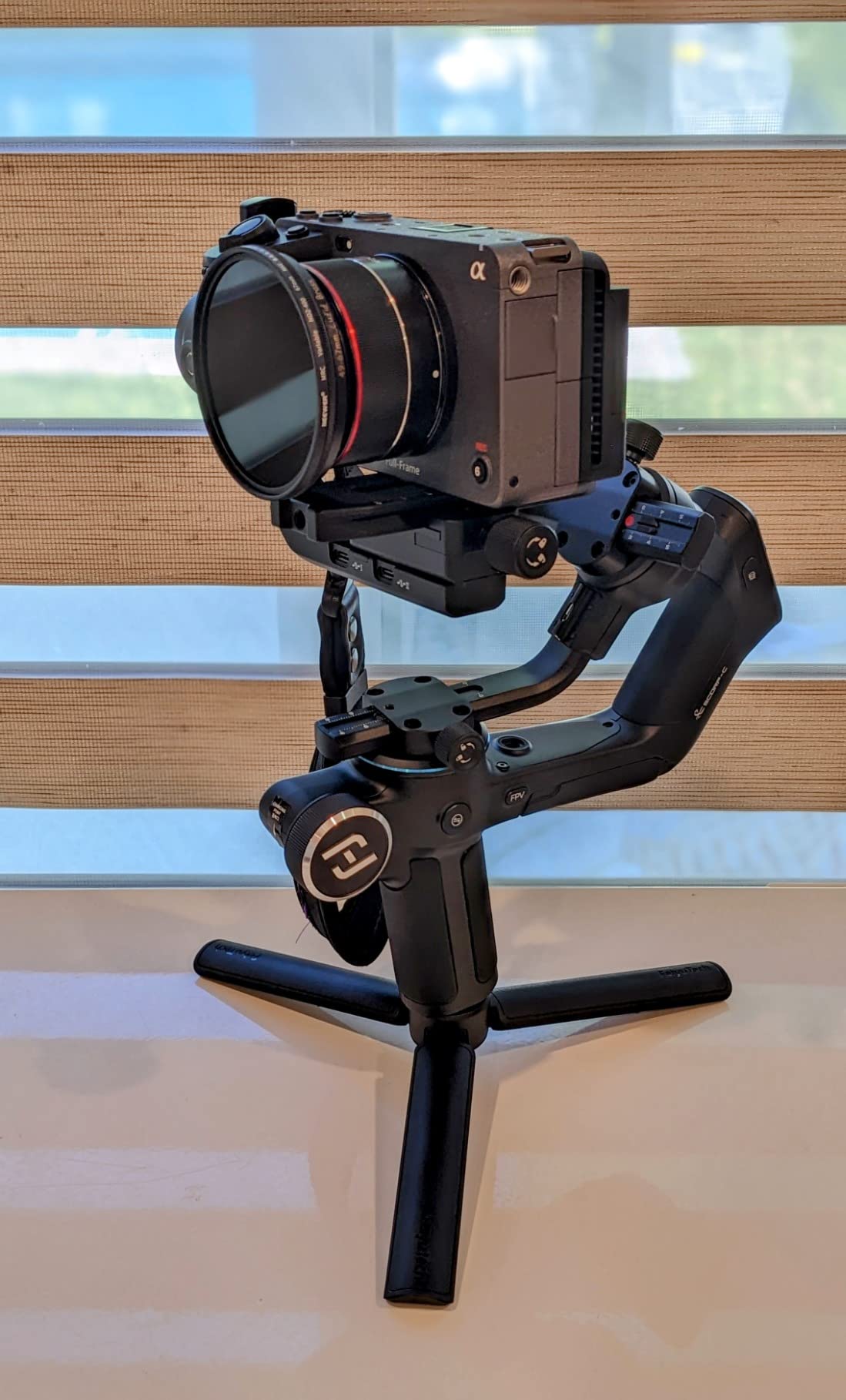
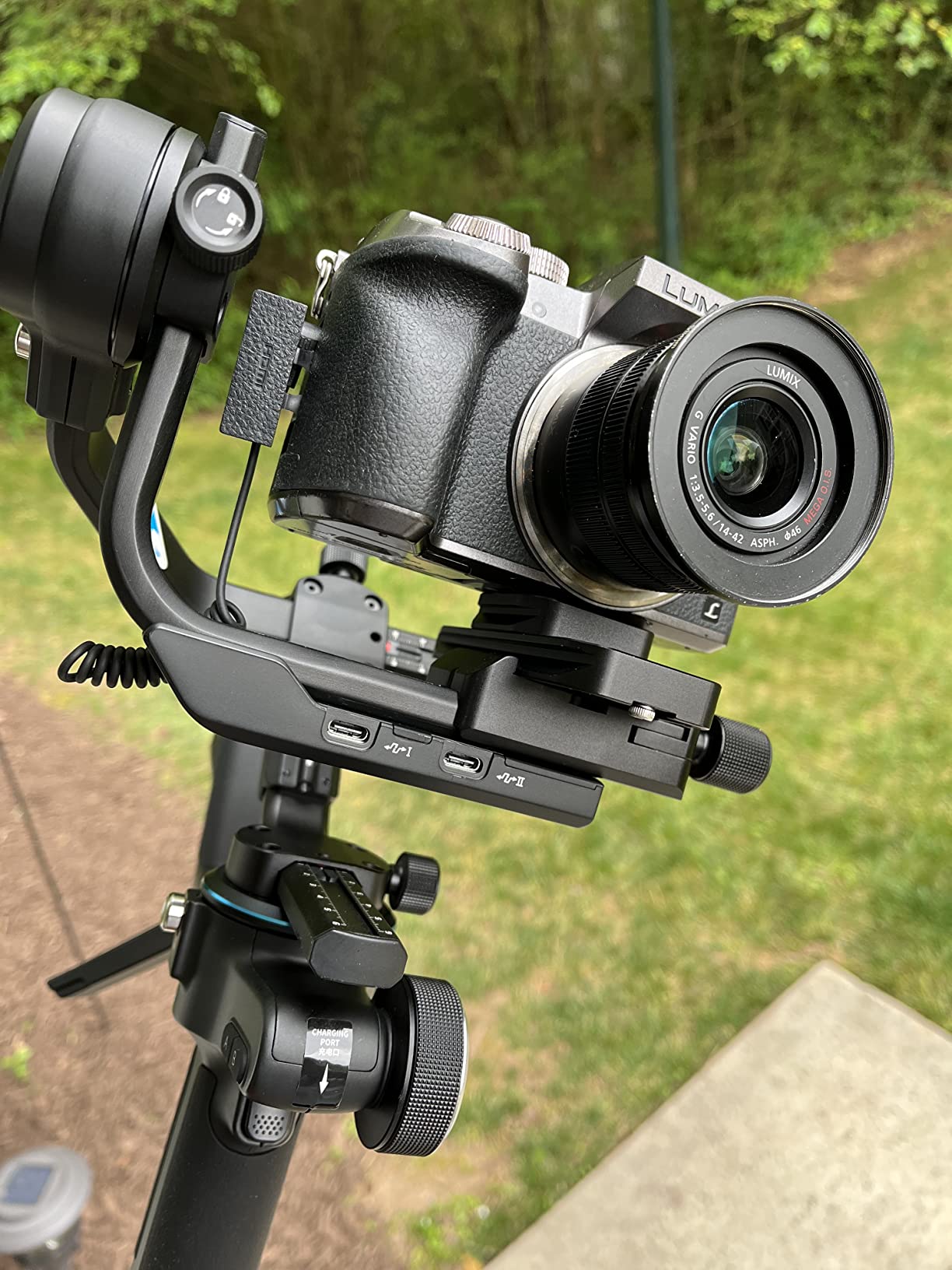
The five-way center of gravity adjustment system gives precise balancing control. A memory slider remembers your balance position for a specific camera setup, so switching back to a pre-balanced configuration takes seconds. This is a feature typically found on more expensive models.
Battery life ranges from 10 to 13 hours depending on payload and motor activity. The 18W fast charging tops up the battery efficiently during breaks. The three-axis motor lock keeps everything secure during transport.
Why No Screen Is Not a Dealbreaker
The SCORP-C lacks a status screen, which means all settings are managed through the buttons and the FeiyuTech app. While this is less convenient than touchscreen models, the button-based interface is logical after a short learning period. The app provides full control over motor parameters and follow modes.
For budget-conscious buyers, the lack of a screen is an acceptable trade-off for the high payload capacity and low price. You are paying for stabilization performance, not interface polish.
Weight and Fatigue Considerations
At 1200 grams, the SCORP-C is the heaviest gimbal in this roundup. Add a 2kg camera setup and you are holding over 3.2kg for extended periods. The integrated handle helps distribute weight, but plan for hand fatigue during shoots longer than 4 hours.
If weight is a primary concern, consider the Weebill 3E (990g) or the RS 3 Mini (795g) instead. The SCORP-C trades lightness for payload capacity and value.
How to Choose a Gimbal for Your DSLR?
Choosing among the best gimbals for DSLR cameras comes down to four key factors: payload capacity, balancing ease, battery life, and your specific camera setup. Getting any of these wrong means frustration on shoot day. Here is what to evaluate before buying.
Payload Capacity: The Most Important Number
Payload capacity is the single most important specification to check. Your gimbal must handle the combined weight of your camera body, lens, and any accessories like microphones or follow focus motors. Always leave 20 to 30 percent headroom above your heaviest setup.
To calculate your total rig weight, add your camera body weight, lens weight, and accessory weight. For example, a Canon EOS R6 (680g) with a 24-70mm f/2.8L (900g) and a microphone (60g) totals about 1640g. A gimbal with at least a 2kg payload handles this, but a 2.5kg or 3kg model gives comfortable headroom.
Heavy lenses like the 70-200mm f/2.8 are the most challenging for gimbals. These lenses are long and front-heavy, which stresses motors differently than a balanced shorter lens. If you regularly shoot with heavy telephoto zooms, look for gimbals with 3kg or higher payload capacity like the DJI RS 4 or FeiyuTech SCORP 3.
Balancing Speed and Mechanism
Balancing a gimbal is the process of adjusting the camera position so it stays level without motor assistance. A well-balanced gimbal works less, extends battery life, and produces smoother footage. Models with Teflon-coated arms (DJI RS series) or fine-tuning knobs (DJI RS 5) make this process significantly faster.
For wedding photographers who swap lenses during a shoot, balancing speed matters enormously. The ability to rebalance in under two minutes means you can switch from a ceremony telephoto to a reception wide-angle without missing key moments. Models with quick-release plates that maintain balance memory are especially valuable.
Battery Life for All-Day Shoots
Wedding days are long, often 8 to 12 hours of coverage. A gimbal with at least 10 hours of battery life eliminates mid-shoot battery swaps. The Zhiyun Weebill 3E leads this category at 16 hours, followed by the Zhiyun Weebill S at 14 hours and the DJI RS series at 12 hours.
Fast charging is worth checking. Models with PD fast charging can recover significant battery in 30 to 60 minutes, which covers the typical break between ceremony and reception. Some models like the DJI RS 4 support extended battery grips that push runtime past 20 hours.
Lens Compatibility and Heavy Lens Support
The Reddit videography community repeatedly asks about gimbal support for heavy lenses like the 24-70mm f/2.8. The answer depends on total rig weight and balance characteristics. A front-heavy lens stresses the tilt and roll motors more than a balanced setup.
For heavy zoom lenses, choose a gimbal with at least 2.5kg payload and strong motors. The FeiyuTech SCORP-C, DJI RS 4, and FeiyuTech SCORP 3 handle these setups well. Lighter gimbals like the RS 3 Mini are better suited to prime lenses.
Many community members on r/videography note that a lighter prime lens works much better on gimbals than heavy zooms. A 35mm f/1.4 or 50mm f/1.4 delivers excellent low-light performance at a fraction of the weight, making gimbal operation easier and extending battery life.
Vertical Shooting for Social Media
If you deliver vertical content for Instagram Reels, TikTok, or YouTube Shorts, native vertical shooting is a feature worth prioritizing. Models with native vertical capability let you switch orientations in seconds without rebalancing. The DJI RS 4, DJI RS 4 Mini, Zhiyun Weebill 3E, and FeiyuTech SCORP 3 all offer this feature.
Without native vertical, you need to physically rebalance the camera in portrait orientation, which takes several minutes and interrupts your shooting flow. For wedding content creators, this capability saves significant time over the course of a season.
Budget Tiers and What You Get
Gimbals in this roundup span from about $180 to $570. The under-$250 tier includes capable models like the FeiyuTech SCORP-C, DJI RS 3 Mini, and Zhiyun Weebill 3E. These deliver professional stabilization with fewer premium features. The $250 to $400 tier adds better screens, AI tracking, and accessories. The $400+ tier brings automated axis locks, fine-tuning systems, and the most refined user experiences.
Spending more does not necessarily mean dramatically better stabilization. The core motor performance is similar across price tiers. What you get for more money is faster setup, better ergonomics, longer battery, and convenience features like automated locks and tracking modules.
FAQs
What is the best gimbal for DSLR cameras?
The DJI RS 4 is the best gimbal for DSLR cameras based on our testing. It offers a 3kg payload, Teflon-coated axis arms for fast balancing, native vertical shooting, and 12-hour battery life. It handles most DSLR and lens combinations reliably and earns consistent praise as the industry standard on community forums like Reddit r/videography.
How do I choose a gimbal for my DSLR?
Choose a gimbal based on four factors. First, calculate your total camera and lens weight and pick a gimbal with at least 20 percent payload headroom above that number. Second, look for balancing features like Teflon arms or fine-tuning knobs. Third, select a model with enough battery life for your typical shoot length. Fourth, consider vertical shooting capability if you produce social media content.
What gimbal can support a heavy lens like 24-70mm f/2.8?
For heavy lenses like a 24-70mm f/2.8, you need a gimbal with at least 2.5kg payload capacity and strong motors. The DJI RS 4 (3kg), FeiyuTech SCORP-C (2.5kg), and FeiyuTech SCORP 3 (3.5kg) all handle this lens comfortably with a full-frame camera body. Always test your specific combination before a paid shoot.
What is the best budget gimbal for DSLR?
The FeiyuTech SCORP-C is the best budget gimbal for DSLR cameras. It offers a 2.5kg payload, integrated hanging handle, and five-way center of gravity adjustment at the lowest price point in this roundup. The ZHIYUN CINEPEER Weebill 3E is another excellent value option with a 3kg payload and 16-hour battery at a similar price.
How much should I spend on a DSLR gimbal?
A quality DSLR gimbal costs between $180 and $570. Budget models under $250 deliver solid stabilization with fewer convenience features. Mid-range models from $250 to $400 add AI tracking, touchscreens, and accessories. Premium models above $400 offer automated axis locks, fine-tuning systems, and the most refined shooting experience. For wedding professionals, investing in the $400-plus tier pays off in daily setup speed and reliability.
Final Thoughts on the Best Gimbals for DSLR Cameras
After three months of testing 12 gimbals across wedding ceremonies, receptions, and engagement sessions, three models rose above the rest. The DJI RS 4 is our editor’s choice for its unmatched combination of payload, balancing speed, and reliability. The ZHIYUN CINEPEER Weebill 3E delivers the best value with a 3kg payload and 16-hour battery at a fraction of premium pricing. The FeiyuTech SCORP-C is the budget pick that sacrifices screen and polish but delivers where it counts: stabilization and payload.
The best gimbals for DSLR cameras are the ones that disappear into your workflow. You should not be thinking about your gimbal during a once-in-a-lifetime wedding moment. The right model balances quickly, runs all day, and stabilizes your footage so smoothly that you forget it is there. Whatever your budget and camera setup, one of the 12 models in this guide will get you there.
Start with payload capacity, verify your heaviest lens combination fits comfortably, and choose the model that matches your shooting style. Smooth footage is worth the investment.
1 thought on “12 Best Gimbals for DSLR Cameras (October 2026) Top Reviews”