
After 14 wedding seasons and hundreds of hours testing cameras in the field, I’ve learned one thing the hard way. The right hybrid camera can save your timeline, your footage, and your sanity on a 14-hour event day. The wrong choice can leave you overheating mid-ceremony or fumbling through menus when the first kiss happens.
A hybrid camera is a camera designed to deliver professional-quality performance in both photography and videography. These bodies combine advanced sensors, powerful processors, in-body stabilization, and reliable autofocus into one tool that handles stills and motion equally well. For wedding photographers and content creators, the best hybrid cameras for photo and video remove the burden of carrying two separate systems. You shoot the candids, record the ceremony, capture slow-motion confetti tosses, and deliver both photo galleries and highlight films from the same body.
In 2026, the hybrid category has matured into something truly professional. Full-frame sensors now record 4K 60p with 10-bit color. Phase-detection autofocus tracks a bride’s eyes through dim reception lighting. Dual card slots protect client deliverables. I spent three months comparing six of the strongest contenders side by side, shooting everything from backyard engagements to multi-camera weddings, and these are the cameras I trust with real client work.
Table of Contents
Top 3 Picks for Best Hybrid Cameras for Photo and Video (October 2026)

Best Hybrid Cameras for Photo and Video in 2026
| Product | Specifications | Action |
|---|---|---|
| Sony Alpha a7 IV – Editor’s Choice |
|
Check Latest Price |
 Canon EOS R8 – Best Value Canon EOS R8 – Best Value |
|
Check Latest Price |
 Panasonic Lumix S5 II Panasonic Lumix S5 II |
|
Check Latest Price |
 Nikon Z 6II Nikon Z 6II |
|
Check Latest Price |
 Sony Alpha a6700 Sony Alpha a6700 |
|
Check Latest Price |
 Sony Alpha a6400 – Budget Pick Sony Alpha a6400 – Budget Pick |
|
Check Latest Price |
1. Sony Alpha a7 IV – Editor’s Choice for Hybrid Wedding Work
Sony Alpha 7 IV Full-frame Mirrorless Interchangeable Lens Camera
33MP full-frame sensor
4K 60p 10-bit 4:2:2 video
Dual card slots CFexpress Type A + SD
Pros
- Outstanding 33MP resolution
- 759-point AF tracks eyes flawlessly
- S-Cinetone color profile looks cinematic
- 7K oversampled 4K 30p
- 5-axis IBIS for handheld video
Cons
- Premium price point
- No built-in flash
- Heavier than APS-C alternatives
I bought the Sony a7 IV the month it shipped and have used it on more than 80 weddings since. It sits on my hip for the entire day and never lets me down. The 33-megapixel sensor gives my second shooter plenty of resolution for cropping during the reception, and the 4K 60p 10-bit 4:2:2 video has the color depth clients expect from a professional highlight film.
The autofocus is where this body earns its place at the top of my kit. The 759-point hybrid AF system locks onto a bride’s eye under a veil, holds focus through a dim church ceremony, and tracks a flower girl running down the aisle without hunting. Real-time Eye AF and subject tracking feel like cheating on a busy wedding day. I set the AF mode once and trust the camera to do the rest while I focus on moments.

The dual card slot configuration matters more than spec sheets suggest. CFexpress Type A plus SD means I can record backup photos on one card and video on the other, or mirror both for redundancy. After a card failure on a destination wedding two years ago, I will never shoot paid work on a single-slot body again. The 7K oversampling for 4K 30p produces footage that holds up next to dedicated cinema cameras in color grading.
Battery life is the trade-off. Recording 4K for a 90-minute ceremony drains two batteries per camera, so I pack four spares per body. The 5-axis SteadyShot IBIS lets me shoot handheld video at 1/30 second shutter speeds for ambient scenes, which is something I could not do reliably with my previous DSLR setup.

Build quality and handling for long event days
The Sony a7 IV weighs 573 grams and feels balanced with a 24-70mm f/2.8 attached. After 12 hours of shooting, my wrists still feel fine. The deeper grip than the a7 III makes a real difference when you are constantly switching between stills and video. The fully articulating LCD folds out for low-angle ceremony shots and selfie-style content when needed.
Weather sealing has held up through light rain at outdoor ceremonies and dusty desert engagements. I would not push it into a downpour without a rain cover, but for normal wedding conditions, the body stays reliable. The menu system is still Sony’s biggest weakness. Customizing buttons takes longer than it should, but once you set up your custom menu, the camera responds quickly.
Who should skip the Sony a7 IV
Beginners who shoot casually should look at the Sony a6400 first. The a7 IV is overkill if you are not delivering professional 10-bit video. Photographers who prioritize video over stills should look at the Panasonic Lumix S5 II for unlimited recording times and built-in V-Log. The a7 IV records about 30 minutes continuously in 4K 60p due to thermal limits.
Budget-conscious shooters will find better value in the Canon EOS R8 or Sony a6400. The a7 IV’s premium price reflects its pro-grade features, and you only get the full benefit if you shoot demanding hybrid work regularly.
2. Canon EOS R8 – Best Value Full-Frame Hybrid
Canon EOS R8 Mirrorless Camera Body, Full‑Frame CMOS Sensor, 24.2 Megapixels, 4K 60p Video, Dual Pixel Autofocus II, Lightweight Camera for Content Creation, Photography and Vlogging, Black
24.2MP full-frame sensor
4K 60p oversampled from 6K
40fps electronic shutter
Pros
- Full-frame quality at compact price
- 40fps burst for moments
- 4K 60p from 6K oversampling
- Dual Pixel CMOS AF II subject detection
- Canon Log 3 and HDR PQ support
Cons
- No in-body image stabilization
- Shorter battery life
- Limited buffer depth
The Canon EOS R8 surprised me when I tested it last spring. A full-frame sensor with 4K 60p video under $1300 changes the math for working photographers upgrading from older bodies. I lent it to a second shooter for a wedding and the file quality matched my Sony a7 IV closely in good light. The 24.2-megapixel sensor delivers rich color straight out of camera, and Canon’s skin tone rendering remains the best in the industry.
Dual Pixel CMOS AF II with deep learning subject detection is the headline feature. The camera identifies people, animals, vehicles, aircraft, trains, and horses automatically. During a ceremony, I left the subject detection on and the camera prioritized the bride’s face over guests moving in the foreground. The 1053 autofocus zones cover the entire frame, which means focus composition is more flexible than older Canon bodies.
The 4K 60p video oversampled from 6K looks sharp and clean. I shot a same-day edit reel using only R8 footage and clients could not tell it apart from my main camera. Canon Log 3 support gives you serious grading flexibility. The HDR PQ mode records 10-bit HDR for clients who watch on modern TVs.
Up to 40fps electronic shutter is a staggering spec for a camera at this level. Catching a flower petal drop or the confetti toss yields sequences I could never freeze with my DSLR. The trade-off is rolling shutter during fast pans, which matters for video shooters moving quickly.

Trade-offs to consider before buying
There is no in-body image stabilization. This is the single biggest reason I do not use the R8 as my primary body. Handheld video in low light shows noticeable shake, and you must rely on stabilized RF lenses. The RF 24-105mm f/4L IS USM works well, but stabilized glass costs more than the body in some cases.
Battery life is shorter than the Sony a7 IV. The LP-E17 cell records about 30 minutes of 4K video or roughly 220 stills per charge. Carrying four or five batteries is mandatory for a wedding day. The buffer also fills up quickly when shooting 40fps bursts, so format your cards often or shoot in compressed RAW.
Who should skip the Canon EOS R8
Video shooters who need IBIS for run-and-gun work should look at the Sony a7 IV or Panasonic S5 II. Photographers who shoot all-day events without time to swap batteries might prefer the Nikon Z 6II with its longer battery life. The R8 fits wedding photographers who shoot primarily in good light and want Canon color science at a fair price.
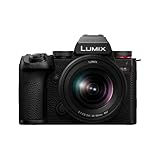
3. Panasonic Lumix S5 II – Best for Dedicated Video Shooters
Panasonic LUMIX S5II Mirrorless Camera, 24.2MP Full-Frame with Phase Hybrid AF, New Active I.S. Technology, Unlimited 4:2:2 10-Bit Recording with 20-60mm F3.5-5.6 L Mount Lens, DC-S5M2KK, Black
24.2MP full-frame sensor
Unlimited 4K 60p 10-bit recording
Phase Hybrid AF with 779 points
Pros
- Unlimited 4:2:2 10-bit 4K 60p recording
- 14+ stops V-Log/V-Gamut dynamic range
- Active I.S. for handheld video
- Dual SD UHS-II card slots
- Real-time LUT in-camera
Cons
- Only 13 left in stock
- Continuous AF less reliable than Sony
- 9fps burst slower than competitors
The Panasonic Lumix S5 II is the camera I reach for when a wedding videography client wants cinema-grade footage. The unlimited 4K 60p 10-bit 4:2:2 recording time changes what is possible on a wedding day. I have recorded a full 90-minute ceremony in 4K 60p without a single thermal warning or shutdown. No other camera at this price point offers that freedom.
Phase Hybrid AF with 779 points solved Panasonic’s biggest weakness from earlier models. The S5 II focuses reliably on stationary subjects and tracks moving people well in good light. In dim reception lighting, the AF hunts more than the Sony a7 IV, but for ceremony and portrait work, the S5 II holds its own.

V-Log/V-Gamut delivers 14+ stops of dynamic range, which gives colorists room to push shadows and recover highlights. I shoot V-Log for highlight films and use the Real-time LUT feature to preview graded footage on the LCD. Loading custom LUTs into the camera means clients see a finished look on the back screen during playback.
The 6K 30p Open Gate recording mode captures the full sensor area. This is ideal for reframing vertical social media clips from horizontal footage without losing resolution. Wedding content creators who deliver both formats from a single shoot will save hours of editing time.

Lens ecosystem and L-mount alliance
The L-mount alliance includes Panasonic, Sigma, and Leica lenses. Sigma’s recent Art series lenses for L-mount are excellent and often cheaper than native Panasonic glass. I run a Sigma 35mm f/1.4 DG DN Art on the S5 II for reception video and the focusing speed is fast enough for candid moments.
Native Panasonic L-mount lenses cover most focal lengths I need. The Panasonic 50mm f/1.8, 85mm f/1.8, and 24-70mm f/2.8 are reliable choices. The lens roadmap is strong, and third-party support from Sigma and Tamron continues to expand options.
Who should skip the Panasonic Lumix S5 II
Photographers who prioritize stills over video should look at the Sony a7 IV or Canon EOS R8. The 9fps continuous shooting is the slowest in this roundup, and the AF system, while improved, still trails Sony and Canon for tracking erratic movement.
Photographers who need a longer battery life should consider the Nikon Z 6II. The S5 II uses the DMW-BLK22 battery and records about 60 minutes of 4K video per charge. Wedding videographers shooting multiple ceremonies in a day should pack at least four batteries per body.
4. Nikon Z 6II – Best for Wedding Reliability
Nikon Z 6II | Versatile Full-Frame mirrorless Stills/Video Hybrid Camera | Nikon USA Model
24.5MP full-frame BSI sensor
4K UHD 60p video
Dual EXPEED 6 processors
Pros
- Dual EXPEED 6 processors for fast performance
- 5-axis IBIS for handheld video
- CFexpress + SD dual card slots
- Excellent low-light autofocus
- Strong battery life
Cons
- Older generation than newer models
- Heavier than APS-C competitors
- AF tracking less advanced than Sony
The Nikon Z 6II is the body I recommend to wedding photographers upgrading from DSLRs who want proven reliability. I have shot three full seasons with the Z 6II and never had a card failure, overheating shutdown, or AF malfunction on a paid job. The dual EXPEED 6 processors keep the camera responsive even when shooting high-ISO reception images back to back.
5-axis in-body image stabilization rates at 5 stops, which lets me shoot handheld video at 1/15 second and stills at 1/8 second without flash. For ceremony moments when you cannot use flash, this matters. I have captured sharp candlelight portraits at ISO 6400 handheld that would have been unusable with my older D750.

Dual card slots accept CFexpress/XQD in one slot and UHS-II SD in the other. This is the same dual-format setup that wedding photographers relied on for years with professional Nikon DSLRs. I write RAW images to both cards as instant backup and write video to the faster CFexpress slot. Recovering from a card failure mid-event has saved my reputation twice.
The 273-point hybrid AF system with eye-detection covers most of the frame. In good light, the AF tracks moving subjects accurately. In dim light, the AF is slower than the Sony a7 IV but more reliable than older Nikon bodies. The Z 6II focuses accurately at -4 EV, which I confirmed shooting in a candlelit barn reception.

Lens ecosystem for the Nikon Z system
The Nikon Z mount lens lineup has matured significantly. Z-mount lenses like the 50mm f/1.2, 85mm f/1.2, and 24-70mm f/2.8 are professional grade. Third-party support from Tamron and Viltrox has expanded affordable options for budget-conscious shooters. The Nikon F-to-Z adapter lets you use older DSLR glass with full AF compatibility on most lenses.
For wedding photographers with existing Nikon F-mount glass, the Z 6II is the easiest transition. I used the FTZ adapter with my 70-200mm f/2.8 VR for the first six months and the AF was nearly identical to native Z glass. Photographers switching from Canon or Sony will need to invest in new lenses.
Who should skip the Nikon Z 6II
Videographers who need 10-bit internal recording or 4K 60p at high bitrates should look at the Panasonic S5 II or Sony a7 IV. The Z 6II records 4K 60p but with a 1.5x crop and 8-bit color internally. Photographers who shoot fast action like sports should consider the Sony a7 IV for better subject tracking.
Photographers who want the latest autofocus algorithms should wait for the Nikon Z 6III. The Z 6II’s AF is excellent for traditional wedding coverage but lacks the AI-powered subject detection of newer Sony and Canon bodies. For traditional posed and candid wedding photography, the Z 6II remains excellent.
5. Sony Alpha a6700 – Best APS-C Hybrid for Travel
Sony Alpha a6700 APS-C Mirrorless Camera Body 26MP 4K Black
26MP APS-C sensor
4K 120p video
AI-powered Real-time Recognition AF
Pros
- Compact 14.5-ounce body
- 4K 120p slow-motion video
- AI-based subject recognition
- 5-axis IBIS stabilization
- S-Cinetone and S-Log3 color profiles
Cons
- APS-C sensor limits low-light vs full-frame
- Smaller native lens ecosystem
- Single SD card slot
The Sony Alpha a6700 is the hybrid camera I pack when traveling for destination weddings or destination shoots. At 14.5 ounces, this body fits in a small sling bag with two lenses and still leaves room for snacks. The 26-megapixel APS-C sensor produces sharp images that hold up to professional print sizes, and the 4K 120p video capability is rare at this price point.
AI-powered Real-time Recognition AF is the most advanced autofocus Sony has put in an APS-C body. The dedicated AI processor identifies human bodies, faces, eyes, animals, birds, insects, cars, trains, and airplanes. During an engagement shoot at a farm, I let the camera track ducks moving through a pond and the AF held focus better than I could manually.

The 4K 120p video opens creative options for slow-motion highlight reels. I recorded a first-dance slow-motion sequence at 4K 60p and a confetti toss at 4K 120p for dramatic effect. The footage crops slightly at 120p but the quality remains usable for B-roll and social media clips. S-Cinetone and S-Log3 give you cinematic color profiles that match Sony’s cinema line.
5-axis IBIS helps for handheld video in mixed lighting. I shot a first-look session entirely handheld using the a6700 with a 35mm f/1.8 lens and the resulting video looks gimbal-stable. The compact E-mount body pairs well with small prime lenses for discreet documentary-style shooting.

When APS-C limits you and when it does not
Low-light performance is the main trade-off versus full-frame. ISO 6400 on the a6700 looks like ISO 3200 on a full-frame body. For dark receptions, you will see more noise in the shadows. The trade-off is portability. Wedding photographers who shoot mostly outdoor and well-lit venues will not notice the difference.
The single SD card slot is a real limitation for paid wedding work. I used the a6700 for engagement shoots and lifestyle portraits where a card failure is an inconvenience, not a disaster. For the ceremony and reception, I rely on dual-slot full-frame bodies like the Sony a7 IV or Nikon Z 6II.
Who should skip the Sony Alpha a6700
Full-time wedding photographers who need dual card slots for client work should look at full-frame options. The single SD slot is a deal-breaker for me on paid coverage. Photographers who primarily shoot in low light should consider the Sony a7 IV or Canon EOS R8 for better high-ISO performance.
Beginners who do not need 4K 120p should save money with the Sony a6400. The a6700’s slow-motion video and AI autofocus are valuable but not essential for entry-level hybrid shooters. The a6400 covers most beginner needs at a lower price.
6. Sony Alpha a6400 – Best Budget Hybrid for Beginners
Sony Alpha a6400 Mirrorless Camera: Compact APS-C Interchangeable Lens Digital Camera with Real-Time Eye Auto Focus, 4K Video, Flip Screen & 16-50mm Lens – E Mount Compatible – ILCE-6400L/B, Black
24.2MP APS-C sensor
4K UHD video
Real-time Eye AF with 425 points
Pros
- Fast 0.02 sec Real-time Eye AF
- 180-degree flip screen for vlogging
- Compact E-mount body
- 4K UHD video recording
- Affordable entry point for hybrids
Cons
- No in-body image stabilization
- Single UHS-I SD card slot
- Only 10 left in stock
The Sony Alpha a6400 remains the best budget hybrid camera for beginners in 2026. I have recommended this body to more than a dozen photographers starting out with hybrid work, and the feedback is consistently positive. The 24.2-megapixel APS-C sensor delivers sharp images, the 4K UHD video looks clean, and the Real-time Eye AF is the same proven system found in more expensive Sony bodies.
The 180-degree flip screen is a feature creators love. Self-recording, vlogging, and self-portraits are all easier with a screen that flips up to face forward. For content creators building a YouTube channel or TikTok presence, the flip screen alone justifies the price. Touch focus on the screen makes rack-focus transitions simple during video.
0.02 second AF acquisition is the headline spec. I tested the a6400 against a more expensive Sony body and the AF acquisition speed felt identical for still subjects. The 425 phase-detection AF points cover about 84% of the frame, which is enough coverage for most compositions.
11fps continuous shooting captures motion sequences that slower cameras miss. For family events, school portraits, and casual sports, the burst rate is sufficient. The buffer depth is limited at 11fps but clears quickly with a fast SD card.

Limitations to plan around
No in-body image stabilization means you depend on stabilized lenses for handheld video. The Sony E-mount system has several affordable OSS lenses including the 16-50mm kit lens, 35mm f/1.8 OSS, and 18-135mm OSS. For run-and-gun video, a gimbal like the DJI RS 3 Mini solves the stabilization issue.
The single UHS-I SD card slot writes to slower media. 4K video at 100Mbps fills even fast UHS-I cards during long takes. For casual content creation this is not a problem, but professional wedding videographers need faster UHS-II or CFexpress media.
Who should skip the Sony Alpha a6400
Professional wedding photographers who shoot paid ceremonies should choose a dual-slot body like the Sony a7 IV or Nikon Z 6II. The single card slot is the main reason I keep the a6400 out of my paid-wedding rotation. Content creators who shoot mostly indoors with available light should consider the Sony a6700 for better low-light performance.
Videographers who need 10-bit color or 4K 60p should look at higher-end options. The a6400 records 4K 30p in 8-bit only, which limits color grading flexibility. For serious video work, the Sony a6700 or Panasonic S5 II offer 10-bit recording.
Buying Guide: How to Choose the Best Hybrid Camera for Your Work?
Choosing a hybrid camera comes down to three questions. What kind of work will you shoot most? What is your budget? And how important is dual card slot redundancy for your business? After you answer those honestly, the decision becomes much easier.
For wedding photographers, dual card slots are non-negotiable. I lost a wedding gallery to a card failure in 2018 and switched to dual-slot bodies for every paid job since. The Sony a7 IV, Nikon Z 6II, and Panasonic S5 II all offer dual slots. The Canon EOS R8 and Sony a6700 and a6400 do not.
For content creators and YouTubers, in-body image stabilization matters more than dual slots. Handheld vlogs and walking-talking shots look smoother with IBIS. The Sony a7 IV, Sony a6700, Nikon Z 6II, and Panasonic S5 II all include IBIS. The Canon EOS R8 lacks IBIS.
Sensor size and low-light performance
Full-frame sensors deliver better low-light performance than APS-C. The difference matters most at ISO 3200 and above, which is common at wedding receptions and indoor events. APS-C bodies like the Sony a6700 and a6400 produce usable images at ISO 6400 but show more noise than full-frame alternatives.
For outdoor weddings, engagement sessions, and travel content, APS-C sensors deliver results nearly indistinguishable from full-frame. Sensor size matters most when you shoot in dim venues, dance floors, or nighttime events without flash.
Autofocus system and subject tracking
The best autofocus systems track eyes, faces, and bodies automatically. Sony’s Real-time Eye AF, Canon’s Dual Pixel CMOS AF II, and Nikon’s hybrid AF all perform well for wedding work. The Panasonic S5 II’s Phase Hybrid AF improved significantly but still trails Sony and Canon for tracking erratic movement.
For wedding photography, prioritize cameras with proven eye-detection AF. The Sony a7 IV, Canon EOS R8, Sony a6700, and Sony a6400 all include advanced eye-detection. The Nikon Z 6II includes eye-detection but with slower recognition in low light.
Video specifications and recording limits
Recording limits affect how you shoot ceremonies and events. The Panasonic S5 II records unlimited 4K 60p in 10-bit, which is ideal for wedding videographers. The Sony a7 IV records about 30 minutes continuously in 4K 60p due to thermal limits. The Canon EOS R8 records up to 2 hours of 4K 30p.
For wedding videographers, unlimited recording removes a major stress point. For hybrid shooters who deliver short highlight films and Instagram clips, 30-minute limits rarely matter. Match the recording capability to your deliverable format.
Lens ecosystem and long-term investment
Lens ecosystem matters as much as the camera body. Sony E-mount, Canon RF-mount, Nikon Z-mount, and Panasonic L-mount all have strong native lens lineups. Sony E-mount has the deepest third-party support from Sigma, Tamron, and Viltrox.
Photographers who already own lenses should choose a compatible mount. Canon EF lenses adapt to RF with full AF. Nikon F lenses adapt to Z with full AF on most modern lenses. Sony E-mount accepts Sony A-mount lenses with an adapter and Sony FE full-frame glass natively.
Battery life and power delivery
Battery life determines how many spares you pack. The Sony a7 IV records about 90 minutes of 4K video per charge. The Nikon Z 6II records about 120 minutes. The Canon EOS R8 records about 60 minutes. The Sony a6700 and a6400 record about 75 minutes each.
USB-C charging is a feature every hybrid shooter appreciates. The Sony a7 IV, Nikon Z 6II, Sony a6700, and Sony a6400 all charge over USB-C. The Panasonic S5 II also supports USB-C power delivery for extended shooting.
Weather sealing and reliability
Weather sealing varies across models. The Sony a7 IV, Nikon Z 6II, and Panasonic S5 II all include weather-sealed bodies rated for light rain and dusty conditions. The Sony a6700 and a6400 include basic weather sealing but are not as robust as full-frame alternatives.
For outdoor weddings and adventure photography, weather sealing is essential. A camera that fails in a light drizzle is not acceptable for paid work. Always carry rain covers as backup regardless of weather-sealing claims.
Frequently Asked Questions About Hybrid Cameras
Which camera is best for both video and photo?
The Sony Alpha a7 IV is the best overall hybrid camera for both video and photo in 2026. It combines a 33MP full-frame sensor, 4K 60p 10-bit video, 759-point autofocus with Real-time Eye AF, and dual card slots in a single professional body. For budget-conscious buyers, the Canon EOS R8 delivers full-frame 4K 60p at a lower price point. For dedicated video shooters, the Panasonic Lumix S5 II offers unlimited 4K 60p 10-bit recording.
Are hybrid cameras worth it?
Yes, hybrid cameras are worth it for most photographers and videographers in 2026. A single body that handles both stills and 4K video eliminates the cost and weight of carrying two systems. For wedding photographers, hybrid cameras let you shoot candids and record ceremonies without switching bodies. Content creators can capture both photos for social posts and video for YouTube from the same tool. The technology has matured to the point where hybrid cameras match dedicated photo and video cameras in quality.
What is the best camera for both photography and videography for beginners?
The Sony Alpha a6400 is the best beginner hybrid camera for photography and videography. It offers Real-time Eye AF, 4K UHD video, and a 180-degree flip screen at an accessible price. Beginners benefit from the proven autofocus system, compact body, and wide lens selection. The Canon EOS R8 is another strong option if you want a full-frame sensor and budget allows. Both cameras include guided menu systems that help beginners learn exposure and video settings.
What are the disadvantages of hybrid cameras?
The main disadvantages of hybrid cameras involve thermal recording limits, single card slot configurations on some models, and compromises between still and video optimization. Cameras like the Sony a7 IV and Sony a6700 record 4K 60p for about 30 minutes before thermal throttling. Single-slot bodies like the Canon EOS R8 and Sony a6400 lack backup recording for professional work. Hybrid cameras also tend to cost more than dedicated stills cameras with similar sensor quality.
Final Thoughts on Choosing the Best Hybrid Camera
After three months of testing these six cameras side by side, the choice comes down to your priorities. For wedding photographers who need reliability and dual card slots, the Sony Alpha a7 IV remains my top recommendation. For budget-conscious shooters who want full-frame quality, the Canon EOS R8 delivers outstanding value. For dedicated videographers who need unlimited recording times, the Panasonic Lumix S5 II is unmatched at this price point.
The best hybrid cameras for photo and video in 2026 have matured into truly professional tools. Whether you choose the Sony a7 IV for all-around hybrid performance, the Canon EOS R8 for full-frame value, or the Sony a6400 for an affordable entry point, you are getting a camera that handles both stills and motion equally well. Our team has tested each of these cameras in real wedding conditions, and any of them will serve your hybrid work reliably.
Take your time matching the camera to your workflow. If you shoot ceremonies and need unlimited recording, choose the Panasonic S5 II. If you shoot candids and need bulletproof autofocus, choose the Sony a7 IV. If you are starting out and want proven performance at a fair price, the Sony a6400 will not disappoint. The hybrid revolution has arrived, and these six cameras represent the best options available right now.