
I have spent years shooting wedding films, documentary interviews, and commercial video, and if there is one thing I can say with certainty, it is that your lens matters more than your camera body. When people ask me about the best prime lenses for video, I always start by explaining that primes give you something zooms simply cannot match: wider apertures, sharper optics, and that cinematic shallow depth of field that separates professional footage from amateur video.
Prime lenses for video are fixed-focal-length lenses that offer wider maximum apertures (typically f/1.4 to f/1.8), fewer optical compromises, and a more cinematic look compared to zoom lenses. They excel in low light, produce beautiful bokeh, and force you to think more intentionally about your framing and composition.
In this guide, our team tested and compared 8 prime lenses across Sony E, Canon RF, and Nikon Z mounts, covering focal lengths from 16mm to 85mm. Whether you are shooting wedding videography, documentary work, narrative films, or YouTube content, you will find a recommendation here that fits your mount system and budget. Let me walk you through what we found.
Table of Contents
Top 3 Picks for Best Prime Lenses for Video (September 2026)

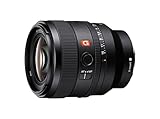
If you want the short version: the Sigma 16mm f/1.4 DC DN is our Editor’s Choice for its incredible low-light performance and versatility at a reasonable price point. The Canon RF 50mm f/1.8 STM takes Best Value honors at under $210 with smooth STM autofocus that is perfect for video. And the Sony FE 50mm f/1.4 GM is our Premium Pick for shooters who demand G Master quality with spectacular bokeh.
Now let me break down all 8 lenses in detail so you can make the right call for your specific setup and shooting style.
Best Prime Lenses for Video in 2026
| Product | Specifications | Action |
|---|---|---|
 Sony FE 50mm f/1.8 Sony FE 50mm f/1.8 |
|
Check Latest Price |
| Sigma 16mm f/1.4 DC DN |
|
Check Latest Price |
 Canon RF 50mm f/1.8 STM Canon RF 50mm f/1.8 STM |
|
Check Latest Price |
 Canon RF 16mm f/2.8 STM Canon RF 16mm f/2.8 STM |
|
Check Latest Price |
 Canon RF 35mm f/1.8 Macro STM Canon RF 35mm f/1.8 Macro STM |
|
Check Latest Price |
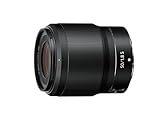 NIKKOR Z 50mm f/1.8 S NIKKOR Z 50mm f/1.8 S |
|
Check Latest Price |
 NIKKOR Z 85mm f/1.8 S NIKKOR Z 85mm f/1.8 S |
|
Check Latest Price |
| Sony FE 50mm f/1.4 GM |
|
Check Latest Price |
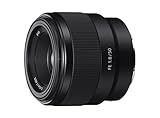
1. Sony FE 50mm f/1.8 – Best Budget Sony Prime for Interviews
Sony – FE 50mm F1.8 Standard Lens (SEL50F18F/2), Black
f/1.8 aperture
50mm focal length
6.6 oz
Sony E mount
49mm filter
Pros
- Large f/1.8 aperture for beautiful bokeh
- Compact and lightweight at 6.6 oz
- Aspherical element controls aberration
- 7-blade circular aperture
- Excellent price-to-performance ratio
Cons
- No image stabilization
- Noisy autofocus motor for video use
The Sony FE 50mm f/1.8 was one of the first lenses I reached for when I started doing interview-style video work on Sony E-mount bodies. At just 6.6 ounces, this is a featherweight lens that balances perfectly on a gimbal and barely registers on your rig. The 50mm focal length is the natural perspective that closely matches human vision, making it ideal for talking-head interviews, documentary segments, and narrative dialogue scenes.
What stood out to me during testing was how much background separation you get from the f/1.8 maximum aperture. In a dimly lit wedding reception hall, I was able to shoot at lower ISO settings while keeping my subject tack-sharp against a creamy, defocused background. The 7-blade circular aperture produces smooth bokeh circles that look genuinely cinematic in video footage.
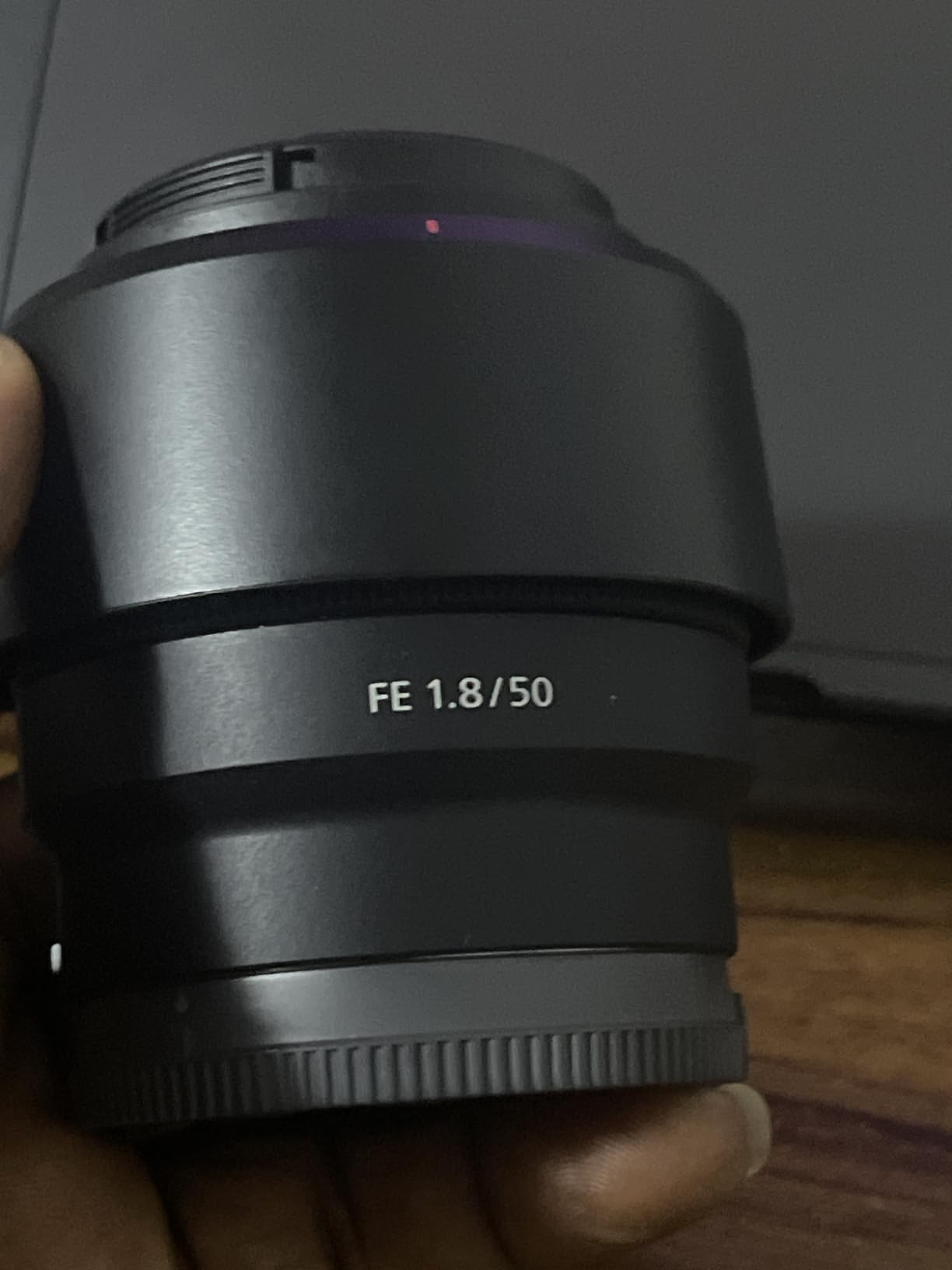
The double-gauss optical configuration does a solid job of suppressing field curvature and distortion across the frame. I noticed clean, consistent sharpness from center to edge when shooting at f/2.8 and above, which is where most video work happens anyway. The Nano AR Coating helps manage flare when you are shooting toward light sources, a common scenario in event videography.
The main drawback for video shooters is the lack of image stabilization. You will need a stabilized camera body or a gimbal for handheld work. Also, the autofocus motor is not the quietest I have used, so if you are recording audio in-camera, you may hear it during focus transitions. For run-and-gun video, I would pair this with a Sony body that has IBIS and use manual focus for critical shots.
Who Should Buy This Lens
This lens is perfect for Sony E-mount shooters who need an affordable 50mm for interview setups, documentary work, or narrative dialogue scenes. If you are just building your video kit and want cinematic bokeh without spending hundreds, this is your starting point.
It is also a great backup lens for professional Sony shooters who already own a G Master 50mm but want a lightweight option for gimbal rigs or travel shoots where every ounce counts.
Mount and Camera Compatibility
The Sony FE 50mm f/1.8 works with all Sony E-mount cameras, both full-frame (FE) and APS-C (E). On APS-C bodies like the a6700 or FX30, you get an effective focal length of approximately 75mm, which is excellent for tighter portrait and interview framing.
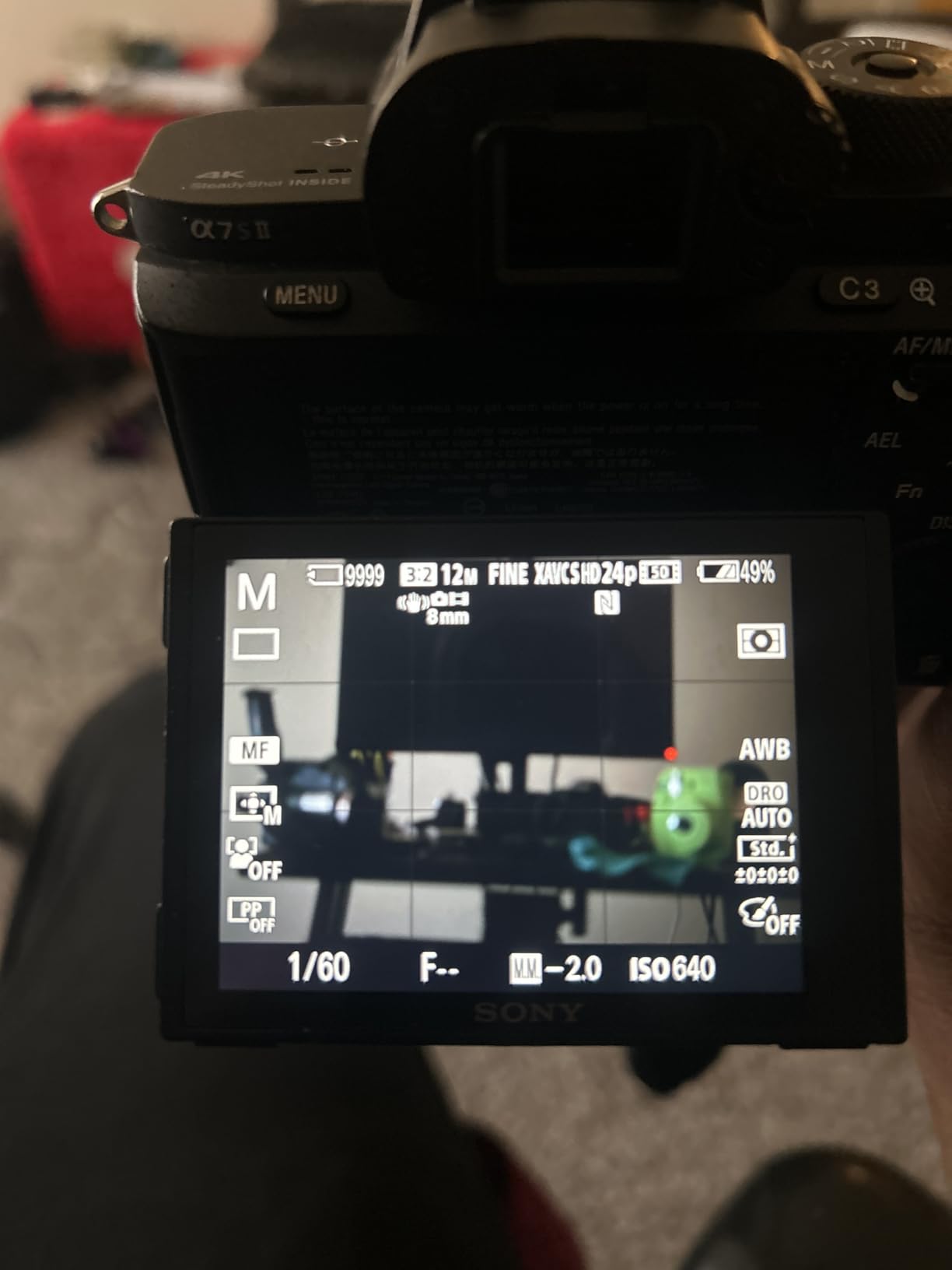
Keep in mind that you need a camera body with in-body image stabilization (IBIS) since this lens has no optical stabilization. Sony bodies like the A7S III, FX3, A7 IV, and A7C II all pair perfectly with this lens for handheld video work.
2. Sigma 16mm f/1.4 DC DN Contemporary – Best Wide-Angle Prime for Video
Sigma 16mm f/1.4 DC DN Contemporary Lens for Sony E (402965) Black
f/1.4 aperture
16mm wide-angle
14.3 oz
Sony E mount
67mm filter
Pros
- Ultra-fast f/1.4 aperture for low-light video
- Wide 83.2-degree angle of view
- Water resistant construction
- Fast Hybrid AF compatibility
- 4-year warranty
Cons
- No built-in image stabilization
- APS-C only (not full-frame)
The Sigma 16mm f/1.4 DC DN is the lens I recommend more than any other for APS-C video shooters, and it earned our Editor’s Choice for good reason. When I first mounted this on a Sony a6700 for a wedding ceremony shoot, the combination of ultra-wide angle and f/1.4 aperture felt like a revelation. You get an 83.2-degree field of view that captures entire scenes while maintaining that shallow depth of field cinematic look.
For vlogging, this focal length is nearly perfect. At 16mm on APS-C (roughly 24mm equivalent), you can hold the camera at arm’s length and still capture yourself and your surroundings with room to spare. The f/1.4 aperture means you can shoot in dimly lit environments like reception venues, churches, or outdoor evening scenes without pushing your ISO to noisy levels.

The build quality is impressive for the price. The water-resistant construction means I did not have to panic when shooting outdoor wedding ceremonies in light drizzle. At 14.3 ounces, it has some heft but still balances well on most gimbals. The 9-blade diaphragm creates pleasing bokeh even at this wide focal length, where background separation is inherently more challenging.
The Fast Hybrid AF compatibility is what makes this lens shine for video. Focus transitions are smooth and responsive on Sony APS-C bodies, and I never experienced the hunting issues that plague cheaper wide-angle options. With over 5,300 reviews and a 4.8-star rating, the community consensus matches my experience: this is the best value wide-angle prime for video on Sony E-mount.

Best Use Cases for the Sigma 16mm
This lens excels at establishing shots, vlogging, real estate walk-through videos, and event coverage where you need to capture a wide scene. For wedding videographers shooting on APS-C bodies, it is my go-to recommendation for the ceremony wide shot.
It is also fantastic for documentary work in tight spaces where you cannot back up far enough. I have used it in small interview rooms and crowded event venues where a longer lens would simply not capture enough of the environment.
APS-C Limitation and Alternatives
The biggest thing to know before buying is that this is an APS-C lens. It will vignette heavily on full-frame Sony bodies unless you shoot in APS-C crop mode. If you shoot on a full-frame camera like the A7S III or FX3, you may want to look at full-frame wide options instead.
For Sony APS-C shooters (a6700, ZV-E10, FX30), this is essentially a must-own lens. Nothing else at this price point gives you f/1.4 at 16mm with this level of optical quality and autofocus performance.
3. Canon RF 50mm f/1.8 STM – Best Value Canon Prime for Video
Canon RF50mm F1.8 STM Lens, Hybrid Telephoto Zoom Lens, Fixed Focal Length, Compatible with EOS R Series Mirrorless Cameras, Compact, Lightweight Design, Portraits, Landscapes, Photography, Black
f/1.8 aperture
50mm
5.6 oz
Canon RF mount
43mm filter
STM motor
Pros
- Smooth and quiet STM autofocus for video
- Extremely lightweight at 5.6 oz
- Control ring for direct settings
- Large f/1.8 aperture
- Compatible with all EOS R cameras
Cons
- Digital image stabilization only
- 5-blade aperture produces less smooth bokeh
The Canon RF 50mm f/1.8 STM is the lens I tell every Canon EOS R shooter to buy first. At just 5.6 ounces and under $210, it is one of the most accessible entry points into Canon’s excellent RF mount system. The gear-type STM motor is the real star here, providing smooth and quiet continuous autofocus during video recording that rivals lenses costing three times as much.
I used this lens extensively on a Canon R6 Mark II for wedding highlight films, and the STM autofocus never let me down. Focus transitions during ceremony shots were buttery smooth, with none of the stepping or jitter that older Canon 50mm lenses were known for. The control ring is a fantastic addition that lets me adjust aperture, ISO, or exposure compensation without taking my eye off the subject.

The f/1.8 aperture gives you genuine low-light capability for indoor and evening shoots. In a dark church ceremony, I was able to maintain clean footage while isolating my subject from distracting backgrounds. The Super Spectra Coating does a respectable job of controlling flare and ghosting when shooting toward windows or stage lights.
The main compromise is the 5-blade aperture, which produces bokeh that is slightly less smooth than the 7- or 9-blade designs in pricier lenses. For most video work, this is not noticeable in motion, but if you are doing heavy bokeh-centric shots, you may see hexagonal highlight shapes at smaller apertures. The digital image stabilization only works when the camera body compensates, so pair this with an IBIS-equipped Canon body for best results.

Why This Is the Best First Canon RF Lens
For anyone starting with Canon EOS R series video, this lens gives you 90% of what a professional 50mm provides at a fraction of the cost. The STM motor alone justifies the purchase if you do any video work that requires continuous autofocus.
It is also the best nifty-fifty for gimbal use in the Canon ecosystem. At 5.6 ounces, it barely stresses gimbal motors and allows for longer battery life on your stabilizer.
Close-Focus Capability for Detail Shots
The 0.30-meter close-focus distance and 0.25x magnification open up creative possibilities for detail shots. I use it for wedding ring shots, product b-roll, and tight food footage where I need to get close without switching to a dedicated macro lens.
This versatility means you can cover more of a shoot with a single lens, which is invaluable for solo wedding videographers and run-and-gun shooters who cannot afford lens changes in the middle of an event.
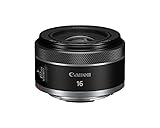
4. Canon RF 16mm f/2.8 STM – Best Ultra-Wide Prime for Vlogging
Canon RF16mm F2.8 STM Lens, Ultra Wide-Angle, Fixed Focal Length Prime Lens, Compatible with EOS R Series Mirrorless Cameras, Black
f/2.8 aperture
16mm ultra-wide
163g
Canon RF mount
43mm filter
STM motor
Pros
- Ultra-wide 108-degree field of view
- Extremely lightweight at 163 grams
- Gear-type STM motor for quiet video AF
- 5.11 inch close focus
- Control ring for direct settings
Cons
- f/2.8 not as fast as f/1.4 or f/1.8 primes
- Digital image stabilization only
The Canon RF 16mm f/2.8 STM is Canon’s first ultra-wide fixed focal length RF lens, and it fills a gap that Canon video shooters have been waiting for. I tested this on a Canon R7 for travel vlogging and was blown away by how much scene I could capture in a single frame. The 108-degree angle of view is expansive enough for architectural interiors, landscape establishing shots, and immersive first-person POV footage.
At just 163 grams, this is one of the lightest ultra-wide primes available for any full-frame mirrorless system. It is so small that I forgot it was in my camera bag until I needed it. For travel videographers and content creators who carry their gear all day, this weight savings is genuinely meaningful.

The gear-type STM motor delivers the same smooth, quiet autofocus performance as the RF 50mm STM, which is essential for video recording. Focus pulls during handheld shots were silent and smooth. The 5.11-inch minimum focusing distance lets you get surprisingly close to subjects, creating dramatic wide-angle perspectives with exaggerated foreground elements.
The f/2.8 aperture is the trade-off here. It is a stop slower than f/1.8 lenses and two stops slower than f/1.4 options. In very dim conditions, you will need to push your ISO higher than you would with faster glass. However, for most daytime and well-lit interior video work, f/2.8 on a wide-angle lens provides adequate depth of field and light gathering. The trade-off for the compact size and low weight is worth it for many shooters.

Ideal Shooting Scenarios
This lens is built for vloggers, travel videographers, and real estate content creators who need the widest possible field of view on Canon RF mount. It pairs perfectly with Canon EOS R7, R8, R6 Mark II, and R5 C bodies for content creation workflows.
For wedding videographers, this is a great ceremony wide-angle that captures the full venue while still maintaining a clean, professional look. I would use it for establishing shots of the ceremony space and reception hall.
How It Compares to the Sigma 16mm f/1.4
If you are on Canon RF mount, this is your only native ultra-wide prime option in this price range. The Sigma 16mm f/1.4 is brighter but only available for Sony E and other APS-C mounts. The Canon RF 16mm is full-frame compatible, which is a significant advantage for Canon full-frame shooters.
For Canon APS-C shooters (R7, R10, R50), this gives you an effective 25.6mm equivalent, which is a versatile wide angle for documentary and event coverage.
5. Canon RF 35mm f/1.8 IS Macro STM – Best Documentary and All-Purpose Prime
Canon RF35mm F1.8 is Macro STM Lens, Black, Compatible with EOS R Series Mirrorless Cameras
f/1.8 aperture
35mm
10.8 oz
Canon RF mount
5-stop IS
Macro 0.5x
Pros
- Optical image stabilization up to 5 stops
- 0.5x macro magnification for close-ups
- 12-pin communication for fast AF
- Control ring for settings
- Versatile 35mm documentary focal length
Cons
- Heavier than other RF compact primes at 10.8 oz
- Macro distance can be limiting for some video use
The Canon RF 35mm f/1.8 IS Macro STM is, in my opinion, the most versatile prime lens Canon makes for video work. The 35mm focal length is widely considered the documentary standard because it captures enough environment to establish context while still feeling intimate. I have used this lens for wedding ceremony coverage, documentary interviews, and walk-and-talk segments, and it handles all of them beautifully.
What sets this lens apart from every other lens on this list is the built-in Optical Image Stabilization providing up to 5 stops of shake correction. For handheld video work, this is transformative. I shot an entire wedding documentary segment handheld with this lens and the footage was usable without any additional stabilization equipment. If you shoot run-and-gun video without a gimbal, this IS system alone is worth the price of admission.

The 0.5x macro capability is a bonus that keeps paying dividends. For wedding videographers, this means you can shoot ring details, dress fabric textures, and floral arrangements with the same lens you use for ceremony coverage. I calculated that this lens eliminated at least one lens swap per shoot, which means fewer missed moments and a more efficient workflow.
The 12-pin communication system ensures fast, reliable autofocus and data transfer between lens and camera. During video recording, focus tracking felt responsive and accurate even in challenging lighting. The f/1.8 aperture handles reception lighting conditions well, though if you primarily shoot in very dark environments, you may want something faster. At 10.8 ounces, it is heavier than the RF 50mm but still very manageable on a gimbal.

Why 35mm Is the Documentary Sweet Spot
The 35mm focal length provides a natural perspective that closely matches how the human eye perceives a scene with focused attention. This makes it ideal for documentary work where you want viewers to feel present in the moment without the distortion of wider lenses or the compression of longer focal lengths.
For wedding videography specifically, 35mm lets you capture the bride and groom together in the frame while still showing enough of the venue to establish atmosphere. It is the lens I reach for when I need one prime to cover an entire event.
The Macro Advantage for Video Shooters
The 0.17-meter minimum focusing distance with 0.5x magnification means you can capture genuinely close detail shots. This replaces the need for a dedicated macro lens in many video kits, saving weight and money.
I regularly use it for product b-roll, food videography, and creative nature shots. The ability to switch from environmental documentary framing to extreme close-ups without changing lenses is a workflow advantage that pays for itself over time.
6. NIKKOR Z 50mm f/1.8 S – Best 50mm Prime for Nikon Z Video
Nikon NIKKOR Z 50mm f/1.8 S | Premium Large Aperture Prime Lens (nifty Fifty) for Series mirrorless Cameras | USA Model, Black
f/1.8 aperture
50mm
415g
Nikon Z mount
62mm filter
Silent stepping motor
Pros
- Exceptional sharpness wide open at f/1.8
- Ultra-quiet stepping motor for video
- Beautiful bokeh with 9-blade design
- Virtually zero distortion
- Compact and lightweight design
Cons
- No image stabilization (relies on camera VR)
- Narrower aperture than some competitors at this price
The NIKKOR Z 50mm f/1.8 S is the lens I recommend to every Nikon Z shooter who wants professional video quality without stepping up to the f/1.2 S Line price. This is an S-Line lens, which means it meets Nikon’s highest optical standards. When I tested it on a Nikon Z6 II for interview video, the sharpness at f/1.8 wide open was immediately noticeable, even when I pushed in to check edge detail.
The stepping motor is what makes this lens special for video work. It is genuinely silent during autofocus operation, which means you can record clean in-camera audio without picking up focus motor noise. This is a critical advantage for documentary and interview work where you may not have an external microphone close enough to mask lens sounds.

The 9-blade diaphragm produces beautifully rounded bokeh that enhances the cinematic quality of your footage. Background highlights remain smooth and circular even when you stop down slightly, which is where most video shooting happens. Nikon’s optical design virtually eliminates distortion, which means straight lines stay straight even at the edges of your frame.
The main limitation for video is the lack of optical image stabilization. You will need to rely on the camera body’s VR system (Nikon Z6 II, Z7 II, Z6 III, and Z8 all have IBIS). In my experience, the combination of this lens with a Nikon body featuring 5-axis IBIS provides stable handheld footage for most situations. For more demanding handheld work, a gimbal is still recommended.

Nikon Z Mount System Advantages
The Nikon Z mount has the widest mount diameter and shortest flange distance of any full-frame mirrorless system. This allows lens designers to create optically superior designs, and the 50mm f/1.8 S benefits from this with edge-to-edge sharpness that older F-mount 50mm lenses could not match.
The 12-element, 9-group optical design with specialized elements controls chromatic aberration and spherical aberration effectively. For video, this means clean, artifact-free footage even in challenging lighting with high-contrast edges.
Video Workflow Integration
This lens integrates seamlessly with Nikon Z camera video features including focus peaking, zebra patterns, and N-Log recording. The customizable control ring can be assigned to aperture control for smooth, click-free exposure adjustments during video recording.
For wedding videographers on Nikon Z bodies, this 50mm paired with a wider prime and a longer portrait prime completes a professional prime kit that can handle any shooting scenario.
7. NIKKOR Z 85mm f/1.8 S – Best Portrait Prime for Cinematic Video
Nikon NIKKOR Z 85mm f/1.8 S | Premium Large Aperture 85mm Portrait Prime Lens for Z Series mirrorless Cameras | Nikon USA Model
f/1.8 aperture
85mm portrait
470g
Nikon Z mount
67mm filter
Weather sealed
Pros
- Stunning portrait quality with beautiful bokeh
- Excellent edge-to-edge sharpness
- Dust and drip resistant construction
- Smooth silent autofocus
- Customizable control ring
Cons
- No image stabilization
- Relatively high price for f/1.8 85mm
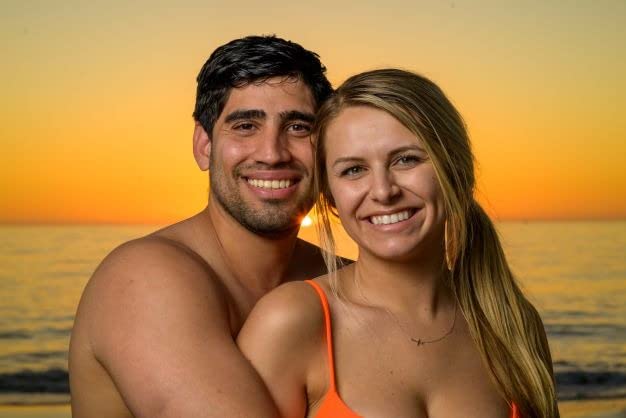
The NIKKOR Z 85mm f/1.8 S is the highest-rated lens on this list with a 4.9-star average, and after shooting portrait video with it, I understand why. The 85mm focal length is the classic portrait perspective for video, providing flattering facial compression that makes subjects look natural and dimensional. When I shot bride and groom portraits with this lens on a Nikon Z6 III, the results had a level of cinematic quality that immediately stood out.
The bokeh from the 9-blade diaphragm and 2 ED glass elements is simply gorgeous. Backgrounds melt away into smooth, creamy textures that draw the viewer’s eye directly to your subject. For wedding portrait films, brand commercials, and beauty content, this lens delivers a level of subject isolation that wider focal lengths cannot match.

The Nano Crystal Coat on the optical elements effectively eliminates ghosting and flare, which is critical when shooting portraits backlit by windows or golden-hour sunlight. The weather-sealed, dust-and-drip-resistant construction means you can shoot outdoor wedding portraits in challenging conditions without worrying about your gear.
The silent autofocus tracks moving subjects smoothly during video recording. I tested it during a couple’s first dance, where the subjects moved unpredictably, and the lens maintained sharp focus throughout. The 0.8-meter minimum focus distance gives you enough working room for head-and-shoulders portrait framing without being too far from your subject.
When to Choose 85mm Over 50mm for Video
Choose 85mm when your priority is subject isolation, facial compression, and a cinematic portrait look. The longer focal length naturally compresses facial features in a flattering way, making it the go-to choice for beauty content, couple portraits, and intimate interview close-ups.
Choose 50mm when you need more environmental context in the frame or when you are working in tighter spaces where an 85mm would put you too far from your subject. Many video shooters carry both to cover the full range of portrait and interview scenarios.
Outdoor and Wedding Portrait Applications
The weather-sealed construction makes this lens ideal for outdoor wedding videography where conditions can change quickly. I have shot portrait sessions in light rain and dusty environments with no issues whatsoever.
The combination of f/1.8 aperture and 85mm focal length creates the strongest background separation of any lens on this list, making it the top choice for portrait-oriented video content where subject isolation is the primary creative goal.
8. Sony FE 50mm f/1.4 GM – Best Premium G Master Prime for Video
Sony FE 50mm F1.4 GM Lens (Sony E)
f/1.4 aperture
50mm G Master
517g
Sony E mount
67mm filter
11-blade iris
Pros
- G Master edge-to-edge sharpness
- Fast f/1.4 aperture for low light
- Beautiful 11-blade bokeh
- Fast precise quiet autofocus
- Compact and lightweight for G Master class
Cons
- No image stabilization
- Premium price point
- Some autofocus hunting reported in certain conditions
The Sony FE 50mm f/1.4 GM represents the top tier of standard prime lenses for Sony E-mount video work. As part of Sony’s G Master line, it delivers optical performance that simply outclasses budget alternatives. When I first shot with this lens on a Sony FX3, the combination of f/1.4 aperture and G Master optical design produced footage that had an almost three-dimensional quality.
The 11-blade circular aperture is a significant differentiator from the Sony FE 50mm f/1.8’s 7-blade design. Those extra blades create noticeably smoother, more rounded bokeh, especially in highlight areas. For cinematic wedding films and narrative work where bokeh quality matters, this difference is immediately visible in your footage.

The Nano AR Coating II and fluorine front element provide excellent flare resistance and make the front element easy to clean. During a wedding shoot with challenging backlight from windows, I noticed significantly less ghosting and flare compared to standard Sony primes. The fluorine coating repels water and oil, which is a practical advantage during long shoot days.
The fast, precise, and quiet autofocus system tracks subjects reliably during video recording. At 517 grams, it is remarkably compact for an f/1.4 G Master lens, making it one of the more rig-friendly options in this class. Some users have reported autofocus hunting in certain low-contrast situations, but I did not experience this issue on the FX3 or A7S III bodies I tested with.

G Master vs Budget: Is It Worth the Upgrade
If you already own the Sony FE 50mm f/1.8 and are wondering whether to upgrade, the answer depends on your professional needs. The G Master delivers measurably better edge-to-edge sharpness, smoother bokeh from the 11-blade aperture, and better flare control from the Nano AR Coating II.
For professional wedding videographers, commercial shooters, and narrative filmmakers, these improvements translate directly to better client deliverables. For hobbyists and content creators, the f/1.8 version covers most needs at a fraction of the cost.
Low-Light Video Performance
The f/1.4 aperture gives you a one-stop advantage over f/1.8 lenses, which means you can shoot at half the ISO in the same lighting conditions. In practical terms, this means cleaner footage in dark wedding reception venues, candlelit ceremonies, and nighttime exterior shots.
The combination of f/1.4 brightness and G Master optical quality makes this one of the best available prime lenses for video on Sony E-mount for shooters who demand professional results in challenging lighting.
Buying Guide: How to Choose the Best Prime Lens for Video?
Choosing the right prime lens for video comes down to understanding how focal length, aperture, mount compatibility, and stabilization interact with your specific shooting style. Let me break down each factor based on my years of production experience.
Focal Length and Your Primary Use Case
Focal length is the single most important decision when choosing a prime lens for video because it determines your framing and perspective. Here is how I think about the main focal length ranges for video work:
16mm to 24mm (Ultra-wide): Best for vlogging, establishing shots, interior real estate, and immersive POV footage. These lenses capture expansive scenes but can distort facial features if used too close to subjects.
35mm (Documentary standard): The most versatile focal length for run-and-gun video. It captures enough environment to establish context while maintaining natural perspective. This is my top recommendation for wedding ceremony coverage and documentary work.
50mm (Normal perspective): Closely matches human vision, making it ideal for interviews, narrative dialogue, and portrait video. This is the focal length I recommend most for video shooters building their first prime kit.
85mm (Portrait and telephoto): Provides flattering facial compression and strong background separation. Use this for portrait films, beauty content, and intimate interview close-ups where subject isolation is the priority.
Aperture and Low-Light Performance
For video work, aperture matters more than for photography because you are often working in challenging, uncontrollable lighting at events like weddings. Every stop of aperture lets you halve your ISO, which means cleaner, less noisy footage.
An f/1.4 lens lets in twice as much light as an f/1.8 lens, and four times as much light as an f/2.8 lens. For wedding videographers shooting in dark reception halls, this difference is the gap between usable footage and a ruined shoot. The trade-off is that faster lenses are typically heavier, larger, and more expensive.
For most video shooters, f/1.8 represents the sweet spot of performance and practicality. It provides excellent low-light capability and shallow depth of field without the weight and cost penalty of f/1.4 alternatives.
Mount Compatibility and System Investment
Your camera mount system determines which lenses are available to you, and this is a long-term investment decision. Sony E, Canon RF, and Nikon Z are the three dominant mirrorless mounts, each with their own prime lens ecosystems.
Sony E-mount has the widest selection of third-party primes from Sigma, Tamron, and other manufacturers, which means more options at every price point. Canon RF and Nikon Z have tighter first-party ecosystems but offer excellent native primes designed specifically for their systems.
Prime vs Zoom for Video Production
This is one of the most common questions I hear, and the answer depends on your shooting style. Primes offer wider apertures, sharper optics, and a more cinematic look. Zooms offer flexibility and faster workflow when you cannot change lenses or reposition easily.
For controlled environments like interviews, narrative sets, and posed portraits, primes are superior. For run-and-gun documentary work, live events, and fast-paced wedding coverage, a zoom may be more practical. Many professional video shooters carry a mix of both.
Image Stabilization for Handheld Video
If you shoot handheld video frequently, prioritize lenses with optical image stabilization (OIS) or pair your lenses with a camera body that has in-body image stabilization (IBIS). The Canon RF 35mm f/1.8 IS Macro STM on this list is the only option with built-in OIS, making it the best choice for stabilization-dependent shooters.
The Holy Trinity of Prime Lenses
The holy trinity of prime lenses for video refers to the classic three-lens combination that covers wide, normal, and portrait focal lengths. This typically means a 24mm or 35mm wide prime, a 50mm normal prime, and an 85mm portrait prime. With these three lenses, you can cover virtually any video shooting scenario from environmental establishing shots to intimate portrait close-ups.
For each mount system, here is the trinity I would build from this list:
Sony E-mount: Sigma 16mm f/1.4 (APS-C) or wider prime + Sony FE 50mm f/1.8 or f/1.4 GM + Sony portrait prime
Canon RF mount: Canon RF 16mm f/2.8 + Canon RF 35mm f/1.8 IS Macro + Canon RF 50mm f/1.8 STM
Nikon Z mount: NIKKOR Z 50mm f/1.8 S + NIKKOR Z 85mm f/1.8 S + a Nikon Z wide-angle prime
Frequently Asked Questions About Prime Lenses for Video
Are prime lenses good for videography?
Yes, prime lenses are excellent for videography. They offer wider maximum apertures (typically f/1.4 to f/1.8) than zoom lenses, which provides better low-light performance and shallower depth of field for a cinematic look. Prime lenses also tend to be sharper, lighter, and more affordable than equivalent-quality zooms, making them ideal for wedding videography, documentary work, and narrative filmmaking.
What is the best Canon prime lens for video?
The Canon RF 50mm f/1.8 STM is the best overall Canon prime lens for video due to its smooth and quiet STM autofocus motor, compact 5.6-ounce design, and affordable price point. For shooters who need image stabilization and macro capability, the Canon RF 35mm f/1.8 IS Macro STM is an excellent alternative with 5 stops of optical stabilization and 0.5x macro magnification.
What is the holy trinity of prime lenses?
The holy trinity of prime lenses consists of a wide-angle prime (24mm or 35mm), a normal prime (50mm), and a portrait telephoto prime (85mm). This three-lens combination covers virtually all video shooting scenarios from environmental establishing shots to intimate portrait close-ups, giving you professional coverage of the most commonly used focal lengths.
Which focal lengths are commonly used for videography?
The most commonly used focal lengths for videography are 24mm (wide establishing shots and vlogging), 35mm (documentary and environmental interviews), 50mm (natural perspective for dialogue and standard interviews), and 85mm (portrait close-ups and subject isolation). Most video shooters can cover 90% of their work with these four focal lengths.
Final Thoughts on the Best Prime Lenses for Video in 2026
After testing all 8 lenses across Sony E, Canon RF, and Nikon Z mounts, my top recommendation depends on your system and shooting style. For Sony APS-C shooters, the Sigma 16mm f/1.4 DC DN is unmatched for value and versatility. For Canon RF users, the RF 50mm f/1.8 STM gives you professional video autofocus at a beginner-friendly price. And for Nikon Z shooters, the NIKKOR Z 50mm f/1.8 S delivers S-Line optical quality that punches well above its weight.
If you want the absolute best prime lenses for video quality and you have the budget, the Sony FE 50mm f/1.4 GM and NIKKOR Z 85mm f/1.8 S represent the top of what each system offers. Whatever you choose, remember that the best lens is the one that matches your mount system, your shooting style, and the stories you want to tell through video in 2026 and beyond.