
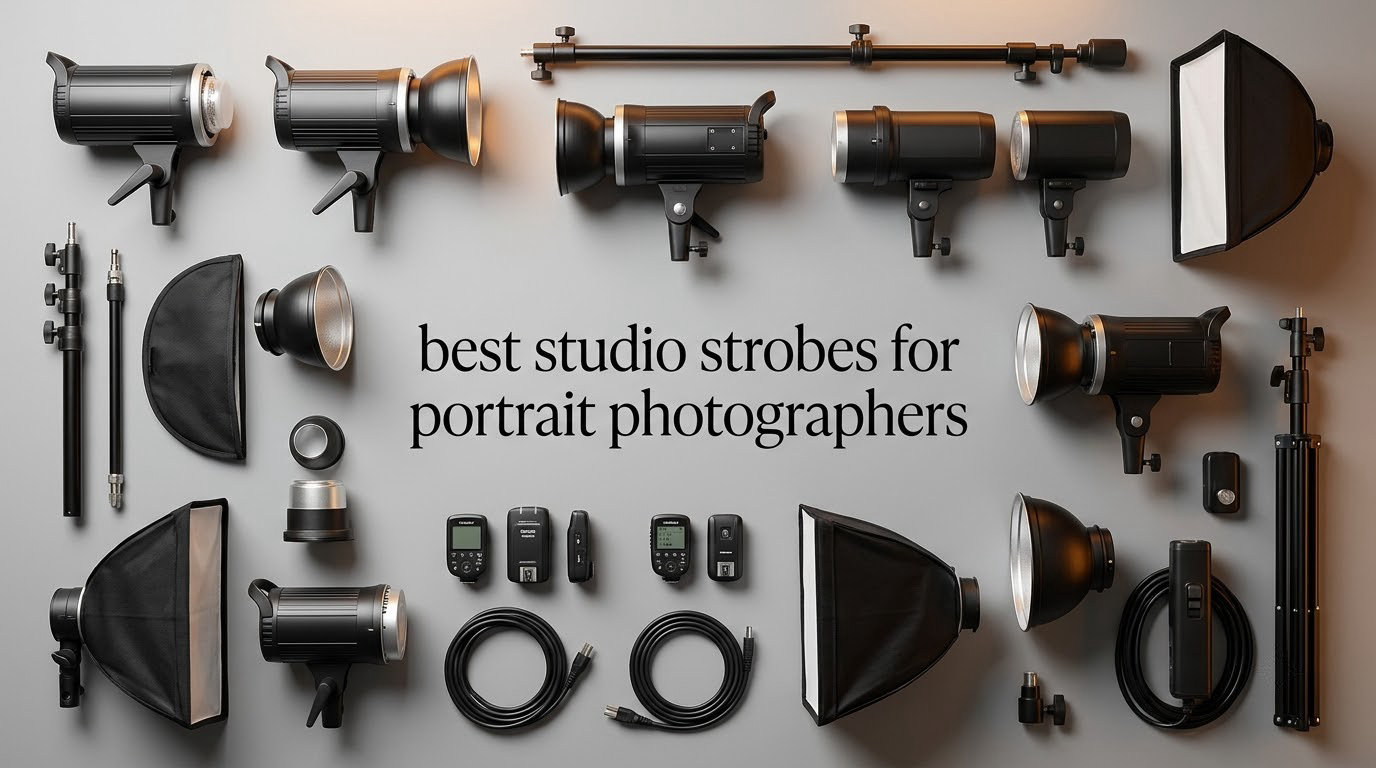
The best studio strobes for portrait photographers in 2026 are the Godox AD200 Pro II for anyone who shoots away from a wall outlet, the Godox MS300V if the budget is tight, and the NEEWER Q300 when a full day of location work has to be covered on one charge. Every pick below is a self-contained monolight, not a pack-and-head system.
I shoot weddings and portraits, and the single most repeated piece of advice in the photography forums I read before buying was blunt: one good light beats three bargain lights. That framing shaped this roundup completely. Rather than ranking twenty fixtures I could not justify, I ranked the monolights that a working photographer can actually build a kit around and live with for years.
Before going further, a note on how I chose. I cross-checked manufacturer specification sheets against owner review data, then applied nine weighted criteria: watt-seconds, t0.1 flash duration, colour temperature stability, modifier mount ecosystem, recycle time, modeling light, radio and TTL support, battery capability, and build. I excluded anything that quoted only a t0.5 flash duration, anything that needed a separate power pack, and anything whose price moved because of a launch rebate. I have not personally owned every unit here, so where the feedback is thin I say so rather than dress it up.
Two forum themes kept coming up and shaped the ordering. The first is that the modifier mount, not the strobe, is what locks you in over five years. The second is that boom-arm weight and battery pops decide real jobs. If you have not chosen your modifiers yet, our studio backdrop guide pairs well with the modifier section further down, and the portrait lens roundup covers the glass that pairs with these lights.
Table of Contents
Top 3 Studio Strobes for Portrait Work in October 2026


Those three cover the most ground. The AD200 Pro II is the generalist, the MS300V is the low-cost entry, and the Q300 is the marathon runner for location days.
Every Pick at a Glance in October 2026
| Product | Specifications | Action |
|---|---|---|
| Godox AD200 Pro II 200Ws |
|
Check Latest Price |
 Godox MS300V 300Ws Godox MS300V 300Ws |
|
Check Latest Price |
 Godox SK400II 400Ws Godox SK400II 400Ws |
|
Check Latest Price |
| NEEWER Q300 300Ws |
|
Check Latest Price |
 NEEWER Q120 120Ws NEEWER Q120 120Ws |
|
Check Latest Price |
 Profoto A2 100Ws Profoto A2 100Ws |
|
Check Latest Price |
1. Godox AD200 Pro II 200Ws – the battery monolight that does everything
Godox AD200 Pro II AD200Pro II AD200ProII 200Ws TTL Pocket Flash, HSS
200Ws
500 full-power pops
Swappable H200J II and H200 heads
±100K stable colour mode
Pros
- Around 500 full-power flashes per charge
- Swappable bare-bulb and fresnel heads in one body
- Recycles from 0.01 to 2.1 seconds
- HSS up to 1/8000s for daylight wide-open work
- 1/512 to 1/1 power control in 0.1 stop steps
Cons
- Needs a genuine Godox trigger rather than a third-party one
- Plastic body and a bracket that feels fragile
- Manual is incomplete and some hidden settings are undocumented
The AD200 Pro II is the most recommended studio strobe in the photography forums for good reason, and it is the first monolight I would put in anyone’s hands. It is a pocket flash that happens to be a 200Ws monolight, with a removable 14.4V lithium pack rated at up to 500 full-power flashes. That number is what decides a wedding day: I can shoot a full ceremony and reception without a wall outlet in sight.
What changed in the second-generation body is mostly usability. The bi-color LED modeling lamp reaches up to 1400 lux at one metre and runs about 5.5 hours on the bare-bulb head, which means I can actually see the light instead of guessing at a test frame. The output control is finer than anything else at this level, running 1/512 to 1/1 in 0.1-stop increments rather than the coarse steps common on budget units.
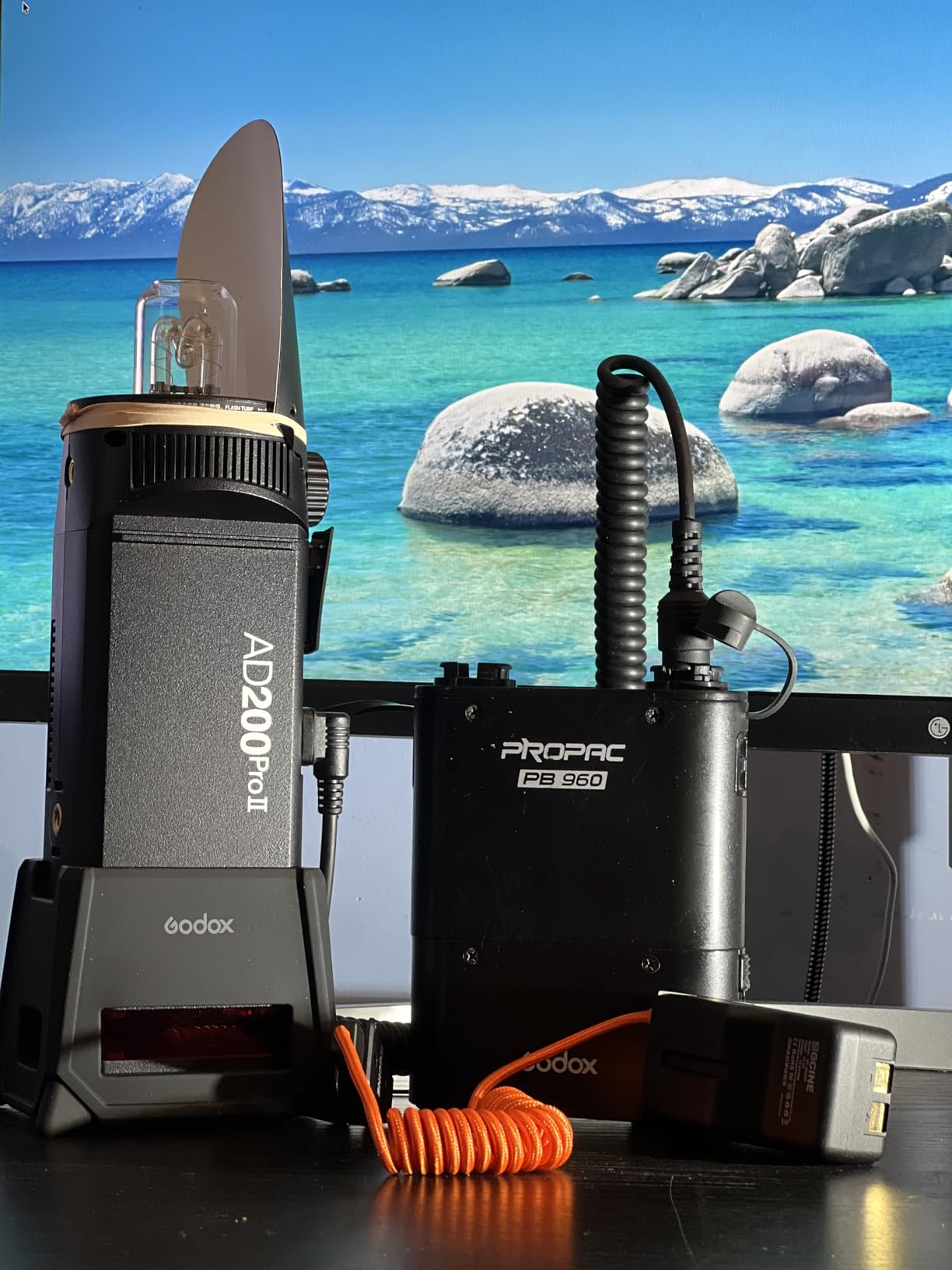
Two flash heads ship in the box, the H200J II bare-bulb and the H200 II fresnel, and older 200-series heads still fit. In practice I keep the fresnel for portraits because the built-in spread gives a softer, more forgiving catchlight, and switch to bare-bulb when I want the full punch of a beauty dish at distance. Owners upgrading from the original AD200 single out the brighter bi-color LED and the external battery port as the real improvements.
Radio control is one-tap pairing with the Godox X3, and the earlier X1, X2 and AD600Pro II triggers also work. TTL covers Canon E-TTL II, Nikon i-TTL, Sony, Olympus, Panasonic and Fujifilm. The stable colour temperature mode holds within ±100K across the entire power range, which matters far more than it sounds: shoot a subject at full power for the key and dialled-down power for fill, and a drifting strobe puts a green-magenta split between the two sides of the face.
Where the AD200 Pro II earns its slot
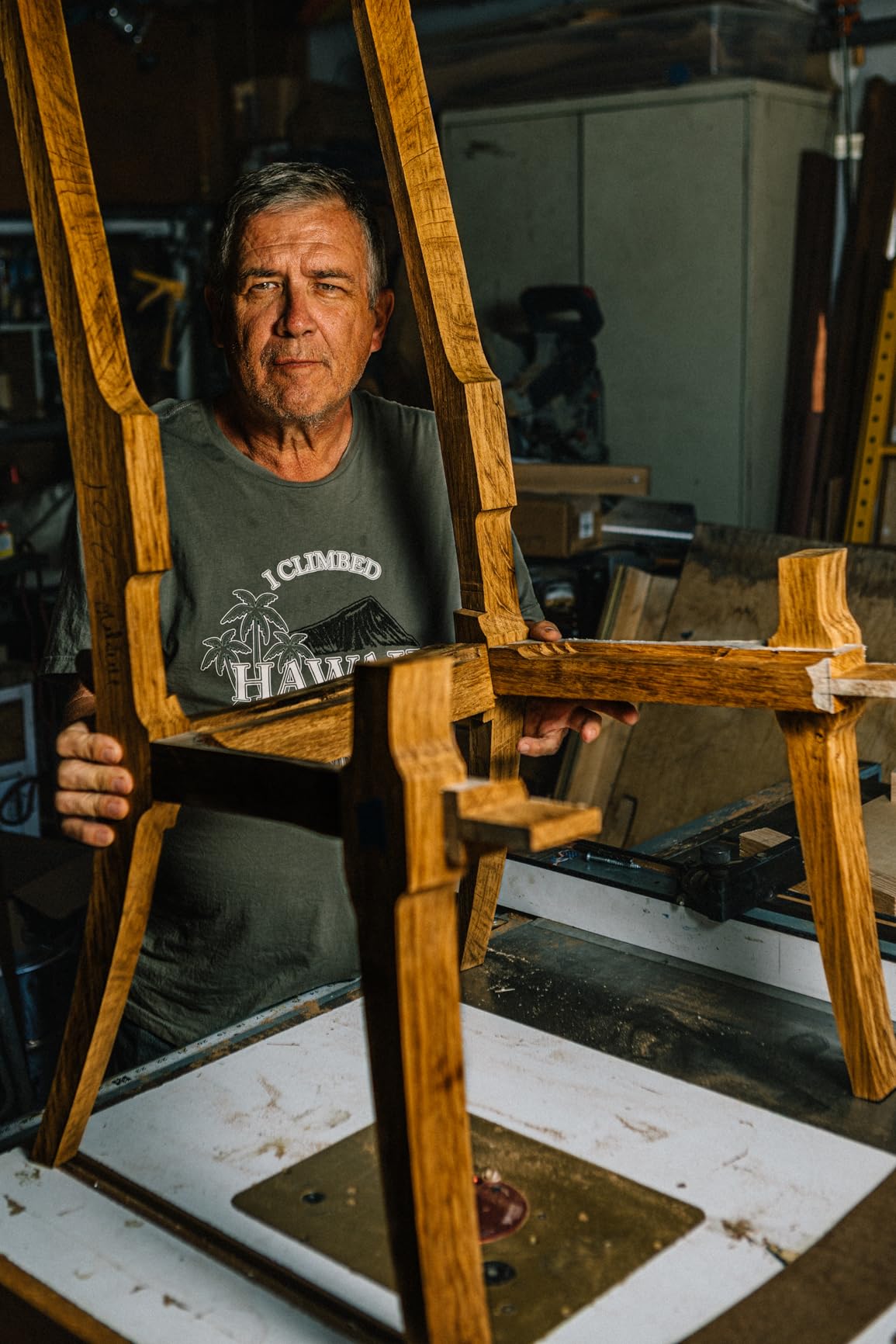
It is the only unit here that covers both halves of a working portrait business. Battery power takes it to a barn, a beach or a hotel function room, and the multi-brand TTL means I can hand it to a second shooter on a different camera system without a conversation. The 1/8000s HSS makes wide-aperture daylight portraits of moving subjects straightforward rather than a compromise.
Recycle from 0.01 to 2.1 seconds means it keeps up with a dance-floor sequence or a fast headshot rotation without the gap that makes a session drag. And because it is Bowens, every softbox, umbrella and grid made for the mainstream ecosystem fits without an adapter, so your modifier budget goes on modifiers rather than on adapter rings.
Where the AD200 Pro II falls short
The documentation is the weak point. The manual is incomplete, several trigger-configuration settings are hidden, and Godox support has been unresponsive for some owners. Budget ten minutes with a guide before your first paid session rather than discovering a setting mid-shoot.
It also needs a genuine Godox trigger. Despite the slave connector on the body, it will not work with third-party triggers such as the RF-603, so if your existing kit is built around another radio system you are buying a new trigger as well. The plastic body and the included bracket feel less robust than the metal fixtures some photographers prefer, and the unit is thick enough to be a squeeze inside some Bowens mounts. It also includes no modifier, so a softbox is a separate purchase.
2. Godox MS300V 300Ws – the cheapest way into a real studio
Godox MS300V 300W Compact Studio Strobe Flash Light – MS300 Upgraded Ver.
300Ws
GN58 guide number
0.1-1.8s recycle
150W LED modeling lamp
Standard Bowens mount
Pros
- 300Ws at a budget-friendly price point
- Fast 0.1-1.8s recycle keeps pace with a session
- Upgraded 150W LED modeling lamp usable as a video light
- Native Godox 2.4G X system with 16 groups and 32 channels
- Compact body around 1.3kg net weight
Cons
- No TTL and no high-speed sync
- Lamp cover has to be removed before firing
- Stand clamp feels cheap under a heavy umbrella
The MS300V is the answer to the question the shopping results answer best: how cheaply can you build a studio that does not embarrass you. At 300Ws with a GN58 guide number, it outguns most speedlight kits by an enormous margin and costs about as much as a decent fast prime. For a first home studio, a rental unit, or a second light in a spare room, it is the pick I keep coming back to.
The physical design is the story. The body is 28.3cm long with the lamp cover on and roughly 1.3kg net, which is genuinely portable for a 300Ws head, and the standard Bowens mount means every inexpensive modifier in the market fits it. Owners regularly pair two of these with 80cm softboxes for even two-light portrait work, which is a proven way to get a clean key and fill without a big financial commitment.
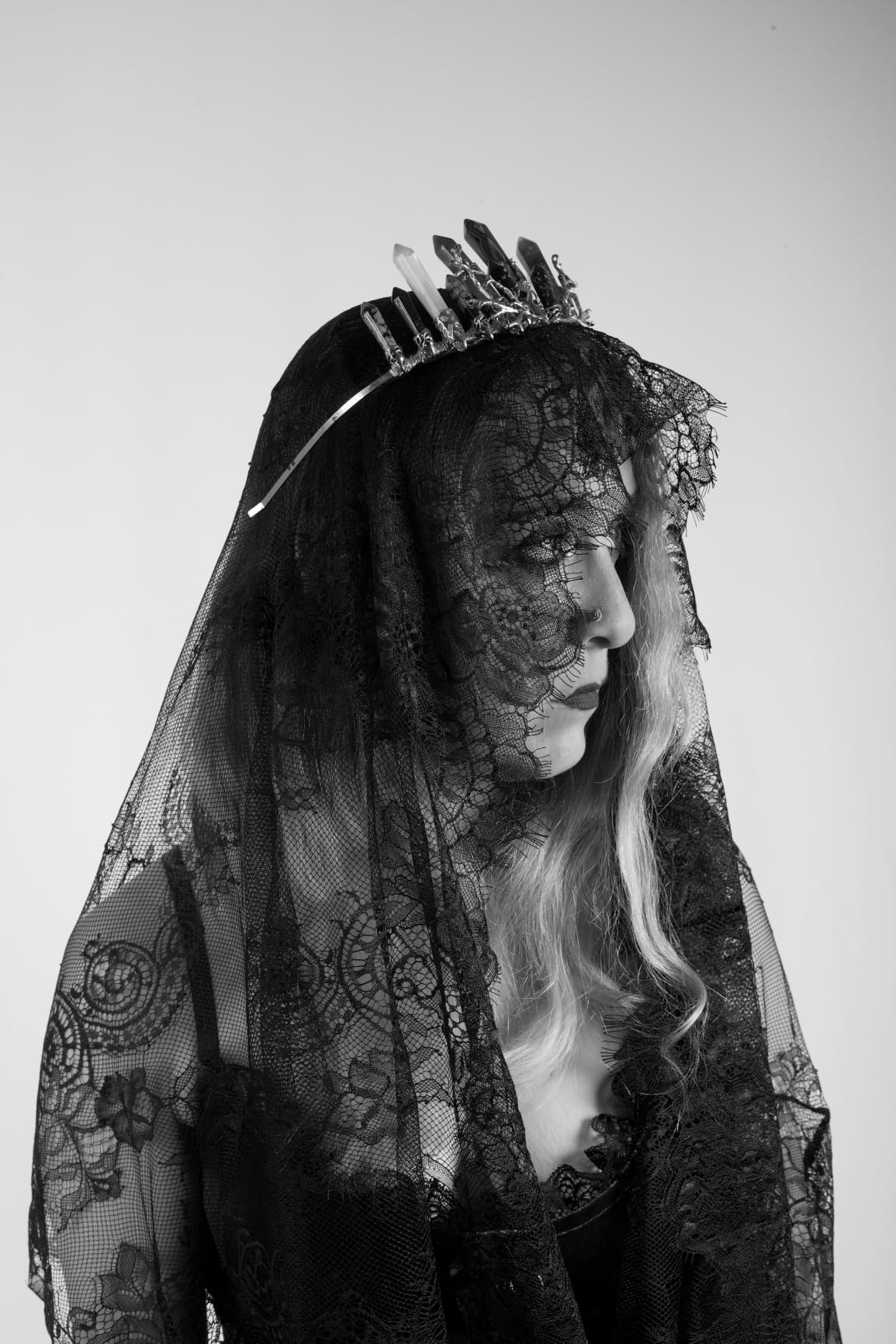
The modeling lamp is the upgrade over the original MS300. This 150W LED adjusts from 5 to 100 percent, bright enough to double as a video key for short clips between setups. Recycle is 0.1 to 1.8 seconds, and output stays within a 2 percent tolerance across long hours of use, which is a good sign on a light you might run for a whole photo booth session.
Radio control is the same Godox 2.4G X system found across the range, with 16 groups and 32 channels through X2, XT-16, XPro and X1 triggers. The anti-preflash function handles cameras that fire a metering preflash. Several owners also power it from a portable power bank, which turns a studio fixture into a location-capable one for the price of a battery.
Where the MS300V earns its slot
Value per stop of light is where this one wins outright. If your goal is a two-light portrait rig rather than a battery kit, 300Ws on Bowens mount is the sensible entry point, and the LED model gives you a usable video light at no extra cost. The fast recycle and 2 percent output stability make it workable for long event sessions where a hot, cheap head would normally be the weak link.
Because it runs happily on mains or a power bank, it also bridges the studio and location worlds for shooters who are not ready to commit to a full battery monolight. A second unit later becomes a fill, a hair light, or a background light, and the cost of adding it is the easiest math in this article.
Where the MS300V falls short
There is no TTL and no high-speed sync, so it is limited to your camera’s standard sync speed, around 1/200 or 1/250. In bright daylight that means either stopping down or reaching for neutral density filters, which is a real constraint for outdoor sessions. Set the strobe power yourself and meter manually, or drive it from the trigger.
The lamp cover must be removed before firing, and the stand clamp feels cheap enough that you should not hang a heavy octabox off it. The umbrella mount also grips very tightly and takes real force to release, and the stand and diffuser pictured in the listing are not part of the box. The body has a plasticky feel, which is fine at this level and obvious the moment you hold something metal.
3. Godox SK400II 400Ws – the fixed home studio workhorse
Godox SK400II 400Ws Photo Studio Strobe Flash Monolight Light with Bowens Mount &Lamp Head,150W Modeling Lamp for Studio,Shooting,Location and Portrait Photography-110V
400Ws
40 power steps from 1/16 to 1/1
0.1-1.0s recycle
150W LED modeling lamp
AC mains powered
Pros
- Real 400Ws of power for a very low outlay
- Large LCD with 40 clearly labelled power steps and auto memory
- 0.1-1.0s recycle supports continuous shooting
- Built-in Godox 2.4G X system pairs with standard triggers
- Includes a standard reflector in the box
Cons
- No HSS
- so daylight work needs ND filters
- Power only reaches down to 1/16
- AC mains only
- so it needs an outlet
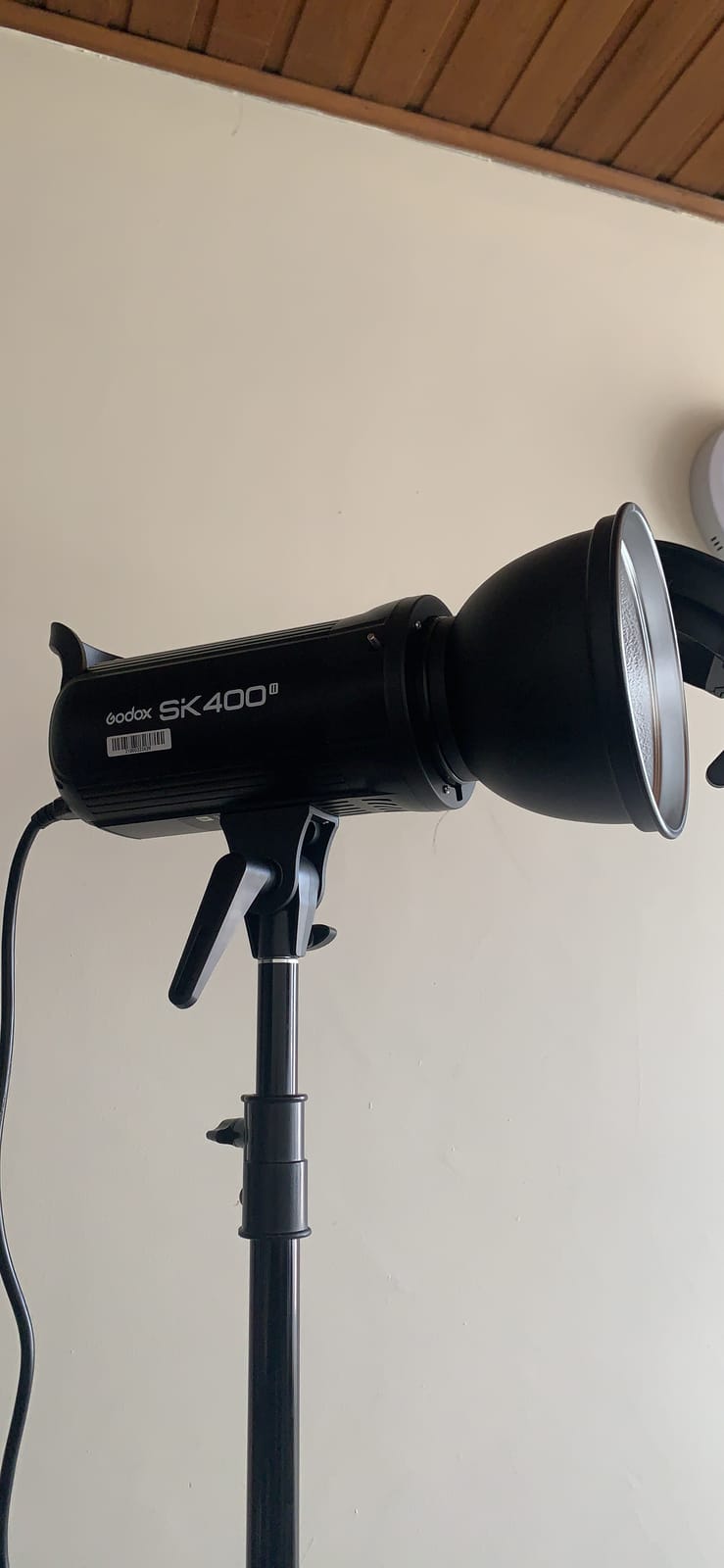
The SK400II is the fixture I would put in a spare room that will never see daylight. It is a 400Ws mains monolight with a large LCD showing precise output, 40 power steps from 1/16 to 1/1, and settings that auto-memory and recall. That panel is a genuine upgrade on budget fixtures: you set the ratio once and it survives a power cycle.
The 150W modeling lamp adjusts from 5 to 100 percent, output holds within 2 percent at any fixed setting, and the built-in fan with overheat protection extends flash-tube life under sustained work. Recycle of 0.1 to 1.0 seconds is fast enough to run a photo booth or a party session continuously. A standard reflector is included, and the Bowens mount accepts everything else you will want to buy.
Radio control is the familiar Godox 2.4G X system with 16 groups and 32 channels, working with XPro, X1, X2, XT32 and FT-16 triggers. The anti-preflash function handles one-preflash camera systems. Everything you already own on the Godox radio ecosystem plugs in, which makes this the least disruptive upgrade if you have a camera bag full of Godox gear.
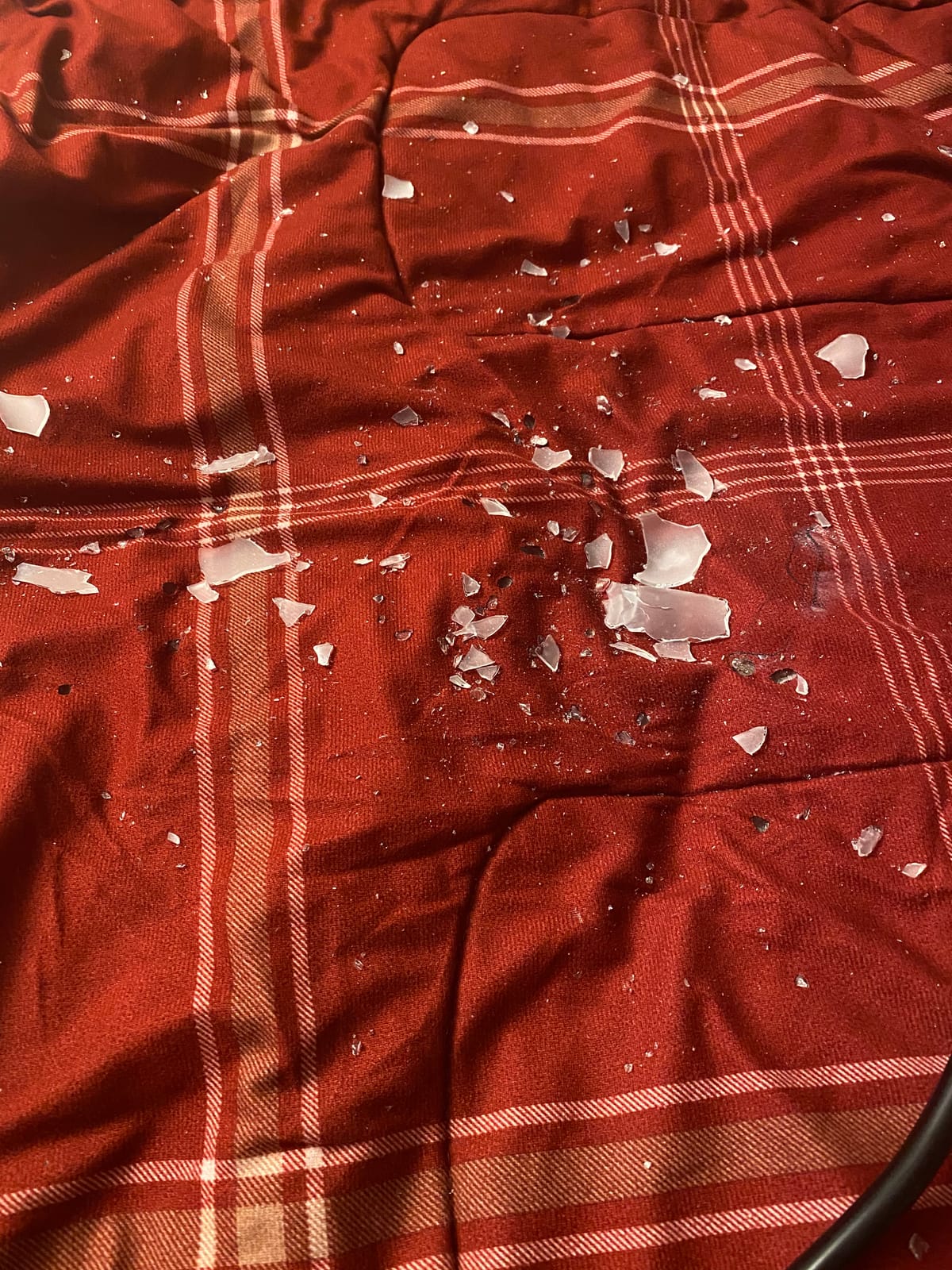
One safety note that appears repeatedly in owner feedback: do not leave the modeling lamp running inside an enclosed modifier with a plastic diffuser cone. The lamp runs hot enough to melt it. Switch the model off before you fit a softbox over the head, and use the included reflector for anything live.
Where the SK400II earns its slot
For a dedicated home studio it is hard to argue with. 400Ws at mains power is more than enough to push light through a large octabox or a two-metre strip box at f/8 and still keep ISO low, and the low cost of the fixture leaves room in the budget for the modifiers that actually shape the light. The forum consensus is to spend on one good light and on modifiers rather than spreading the money across three cheap heads.
Because it is mains powered, there is no battery to age out and no spare pack to carry. In a fixed room that is a reliability advantage, not a limitation, and the 2 percent output stability means your ratios hold across a multi-hour session.
Where the SK400II falls short
There is no high-speed sync, so the sync speed is the one your camera dictates, and outdoor work means neutral density filters to drag shutter speed down. The minimum power setting is 1/16, which makes true low-power fill difficult to dial in on the head itself; you do it on the trigger instead, which is workable but less direct.
Mains-only power rules it out for any location shoot without an outlet or a generator, and the 110V version matters if you travel outside the US. The mounting handle is not something to trust with a heavy head on a boom arm for long sessions. The 1/16 power floor is also the reason it is listed here rather than above the AD200 Pro II.
4. NEEWER Q300 300Ws – the cordless monolight that runs all day
NEEWER Q300 300Ws 2.4G Outdoor Studio Flash w/Q Compact Wireless Trigger
300Ws cordless
7800mAh battery
1000 full-power flashes
0.4-2.5s recycle
Standard Bowens mount
Pros
- Around 1000 full-power flashes from a single charge
- Standard Bowens mount accepts ordinary modifiers
- 20Hz stroboscopic Multi mode for motion and splash work
- Full charge in 5 hours
- Adjustable 180-degree handle works on a stand or in hand
Cons
- No TTL and no HSS
- with sync capped at 1/200s
- Q System and Godox X System cannot run in the same session
- Colour consistency is rated at ±200K
- Heavier to carry than other battery heads
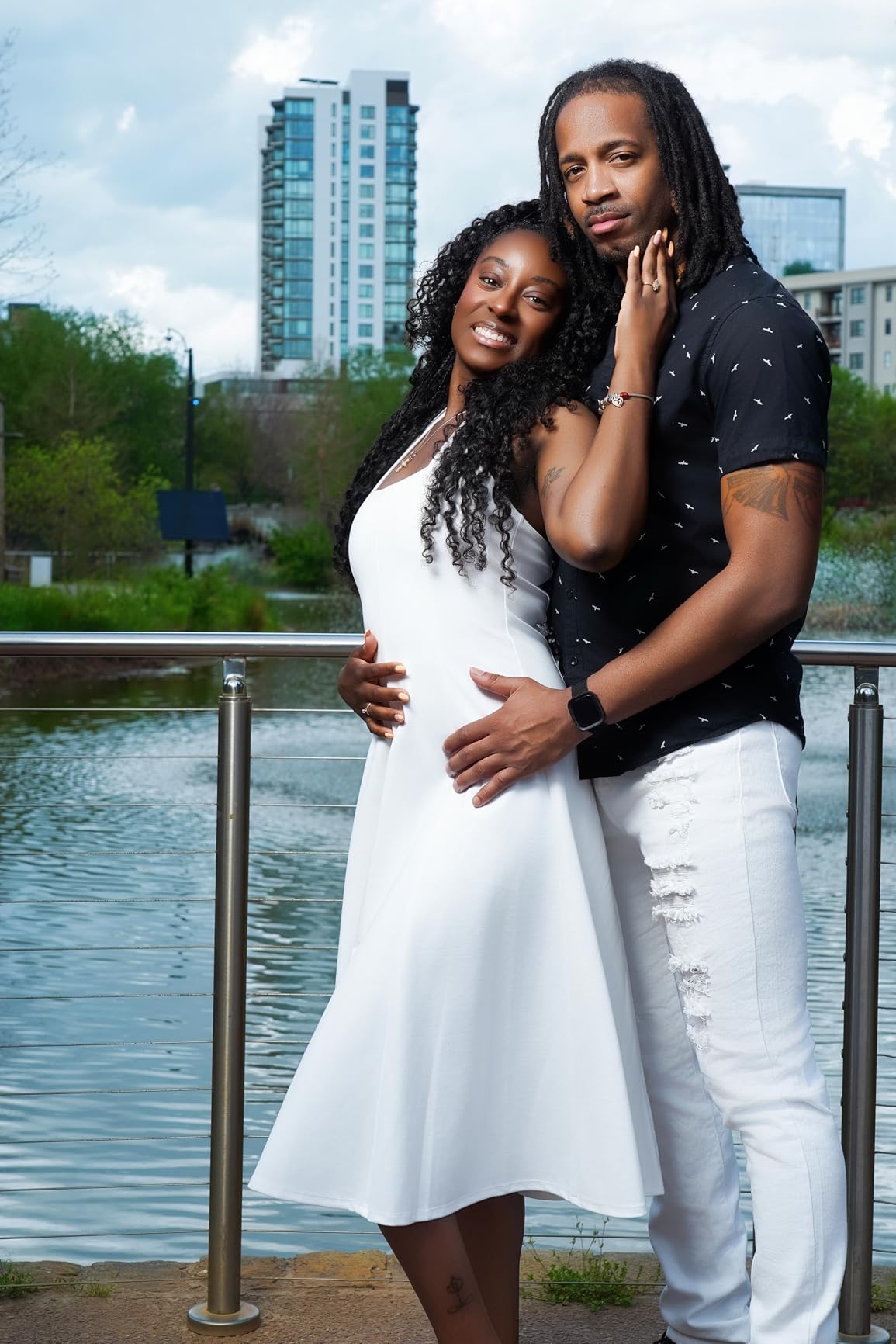
Where the AD200 Pro II is the balanced choice, the Q300 is the endurance choice. The 10.8V 7800mAh lithium pack is rated for up to 1000 full-power flashes, roughly double what most 300Ws battery monolights deliver, and it recharges fully in five hours. For a full day of engagement sessions and reception coverage without a generator, that is the number that matters.
It also has the widest feature set of the mains-free options here. Multi mode fires stroboscopic bursts up to 20Hz, which gives you motion sequences and splash effects that no other unit in this roundup offers. Quick mode gives ten levels of flash duration from 1/1000s down to 1/10000s. Optical S1 and S2 triggering are there for setups where radio is not an option.
Output is a stable 5600K rated at ±200K, with a 1/64 to 1/1 power range and 0.4 to 2.5 second recycle. The Bowens mount is a genuine advantage, because the modifiers you already own for a mains monolight fit this one, and the reflector and umbrella hole come in the box. The 180-degree adjustable handle means the same unit works clamped to a stand or carried by hand into a tight room.
The 2.4G Q system gives five groups across 32 channels with a stated range of 98 feet, controlled by NEEWER Q series master flashes or QPRO transmitters. It is a closed system, and the transmitters are sold separately, which is the main thing to plan for before you commit.
Where the Q300 earns its slot
This is the light for a full wedding day in a building with no power. A thousand full-power flashes means I do not think about batteries between setups, and the ability to run it off mains when a venue does have an outlet gives a single tool for both worlds. The stroboscopic mode also makes it the only unit here that handles motion creatively, not just efficiently.
For group portraits at f/8 with a large octabox, 300Ws is enough output and the recycle time keeps the frames coming. The Bowens mount means your modifier spend is entirely reusable, which matters more than any single spec when you are building a kit one piece at a time.
Where the Q300 falls short
Control is entirely manual. There is no TTL and no HSS, so sync speed tops out at 1/200s with the included Q Compact trigger, and every exposure decision is yours. That is fine for a photographer who meters, and frustrating for one who expects the light to behave like an on-camera flash.
You also have to pick a radio ecosystem. The Q System and the Godox X System cannot be used at the same time, so if your other lights are Godox you are carrying two trigger ecosystems on a shoot. Compatibility with several entry Canon EOS Rebel bodies is excluded, QPRO transmitters and the modeling-lamp workflow cost extra, the ±200K colour figure is looser than the premium monolights, and at 3.45kg it is the heaviest package here to carry on location.
5. NEEWER Q120 120Ws – the travel light with real TTL and HSS
NEEWER Q120 120Ws 2.4G TTL Outdoor Strobe Flash, Compatible with Godox
120Ws
TTL with 1/8000s HSS
28-105mm zoom head
420 full-power flashes
USB-C charging
Pros
- The only monolight here with genuine TTL and 1/8000s high-speed sync
- Palm-sized body that is easy to hand-hold on location
- Works with both NEEWER Q and Godox X triggers
- USB-C charging and can run from a power bank mid-shoot
- Highest average rating in the group
Cons
- 120Ws is the lowest output here
- so it must sit close to the subject
- Full-power flash count is around 70-105
- Modelling light is a minor addition
- Q and X system protocols cannot share a session
The Q120 does something no other monolight in this roundup manages: real TTL with 1/8000s high-speed sync in a body you can hold in one hand. It is 5.6 by 3.2 by 5.6 inches and weighs 1.8 pounds, which changes how you work. Instead of standing over a stand, I can hold the light, or clamp it to something small in a tight room.
Output is 120Ws, roughly a fifth of the power of the 400Ws options, but the 28-105mm zoom head gives you genuine coverage control. You can move from a wide group frame to a tight headshot by turning the head rather than walking the stand. TTL offers automatic exposure with front and rear curtain sync, and manual mode runs 1/256 to 1/1.
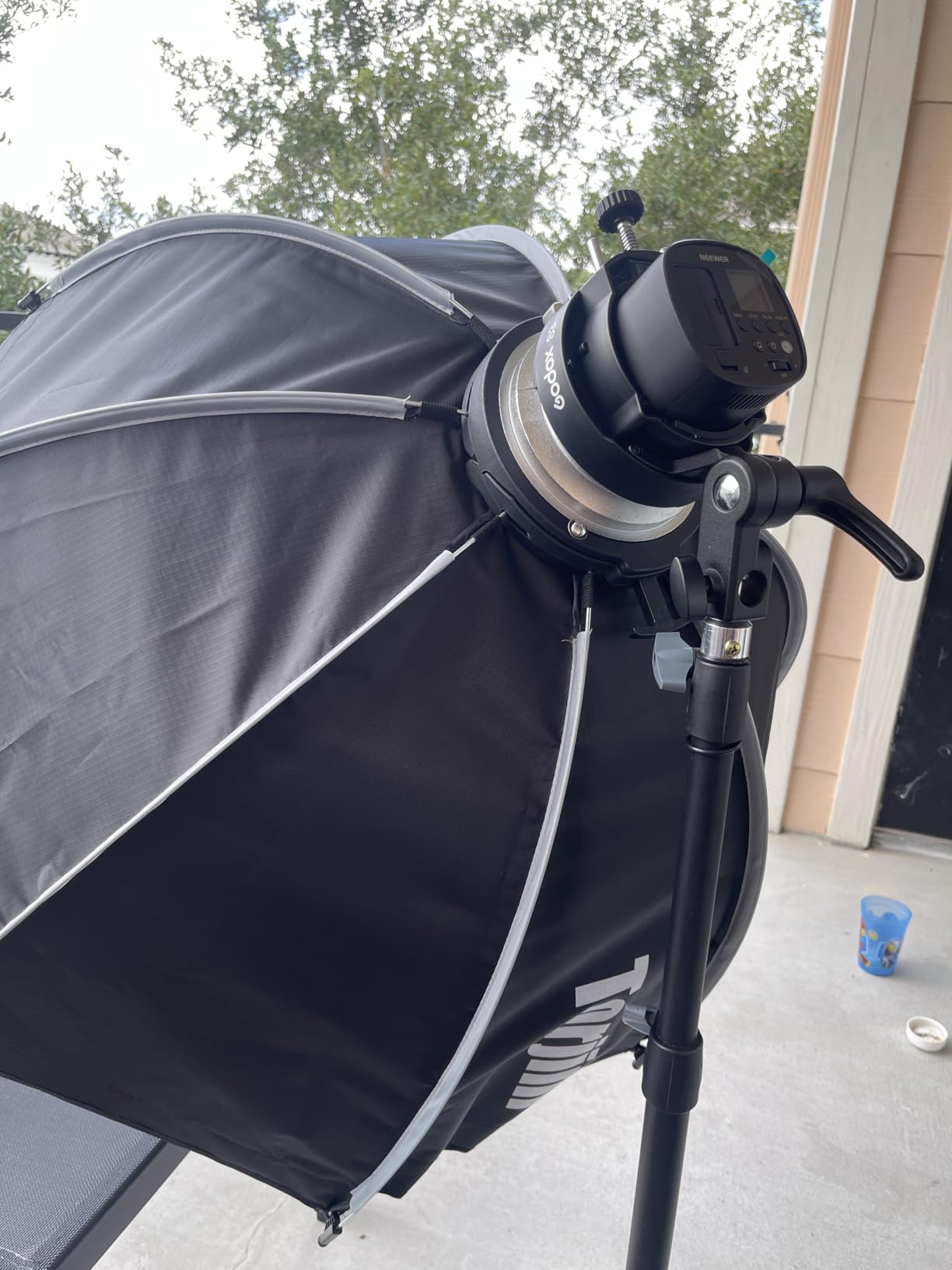
The integrated 3000mAh battery is rated for up to 420 full-power flashes at a 1.5 second recycle, with flash duration from 1/400s to 1/20000s for freezing motion. The uniform 5800K colour temperature is a fixed value rather than a drifting one, which means you are not correcting between frames. USB-C charging means you can top it up from a power bank between setups.
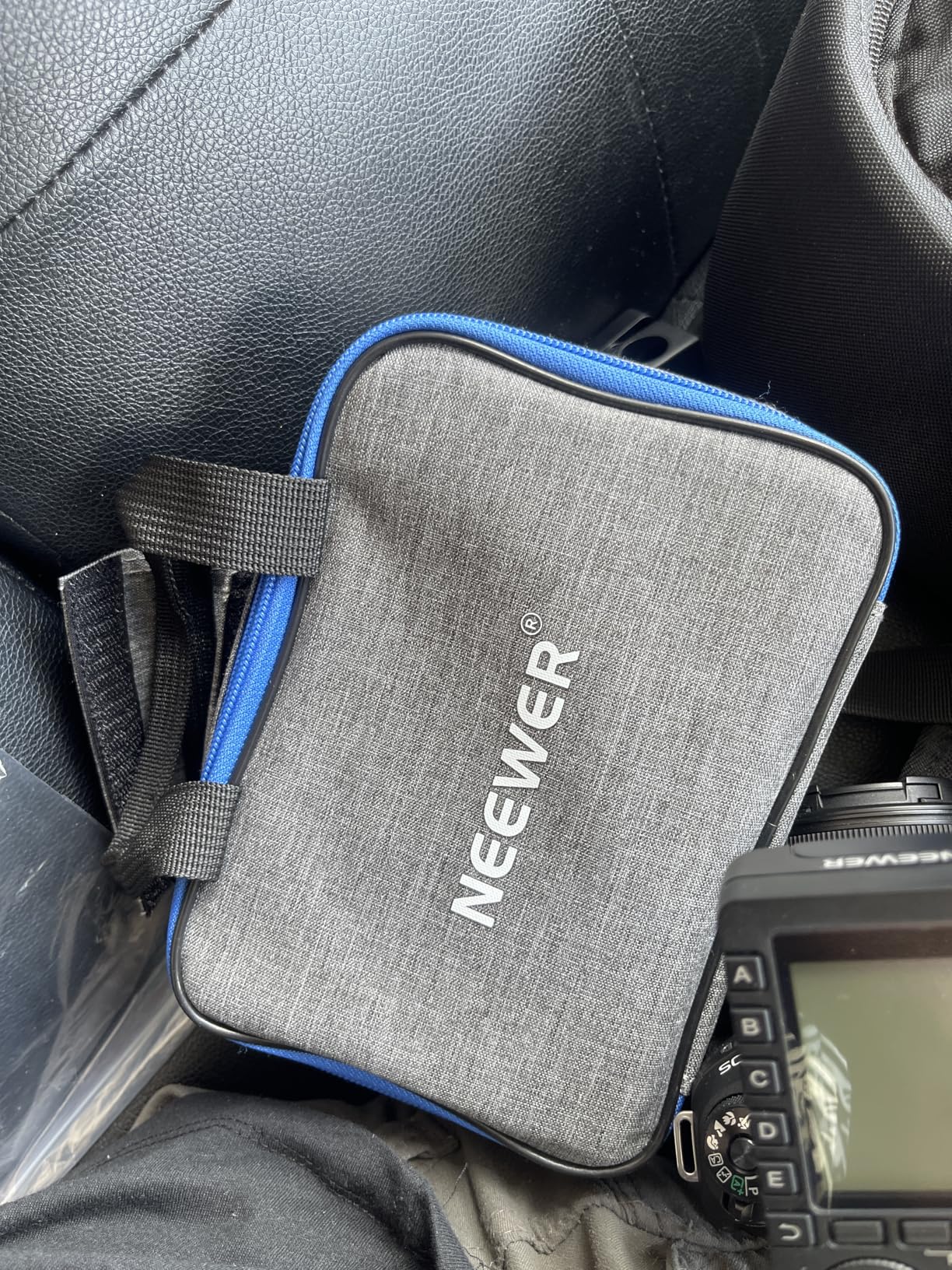
The radio story is the interesting part. It has a built-in 2.4GHz Q system with a stated 328 foot range and app control for groups and firmware, and it also receives Godox X system triggers such as the XPro, X3 and X2. It pairs with the Sekonic L-858D meter. In practice that means one light can speak two protocols, which is unusual at any price point.
Where the Q120 earns its slot
It is the answer to travel and small-room portraits. If your work is engagement sessions, hotel rooms and small ceremonies where there is nowhere to stand a big head, the size and the TTL make it the only one here that lets you shoot the way you would with a speedlight while keeping studio-quality output. The zoom head is a genuine substitute for changing modifiers at speed.
It also carries the highest average rating in the group, and the dual-protocol receiver makes it a useful second body light for someone whose main kit is already on a Godox radio system. USB-C and power-bank capability remove the charging anxiety that usually comes with battery monolights.
Where the Q120 falls short
120Ws is the lowest output here, and that has a direct consequence: it has to sit close to the subject to match a mains monolight. Close placement means the inverse square law works against you, so a group frame or a tall subject needs you nearer the lens, which changes your angles and your modifier distances.
The full-power flash count is realistically around 70 to 105 rather than the headline 420 under light use, so long sessions mean a second battery or a power bank. The modeling light is a minor addition rather than a proper studio work light, and the mounting options are narrower than a standard Bowens monolight, so it is not a drop-in for your existing modifier kit.
6. Profoto A2 100Ws – the compact light for colour-accurate skin
Profoto A2 Monolight
100Ws
5800K within ±100K
1/26,000s flash duration
0.1-1.6s recycle
400 full-power flashes
Pros
- Colour rendition held within ±100K across the power range
- Ten stops of range in 0.1-stop increments
- 1/26000s flash duration freezes motion cleanly
- Battery
- charger and carry bag included
- Built-in reflector and lens give smooth natural falloff
Cons
- 100Ws is low for a key light at distance
- Sync tops out at 1/250s with no HSS
- AirX radio and Clic modifiers are a closed
- costly ecosystem
- Only 30 reviews
- so long-term feedback is thin
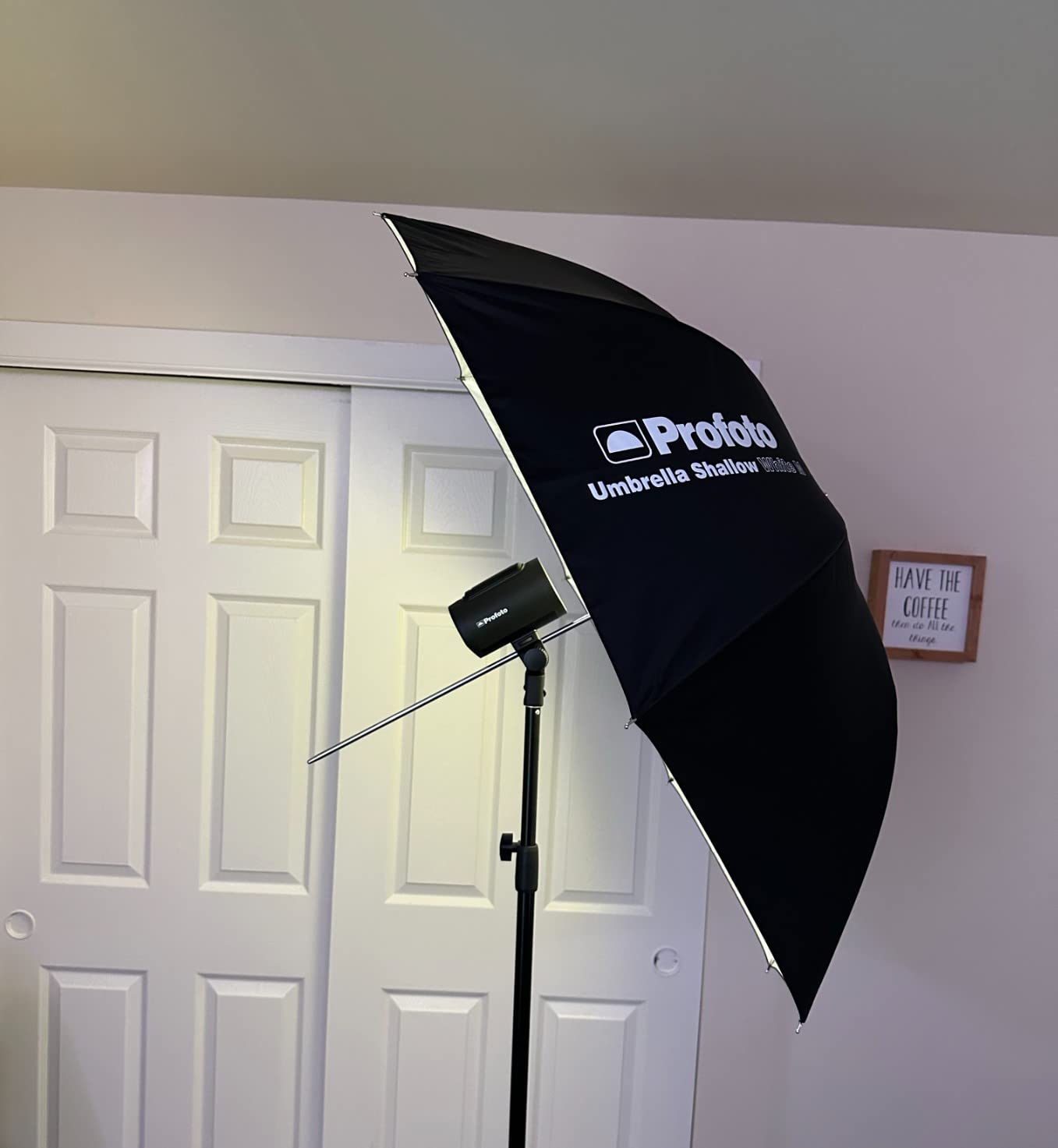
The Profoto A2 is the smallest and the weakest in raw power, and the least interchangeable. It is in this roundup for one reason: if you sell retouching time, colour consistency and skin rendition are the point, and the A2 holds 5800K within ±100K across the whole power range. The ten stops of range in 0.1-stop increments is the finest control resolution here, and the 1/26,000s flash duration is the shortest.
Recycle is 0.1 to 1.6 seconds, the integrated LED modeling light is simple rather than bright, and the built-in reflector and lens give a natural spread with smooth falloff before you attach anything. Up to 400 full-power flashes per battery charge, with the battery, charger and carry bag all in the box. At 3 pounds it is a light you leave in the bag rather than one you think about.
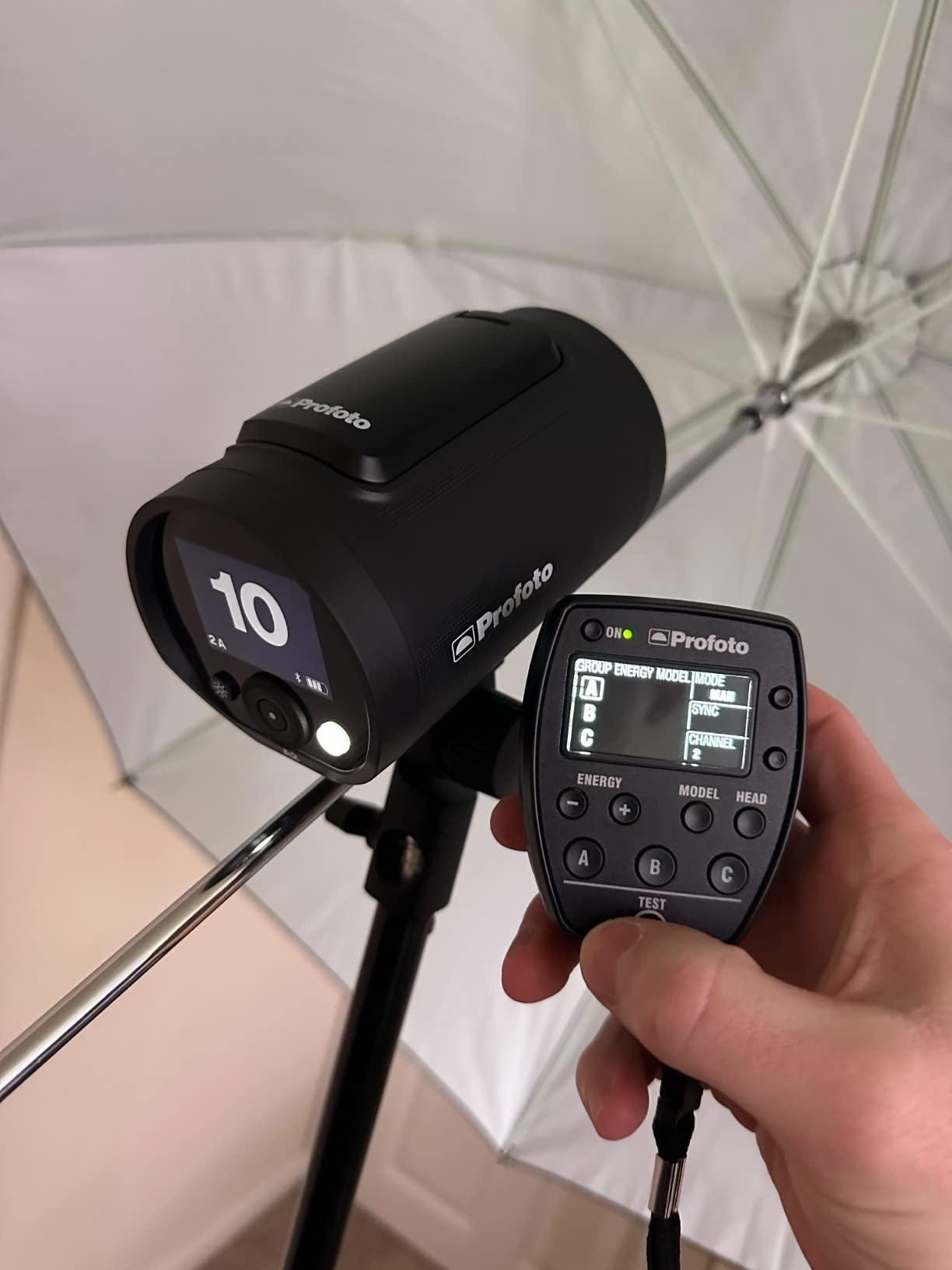
The magnetic mount takes Profoto Clic light shaping tools, which attach quickly and cleanly. Full TTL integration and AirX wireless are the communication layer, and the fan-cooled body is built for repeated professional use. If you already own Profoto gear, the A2 slots into an existing AirX workflow with no new trigger to learn.
The honest caveat is the sample size. Thirty reviews is a thin base, and the 4.2 average reflects people who expected a key light and got a premium compact. Read the one-star feedback as much as the five-star: it clusters around battery life and closed-system limits rather than output quality or colour.
Where the Profoto A2 earns its slot
Treat it as a specialised tool rather than a generalist. As a fill, a second light, or a beauty and skin-tone critical light, its ±100K stability and 0.1-stop resolution let you match an existing setup almost exactly, and the 100Ws is plenty at the distances a fill or accent light works at. On-location and travel work suits it, because the whole kit is three pounds and self-contained.
It is the pick for a photographer already inside the Profoto ecosystem, and for anyone who has been correcting a colour cast frame by frame and wants that problem to disappear. The included battery, charger and bag mean there is nothing else to buy before the first session.
Where the Profoto A2 falls short
100Ws is genuinely low next to the Godox and NEEWER units, so as a key light thrown across a room it loses. Sync tops out at 1/250s with no high-speed sync, which is restrictive in daylight. AirX is a closed radio system that works with Profoto triggers and AirX remotes, and the magnetic Clic modifiers are proprietary and considerably more expensive than Bowens equivalents, which is the cost trap that shows up over five years rather than on day one.
Battery life is listed at roughly 90 minutes of heavy use, so it is a second-light or travel light rather than an all-day engine. And with only 30 reviews, the long-term reliability picture is genuinely unknown compared with the Godox units that thousands of owners have documented.
How to Choose a Studio Strobe for Portrait Work?
The forum advice repeats the same principle every time: one reliable light beats three bargain lights. Buying three cheap heads means three modifiers, three triggers or one trigger you keep reconfiguring, and three sets of colour drift to correct. Buy one monolight you can mount properly, learn its controls, and add the second light when the first is genuinely limiting your work.
Watt-seconds, not watts
This is the most repeated correction in the photography forums, and it confuses more beginners than any other spec. Watts describe continuous output. Strobes are measured in watt-seconds, which is joules, because the flash is over in a fraction of a second and the total light energy is what matters, not the instantaneous power. Comparing a 300Ws strobe to a 300W LED panel is like comparing a camera shutter speed to a video frame rate.
Power also scales in stops, not in linear numbers. Doubling watt-seconds is one stop of light, so a 400Ws head is exactly one stop brighter than a 200Ws head and exactly two stops below an 800Ws one. A photographer running a 600Ws head at quarter power indoors is carrying two stops of unused capacity and should have bought the smaller light. For portraits in a controlled room, 300 to 400Ws is the working band; go larger only when you need to push light through a big modifier at a distance.
Flash duration and what t0.1 actually means
Flash duration is how long the tube stays bright, and it decides whether motion is frozen. t0.1 is the industry-standard measure: the time for the flash to reach 10 percent of peak and back down. t0.5 measures the same event to 50 percent of peak, which produces a flattering-but-meaningless number because t0.5 is roughly three times longer. Any manufacturer quoting only t0.5 is telling you about a duration nobody photographs at.
For portraits, t0.1 mostly matters when your subject moves: a dancer, a splash, a laughing group. The short durations here range from the Q120 at 1/20000s and the Profoto A2 at 1/26,000s through to the mains units, whose tubes are physically larger and slower. A big light will not freeze a running child as cleanly as a compact one, which is a genuine argument for the travel units even when you own something larger.
Battery monolight or AC-only
Battery monolights cost more and last less in calendar years, and they buy you the ability to shoot in a room with no outlet. That is the whole trade. For studio work with a fixed room, mains power is cheaper, simpler, and never ages. For wedding and location work, battery capacity in full-power pops per charge is the number to shop on, and the 1000-flash figure on the Q300 is genuinely useful for a full day.
Also check what happens when the battery dies. The MS300V will run from a mains outlet or a portable power bank, which makes it a bridge between the two worlds. Most battery units charge over USB-C or a dedicated charger, and spare packs are an ongoing cost that the purchase price does not show.
Modifier mount decides your long-term cost
This is the decision that quietly costs money over five years. Bowens, also called S-Type, is the near-universal standard, and softboxes, umbrellas, reflectors and grids for it are inexpensive and widely available. Profoto’s magnetic Clic mount and the Bron and Elinchrom bayonets are excellent systems, but their modifiers cost noticeably more per piece and you are locked into one ecosystem.
Buy the strobe whose mount matches the modifiers you already own, and if you own none, buy Bowens. The forum consensus is unanimous on this point. Weights, stands and modifiers are covered in more detail in our ring light comparison for anyone deciding between continuous fixtures and strobes.
Colour temperature stability
Portrait work punishes colour drift more than almost any other genre, because skin is the subject and skin tone is the product. A strobe rated at ±100K holds its colour across the power range; one rated at ±200K can shift noticeably when you dim it for fill, and you end up correcting a green-magenta split between the two sides of a face across hundreds of frames.
The practical test is simple. Set the strobe to full power, take a grey-card frame, then set it to one-quarter power and take another. If the two frames need different white balance corrections, the strobe is drifting. Only the AD200 Pro II and the Profoto A2 publish ±100K figures in this group; the Q300 is published at ±200K.
How Many Strobes Do You Actually Need?
One light is enough to start, and the most common working pattern in the forums is a single monolight with one diffused octabox. Place it 45 degrees off the axis and slightly above the subject, meter for the background at about two stops under, and you have a portrait. A second light is the first genuine upgrade: key on one side, fill on the other at a stop or two below, which is where the two-light look in most headshot studios comes from.
The third light earns its place when you need separation. A hair or rim light behind the subject, or a background light to blow a backdrop to white for high-key work. Most photographers I know shoot for years with one or two and add the third only when a specific job needs it. The advice that repeats is to spend the money on one good light and proper modifiers first, then count upward.
Which Modifier to Pair With Your Strobe
The modifier shapes the light before the strobe does, and the shape is what makes a portrait look professional. A beauty dish deflects rather than transmits the flash, so it produces no hot spot, and it tightens into a small round catchlight that flatters most faces. It is the classic choice for beauty and skin work, and it pairs naturally with the higher-output units that can throw one across a room.
An octabox produces the roundest, most pleasing catchlight and the softest wrap, which makes it the safest first purchase for headshots. A strip softbox gives a narrow, tall source that works as an edge light down the side of a face or as a background light, and it separates a subject from a dark background better than anything else. A parabolic reflector throws an even, focused beam for rim and hair work at long distances.
The catchlight rule helps when you are unsure. The rounder the source, the rounder and more pleasing the reflection in your subject’s eyes, and a slightly high catchlight reads as confident and open. Buy one modifier, learn it, then add a second of a different shape rather than three of the same.
Strobe or Continuous LED for Portraits
Continuous LED is not a replacement, it is a different tool. You can see exactly what you are getting, which is a genuine advantage for video and for clients who want to preview the frame. For stills, a strobe delivers far more light for the same electrical input, freezes motion that a continuous source smears, and costs less as output rises.
The forum answer to which is better is usually about the deliverable. If you are delivering a video, or shooting a rehearsal-style moment where the client needs to see the light, continuous makes sense. If you are delivering stills in a controlled room, a strobe wins on power, freeze and cost. Our 85mm lens roundup covers the other half of that exposure triangle.
Five Mistakes That Cost Portrait Shooters Money
First, buying on wattage instead of watt-seconds, which is the same as comparing a flash to an LED panel. Second, trusting a t0.5 figure, which tells you nothing about motion. Third, buying into a proprietary modifier mount before you have decided which modifiers you want, the single most expensive long-term mistake on this list.
Fourth, buying three bargain lights instead of one good one. You will spend more on stands, triggers and modifiers, and spend it on correcting colour drift rather than on the picture. Fifth, buying more power than you will use, when a 600Ws head at quarter power is a sign the fixture is too large for the room, not that the photographer is underpowered.
Frequently Asked Questions
What is the best studio lighting for portrait photography?
A monolight with a Bowens mount, a bright LED modeling lamp and a stable colour mode covers most portrait work. The Godox AD200 Pro II leads this roundup because its removable lithium battery delivers up to 500 full-power flashes, its HSS reaches 1/8000s, and its stable colour mode holds within ±100K across the power range.
Which Godox strobe light is the best?
For portrait work the AD200 Pro II is the strongest all-rounder, with 200Ws, two swappable heads, TTL for Canon, Nikon and Sony bodies, and battery power for location days. The MS300V is the better value choice in a fixed studio, and the SK400II gives you 400Ws on mains power for the lowest outlay.
How much power do I need for a portrait strobe?
For portraits in a controlled room, 300 to 400Ws is the working band. Because power scales in stops, doubling watt-seconds is one stop of light, so 400Ws is exactly one stop brighter than 200Ws. Buy larger only if you are pushing light through a big modifier at a distance or photographing large groups.
What is t0.1 flash duration?
t0.1 is the time the flash takes to reach 10 percent of peak brightness and fall back to it again. It is the industry standard because it describes most of the visible pulse. t0.5 measures the same event to 50 percent of peak and reads roughly three times longer, which is why manufacturers quoting only t0.5 are quoting the flattering number.
How many strobes do I need for portraits?
One light is enough to start, and the most common working pattern in photography forums is a single monolight with one diffused octabox placed 45 degrees off axis and slightly above the subject. Add a second light for key and fill, and a third only when you need hair separation or a lit background.
Which is better for taking photos, continuous light or flash?
For stills, flash wins. A strobe delivers far more light for the same electrical input, freezes motion a continuous source smears, and costs less as output rises. Continuous LED earns its place when you are delivering video, when a client needs to preview the lighting, or when you want to see the effect before firing.
Are battery studio strobes bright enough for commercial work?
Yes, and capacity is measured in full-power pops per charge. The NEEWER Q300 is rated for up to 1000 full-power flashes and the Godox AD200 Pro II for up to 500, which is enough to cover a full event day without a wall outlet. Mains-only fixtures like the SK400II match them on output but not on location flexibility.
The Verdict on Studio Strobes for Portrait Photographers in 2026
The best studio strobes for portrait photographers in 2026 come down to one honest question: do you need power away from an outlet? If yes, the Godox AD200 Pro II is the one to buy, with 500 full-power pops, multi-brand TTL and the tightest colour stability in the group. If no, take the Godox MS300V for value or the SK400II for raw output, and put the money you saved into modifiers. The Profoto A2 stays the specialist for colour-critical skin work, and the Q120 earns its bag space on location days. Start with one light, learn it properly, and add a second when the first is the thing holding you back.