
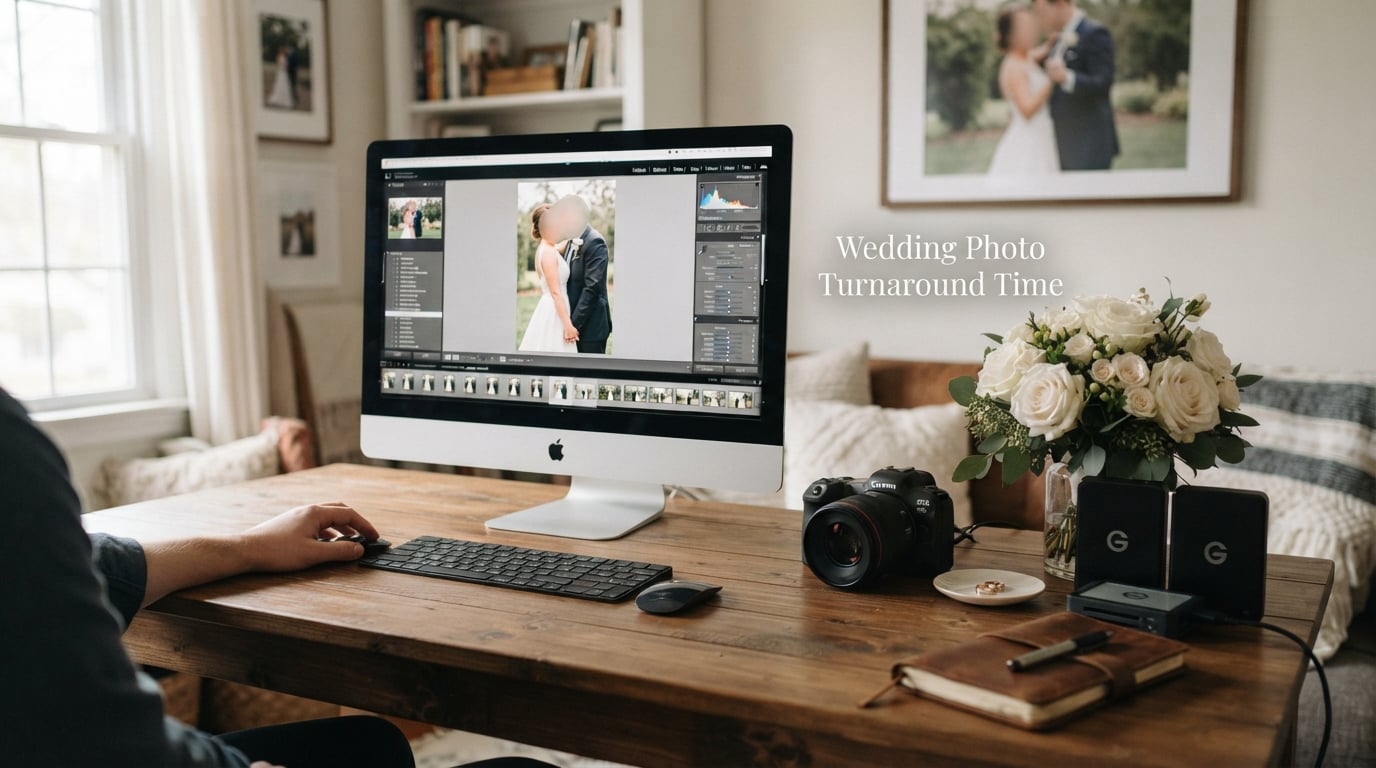
Wedding photo turnaround time is the gap between your wedding day and the moment your full edited gallery lands in your inbox. Most photographers deliver final photos within 4 to 12 weeks, with 6 to 8 weeks as the industry average. Sneak peeks usually arrive within 24 to 72 hours.
I hear the same question every week from couples in our studio: “When will I actually see my photos?” It’s a fair question, and the answer depends on far more than just how fast your photographer can click “export.”
Every couple wants to relive their wedding day as soon as possible. The dress, the vows, the first dance, the toasts, the tearful parents. All of those moments live on camera, and waiting weeks to see them can feel like torture.
This guide breaks down what wedding photo turnaround time really means, why the wait feels longer than it is, and how to set yourself up for a smooth experience from “I do” to “download.” By the end, you’ll know exactly what to expect, what’s normal, and what to do if something feels off.
Table of Contents
What Is the Standard Wedding Photo Turnaround Time?
The standard wedding photo turnaround time falls between 4 and 12 weeks from your wedding date. Most professional photographers aim for the 6 to 8 week window as their promised delivery range.
Here is how the timeline usually breaks down:
Sneak peeks: 24 to 72 hours after the wedding
Average full gallery delivery: 6 to 8 weeks
Standard contract window: 4 to 12 weeks
Peak season backlog: 10 to 14 weeks
Fastest professional turnaround: 2 to 3 weeks (rare, premium or small studios)
Longest typical turnaround: 5 to 6 months (high-volume or solo operations)
If your photographer promises your gallery in under two weeks, that’s a red flag worth discussing. Rushed editing often means presets applied in bulk, inconsistent color grading, or missed details in retouching. Quality editing takes real, hands-on time.
I tell every couple during booking that 6 to 8 weeks is our standard window. Anything faster means we are cutting corners somewhere. Anything slower without communication means something is wrong with the workflow.
It’s also worth noting that turnaround times have actually stretched slightly in recent years. More photographers are shooting higher volume, more couples are requesting larger galleries, and the editing standards clients expect have gone up. The 6 to 8 week average is holding steady, but you’ll see more studios pushing 8 to 10 weeks.
What Happens Between Your Wedding Day and Your Final Gallery
The 6 to 8 week wedding photo turnaround time isn’t spent sitting around. Most photographers spend 20 to 40 hours of hands-on editing for every wedding they shoot. Here is the step-by-step process your images go through before they reach you.
Step 1: Backing Up and Importing Your Images
On the wedding night or the morning after, your photographer copies every RAW file from their memory cards to at least two separate hard drives. The originals then sit untouched while a working copy is imported into editing software like PhotoMechanic or Lightroom.
This step alone usually takes 1 to 3 hours depending on how many cards were shot. A typical 8-hour wedding generates 3,000 to 5,000 RAW images, sometimes more if there were multiple photographers or extensive family formals.
Backup is non-negotiable. If your photographer isn’t doing redundant backups, your images are at risk. Ask them about their backup strategy during booking.
Step 2: Culling Thousands of RAW Files
Culling is the process of sorting through every image and keeping only the strongest shots. Photographers look for sharp focus, good expressions, clean backgrounds, and moments that tell the story of your day.
For a 4,000-image wedding, culling often takes 4 to 6 hours. Most photographers end up delivering 400 to 800 final images, which means roughly 80% of the original files never make it to your gallery.
Culling is harder than it sounds. Your photographer has to choose between two nearly identical shots, decide which moment of a laugh is more genuine, and eliminate photos that might be technically fine but emotionally flat.
Step 3: Editing Every Selected Photo
Each kept image gets individually edited for exposure, white balance, color grading, contrast, and crop. Editing software like Lightroom handles most of this work, but every photo still requires a human eye and judgment.
A photographer who edits 500 images at 3 to 5 minutes each is looking at 25 to 40 hours of editing time per wedding. That is the heart of the wedding photo turnaround time.
This is also where consistency matters most. A good editor maintains the same color palette, skin tones, and exposure feel across every photo in your gallery. That consistency is what makes a wedding gallery look polished rather than slapped together.
Step 4: Retouching and Special Adjustments
Beyond basic editing, certain images need extra retouching in Photoshop. Common examples include removing a stray exit sign, smoothing a wrinkled dress, fixing a bra strap peeking out, or fine-tuning skin tones for portrait shots.
This step is what separates a quick edit from a polished gallery. Expect another 2 to 5 hours of work here for an average wedding, and more for weddings with complex lighting or large group portraits.
The photographer’s signature style lives in this step. Two photographers can edit the same image and produce very different results. That artistic vision is what you’re paying for, not just the time spent clicking buttons.
Step 5: Exporting and Uploading Your Final Gallery
The final step is exporting high-resolution JPEGs, uploading them to an online gallery platform, and writing your delivery email. Most galleries are ready within 24 hours of the export step being complete.
Export time depends on file sizes and gallery count. A 600-image gallery can take 2 to 4 hours to export and another 1 to 2 hours to upload depending on internet speed.
This is the moment the wedding photo turnaround time officially ends and your waiting begins.
When Do You Get Sneak Peeks and Why They Matter
Sneak peeks are a small selection of 5 to 15 images delivered within 24 to 72 hours of your wedding. Most photographers post them on social media or send them through a private link.
Sneak peeks serve two important purposes. They give you something to share with friends and family right away, and they ease the anxiety of waiting for the full gallery.
I’ve seen couples completely melt down at the 3-week mark thinking something went wrong. A sneak peek delivered on Tuesday after their Saturday wedding changes everything. They have proof the photographer has the images and is actively working.
Not every photographer includes sneak peeks by default, so ask during booking. If your photographer doesn’t offer them, it doesn’t mean they’re unprofessional. It just means you might want to negotiate for that small touch of reassurance.
Sneak peeks also give you content for social media, save-the-date announcements if you’re sending late, and thank-you cards. Having even a handful of polished images in the first week can be hugely useful for the post-wedding chaos of thank-you notes and family sharing.
The best sneak peeks include one portrait of the couple, one ceremony moment, one reception detail, and one candid. That mix gives you a complete taste of your wedding story.
Why Peak Season Weddings Take Longer to Deliver
Peak wedding season runs from late April through early October in most of the United States. During these months, photographers often shoot 2 to 4 weddings per weekend on top of engagement sessions, family portraits, and album design work.
The editing backlog builds quickly. A photographer who shoots 8 weddings in June may not finish editing the June weddings until late August. This is the main reason wedding photo turnaround time stretches during peak season.
If you’re planning a September or October wedding, expect your gallery to take closer to 10 to 12 weeks. April and May weddings tend to come back faster because the spring rush hasn’t fully kicked in.
Winter weddings (December through February) typically have the fastest turnaround because most photographers are in their editing season with fewer shoots on the calendar.
Peak season also brings weather-related challenges that slow editing down. Outdoor weddings with challenging light, golden hour sessions that push into dark reception lighting, and unpredictable cloud cover all add editing complexity.
Some photographers hire associate shooters or outsource culling during peak season to keep up. This can speed up delivery, but ask how much of the final edit your main photographer still handles personally.
Questions to Ask Your Photographer Before Booking
The contract is your best protection against unexpected delays. Before signing, ask these specific questions about wedding photo turnaround time:
What is your guaranteed delivery window? Get the number in writing, not just verbal.
Do you offer sneak peeks? If so, how many and how fast? 24 to 72 hours is standard.
What happens if you miss the deadline? Some studios offer partial refunds or rush delivery.
How many weddings do you shoot per month? High volume often means longer wait times.
Do you edit the photos yourself or outsource? Outsourced editing can be faster but less consistent.
Can I pay for a rush delivery if needed? Some photographers offer 2-week delivery for an extra fee.
What format will I receive the photos in? High-resolution JPEGs with print release is standard.
How long will my online gallery stay active? Most galleries remain available for 6 to 12 months.
Do you have a backup plan if you’re injured or unavailable? Every pro should have an emergency network.
Can I see a full wedding gallery from start to finish? Real galleries reveal editing consistency better than portfolio highlights.
Photographers who answer these questions clearly and put their timeline in writing are usually the ones who deliver on time. Vague answers often turn into vague delivery dates.
The best photographers are happy to walk through their process. Anyone who bristles at delivery questions might not be confident in their own workflow.
Red Flags When Turnaround Takes Longer Than Promised
A wedding photo turnaround time that drags past the contract deadline is more than an inconvenience. It can signal real problems. Watch for these red flags:
No communication after the wedding. Silence past the 2-week mark is unusual.
Repeated promises without delivery. “Next week” three weekends in a row is a pattern.
Refusal to share work-in-progress. Sneak peeks or previews should be available by week 4.
Unreturned messages for 7+ days. Your photographer should respond within 48 hours during business days.
Sudden price increases for delivery. Some photographers charge “editing fees” after the wedding. This should be in the contract.
No backup system explained. Every photographer should have redundant storage for your images.
Social media silence while your deadline passes. If they’re posting other clients’ work but not communicating with you, something is off.
If your photographer blows past the deadline by 4 or more weeks, you have the right to demand answers. Send a polite but firm email referencing your contract terms. Request a specific delivery date, not another vague promise.
If the issue continues, document every interaction. Keep copies of your contract, emails, text messages, and any social media posts that show the photographer working with other clients while delaying yours.
I have heard horror stories on Reddit about couples waiting 6 months with no communication. These are rare, but they happen. The best protection is a strong contract signed before the wedding day.
If communication completely breaks down, you can file a complaint with the Better Business Bureau, contact your state’s consumer protection office, or take the matter to small claims court. Most disputes resolve long before that point once the photographer sees you’re serious.
How to Manage the Wait Without Losing Your Mind
The 6 to 8 week wait can feel endless, especially in the first two weeks when excitement is at its peak. Here are practical ways to handle the waiting period:
Plan a mini celebration at the 4-week mark. Treat yourself to a date night or weekend trip. By then, your photographer should be deep into editing.
Reach out at week 3 if you haven’t heard anything. A simple “just checking in” email is perfectly appropriate.
Start planning your album or photo wall. Having a project keeps your mind busy while you wait.
Share sneak peeks with close family. They will love seeing early glimpses of your day.
Avoid comparing timelines with friends. Every photographer works differently, and comparison creates unnecessary stress.
Trust the process. Quality editing takes time. Your full gallery will be worth the wait.
Use the wait to write thank-you cards. You can reference photos you’ll share once the gallery arrives.
One of my couples told me they nearly called their photographer at week 5 because they were so anxious. Their gallery arrived on day 56, exactly when promised. Patience paid off.
The wedding photo turnaround time is one of those things that feels long while you’re living it but completely fades once you see your images. Thousands of couples have waited the standard 6 to 8 weeks and loved every minute of the eventual reveal.
If you find yourself checking your email obsessively at week 3, that’s completely normal. Just remember: every day of the wait is a day your photographer is making your photos better.
Frequently Asked Questions
What is a reasonable turnaround time for wedding photos?
A reasonable turnaround time for wedding photos is 4 to 12 weeks, with 6 to 8 weeks as the industry average. Anything within that range reflects the time needed for proper culling, editing, and retouching. Sneak peeks within 24 to 72 hours are also standard.
Why does it take so long to get wedding photos back?
Wedding photos take weeks because photographers spend 20 to 40 hours per wedding on editing alone. The process includes culling thousands of images, individually editing each selected photo, retouching details in Photoshop, and uploading the final gallery. Rushing this process compromises quality.
Can I get my wedding photos faster than 6 weeks?
Yes, some photographers offer rush delivery for an extra fee. You can typically pay for 2-week or 3-week delivery. Discuss this option before booking and get the terms in writing. Be aware that very fast turnaround often means batch presets rather than detailed editing.
What are sneak peeks and when should I expect them?
Sneak peeks are 5 to 15 edited images delivered within 24 to 72 hours of your wedding. Most photographers post them on social media or send through a private link. They ease waiting anxiety and give you something to share with family and friends right away.
What should I do if my wedding photos are delayed past the deadline?
If your wedding photos are past the contract deadline, send a polite email referencing your contract terms and requesting an updated timeline. If communication remains poor after 4 weeks past the deadline, consider consulting consumer protection resources. Always insist on written delivery terms before booking.
Do peak season weddings take longer for photo delivery?
Yes, peak season weddings (April through October) typically take longer for photo delivery. Photographers shoot more weddings during these months, creating editing backlogs. Expect 10 to 12 weeks for September or October weddings and faster delivery for winter weddings.
The Bottom Line on Wedding Photo Turnaround Time
Wedding photo turnaround time is one of the most misunderstood parts of the wedding photography process. The standard 4 to 12 week window exists because quality editing is genuinely time-consuming work that demands patience and skill.
You can set yourself up for a smooth experience by asking the right questions before booking, getting delivery terms in writing, and trusting the process once the wedding is over. Your full gallery will arrive when it arrives, and the wait will be worth it.
If you’re currently in the waiting period, hang in there. Your photographer is working hard behind the scenes, and your wedding photo turnaround time will end with images you’ll treasure for the rest of your life.