
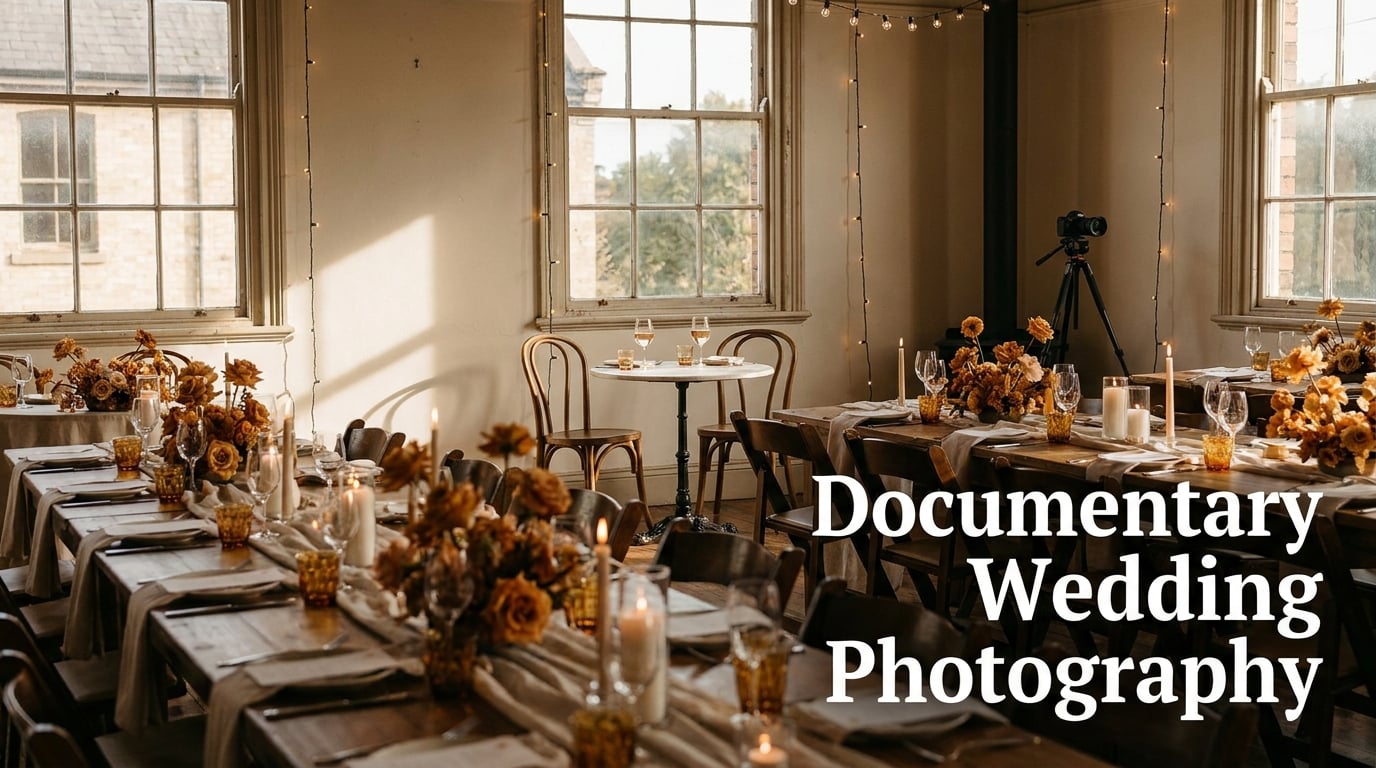
Documentary wedding photography is an approach that captures real, unscripted moments as they naturally unfold, focusing on authentic emotions and storytelling rather than staged or directed poses. If you have ever looked at a wedding album and felt like the pictures could have belonged to any couple, this style exists to fix exactly that problem.
As a team that shoots weddings every season, we have seen firsthand how couples respond to genuine imagery versus stiff poses. The authentic shots, the ones where nobody knew the camera was there, are the ones couples pull out decades later. Those are the frames that actually feel like the day you remember.
In this guide, we will walk you through what documentary wedding photography really means, how it differs from traditional and editorial styles, why couples choose it, what to expect on the wedding day itself, and most importantly, how to tell if a photographer is genuinely documentary or just using the label. By the end, you will know exactly what to look for and the right questions to ask before you book.
Table of Contents
What Is Documentary Wedding Photography?
Documentary wedding photography (also called photojournalistic wedding photography) is a hands-off style that documents your wedding day exactly as it happens. The photographer observes, anticipates, and captures real moments without staging, directing, or interfering with the natural flow of events.
Think of it like a documentary film crew covering your celebration. They are there to record the story, not to script it. The goal is to preserve the genuine laughter, the nervous energy before the ceremony, the tears during speeches, and the small in-between moments that posed photography almost always misses.
A true documentary wedding photographer relies on two core skills: observation and timing. They read the room, anticipate what is about to happen, and position themselves to capture it the instant it unfolds. This takes years of practice and a genuine instinct for human behavior. It is not about having a nice camera. It is about knowing exactly when to press the shutter.
The result is a wedding gallery that reads like a narrative. You see the morning preparation, the walk down the aisle, the reactions of guests, the chaos of the dance floor, and the quiet moments at the end of the night. Every image connects to the next, telling the complete story of your day in a way that feels honest and alive.
One important distinction: documentary does not mean the photographer refuses to take any formal portraits. Most documentary photographers will still capture a brief set of family formals or couple portraits. The difference is that these are kept efficient and minimal, leaving the bulk of the day for genuine, unscripted storytelling.
Documentary vs Traditional vs Editorial Wedding Photography
These three terms get used interchangeably all the time, and that confusion is one of the biggest frustrations couples express in wedding forums. Understanding the differences before you start interviewing photographers will save you from hiring someone whose style does not match what you actually want.
Here is a clear breakdown of how the three main wedding photography styles compare.
| Aspect | Documentary | Traditional | Editorial |
|---|---|---|---|
| Approach | Observational, hands-off | Posed and directed | Stylized, art-directed |
| Direction Level | Minimal to none | High throughout the day | Moderate to high, with creative input |
| Best For | Couples wanting authentic memories | Couples who want classic, formal portraits | Couples wanting magazine-quality aesthetics |
| Posing | Almost none, short family formals only | Extensive, full bridal party and family | Curated poses with fashion influence |
| Feel of Final Gallery | Story-driven, emotional, candid | Polished, structured, classic | Glamorous, designed, dramatic |
| Time Spent Away From Guests | Very little, stays in the moment | Significant portrait sessions | Moderate, often with styled setups |
Many photographers describe themselves as hybrid, blending documentary coverage with a short set of directed portraits. This is actually the most common approach in the industry today. A pure documentary photographer will keep directed time to an absolute minimum, often under 30 minutes total, so you can spend your day with your people instead of posing for the camera.
Editorial photography sits closer to a fashion shoot. The photographer may design specific shots, direct your placement and posture, and treat the wedding day partly as a creative production. It can look stunning, but it involves more interruption and direction than documentary work. Knowing where a photographer falls on this spectrum matters far more than the label they use on their website.
The Philosophy Behind Documentary Wedding Photography
The heart of documentary wedding photography is a belief that the most meaningful images come from moments nobody arranged. A grandfather wiping his eyes during the vows. A flower girl spinning on the dance floor. The quiet look between partners when they think nobody is watching. These moments cannot be recreated, no matter how talented a photographer is at posing.
Documentary photographers are essentially storytellers who use light and timing instead of words. They look for the extraordinary inside ordinary moments, the small gestures and fleeting expressions that reveal who people really are to each other. This is why couples often describe their documentary galleries as feeling alive in a way that posed albums simply do not.
There is also a deeper purpose here. Wedding photographs become family history. Decades from now, your children and grandchildren will look at these images to understand who you were, who was there, and what that day felt like. Documentary photography preserves that truth. It shows the real people, the genuine emotions, and the actual atmosphere rather than an idealized version created for the camera.
Why Choose Documentary Wedding Photography
Couples gravitate toward documentary wedding photography for a wide range of reasons, but a few themes come up again and again in conversations with our clients and in wedding planning communities.
Here are the benefits that matter most:
Authentic memories: You get images that reflect your actual day, not a performance of it. Every smile, tear, and laugh happened for real.
You enjoy your wedding: Instead of spending an hour away from guests for portrait sessions, you stay present. The photographer works around you, not the other way around.
Guests feel comfortable: People who hate posing relax when the photographer is not directing them. This leads to more natural, candid reactions throughout the day.
A complete narrative: Your gallery tells the full story from morning prep to last dance, with all the connecting moments in between.
Lasting emotional value: Years later, the images that capture genuine emotion resonate far more than posed perfection. These become heirlooms.
Captures people as they truly are: Friends and family are documented naturally, showing real personalities rather than stiff formal poses.
One thing we hear constantly from couples who chose this style is a sense of relief. They did not have to perform. They did not have to worry about whether they looked right in every shot. They just lived their day, and the photographs captured it honestly.
That said, documentary photography is not for everyone. If having a large set of perfectly composed, formally posed portraits is important to you or your family, a hybrid approach may serve you better. The key is understanding your own priorities before committing to a style.
What to Expect on Your Wedding Day
If you have never worked with a documentary photographer before, the experience can feel surprisingly relaxed. Here is what a typical day looks like when your photographer is taking a hands-off approach.
Your photographer usually arrives early, often during hair and makeup or while the wedding party is getting ready. They move quietly through the space, capturing the nervous energy, the small jokes, and the details that set the scene. You will barely notice them working.
During the ceremony, they position themselves to capture reactions rather than just the staged shots. That means your partner’s face when you walk down the aisle, the tears in the front row, and the exchange of rings from angles that show genuine emotion. They are anticipating moments, not just recording them.
After the ceremony, a documentary photographer typically handles a brief set of family formals and maybe a short couple session. This is usually 20 to 40 minutes, not the multi-hour portrait marathon that traditional packages sometimes include. Then they release you back to your celebration.
The reception is where documentary coverage truly shines. The toasts, the first dance, the chaos of the dance floor, the late-night conversations, the goodbyes. Your photographer moves through all of it, capturing the atmosphere and the connections without interrupting a single moment.
One question couples ask often is whether they should do a first look. Documentary photographers are generally flexible here. A first look can create a private, emotional moment that photographs beautifully, and many couples value that experience regardless of their photography style. It is entirely your choice.
By the end of the night, you should have a gallery that feels like a film of your day. Every part of the celebration is represented, connected by the same observational thread. That is the documentary difference.
How to Tell if a Photographer Is Truly Documentary?
This is the question we see most often in wedding forums, and it is a legitimate concern. Plenty of photographers market themselves as documentary when their actual work is heavily directed. The label has become a popular selling point, which means couples need to know how to verify it for themselves.
Here are the most reliable ways to spot an authentic documentary wedding photographer:
Review full wedding galleries, not just highlights. Anyone can curate a few candid-looking images for an Instagram feed. Ask to see a complete wedding day, start to finish. If the majority of images are posed, the photographer is not truly documentary.
Look for consistency across the entire day. A real documentary photographer maintains their observational style from morning prep through the last dance. If the getting-ready shots feel candid but the reception looks heavily staged, that is a red flag.
Check for the in-between moments. Documentary galleries include images that no one would think to pose: a guest fixing their shoe, a parent quietly watching the couple, the messy table after dinner. If every image looks picture-perfect, the day was likely directed.
Read their philosophy page. Authentic documentary photographers usually explain their approach in detail. Look for genuine statements about observation, storytelling, and non-interference rather than vague marketing language.
Look for professional credentials. Membership or awards from organizations like the Wedding Photojournalist Association (WPJA) indicate a genuine commitment to documentary work.
Read client reviews carefully. Phrases like “we barely noticed them” and “captured the real moments” are strong signals. If reviews focus mostly on how the photos looked rather than how the day felt, the approach may be more directed.
Ask about their portrait time. A documentary photographer will tell you their posed time is minimal. If they describe hour-long portrait sessions or extensive shot lists, their style leans traditional regardless of the label.
The most reliable test is always the full gallery. A photographer’s highlight reel tells you what they want you to see. A complete wedding day tells you how they actually work.
Questions to Ask Before You Book
Once you have narrowed down your shortlist, a short conversation or email exchange will tell you a lot about whether a photographer’s documentary approach is genuine. Here are the questions we recommend asking every candidate.
How much of the wedding day do you spend on directed or posed portraits?
Can I see a full wedding gallery from a recent wedding, not just highlights?
How do you handle family formalals, and how long do they typically take?
What is your philosophy on when to intervene and when to observe?
Do you belong to any photojournalism organizations or hold relevant awards?
How do you capture moments you cannot anticipate, like unexpected events during the day?
What does your typical wedding day timeline look like from your perspective?
A photographer who is genuinely documentary will answer these questions with specifics, not vague reassurances. If they describe an observational process, talk about anticipation and reading the room, and confirm that directed time is minimal, you are likely looking at the real thing.
Treat this conversation the way you would any important hire. Their answers reveal not just their style but their professionalism, their communication, and whether they are a good fit for your personality and priorities.
The Technical Side: Equipment and Approach
Most guides skip the technical side entirely, but understanding it helps you appreciate what goes into documentary wedding photography and why certain photographers produce better results.
Documentary photographers typically work with prime lenses rather than zooms. A 35mm lens is a favorite because it captures a scene with natural context: the subject plus the environment around them. A 50mm or 85mm is used for tighter moments that still feel intimate. Prime lenses force the photographer to move their body to compose, which builds awareness and presence in the room.
They also rely on available light whenever possible. Flash draws attention and changes the moment, so a skilled documentary photographer learns to read natural light, position themselves where it works, and shoot in challenging conditions without disrupting the scene. This is harder than it sounds and takes years to master.
Perhaps the most important technical skill is not about equipment at all. It is anticipation. Documentary photographers develop an instinct for what is about to happen based on body language, conversation flow, and the rhythm of the day. They position themselves before the moment occurs, then wait. When it unfolds, they are already ready. That combination of patience and instinct is what separates a good wedding photographer from a great documentary one.
FAQs
What is documentary wedding photography?
Documentary wedding photography is an approach that captures real, unscripted moments as they naturally unfold, focusing on authentic emotions and storytelling rather than staged or directed poses. The photographer observes and anticipates moments throughout the day without interfering with the natural flow of events.
What is the difference between documentary and candid wedding photography?
The terms overlap heavily, but documentary wedding photography implies a consistent storytelling approach across the entire wedding day, while candid photography can refer to individual unposed shots taken at any time. A documentary photographer applies their observational, hands-off method throughout the whole event to build a complete narrative.
Why choose a documentary wedding photographer?
Couples choose documentary wedding photography because it captures authentic memories, lets them enjoy the day without lengthy posing sessions, keeps guests comfortable, and produces a story-driven gallery that holds lasting emotional value for years to come.
How to tell if a photographer is truly documentary style?
Review full wedding galleries rather than highlights, look for consistency across the entire day, check for unposed in-between moments, read their philosophy statement, verify credentials like WPJA membership, and ask how much time they spend on directed portraits. A true documentary photographer keeps posed time minimal and maintains an observational approach from start to finish.
What are the benefits of documentary wedding photography?
The main benefits are authentic images that reflect your real day, minimal interruption so you can enjoy your celebration, comfortable guests who are not asked to pose, a complete narrative gallery, and heirloom-quality photographs that capture genuine emotion and personality for future generations.
Is Documentary Wedding Photography Right for You?
Documentary wedding photography is about trust. You trust the photographer to see your day clearly, to anticipate the moments that matter, and to capture them without staging or interference. In return, you receive images that feel like the day you actually lived, full of real emotion and genuine connection.
If you value authenticity over posed perfection, want to stay present with your guests, and hope for photographs that will mean even more in thirty years than they do today, this style was made for you. The key is finding a photographer whose work holds up under scrutiny and whose approach is genuinely observational from the first light of morning to the last dance of the night.
Take your time reviewing full galleries, ask the right questions, and choose someone whose documentary wedding photography tells a story you want to keep forever.