
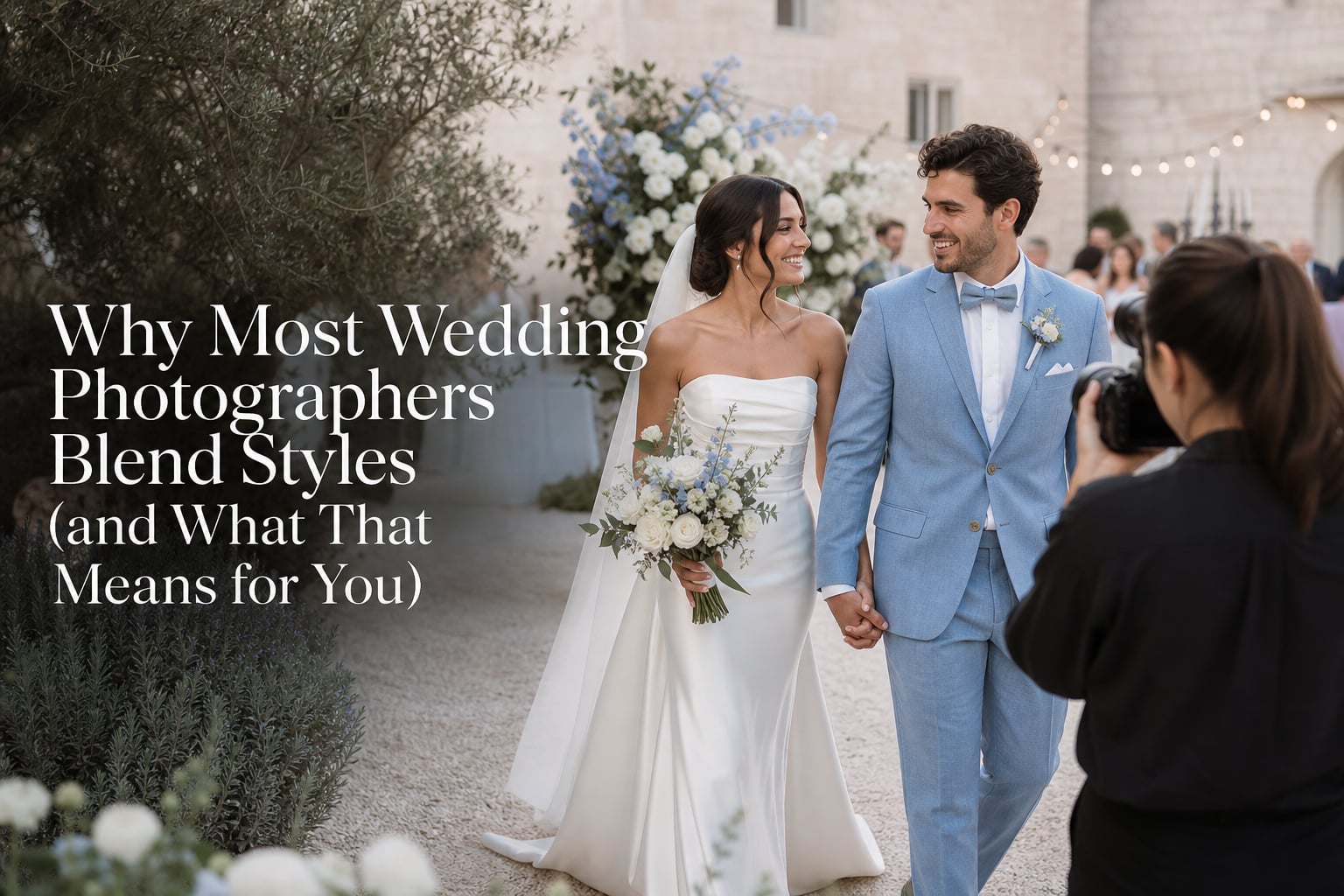
Wedding photographers blend styles because no single approach records every part of a wedding day well. A photographer may quietly document unscripted moments, direct family portraits, create polished couple photographs, and apply one consistent editing style so the finished gallery reads as one complete story.
That is good news if you like more than one look and feel stuck between labels. Understanding the mix helps you assess a photographer portfolio, ask better questions, and know when you will receive direction rather than being left to guess what to do.
Style terms can make this feel more complicated than it is. Think of them as descriptions of choices—how the photographer works in the moment and how the photographs are finished afterward—not strict boxes that every wedding must fit.
Table of Contents
Wedding photographers blend styles to cover a real day, not a styled concept.
A wedding contains very different kinds of photographs: quiet getting-ready exchanges, a fast-moving ceremony, family formals, an unhurried portrait session, detail shots, and a reception with changing light. The same method cannot serve each situation equally well.
During a ceremony, a documentary wedding photography approach helps the photographer observe without interrupting a meaningful exchange. During family formals, clear direction and a traditional structure prevent relatives from wondering where to stand or whether a photograph has been taken.
Couple portraits often benefit from a little editorial direction: a prompt about where to look, a position that uses the best light, or a composition that clears visual distractions. That does not make the image artificial; it gives the couple a calm framework in a part of the day that can otherwise feel awkward.
A blended approach also responds to people rather than forcing people into a brand label. A reserved couple may want gentle prompts and breathing room, while a pair who loves fashion-forward images may enjoy more shaped, editorial posing.
The photographer is making choices as the day changes. They may shoot candid moments with a photojournalistic eye, arrange a formal group picture, then use flash photography and directed energy when the dance floor begins.
The short answer: Blending is common because weddings require both observation and guidance. The best fit is not the photographer with the longest list of labels; it is the one who can explain what they do in each part of the day and show it across complete galleries.
The core wedding photography styles describe different priorities.
The four labels below are useful starting points, but photographers rarely practice any one of them in isolation. Ask what a term means in that photographer’s own work, because two portfolios can use the same word while showing very different levels of direction, contrast, or color grading.
Documentary wedding photography prioritizes observation and candid moments.
Documentary or photojournalistic coverage focuses on what unfolds naturally. The photographer watches for expressions, gestures, reactions, and small interactions rather than constantly arranging them.
This style is especially strong for getting-ready photos, ceremonies, hugs after the vows, cocktail-hour conversations, and reception moments. It can create photographs that feel personal because the people in them are responding to one another rather than the camera.
Documentary does not mean the photographer never speaks. They may still guide you into better light, arrange a group photograph, or suggest a location for portraits; the difference is that they do not manufacture every moment.
Editorial wedding photography prioritizes intentional composition and direction.
Editorial wedding photography borrows a magazine-like attention to composition, wardrobe, setting, posture, and light. It often includes more deliberate posing, clean backgrounds, and a strong awareness of how the frame looks.
That can mean a photographer asks you to slow down near a window, turns a shoulder slightly, or makes room for a dress to fall naturally. Good direction should be understandable and low-pressure, not a lengthy performance that takes you away from your guests.
Editorial work is often most visible in couple portraits, detail shots, and a few carefully arranged scenes. It can sit comfortably alongside relaxed, candid coverage for the rest of the day.
Traditional wedding photography prioritizes complete, clearly organized records.
Traditional wedding photography places value on important people and expected milestones being visibly documented. Family formals, a full-length portrait, the exchange of rings, and a clear photograph of each major event all fit this approach.
The word “traditional” does not have to mean stiff. A photographer can create efficient posed portraits that look warm and natural while still making certain grandparents, siblings, and chosen family members are included.
This part of wedding day coverage matters when you want a dependable record, not only atmospheric highlights. It is also why a photographer who describes themselves as documentary may still plan a formal-photo list with you.
Fine art wedding photography prioritizes mood, softness, and visual interpretation.
Fine art wedding photography often gives extra attention to light, composition, and an artistic feeling in the finished image. It may include film emulation, softer contrast, restrained color, or carefully composed detail photographs, although no one edit defines the category.
Some fine art photographers make images with natural light and a light, airy feel. Others work with film or digital editing that has more grain, depth, or muted toning; the portfolio, not the label, tells you what to expect.
The useful question is not whether one style is better. It is whether the photographer’s interpretation fits the atmosphere you want to remember and works with your venue, season, timeline, and personalities.
Shooting style is the photographer’s behavior, while editing style is the finished look.
Couples often compare an editing style with a shooting style as if they are the same thing. They are related, but they answer different questions.
Shooting style is how the photographer works while photographing: mostly observational or highly directed, close to the action or at a distance, natural light or flash photography, clean composition or busier framing. It shapes your experience and affects which moments can be made or caught.
Editing style is what happens after the wedding. Exposure, white balance, color grading, contrast, toning, skin-color treatment, and post-processing shape how the gallery feels from image to image.
For example, a photographer can make largely documentary images and edit them with soft, light and airy tones. Another can direct editorial portraits but use a dark and moody edit with deeper shadows and stronger contrast.
Look for consistency rather than a promise that every photograph will be identical. A daylight portrait, a candlelit dinner, and a flash-lit dance-floor picture need different technical choices, yet the gallery should still feel connected.
A practical check: When you save inspiration images, mark each one “moment,” “direction,” or “edit.” This separates the candid reaction you love from the pose you want help with and from the color treatment that caught your eye.
A blended approach changes from getting ready through the reception.
The most helpful way to understand style mixing is to follow a wedding day. Here is how one photographer might combine methods without making the gallery feel inconsistent.
Getting-ready coverage is usually documentary with light editorial guidance.
Getting-ready photographs are full of small, unrepeatable moments: a friend fastening a dress, a parent reading a note, hands adjusting cuff links, or a sudden laugh. The photographer generally needs to stay alert and unobtrusive to record those honest reactions.
They may also move a few details nearer a window, remove distracting packaging from a background, or ask the room to pause briefly for a clean robe photograph. Those choices are editorial in purpose but do not erase the real atmosphere.
Ceremony coverage is usually documentary with a traditional safety net.
During the ceremony, the photographer cannot ask for a first kiss twice or recreate a tearful reaction. Documentary instincts matter most: anticipating where people will stand, changing position quietly, and reading the next moment before it happens.
At the same time, a reliable photographer makes a mental list of the essential record: processional, vows, rings, kiss, recessional, and meaningful guests. That traditional safety net protects the story while the candid photographs add emotion around it.
Portrait time is where documentary and editorial often meet.
Portraits are often the clearest example of a hybrid approach. A photographer may begin by putting you in flattering light and offering a simple prompt, then step back while you walk, talk, or react to one another.
The result can include a composed full-length portrait, a close candid laugh, and an in-between photograph where you are adjusting a veil or holding hands. You receive polished images without needing to hold a rigid pose for every frame.
If you dislike being photographed, ask how much direction the photographer gives and what their prompts sound like. “Walk toward each other and tell them what you were nervous about this morning” creates a different experience from a sequence of detailed pose instructions.
Family photographs need clear traditional direction, even in relaxed galleries.
Family formals are the place where a photographer should be comfortable taking charge. A short, well-planned list, a designated family helper, and direct instructions keep this part of the day moving while people are nearby.
That organization does not conflict with candid photography. It gives you the formal record many families care about and frees time for guests, portraits, and unplanned moments afterward.
Reception coverage often combines observation, flash, and energetic direction.
Receptions move quickly and often take place in low or mixed light. The photographer may document a toast reaction from the edge of the room, then use flash photography on the dance floor to make images that feel immediate and clear.
They might also ask your friends to gather for one fun group shot or briefly guide you outside for a nighttime portrait. This mixture keeps the coverage alive to the event while adding a few intentional images that the available light alone might not provide.
Blended coverage gives couples a fuller record and clearer expectations.?
A photographer who blends styles can give you photographs of how the day looked and how it felt. You get posed portraits with the people who matter, along with the glance between those photographs that you did not notice happening.
It also means you should not expect every image to look like the most stylized image in an online portfolio. A complete gallery needs wide scene-setting frames, close reactions, group photographs, details, action, and quieter transitions.
This is one reason complete wedding galleries are more informative than a short highlight selection. Couples in wedding-planning communities often say they wish they had looked beyond a feed of best images, especially when they cared about family coverage, difficult weather, or reception photographs after dark.
A blended style can age well when the photographer balances current taste with clear moments, natural expressions, and believable color. No aesthetic can be guaranteed to feel unchanged over decades, so choose a look you genuinely like rather than trying to predict every future trend.
Warning: Do not hire from one exceptional portrait alone. Ask to see a full gallery from a wedding with a similar venue, time of day, and lighting situation, then assess the ceremony, family photographs, portraits, and reception together.
You can choose a blended photographer by reviewing evidence and stating priorities.
Start with your response to full galleries, not the labels on a website. Make a short list of the images you return to, then identify whether you are responding to candid feeling, pose direction, composition, lighting setup, or editing.
Next, assess at least two complete galleries. One should ideally resemble your venue conditions, and another should show how the photographer handles a different setting; that reveals whether their work stays coherent when the light and schedule change.
A full gallery answers questions a portfolio grid cannot.
Check whether ceremony coverage includes both the central events and guest reactions.
Check whether family portraits look organized, inclusive, and natural rather than rushed.
Check whether couple photographs show different levels of direction, from composed portraits to in-between candid moments.
Check whether indoor and evening images remain clear and consistent with the photographer’s editing style.
Check whether the gallery represents people across varied skin tones thoughtfully and consistently.
Ask a married friend whose photographs you admire what the photographer was like to work with. Firsthand accounts about communication, direction, and flexibility can tell you more about the client experience than a broad compliment alone.
Clear questions turn a broad style preference into a useful conversation.
“Which parts of the day do you photograph mostly candidly, and which parts do you direct?”
“How do you approach family formals so they are complete without taking too long?”
“Can you show us a full gallery with lighting similar to our ceremony and reception?”
“When you say editorial or documentary, what does that look like in practice?”
“How much posing help do you give couples who feel uncomfortable in photographs?”
“How do your color, contrast, and toning change between daylight and a dark reception?”
The answers should be specific and easy to understand. A photographer does not need to promise every possible style; a clear explanation of their process is more useful than agreeing with every inspiration image you show.
A simple preference brief helps the photographer protect what matters to you.
Share a small, edited set of inspiration instead of a large, conflicting board. Add one sentence to each image explaining why it appeals to you, such as “we like the relaxed interaction,” “we want this clean composition,” or “we prefer these soft colors.”
Then name your non-negotiables: perhaps candid guest reactions, a complete family list, guided portraits, documentary ceremony coverage, or a few nighttime flash images. This gives the photographer priorities to plan around without asking them to copy another person’s work frame for frame.
If you love multiple aesthetics, say so directly. A thoughtful photographer can tell you which preferences work together, which rely on very different lighting or timelines, and where a brief extra portrait window would make the greatest difference.
Helpful expectation: Style blending should feel intentional, not random. You should be able to describe the through-line in one sentence, such as “mostly candid coverage with guided portraits and natural-looking color.”
Yes—these common questions have straightforward answers.
Why do wedding photographers blend styles?
Wedding photographers blend styles because a wedding includes unscripted moments, planned portraits, family groupings, details, and changing light. Mixing documentary observation, thoughtful direction, and a consistent editing approach lets them cover the whole day without treating every moment the same way.
What is blended wedding photography?
Blended wedding photography, sometimes called a hybrid approach, combines more than one shooting method or visual influence. A photographer might document the ceremony candidly, direct couple portraits with an editorial eye, organize traditional family photos, and edit the finished gallery with a consistent color and contrast treatment.
Which wedding photo style is most popular?
Documentary and editorial influences are widely used, and many photographers combine them rather than working in only one category. The best choice is less about the most common label and more about how much direction you want, which real moments matter most, and whether the photographer’s complete galleries feel right to you.
How do I choose a photography style when I like multiple looks?
Separate what you like into moment, direction, and editing preferences, then review complete galleries. Tell photographers which parts are most important to you, such as candid guest reactions, guided portraits, family formals, or a particular editing feel, and ask how they would combine those priorities.
What is the 80 20 rule in photography?
There is no single universal 80 20 rule that defines wedding photography style. People use the phrase in different ways, so ask a photographer exactly what they mean; the more useful discussion is how they divide candid coverage, directed portraits, formal group photographs, and post-processing across a full wedding day.
Wedding photographers blend styles so your gallery can hold both the record and the feeling.
Do not feel pressured to choose between “candid” and “editorial” as though they cannot coexist. The stronger question is how your photographer will observe real moments, guide you when guidance helps, organize the people you love, and finish the full gallery with a look you recognize as yours.
Review complete galleries, make a concise preference brief, and have a direct conversation about the wedding day coverage you want. That turns an unclear style label into a plan you can feel comfortable with.