
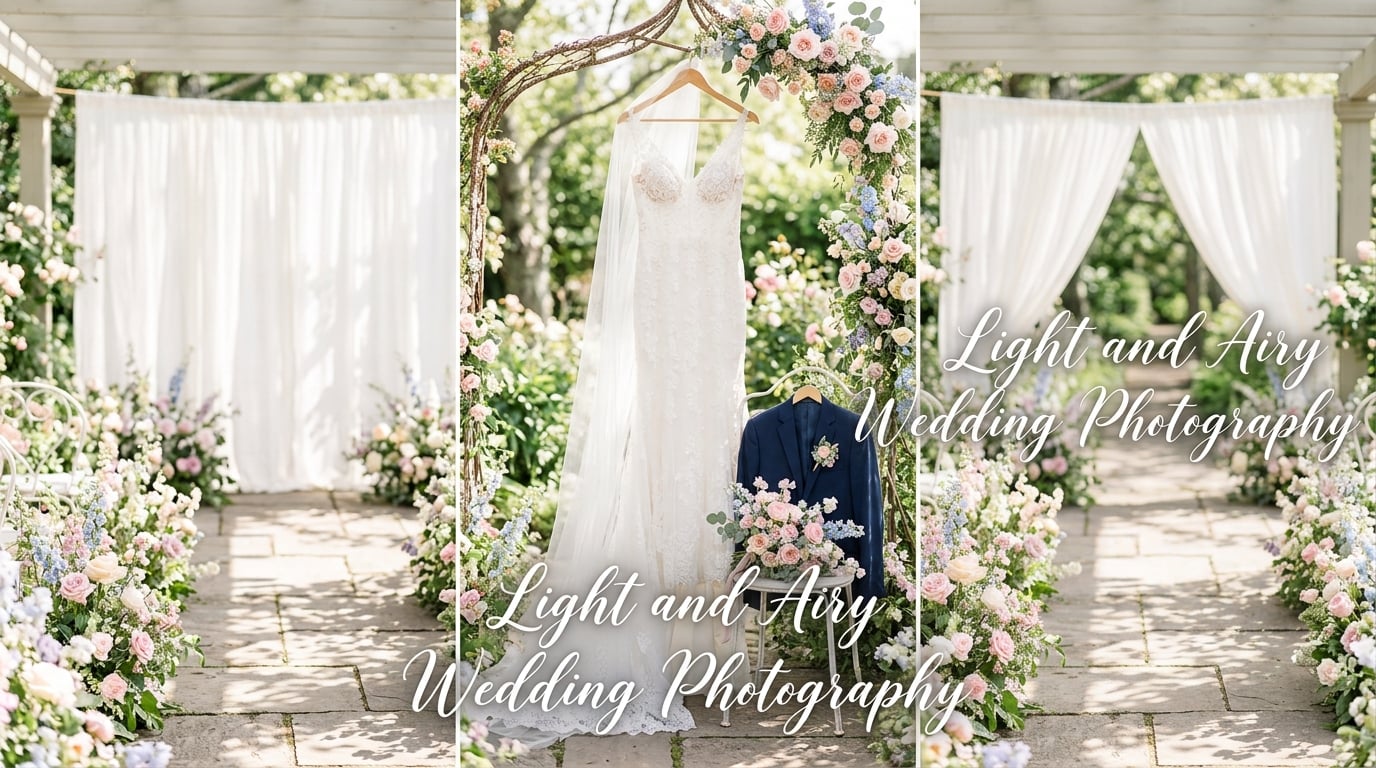
Light and airy wedding photography is a bright, soft, and ethereal style defined by clean whites, lifted shadows, and gentle pastel tones that give images a romantic, fine-art feel. It is one of the most requested wedding photography looks of 2026, and for good reason. When done well, the result feels timeless, dreamy, and quietly emotional rather than heavy or staged.
In this guide, our team breaks down exactly what light and airy wedding photography is, how to shoot it, how it compares to other popular styles, and where it works best. Whether you are a couple choosing a photographer or a shooter refining your craft, you will walk away with a clear understanding of this enduring style. We will keep things practical, honest, and free of jargon.
One quick note before we begin. This style is beautiful, but it is not the right fit for every venue, couple, or photographer. We will cover where it shines and where it can fall flat, so you can make an informed decision for your own wedding day.
Table of Contents
What Is Light and Airy Wedding Photography?
Light and airy wedding photography is a shooting and editing approach that produces images which feel soft, bright, and dreamy. Photographers working in this style prioritize natural light, gentle contrast, and pastel-leaning color palettes. The look is also called bright and airy, fine art, or filmic, and it sits firmly within the romantic end of the wedding photography spectrum.
The defining trait is the way tones are handled. Whites stay clean rather than cream, shadows are lifted instead of deepened, and colors are gently desaturated toward pastel rather than pushed toward bold saturation. The finished photos often resemble faded analog film, which is why the style is sometimes described as film-inspired wedding photography.
Couples tend to choose this look for the emotion it carries. A soft and airy image feels calm, intimate, and timeless, which lines up perfectly with how most people want to remember their wedding day. It pairs especially well with romantic venues, daytime ceremonies, and naturally lit spaces.
The style became dominant in the wedding world through the early 2010s, partly driven by photographers who were emulating medium-format film stocks in their digital work. Since then it has evolved, with some shooters leaning into brighter, more delicate looks and others dialing the effect back for a more restrained feel. In 2026, light and airy remains a leading request among couples planning garden, beach, and fine-art weddings.
Key Characteristics of Light and Airy Photos
Light and airy photography can be recognized by a consistent set of visual traits. The look is less about a single editing trick and more about how those traits work together across an entire gallery.
- Clean whites. White dresses, table linens, and skies stay bright and free of muddy color casts.
- Lifted shadows. Dark areas are opened up rather than crushed, keeping detail visible and mood soft.
- Pastel tones. Colors lean toward gentle pinks, mints, lavenders, and warm creams instead of saturated reds or greens.
- Soft contrast. The image has gentle roll-off between light and dark areas, avoiding harsh transitions.
- Natural light preference. Most work is shot with available light, often near windows, open shade, or golden hour sun.
- Ethereal mood. The overall feeling is dreamy and romantic, sometimes described as the gates of heaven look.
- Consistent gallery. Every image in the set shares the same color and tonal signature, which makes album spreads feel cohesive.
Not every light and airy photo needs all of these traits at once. A skilled photographer balances them, sometimes lifting shadows more, sometimes leaning into pastel tones, depending on the scene and the couple. The goal is a unified look, not a checklist applied identically to every frame.
It is also worth knowing what light and airy is not. It is not the same as simply overexposing an image. Pure overexposure blows out highlights, washes out skin tones, and loses detail. Done well, light and airy keeps textures intact while still feeling bright and delicate.
How to Photograph Light and Airy Weddings
Shooting light and airy wedding photography starts long before the edit. The look has to be captured in camera, then refined in post. Here is a practical workflow our team uses and recommends.
1. Hunt for Soft Natural Light
Natural light is the foundation of this style. Look for large windows, open shade under trees, white-walled interiors, and north-facing doorways. These sources produce soft, directional light without the harsh shadows that flash can introduce.
Avoid direct midday sun whenever possible. It creates contrasty shadows and blown highlights that fight against the airy look. If the ceremony falls at noon, position subjects in shade or use a diffuser to soften the sun.
2. Embrace Golden Hour
The hour after sunrise and the hour before sunset produce warm, low-angle light that flatters skin and adds a gentle glow. This is the ideal window for bridal portraits, couple sessions, and any shot where the airy mood matters most. Plan the timeline with the couple so key portraits land inside this window.
3. Expose Slightly Bright
Most light and airy photographers expose one-third to two-thirds of a stop brighter than a neutral exposure. This lifts midtones and gives skin that clean, luminous quality. Be careful not to clip highlights permanently, since recovered highlights can look muddy after editing.
Shooting in RAW is essential. RAW files hold far more highlight and shadow detail than JPEGs, which gives you room to lift shadows and recover bright areas later without banding or color shifts.
4. Choose the Right Lenses
Fast prime lenses are the workhorses of this style. A 50mm f/1.4 or 85mm f/1.8 lets you shoot wide open, softening backgrounds and pulling attention to the subject. Wider lenses like a 35mm f/1.4 are useful for scenes and detail shots where you still want that delicate background blur.
Zoom lenses can work, but most do not open as wide, which means less light and less background separation. If you shoot zooms, look for constant f/2.8 versions and pair them with reflectors to control contrast.
5. Use Reflectors and Diffusers
A simple 5-in-1 reflector is one of the most valuable tools for this style. The white side bounces soft fill light into shadows. The translucent panel diffuses harsh sun. Even a small reflector can rescue a portrait shot in uneven light, and it costs less than a single editing plugin.
For more control, a scrim or a translucent umbrella can soften larger areas. Many light and airy photographers carry a 42-inch reflector as their go-to tool, even on documentary coverage days.
6. Control Your Backgrounds
Because the look is bright and clean, messy or dark backgrounds fight against it. Position subjects against light walls, sky, foliage, or open space. Avoid black fabric, dark wood, and cluttered corners that will pull the eye away and muddy the tones.
A clean background also means you do not have to fight it in editing. The more disciplined you are in camera, the easier the post-processing stage becomes.
Post-Processing Workflow for the Light and Airy Look
Editing is where light and airy wedding photography truly takes shape. The goal in post is to enhance what was captured, not rescue poorly shot images. Here is the typical workflow used by photographers who shoot this style consistently.
Lift Shadows and Blacks
The fastest way to move an image toward the airy look is to lift the shadow and black sliders in Lightroom. This opens up detail in darker areas and gives the photo that soft, low-contrast feel. Lift gently at first, since too much can flatten the image and wash out depth.
Soften the Tone Curve
A classic technique is to raise the bottom of the tone curve slightly, which lifts true blacks into a soft gray. This single move is responsible for much of the film-inspired feel that defines the style. Combine it with a gentle S-curve in the highlights to keep skin from going flat.
Push White Balance Slightly Warm
Light and airy images often lean a touch warm, somewhere between 5400K and 5800K. This gives skin a healthy glow and keeps whites from feeling cold. Tweak the tint toward magenta just slightly to neutralize any green cast from foliage or fluorescent venues.
Desaturate Selectively
Reduce vibrance a few points to soften strong colors, especially greens and oranges. Avoid pulling saturation globally, since that can leave skin looking gray. Targeted hue adjustments work better, nudging greens toward olive or yellow and reds toward soft pink.
Use Lightroom Presets Thoughtfully
Lightroom presets are a fast way to apply a light and airy baseline, but they are a starting point, not a finish line. Always adjust exposure, white balance, and skin tones per image. A preset applied blindly is the most common reason this style ends up looking washed out or unnatural.
Watch for These Common Pitfalls
Blown skin tones are the number one complaint couples have about poorly executed light and airy work. Keep an eye on the red channel and use the luminance sliders to pull back hot skin. Detail loss in wedding dresses is the second issue, so check your highlights before exporting the final gallery.
Light and Airy vs Other Wedding Photography Styles
Comparing styles helps couples decide what fits their day. Light and airy is one of several popular approaches, and the differences come down to mood, color, and lighting choices.
Light and Airy vs Dark and Moody
Dark and moody wedding photography is essentially the opposite of light and airy. It uses deeper shadows, richer colors, and dramatic lighting to create an intimate, sometimes cinematic feel. Where light and airy lifts shadows, dark and moody deepens them. Where airy desaturates toward pastel, moody pushes toward bold and saturated tones.
Dark and moody works beautifully for evening receptions, candlelit ceremonies, historic venues, and autumn color palettes. Light and airy suits spring and summer, garden weddings, and daytime events. Neither is objectively better, but each flatters different settings and personalities.
Light and Airy vs True to Color
True to color wedding photography aims to reproduce colors as the human eye saw them on the day. Whites stay neutral, skin tones stay natural, and the photographer avoids stylized color shifts. This approach appeals to couples who want an accurate record of their wedding rather than a stylistic interpretation.
Light and airy is, by design, a stylized approach. It takes creative liberties with color and exposure to evoke a specific feeling. Both are valid choices, but they serve different priorities. If authenticity matters most, true to color wins. If romance and dreaminess matter most, light and airy wins.
Light and Airy vs Editorial
Editorial wedding photography borrows from fashion magazines, with strong posing, bold compositions, and a polished production feel. It can be bright or dark, but it is always intentional and styled. Light and airy tends to feel softer and more candid, while editorial feels curated and dramatic.
Some photographers blend the two, using light and airy color science with editorial posing. This hybrid is increasingly popular in 2026, especially for couples who want magazine-quality images without sacrificing the airy mood.
Best Venues and Conditions for Light and Airy Photography
Certain venues make light and airy photography far easier to execute. The right space provides the natural light and clean backgrounds this style needs to shine.
Garden and outdoor venues. Botanical gardens, vineyards, and estates with manicured lawns offer soft, diffused light and pastel-friendly greenery. These spaces are tailor-made for the airy look.
Beach and coastal weddings. Open sky, reflective sand, and water all amplify brightness. Beach ceremonies are some of the easiest environments for light and airy work, provided you manage glare and harsh sun.
Greenhouses and glass venues. These act like giant softboxes, filtering sunlight into gentle, even illumination. They are perfect for daytime ceremonies that need a soft, luminous atmosphere.
Light-filled indoor venues. Loft spaces, converted barns with skylights, and venues with floor-to-ceiling windows all work well. Look for white or light-colored walls that bounce light back into the room.
Daytime ceremonies. Light and airy thrives on available daylight. If your ceremony is scheduled for midday to early afternoon, you get the most natural light to work with, even if the sun is high.
When Light and Airy Might Not Be the Best Choice
This style is popular, but it is not universal. Honest photographers will tell you that light and airy struggles in certain conditions, and pushing it in the wrong environment leads to disappointing results.
Dimly lit venues are the biggest challenge. Windowless ballrooms, candlelit chapels, and evening receptions simply do not provide the natural light the look depends on. A photographer can fake it with flash, but the result rarely matches true natural-light airy work.
Couples who want vivid, true-to-life color may also feel let down. The pastel desaturation that defines the style mutes reds, greens, and blues. If your florist designed bold arrangements or your decor leans saturated, light and airy will soften those choices on camera.
There is also trend fatigue to consider. Some couples on wedding forums mention feeling tired of heavily filtered light and airy galleries that all look the same. The style is not over, but there is a growing appetite for variety, including true to color, dark and moody, and editorial alternatives. The best photographers offer range and adapt to the couple in front of them.
Light and Airy Wedding Photography FAQ
What does light and airy mean in photography?
Light and airy refers to a photographic style characterized by bright, soft, ethereal images with clean whites, lifted shadows, and gentle pastel tones. The look is often described as dreamy, romantic, or film-inspired, and it relies on natural light and deliberate post-processing choices.
How to photograph light and airy?
Shoot in soft natural light such as window light, open shade, or golden hour. Expose slightly brighter than neutral, use fast prime lenses, and bounce fill light with reflectors. In editing, lift shadows and blacks, soften the tone curve, warm the white balance slightly, and desaturate strong colors toward pastel. Always start with strong in-camera capture rather than relying on presets alone.
Is light and airy wedding photography still popular in 2026?
Yes. Light and airy remains one of the most requested wedding photography styles in 2026, especially for garden, beach, and daytime ceremonies. While other looks like true to color, dark and moody, and editorial are gaining attention, light and airy continues to lead demand among couples seeking romantic, timeless imagery.
What is the 30 5 rule for weddings?
The 30 5 rule is a wedding planning guideline that suggests allocating roughly 30 percent of the overall wedding budget to the venue and 5 percent to photography. Actual splits vary by region, priority, and budget, so couples should adjust based on what matters most to them.
Is $4000 a lot for a wedding photographer?
Around $4,000 sits near the national average for a professional wedding photographer in many markets, though pricing varies widely by location, experience, coverage hours, and deliverables. In major metro areas, established photographers often charge more, while smaller markets may offer quality work for less. Focus on the photographer’s portfolio, consistency, and fit with your vision rather than price alone.
Choosing the Right Style for Your Wedding Day
Light and airy wedding photography has earned its place as a leading style because it captures emotion in a way few other approaches can. The brightness, softness, and pastel mood come together to create images that feel romantic, timeless, and quietly powerful. For the right couple in the right venue, it is hard to beat.
The key is alignment. Match the style to your venue, your timeline, and your personal taste, and you will love your gallery for decades. Try to force the look into a setting that fights it, and even a talented photographer will struggle to deliver the dreamy results you imagined.
Our advice is simple. Look at full galleries from any photographer you consider, not just highlight reels. Ask how they handle difficult lighting. Talk openly about whether light and airy wedding photography is the right fit, or whether a true to color, dark and moody, or editorial approach would serve your day better. A photographer who can have that conversation honestly is one worth booking.