
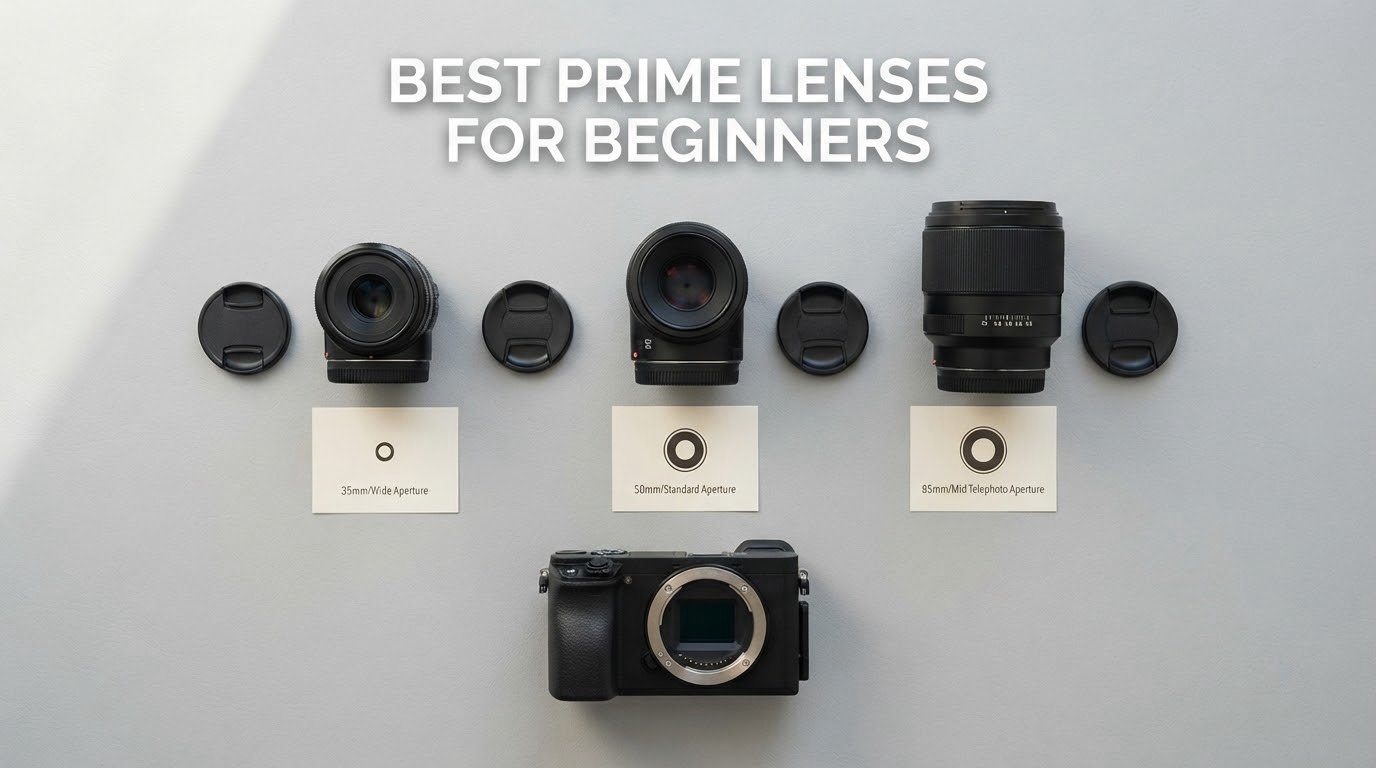
Buy a 50mm f/1.8. That is the honest answer to what prime lens a beginner should buy first, and it holds for full-frame and APS-C shooters alike, because the numbers underneath it are forgiving and the results are immediate. A kit zoom usually tops out around f/5.6, so stepping up to an f/1.8 prime hands you roughly three extra stops of light, and that single change fixes the two problems beginners complain about most: grainy indoor shots and backgrounds that never separate from the subject.
We shoot weddings and portraits for a living, and this roundup is the shortlist we hand people who ask us which fast prime to put on their first serious body. Ten lenses, every mount that matters, from a 159g Canon RF pancake to a weather-sealed Nikon S-Line 50mm. We have carried all of them, and the differences that actually change your pictures are weight, autofocus behaviour in a dim reception room, and how close you can get to your subject.
Two rules before the list. First, focal length decides everything, so pick your focal length before you think about brands. Second, if you have no zoom at all, finish the kit zoom first, because a prime forces you to move and that advice goes stale fast when you cannot change focal length. If you shoot video as well as stills, our [prime lens picks for video](https://www.kingdomweddingphotography.com/best-prime-lenses-for-video/) run down the same focal lengths with silent autofocus in mind.
Table of Contents
Top 3 Starter Primes for Beginners for October 2026


All 10 Prime Lenses at a Glance for October 2026
Every lens below is a genuine first prime, and the table is ordered by the order we would hand them to a beginner. Scan the mount column first, since a lens you cannot attach is worthless regardless of how it scores.
| Product | Specifications | Action |
|---|---|---|
| Canon EF 50mm f/1.8 STM |
|
Check Latest Price |
 Sony FE 50mm f/1.8 Sony FE 50mm f/1.8 |
|
Check Latest Price |
| Sigma 30mm f/1.4 DC DN |
|
Check Latest Price |
 Canon RF 50mm f/1.8 STM Canon RF 50mm f/1.8 STM |
|
Check Latest Price |
 Panasonic Lumix G 25mm f/1.7 Panasonic Lumix G 25mm f/1.7 |
|
Check Latest Price |
 Canon RF 35mm f/1.8 Macro IS STM Canon RF 35mm f/1.8 Macro IS STM |
|
Check Latest Price |
 Nikon NIKKOR Z 50mm f/1.8 S Nikon NIKKOR Z 50mm f/1.8 S |
|
Check Latest Price |
 Fujinon XF 35mm f/2 R WR Fujinon XF 35mm f/2 R WR |
|
Check Latest Price |
 Olympus M.Zuiko 45mm f/1.8 Olympus M.Zuiko 45mm f/1.8 |
|
Check Latest Price |
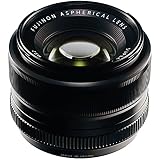 Fujifilm XF 35mm f/1.4 R Fujifilm XF 35mm f/1.4 R |
|
Check Latest Price |
1. Canon EF 50mm f/1.8 STM – The Best Prime Lens for Beginners Overall
Canon EF 50mm f/1.8 STM Lens, Black, Compatible with Canon EOS DSLR Cameras
50mm f/1.8
160g
0.35m close focus
7 rounded blades
STM autofocus
Pros
- Exceptional sharpness wide open
- Quiet STM autofocus that never announces itself
- 160g body that disappears in a bag
- Half-size-capable 0.21x magnification
- Seven rounded blades give creamy bokeh
Cons
- Soft corners at f/1.8 on full frame
- Focus-by-wire manual focus
- Not weather sealed
This is the lens we recommend without hesitation to anyone shooting a Canon DSLR. It weighs 160g, it costs a rounding error compared with any fast zoom, and it does the one job a nifty fifty exists to do: hold a face sharp at f/1.8 while the background turns to mush. The seven-blade diaphragm is rounded, which is why the out-of-focus highlights look like round discs rather than the hard polygons you get from cheap straight-bladed designs.
Autofocus is the quiet story. The stepping motor drives the focus group in short, near-silent increments rather than a single loud sweep, and it never hunts in a way you notice while shooting. During a ceremony you can rack from the back of the room to a face without the whole room hearing you move the lens.

Optically, the centre is impressively resolved wide open. Reviewers consistently report that it only falls behind once you push to the extreme corners at f/1.8, which is a problem you will not meet in a portrait. Close focus runs to 0.35m, so detail shots of rings, invitations and hands at the ceremony are within reach.
Full-time manual focus override is the feature that surprises people most. The lens keeps focusing automatically even when you turn the focus ring, so you can fine-tune a portrait while the camera continues to track. The metal mount also outlives the plastic mounts on lenses costing several times as much.

Is it worth buying when you already own a kit zoom?
If your kit zoom is an 18-55mm, then no, this lens adds no reach. What it adds is three stops of light and a completely different rendering, so it is worth buying as a second lens rather than a replacement. If your kit zoom is a 24-70mm or you have nothing at all, this fills a real gap and makes a fine first prime.
Where this lens will disappoint you
Corners are soft wide open on a full-frame body, so it is not the choice for wide-angle scenery or architecture. Manual focus is electronic rather than mechanical, which matters only for manual-focus legacy glass. The 49mm filter thread is also an older size, so cheap third-party filters fit it less readily.
2. Sony FE 50mm f/1.8 – The Best Value Prime on Sony E
Sony – FE 50mm F1.8 Standard Lens (SEL50F18F), Black
50mm f/1.8
186g
Optical stabilisation
0.45m close focus
Hood included
Pros
- Optical image stabilisation in a lens this small
- Sharp centre rendering wide open
- Only 186g
- Double-Gauss design keeps distortion low
- Hood included in the box
Cons
- Slow and noisy autofocus in low light
- Soft corners wide open
- Chromatic aberration at f/1.8
Sony built this lens around a double-Gauss design with an aspherical element, and the result is a centre that stays sharp wide open at a focal length where many cheaper primes fall apart. On APS-C bodies it frames like a 75mm equivalent, which makes it a natural low-light portrait lens for Sony shooters who do not want to spend flagship money.
Optical image stabilisation is the quiet winner here. Almost nothing at this size has it, and for a beginner shooting handheld at 1/60th in a dim room it is the difference between a clean frame and a blurred one, even with the two extra stops of aperture available as backup.
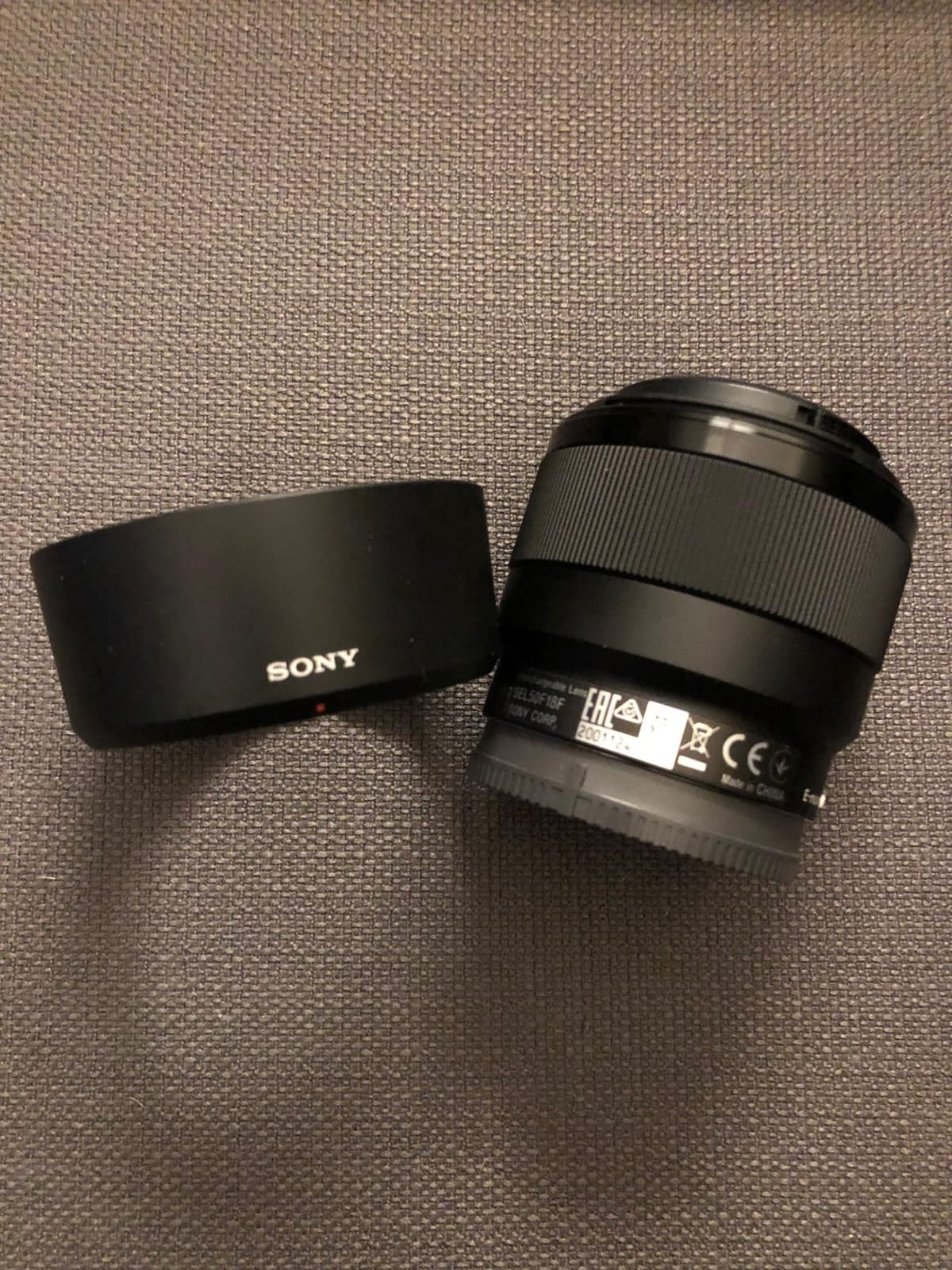
What to know before you commit is the focusing. The DC motor is the older style, and in low-contrast light such as a dark reception hall it is slower and noisier than the stepping motors used in the Canon EF and RF 50mm primes. Reviewers also note that a firmware update improved behaviour, so install it before judging the lens on a real evening.
Stopping down to f/2.8 fixes most of the optical complaints too. Corner softness and the purple fringing on high-contrast edges both ease off, and at f/2.8 you still have far more light than any kit zoom.
Should Sony shooters wait for a faster focusing 50mm?
If your photography is studio, daylight and family portraits, this lens is plenty and you will not notice the motor. If you shoot live events with unpredictable low light, a stepping-motor lens is worth the wait and the extra spend. We weigh the two in more detail in our [beginner 50mm lens guide](https://www.kingdomweddingphotography.com/best-50mm-lenses-for-beginners/).
Where this lens will disappoint you
Autofocus speed and noise in dim rooms are the honest weaknesses, and corner performance at f/1.8 is average rather than good. Chromatic aberration is visible on high-contrast edges close to the frame border. It is a compact, capable lens, not a specialist one.
3. Sigma 30mm f/1.4 DC DN Contemporary – The Best Prime for Sony APS-C
Sigma 30mm F1.4 Contemporary DC DN Lens for Sony E
30mm f/1.4 for APS-C
263g
0.3m close focus
9 rounded blades
Optical stabilisation
Pros
- Full stop faster than any entry f/1.8
- Exceptionally sharp wide open
- Nine rounded blades for smooth bokeh
- Optical image stabilisation
- Stepping motor autofocus is fast and quiet
Cons
- APS-C bodies only
- No distance scale
- Hood attaches awkwardly
This is the one lens on the list that gives an APS-C shooter a full-frame f/1.4 view, because 30mm on a 1.5x crop body frames like a 45mm. The extra stop over an entry f/1.8 matters more than beginners expect, because it buys a shutter speed fast enough to freeze a moving subject rather than merely accept some motion.
Sigma’s Contemporary line is engineered without a price tag as the first design brief, and it shows. Nine rounded diaphragm blades give bokeh that looks like it came from glass costing far more, and the optical image stabilisation gives you another two or three stops of hand-held latitude inside a 263g package.

The stepping motor is the surprise. On a lens this fast and this wide, focus is quick, quiet and accurate, and it does not hunt when you are working near the 0.3m close-focus limit on small details. Build quality is solid, and a lens hood is included, which is not always the case at this level.
It is a good match for weddings and events because it does three jobs: environmental portraits, group shots in tight rooms, and low-light candlelight work. We covered the APS-C angle in depth in our [APS-C prime lens picks for Fujifilm](https://www.kingdomweddingphotography.com/best-aps-c-prime-lenses-for-fujifilm/), and the crop-factor logic applies identically here.

Who is this lens wrong for?
Anyone who plans to move to a full-frame body. The DC DN 30mm is an APS-C design and will not mount on full-frame Sony bodies, so you would be buying it for one camera generation rather than one camera. Full-frame Sony shooters should look at the FE 50mm above instead.
Where this lens will disappoint you
There is no distance scale, which is a small loss for a manual-focus workflow. The included hood uses a bayonet style that some users find fiddly to mount in a hurry. Sample variation in optical performance has also been reported, though it is uncommon.
4. Canon RF 50mm f/1.8 STM – The Best First Prime on Canon RF
Canon RF50mm F1.8 STM Lens
50mm f/1.8 on RF
159g
0.5x macro
Control ring
Super Spectra coating
Pros
- Lightest full-frame 50mm prime in this roundup
- Half-size macro at close focus
- Gear-type STM autofocus is smooth and silent
- Control ring for quick aperture changes
Cons
- No optical image stabilisation
- Soft corners wide open
- 43mm filter thread is uncommon
Canon’s RF 50mm f/1.8 STM is the modern mirrorless answer to the EF version that tops this list, and it is a better lens in almost every respect. At 159g it is the lightest full-frame 50mm prime here, it carries a control ring for direct aperture changes, and it focuses to half life-size at 0.3m.
That macro capability is more useful for wedding work than it sounds. Detail shots of rings, stationery and texture are part of the job, and a 0.5x magnification ratio on a 50mm gives a working distance that does not crowd the subject, unlike a close-focusing wide angle.

Super Spectra coating keeps flare and ghosting under control in the strong backlight you get shooting toward windows during a ceremony. The gear-type stepping motor is near silent, which matters more on video and on quiet moments than on paper.
There is no optical stabilisation in the lens, though it works with in-body stabilisation on recent EOS R bodies. The 43mm filter thread is smaller than the older 49mm standard, so check your filter kit before an event.

Is the RF version worth upgrading to over the EF version?
If you already own the Canon EF 50mm f/1.8 STM and use an adapter, the RF lens is a modest upgrade rather than a revelation. The macro ratio and control ring are genuinely useful, and if you are buying new for an R body there is no reason to choose the adapted EF lens. We covered RF-specific advice in our [wedding prime lens roundup](https://www.kingdomweddingphotography.com/best-prime-lenses-for-wedding-photography/).
Where this lens will disappoint you
Corner softness and slight chromatic aberration wide open, plus no optical stabilisation, put it behind the Nikon Z 50mm on pure image quality. It is also built largely from plastic, which saves weight but does not inspire confidence in rain.
5. Panasonic Lumix G 25mm f/1.7 – The Best Micro Four Thirds Starter Prime
Panasonic LUMIX G Lens, 25mm, F1.7 ASPH, Mirrorless Micro Four Thirds, H-H025K (USA Black)
50mm equivalent
222g
0.25m close focus
7 rounded blades
Nano Surface Coating
Pros
- Sharp wide open at f/1.7
- Compact and light for a fast prime
- Quiet stepping motor suits video
- Nano Surface Coating tames flare
- 0.25m close focus is very short
Cons
- No optical image stabilisation
- No lens hood included
- 46mm filter thread is uncommon
Micro Four Thirds users get a 50mm equivalent field of view from this 25mm lens, which makes it the natural nifty fifty for the system. It is also one of the few fast primes you can genuinely carry all day without noticing, at 222g and just over 2 inches long.
Optically it holds up wide open, and the seven rounded blades give background highlights a soft round shape that flatters skin tones. The 0.25m close focus is the shortest on this list, which makes it a good choice if you shoot food, small details or second rings.
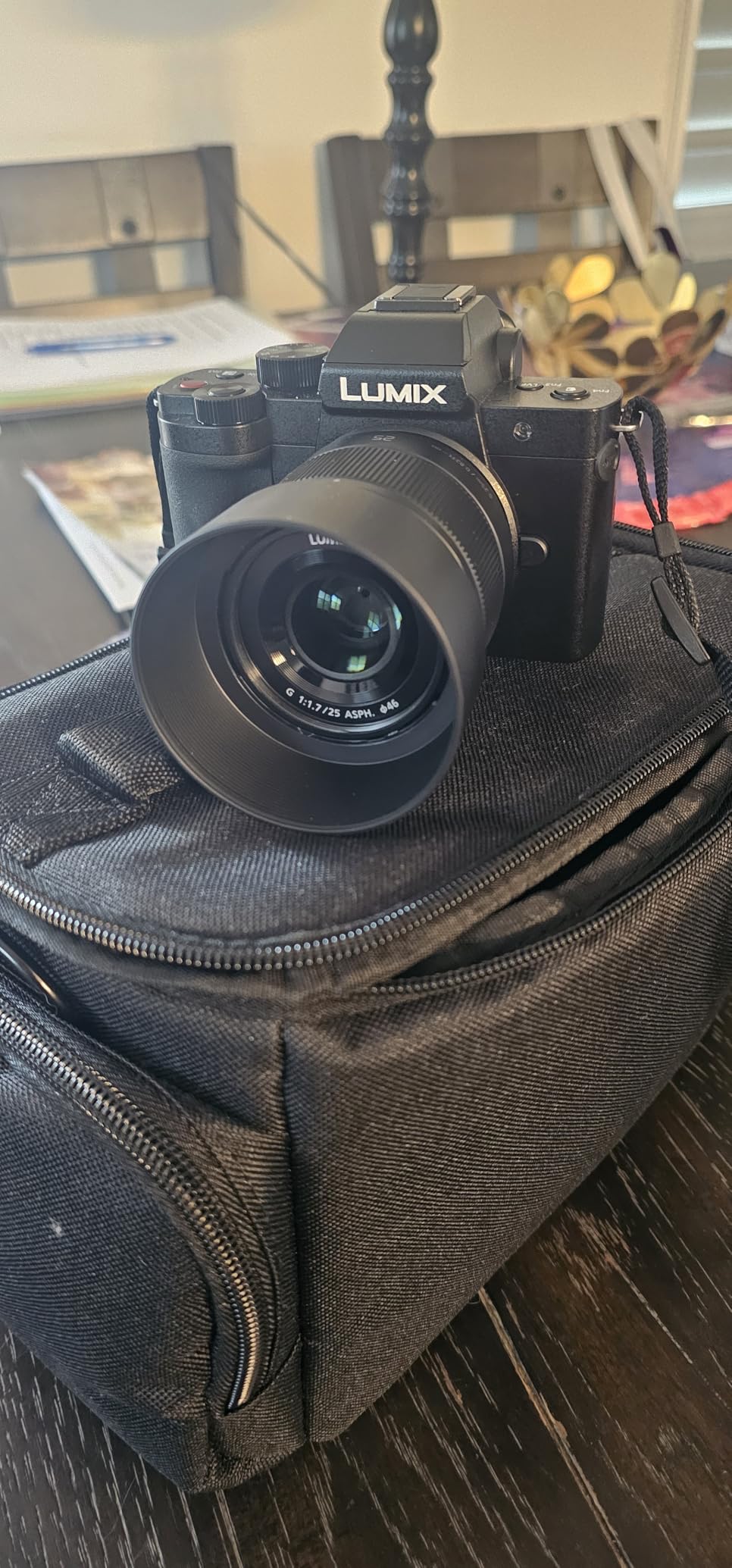
Two aspherical elements and one ultra-high refractive index element keep the small format’s usual diffraction complaints largely out of frame. The Nano Surface Coating does a solid job against the backlighting you get shooting toward a window or a bright doorway.
The stepping motor is geared for quiet operation, so this lens suits hybrid shooters filming a speech or a first look. Stabilisation comes from the body, so pair it with a Lumix or OM System body that has in-body stabilisation.
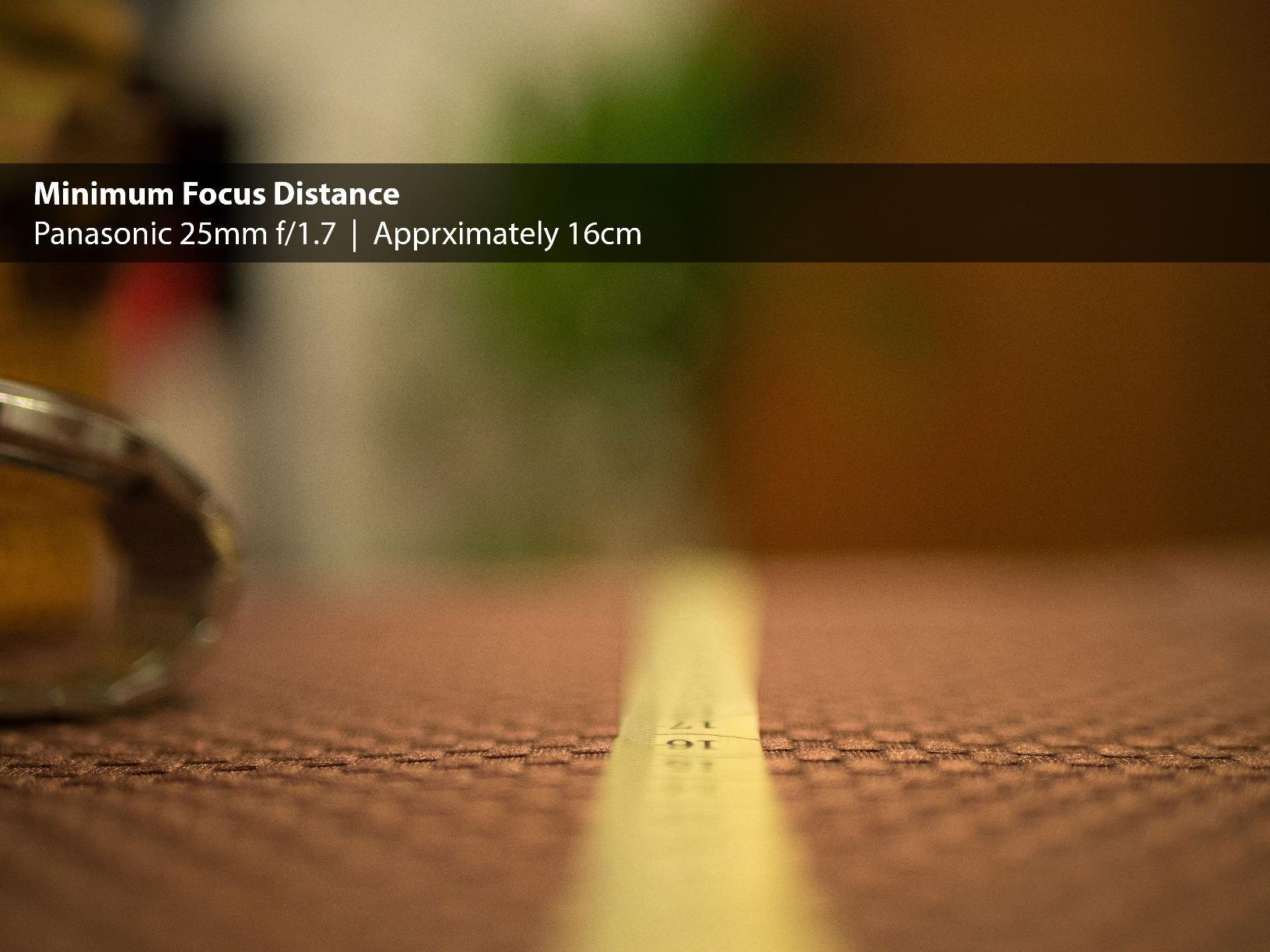
Should you spend up for an f/1.4 in this system?
For most people, no. f/1.7 is already fast enough for event work when combined with a modern high-iso sensor, and this lens is lighter and smaller than the f/1.4 options in the same mount. Choose f/1.4 only if shallow depth of field is your defining creative goal.
Where this lens will disappoint you
There is no optical stabilisation in the lens and no hood in the box, so you will want to add both before a paid shoot. It is not as fast as the primes above, so in very dim rooms you will lean harder on your camera’s high-iso performance.
6. Canon RF 35mm f/1.8 Macro IS STM – The Best Prime for Close-Ups
Canon RF35mm F1.8 is Macro STM Lens
35mm f/1.8 on RF
308g
0.5x macro
5-stop optical IS
9 blades
Pros
- Half-size macro at an everyday focal length
- Five stops of optical stabilisation
- Weather-resistant construction
- Silent STM for video
- 63 degree angle of view works indoors
Cons
- Heavier than other 50mm primes
- Some copy-to-copy AF variation
- Purple fringing wide open
This is the most capable lens in the roundup for anyone who shoots more than one subject per frame. A 35mm prime with genuine half-size macro, five stops of optical stabilisation and weather-resistant construction covers portraits, group shots, tight indoor spaces and detail work without changing glass.
At 0.17m minimum focusing distance the macro capability is the real headline. A half-life-size reproduction ratio on a 35mm means you can fill the frame with a pair of hands or the texture of a dress, and the working distance stays long enough that you are not in the subject’s space.
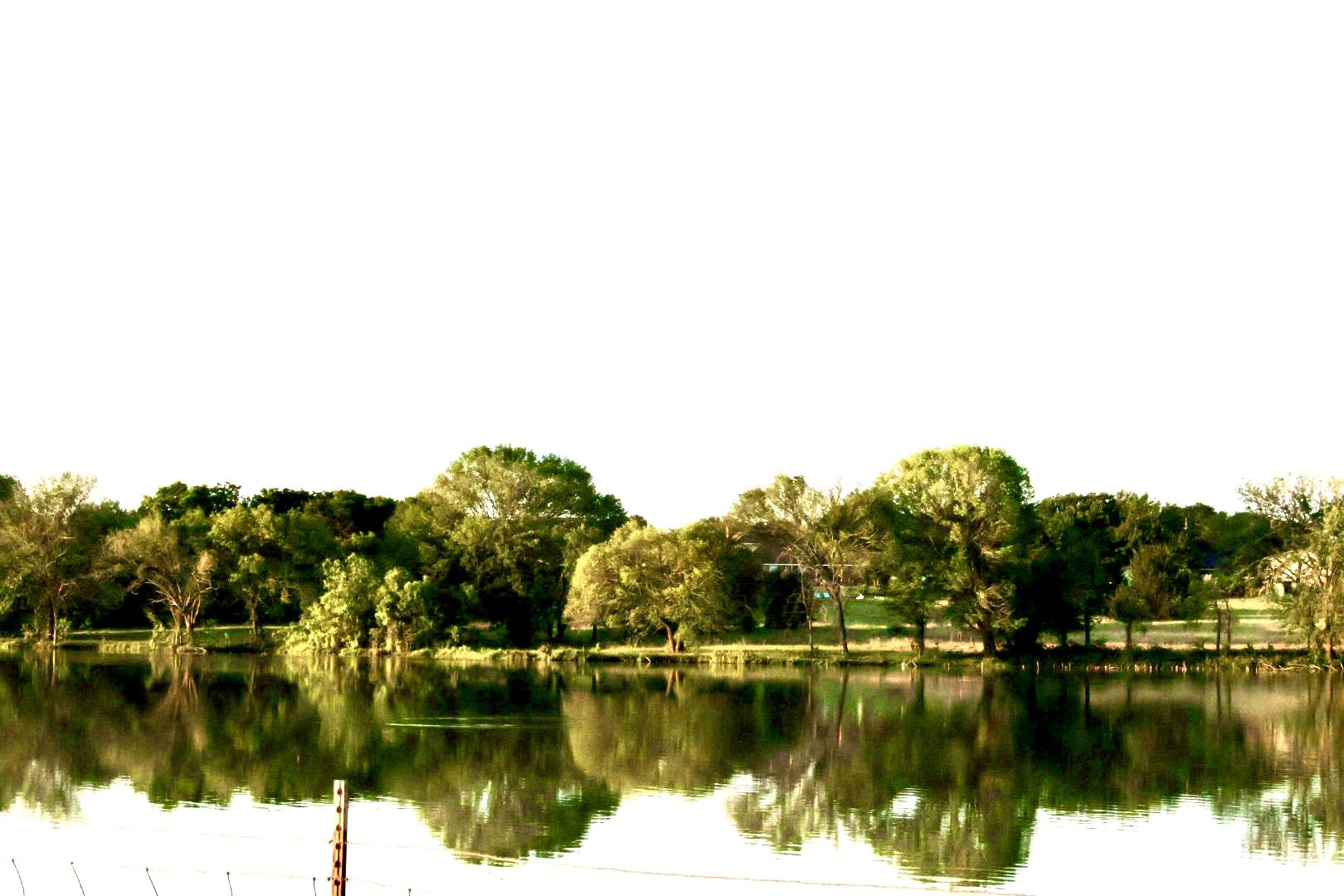
Stabilisation is unusual at this focal length and price, and it makes a real difference in a dim ceremony. Silence matters too: the stepping motor is quiet enough to shoot a video sequence mid-ceremony without drawing attention, and the 12-pin communication with the body feeds aperture and stabilisation data.
It also works with Canon’s macro twin light and ring flash units through the adapter, if you ever go that way. The nine-blade rounded diaphragm produces smooth highlight discs even at full aperture, which is unusual for a lens in this class.
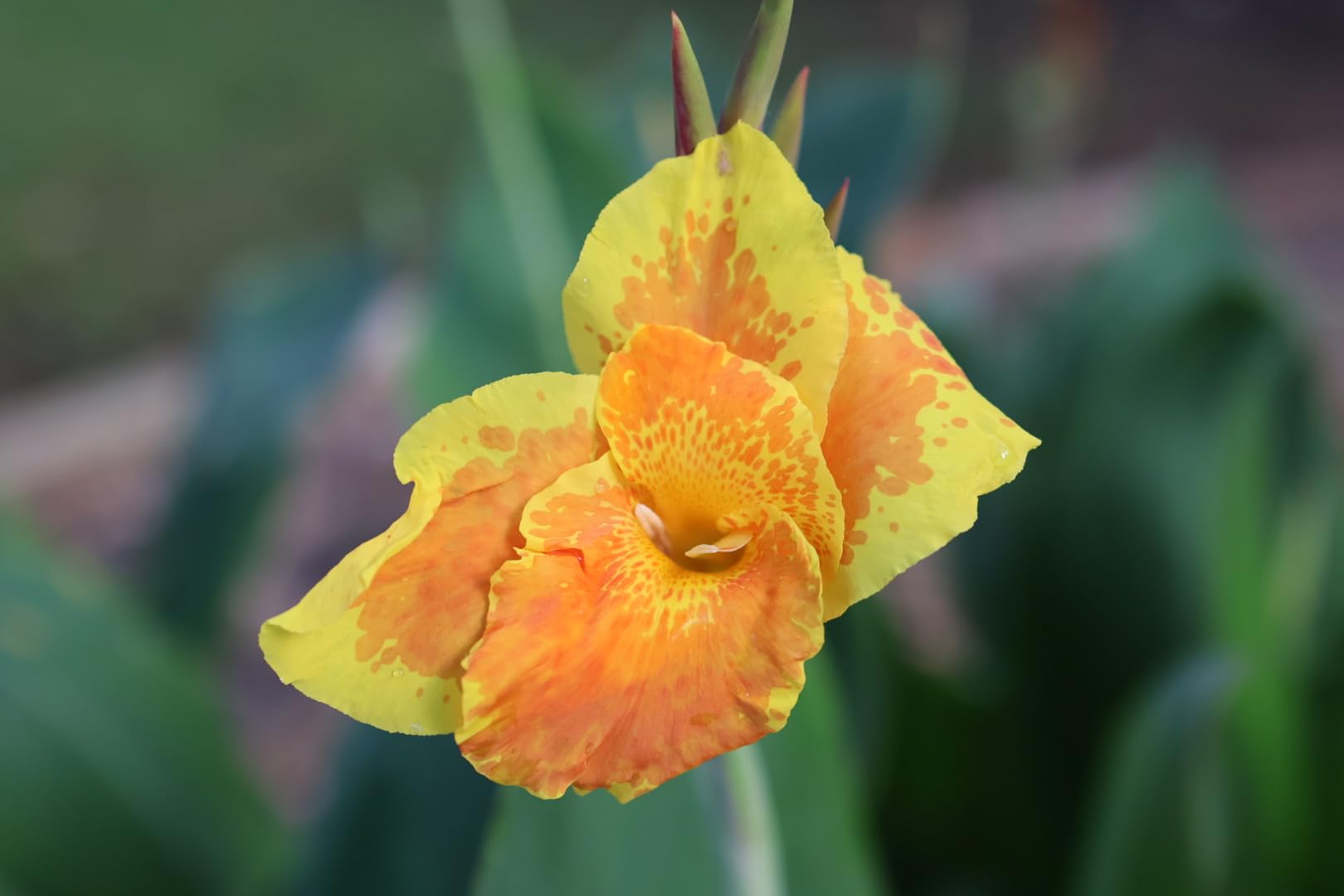
Is the 35mm too wide for close portraits?
Full frame, a 35mm at close range does stretch the edges of faces, so we switch to longer glass for headshots and use this for environmental portraits, group shots and details. It is a working lens rather than a headshot lens, and knowing that is what makes it useful.
Where this lens will disappoint you
At 308g it is the second-heaviest lens here, so it is a commitment for an all-day carry. Some owners report autofocus consistency varying between copies. Reviewers also note purple fringing on high-contrast edges when shooting wide open.
7. Nikon NIKKOR Z 50mm f/1.8 S – The Best Premium Nikon Z Prime
Nikon NIKKOR Z 50mm f/1.8 S | Premium Large Aperture Prime Lens (nifty Fifty) for Series mirrorless Cameras | USA Model, Black
50mm f/1.8 S-Line
415g
Weather sealed
Nano Crystal Coat
9 rounded blades
Pros
- Sharp corner to corner even at f/1.8
- Fast silent accurate autofocus
- Weather sealed for outdoor work
- Nine rounded blades for creamy bokeh
- Includes hood and padded case
Cons
- Heaviest lens in this roundup
- Costs more than rival 50mm primes
- No optical stabilisation in the lens
The NIKKOR Z 50mm f/1.8 S is the one lens here with no visible optical compromise, and that is exactly why it is the one we recommend for anyone whose photography has moved past learning the exposure triangle. Sharpness holds corner to corner at full aperture, and the bokeh from nine rounded blades is the smoothest in the group.
It is weather sealed at eight points and tested for cold operation, which matters if you shoot winter weddings outdoors. The Nano Crystal and ARNEO coatings keep flare under control when you are inevitably pointed at a bright window or a doorway during a ceremony.

Autofocus is fast, silent and accurate through the multi-focusing system, and the customisable control ring lets you assign a function you will actually use. The HB-90 hood and a padded case are included, which is unusual at any price and removes a small extra cost.
The trade is weight and cost. At 415g it is the heaviest prime in this roundup by a wide margin, and with the hood fitted it is as long as a 24-70mm f/4. If you hang a full kit off your shoulder for ten hours, feel this one before you commit.

Is it worth paying more for S-Line optics?
If you shoot events, portraits in good light, or anything where your frame fills a large print, yes. Corner-to-corner sharpness at f/1.8 is the difference between a portrait that holds up cropped and one that does not. If you mostly shoot small-screen images in daylight, an entry f/1.8 will satisfy you and cost less.
Where this lens will disappoint you
It is heavy, long, and the most expensive 50mm here, so it is a poor first fast prime for someone still deciding which kind of photography they enjoy. Bokeh shows mild cat’s-eye shape at the frame edge wide open, and it has no stabilisation of its own.
8. Fujinon XF 35mm f/2 R WR – The Best All-Rounder on Fujifilm X
Fujinon XF35mmF2 R WR – Black
53mm equivalent
f/2
408g
Weather resistant
0.08s inner focus AF
Pros
- All-metal weather-resistant build rated to minus 10 degrees
- Very fast silent inner-focus autofocus
- Sharp wide open at f/2
- Includes hood and pouch
- Excellent balance on X bodies
Cons
- One stop slower than the f/1.4 version
- Small hood gives limited flare control
- Focus ring is narrow
On Fujifilm X, a 35mm frames like a 53mm equivalent, which is the sweet spot for street, travel and portraits. This f/2 version gives up one stop of light against the f/1.4 lens in the same mount and gets back faster autofocus, better sealing and a smaller, cheaper body.
That trade is the right one for a beginner. The inner focusing system drives AF in 0.08 seconds and keeps the front element from rotating, so the lens stays balanced and the hood stays easy to align. On a rainy day shooting an outdoor ceremony, the eight-point weather sealing is worth more than an extra stop you can claw back with iso.
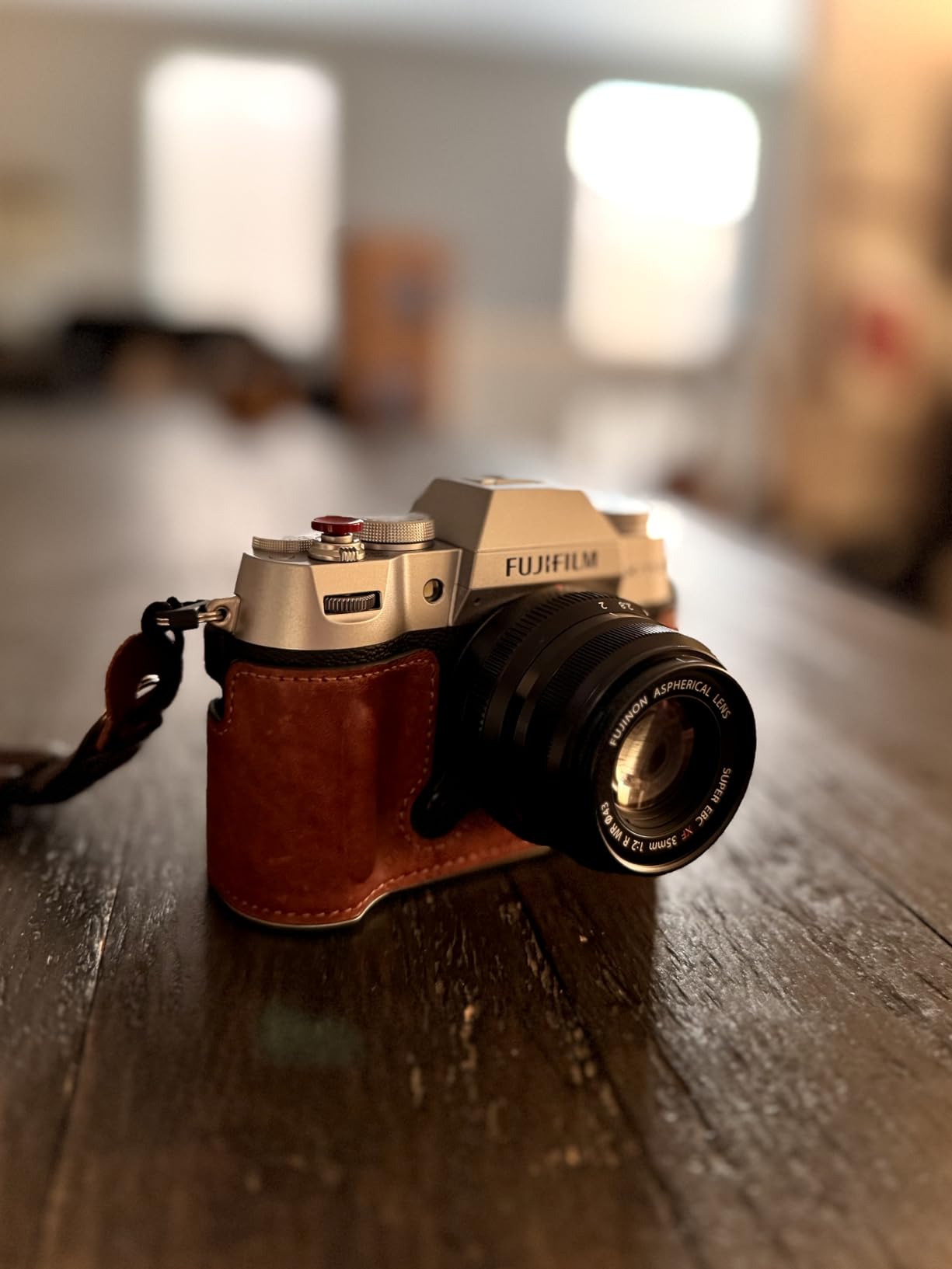
The all-metal barrel feels a class above the entry primes, and the nine rounded blades give soft background highlights. Nano-GI coating handles backlit situations, and the lens is sharp wide open rather than only when stopped down.
One practical warning from owners: the physical aperture ring is unmarked at the closest settings and easy to knock with a finger while changing lenses in a bag. A strip of tape under the ring is a common and cheap fix.
Should Fujifilm shooters choose f/2 or f/1.4?
Choose f/2 for almost everything, especially video, low light and weather. Choose f/1.4 only if the rendering of that specific lens matters to you more than focusing speed and weather sealing. Fuji users in our [Fujifilm APS-C prime guide](https://www.kingdomweddingphotography.com/best-aps-c-prime-lenses-for-fujifilm/) reach the same conclusion.
Where this lens will disappoint you
At 408g it is heavy for a walk-around prime, so it is not the lens to forget on a kitchen table. The bundled hood is small and gives limited flare protection in strong backlight, and f/2 is a real step down from f/1.4 in a very dim venue.
9. Olympus M.Zuiko 45mm f/1.8 – The Best Lightweight Portrait Prime
OM SYSTEM Olympus M.Zuiko Digital 45mm F1.8 Black for Micro Four Thirds System Camera, Compact Design, Beautiful Bokeh, Bright
90mm equivalent
116g
0.2m close focus
7 rounded blades
MSC autofocus
Pros
- Lightest prime in this roundup at 116g
- Sharp wide open at f/1.8
- Compact enough to carry every day
- Quiet MSC autofocus
- Works with IBIS on Olympus and Panasonic bodies
Cons
- Narrow field of view needs working distance
- No hood included
- Plastic barrel
At 116g this is the smallest lens on the list by a distance, and it still gives you a 90mm equivalent field of view on a Micro Four Thirds body. That combination is unusual and it is why this lens keeps showing up on working photographers’ bodies that are otherwise too heavy to carry.
The 90mm equivalent framing flatters faces because the longer working distance flattens perspective slightly and keeps you far enough away that people relax. It is also forgiving of focus errors in a way a 25mm equivalent is not, which is a genuine help while you are still learning.

Optically it is sharp wide open, and the seven rounded blades render out-of-focus highlights softly. The MSC drive is quiet and geared for both stills and video, so it works for anyone shooting a short film clip alongside their event coverage.
Working distance is the thing to plan around. A 90mm equivalent needs real room, so in a cramped venue or a small ceremony space you will be shooting from the doorway rather than moving through the room.
Is a narrow field of view a problem for beginners?
It can be, because you cannot reframe after the fact and there is no zoom to fall back on. If you shoot a lot of cramped interiors, or you need to capture group shots indoors, pair it with a wide zoom. If you shoot portraits and travel, this lens alone is plenty.
Where this lens will disappoint you
No hood is included, so you will want to add one before working outdoors. The barrel is plastic, and there is no distance scale. The narrow field of view also makes it a poor match for landscapes unless you enjoy a very compressed, minimal look.
10. Fujifilm XF 35mm f/1.4 R – The Best Prime for Dreamy Bokeh
Fujifilm XF35mmF1.4 R
53mm equivalent
f/1.4
187g
All-metal barrel
1/3 stop aperture ring
Pros
- Distinctive rendering photographers travel for
- Full f/1.4 aperture in a compact barrel
- All-metal construction with aperture ring clicks
- Creamy bokeh
- Light at 187g for an f/1.4
Cons
- Slow noisy autofocus
- No stabilisation and no weather sealing
- Focus-by-wire manual focus
This is the odd one out in a roundup full of practical choices, and we include it deliberately. The 35mm f/1.4 gives Fujifilm shooters a full stop more light than the f/2 lens and a rendering that a lot of photographers consider the reason they bought into the system in the first place.
The all-metal barrel and the aperture ring with third-stop clicks make it a joy to handle. It is also surprisingly light at 187g for an f/1.4, so the weight objection that rules out many fast primes does not really apply here.

Optically it is excellent, with strong centre sharpness wide open and creamy bokeh from the seven-blade diaphragm. The Super EBC coating handles flare, though a metal hood is included, which helps more in backlit situations than coatings alone.
Autofocus is the honest weak point. It is slow, audible, and uses focus-by-wire manual focus, so it will hunt in the low-contrast corners of a dim venue where a modern stepping motor would simply lock on.
Is this the right first prime for a beginner?
Only if you already know you want this rendering. As a first fast prime it asks you to accept slow focusing and no weather sealing in exchange for an image character you might not prefer. We would buy the XF 35mm f/2 first and add this one later.
Where this lens will disappoint you
It is not sealed against dust or rain, so it is a poor choice for outdoor ceremonies in bad weather. There is no stabilisation, manual focus is electronic, and the included hood cap is reported to fall off easily. Budget a filter that fits 52mm.
Which Focal Length Should You Buy First?
Start with 50mm on full frame, and with 35mm on APS-C. That is the shortest useful answer, and it is the answer that appears most often in photographer forums when people with 35mm, 50mm and 85mm primes say which one they actually use. A normal focal length is flexible enough for portraits, events, street and travel without any of them feeling like a compromise.
The three focal lengths that matter for beginners are 35mm, 50mm and 85mm on full frame, which photographers sometimes call the holy trinity of prime lenses. On APS-C, multiply by the crop factor to get the full-frame equivalent that actually describes the framing.
35mm equivalent – Wide enough for environmental portraits, group shots and tight indoor rooms. The everyday storytelling focal length.
50mm equivalent – The safe default for people, food and street. Natural perspective, and the focal length you will use most.
85mm equivalent – Compression and flattering headshots from a comfortable distance, but it needs room to work.
That is the decision, and it depends on your space. If you shoot ceremonies and receptions in tight rooms, go wider at 35mm. If you shoot headshots, group portraits and everyday family work, 50mm is right. If you shoot outdoors with room to back up, 85mm is where portraits get interesting.
One more thing that comes up constantly: avoid buying a focal length your kit zoom already covers. An 18-55mm kit lens makes a 50mm prime a genuine upgrade because of the aperture. A 24-70mm kit lens makes it close to redundant.
f/1.8 vs f/1.4 vs f/1.2: How Much Aperture Do You Need?
For beginners, f/1.8 is the sweet spot. It gives roughly three more stops of light than the f/5.6 at the slow end of a kit zoom, which is enough to shoot a dim reception at a handheld-friendly shutter speed without cranking iso to where the image falls apart.
Stepping up to f/1.4 buys one more stop and costs weight, size and price. It also costs depth of field, and thin slices of focus are hard to hold on a moving subject when you are new to manual focus. Step up to f/1.2 only if shallow depth of field is the picture you are trying to make, not just a number.
Low-light focusing reliability matters more than aperture on paper. A lens that hunts in dim light wastes the light it collects, so a quiet stepping motor is worth more than an extra stop. That is why every Canon prime in this roundup uses an STM design.
A quick buying checklist: confirm the mount matches your camera, confirm the sensor format is covered, check the weight against what you can carry all day, check the minimum focus distance against how close you need to work, and check whether the lens is sealed if you shoot outdoors.
Picking up a padded [lens pouch for prime lenses](https://www.kingdomweddingphotography.com/best-lens-pouches-for-prime-lenses/) sounds minor, but a fast prime in an unprotected bag is how most of our scratches happened before we started using one.
APS-C and Micro Four Thirds: What Focal Length Really Means
Crop factor is the source of most beginner confusion. A focal length only describes framing in combination with the sensor size, so a 35mm on a Micro Four Thirds body shows about the same view as a 70mm on full frame, and comparing the numbers directly is meaningless.
Full frame (1x) – 35mm is wide, 50mm is normal, 85mm is short telephoto.
APS-C (1.5x) – 24mm reads as 36mm, 35mm reads as 53mm, and 50mm reads as 75mm.
Micro Four Thirds (2x) – 25mm reads as 50mm and 45mm reads as 90mm.
That is why Micro Four Thirds shooters should look at 25mm and 45mm primes first, APS-C shooters should start at 35mm, and full-frame shooters should start at 50mm. If you read the equivalent figure and pick the lens that produces the framing you want, you will never be confused by crop factor again.
For Sony and Fujifilm APS-C shooters specifically, the 30mm f/1.4 Sigma and the 35mm primes in this roundup are the same decision. On Nikon DX bodies, think in terms of the DX crop mode when you compare against full-frame advice.
What Not to Buy First
Four traps catch almost every beginner we advise. The first is buying an 85mm as your only fast prime, then discovering at the first indoor group shot that you cannot fit three people in a small room.
The second is a very wide lens on faces. Anything around 16mm or 20mm on full frame stretches noses and edges uncomfortably close, which is exactly the opposite of flattering. The third is a heavy f/1.2 as a starter, because the weight and razor-thin focus make a first prime frustrating rather than inspiring.
The fourth is paying flagship money before you know which kind of photography you enjoy. The Nikon Z 50mm f/1.8 S is the finest optical performer here, and it is still the wrong first purchase for someone who has not decided whether they enjoy shooting people at all.
None of that is an argument against buying fast glass. It is an argument for buying one sensible f/1.8 or f/2 prime, carrying it for a year, and adding a second focal length once you know where your work takes you.
Frequently Asked Questions
What prime lens should I buy first?
A 50mm f/1.8 on full frame, or a 35mm f/1.8 on APS-C, is the safest first prime. It gives a natural field of view, roughly three more stops of light than a kit zoom, and enough flexibility for portraits, events and travel without a second lens.
Which prime lens is better, 35mm or 50mm?
Choose 50mm for headshots, group portraits and everyday family work, because it frames closer to how the eye sees. Choose 35mm for environmental portraits, group shots and tight indoor rooms where you need the wider view. If your kit zoom is 18-55mm, a 50mm f/1.8 is the better upgrade.
What is the Holy Trinity of prime lenses?
The holy trinity of prime lenses is 35mm, 50mm and 85mm on full frame, covering wide, normal and short telephoto perspectives. Most beginners need only the 50mm first, and add the other two once they know which subjects they shoot most.
Do I need a prime lens if I already have a kit zoom?
Usually yes, because the gain is light and rendering rather than focal length. A kit zoom stops down to f/5.6 at the long end, so an f/1.8 prime gives roughly three extra stops. If your kit zoom already covers 50mm at f/2.8 or wider, the prime adds less.
Is a 50mm lens boring?
No. A 50mm is the focal length most used by photographers who own several primes, because it handles portraits, food, street and travel without moving to an extreme. It is limited compared with a zoom, and that limitation is what teaches you to frame and to move.
Why is my f/1.8 lens soft in low light?
Two causes are common. A kit zoom is simply wider than f/1.8, so the lens is gathering more light and the sensor is pushed harder. Wide-open primes also soften in the corners, so stopping down to f/2.8 or f/4 usually sharpens the frame noticeably.
The Default Recommendation
Buy the Canon EF 50mm f/1.8 STM if you shoot a Canon DSLR, the Sony FE 50mm f/1.8 if you shoot full-frame Sony, and the Canon RF 50mm f/1.8 STM if you shoot an EOS R body. They are 160g, 186g and 159g respectively, and each one changes the way your pictures look on the day you mount it.
That is our default answer to the best prime lenses for beginners question, and it has not changed as the range has grown. Pick your focal length, then your mount, then the aperture, and you will spend your money on a lens that makes you photograph more rather than one that sits in a cupboard. Our picks are updated for 2026, and every recommendation here comes with the button to check the current price yourself.