
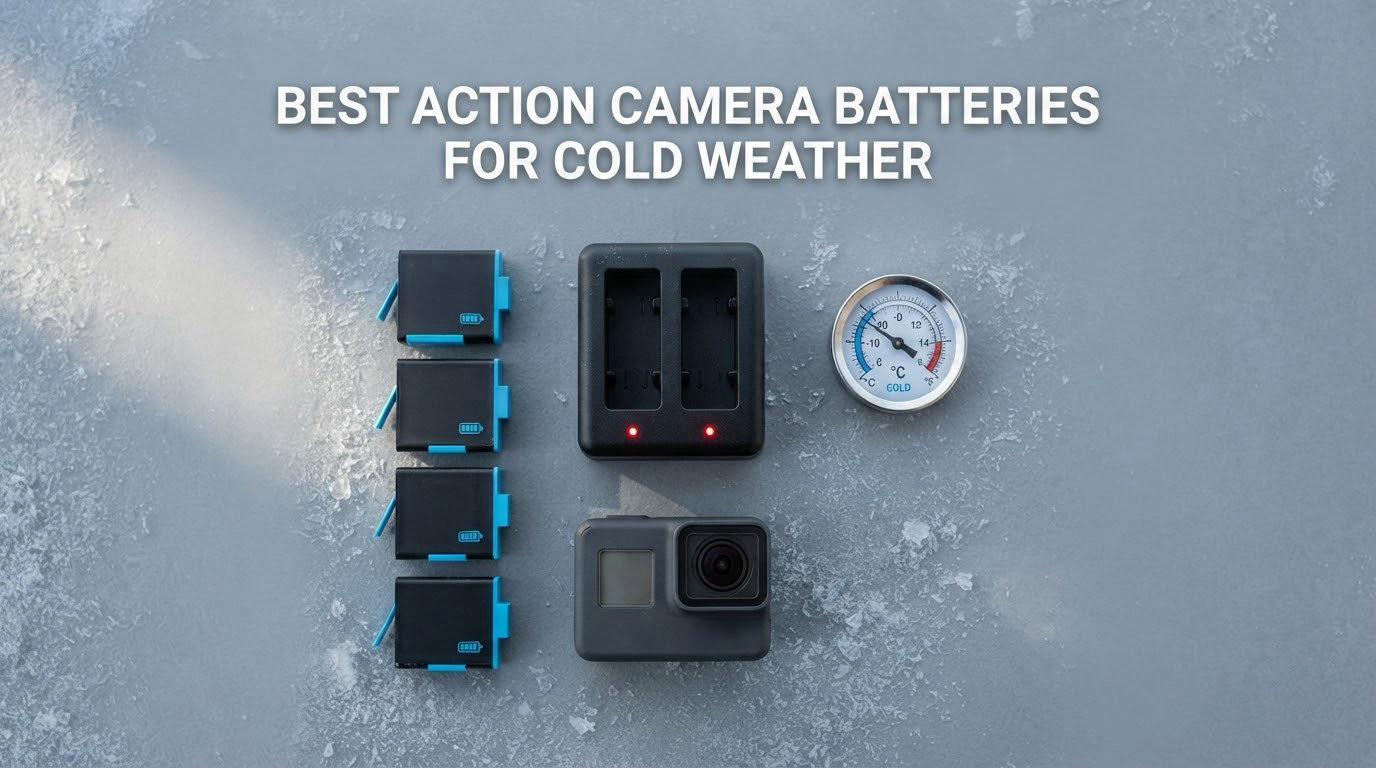
There is no point buying a superb action camera if the battery dies on the second run of the morning. Cold does something specific to a lithium-ion cell: internal resistance climbs, discharge voltage falls, and the camera reaches its cut-off voltage long before the cell is genuinely empty. That is why the best action camera batteries for cold weather are not simply the cells with the biggest number printed on the box.
For this roundup I compared eight replacement batteries and battery kits across GoPro, DJI Osmo Action, and Insta360 bodies, focusing on the things that decide whether you keep shooting or watch a camera die mid-turn. What matters is the published operating temperature range, the capacity in mAh, the decode behaviour inside your specific camera, and how fast you can rotate spares on a freezing morning.
If you are filming ski runs, snowmobile trails, winter hikes, ice fishing, or an outdoor winter wedding ceremony, the practical answer is straightforward: carry more cells than you think you need, keep them inside your jacket, and never trust a battery that has been sitting in a car overnight. I have broken that down below, product by product, with the cold claims separated from what owners actually report.
Table of Contents
Top 3 Cold-Weather Batteries for Action Cameras in October 2026

DJI Osmo Action Battery Plus 1950 mAh
- Rated from -20C to 45C
- 1950 mAh capacity
- Fits Action 3 through 6 and Osmo 360

INSTA360 2290 mAh Battery for X4
- Official Insta360 cell
- 2290 mAh capacity
- Most reviewed battery in this group

GoPro Enduro 2-Pack with Dual Charger
- Two Enduro cells for HERO13 Black
- Dual charger with quick check
- About a 2 hour charge cycle
The Best Action Camera Batteries for Cold Weather Compared for October 2026
Every pick below fits a specific camera body, and several ecosystems overlap in confusing ways. Read the compatibility line before anything else, because a cold-rated cell that your camera will not recognise is worthless on a mountain. The capacity figures are manufacturer ratings, and the temperature ranges are exactly what each maker claims.
| Product | Specifications | Action |
|---|---|---|
| DJI Osmo Action Extreme Battery Plus 1950 mAh |
|
Check Latest Price |
| INSTA360 2290 mAh Battery for X4 |
|
Check Latest Price |
| GoPro Enduro 2-Pack and Dual Charger for HERO13 Black |
|
Check Latest Price |
 GoPro Enduro Battery for GoPro MAX GoPro Enduro Battery for GoPro MAX |
|
Check Latest Price |
 TELESIN Enduro 2-Pack for HERO9 to HERO12 TELESIN Enduro 2-Pack for HERO9 to HERO12 |
|
Check Latest Price |
 K&F CONCEPT HERO13 3-Pack with Charger K&F CONCEPT HERO13 3-Pack with Charger |
|
Check Latest Price |
 K&F CONCEPT 2100 mAh 3-Pack for Osmo Action K&F CONCEPT 2100 mAh 3-Pack for Osmo Action |
|
Check Latest Price |
 FPZMAS 2500 mAh 2-Pack for Insta360 X4 FPZMAS 2500 mAh 2-Pack for Insta360 X4 |
|
Check Latest Price |
1. DJI Osmo Action Extreme Battery Plus 1950 mAh – the Cold-Rated Reference
DJI Osmo Action Extreme Battery Plus (1950 mAh), Compatibility: Osmo 360, Osmo Action 6, Osmo Action 5 Pro, Osmo Action 4, Osmo Action 3
1950 mAh
Lithium-ion
Rated -20C to 45C
Fits Action 3 to 6 and Osmo 360
Pros
- Rated to operate from -20C to 45C
- 1950 mAh supports long high-resolution takes
- Official DJI pack with identical fit to the original
- Reaches about 80 percent in under 20 minutes on a 30W PD charger
Cons
- Costs more per cell than third-party alternatives
- Sold as a single pack so spares are separate purchases
- Some 1-star reports of cells failing after extended use
This is the cell I trust most when the temperature is genuinely hostile. DJI publishes an operating range of minus 20C to 45C, which is the deepest cold floor of any battery in this roundup, and the 1950 mAh capacity gives you room to shoot long 4K sequences before the voltage sags. It weighs 32 grams, so the extra capacity is not costing you much in pack weight.
What sold me is the compatibility list. The same pack fits the Osmo 360, Action 6, Action 5 Pro, Action 4 and Action 3, which means one battery can cover several bodies you might rotate through on a winter trip. That removes an entire category of frustration, because Osmo packs are notoriously easy to mix up between generations.
The community consensus matches the spec sheet. On r/djiosmo, owners consistently point to the 1950 mAh pack as the cold-weather option for Osmo bodies, and the standard advice in those threads is to carry two extras rather than one. Reviewers also report the capacity difference is noticeable against the cell that shipped with the camera, particularly at higher resolutions where the camera pulls more current.
Fast charging helps on a cold shoot more than most people expect. Owners report reaching roughly 80 percent in under 20 minutes with a 30W PD charger, which means you can cycle a cell through a lunch break rather than planning the whole day around charge time. Note that the box contains a single battery, not a pair, so a multi-day trip needs separate purchases.
Who this battery suits
This is the pick if your winter work happens on an Osmo Action body and you want a single purchase that covers several camera generations. The published minus 20C floor gives you real headroom for alpine filming, night snowmobiling, and dawn sessions on frozen lakes.
It also makes sense if you shoot cold but not constantly, because the fast charge turnaround means one cell can carry you through most of a day. For photographers moving between an action camera and stills work, treat it as the same as picking any premium spare: you are paying for predictable behaviour and a warranty behind it.
Where it falls short
The cost per cell is the most common complaint, and it is a real one. Buyers consistently say the official pack is expensive next to third-party alternatives of similar capacity, then buy it anyway because the third-party options are less predictable. Some 1-star reviews report cells failing after extended use, which is a small but non-zero risk on any lithium cell.
Because it is a single pack, a cold-weather kit is at least a three-cell purchase. If you need Osmo Action 6 and Osmo 360 coverage plus a charger, budget for a three-item solution rather than assuming one purchase covers the whole trip.
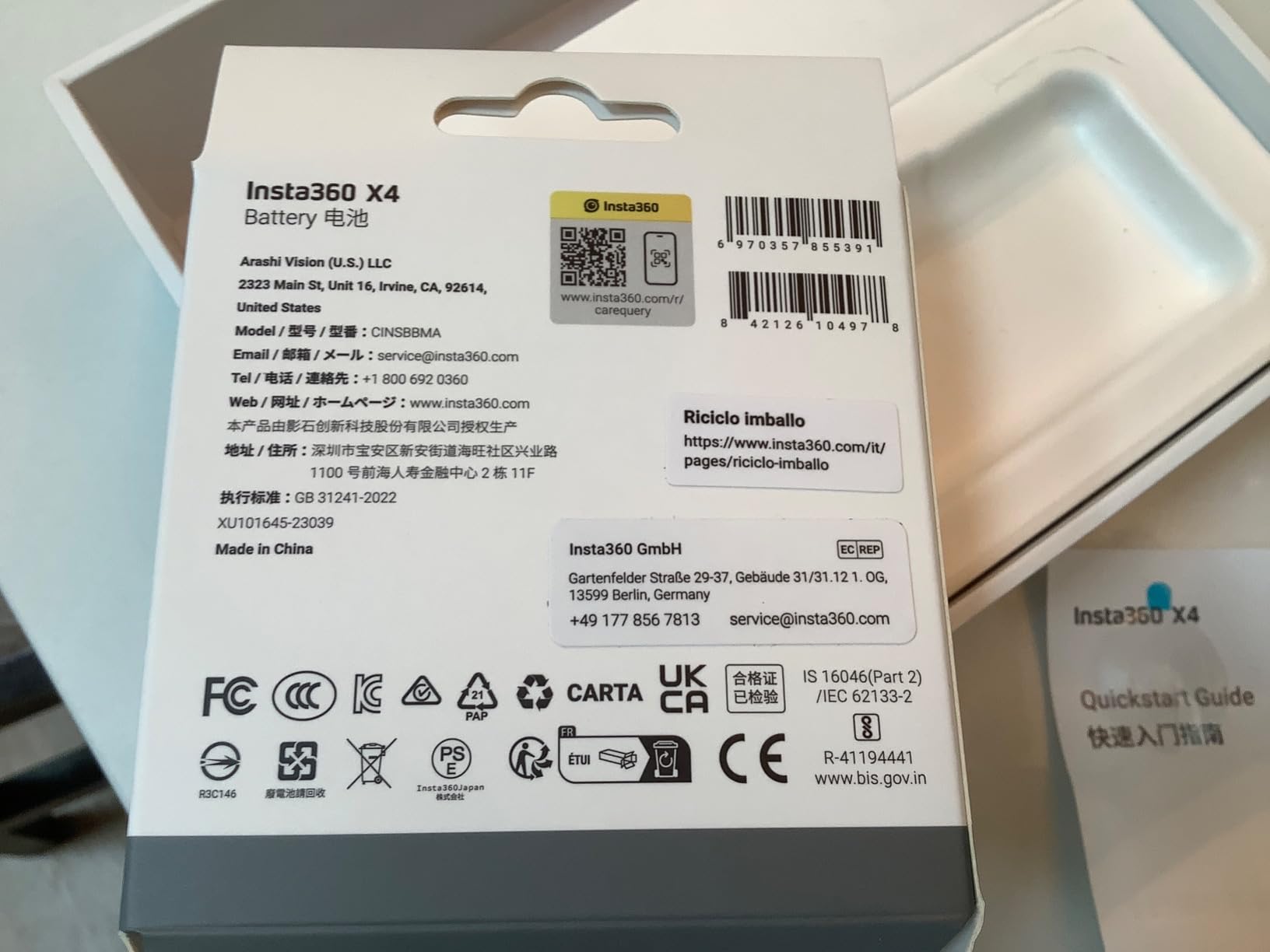
2. INSTA360 2290 mAh Battery for the X4 – Most Reviewed
INSTA360 Rechargeable 2290MAH Battery for X4 Camera
2290 mAh
Official X4 cell
1.83 ounces
Fits X4 and charging dock
Pros
- Official manufacturer cell that pairs cleanly with the X4
- Highest review count in this group at 1589 ratings
- 2290 mAh matches the cell supplied with the camera
- Consistent 4.7-star average across thousands of owners
Cons
- No published cold-temperature operating range in the listing
- Sold as a single pack so a cold kit needs several
- No charger included
With 1,589 ratings and an average of 4.7, this is the most thoroughly used battery in the entire roundup, and that is a meaningful signal when reliability is the concern. Owners treat it as the no-fuss default for the X4, which tells you it behaves exactly like the cell that came in the box rather than doing anything unusual.
The capacity of 2290 mAh is the same as the supplied battery, and the weight of 1.83 ounces keeps it out of the way in a jacket pocket with the rest of your spares. It works with the X4 and the manufacturer’s charging dock, so the existing charging setup carries straight over.
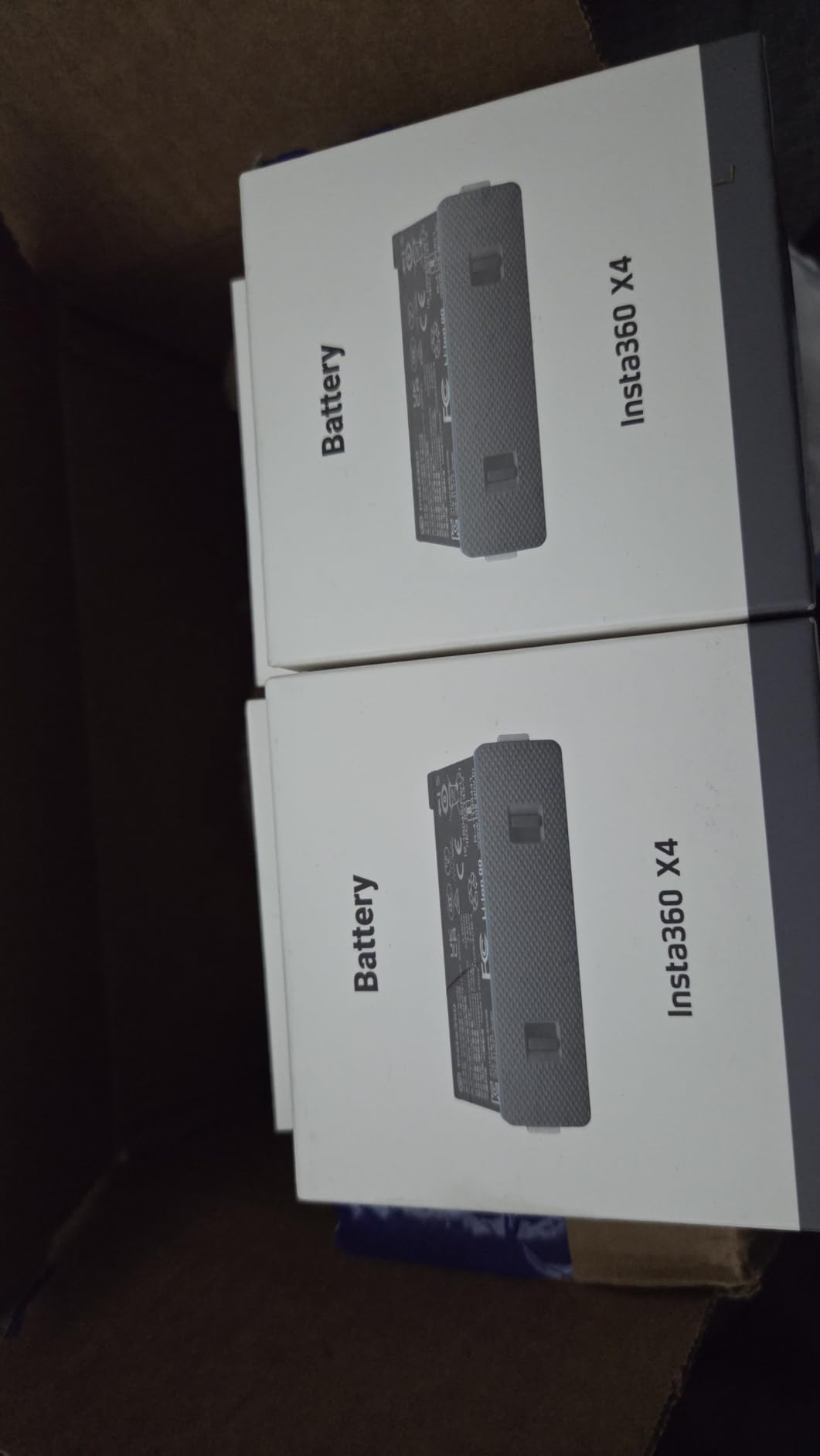
Here is the honest limitation. Insta360 does not publish a cold operating range for this pack, so you are buying capacity and reliability rather than a documented low-temperature spec. In practice, an official cell of this capacity behaves reasonably in cold, but the margin over a standard cell is smaller than the difference between a cold-rated pack and a generic one on the GoPro side.
There is also no charger in the box, and it is a single cell. If you shoot a full day on the X4 in winter, three of these is a realistic kit, which is a straightforward way to build spares without researching third-party compatibility.
Who this battery suits
Pick this if you want the default, low-risk option for an X4 and you would rather not troubleshoot firmware behaviour or decode warnings. Owners consistently report no errors and no battery warnings, and that is worth more in a cold shoot than a slightly higher capacity cell from a lesser brand.
For anyone filming winter weddings or outdoor ceremonies on an Insta360 body, the 360 form factor is often the reason you own the camera, and a dependable cell matters more than a marginal capacity upgrade. Read our guide to cameras for cold weather photography for the body side of that decision.
Where it falls short
The lack of a published temperature rating is the thing buyers ask about most, and there is no manufacturer figure to lean on. If you regularly shoot at minus 15C or below, you are relying on capacity and general lithium behaviour rather than a cold-specific design.
Single-pack sales are the second limitation. There is no bundled charger here either, so a complete cold-weather setup means buying cells and a charging solution separately, and you should budget for enough of them that a flat cell is never the reason you stop filming.
3. GoPro Dual Charger with Two Enduro Batteries for HERO13 Black
GoPro Dual Battery Charger + 2 Enduro Batteries for HERO13 Black
Two Enduro cells for HERO13 Black
Dual charger
About 2 hour cycle
Limited lifetime warranty
Pros
- Charger and two cold-ready cells arrive in one box
- Quick check reports charge status without mains power
- Dual LEDs show charge state at a glance
- Official GoPro accessory with a limited lifetime warranty
Cons
- Compatible with HERO13 Black only
- Bulkier than buying bare cells
- Fixed wall-plug charger rather than a USB-C travel unit
Two official Enduro batteries plus the dual charger in one box is the most complete cold-weather solution for a HERO13 Black, and it is why this kit pulls 1,020 ratings. Instead of a cell in one package and a charger in another, the spares and the charging hardware arrive together and are matched to each other.
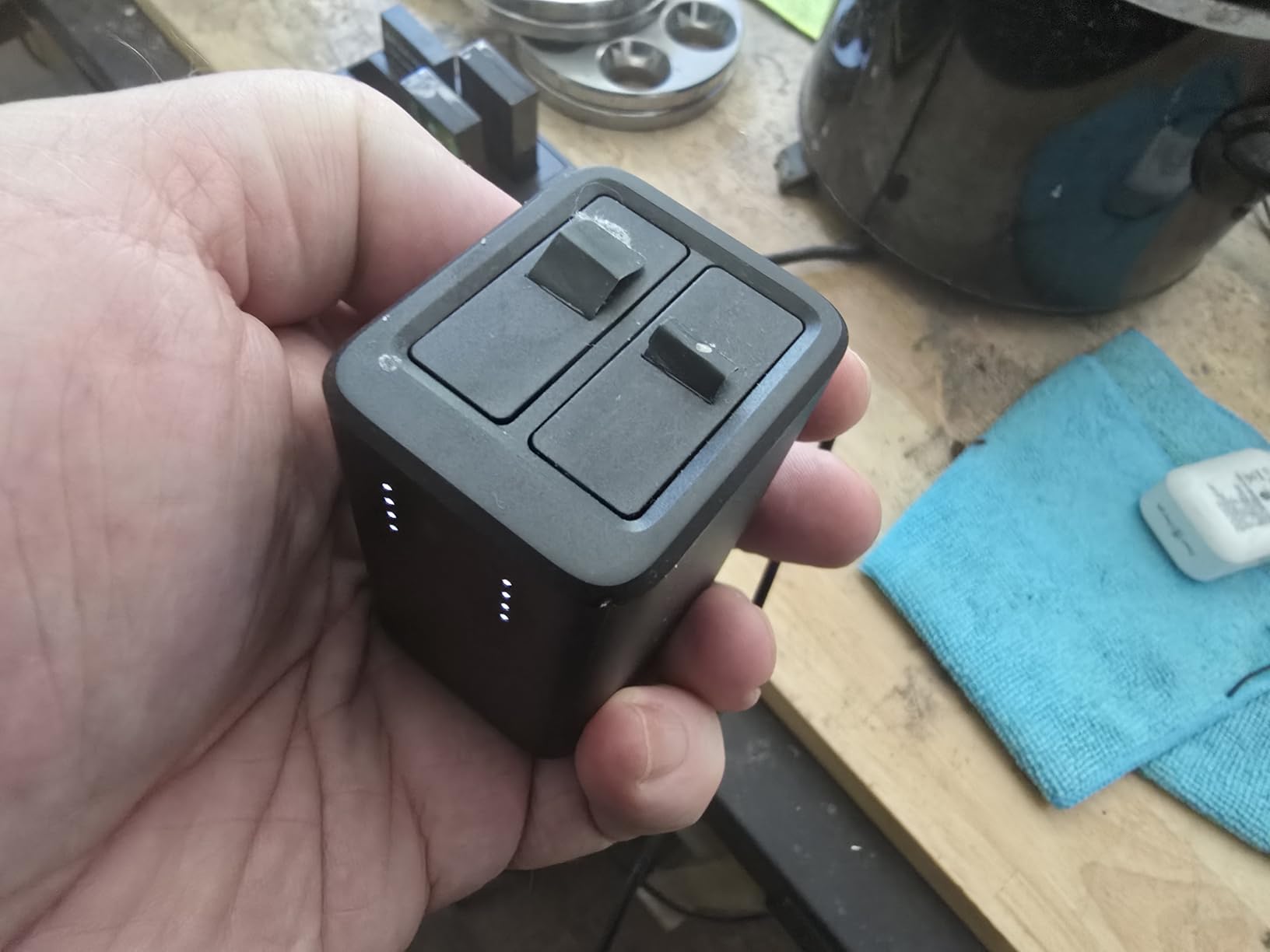
The quick-check feature is the detail that matters most in the field. You can check the state of a battery without plugging the charger into power, which means you can sort your spares in a lodge or a vehicle and know which ones are worth carrying before you step outside. The dual LEDs make charge state visible at a glance in poor light.
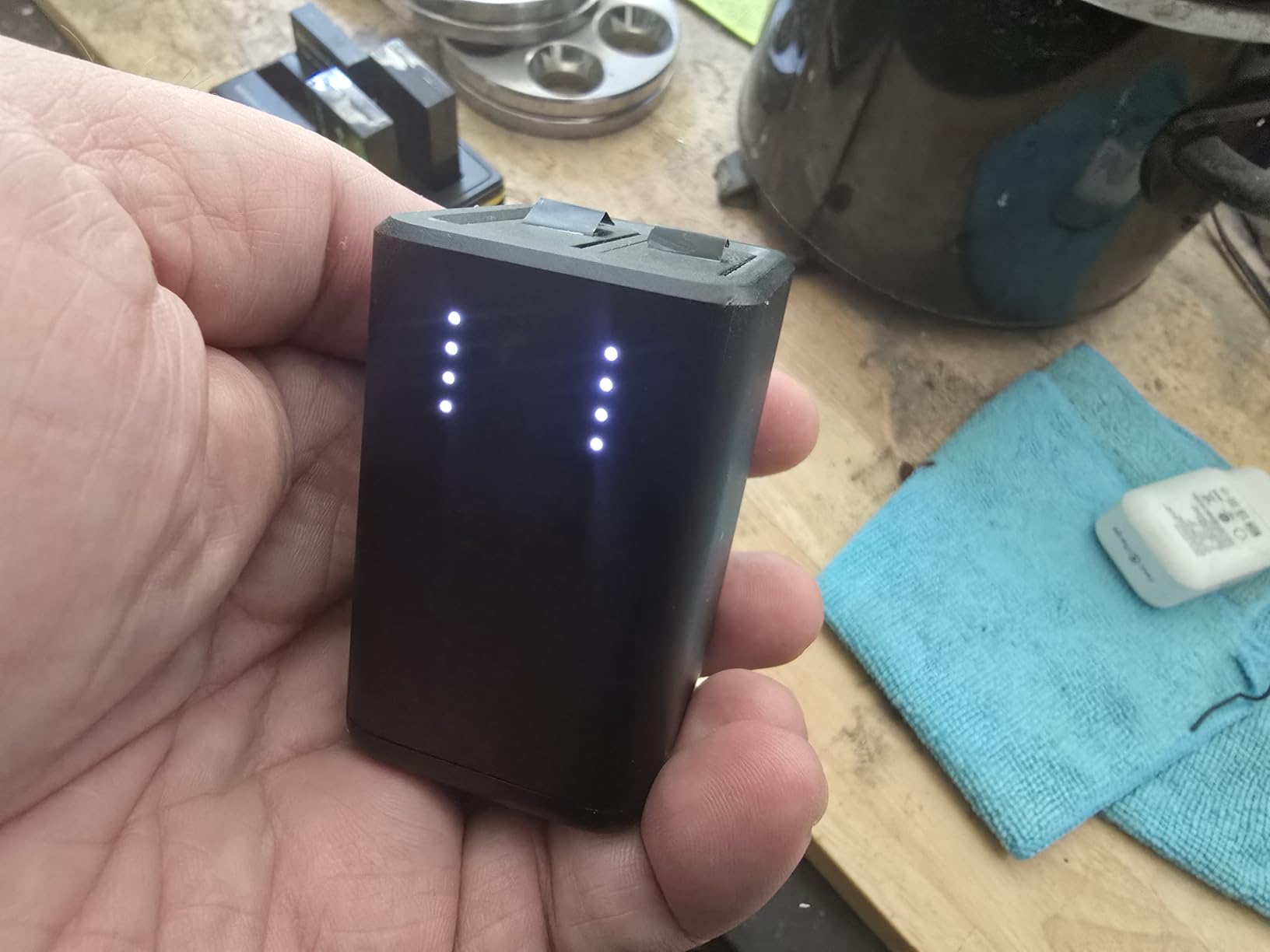
The full cycle runs roughly two hours for the two cells, and 86 percent of ratings are five stars with owners pointing at the quick check and the turnaround time as the most-praised details. On a three-day cold shoot, the practical rhythm is to charge the pair in the evening and carry both in the morning.
GoPro bundles a USB-C cable, and the charger is an official accessory carrying a limited lifetime warranty. That matters for winter work because a cell failure in freezing conditions is exactly the moment you least want to be disputing a warranty on a replacement.
Who this kit suits
This is the straightforward answer for anyone filming on a HERO13 Black in cold conditions who wants a working spare rotation from day one. You get two cold-appropriate cells, a way to charge both at once, and a way to check them without power. Very little to configure.
If your cold-weather work is a full day out rather than an hour at a time, the economics work in your favour. Two batteries in the morning and two recharging while you are inside covers a long day without the constant anxiety that a single spare creates. Pair it with a warm pair of heated gloves for cold weather and thin liner gloves so you can change cells without losing feeling in your fingers.
Where it falls short
Compatibility is narrow. This is a HERO13 Black kit, and it will not serve other HERO bodies, so if you switch cameras between projects you are buying into a specific generation rather than a flexible solution.
The charger is a fixed wall-plug unit rather than a USB-C travel device, which is awkward for a multi-day trip where you would recharge from a power bank in a hut. It is also bulkier than loose cells, which adds up if you are already carrying lenses, a pole, and a housing. The charge cycle is around two hours, so plan swaps around that window rather than expecting a full spare in fifteen minutes.
4. GoPro Enduro Battery for GoPro MAX – the Only Cell with a Published Cold Spec
GoPro Rechargeable Enduro Battery (MAX) – Official GoPro Accessory
1600 mAh
Lithium-cobalt cell
Published down to 14F
GoPro MAX only
Pros
- Only official cell in this group with a published cold rating
- 1600 mAh adds roughly 5 to 20 percent runtime over the standard cell
- Owners report the best tolerance of temperature swings
- A single-battery purchase keeps the cost down
Cons
- Fits the GoPro MAX only and not current HERO models
- One reviewer saw about 40 percent of warm-weather runtime at -15F
- Camera can refuse to power on with an already chilled cell
This is a niche pick, but it is the only official battery here that publishes an actual cold-weather figure: GoPro states it improves cold-weather performance in temperatures down to 14F, which is minus 10C. The 1600 mAh lithium-cobalt cell also carries an average 5.6 percent recording-time gain in high-performance settings over the standard pack.
If you are still shooting on a GoPro MAX rather than a current HERO body, this is the Enduro that applies, and skiers and riders describe it as the battery that gets the MAX recording where standard cells stop. On r/snowmobiling, Enduro cells are treated as close to mandatory gear for anyone filming in cold temperatures.
Owners also report roughly 90 minutes or more per charge at high resolutions, and several describe it as the best GoPro battery they have used across temperature ranges. Because it is a single cell rather than a bundle, the cost per pack is lower than buying a multi-pack.
Worth reconciling one thing clearly. On r/gopro, owners regularly report that even Enduro cells still shut down below freezing, and one reviewer on this product saw about 40 percent of warm-weather runtime at minus 15F. A published rating tells you the cell will power on and work. It does not promise full capacity at that temperature, and no battery in this roundup changes that.
Who this battery suits
Choose this if your camera is a GoPro MAX and you have settled on staying with that body. It is the only pick in the group with a manufacturer-stated cold floor, which makes it an easy recommendation to defend to someone who wants a documented number rather than a marketing phrase.
It also works well for winter riding where you keep one cell in a warm pocket and one in the camera, swapping as the exposed cell cools. A lower price per pack than a bundle makes it easier to own two or three without thinking hard about it.
Where it falls short
MAX-only compatibility is the hard limit. This pack does not fit current HERO models, so if you are considering a camera upgrade this year, skip it and look at the HERO13 kit or the TELESIN pack instead.
The runtime drop at depth is real, and users mention the camera sometimes will not power on from a cell that is already chilled. Let the battery come up toward room temperature before you insert it, and treat a cold-rated cell as one that extends your shooting intervals rather than one that removes the need for spares. One 1-star review also reports receiving the wrong battery, so check the contents on arrival.
5. TELESIN Enduro 2-Pack for HERO9 to HERO12 – Deep Cold Claims at a Lower Cost
TELESIN Enduro Battery (2-Pack) for GoPro 12 11 10 9 Accessories
2-Pack of 1720 mAh cells
Fits HERO9 to HERO12
Claimed -20C to -60C power-on
Fast charging
Pros
- Covers HERO9 through HERO12 bodies in one purchase
- Two cells means an immediate spare without extra buying
- Claimed power-on from -20C to -60C without a warm-up wait
- Adds fast charging that the original Enduro cell does not have
Cons
- Lowest average rating in this roundup at 4.2 with 9 percent one-star reviews
- Third-party cell with more variability than an OEM pack
- No charger included so fast charging needs a separate unit
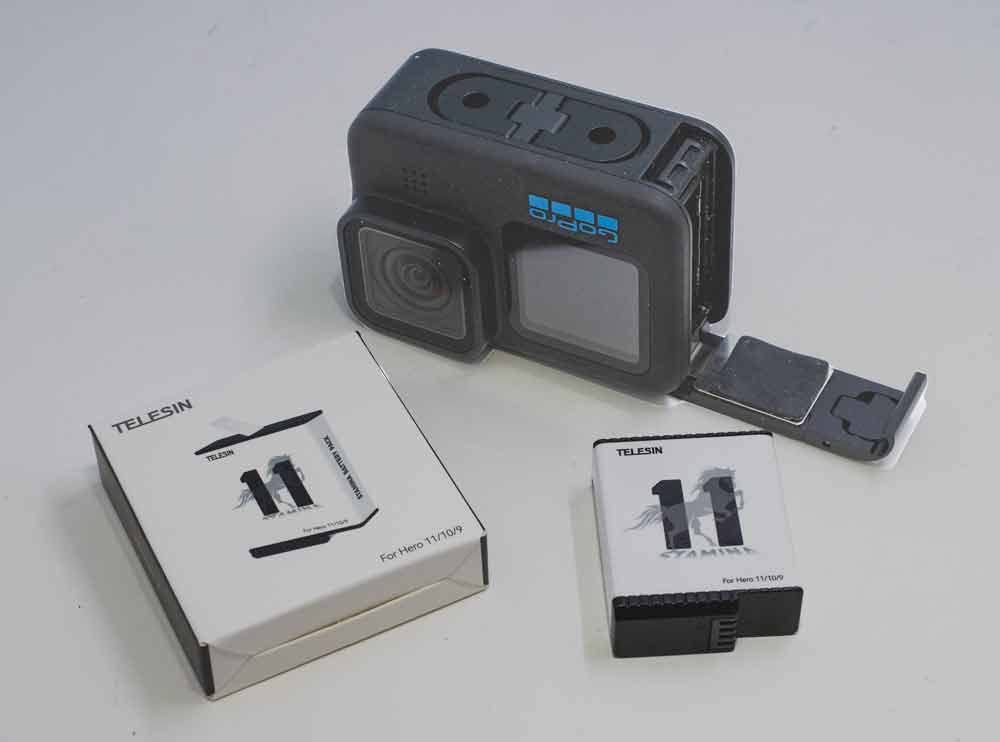
The TELESIN pack is the broadest compatibility in the group, covering HERO12, HERO11, HERO10 and HERO9 bodies with one purchase. That is a genuine advantage if you have more than one GoPro or hand cameras to friends, and it removes the fitment guesswork that trips up a lot of battery buying.
Capacity is 1720 mAh per cell at 3.85 volts, and TELESIN publishes low-temperature test data of about 43 minutes at 4K120, 58 minutes at 4K60 and 82 minutes at 1080p30, comparing against 43, 51 and 85 for the original Enduro in the same testing. Room-temperature figures are listed as 54, 67 and 116 minutes. The maker also states the cells power the camera on from minus 20C to minus 60C without a warm-up wait.
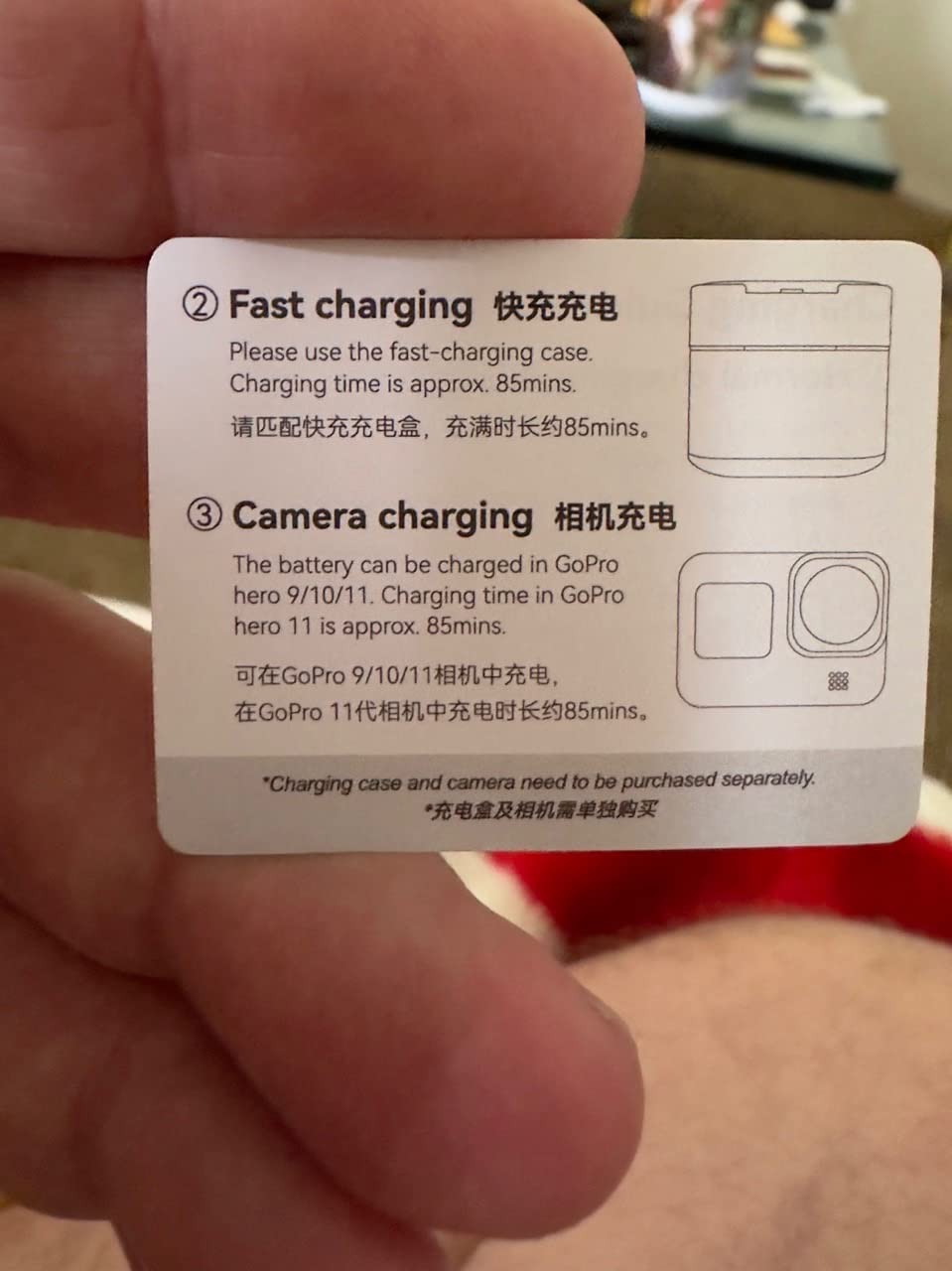
Fast charging is a genuine addition rather than a claim. TELESIN states roughly 85 minutes with a compatible fast charger and 90 minutes inside the Hero camera, and notes explicitly that the original Enduro cell supports no fast charging. Each cell is described as fully power-consumption tested for stable reporting, which addresses one of the more annoying cold-shoot complaints.
It is also the most polarising product in the roundup. A 68 percent five-star share sits beside 9 percent one-star reviews, pulling the average to 4.2. Fans point at value, wide compatibility and powering on in deep cold. Critics report cells that drain faster than OEM packs or fail to hold charge. Treat it as a capable budget option with more variance, not as a like-for-like substitute.
Who this 2-pack suits
This makes sense if you run an older HERO body, want spares immediately, and would rather not commit to a single camera generation. Two cells is a realistic half-day cold kit at a lower entry point, and the fast charging route means you can recover a cell during a break.
It is also a reasonable pairing with a hand warmer and a pocket strategy rather than a technical fix. Users doing multi-day winter filming should treat the pair as a starting rotation and add a third cell rather than trusting two through a whole trip.
Where it falls short
Variability is the main issue. The 9 percent one-star share is not a rounding error, and reports of cells that drain faster than OEM packs are exactly the failure you cannot afford when the nearest replacement is a long drive away. Buyers who need predictable behaviour should look at an official pack.
There is no charger in the box, and the fast charging claim needs a compatible TELESIN unit to be useful. The listing also publishes no weight or dimension data, so if you are packing weight-sensitive for a backcountry trip, you are estimating. Third-party cells also carry no direct manufacturer support if one fails.
6. K&F CONCEPT HERO13 3-Pack with Three-Bay Fast Charger
K&F CONCEPT Hero 13 Battery, 3-Pack Enduro Hero13 Batteries and Upgraded Fast Charger Compatible with GoPro Hero 13 Black Camera
3 batteries and 3-bay charger
About 1 hour at 5.3K60
HERO13 Black only
CE FCC RoHS certified
Pros
- Three cells plus a three-bay charger in one kit
- Fully decoded so the camera shows no battery warnings
- Charger also accepts OEM GoPro HERO13 cells
- Independent LED indicator per slot
Cons
- One 1-star review reports the charger catching fire on first plug-in
- Runtime somewhat shorter than the OEM battery
- Occasional charge-level misreporting on the camera
- Built for HERO13 Black only
The argument for this kit is arithmetic. You get three batteries and a three-bay charging case, and owners of the HERO13 repeatedly say it works out well below the cost of two OEM cells while matching OEM decode behaviour. For cold-weather work, three cells is close to a full day of rotation without an evening charge.
Decode behaviour is the detail that earns trust. The cells and charger are described as fully decoded, with no errors or warnings on the camera, which removes the most common complaint about third-party GoPro packs. The charger also accepts OEM HERO13 cells, so you can use it as a three-bay add-on to your official batteries rather than replacing them.
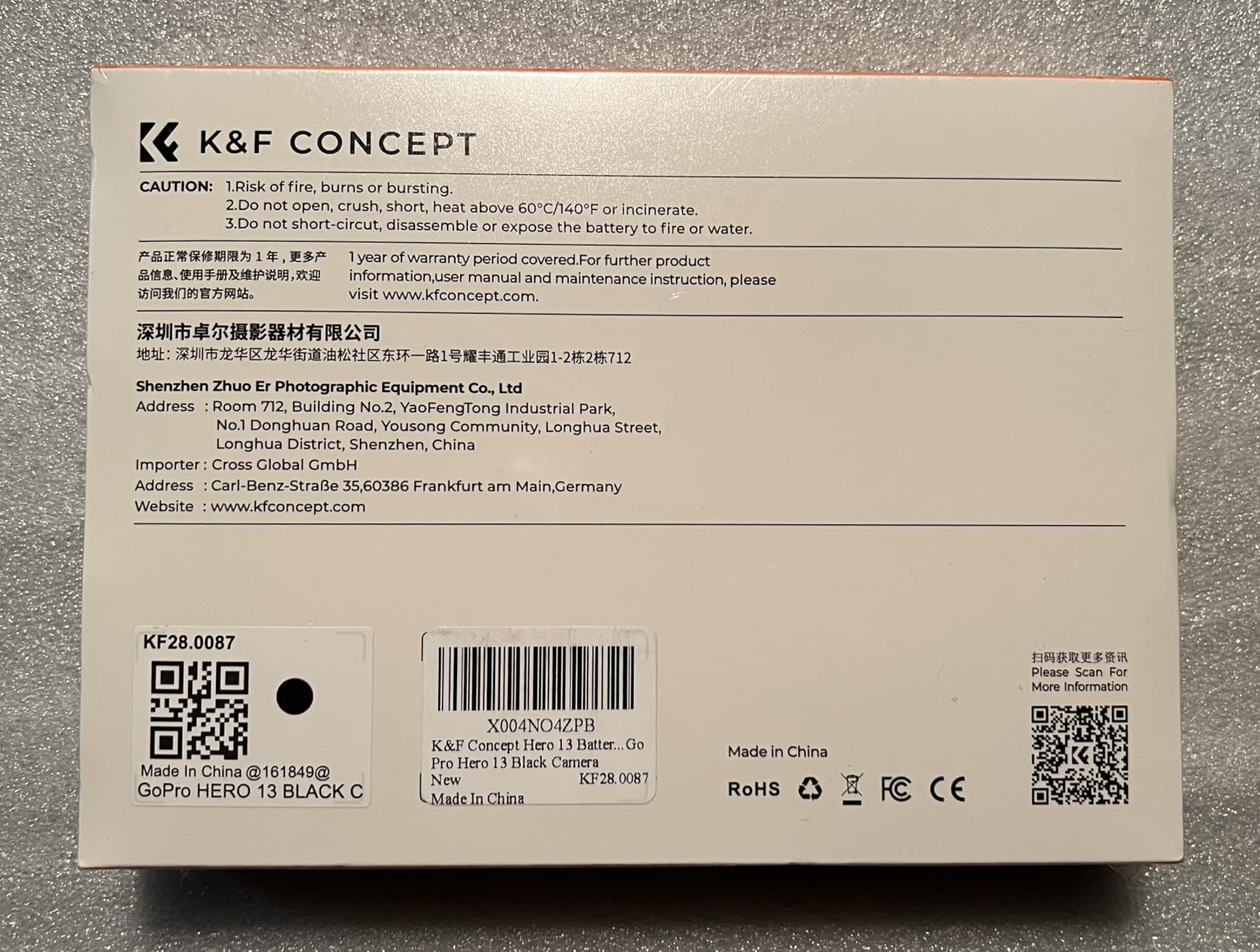
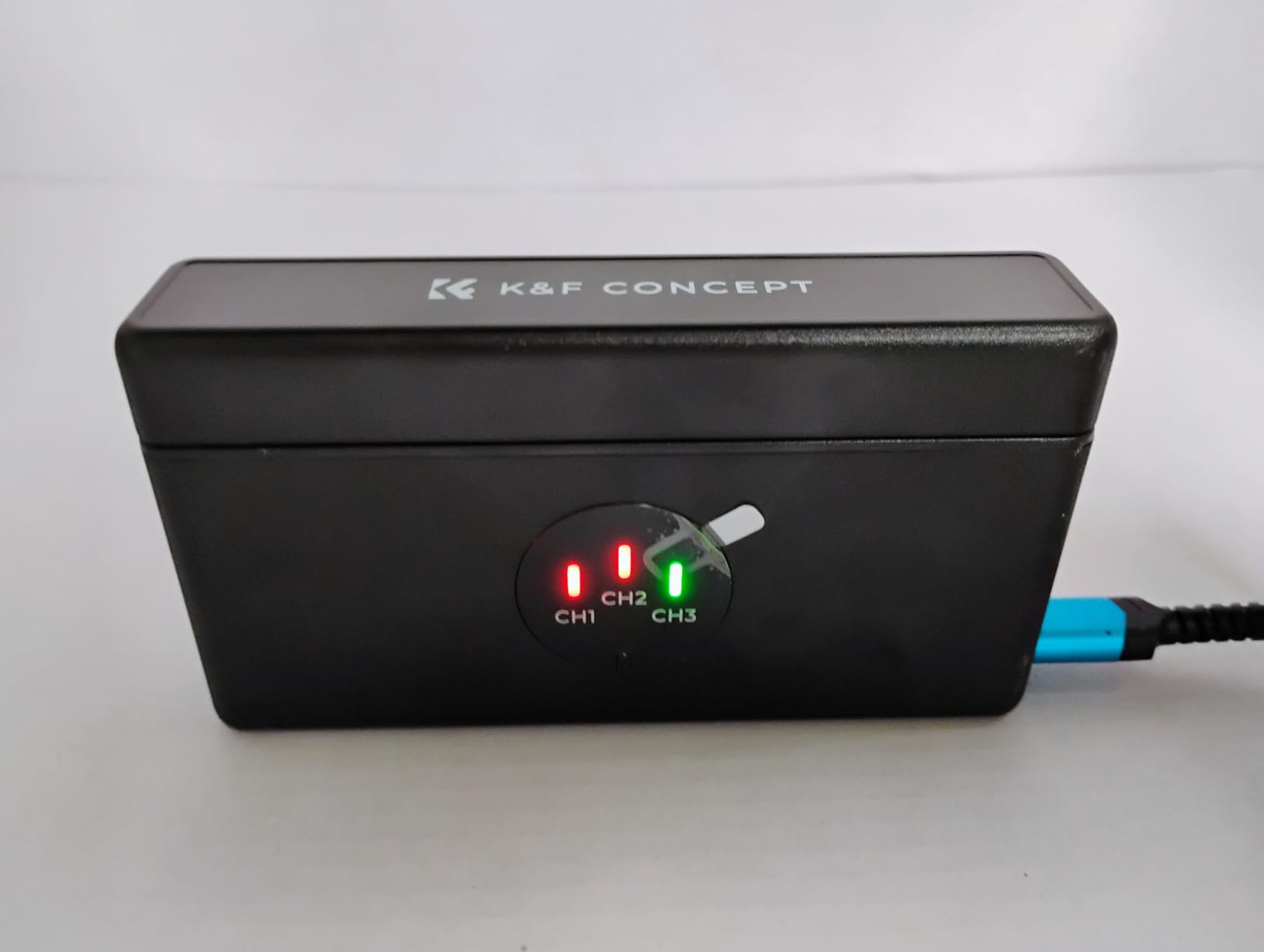
Tested runtime is listed at about one hour of 5.3K at 60fps, which is similar to OEM cells. The case charges three batteries simultaneously in roughly three hours, doubles as storage, and holds an SD card, and each slot has its own LED with red for charging and green for full. Certification covers CE, FCC and RoHS, with overcharge, short-circuit, overheat and surge protection listed.
Owners also note that these cells hold their charge better during long storage than their OEM packs, which matters if you kit cameras up months ahead of a winter season. That is a quieter benefit than runtime, and it is a real one for infrequent winter shooters.
Who this kit suits
This is the pick for HERO13 Black owners who want the highest cell count per purchase and need a charger that works in the field. The three-slot case means you can top up everything overnight and carry all three the next day, which is the rotation that actually removes cold anxiety.
It also works well if you already own official cells and want a charging solution that handles OEM and third-party together. Having a three-bay charger in the kit is arguably the more valuable half for multi-day cold work.
Where it falls short
Some owners report runtime somewhat shorter than the OEM battery, and others see charge levels misreported, with cells showing around 56 percent on the camera when full. A misread gauge in cold conditions is worse than an accurate one, so test a cell before you depend on it in the field.
There is also one 1-star review reporting the charger catching fire on first plug-in. That is an isolated report rather than a pattern, but it is worth charging a cell indoors the first time rather than over a sleeping bag in a tent. The kit is HERO13 Black only, and the three-hour charge cycle is the longest in this group, so plan around it.
7. K&F CONCEPT 2100 mAh 3-Pack for Osmo Action 3 to 6
K&F Concept 3-Pack 2100mAh Batteries & Charger for OSMO Action 6/5/4/3
3 cells at 2100 mAh and 3.87V
Rated -10C to 60C
Covers Action 3 to 6 and Osmo 360
1 year warranty
Pros
- Only Osmo set here with a published cold operating range
- 2100 mAh per cell exceeds the 1950 mAh OEM pack
- Spans four Action generations plus Osmo 360 in one purchase
- 3-in-1 case charges and stores plus holds two SD cards
Cons
- Third-party cells so real capacity may fall short of the 2100 mAh claim
- Single USB port limits speed when powered from a laptop
- Milder -10C floor than the DJI official pack
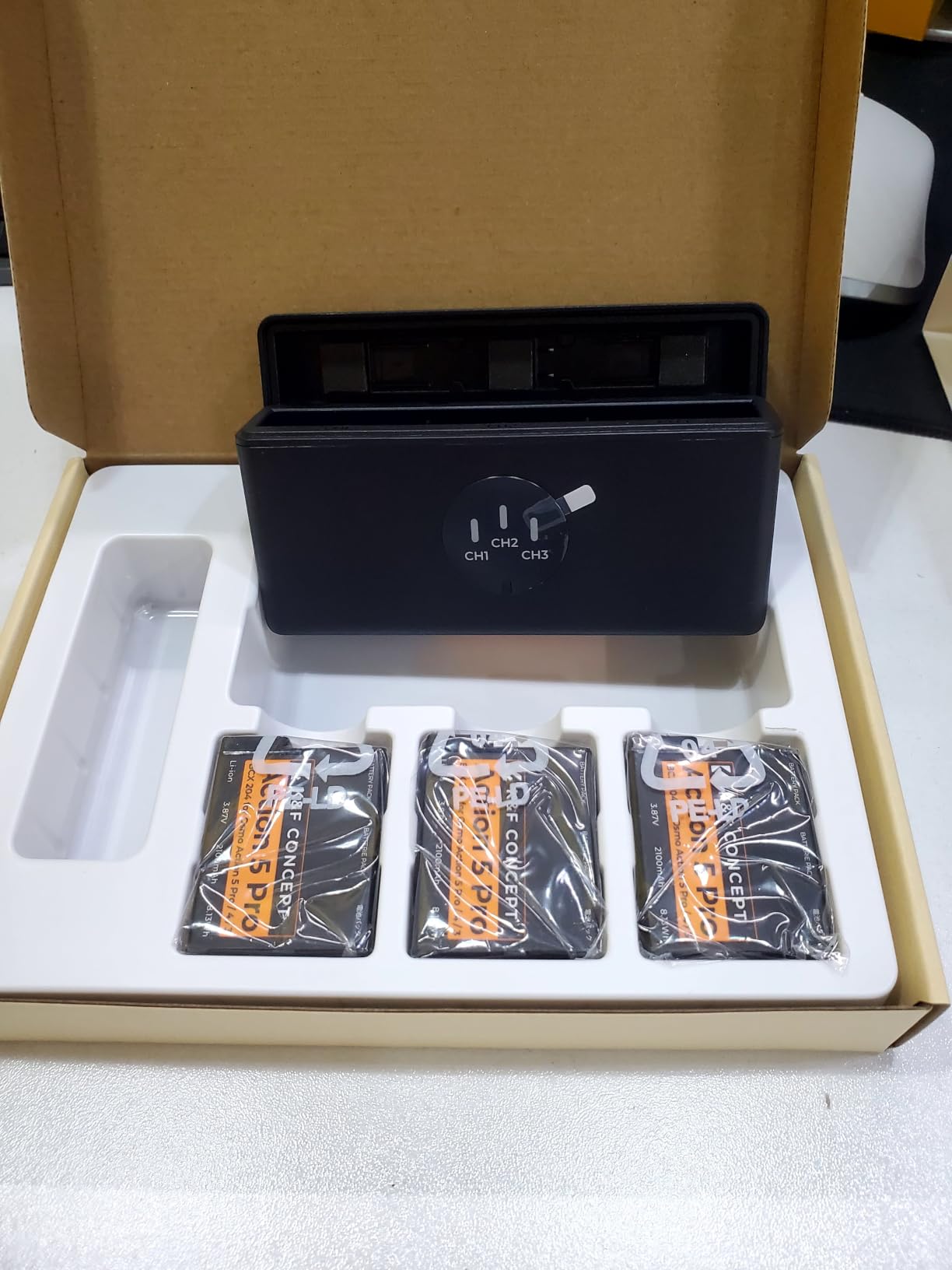
This is the only Osmo Action kit in the roundup with a published cold operating range, stated as minus 10C to 60C and specifically positioned for skiing, desert and underwater filming. That makes it the only third-party option here where the cold rating is documented rather than implied.
Capacity is the headline number: 2100 mAh per cell at 3.87 volts, which exceeds the 1950 mAh of the official DJI Extreme Battery Plus. Compatibility covers the Osmo Action 6, Action 5 Pro, Action 4, Action 3 and Osmo 360, plus the Xtra Edge, Edge pro and Sphra 360, so one purchase covers a lot of bodies.
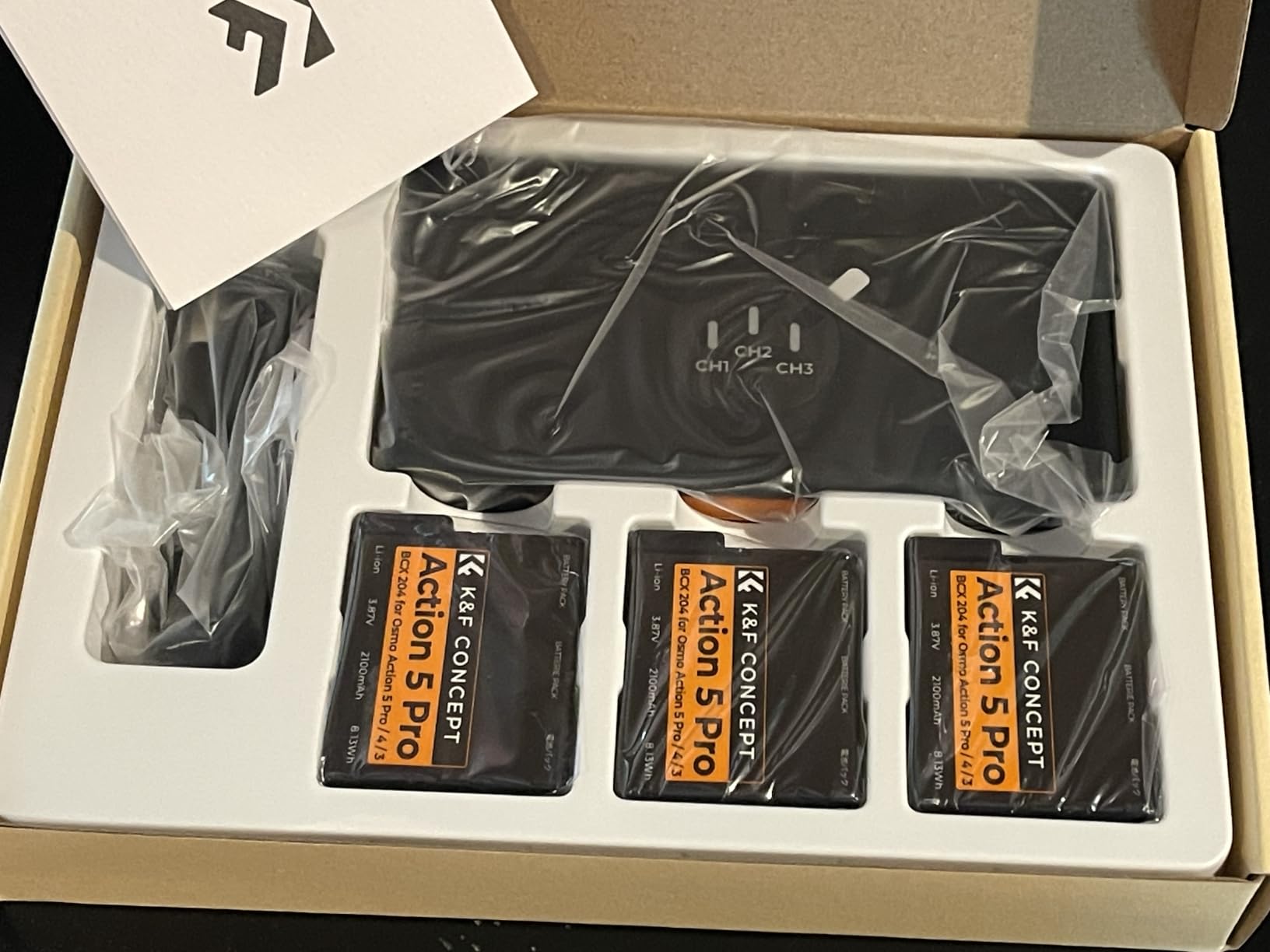
The case is genuinely useful in winter conditions. It charges up to three cells at once, stores them, and holds two SD cards, which keeps everything in one insulated object you can put in a jacket. Protection circuits cover overcharging, overheating and short circuits, and each slot has an LED indicator. A one-year warranty is included.
Charging runs from any standard 5V USB source, so a wall adapter, power bank, car or laptop all work, and a USB-C cable is in the box. That flexibility is worth more on a remote shoot than a faster proprietary charger would be. Owners generally focus on the capacity bump and the cross-generation coverage, with 76 percent five-star ratings.
Who this kit suits
Choose this if you run Osmo bodies across more than one generation, want the most capacity per cell available in this roundup, and shoot in cold but not polar-extreme conditions. Three cells plus a case is a complete rotation for a long day out.
For anyone working winter outdoor events, the three-bay case solves a specific problem. Instead of three loose cells scattered across a vehicle, you keep them together in one rigid, insulated container that you can warm with your hands between setups.
Where it falls short
The minus 10C floor is milder than the DJI pack rated to minus 20C, so if your winter work happens at serious altitude or on early-morning snowmobiling runs, the official pack has more margin. Capacity is also a manufacturer claim, and owners note real-world capacity may fall short, which is normal for third-party cells.
The case has a single USB port, so powering it from a laptop will be slow. If you are charging from a power bank in the field, budget more time than the three-slot layout suggests. And with third-party cells there is no direct manufacturer support if a pack fails.
8. FPZMAS 2500 mAh 2-Pack for Insta360 X4 with LED Charging Hub
2 Packs Replacement Batteries for FPZMAS Insta360 X4 Battery 2500mAh and LED USB Quick Battery Charger Hub, Replacement Battery Pack Charger for Insta 360 X4 (2 Batteries+ Charging Box)
2 cells at 2500 mAh
3-channel LED hub
USB-C input
Two cells in about 2 hours
Pros
- 2500 mAh per cell exceeds the 2290 mAh OEM X4 battery
- Two cells plus a three-channel LED hub in one box
- Hub also charges the original Insta360 battery
- Most owners report no battery warning or error on the camera
Cons
- An earlier revision triggered a non-OEM shutdown until a newer one arrived
- One 1-star review reports swollen and warped cells
- Some cells top out around 70 percent charge
- Future X4 firmware updates are not guaranteed
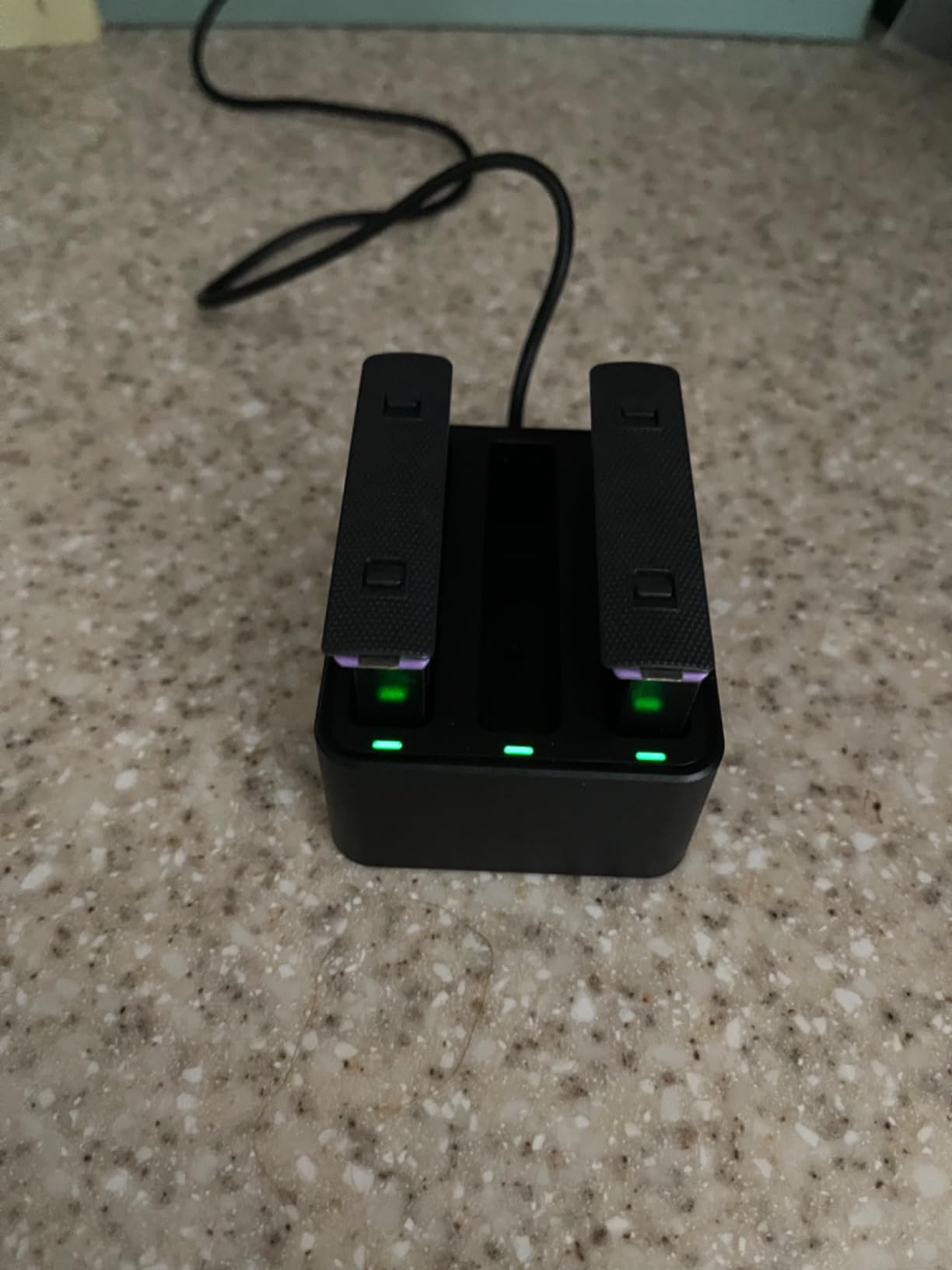
This is the capacity upgrade route into the X4. Each cell is rated at 2500 mAh against the official 2290 mAh pack, and the box includes two batteries and a three-channel LED charging hub, so you have a spare the day it arrives. The hub takes USB-C input, which means you can charge from a power bank on the trail rather than relying on mains.
Most owners report that the X4 accepts the cells with no battery warning or error, and the hub will charge the original Insta360 battery alongside the third-party ones, so it works as an addition to your kit rather than a replacement. Two cells reach full in about two hours. Protection circuits cover over-voltage, overcurrent, short circuit, high temperature and over-charge.
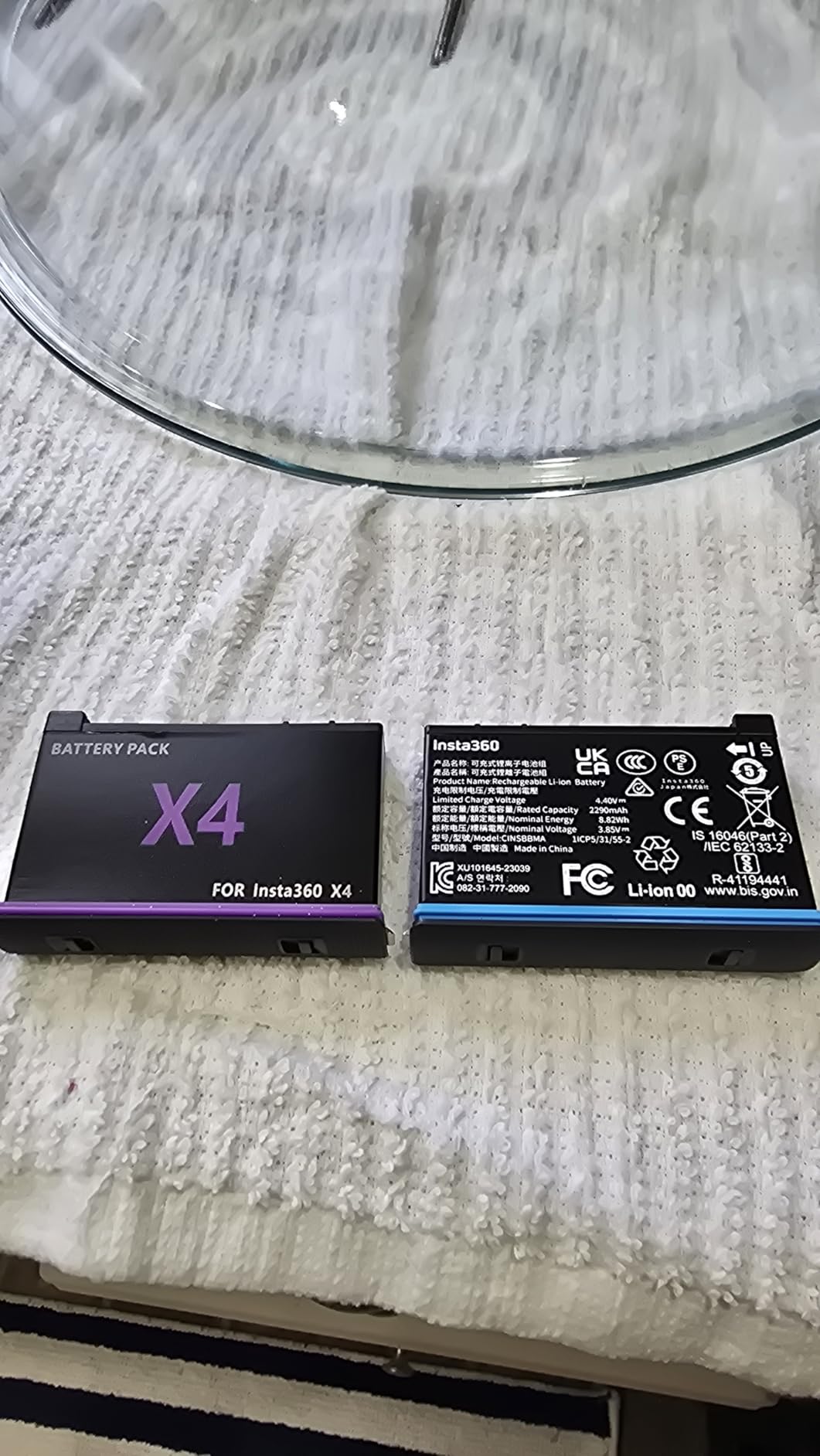
Two issues are worth knowing before you commit. An earlier revision of this battery triggered an Insta360 firmware non-OEM shutdown until the seller shipped a replacement, so the revision you receive matters and the seller’s responsiveness on that fix is repeatedly praised. A smaller number of buyers also report cells that stop near 70 percent charge, which you will notice on a long cold day.
The other caution is physical. One 1-star review reports swollen, warped cells that were difficult to remove from the camera. That is a small number of reports, but swelling is not a symptom to ignore, and it is worth storing cells you are not using in something protective rather than loose in a cold bag.
Who this 2-pack suits
This fits X4 owners who want more capacity per cell than the official pack offers and prefer a two-cell-plus-hub package to buying official cells one at a time. The USB-C hub is genuinely useful for multi-day work away from mains power.
It also makes sense as a top-up alongside the official Insta360 battery. Keeping one OEM cell and one higher-capacity cell in rotation gives you a fallback if the third-party pack misbehaves on a firmware update.
Where it falls short
Firmware compatibility is the real risk. A revision change already caused a shutdown on earlier stock, and future X4 updates are not guaranteed to behave. If you update your camera frequently, check that the revision you are buying is the current one before a trip where you will not have easy access to a replacement.
Reports of cells topping out around 70 percent and shorter-than-original runtime mean you should test both cells at room temperature before you rely on either in freezing conditions. Some owners also see runtime shorter than the original pack, and there is a one-year warranty rather than a lifetime one. A swelling report means any cell that no longer sits flat should be retired immediately.
How to Choose a Cold-Weather Action Camera Battery
Start with the operating temperature rating, because it is the only figure that speaks directly to your problem. A cell rated to minus 20C has more headroom than one rated to minus 10C, and the DJI pack in this group is the deepest published rating available for the Osmo platform. Treat a rating as the point where the cell still powers the camera reliably, not as a promise of full runtime.
Do not confuse capacity with cold performance. mAh tells you how much charge the cell holds in a warm room, and a larger cell with a weak cold rating is a worse winter choice than a smaller cell designed for low temperature. Read the mAh number and the temperature range as two separate scores, then decide which one your shooting style depends on.
Check fitment with the exact model before anything else. Battery confusion is the single biggest source of frustration in this category, so verify whether the pack fits HERO9 through HERO12 or the MAX, whether it covers Osmo Action 3 through 6 and the Osmo 360, and whether it is an X4 part. Some cells look interchangeable and are not, and a pack your camera will not recognise is useless in the cold.
Decoding support matters as much as the cell itself. A third-party battery that throws a battery warning or a decode error on your camera will cost you shots. Fully decoded cells, like the K&F CONCEPT HERO13 kit here, are the safer third-party option, and official packs avoid the problem entirely at a higher cost per cell.
Work out how many spares you need before you buy, and add one. A cold-rated battery extends the interval between swaps, it does not remove the need to swap. For a full day of skiing or snowmobiling, four cells is a realistic working number, and body heat does more for you than any cell chemistry. Keep spares inside your jacket rather than in a camera bag, and read our dual chargers for camera batteries guide for turning a spare rotation around fast at the end of the day.
Never charge a frozen cell. Let it reach room temperature first, in a warm dry place, before it goes onto a charger or back into a camera body. Charging a cell below freezing is a safety concern and also produces a poor, unreliable first fill, and the same rule applies on the way out.
Finally, know when to retire a cell. Swelling, a soft or warped body, a camera compartment that will not close properly, or a cell that no longer sits flat are all stop signals. Cold makes old cells look worse than they are, but swelling is mechanical damage, not a temperature effect, and a swollen cell should not go back in the camera or the charger.
If you are organising a longer winter trip, the supporting gear matters as much as the batteries. Warm hand warmers extend the time your fingers can operate a cold body, and if you are away from mains for days, our solar charger recommendations are worth a look for topping up a power bank between locations.
Frequently Asked Questions
How cold is too cold for a GoPro?
Below freezing is where standard action camera batteries start losing usable capacity quickly, and around minus 10C to minus 20C is where most general-purpose cells stop behaving predictably. The DJI Extreme Battery Plus is rated to operate from minus 20C to 45C, and the GoPro Enduro for MAX publishes a cold rating of 14F. Even cold-rated cells lose substantial runtime in deep cold, so treat the rating as the point where the cell still powers the camera, not as a guarantee of full capacity.
What type of GoPro battery is best for cold weather?
For a HERO13 Black, the official Enduro cells supplied with the dual charger kit are the safest choice because they decode natively and carry a limited lifetime warranty. For HERO9 through HERO12, the TELESIN 2-Pack covers the widest range of older bodies and publishes low-temperature test data. For a GoPro MAX, the official Enduro for MAX is the only cell here with a manufacturer-published cold rating. A fully decoded third-party pack works if you test it before you rely on it.
Why is my GoPro battery dying so fast?
Cold raises the internal resistance of a lithium-ion cell and lowers its discharge voltage, so the camera works harder and the estimated battery percentage falls faster than the true remaining charge. Ageing cells, a partial charge, or a cell that has been stored in a cold vehicle make it worse. A common reported symptom is video freezing while audio keeps recording, which happens when voltage collapses under load. Let a chilled battery warm toward room temperature before inserting it, and rotate spares inside your jacket rather than in a bag.
Which batteries are the best for extreme cold weather?
For Osmo bodies, the DJI Extreme Battery Plus at 1950 mAh has the deepest published operating range in this group, at minus 20C to 45C. The TELESIN Enduro 2-Pack claims power-on from minus 20C down to minus 60C and publishes low-temperature runtime figures for HERO9 to HERO12 bodies. The Ku0026amp;F CONCEPT 2100 mAh 3-Pack is the only Osmo set here with a published range, at minus 10C to 60C. Whichever you choose, carry more spares than you expect to use.
How long does the battery last on the GoPro Enduro?
In mild conditions, owners of the official Enduro report roughly 90 minutes or more per charge at high resolutions, and GoPro states an average 5.6 percent recording-time gain over the standard cell in high-performance settings. In cold, expect far less: one reviewer on the Enduro for MAX saw about 40 percent of warm-weather runtime at minus 15F. TELESIN publishes its own low-temperature test data of about 58 minutes at 4K60 and 82 minutes at 1080p30 for its comparable cells, so manufacturer figures are best treated as relative rather than absolute.
Can you charge action camera batteries in the cold?
Do not charge a cell that is below freezing. Let it warm to room temperature in a dry place first, then charge it. Charging a frozen or near-frozen lithium-ion cell is a safety concern and also gives you a poor, unreliable first fill. The same applies in reverse: give a warm cell time to acclimatise before you seal it into a freezing housing, and avoid leaving a camera or charger sitting in direct cold when you do not need to.
The Verdict: Which Battery to Buy for Winter in 2026
For Osmo Action bodies, the DJI Osmo Action Extreme Battery Plus is the pick, because it combines the deepest published operating range in this roundup with cross-generation compatibility and fast charging. For a GoPro MAX, the official Enduro is the only cell here with a manufacturer-published cold rating. For a HERO13 Black, the Enduro 2-Pack with dual charger solves spares and charging in one box.
For older HERO9 through HERO12 bodies, the TELESIN 2-Pack covers the most cameras and publishes its own low-temperature data, provided you accept more variability. For HERO13 owners who want the most cells per purchase, the K&F CONCEPT 3-Pack is fully decoded and charges three at a time. For Osmo capacity, the K&F CONCEPT 2100 mAh 3-Pack is the only set with a published cold range, and for X4 owners wanting more capacity than the official cell, the FPZMAS 2-pack with its USB-C hub works if you confirm the firmware revision first.
Whichever cell you land on, remember that battery choice sets the interval between swaps, not the number of swaps. Keep spares inside your jacket, let a frozen cell warm before charging it, retire any cell that swells, and buy one more than you think a winter day in 2026 requires.