
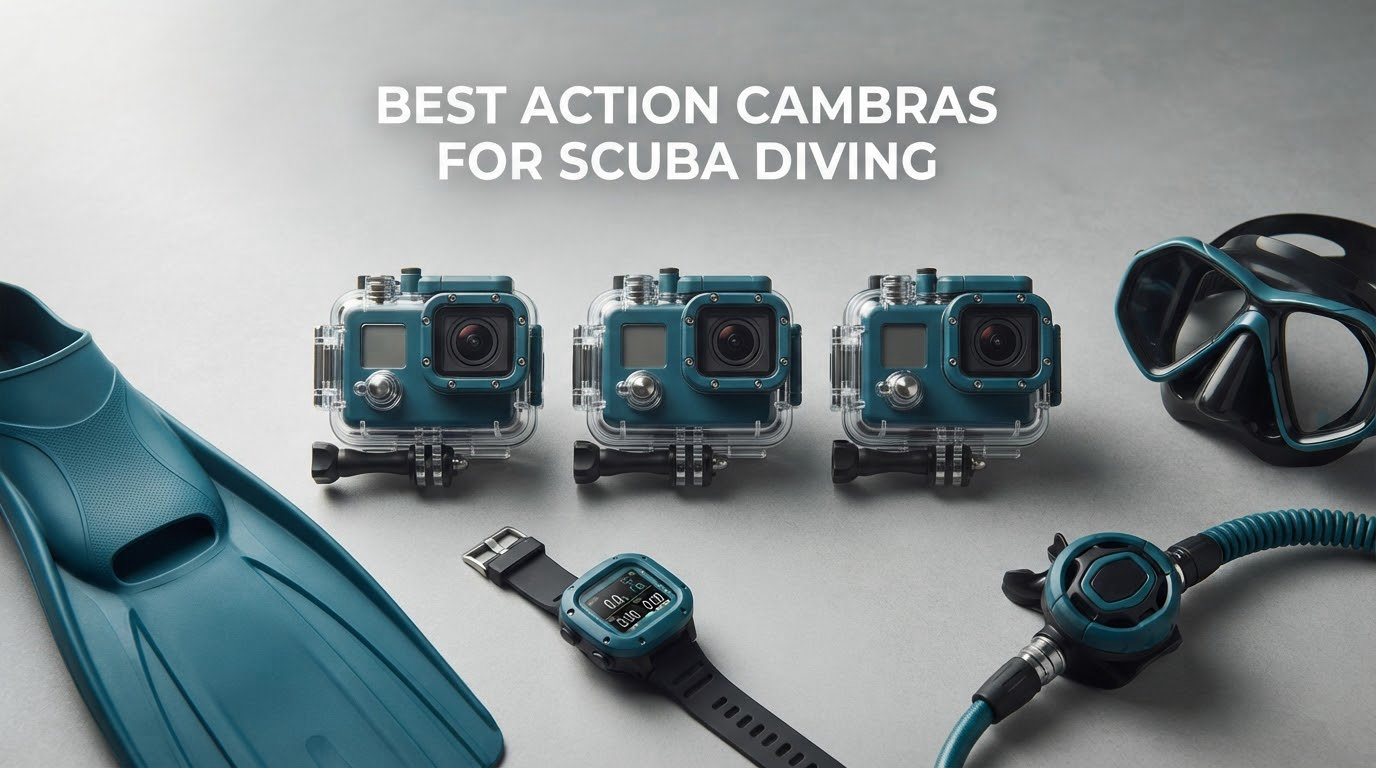
The best action cameras for scuba diving right now are the Insta360 X4 Invisible Dive Bundle for divers who want 360 footage, the DJI Osmo Action 6 for the deepest bare-body waterproof rating, and the GoPro HERO13 Black for the sharpest conventional single-lens video. The DJI is the only one here rated to 66 feet without any housing at all. Everything else in this list is a snorkeling-grade bare body or a housing-first camera.
Underwater is a genuinely different problem from filming on land. Red and orange wavelengths are gone within the first few meters, so footage comes back green or blue unless you correct for it, and the video light you are used to on land does nothing. Divers on r/scuba and ScubaBoard also point out that a bare waterproof rating is not the same thing as being flood-proof at depth, which is why most of them put a housing on even when they are staying shallow.
There is a second decision that comes before any brand, and it is the one most guides skip. Single-lens or 360? A single-lens camera gives you one clean, sharp 4K file you can edit normally and it is the right tool for a narrow wreck penetration or a reef wall. A 360 camera captures everything around you, including the diver behind, and lets you pick the framing later in an app, which is why it wins on liveaboards and shallow reef storytelling.
We compared eight cameras across both formats, weighing the bare depth rating against the maximum depth available with a dive housing, the sensor and lens behind it, stabilization behaviour in moving water, battery behaviour in the cold, and the mount and app ecosystem you will actually be stuck with. A few of these cameras are old enough that you can buy them well under the current listing, and two of them are cheap enough that most divers buy a spare. We have also flagged the case where a compact underwater camera beats all of them.
If you are still working out the basics, start with our guide to cameras for scuba diving, which covers the full range of underwater camera types before the action camera question even comes up.
Table of Contents
Top 3 Picks for Scuba Diving in October 2026

Insta360 X4 Invisible Dive Bundle
- 8K 360 video
- Dive case rated to 164ft
- 135 minute battery
- Invisible Selfie Stick

DJI Osmo Action 6 Essential Combo
- Waterproof to 66ft bare
- 8K on a large sensor
- Variable aperture
- 4 hour battery

Insta360 X3 360 Action Camera
- 5.7K 360 Active HDR
- Single-lens 4K mode
- Needs a dive case
- Compact body
Best Action Cameras for Scuba Diving in October 2026
| Product | Specifications | Action |
|---|---|---|
| Insta360 X4 Invisible Dive Bundle |
|
Check Latest Price |
| DJI Osmo Action 6 Essential Combo |
|
Check Latest Price |
 GoPro HERO13 Black GoPro HERO13 Black |
|
Check Latest Price |
| Insta360 X3 360 Action Camera |
|
Check Latest Price |
 AKASO V50 Elite 4K60 AKASO V50 Elite 4K60 |
|
Check Latest Price |
 AKASO EK7000 Pro AKASO EK7000 Pro |
|
Check Latest Price |
 AKASO Brave 4 AKASO Brave 4 |
|
Check Latest Price |
 TIMNUT C16 Action Camera TIMNUT C16 Action Camera |
|
Check Latest Price |
1. Insta360 X4 Invisible Dive Bundle – The Complete 360 Dive Rig
Insta360 X4 Invisible Dive Bundle – 8K Waterproof 360 Action Camera, 4K Wide-Angle Video, Invisible Selfie Stick, Removable Lens Guards, 135 Min Battery Life, AI Editing, Stabilization
8K 360 video
Waterproof to 33ft bare and 164ft with dive case
135 minute battery
256GB card included
Pros
- 8K 360 capture stays clean when you crop into the file
- FlowState stabilization and 360 degree horizon lock
- Longest rated runtime in this group at 135 minutes
- Removable screw-in lens guards
- Bundle includes the Invisible Dive Case and a floating grip
Cons
- Reframed output drops to 2.7K rather than full 8K
- Auto exposure blows out bright conditions
- X3 batteries are not compatible with the X4
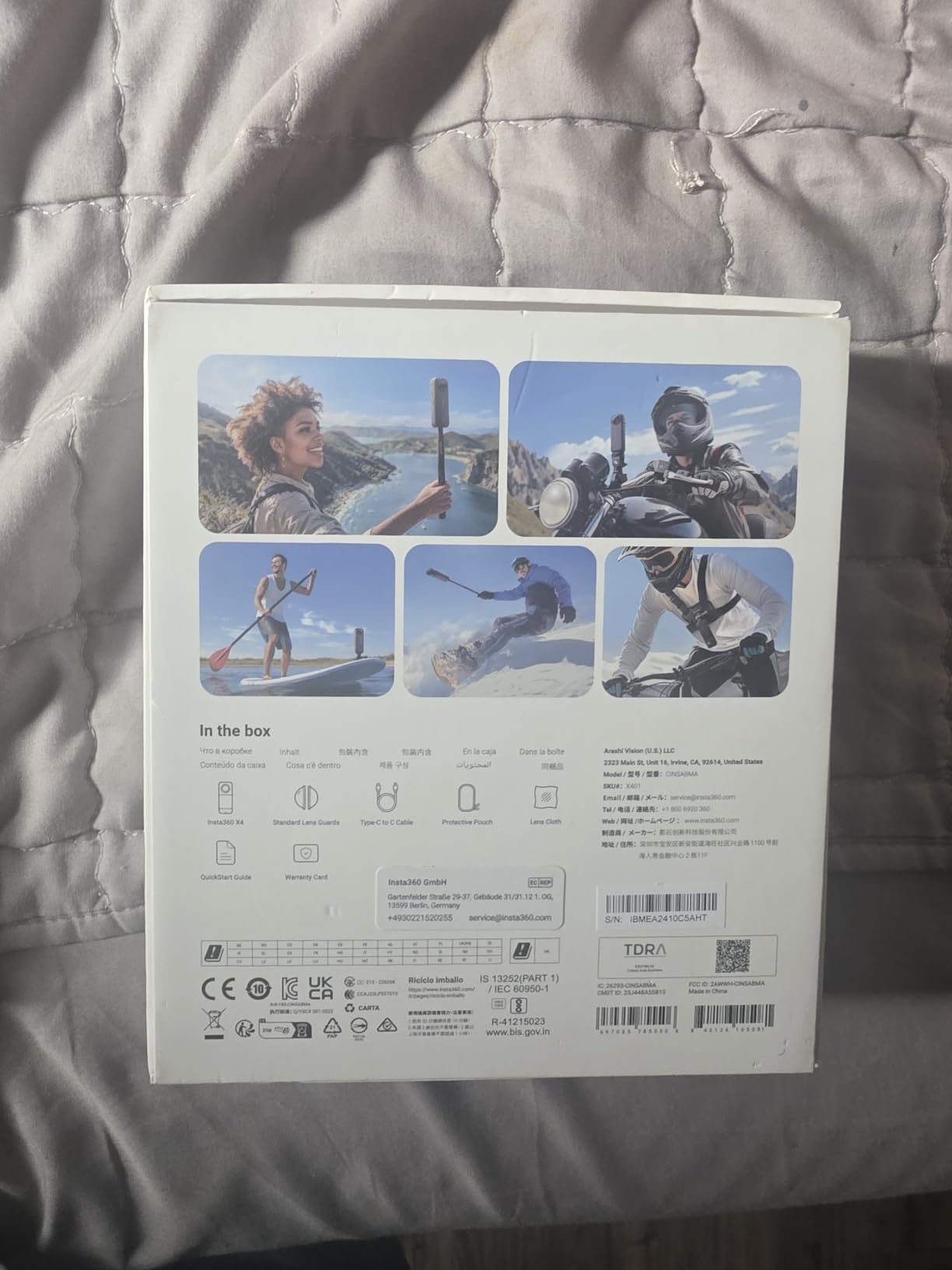
The X4 bundle is the only package in this list that arrives dive-ready. It includes the Invisible Dive Case, a floating hand grip, a 256GB microSD card and the invisible selfie stick, so there is nothing else to buy before your first trip. For a diver who has never owned a 360 camera, that removes the single biggest reason people never start: the accessory list.
Both lenses sit behind removable screw-in guards. On a dive that matters more than it sounds, because a rock shelf or a wreck frame will find the one piece of glass you cannot see. Owners report almost no added distortion from the guards, and the 8K 360 file holds up when you crop into it, which is what makes reframing a genuine second pass rather than a compromise.

The spec sheet matters more underwater than it does on land. Sensor size here is 1/2-inch with a 2.5-inch Gorilla Glass touchscreen, and the rated runtime is up to 135 minutes per charge, which is the longest figure in this group. Cold resistance down to -4F is a spec you will actually use if you are diving a North Atlantic liveaboard in the shoulder season.
Framing after the fact is the reason to buy a 360 camera. Record a pass over a reef and choose afterwards between a wide 8K crop, a vertical clip for a reel, and a view that includes your buddy behind you. On a technical dive, that also means you never have to choose between shooting the penetration and shooting the team.
What you should check before you buy
Decide whether you are comfortable editing 360 footage. The reframed output is 2.7K, not 8K, so the 8K file is your crop source rather than your delivery file. If you want a finished clip you can upload without opening desktop software, this is more work than a single-lens camera.
Check that you can live with the app. Owners report the Insta360 mobile app lagging behind the desktop software, and occasional lock-ups or colour banding during fast playback. Buy the batteries and cards you need as part of the kit, because X3 batteries do not fit this body.
Where it falls short for divers
The bare body is rated to 33 feet, so a recreational diver going to 60 feet on a reef is already in housing territory. The dive case handles that, but the selfie stick adds bulk that some divers find annoying on a crowded tray mount.
Auto exposure blows out bright scenes, which shows up on shallow tropical dives in full sun. Lock exposure manually before you descend and the problem largely disappears.
2. DJI Osmo Action 6 Essential Combo – The Only One Rated to 66 Feet Bare
DJI Osmo Action 6 Essential Combo, 8K Waterproof Action Camera
Waterproof to 66ft bare
8K on a 1/1.1 inch sensor
Variable aperture f/2.0 to f/4.0
Up to 4 hours per battery
Pros
- Deepest bare-body waterproof rating in this group at 20m
- Large 1/1.1 inch square sensor with a variable aperture
- RockSteady 3.0 and 360 degree HorizonSteady hold the horizon in chop
- Up to four hours of recording per battery
- 50GB of internal storage removes card anxiety
Cons
- Fixed wide lens with no interchangeable lens options
- Built-in screen is a basic non-touch 400x712 display
- Essential Combo includes only a single battery
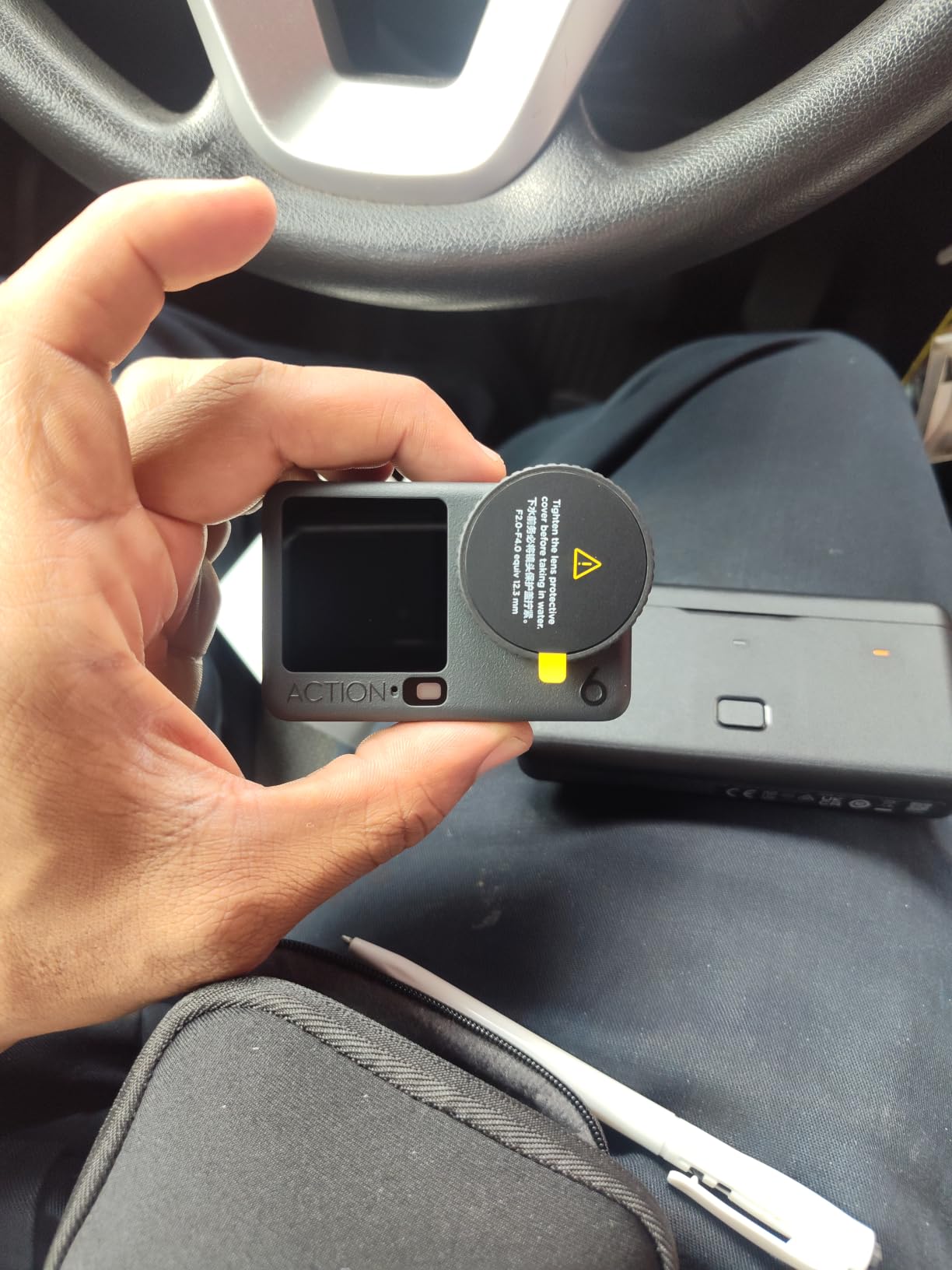
This is the camera the diving community keeps coming back to, and the reason is one number. Waterproof to 20 metres without a case means a recreational diver on a 60-foot reef dive can put the camera in their BC or on a tray and start filming. No housing, no seals to inspect, no second purchase to budget for.
A r/scuba poster running the Action 5 Pro described it as far superior to the GoPro underwater and moved to a third-party housing to use it. ScubaBoard threads carry the same sentiment from long-time GoPro owners. That is a real community signal, and it lines up with what the hardware suggests: a 1/1.1-inch square sensor is a genuinely large sensor for this class of camera.
The variable aperture from f/2.0 to f/4.0 is the underrated feature for diving. Wide open you get clean low-light frames on an evening or night dive; stopped down you have more depth of field for a close subject. Most action cameras give you one fixed aperture, so you are choosing between brightness and sharpness all dive.
Stabilization is the other reason it suits moving water. RockSteady 3.0 plus RockSteady+, HorizonBalancing and HorizonSteady work together to keep the horizon level during a current-heavy drift or a boat ride at the end of the day. The rated runtime of up to four hours per battery means a full multi-dive day without a swap, which no other camera here claims.
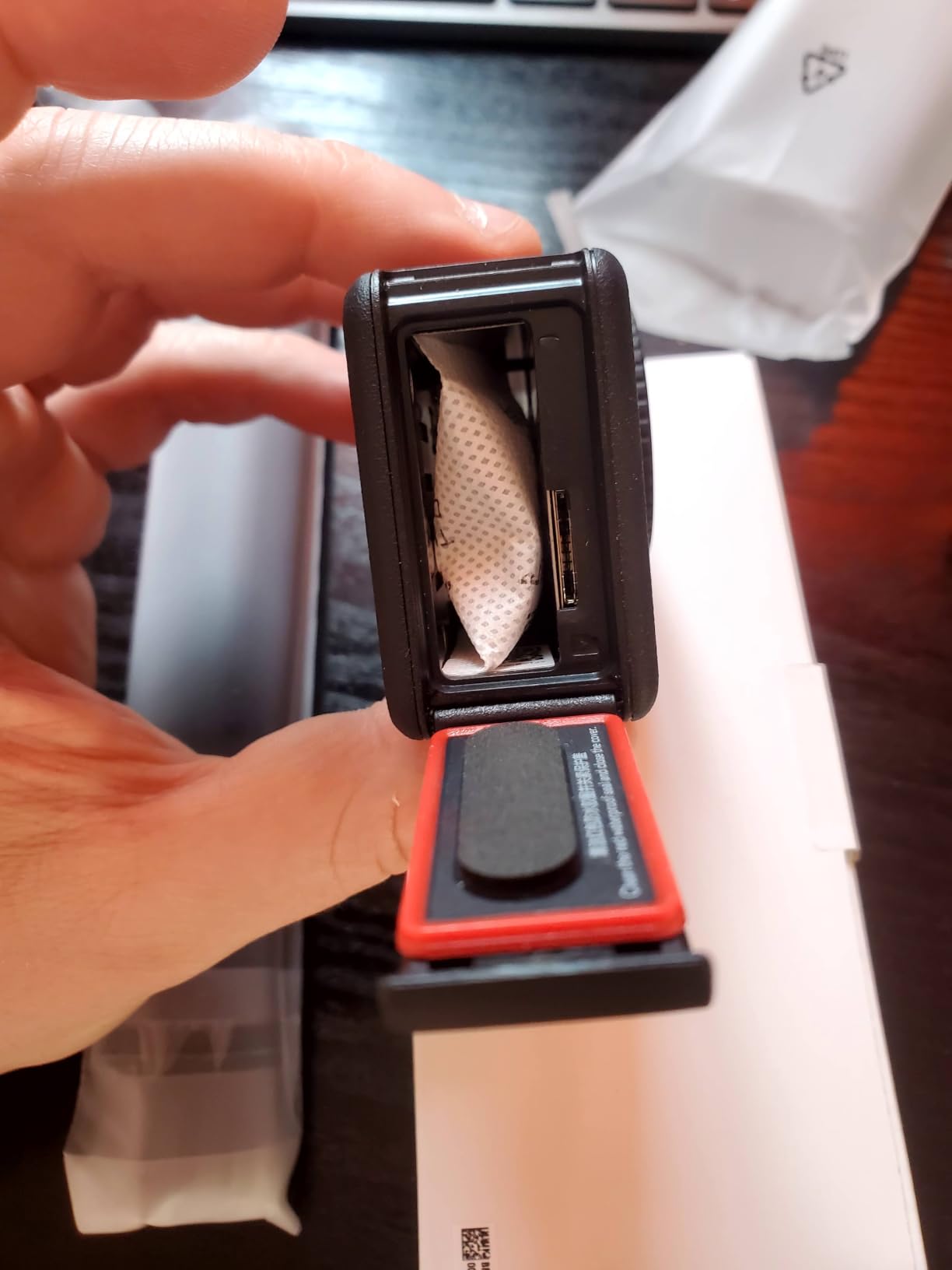
Fifty gigabytes of built-in storage means you can start the first dive without waiting for a card, and expand with microSD when you need to. Cold-resistant design keeps the battery usable in cold water, and gesture and voice control let you start recording without touching the camera with cold hands.
What you should check before you buy
Anything past 20 metres still needs a dive housing, so technical divers past 40 metres are buying a second purchase here too. The fixed wide lens cannot be swapped, so there is no macro or ultra-wide module to add later.
Read the package contents. The Essential Combo includes one Extreme Battery Plus and a dual-direction quick-release mount. For a full day of diving you will want to add a second or third battery regardless of the four-hour claim, because cold water and continuous recording both cut into it.
Where it falls short for divers
The built-in screen is a basic non-touch 400×712 display. You set your dive profile and colour mode on the phone, and a gloved hand cannot drive the menu in the housing.
App-based editing adds friction when you want a quick reframe. It is a workflow penalty rather than a quality one, but it is real when you are tired at the end of a three-dive day.
3. GoPro HERO13 Black – The Sharpest Single-Lens File
GoPro HERO13 Black – Waterproof Action Camera with 5.3K60 Video, 27MP Photo + Compatability with HB-Series Lenses
5.3K60 video
27MP stills
Waterproof to 33ft bare
157g body
Pros
- Crisp 5.3K60 capture with strong detail retention
- Waterproof to 10m with no housing for recreational diving
- Auto-detects HB-Series lenses and filters and adjusts settings
- Rugged beat-resistant body with a water-repelling lens cover
- Enduro battery included
Cons
- Bare waterproofing limited to 33ft so deeper dives need a housing
- Shorter battery life than the larger-capacity cameras on this list
- Front display is FHD rather than a higher-resolution touchscreen
The HERO13 Black is the most conventional answer on this list and the one most divers buy twice, once for diving and once for everything else. A 4.4 rating across more than a thousand reviews reflects a camera people are broadly happy with rather than one that wows anyone.
Image quality is where it earns its place. A user on r/gopro who reviewed four recent action cameras underwater said the results surprised them and that the HERO13 had the best image quality of the group. The 5.3K60 mode is listed as carrying 91 percent more resolution than 4K, and that headroom is what you have left after stabilising and cropping a moving shot.
Twenty-seven megapixel stills come off the same body, so the camera is not video-only. On a shallow reef in good light the stills are genuinely usable, and the HB-Series lens system auto-detects an attached Ultra Wide, Macro, ND or Anaphoric lens and adjusts settings for it, which takes a lot of guesswork out of changing glass on a boat deck.
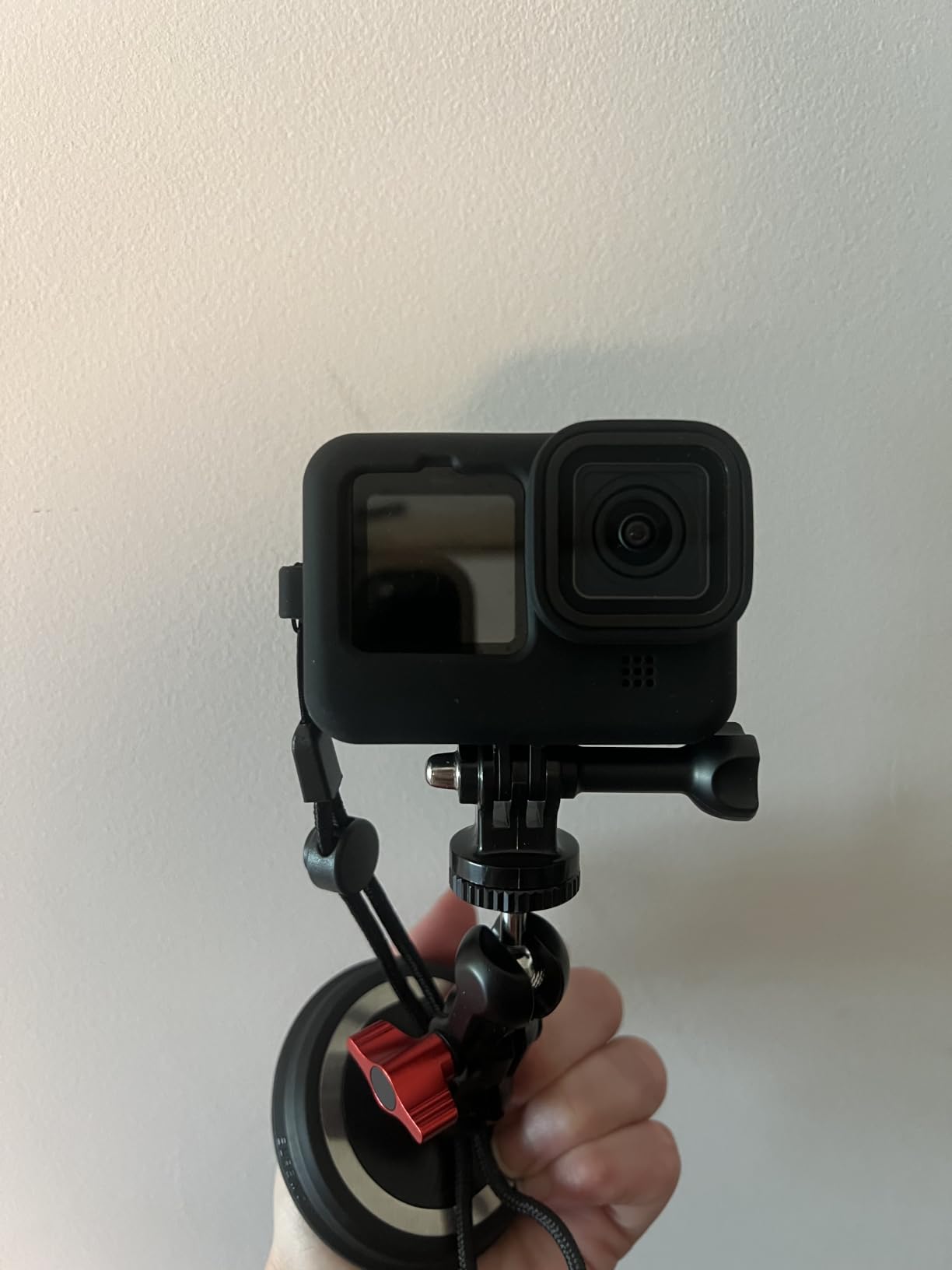
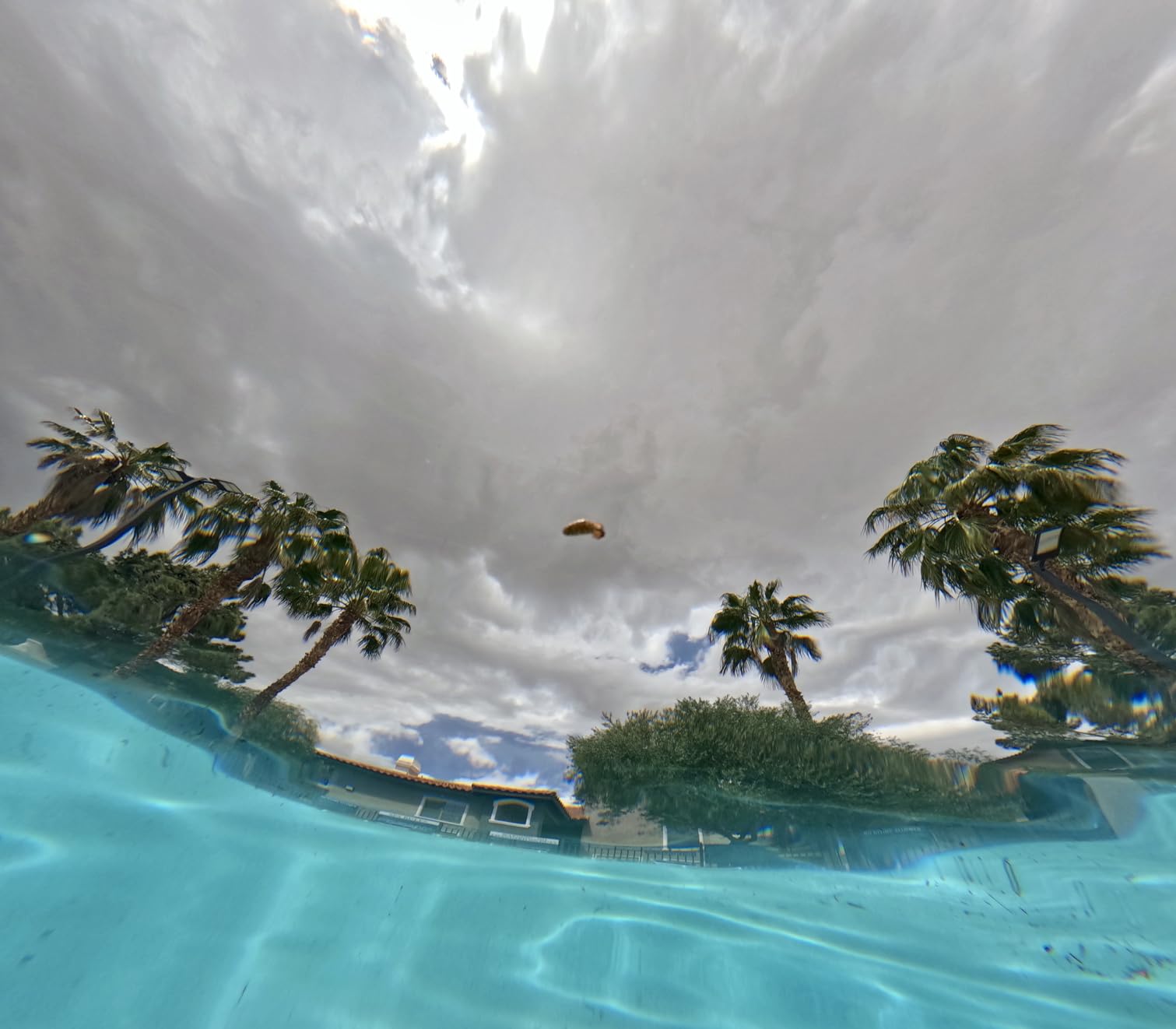
Two small details matter more underwater than the brochure suggests. The water-repelling lens cover reduces flare from the water film that otherwise appears on the front element, and the body is rated to 33 feet bare, so a snorkelling trip and a shallow reef dive need no housing at all. Enduro battery is included, which is what you want in cold water.
The wide-angle lens and 5.3K60 combination also give you the flexibility to slow things down. Burst slo-mo up to 13x, plus 5.3K 4x slo-mo clips, means a passing shark or a mantis shrimp strike can be replayed in slow motion, which is the kind of shot that never works when you only have 30 frames per second.
What you should check before you buy
Check your real maximum depth. Recreational scuba tops out around 60 feet and this body stops at 33, so most divers who film past the first few metres are buying a GoPro dive housing. Get it in the same trip, and keep the anti-fog inserts in the kit bag.
Check your editing workflow. On-screen menu navigation and the app-based workflow add friction for quick adjustments, and that is a genuine annoyance when you want to change a setting between dives.
Where it falls short for divers
Battery life is the biggest gap. The rated 79 minutes is the shortest in this group, and in cold water on a long deep dive you should expect to swap once per day at minimum.
The front display resolution is FHD, which is fine for framing a shot but not a highlight reel. A fixed wide lens also means no macro option, and macro is the one thing divers keep asking this camera for.
4. Insta360 X3 360 Action Camera – The Cheapest Way Into 360 Dive Footage
Insta360 X3, 360 Action Camera with 5.7K 360 Active HDR Video, 4K Single-Lens Camera, Waterproof, FlowState Stabilization, 2.29″ Touchscreen, AI Editing, for Motorcycle, Wintersports and Vlogging
5.7K 360 Active HDR video
4K30 single-lens mode
200g body
Dive case required
Pros
- 360 Active HDR holds usable detail in low-contrast underwater scenes
- Reframe in the app after the dive
- FlowState stabilization and horizon lock
- Works as both a 360 and a conventional 4K camera
- Compact and light enough for a helmet
- mask strap or hand grip
Cons
- Requires a dive case for anything beyond shallow immersion
- Reframed output drops below the native 5.7K
- 2.29-inch screen is smaller than newer rivals
The X3 is the value pick because it does the one thing a 360 camera does for diving and it does it well. Owners rate the 360 Active HDR capture as usable in low-contrast underwater scenes, which is exactly the failure mode of most footage shot on a wreck or in green water.
You also get a conventional camera in the same body. Switch it to single-lens mode and record 4K at 30 frames per second, or use 170 degree MaxView at 2.7K60 when you want the widest single-lens look. For a diver who is not sure whether they want 360 at all, that dual mode makes the decision reversible.
At 200 grams and 2.29 inches on the touchscreen, it is easy to mount on a helmet, a mask strap or a hand grip without getting in the way of anything. If you are still deciding whether the camera suits a surface-interval camera, our snorkeling action camera guide covers the shallow-water use case in detail.
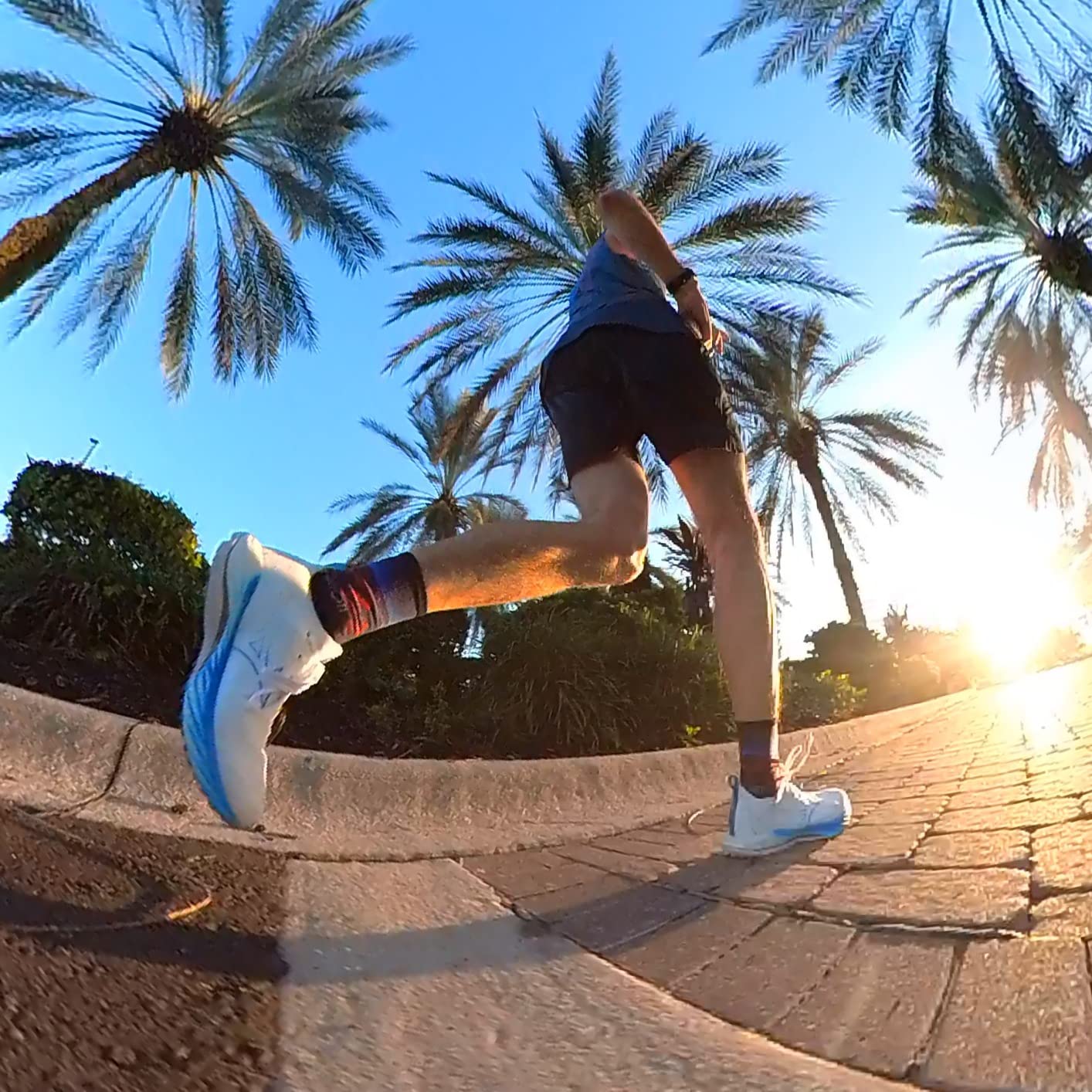
Storage is the practical detail. There is minimal in-body storage, so every clip has to be offloaded to a card, and the high-speed modes want a V90-class card or faster. That is a cost and a bit of admin, but it also means no risk of filling an internal buffer halfway through a dive.
What you should check before you buy
Budget for a dive case. Unlike the X4 bundle, this does not include one, and the bare body is not built for a real dive. Add the case to the purchase, plus anti-fog inserts, before the first trip.
Compare the total against the X4 bundle. The X3 is the cheaper way into 360, but the X4 bundle includes the dive case and a card, which is often most of the difference once you are ready to actually dive.
Where it falls short for divers
Reframed 360 output drops resolution below the native 5.7K, so the big number on the box does not describe your finished file. On a dark dive that difference is more visible than the specs suggest.
The 2.29-inch screen is small, and high-speed modes need a fast card. Neither is a dealbreaker, but both add friction on a boat deck with cold hands.
5. AKASO V50 Elite – 4K60 Without the Premium Price Tag
AKASO V50 Elite 4K60fps Action Camera with 256GB MicroSD Memory Card Bundle
4K60 recording
131ft waterproof case
20MP stills
Two batteries and 256GB card
Pros
- 4K60 at a fraction of the price of premium action cameras
- Waterproof case rated to 131ft handles scuba use
- 20MP photos with good color reproduction
- Large accessory kit and two batteries included
- Rubberized body gives a secure grip with wet or bare hands
Cons
- Video and audio quality trail a GoPro in low light and fast movement
- Housing heavily muffles recorded audio
- 4K60 needs a U3 or V30 card or the camera shuts off mid-recording
The V50 Elite exists because 60 frames per second at 4K used to be a premium feature. At 51 grams with a 1/3-inch sensor and a 131-foot waterproof case in the box, it is the most sensible way to get smooth 4K60 footage on a dive if you are not chasing stabilisation perfection.
Owners treat it as a budget alternative that gets the fundamentals right, and they specifically report good snorkeling and scuba footage through the 131-foot case. Colour reproduction is called out as a strength, with 20MP photos and results described as vivid on a 4K television. For reef and shallow-water work that is a reasonable place to land.
The bundle is generous for the money. A 256GB microSD card, two batteries and a full accessory kit are in the box, which removes the most common first-buy complaint about budget cameras, where you have to buy a card before the camera is useful.
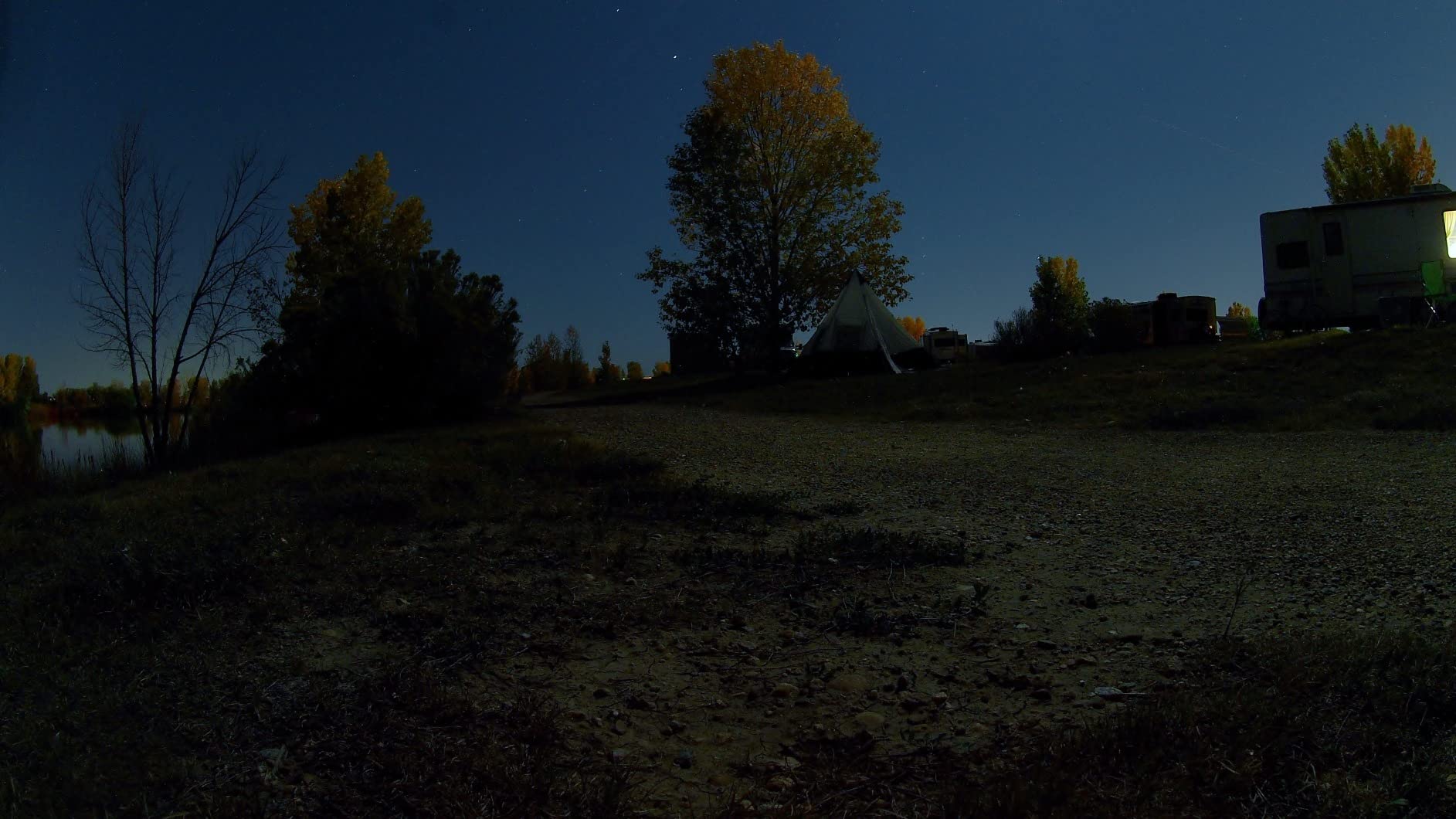
Adjustment is useful underwater because it lets you trade fisheye distortion for a narrower view when you are inside something. Combined with voice control for starting a recording hands-free, it takes some of the fumbling out of pressing buttons through a housing with gloves on.
What you should check before you buy
Buy a U3 or V30 card if you have not already got one in that class. Recording 4K60 on a slower card causes the camera to shut off mid-recording, and losing a clip at the surface is a bad way to end a dive.
Expect the audio to be quiet. The housing heavily muffles or mutes recorded sound, so plan on this as a video camera rather than a talking-head camera.
Where it falls short for divers
Low light and fast movement are where it gives ground against a GoPro or a DJI. On a night dive or a deep blue-water drift, the electronic stabilisation and the smaller sensor both show.
The companion Android app is poorly rated and largely unnecessary, and firmware occasionally reports recording without saving the file. Offload your clips before you trust the card.
6. AKASO EK7000 Pro – The Easiest First Dive Kit
AKASO EK7000 Pro 4K30 Action Camera with Touch Screen EIS 131FT Waterproof Underwater Camera 5X Zoom Remote Control with Waterproof Floating Hand Grip Bundle and Carrying Case Accessories Kit Bundle
4K30 video and 20MP photos
131ft waterproof case
Two 1350mAh batteries
Floating grip included
Pros
- Lowest entry cost with 4K30 and 20MP stills
- Waterproof case rated to 131ft for diving
- Two long-life 1350mAh batteries plus a dual charger
- Waterproof floating hand grip is a real safety plus
- EIS keeps footage steady when filming in motion
Cons
- 4K is limited to 30fps with no high-frame-rate option
- Digital EIS cannot fully compensate for heavy hand movement
- Small 2-inch screen makes menu changes in the housing awkward
If you are on a Discover Scuba course or taking your first real trip, this is the camera to learn on. The 131-foot waterproof case does the job, the two 1350mAh batteries give up to 140 minutes each, and the floating hand grip in the bundle is a genuine safety feature rather than a gimmick.
Battery quantity matters more than any spec on a learning camera. The dual charger means you can swap a battery between dives while the other is charging, which removes the stress of watching a battery bar during a 40-minute dive. It is the first thing we would tell a new diver to prioritise over a resolution upgrade.
The 5x digital zoom is not something to lean on, but a 20MP sensor and 4K30 video produce perfectly good reef and shallow-water clips, and EIS keeps things steadier than a phone held in one hand.
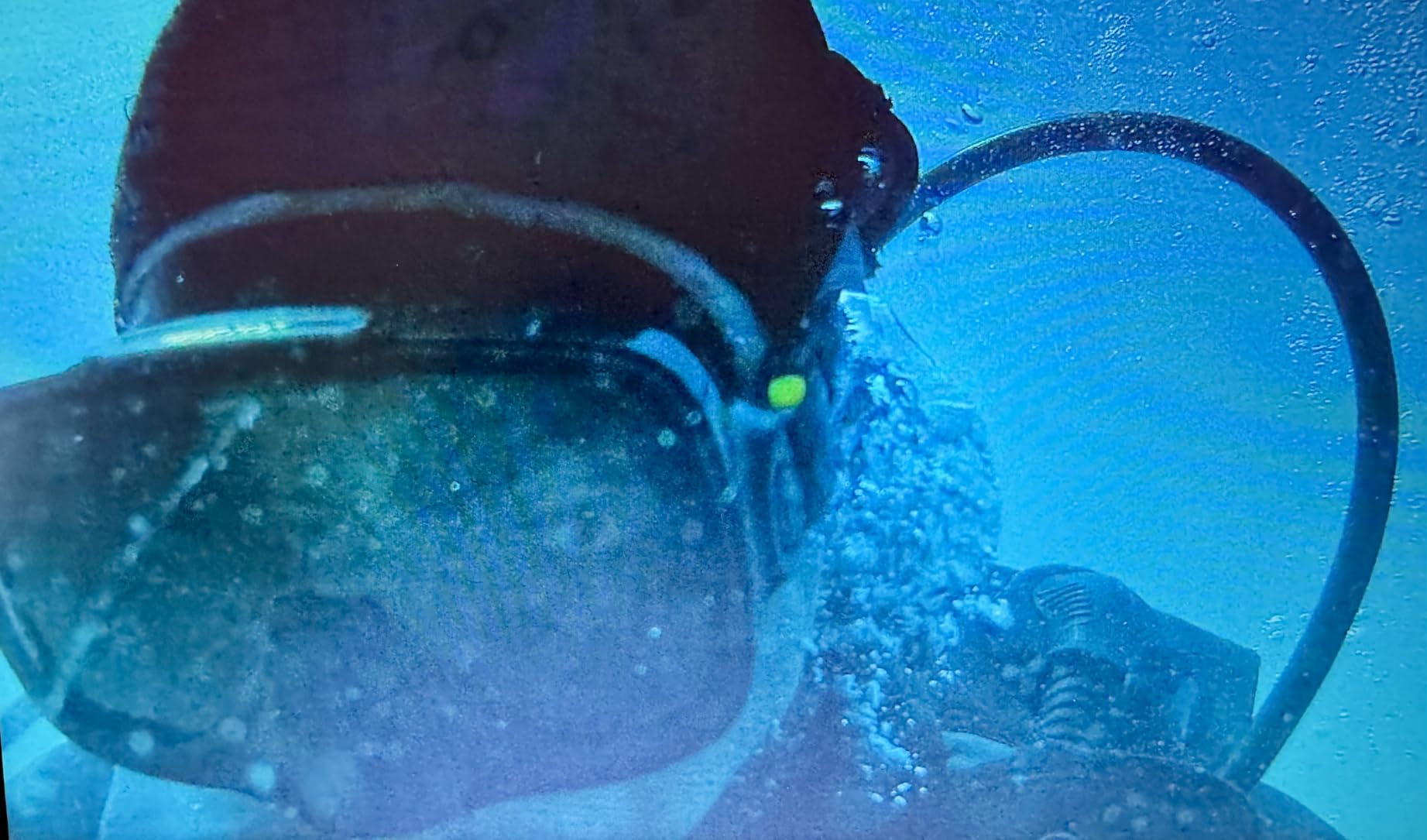
The remote control wristband is more useful underwater than it looks. Starting a recording on a selfie stick with a gloved hand, or when the camera is behind you, is a two-press problem solved.
What you should check before you buy
Be clear that 4K is 30 frames per second only. If your plan is slow-motion footage of passing marine life, you need a camera that can record above 60 frames per second in 4K.
Check the 2-inch screen. It is small, and changing settings through the housing with gloves on is awkward, so set your resolution and mode before the boat leaves the dock.
Where it falls short for divers
Digital EIS cannot fully compensate for heavy hand movement underwater, so mount it rather than holding it wherever the shot is interesting.
The fisheye lens produces noticeable edge distortion in tight quarters, which matters in a wreck interior. The bundled accessories are also basic compared with the higher-tier models.
7. AKASO Brave 4 – Dual Screens and the Largest Review Base Here
AKASO Brave 4 Action Camera 4K30 Ultra Hd Waterproof Underwater Camera
4K30 video and 20MP photos
131ft waterproof housing
Four view angles
Dual screens
Pros
- Affordable entry to 4K underwater shooting with a 131ft housing
- Dual screens make framing easy without removing the camera
- Selectable view angles help control fisheye distortion
- Two batteries plus a dual charger so you can swap while charging
- Large accessory bundle and works with GoPro-style mounts
Cons
- Clumsy button-driven control flow
- Weak low light performance and grainy photos at higher ISO
- Digital-only 5x zoom barely beats cropping
With 17418 reviews, the Brave 4 has the largest installed base of anything on this list, and that matters in a niche like underwater video. When a housing seal, a button or a menu quirk develops a problem, there is a large body of owners who have already worked out the workaround.
The dual screens are the reason to like it. A 2-inch rear screen and a 0.96-inch front screen let you frame a shot without pulling the camera out of the housing, turning the housing around, and hoping the seal held. On a shallow dive where you are not using a housing, the front screen makes handheld filming far more usable.
Four selectable view angles at 170, 140, 110 and 70 degrees let you trade wide-angle context for a tighter frame. In a wreck penetration or against a coral head, dropping from 170 to 110 degrees removes a lot of edge distortion and gives you a subject that fills the frame.
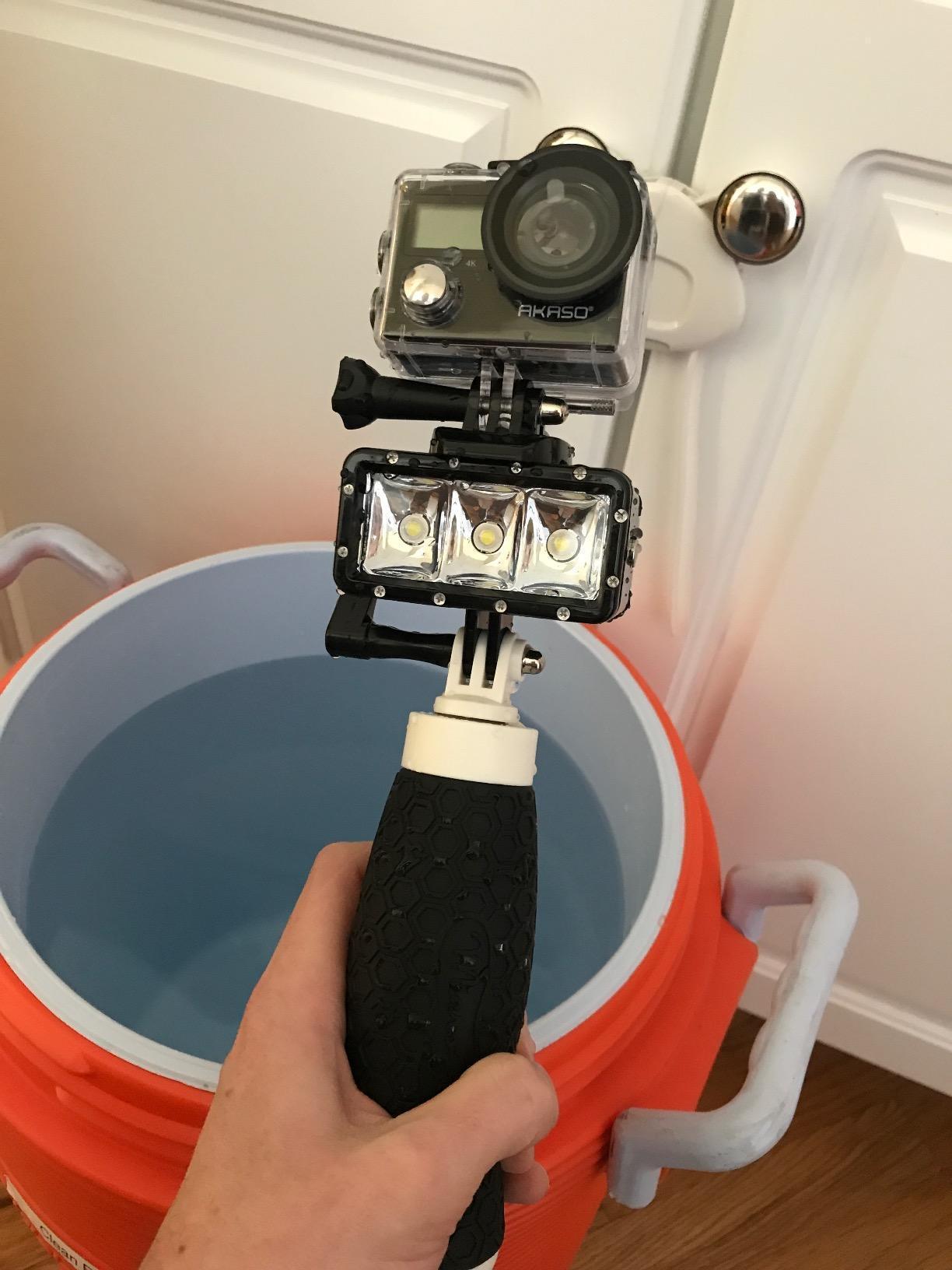
Two 1050mAh batteries at up to 90 minutes each, plus a USB dual charger, are the right kit arrangement. The accessory bundle is large and it accepts GoPro-style mounts, so a tray or a BCD mount you already own will usually fit. Our chest mount guide covers the mounting options in more detail if you want hands-free framing.
What you should check before you buy
Sit with the menu system before the trip. Owners describe the button-driven control flow as clumsy, and the Wi-Fi app and remote wristband as confusing to set up. Ten minutes of practice on dry land saves a lot of fumbling at 20 metres.
Check your light. This is a small-sensor budget camera, and owners consistently cite poor low-light performance. If your diving is mostly twilight, night dives or deep blue water, look at the larger-sensor cameras instead.
Where it falls short for divers
Photos are noticeably grainy at higher ISO, which is where low light pushes the sensor. The 5x zoom is digital only and barely beats cropping in an editor.
The battery door is loose and unhinged, which is worth checking with a fingernail before every dive rather than after.
8. TIMNUT C16 Action Camera – The Lowest-Cost Way to Film a Dive
Action Camera 4K30fps with 64G SD Card,HD Waterproof Camera 131ft Underwater Cameras 20MP Pre-recording WiFi Camera 170° Remote Control Sports Cameras with 2 Batteries Helmet Mount Accessories Kits
4K30 video and 20MP stills
Sealed 131ft housing
170 degree field of view
64GB card and two batteries
Pros
- Lowest cost in the group with a card and two batteries included
- Waterproof housing works to 131ft for snorkeling and shallow diving
- 170 degree wide lens and gyro-assisted EIS
- Compact enough to wear on a helmet or chest
- Remote control for when the camera is out of reach
Cons
- Claimed 4K does not always deliver true 4K detail
- Sealed housing means external microphones cannot be used
- Low light footage is soft and under-exposed
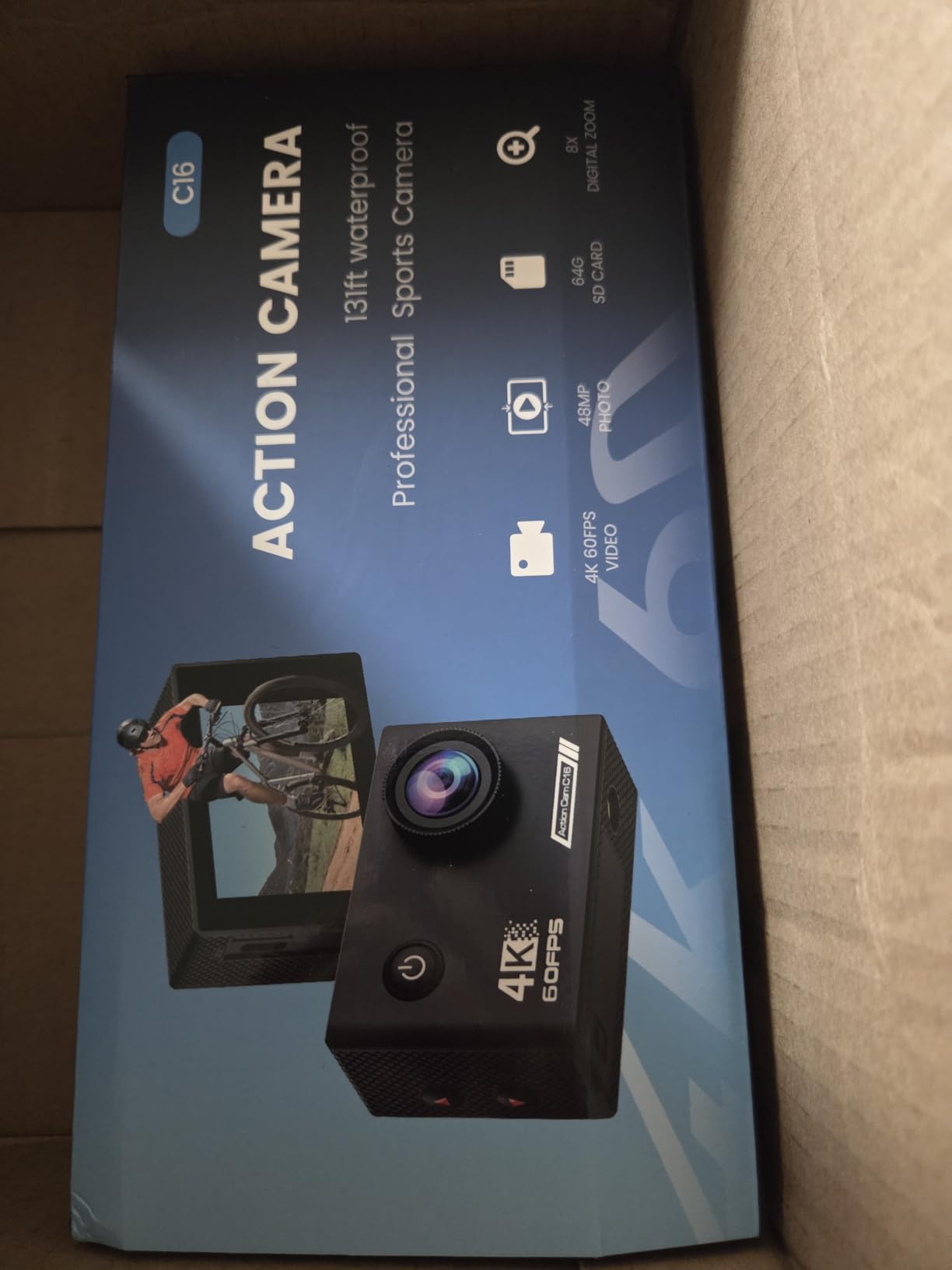
The C16 exists so that nobody has to go into a dive without a camera because of a purchase decision. It is the cheapest option here, and it includes a 64GB card and two 1350mAh batteries, which together are usually the first two things you would have to buy anyway.
Owners describe it as a capable entry-level action camera whose bundled card, batteries and 131-foot housing make it a solid first dive or snorkel camera. The 170-degree field of view is genuinely wide, and a 3-axis gyro with electronic image stabilisation keeps handheld footage steadier than the price would suggest.
Pre-recording is a nice feature for catching whatever swims past your mask without starting the camera first, and the 2.4GHz wireless remote plus Wi-Fi app control give you a way to start a recording when the camera is mounted somewhere you cannot reach.
What you should check before you buy
Understand what 4K means on this camera. Owners report the claimed 4K does not always deliver true 4K detail, so treat it as a 4K-class file rather than a reference-grade one. If the dive footage is going somewhere professional, this is not the camera.
Accept a silent camera. The housing is fully sealed, so external microphones cannot be used and little to no audio passes through the case. That is fine for dive footage and irrelevant for anything with talking in it.
Where it falls short for divers
Low light is the weak point. Footage is noticeably soft and under-exposed, which limits it to daylight and shallow reef work rather than deep or evening dives.
The OK button is wobbly and its rattle is picked up by the microphone. It is a small thing, but on a housing it is the button you are most likely to press.
How to Choose an Underwater Action Camera
Work through these in order. Most divers who regret a purchase regret it on the first two criteria, and the resolution is almost never the reason.
1. Bare depth rating against your real maximum depth. Recreational scuba tops out at 60 feet and 18 metres. Snorkelling is 0 to 10 metres. Wreck, overhead and technical diving goes past 40 metres. If your bare rating does not clear your deepest planned dive, budget the housing from the start rather than treating it as an optional extra. A camera rated to 33 feet is a snorkeling rating that happens to be sold to divers.
2. Housing versus no housing. A dive housing is a second purchase with its own seals, its own anti-fog inserts and its own failure mode. Divers on r/scuba repeatedly give the same advice: use the dive housing even if you are not expecting to exceed the rated depth. The only camera on this list where that advice genuinely does not apply below 20 metres is the DJI Osmo Action 6.
3. Colour handling. This is the difference between green footage and blue footage. Look for a manual white balance lock rather than relying on automatic white balance, because auto will hunt for several seconds at depth and the fix never quite matches the scene. A colour temperature sensor is a bonus. A video light matters more than most guides admit, and a red or magenta filter does more in blue water than in green water.
4. Sensor and low-light performance. A 1/1.1-inch square sensor and a variable aperture will produce a cleaner frame on a night dive or at 40 metres than a 1/3-inch sensor with a fixed aperture. If your diving is entirely in daylight at 10 metres, this matters much less and you can save money.
5. Stabilisation, and what kind. RockSteady from DJI, HyperSmooth from GoPro and FlowState from Insta360 are proprietary names for the same job. What you want underwater is horizon locking, not just smoothing, because a rolling horizon is the most obvious amateur-looking artefact in dive footage. Our helmet mount guide covers the rigs that get the most out of it.
6. Battery behaviour in cold water. The single most common complaint in every diving forum is cold-water drain. Rated runtimes are measured in air at room temperature. Carry two or three batteries, keep spares in an insulated pocket against your body, and charge between dives rather than overnight.
7. Controls with gloves on. A 3mm to 5mm neoprene glove is thick. Large tactile buttons, a front screen for framing, and voice or gesture control all save you from fumbling a button you cannot feel.
8. Ecosystem and cross-compatibility. A tray, a BCD mount, a video light and dive filters are the real ongoing cost. GoPro-style mounts are the closest thing to a common standard, and the Insta360 X4 bundle is the only package here that arrives with the case, grip and card already in the box.
9. Editing friction. 360 cameras buy their flexibility with work. App-based reframing, subscription-gated colour tools and mobile software that lags behind desktop software are all real costs. If you would rather not edit at all, buy a single-lens camera.
GoPro vs DJI vs Insta360 for Diving
DJI wins underwater right now, and the margin is not about video quality. It is the 20-metre bare waterproof rating, the largest sensor in this group and roughly four hours of runtime per battery, which between them remove almost every accessory purchase a recreational diver would otherwise make on day one.
GoPro wins on ecosystem and on single-lens image quality. If you already own a GoPro tray, mounts and dive housing, the marginal cost of adding a HERO13 Black is low, and the HB-Series lens auto-detection is the most mature accessory system in the category. Its weakness underwater is specific: a 33-foot bare rating and a 79-minute battery.
Insta360 wins on 360. If your dive is a wide reef, a swim-through or a liveaboard day where you want the shot to include everyone, the X4 bundle is the strongest complete package here, and the included Invisible Dive Case removes the second-purchase problem. If you want one clean conventional 4K file, Insta360 is the wrong brand.
On colour, none of the three solves red-light loss on its own. All three need either a video light close to the subject, a red or magenta filter for blue water, or a manual white balance set on the way down. Brand choice does not remove the underwater colour problem.
Depth Ratings and Dive Housings
Every depth rating on this list is a bare-body figure unless stated otherwise, and that is the number divers get wrong most often. Four of the eight cameras here are rated to 33 feet bare, which is a surface and snorkelling rating. Three more need a housing before a recreational dive at all.
A dive housing does three jobs. It adds depth rating, it adds a flat optical port that removes some of the refraction that makes action camera footage look like it was shot through a drinking glass, and it adds physical buttons you can operate with gloves on. The cost is a second purchase, more parts to inspect, and one more thing that can flood.
The Invisible Dive Case included with the Insta360 X4 bundle is rated to 164 feet, which is deeper than most recreational divers will go. For 360 cameras generally, a dive case is not optional, because the two lenses sit behind a single curved element that behaves differently under pressure.
Check the seals before every dive rather than after a problem. Rinse the housing in fresh water the same day, dry it with the latch and buttons open, and replace the desiccant rather than microwaving anything. If you dive in cold water, carry spare anti-fog inserts and change them mid-dive when the video goes soft at the edges.
Battery Life Underwater and Cold Water Drain
Rated runtimes across this list run from 79 minutes on the GoPro HERO13 Black to up to four hours on the DJI Osmo Action 6, with the Insta360 X4 in between at 135 minutes. Two budget AKASO models quote 140 and 90 minutes per battery respectively, and the TIMNUT C16 bundles two batteries for up to 240 minutes combined.
Those numbers are laboratory figures at room temperature in air. Cold water drain is the most repeated complaint across every diving forum, and the practical response is boring and effective: carry a spare battery for every camera, keep spares in an insulated pocket against your body so they stay at body temperature, and top them up between dives over USB-C rather than charging them all overnight.
Long continuous recording at high frame rates also generates heat, and a warm camera in a sealed housing is a camera that shuts down mid-clip. Recording 4K30 rather than 4K60, and turning off any mode you are not using, is the cheapest way to extend a dive day.
If you shoot on a boat deck and a liveaboard, the DJI Osmo Action 6 is the only camera here whose rated runtime genuinely covers a multi-dive day on one charge. Everyone else needs at least one swap, which is why the two-battery kits in the AKASO bundles and the TIMNUT package are more than a box-ticking extra.
Color, White Balance, and Losing Red Light
Water absorbs red and orange light within the first few metres, which is why a reef looks grey and a diver’s suit looks black. This is physics rather than a camera defect, and no brand on this list fixes it in hardware alone.
Three tools handle it. Manual white balance stops the camera hunting for a neutral value as you descend, and locking it on the way down is the single highest-impact setting change a new diver can make. A red or magenta filter brings back warm tones in blue water, and works less well in green or overcast water where the loss is not purely red. A video light mounted close to the subject, ideally on the same tray as the camera, restores colour and detail at any depth if it is bright enough and close enough.
For 360 cameras the problem is bigger, because half of every frame is facing away from the light. A DJI with a fixed wide lens and a video light recovers more of a scene than a 360 body can, which is a real argument for single-lens on deeper and darker dives.
When an Action Camera Is the Wrong Tool
Action cameras cannot focus close. The minimum focus distance on every model here means a nudibranch 20 centimetres from the lens is a soft blob, and no settings change fixes it. Experienced shooters on r/underwaterphotography steer people toward a compact camera in a proper housing for that reason, and they describe the action camera as a video tool rather than a stills tool.
If your priority is sharp images of nudibranchs, shrimp, blennies or coral polyps, a compact underwater camera with a macro capable lens and a dome port will beat any of these eight. That is a purpose-built tool doing the job it was designed for.
Two other cases where an action camera is wrong: if you are not going to edit, a 360 camera’s flexibility is wasted; and if your dives are all on a small-boat shallow reef trip, the gap between the budget and premium models here is smaller than the gap to a real underwater camera. Our full scuba camera guide walks through the compact and phone-housing options alongside the action cameras.
Post-Dive Rinse and Maintenance Protocol
Flooding is the divers’ biggest fear and the cheapest one to manage. This takes five minutes after every dive.
1. Open the housing latches underwater before you leave the water, so trapped pressure cannot force water past a seal on the way up.
2. Rinse the camera and housing in fresh water with the buttons and latches open. Salt crystallises in the button gaps and in the microphone port and will eat a seal over a season.
3. Do not use a jet of water at the seals, and do not put the camera in a dishwasher or a sink of detergent.
4. Dry the housing with everything open, away from direct sun, and replace the desiccant in the case rather than reusing old silica.
5. Inspect the O-rings and the sealing face for grit before the next assembly, and run a dry test with the camera off and the buttons pressed before you take it anywhere near water.
6. Change anti-fog inserts rather than reusing them. Once a lens has fogged inside the port you will shoot the rest of the dive through it.
7. Copy your clips and format the card in the camera before the next trip, not on a laptop.
Frequently Asked Questions
What camera is best for scuba diving?
The Insta360 X4 Invisible Dive Bundle is our overall pick because it is the only complete dive-ready package here: 8K 360 video, an Invisible Dive Case rated to 164 feet, a floating grip and a 256GB card in the box. If you want one camera with no housing at all, the DJI Osmo Action 6 is rated to 66 feet bare, and if you want the sharpest single-lens file the GoPro HERO13 Black takes it.
Which 360 action camera is best for diving?
The Insta360 X4 Invisible Dive Bundle. It records 8K 360 video with a 5.7K60 option, holds the horizon with FlowState stabilisation, and ships with the Invisible Dive Case rated to 164 feet plus a floating grip and a 256GB card. Be aware that reframed output is 2.7K, so the 8K file is your crop source rather than your delivery file.
Is GoPro or DJI better for diving?
DJI is better for most recreational divers. The Osmo Action 6 is waterproof to 20 metres with no housing, carries a larger sensor, and runs far longer per battery, while the GoPro HERO13 Black stops at 33 feet bare and has a 79-minute rated runtime. Choose the GoPro if you already own GoPro mounts and a dive housing, or if you shoot macro and want the HB-Series lens system.
How deep can an action camera go without a housing?
It depends entirely on the model. The DJI Osmo Action 6 is rated to 66 feet, or 20 metres, bare. The GoPro HERO13 Black and the Insta360 X4 are rated to 33 feet, or 10 metres, which is a snorkelling rating. The 360 Insta360 X3 needs a dive case for real diving, and the AKASO models and the TIMNUT C16 all rely on a housing rated to 131 feet.
Do I need a dive housing for my action camera?
For any dive below the camera’s bare rating, yes. Most divers also use a housing even within the bare rating, because diving forums consistently recommend it for the added port, the gloved controls and the seal redundancy. The exception is the DJI Osmo Action 6 below 20 metres, which is the one camera here that works bare on a recreational dive.
How long do action camera batteries last underwater?
Rated runtimes run from 79 minutes on the GoPro HERO13 Black to up to four hours on the DJI Osmo Action 6, with the Insta360 X4 at 135 minutes. In practice, cold water drain cuts that well short, which is why divers universally carry two or three spare batteries, keep them against the body in an insulated pocket, and charge between dives.
Bottom Line on the Best Action Cameras for Scuba Diving in 2026
The best action cameras for scuba diving divide cleanly by what you do before you buy. Buy the Insta360 X4 Invisible Dive Bundle as the overall pick if you want 360 storytelling, because the case, grip and card come in the box and there is no second purchase to budget for. Buy the DJI Osmo Action 6 if your priority is taking the camera on the dive without buying a housing, because a 66-foot bare rating removes the seal anxiety and the battery juggling in one step. Buy the GoPro HERO13 Black if you need the sharpest single-lens file or already own GoPro mounts.
Below those three, the AKASO EK7000 Pro and AKASO Brave 4 are the safest first dive cameras, the AKASO V50 Elite is the one to buy if you want 4K60 on a budget, and the TIMNUT C16 is there so nobody dives without a camera at all. And if your goal is sharp photos of nudibranchs, skip all eight and buy a compact underwater camera instead.