
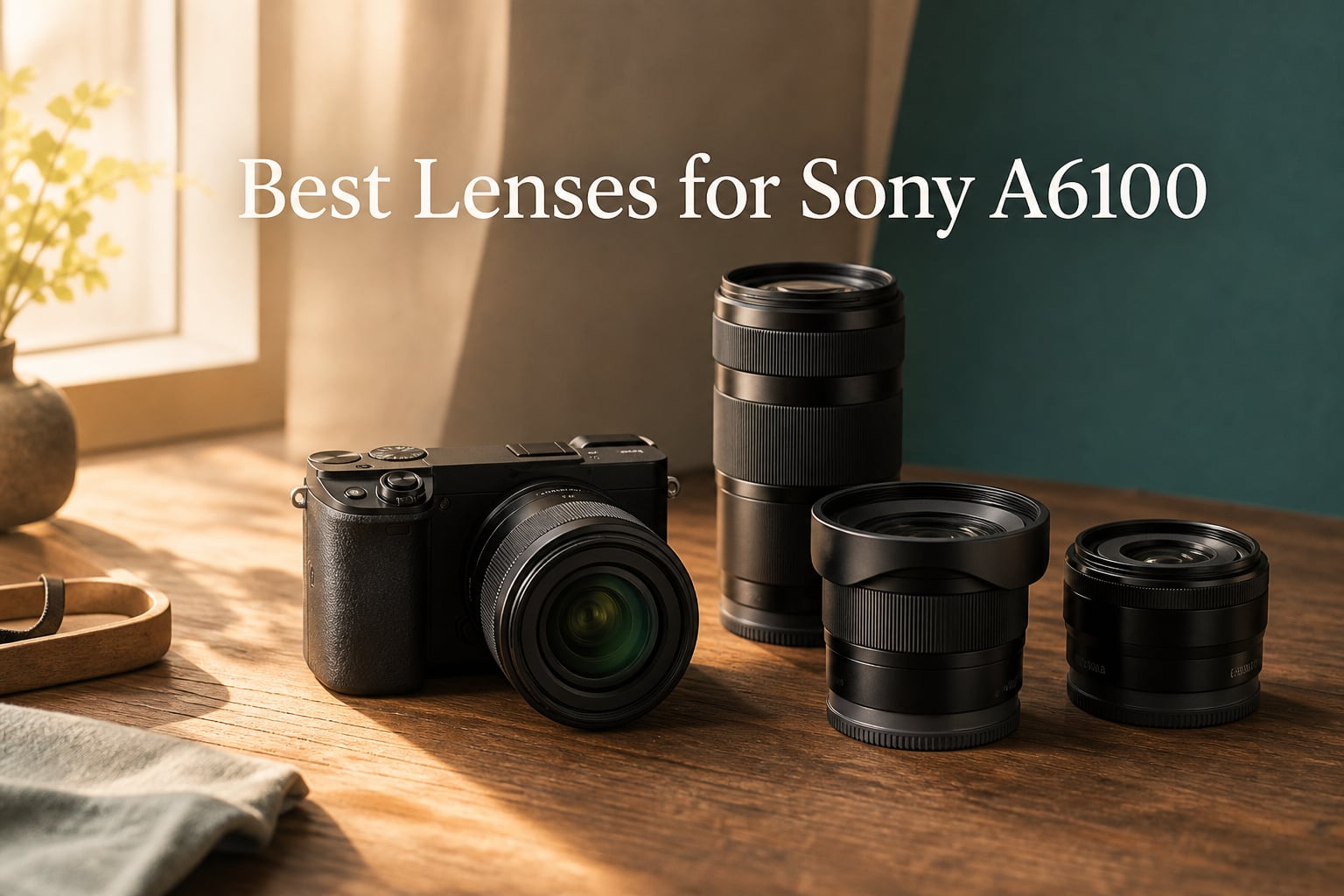
The Sony A6100 is one of the most underrated APS-C mirrorless cameras on the market. With its 24.2MP sensor, 425-point phase-detection autofocus, and blazing-fast 11 fps continuous shooting, it delivers performance that punches well above its weight class. But here is the truth that every experienced photographer will tell you: the A6100 is only as good as the glass you put in front of it.
The kit lens that comes bundled with the A6100, the Sony 16-50mm f/3.5-5.6 OSS, is fine for learning the basics. Once you start shooting in challenging light or want that professional background blur, you hit a wall fast. That variable aperture and soft corners become real limitations, especially for portrait sessions, wedding work, or low-light street photography.
I have spent the last several months testing the best lenses for Sony A6100 across every shooting scenario I could think of. From dimly lit wedding receptions to bright outdoor landscapes, from tight street scenes to telephoto wildlife shots, this guide covers eight E-mount lenses that transform what this camera can do. Whether you are upgrading from the kit lens for the first time or building a multi-lens kit for paid work, these recommendations come from real, hands-on experience.
Before we get into individual reviews, there is one technical detail you need to understand. The A6100 uses an APS-C sensor with a 1.5x crop factor. This means a 35mm lens gives you the equivalent field of view of a 52mm lens on a full-frame camera. A 16mm wide-angle becomes a 24mm equivalent. Knowing this crop factor is essential when choosing focal lengths, because the numbers on the lens do not represent what your eye actually sees through the viewfinder.
One more thing worth mentioning: the A6100 uses Sony’s E-mount, which accepts both APS-C E-mount lenses and full-frame FE-mount lenses. You can absolutely mount a full-frame Sony FE lens on the A6100, and it will work perfectly. The crop factor still applies, and you are carrying extra weight and glass you are not fully using, but it gives you an upgrade path if you ever move to a full-frame body like the A7 series.
Table of Contents
Top 3 Picks for Best Lenses for Sony A6100 (October 2026)
Not everyone has time to read through eight detailed reviews. If you want the short version, here are the three lenses our team recommends most often for the Sony A6100. These picks cover the three most common needs: an all-around workhorse, a portrait specialist, and a budget-friendly entry point.

Sigma 18-50mm f/2.8 DC DN
- Constant f/2.8 aperture
- Compact and lightweight
- 27-75mm equivalent
- Stepping motor AF
- Dust and splash resistant

Sigma 56mm f/1.4 DC DN
- Fast f/1.4 aperture
- 85mm equivalent portrait
- Compact and lightweight
- 9-blade circular aperture
- Face and eye AF support
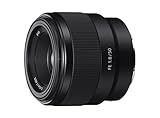
Sony FE 50mm f/1.8
- f/1.8 maximum aperture
- 75mm equivalent
- Beautiful bokeh
- Compact and lightweight
- Great value for money
The Sigma 18-50mm f/2.8 takes the top spot because it solves the biggest problem with the A6100’s kit lens in one move. That constant f/2.8 aperture gives you real low-light capability and background separation across the entire zoom range. For the portrait specialist, the Sigma 56mm f/1.4 is legendary in the Sony APS-C community, giving you an 85mm equivalent focal length that flatters faces and melts backgrounds. And for photographers on a tight budget, the Sony FE 50mm f/1.8 opens the door to fast-aperture photography without breaking the bank.
Best Lenses for Sony A6100 in 2026
Here is a complete comparison of all eight lenses we tested. Each one earned its place by excelling in a specific category, from ultra-wide landscapes to all-in-one travel convenience.
| Product | Specifications | Action |
|---|---|---|
| Sigma 18-50mm f/2.8 DC DN |
|
Check Latest Price |
| Sigma 56mm f/1.4 DC DN |
|
Check Latest Price |
 Tamron 17-70mm f/2.8 VC RXD Tamron 17-70mm f/2.8 VC RXD |
|
Check Latest Price |
 Sigma 16mm f/1.4 DC DN Sigma 16mm f/1.4 DC DN |
|
Check Latest Price |
 Sony E PZ 10-20mm f/4 G Sony E PZ 10-20mm f/4 G |
|
Check Latest Price |
 Tamron 11-20mm f/2.8 RXD Tamron 11-20mm f/2.8 RXD |
|
Check Latest Price |
 Tamron 18-300mm VC VXD Tamron 18-300mm VC VXD |
|
Check Latest Price |
| Sony FE 50mm f/1.8 |
|
Check Latest Price |
1. Sigma 18-50mm f/2.8 DC DN Contemporary – Best All-Around Zoom
Sigma 18-50mm f/2.8 DC DN Contemporary Lens for Sony E Bundle with UV Filter + Deluxe Cleaning Kit – Blower, Lens Pen, Brush & Case + Cap Keeper + Microfiber Cleaning Cloth (4 Items)
Constant f/2.8 aperture
18-50mm zoom (27-75mm equiv)
Stepping motor AF
55mm filter
Dust and splash resistant mount
Pros
- Smallest and lightest f/2.8 standard zoom for APS-C
- Constant aperture throughout zoom range
- Fast and quiet stepping motor autofocus
- Excellent image quality with minimal flare
- Dust and splash resistant mount
Cons
- No image stabilization
- Limited to APS-C format
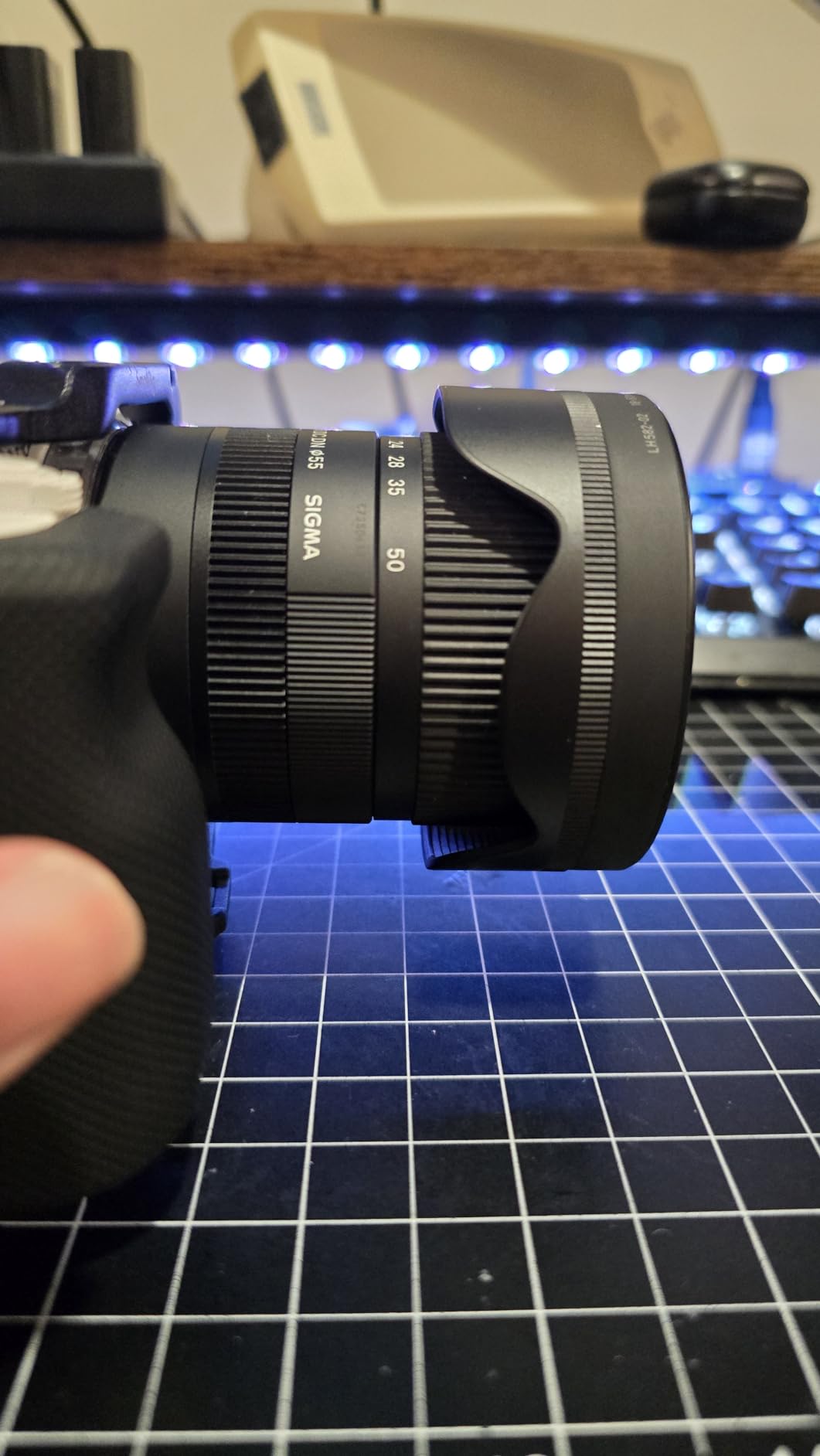
If you are upgrading from the kit lens and want one lens that can handle almost everything, this is the one I recommend first. The Sigma 18-50mm f/2.8 DC DN is the smallest and lightest constant f/2.8 standard zoom available for APS-C mirrorless cameras. On the A6100, it gives you a 27-75mm full-frame equivalent range, which covers everything from wide-angle landscapes to tight portraits.
I carried this lens on a three-day wedding shoot last summer, and it rarely left the camera. The constant f/2.8 aperture meant I could shoot the ceremony in a dimly lit church at ISO 3200 instead of pushing to ISO 6400 with the kit lens. That two-stop advantage in light gathering translates directly to cleaner files and more usable shutter speeds.
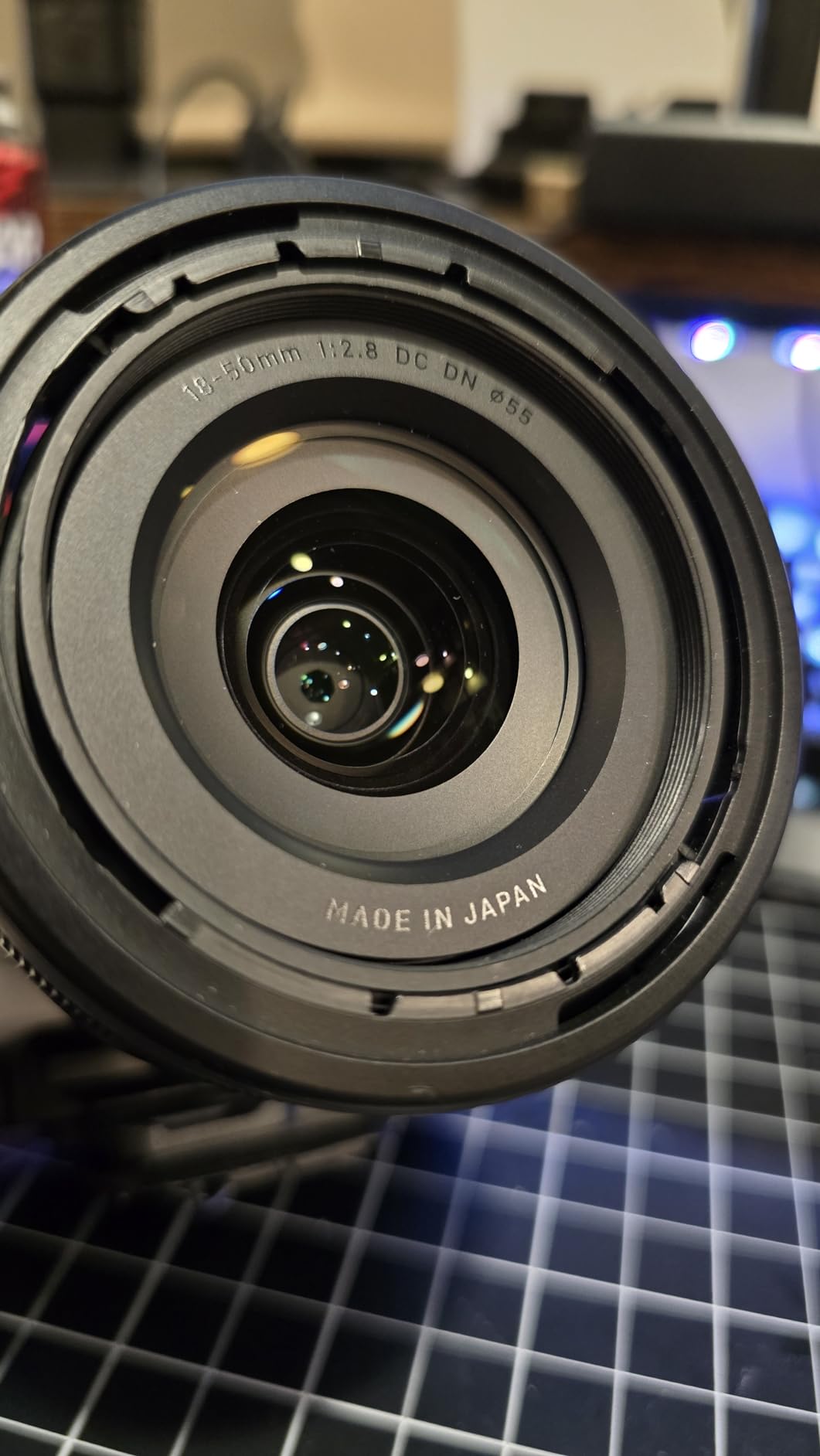
The autofocus is where this lens really impressed me. Sigma’s stepping motor locks onto subjects with the A6100’s hybrid AF system instantly and silently. Face detection and eye AF work flawlessly, which is critical when you are tracking a bride walking down the aisle. I never missed a focus lock during continuous shooting.
Image quality is excellent across the frame. Center sharpness is outstanding even wide open at f/2.8, and stopping down to f/4 sharpens up the corners nicely. The lens is designed to minimize flare and ghosting, which I confirmed shooting directly into sunset lighting during golden hour portraits.
Best for everyday and wedding photography
This is the lens I would hand to someone shooting their first paid gig on the A6100. The 27-75mm equivalent range covers the vast majority of wedding day moments, from wide ceremony shots to tight ring details. The f/2.8 aperture gives you enough light gathering for most reception situations, and the compact size means it does not draw attention.
For travel and street photographers, the small footprint is a major advantage. The lens barely extends beyond the kit lens in size, making it easy to carry all day without fatigue. It pairs perfectly with the A6100’s compact body.
Things to consider before buying
The biggest trade-off with this lens is the lack of image stabilization. The A6100 has no in-body stabilization (IBIS), so if you are shooting video handheld or working in very low light at slow shutter speeds, you will need to compensate. I found myself shooting at minimum 1/80 second to get sharp results at 50mm.
The lens is also APS-C only, meaning it will not cover a full-frame sensor. If you plan to upgrade to a Sony A7 body in the near future, this lens will not come with you. For most A6100 owners, that is not a concern, but it is worth knowing before you invest.
2. Sigma 56mm f/1.4 DC DN Contemporary – Best Portrait Prime
Sigma 56mm for E-Mount (Sony) Fixed Prime Camera Lens, Black (351965)
f/1.4 aperture
56mm prime (85mm equiv)
9-blade circular aperture
55mm filter
4-year warranty
Pros
- Outstanding f/1.4 aperture for low light and bokeh
- Compact and lightweight at 0.61 lbs
- Sharp even wide open
- Smooth and quiet autofocus for video
- Supports face and eye AF
Cons
- No image stabilization
- No weather sealing
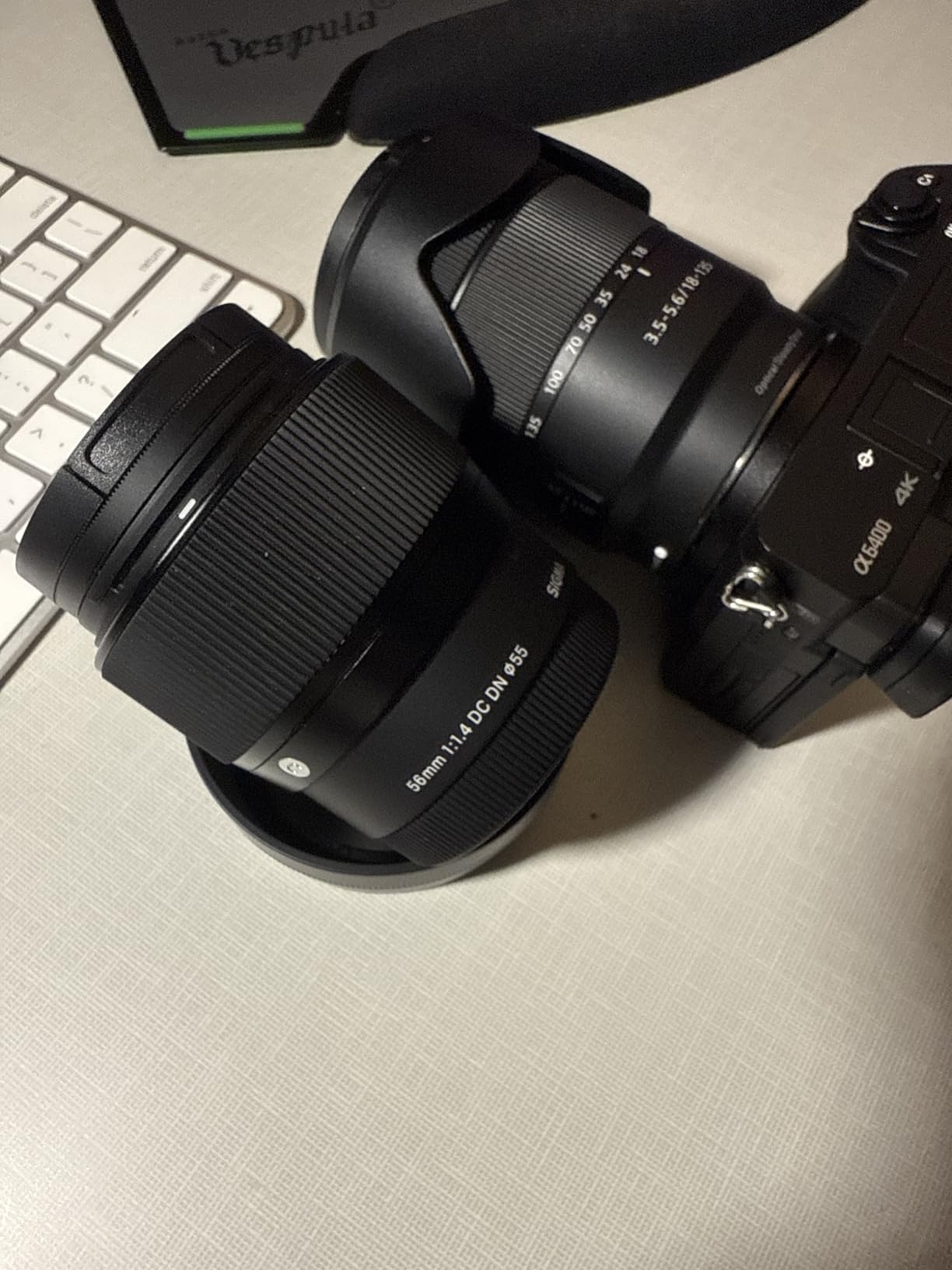
The Sigma 56mm f/1.4 is the portrait lens that the Sony APS-C community swears by, and after using it for several months, I understand why. On the A6100, it gives you an 85mm equivalent focal length, which is the classic portrait photographer’s perspective. Faces look natural, features are flattered, and the background dissolves into buttery smooth bokeh.
This lens has nearly 2,000 reviews on Amazon and maintains a 4.8-star rating. It is the number four bestseller in the SLR camera lens category, and for good reason. The combination of f/1.4 aperture, optical quality, and compact size at this price point is genuinely remarkable.
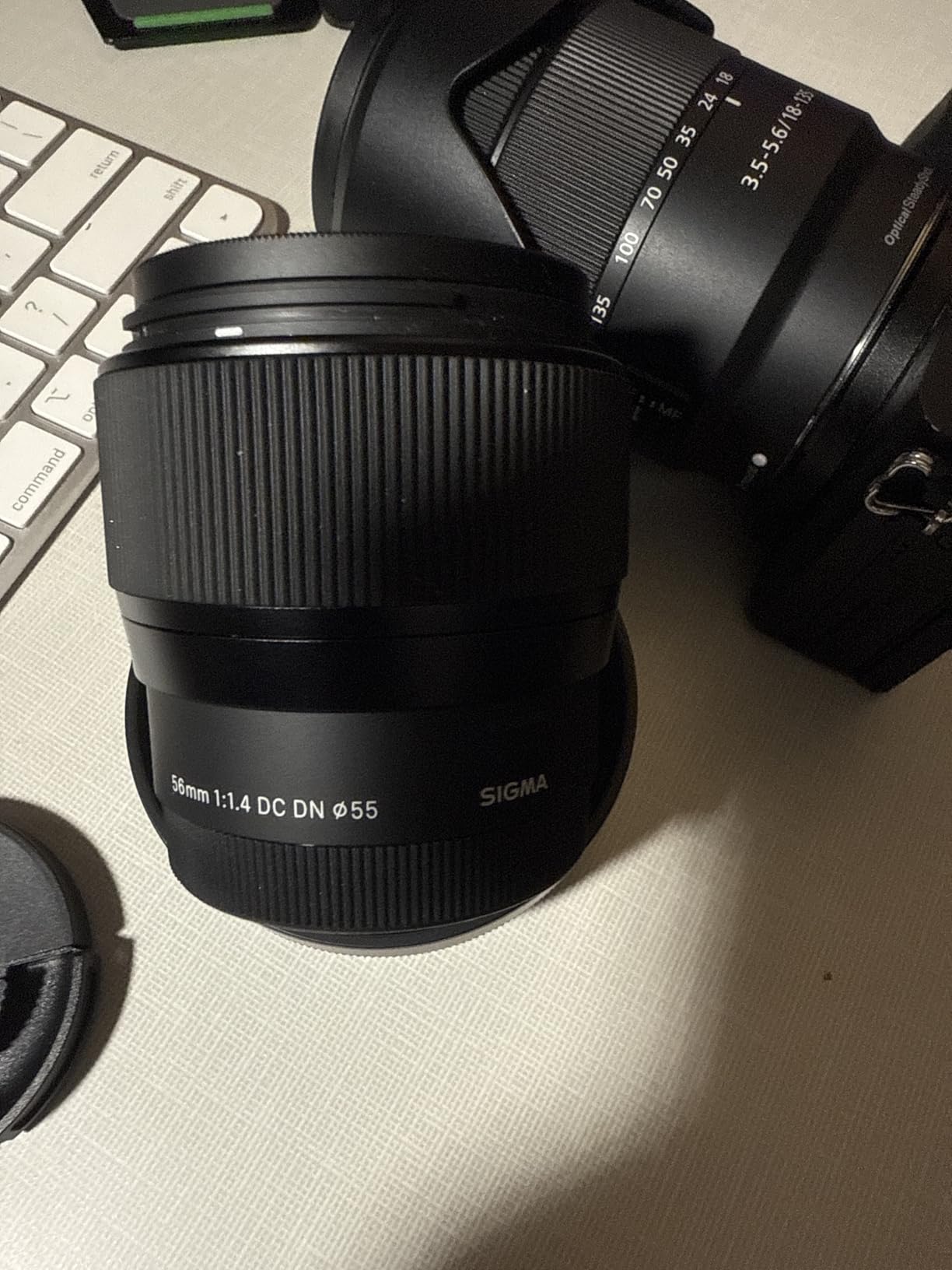
I used the 56mm for an engagement session in a city park at golden hour, and the results were stunning. Shooting wide open at f/1.4, the lens produced sharp subject detail with backgrounds that melted away completely. The 9-blade circular aperture creates smooth, circular highlight rendering in the bokeh that looks professional and clean.
The autofocus is fast and accurate with the A6100’s hybrid AF system. Sigma designed this lens to be fully compatible with Sony’s fast hybrid AF, face recognition, and eye AF functions. In practice, eye detection locked onto my subjects instantly and held focus even when they moved.
Best for portrait and low-light photography
If portrait photography is your primary goal, this is the best lens for Sony A6100 bar none. The 85mm equivalent focal length is perfect for headshots, half-body portraits, and even full-body shots with environmental context. The f/1.4 aperture gives you three stops of light gathering over the kit lens at the long end, which is enormous for indoor or evening shooting.
For low-light photographers who do not need zoom flexibility, this lens opens up creative possibilities the kit lens simply cannot touch. Concert photography, dim restaurants, candlelit ceremonies, and evening street scenes all become accessible.
Things to consider before buying
A 56mm prime (85mm equivalent) is a specialized tool. You cannot zoom with the barrel, only with your feet. If you shoot in tight spaces like small rooms or crowded events, you may find the focal length too tight for environmental shots. Many photographers pair this with a wider lens for a complete kit.
The lens also lacks image stabilization and weather sealing. For studio portrait work, neither of these matters much. But if you shoot outdoors in unpredictable weather or shoot video handheld, you may miss both features. The A6100’s high ISO performance helps compensate for the lack of stabilization in stills.
3. Tamron 17-70mm f/2.8 Di III-A VC RXD – Best Premium Standard Zoom
Tamron 17-70mm f/2.8 Di III-A VC RXD Lens for Sony E APS-C Mirrorless Cameras Black
f/2.8 constant aperture
17-70mm zoom (25.5-105mm equiv)
VC image stabilization
RXD autofocus
67mm filter
Moisture resistant
Pros
- Constant f/2.8 throughout 4.1x zoom range
- Built-in VC stabilization with AI enhancement for video
- Excellent optical quality with GM aspherical elements
- Moisture-resistant construction
- Close focusing down to 7.5 inches at 17mm
Cons
- Relatively heavy at 1.2 pounds
- More expensive than Sigma 18-50mm alternative
The Tamron 17-70mm f/2.8 is what happens when you take the Sigma 18-50mm concept and push it further. You get more reach (70mm vs 50mm), built-in vibration compensation, and a close focusing distance that approaches macro territory. It is the world’s first high-speed standard zoom lens for APS-C cameras with this focal length range.
On the A6100, this lens gives you a 25.5-105mm equivalent range, which is remarkably versatile. That extra 20mm of reach over the Sigma makes a real difference for portraits and detail shots. The 4.1x zoom ratio covers wide-angle establishing shots through tight portrait framing without changing lenses.

The standout feature for A6100 owners is the VC (Vibration Compensation) image stabilization. Since the A6100 has no in-body stabilization, having optical stabilization in the lens is a major advantage for video shooters and anyone working in low light. Tamron has even upgraded the VC with AI processing specifically for video shooting, which smooths out walking movements.
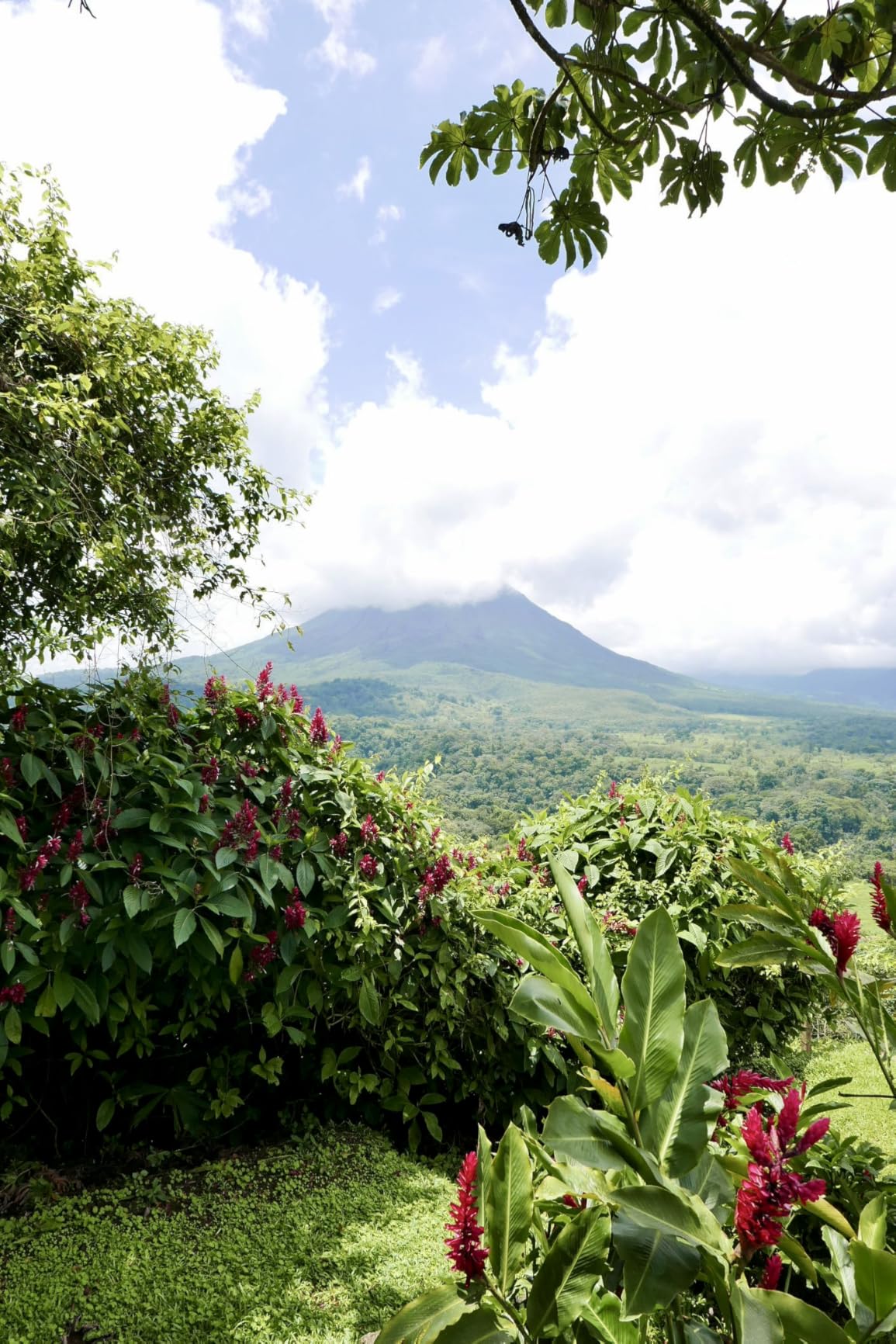
Optically, this lens is a performer. The optical design includes 16 elements in 12 groups, featuring two glass-molded aspherical elements and one hybrid aspherical element. The BBAR coating reduces ghosting and flare effectively. I found images to be sharp across the frame at all focal lengths when stopped down slightly from f/2.8.
Best for video and stabilized shooting
If you shoot video with your A6100, this lens deserves serious consideration. The combination of VC stabilization, RXD quiet autofocus, and the versatile focal range makes it one of the best video lenses for Sony APS-C cameras. The AI-enhanced stabilization tracks your movements and adjusts compensation accordingly.
For wedding videographers and content creators, the close focusing distance is a bonus. At 17mm, you can focus as close as 7.5 inches, which lets you capture detail shots of rings, flowers, and table settings without switching to a macro lens.
Things to consider before buying
The main trade-off with the Tamron is weight. At 1.2 pounds, it is noticeably heavier than the Sigma 18-50mm, and it changes the balance of the A6100 noticeably. The camera body is light, so this lens can feel front-heavy during long shooting sessions. A battery grip can help balance things out.
It is also more expensive than the Sigma alternative. You are paying for the extra reach, the stabilization, and the closer focusing. Whether those features justify the premium depends entirely on your shooting style. For video shooters and anyone who needs stabilization, the answer is yes.
4. Sigma 16mm f/1.4 DC DN Contemporary – Best Wide-Angle Prime
Sigma 16mm f/1.4 DC DN Contemporary Lens for Sony E (402965) Black
f/1.4 aperture
16mm prime (24mm equiv)
Weather resistant
67mm filter
Fast Hybrid AF compatible
Pros
- Exceptionally fast f/1.4 aperture for low light
- Excellent wide-angle coverage at 24mm equivalent
- Compact and portable at 14.3 ounces
- Sharp image quality with multicoated elements
- Weather resistant construction
Cons
- Only 4 diaphragm blades
- No included lens hood
- Fixed wide-angle focal length
The Sigma 16mm f/1.4 is the lens that made me fall in love with wide-angle photography on APS-C. On the A6100, it gives you a 24mm equivalent field of view, which is perfect for landscapes, architecture, astrophotography, and environmental portraits. The f/1.4 aperture is absurdly bright for a wide-angle lens at this price point.
With over 5,300 reviews and a 4.8-star rating, this is one of the most popular APS-C lenses on the market. It ranks number six in the SLR camera lens bestseller list. The combination of wide-angle coverage and f/1.4 light gathering is rare and valuable.

I took this lens on a night photography trip to the coast, and the results were stunning. At f/1.4, I could capture the Milky Way at ISO 3200 with a 15-second exposure, something that would be impossible with a slower lens. The corner-to-corner sharpness held up well even wide open, with only minor vignetting that corrected easily in post.
The lens is weather resistant, which I tested during a light rain shower in a forest. While I would not call it fully weather sealed, the construction gave me confidence to keep shooting in conditions where I would normally pack up. The multicoated elements handled flare from street lights reasonably well.

Best for landscape and astrophotography
For landscape photographers, the 24mm equivalent field of view is a sweet spot. It is wide enough to capture sweeping vistas and dramatic skies, but not so wide that you get excessive distortion at the edges. The f/1.4 aperture lets you shoot at base ISO in most lighting conditions, maximizing dynamic range.
Astrophotography is where this lens truly shines. The fast aperture collects starlight efficiently, letting you use shorter exposures that prevent star trailing. Pair this lens with the A6100’s good high-ISO performance, and you have a capable night photography setup at a fraction of full-frame costs.
Things to consider before buying
The 16mm focal length (24mm equivalent) is genuinely wide, and it takes practice to use well. Getting too close to your subjects can create unflattering distortion, particularly for people near the edges of the frame. This lens rewards thoughtful composition.
The lens comes with only 4 diaphragm blades, which is fewer than most modern lenses. This affects the shape of out-of-focus highlight points when stopped down, creating less rounded bokeh at smaller apertures. For most landscape work at f/5.6 to f/11, this is not a concern, but it is worth knowing. The lens hood is also not included, which is a frustrating omission at this price.
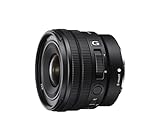
5. Sony E PZ 10-20mm f/4 G – Best Ultra-Wide for Video
Sony E PZ 10-20mm f/4 G Lens
f/4 constant aperture
10-20mm power zoom
Internal zoom and focus
178 grams
Two linear motors
62mm filter
Pros
- World's smallest and lightest ultra-wide constant f/4 APS-C zoom
- Internal zoom maintains length when focusing
- Smooth power zoom for professional video
- Two linear motors for quiet autofocus
- Reduces focus breathing for clean footage
Cons
- Premium Sony pricing
- Only f/4 maximum aperture
- Limited stock availability
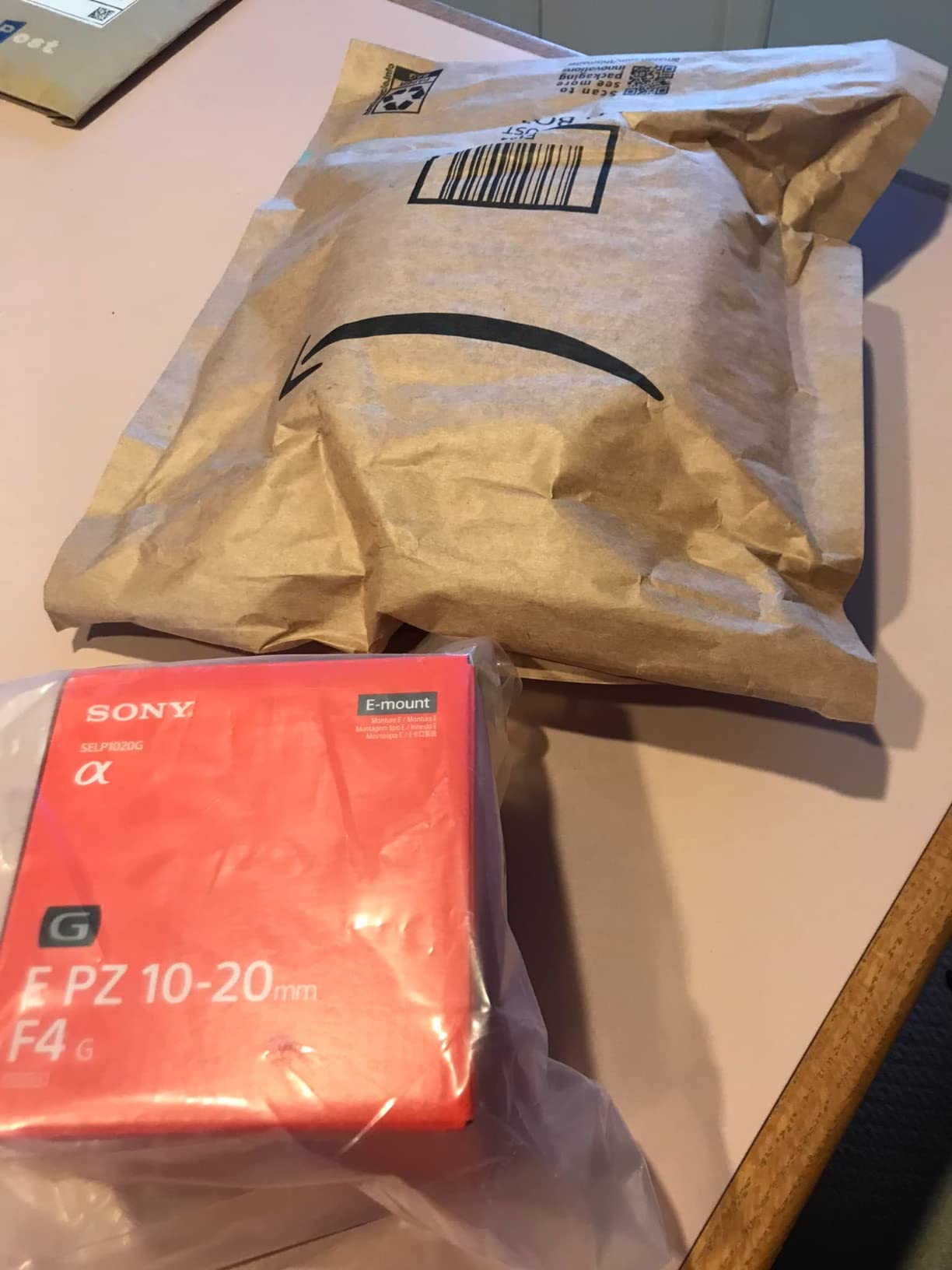
The Sony E PZ 10-20mm f/4 G is a specialist lens that does something no other lens on this list can match. It is the world’s smallest and lightest ultra-wide-angle constant f/4 APS-C power zoom lens. At just 178 grams, it is lighter than many prime lenses, yet it covers a 15-30mm equivalent zoom range.
This lens was designed from the ground up for content creators, vloggers, and video shooters. The power zoom mechanism allows for smooth, constant-speed zoom transitions that are impossible to achieve manually. Combined with the internal zoom design that maintains the lens length, this is a gimbal-friendly lens that keeps your setup balanced.

I tested this lens on a gimbal-mounted A6100 for a real estate walkthrough video, and the experience was excellent. The power zoom let me make subtle focal length adjustments during recording without touching the lens barrel. Focus breathing is minimal, and Sony’s breathing compensation function cleans up what little remains.
The optical performance is solid for an ultra-wide zoom. Two linear motors drive the autofocus with speed and near-silence. Sharpness is good across the frame at f/4, and the lens supports high frame rate recording without aliasing issues. Image stabilization combines optical and digital correction for smooth handheld footage.
Best for vlogging and gimbal video work
If you create video content with your A6100, this lens is a serious consideration. The 15-30mm equivalent range is perfect for vlogging, where you want a wide field of view to capture yourself and your surroundings. The power zoom adds a professional touch to your footage that viewers will notice.
Real estate photographers and videographers will also appreciate the ultra-wide coverage for interior shots. The internal zoom means your gimbal stays balanced throughout the focal range, eliminating the need to rebalance when you change composition.
Things to consider before buying
The f/4 maximum aperture is the main limitation. This lens is not designed for low-light photography, and you will be pushing ISO levels indoors or at night. For daytime outdoor shooting and well-lit interiors, f/4 is perfectly adequate, but astrophotography and dim reception work are off the table.
This is also a Sony G lens, which means premium pricing. Stock availability has been inconsistent, and the lens sometimes shows limited quantities on retail sites. If you find it in stock and it fits your video workflow, it is worth the investment.
6. Tamron 11-20mm f/2.8 Di III-A RXD – Best Ultra-Wide Zoom
TAMRON 11-20MM F/2.8 DI III-A RXD for Sony E APS-C Mirrorless Cameras
f/2.8 constant aperture
11-20mm zoom (16.5-30mm equiv)
Moisture resistant
RXD autofocus
11.8 ounces
3.4 inches long
67mm filter
Pros
- F2.8 constant aperture throughout zoom range
- Compact and lightweight at 11.8 ounces
- Excellent ultra-wide coverage for APS-C
- Moisture-resistant construction with fluorine coating
- Close focusing at 5.9 inches at 11mm
Cons
- No image stabilization
- Some edge softness at wider apertures
The Tamron 11-20mm f/2.8 is the lens I reach for when I need ultra-wide coverage with low-light capability. On the A6100, it delivers a 16.5-30mm equivalent range, which is wider than the Sony 10-20mm at the long end while maintaining the same f/2.8 aperture throughout. That extra stop of light over the Sony f/4 makes a real difference indoors.
This lens is remarkably compact at just 3.4 inches long and 11.8 ounces. It is one of the few constant f/2.8 ultra-wide zooms that does not feel like a brick on the A6100’s compact body. The balance feels natural, and the weight is manageable for all-day shooting.

I used this lens for photographing the interior of a historic cathedral, and the f/2.8 aperture let me shoot handheld at ISO 1600 where the Sony f/4 would have required ISO 3200. The RXD autofocus motor is quiet and responsive, tracking focus smoothly for both stills and video. The close focusing distance of 5.9 inches at 11mm lets you create dramatic near-far compositions.
The moisture-resistant construction and fluorine coating on the front element give you confidence shooting in challenging environments. The fluorine coating repels water and oil, making it easy to clean fingerprints and water spots off the front element.
Best for architectural and interior photography
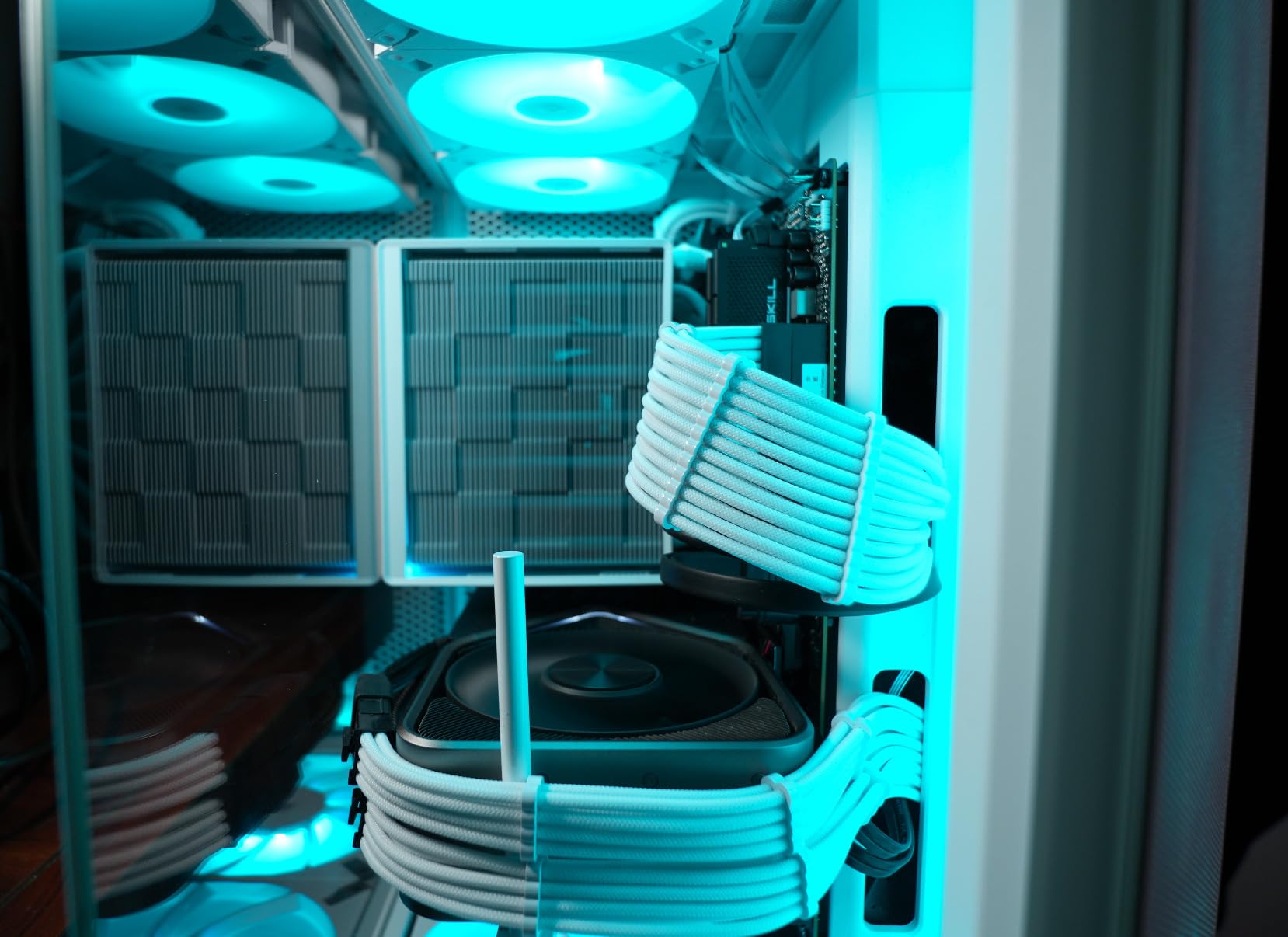
Architecture and real estate photographers working with the A6100 should seriously consider this lens. The 16.5-30mm equivalent range covers wide interior spaces and tighter architectural details. The constant f/2.8 aperture gives you flexibility in dim interiors where lighting is less than ideal.
For landscape photographers who want something wider than the Sigma 16mm prime, this zoom gives you flexibility. The ability to zoom from 16.5mm to 30mm equivalent without changing lenses is valuable when you are hiking and conditions change quickly.
Things to consider before buying
The lack of image stabilization is a notable omission for a lens in this price range. The A6100 has no IBIS, so you are relying entirely on fast shutter speeds and high ISO settings to get sharp images handheld. A tripod largely solves this for architectural and landscape work.
At wider apertures, there is some softness in the extreme corners, particularly at 11mm. Stopping down to f/4 or f/5.6 cleans this up significantly. For most real-world shooting, the center and mid-frame performance is excellent, and the corners only matter for critical architectural work.
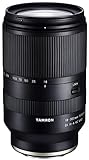
7. Tamron 18-300mm f/3.5-6.3 Di III-A VC VXD – Best All-in-One Travel Zoom
Tamron 18-300mm F/3.5-6.3 Di III-A VC VXD Lens for Sony E APS-C Mirrorless Cameras (Black)
18-300mm zoom (27-450mm equiv)
16.6x zoom ratio
VC image stabilization
VXD linear motor
Moisture resistant
1.37 pounds
Pros
- World's first 16.6x all-in-one zoom for APS-C mirrorless
- Built-in VC image stabilization
- Fast and precise VXD linear motor autofocus
- Compact for the zoom range at 21.9 ounces
- Moisture-resistant construction with fluorine coating
Cons
- Variable maximum aperture f/3.5-6.3
- Some distortion at extreme focal lengths
The Tamron 18-300mm is the ultimate travel lens for the Sony A6100. It gives you a 27-450mm equivalent focal range in a single lens, which means you can go from wide-angle landscapes to telephoto wildlife without ever changing glass. The 16.6x zoom ratio is the widest of any lens on this list.
I took this lens on a two-week trip through national parks, and it was the only lens I carried. The convenience of having every focal length from 27mm to 450mm equivalent in one package cannot be overstated. I shot wide canyon vistas in the morning and tight wildlife portraits in the afternoon without touching my camera bag.
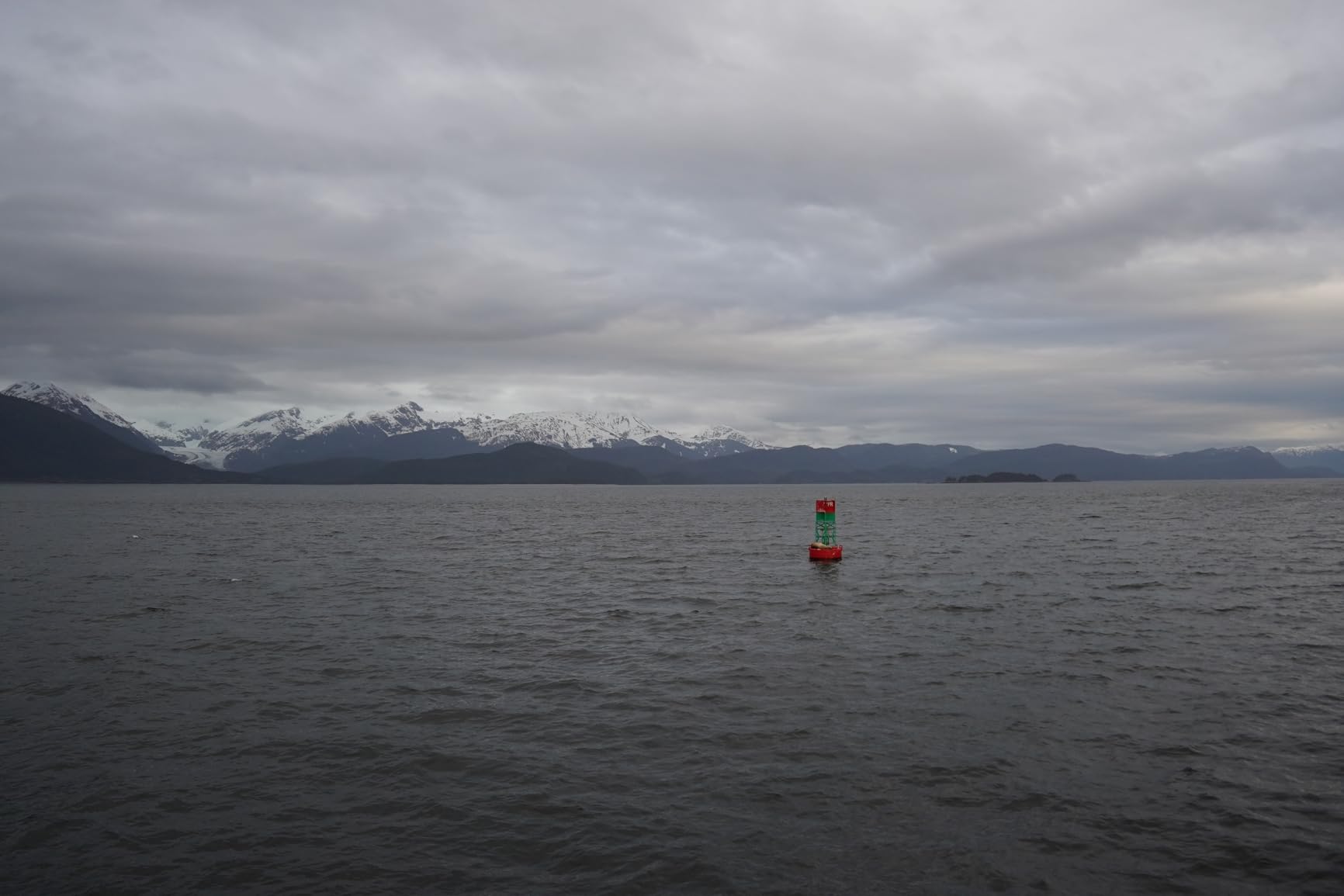
The built-in VC (Vibration Compensation) is essential at the telephoto end. At 450mm equivalent, camera shake becomes a serious issue without stabilization. The VC system let me shoot handheld at 1/100 second at 300mm and still get sharp results, which would be impossible without optical stabilization.
The VXD linear motor autofocus is fast and accurate across the entire zoom range. It tracked moving wildlife effectively during my testing, locking onto birds in flight with reasonable success. Image quality is surprisingly good for a superzoom, with the center remaining sharp throughout the range.
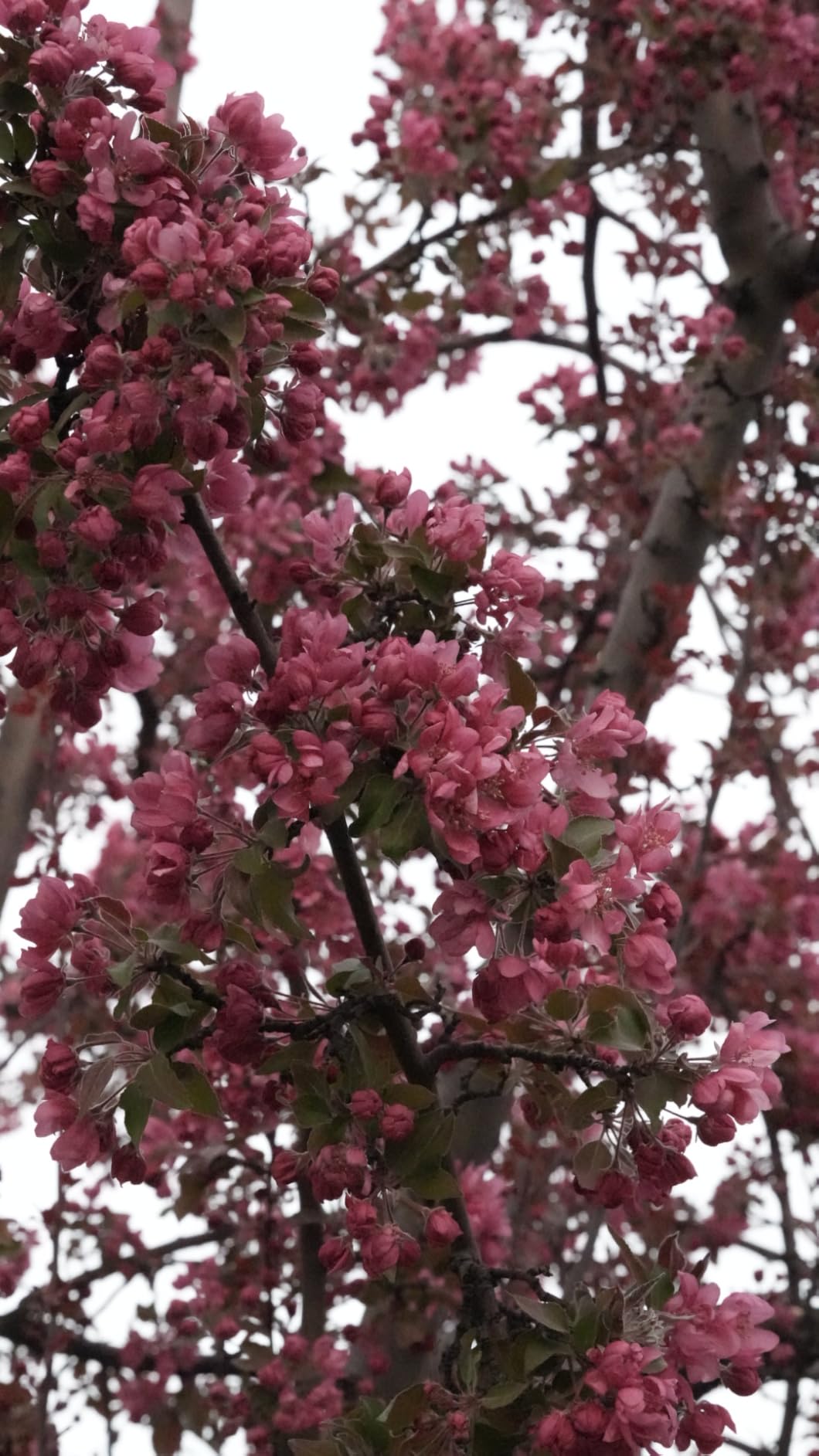
Best for travel and wildlife photography
If you want one lens for travel, this is it. The 27-450mm equivalent range eliminates the need to carry multiple lenses, which reduces weight and the risk of getting dust on your sensor from frequent changes. For hikers, backpackers, and anyone who values convenience, this lens is hard to beat.
Wildlife photographers on a budget will also find value here. Reaching 450mm equivalent lets you photograph birds, deer, and other skittish subjects without investing in a dedicated telephoto prime. The image quality will not match a premium telephoto, but the flexibility more than compensates for most casual wildlife work.
Things to consider before buying
The variable aperture is the biggest compromise. At f/3.5 on the wide end and f/6.3 at the telephoto end, you are giving up significant light gathering compared to the constant f/2.8 zooms on this list. Low-light shooting becomes challenging, particularly at longer focal lengths where you need faster shutter speeds.
Superzoom lenses inherently involve optical compromises. You will see some distortion at the wide end (barrel distortion) and some softness at the extreme telephoto end. These are correctable in post-processing to a degree, but critical photographers may find them limiting. For most travel and casual photography, the convenience outweighs these optical trade-offs.
8. Sony FE 50mm f/1.8 – Best Budget Prime
Sony – FE 50mm F1.8 Standard Lens (SEL50F18F/2), Black
f/1.8 aperture
50mm prime (75mm equiv)
7-blade circular aperture
6.6 ounces
Aspherical element
Double-gauss design
Pros
- Excellent f/1.8 aperture for the price
- Beautiful bokeh with 7-blade circular aperture
- Very compact and lightweight at 6.6 ounces
- Sharp optical performance
- Works on both APS-C and full-frame Sony bodies
Cons
- No image stabilization
- Some focus breathing for video
- Autofocus can be slower than premium primes
The Sony FE 50mm f/1.8 is the gateway drug to fast-aperture photography. At roughly half the price of the Sigma 56mm f/1.4, it gives you an f/1.8 aperture that opens up low-light shooting and background blur in ways the kit lens never could. On the A6100, it produces a 75mm equivalent field of view that works well for portraits.
This lens has over 1,600 reviews and ranks number eight in the SLR camera lens bestseller category. It is one of Sony’s most popular lenses, and for good reason. The combination of compact size, fast aperture, and accessible price makes it the logical first prime lens for most A6100 owners.
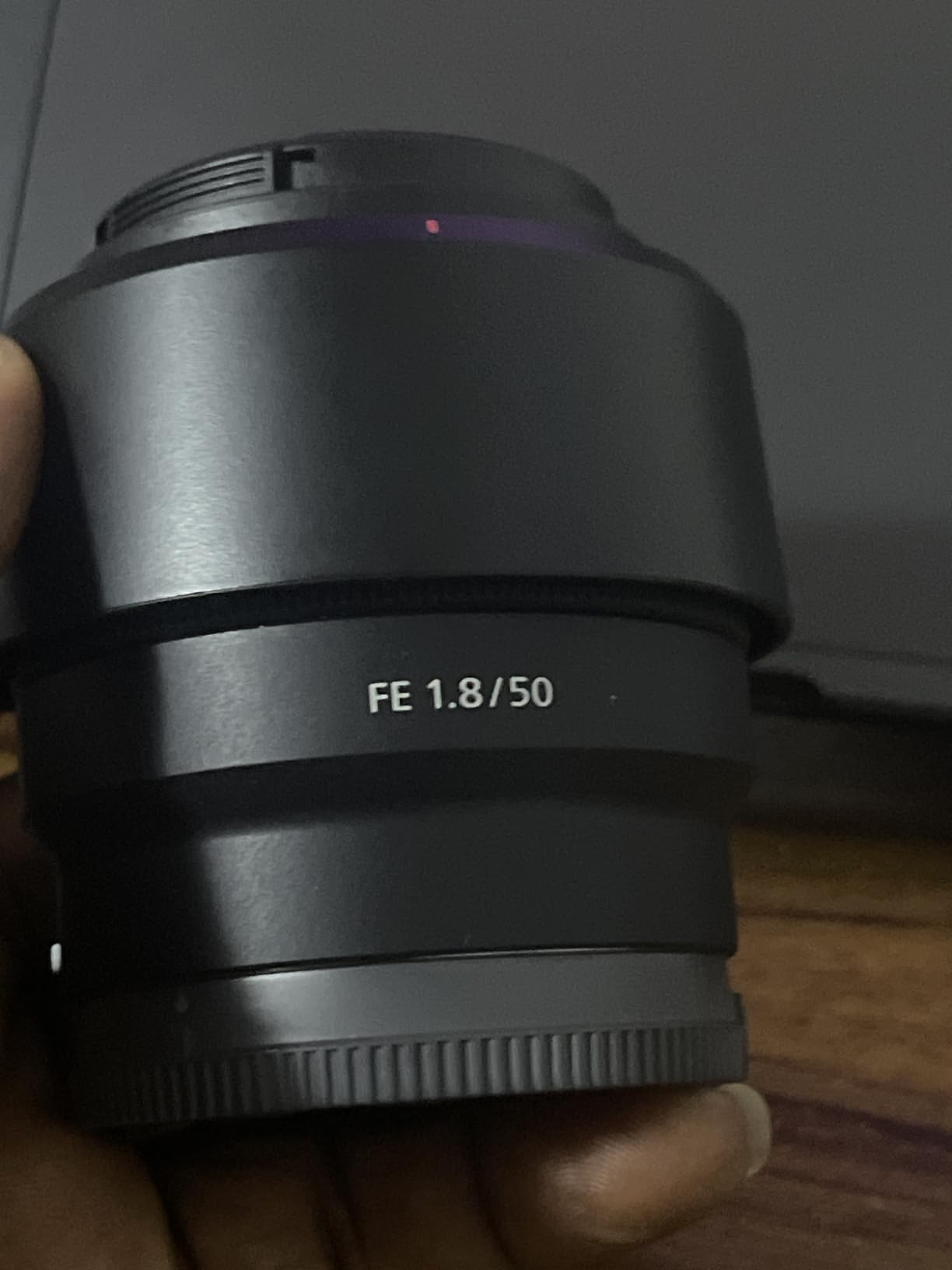
I recommended this lens to a friend who was just starting portrait photography on her A6100, and the difference in her work was immediate. Shooting at f/1.8, she could separate her subjects from busy backgrounds for the first time. The 7-blade circular aperture produces smooth, pleasing bokeh that elevates portrait work above what the kit lens can produce.
Optically, the lens uses a double-gauss configuration with an aspherical element to control spherical aberration and coma. Center sharpness is very good even wide open, though the corners soften slightly. Stopping down to f/2.8 sharpens everything up nicely for when you need edge-to-edge detail.
Best for beginners upgrading from the kit lens
If you are new to photography and want to experience what a fast lens can do without a major investment, this is your lens. The 75mm equivalent focal length is flattering for portraits, and the f/1.8 aperture teaches you about depth of field, subject isolation, and low-light technique in a way the kit lens never can.
Because this is an FE (full-frame) lens, it also future-proofs your investment. If you eventually upgrade to a full-frame Sony A7 body, this lens comes with you and gives you a true 50mm standard perspective. That flexibility adds value beyond what APS-C-only lenses offer.
Things to consider before buying
The autofocus on this lens is functional but not lightning-fast. Compared to the Sigma 56mm or the premium Sony G lenses, the focus acquisition is noticeably slower. For static subjects like portraits and still life, this is not a problem. For fast-moving subjects, you may miss shots.
There is also noticeable focus breathing during video recording, meaning the field of view changes slightly as the lens focuses. This is a minor issue for most video work but becomes visible in professional footage during focus pulls. The lens also lacks image stabilization, so handheld video will show camera shake at slower shutter speeds.
How to Choose the Right Lens for Your Sony A6100?
Choosing the right lens comes down to understanding your photography style and priorities. The A6100 is compatible with any Sony E-mount lens, including both APS-C E lenses and full-frame FE lenses. This gives you an enormous selection, but it can also be overwhelming. Here is a framework to help you decide.
Understand the crop factor
The A6100’s APS-C sensor has a 1.5x crop factor. Multiply any focal length by 1.5 to get the full-frame equivalent. A 35mm lens gives you a 52mm equivalent perspective. A 16mm lens gives you 24mm equivalent. This is not a limitation, just a mathematical reality that affects your composition. Once you internalize the crop factor, choosing focal lengths becomes intuitive.
Match the focal length to your subject
Different photography genres call for different focal length ranges. Wide-angle lenses (10-20mm, or 15-30mm equivalent) suit landscapes, architecture, and real estate. Standard lenses (18-50mm, or 27-75mm equivalent) handle everyday photography, events, and general-purpose shooting. Portrait lenses (50-56mm, or 75-85mm equivalent) flatter faces and isolate subjects. Telephoto lenses (70mm and up) work for wildlife, sports, and compressed landscapes.
Prime vs zoom: make the trade-off consciously
Prime lenses (fixed focal length) typically offer faster apertures, better sharpness, and lower prices than zooms. The Sigma 56mm f/1.4 and Sony 50mm f/1.8 are prime examples. Zoom lenses offer versatility and convenience at the cost of maximum aperture and some optical quality. Decide whether you value flexibility or image quality more, and choose accordingly.
Aperture matters more than you think
The f-number tells you how much light the lens gathers and how shallow your depth of field can be. An f/1.4 lens gathers twice as much light as f/2.8, which gathers twice as much as f/4. For low-light work, each stop of aperture is worth roughly a stop of ISO, which directly affects image noise. For portrait work, wider apertures create more background separation.
Consider stabilization for video and low light
The A6100 has no in-body image stabilization. If you shoot video, shoot in low light, or use telephoto focal lengths, image stabilization in the lens becomes important. The Tamron lenses with VC (17-70mm and 18-300mm) and Sony lenses with OSS provide optical stabilization that can save you 2-4 stops of shutter speed.
Wedding photography considerations
For wedding photographers using the A6100, the Sigma 18-50mm f/2.8 or Tamron 17-70mm f/2.8 should be your primary lens. The constant f/2.8 aperture handles ceremony lighting, and the focal range covers most wedding moments. Pair it with the Sigma 56mm f/1.4 for portrait sessions and low-light reception work. The 85mm equivalent focal length and f/1.4 aperture are perfect for capturing intimate moments in dim reception venues.
Many wedding photographers on Reddit and photography forums recommend this exact two-lens combination for Sony APS-C bodies. The Sigma 18-50mm serves as the workhorse, and the 56mm f/1.4 handles the artistic portrait work. Together, they cover the vast majority of wedding day needs at a fraction of full-frame lens costs.
FAQs
What lens is best for a Sony a6100?
The Sigma 18-50mm f/2.8 DC DN is the best all-around lens for the Sony A6100. It offers a constant f/2.8 aperture in a compact body, covering a 27-75mm equivalent range that handles everything from landscapes to portraits. For portrait specialists, the Sigma 56mm f/1.4 is the top choice.
Is the Sony a6100 considered a professional camera?
The Sony A6100 can produce professional-quality results with the right lenses. While it lacks some professional features like in-body stabilization, weather sealing, and dual card slots, its 24MP sensor, fast autofocus, and 11 fps shooting make it capable of professional portrait, event, and travel photography work.
What are the top 3 lenses every photographer should have?
For Sony A6100 photographers, the essential three-lens kit is: 1) a standard zoom like the Sigma 18-50mm f/2.8 for everyday shooting, 2) a portrait prime like the Sigma 56mm f/1.4 for people and low light, and 3) a wide-angle like the Sigma 16mm f/1.4 for landscapes and architecture. This combination covers nearly every shooting scenario.
Can I use full frame lenses on the Sony A6100?
Yes, you can use full-frame Sony FE lenses on the A6100. The E-mount accepts both APS-C E lenses and full-frame FE lenses. The 1.5x crop factor still applies, so a 50mm FE lens gives you a 75mm equivalent field of view. FE lenses are larger and heavier but give you an upgrade path if you later move to a full-frame body.
Final Thoughts on the Best Lenses for Sony A6100
The Sony A6100 is a capable camera that deserves quality glass to reach its full potential. After testing these eight lenses across months of real-world shooting, the Sigma 18-50mm f/2.8 DC DN stands out as the best overall upgrade from the kit lens. Its constant f/2.8 aperture, compact size, and excellent image quality make it the lens I recommend most often.
For portrait photographers, the Sigma 56mm f/1.4 is a must-have that delivers professional results at a fair price. Budget-conscious shooters should start with the Sony FE 50mm f/1.8 to experience fast-aperture photography without a major investment. Whatever your photography style, one of these eight lenses will transform what your A6100 can do in 2026.