
If you want one camera that will not box you in, the Canon EOS R50 is the best mirrorless camera for beginners. Its 24.2 MP APS-C sensor, subject-detection autofocus and guided menus make it the least intimidating first body, and the Canon RF mount gives you a long lens path later. Updated for 2026, this roundup covers 10 entry-level mirrorless cameras we looked at side by side, from a full-frame body small enough for travel to a Micro Four Thirds kit with real stabilization.
Choosing a first camera is mostly about the lens system you join, not the sensor. Bodies in this list range from 16 MP to 26.2 MP, and the difference in image quality between them matters far less than it does on paper. What does matter: does the autofocus find your kid’s face, can you see the screen in direct sun, and will you still find the lens you want in three years.
We spent weeks reading owner feedback and comparing specifications across all ten bodies, and we grouped them by the job each one actually does well. Every pick below gets a full section with the strengths, the compromises, and the people it suits. Our methodology is at the end of the buying guide. For a different angle, our guide to the best mirrorless cameras for wedding photographers covers bodies built for long event days.
Table of Contents
Top 3 Picks for Beginner Mirrorless Cameras in October 2026
The R50 wins on the balance of sensor quality, autofocus simplicity and lens availability. The a6400 is the value route into Sony E, which has the deepest second-hand and third-party lens market of the four systems here. The R10 is the one to buy if your subjects move fast.
All 10 Cameras at a Glance in October 2026
| Product | Specifications | Action |
|---|---|---|
 Canon EOS R50 Canon EOS R50 |
|
Check Latest Price |
 Sony Alpha a6400 Sony Alpha a6400 |
|
Check Latest Price |
 Canon EOS R10 Canon EOS R10 |
|
Check Latest Price |
 Canon EOS RP Canon EOS RP |
|
Check Latest Price |
 Sony ZV-E10 Sony ZV-E10 |
|
Check Latest Price |
 Sony Alpha a6100 Sony Alpha a6100 |
|
Check Latest Price |
 Nikon Z 50 Nikon Z 50 |
|
Check Latest Price |
 Nikon Z 30 Nikon Z 30 |
|
Check Latest Price |
 OM System E-M10 Mark IV OM System E-M10 Mark IV |
|
Check Latest Price |
 Panasonic Lumix G85 Panasonic Lumix G85 |
|
Check Latest Price |
1. Canon EOS R50 Is the Best Mirrorless Camera for Most Beginners
Canon EOS R50 Mirrorless Camera RF-S18-45mm F4.5-6.3 is STM Lens Kit, 24.2 Megapixel CMOS (APS-C) Sensor, 4K Video, Hybrid Camera, Photo and Video, Vlogging, Content Creator, RF Mount, White
24.2 MP APS-C CMOS
DIGIC X processor
651 AF zones
2.36M-dot EVF
Pros
- Best beginner menus in this list
- Subject detection for people animals and vehicles
- Only 16 ounces with the kit lens
- 6K oversampled 4K video
Cons
- Small grip feels cramped with large hands
- Kit lens is entry-level only
- Small battery capacity
The R50 is the body I hand to people who have never held a camera with a interchangeable lens. The A+ Assist auto mode handles exposure decisions while you learn, and the guided interface explains what it is doing rather than hiding it behind icons. You can turn it off the moment it stops being useful, which is exactly what a first camera should do.
Autofocus is the real reason to stretch here. Dual Pixel CMOS AF II covers 100% of the frame with 651 zones, and the deep-learning subject detection recognises people, animals and vehicles. Point it at a running dog and it stays locked. That single feature removes the frustration that makes most beginners quit photography inside a month.
For video it is stronger than the price suggests. 6K oversampled uncropped 4K at up to 30 fps means the 4K is downsampled from more data rather than cropped, so the framing you get is the framing you composed.
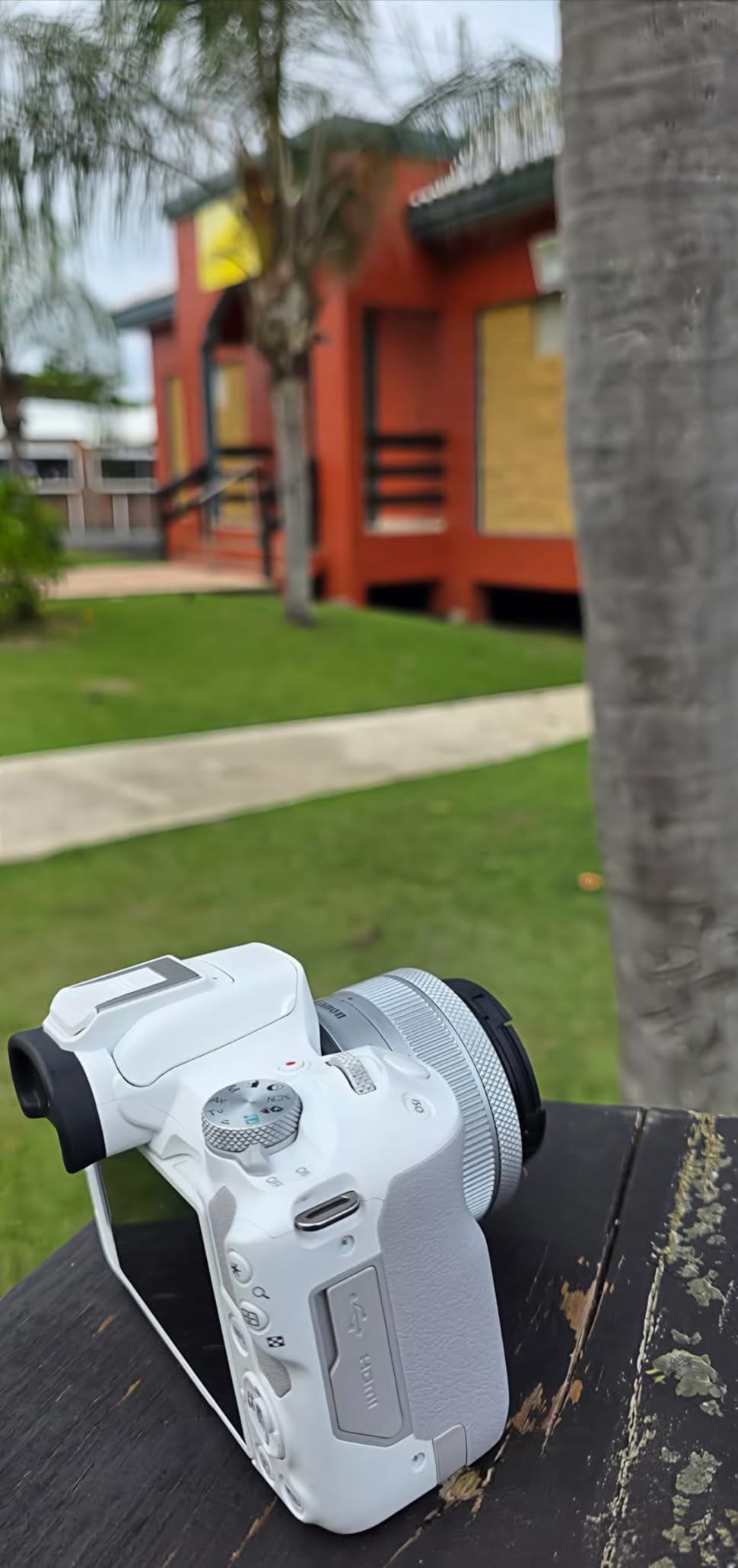
The 2.36-million-dot electronic viewfinder at 0.96x magnification is sharp enough that framing in bright sun works properly, which is a real limitation on several cheaper bodies. The vari-angle touchscreen moves fully to the side for vlogging, and Bluetooth plus Wi-Fi transfer through Canon Camera Connect is among the smoothest phone workflows in this list.
Two honest complaints. The body is genuinely small, and owners with larger hands report the grip feeling cramped enough that some add a grip extension. The bundled RF-S 18-45mm f/4.5-6.3 IS STM is a competent zoom but nothing more. Several buyers buy the body alone and add a single prime instead, which is the smarter move if you can live without a zoom right away.

Who the R50 suits and who should skip it
Buy it if your subjects are people and pets, you want menus that explain themselves, and you plan to stay in the Canon RF mount for a few years. The RF mount is wide, so adapting lenses from other systems later is straightforward.
Skip it if you shoot weddings or events where a small body with a small battery is a liability. The LP-E17 battery is small and the grip limits comfort with a large zoom attached. If your first real job is a long event day, read our wedding photography camera picks instead.
What the R50 does not fix
Low light is where an APS-C sensor at this level runs out of room, and the kit lens is not the reason. Adding a fast prime helps more than switching formats does. It also lacks a headphone port, so if you plan to record long takes with an external mic, budget for that limitation.
2. Sony Alpha a6400 Is the Best Value Pick
Sony Alpha a6400 Mirrorless Camera: Compact APS-C Interchangeable Lens Digital Camera with Real-Time Eye Auto Focus, 4K Video, Flip Screen & 16-50mm Lens – E Mount Compatible – ILCE-6400L/B, Black
20.1 MP APS-C Exmor RS
425 phase-detect points
11 fps burst
16-50mm kit
Pros
- Proven real-time eye autofocus
- Deep and cheap second-hand lens market
- Compact 10.3 ounce body
- 4K with time lapse built in
Cons
- Dense menu system for newcomers
- Kit 16-50mm has a slow aperture range
- Older design without newest subject recognition
The a6400 has been the answer to “what should I buy first” on photography forums for years, and the reason is the lens ecosystem rather than the body. Sony E has the widest range of affordable APS-C glass and the best used market, so a two-year upgrade path is easy to fund by reselling.
Real-Time Eye AF with 425 phase-detection points covering roughly 84% of the sensor is genuinely good for stills. The 180-degree tilting screen is fine for waist-level and vlogging work, though it does not swing fully to the side like a vari-angle panel.
It is an older design and that shows in the details. 20.1 MP is below current APS-C norms, the maximum shutter speed is 1/4000 sec, and there is no AI-based subject recognition. For everyday portraits, family and travel, none of that is a practical problem.

The menu system is the one real barrier. Newcomers routinely report that Sony’s menus take practice, and the fix is real: sit with Guided Shoot mode for a week before touching anything else. Reviewers also point out the 16-50mm kit has a modest slow aperture, so low light is the weak spot out of the box.
For video there is 4K recording plus built-in time-lapse and slow-motion modes, which saves menu hunting on a first outing. If you outgrow the body, every lens you bought stays useful.

When the a6400 is the right buy
Choose it when budget matters more than having the newest processor, and when you want a system with cheap, plentiful lenses. A used body with a good lens costs less than a new entry-level kit, and the a6400 handles that trade well.
Choose something else if menu navigation frustrates you or if your priority is video. The a6400’s 4K is uncropped, which is rare, but it records in a more basic format than the Canon and Sony bodies built for content creation.
The lens ecosystem advantage
Before committing, browse the primes and wide-angle zooms available in Sony E. That decision often settles the brand choice faster than any sensor comparison. Our guide to vintage lenses for mirrorless cameras covers another way to keep glass costs down.
3. Canon EOS R10 Is Best for Action and Wildlife
Canon EOS R10 Mirrorless Camera Lens Kit
24.2 MP APS-C CMOS
15 fps mechanical, 23 fps electronic
RAW burst pre-shooting
ISO 100-32000
Pros
- Fastest burst rate in this list
- 10-bit 4K at this tier
- Subject tracking across the frame
- EF and EF-S lenses via adapter
Cons
- Kit 18-45mm is short for distant subjects
- Slow Wi-Fi transfers
- LP-E17 battery not shared with higher EOS R models
The R10 is the camera in this list for anyone whose subjects refuse to sit still. 15 fps on the mechanical shutter and 23 fps electronic is fast enough that you stop thinking about frame rate, and RAW Burst mode with half-second pre-shooting captures frames before you fully press the shutter. For kids, pets and school events, that pre-capture buffer is the feature that changes results.
Video is the quiet strength. 10-bit 4K output is unusual at this level and gives you far more latitude in colour grading than an 8-bit file. It also supports vertical video shooting directly, which matters if your content lives on phones.
Autofocus is the same Dual Pixel CMOS AF II system as the R50, covering approximately 100% of the frame with up to 651 zones down to EV -4, which means it keeps finding subjects in dim reception halls.
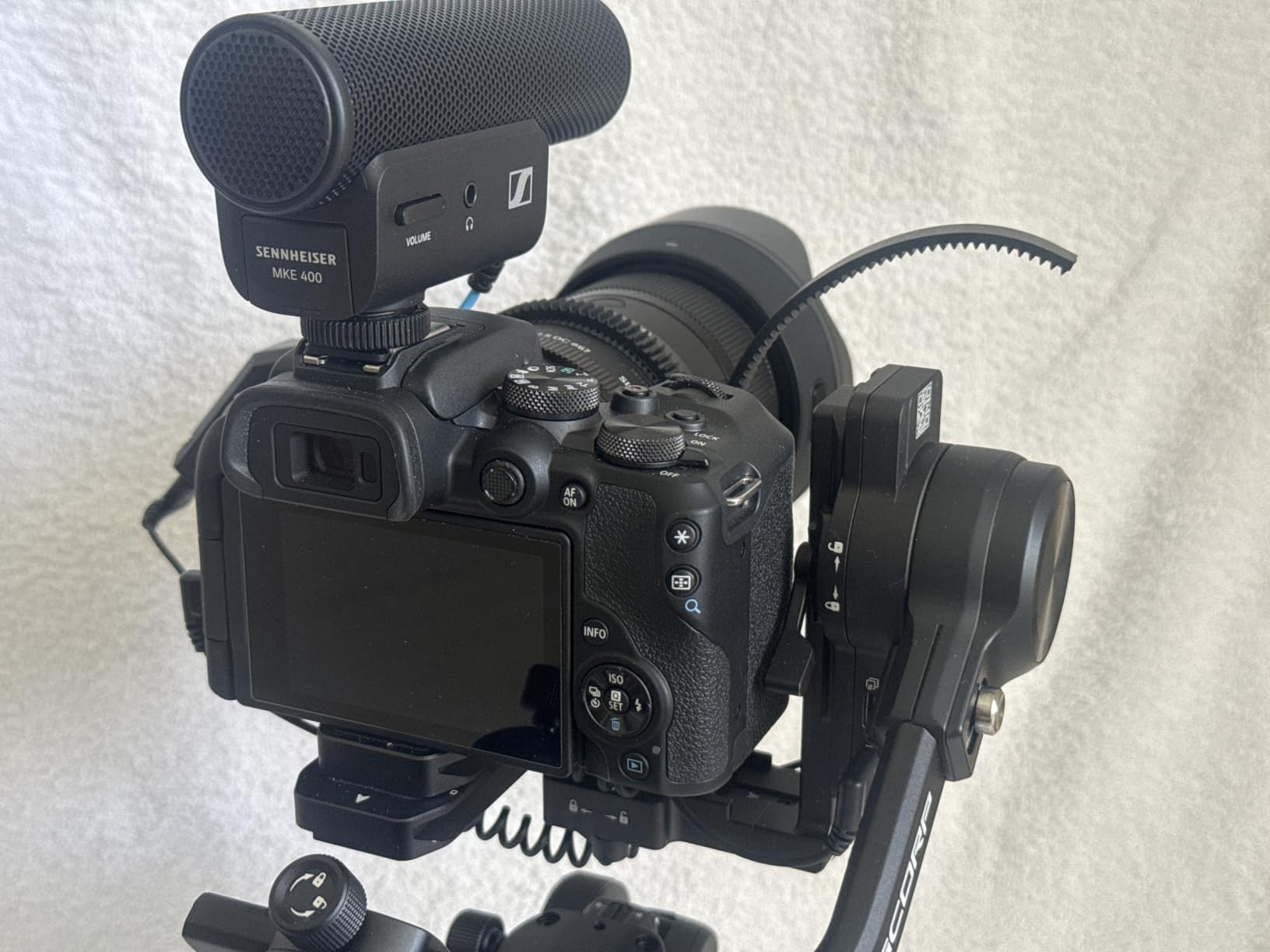
The honest catch is the bundled RF-S 18-45mm f/4.5-6.3 IS STM. For anything distant, a bird across a field or a child at the end of a field, you will be adding a longer zoom soon. Owners report that the kit is adequate rather than good, and that Wi-Fi transfer is slow enough that a cable is often faster.
A few buyers also note that their unit arrived as a grey import without local warranty, so check the seller carefully. Through Canon EF and EF-S lenses adapt fine via the EF-EOS R adapter, which widens your options considerably.
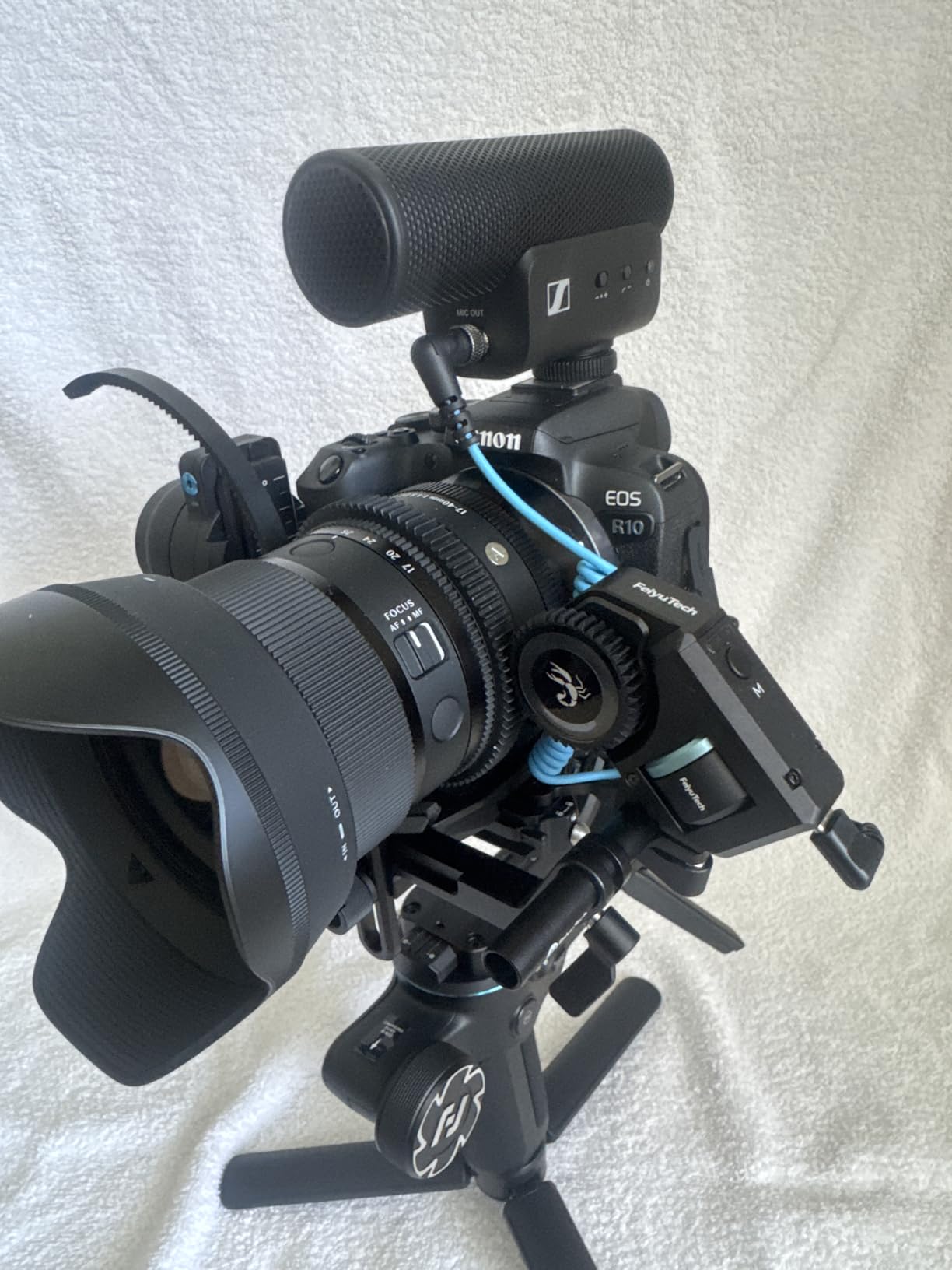
Is the R10 worth the step up from the R50
If your photography is families, travel and still subjects, the R50 gives you the same sensor and autofocus and you can put the difference into a lens. That is the smarter spend for almost everyone.
If you shoot sport, pets in motion, or events where the decisive moment lasts a fraction of a second, the R10 earns its place. The pre-capture buffer and 23 fps rate are not features you will miss until you need them, and then you cannot do without them.
Battery and card planning
The single UHS-II SD card slot is a genuine plus for buffer clearing, and USB Power Adapter PD-E charging in-camera is convenient for long days. The battery is LP-E17, which is not shared with higher-tier EOS R models, so plan on a spare for a full shooting day.
4. Canon EOS RP Is the Best Full-Frame Body for Beginners
Canon EOS RP Full-Frame Mirrorless Interchangeable Lens Camera + RF24-105mm Lens F4-7.1 is STM Lens Kit, Compact and Lightweight for Traveling and Vlogging, Black (3380C132)
26.2 MP full-frame CMOS
Dual Pixel CMOS AF, 4779 points
RF 24-105mm f/4-7.1 IS STM
0.70x EVF
Pros
- Full-frame depth of field in a compact body
- Stabilized 24-105mm covers most needs
- Works as a USB webcam
- Articulating touchscreen
Cons
- No in-body image stabilization
- No built-in flash
- 5 fps burst is slow
- 30 minute 4K recording cap
The case for a full-frame first camera is depth of field and low light, and the RP delivers both without the bulk. At 16 ounces with the bundled zoom, it is one of the smallest full-frame bodies you can carry all day, which is exactly what a beginner needs to actually take the camera out.
You get a 26.2 MP full-frame sensor with DIGIC 8, Dual Pixel CMOS AF across 4779 points, and an RF 24-105mm f/4-7.1 IS STM with optical stabilization up to 5 stops. That zoom covers wide angle to short telephoto, so one lens handles family, events and landscapes.
It also works as a webcam. EOS Utility Webcam Beta support over USB or clean HDMI turns it into a high-quality video device for a home office, which is an underrated use of a first camera.

The trade-offs are real and worth weighing. There is no in-body image stabilization, so you depend entirely on the lens for steady handheld shots and smooth walking video. There is no built-in flash. Burst shooting is 5 fps, the slowest in this list, and 4K recording stops at 30 minutes.
Owners consistently value the small full-frame package and accept the compromises. The bundled STM zoom has a modest aperture range and average corner sharpness, so it is a starting point rather than a keeper.

Full-frame as a first camera: worth it or not
Full-frame makes sense if portraits and low-light events are the reason you are buying. The background separation at f/1.8 on a full-frame sensor is something no APS-C body in this list matches, and that difference shows immediately in a portrait.
It makes less sense if the appeal is travel weight or video. Every other body here is lighter, and two of them include stabilization. Do you need full-frame as a beginner? Not technically. You can always move up later, and moving up keeps your lenses.
Handling for event work
For event or wedding work the 24-105mm is a genuinely useful single-lens answer, though the lack of a second card slot and the burst rate limit it as a primary body. If you shoot events, our beginner-friendly event camera guide covers bodies built for that pace.
5. Sony ZV-E10 Is Best for Vlogging and Solo Video
Sony ZV-E10 APS-C Mirrorless Camera with 16-50mm Lens Black
24.2 MP APS-C Exmor
4K oversampled from 6K
No viewfinder
Product Showcase mode
Pros
- Crisp 4K from 6K full pixel readout
- Product Showcase and Background Defocus buttons
- Directional 3-capsule mic
- Single-cable USB streaming
Cons
- No electronic viewfinder for stills
- No built-in flash
- Companion app criticized by owners
- APS-C not class-leading in low light
Every button on the ZV-E10 exists because Sony watched people film alone and struggled. Product Showcase shifts focus from your face to whatever you pick up, without you touching the screen. Background Defocus is a single button that instantly blurs the backdrop. Neither feature exists on a conventional stills camera.
Video quality is 4K oversampled from 6K with full pixel readout and no pixel binning, and it keeps recording long takes in reasonable conditions. A directional 3-capsule microphone with a windscreen keeps dialogue clear without extra gear, and clean HDMI plus single-cable USB make it a straightforward streaming or teleprompter camera.
Autofocus is the 425-point Fast Hybrid system with Real-Time Eye AF and tracking, which handles a talking head at arm’s length well.

The obvious catch: there is no electronic viewfinder, so framing happens entirely on the 3.0-inch side flip-out screen. In bright sunlight that is a genuine problem, and reviewers consistently list the missing viewfinder as the first limitation. There is no built-in flash either, only a hotshoe.
Owners also report mixed experiences with the companion smartphone app, and a few mention odd battery behaviour after long periods unused. The bundled E PZ 16-50mm F3.5-5.6 OSS II is fine for video but not a fast low-light option.

Is a viewfinder-less camera a mistake for stills
If you shoot mostly video, no. Many creators never raise the camera to their eye, and the screen-first design is lighter and simpler. If you shoot events or landscapes, yes. Composing a horizon at arm’s length in direct sun is a poor experience, and no amount of skill fixes a washed-out screen.
Non-stabilised lenses require stabilization in the lens itself, so factor that into any future prime purchases.
Who this body is really for
The ZV-E10 suits a beginner whose camera is a content tool first. It is also a reasonable stepping stone to Sony E, so lenses carry forward. If your priority is still images with a viewfinder, the a6400 or the R50 covers you better for a similar outlay.
6. Sony Alpha a6100 Has the Best Autofocus in This List
Sony Alpha a6100 Mirrorless Camera with 16-50mm Lens Black
24.2 MP APS-C BSI Exmor
0.02 sec AF acquisition
11 fps with AF/AE tracking
Built-in flash and EVF
Pros
- Focus acquisition in 0.02 sec with object tracking
- Viewfinder and flash in a small body
- Retractable kit lens packs flat
- Menus are approachable for beginners
Cons
- Kit lens zoom range is limited
- Colour may need editing to match your taste
- Older-generation body
- Battery life varies with use
The a6100 is the fastest-focusing body in this group on paper, acquiring focus in 0.02 sec with real-time autofocus and object tracking, backed by 425 hybrid phase-detection points with eye detection. Reviewers single out autofocus as the standout feature again and again, and for a beginner that translates directly into more keepers and less frustration.
It also keeps things a 2016-era body usually loses. You get a 0.70x electronic viewfinder, a built-in flash, ISO up to 51,200 expanded, 11 fps continuous shooting at 24.2 MP RAW with tracking, and 4K movie with 2.4x oversampling and full pixel readout.
Menus are the other calling card. Owners describe them as easy to learn from online tutorials, which matters when the alternative is a menu system that fights you.

The E PZ 16-50mm F3.5-5.6 OSS II retracts into the body, so the whole kit fits a small bag. The drawback is the zoom range: 16-50mm is short at the wide end by modern standards and has nothing at the tele end. That is a kit lens to grow out of.
Colour output may need editing to get the look you want, and the body is a pound, heavier than the a6400. Battery life varies with use, so a spare is worth having.

Speed versus the newer Sony bodies
Against the a6400, the a6100 wins on autofocus speed and resolution, and loses nothing serious except a little weight. Against current-generation bodies it lacks the newest AI subject recognition, which mostly shows up with unusual subjects rather than people and pets.
Choose it if you shoot moving subjects and want a small body with a viewfinder. Choose the a6400 if lens cost and used availability drive your decision.
First-week setup with this body
Set the autofocus area to a small zone rather than full frame, assign eye detection to a front control, and leave colour profiles alone for a month. Reviewers note that the kit lens is fine for learning; the menus are not the obstacle people expect.
7. Nikon Z 50 Is Best for Street and Everyday Carry
Nikon Z 50 with Wide-Angle Zoom Lens | Compact mirrorless Stills/Video Camera with 16-50mm Lens | Nikon USA Model
20.9 MP DX-format CMOS
209-point hybrid AF
1.02x EVF magnification
16-50mm f/3.5-6.3 VR
Pros
- Pocketable with a DX lens
- Viewfinder with minimal lag
- High-ISO quality beats older DX DSLRs
- Tracking AF covers most of the frame
Cons
- Single UHS-I card slot
- Micro USB instead of USB-C
- Relies on lens VR not body stabilization
- Many shooting modes to learn
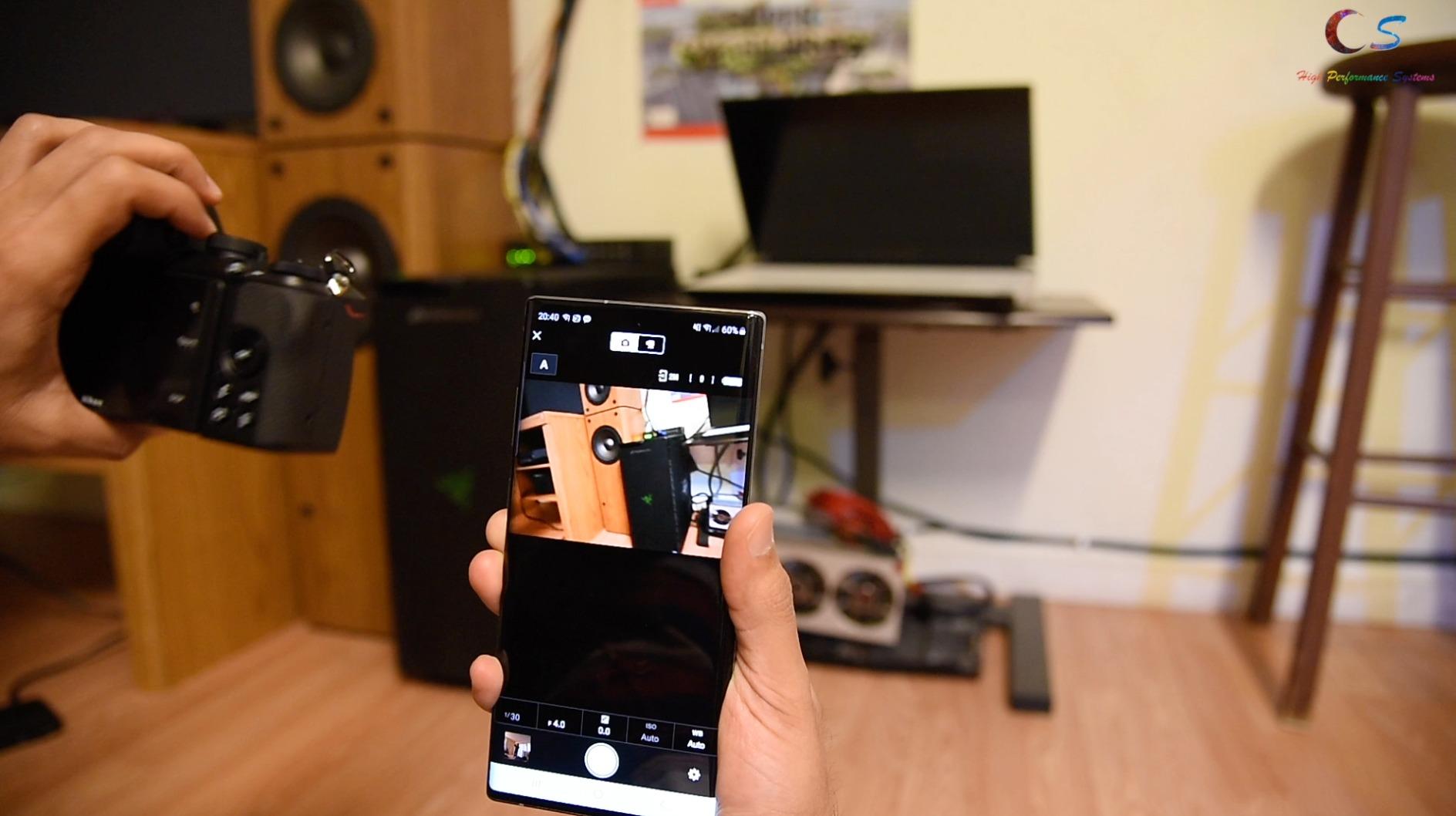
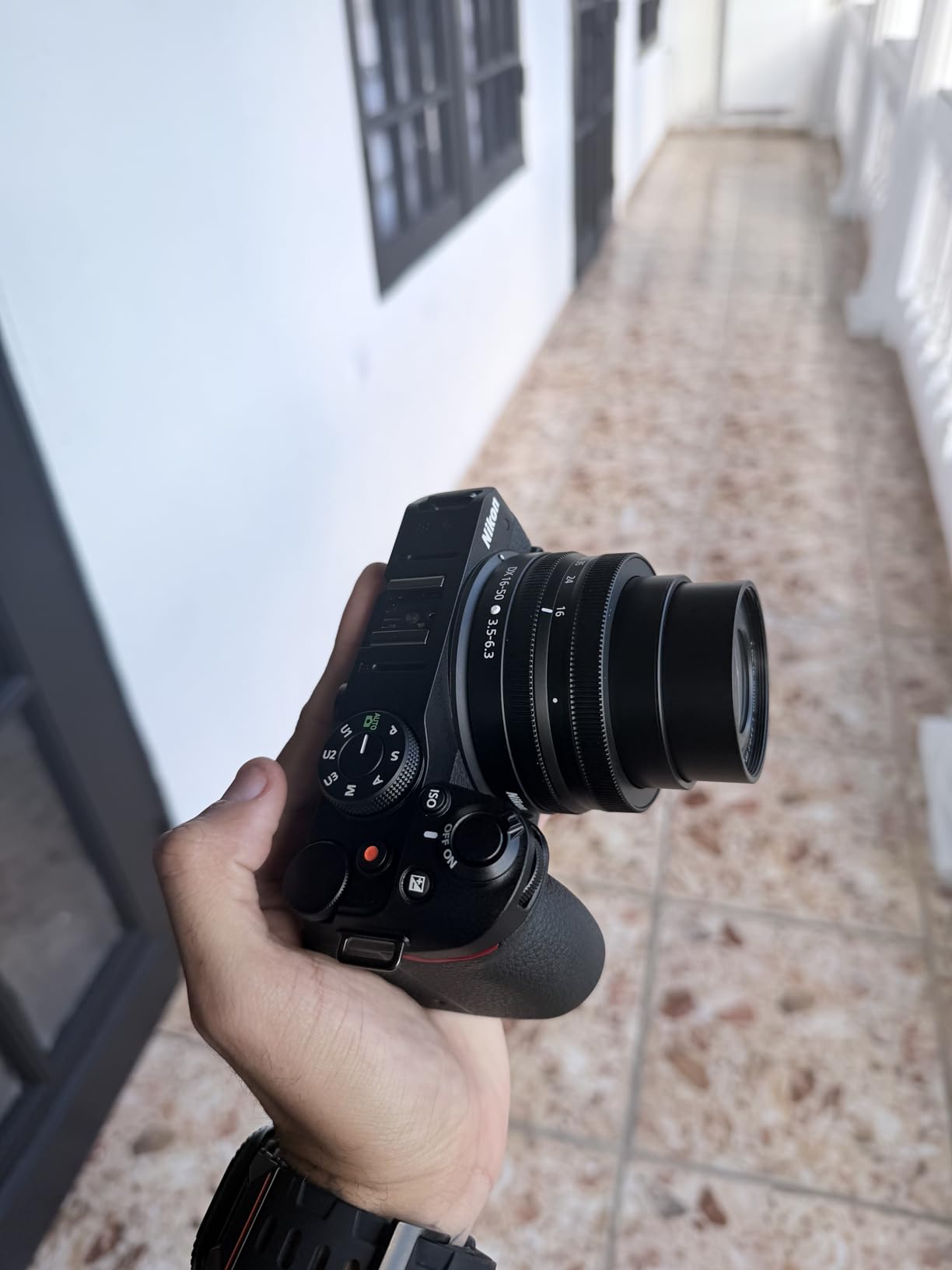
The Z 50 is the smallest body here with a real viewfinder, and that combination is unusual. At 14.4 ounces with the NIKKOR Z DX 16-50mm f/3.5-6.3 VR attached, it disappears into a coat pocket, which is the whole point of a street camera. Owners regularly describe it fitting in a coat with the DX lens.
The 1.02x magnification viewfinder has minimal lag and good clarity, so bright sun is not a problem. High-ISO performance compares well with older DX Nikon DSLRs, and the 209-point hybrid autofocus with tracking covers most of the frame.
It is also the first DX body on the wide 55mm Nikon Z mount, which means the adapter path to full-frame glass is open if you grow into it.
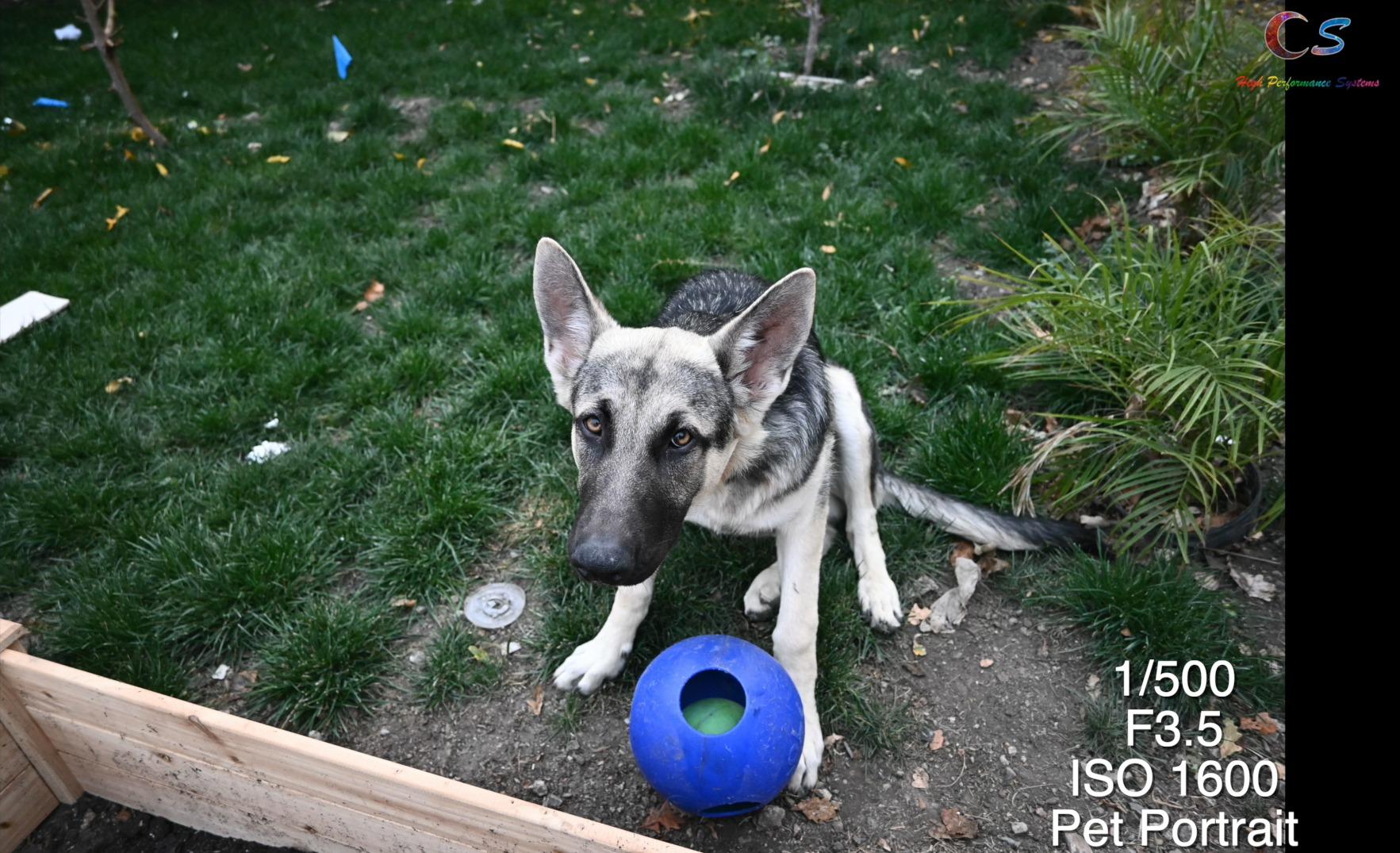
Compromises are technical. A single UHS-I card slot limits buffer and video throughput, Micro USB is dated, and the EN-EL25 battery is not shared with other Nikon models. Stabilization comes from lens VR rather than the body, so stabilised glass matters.
The menu system carries many shooting modes, and reviewers note it takes time to learn. The 3.2-inch flip-down screen with a dedicated selfie mode is useful for self-portraits and vlogging, though it is not a full vari-angle panel.
Who should stay inside Nikon Z
If you already own Nikon F-mount DSLR lenses, the FTZ adapter makes this the cheapest path into mirrorless without selling your glass. That advice comes up constantly in photography forums and it is sound: adapters cost far less than a body plus a lens.
For everyone else, the Z mount’s current lens range is narrower than Sony E, so check that the lens you want later exists before you commit.
Street shooting settings that work on this body
Auto ISO with a ceiling around 6400, single-point AF for deliberate compositions, and the 11 fps burst for decisive moments. The DX crop factor works in your favour on the street: the 16-50mm behaves like a 24-75mm equivalent, and lenses are smaller and lighter than full-frame equivalents.
8. Nikon Z 30 Is Best for Streaming and USB-C Webcams
Nikon Z 30 with Wide-Angle Zoom Lens | Our most compact, lightweight mirrorless stills/video camera with 16-50mm zoom lens | Nikon USA Model
20.9 MP DX CMOS
209-point AF with eye detect
Flip-out selfie screen
4K30 and 1080p60
Pros
- Smallest and lightest Nikon Z body
- Plug-and-play USB-C webcam and streaming
- Eye detection for people and pets
- Strong stabilization for the class
Cons
- No electronic viewfinder
- 20.9 MP below newer APS-C bodies
- Kit lens zoom is limited
- Single card slot
The Z 30 is built around one job: making good video on your own. The flip-out selfie monitor, red REC light and built-in stereo microphone with adjustable sensitivity are the details a vlogger notices on day one. It also runs as a plug-and-play webcam over USB-C with constant power, so it works as a streaming camera with no capture hardware.
It is the smallest and lightest Nikon Z body at 12.32 ounces, which is why owners carry it for travel as well as video. Autofocus uses 209 hybrid points with eye detection for people and pets, and 4K at 30p plus Full HD 60p streaming over USB-C covers the usual needs.
Owners also praise the stabilization and low-light performance for the class, and the fact that it uses the full NIKKOR Z lens lineup as you grow.
The lack of an electronic viewfinder is the most common complaint, and it is the right complaint for anyone who shoots stills. At 20.9 MP the sensor is also below newer APS-C bodies, which limits how much you can crop. The kit zoom is short, and there is a single card slot.
Buy it for video and travel. If you mostly shoot photographs, the Z 50 gives you the same lens system with a viewfinder, and that is the smarter buy.
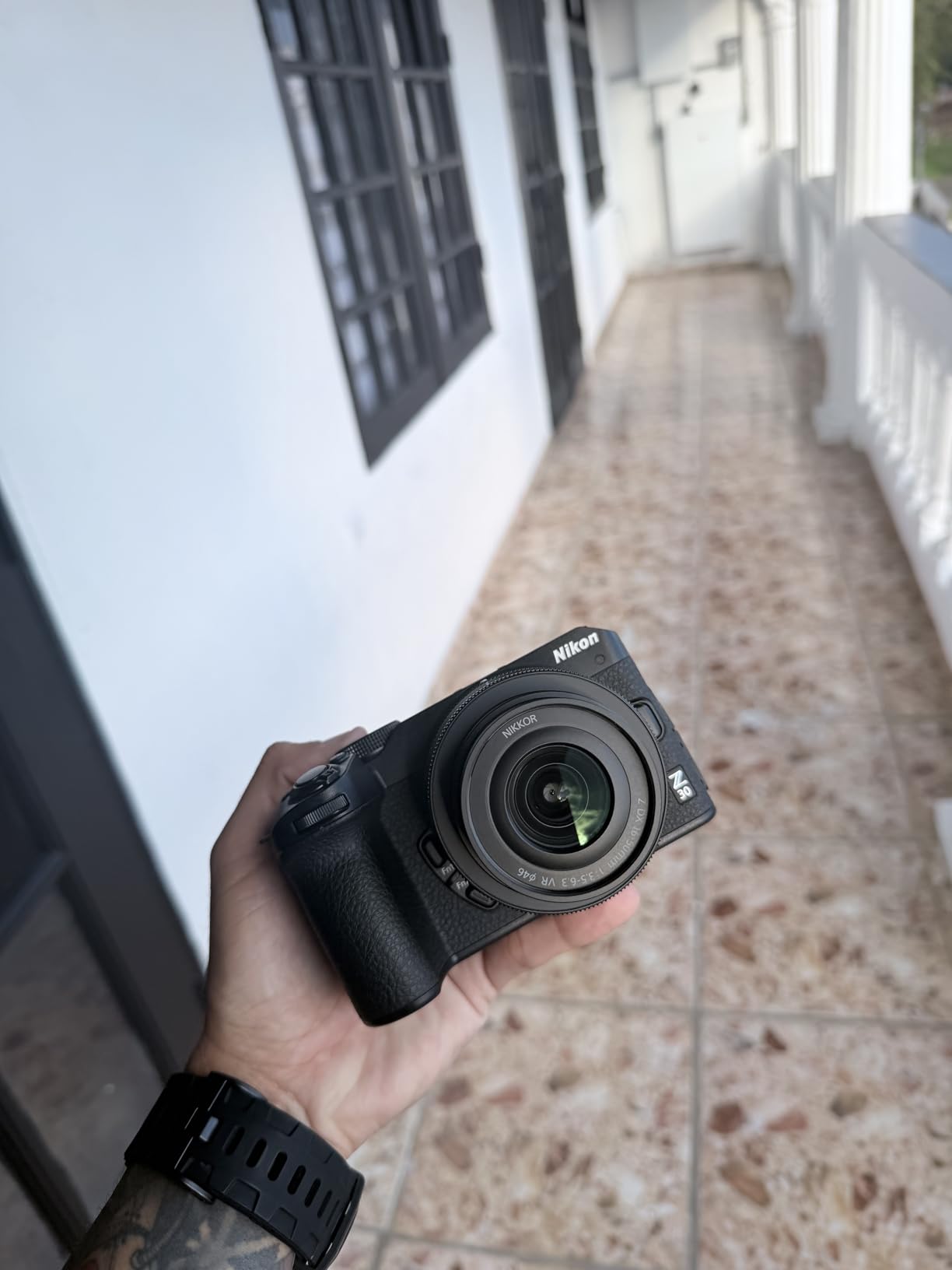
Z 30 versus Z 50 for a first camera
Both use the same mount, so lenses are interchangeable between them. The Z 30 is lighter and video-focused. The Z 50 adds an eye-level viewfinder and better handling for stills, at a slightly larger size.
Buy the Z 30 if your first output is video. Buy the Z 50 if you want one camera that does both without compromise.
Streaming setup notes
Use the flip-out screen for framing, plug USB-C in for power and signal, and set the mic sensitivity so your keyboard is not in every take. Monitor framing is not an option without an external screen, so a cheap field monitor changes the experience more than a different body would.
9. OM System E-M10 Mark IV Is Best for Stabilization
OM SYSTEM Olympus E-M10 Mark IV Silver Micro Four Thirds System Camera M.Zuiko Digital ED 14-42mm F3.5-5.6 EZ kit 20MP Sensor 5-Axis Image Stabilization 4K Video Wi-Fi
20 MP Micro Four Thirds
5-axis IBIS up to 4.5 stops
121-point contrast AF
1/16000 sec max shutter
Pros
- Class-leading 5-axis in-body stabilization
- 16 art filters for creative looks
- Built-in flash plus viewfinder
- Compact retro-styled body
Cons
- Smaller sensor limits low light and dynamic range
- 121-point contrast AF trails phase-detect systems
- Smaller M.Zuiko lens ecosystem
- Single card slot
Nothing else in this list stabilises the sensor itself, and that is a bigger deal than it sounds. In-body 5-axis stabilization with up to 4.5 shutter speed steps of compensation means you can handhold at shutter speeds you would normally dismiss, which is how you get sharp photos in a dim church or a dusk street without buying fast glass.
The E-M10 Mark IV is also a joy to hold. The compact silver body, the flip-down monitor with automatic selfie mode, and 16 art filters across 31 types let a beginner produce a distinctive look without opening editing software. Shutter speeds run to 1/16000 sec, and you keep a built-in flash and a 1.23x viewfinder in a small package.
It also records 4K DCI video at 12-bit through a single UHS-II slot supporting cards up to 2048 GB.

The costs are real. The Micro Four Thirds sensor is smaller than the APS-C options, so low light and dynamic range trail them. The 121-point contrast-detection autofocus is the weakest tracking in this group, which shows with fast subjects. And the M.Zuiko lens ecosystem is smaller than Sony E, Canon RF or Nikon Z, so long glass costs more.
Buyers accept these trade-offs because stabilization partly compensates for the smaller sensor.
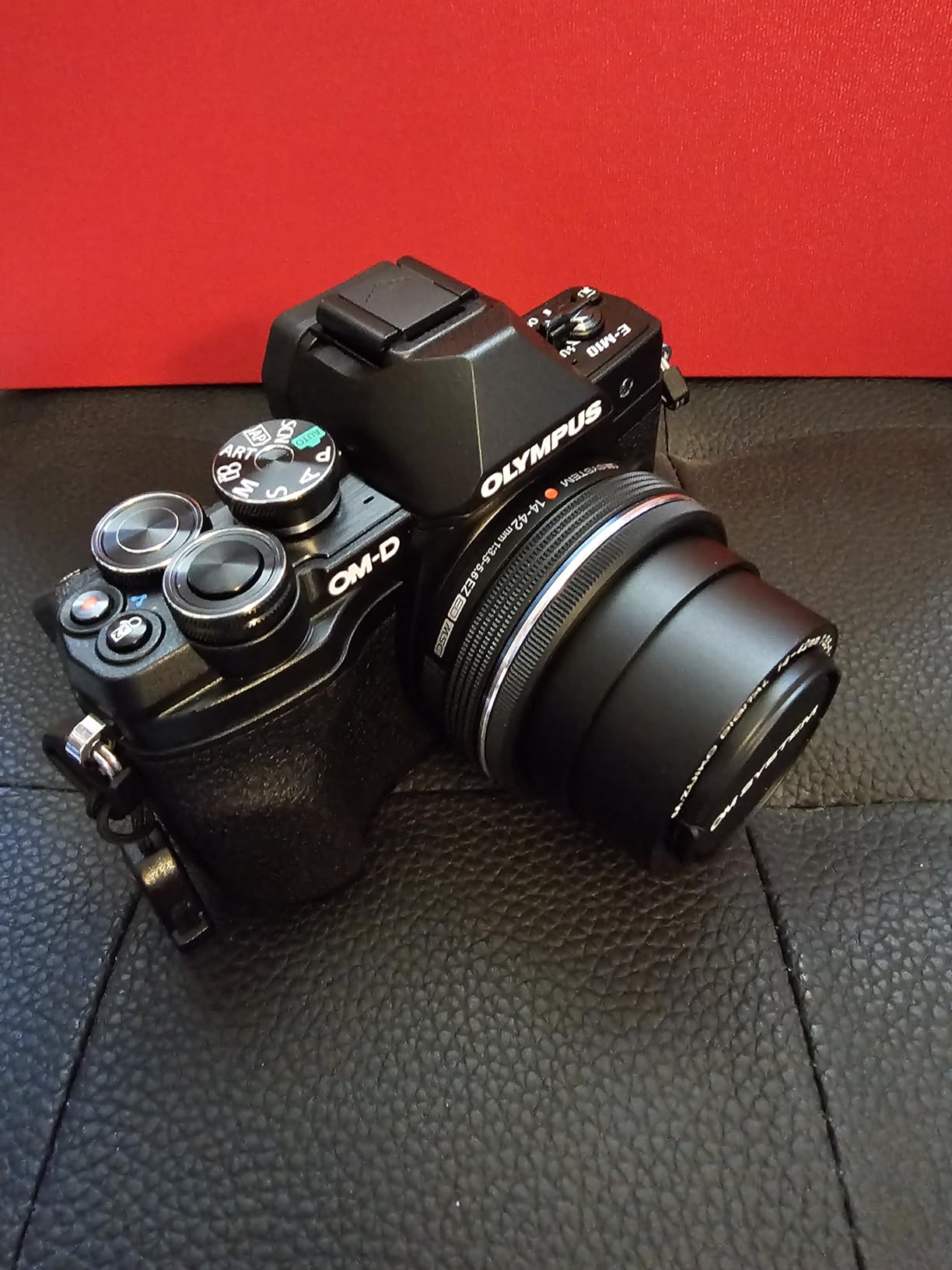
Do you need in-body stabilization as a beginner
If you shoot handheld in low light, travel at dusk, or anything that is not on a tripod, yes. If you mostly shoot in daylight, lenses with optical stabilization cover it. Stabilization becomes a dealbreaker the first time you handhold a long lens indoors.
This is the one body here where in-body stabilization means you can save money on lenses and still shoot in poor light.
Micro Four Thirds for a first system
The format’s advantage is physical: lenses and bodies are small, which is why this camera suits a small bag. Its disadvantage is reach and low light. Check that the focal lengths you need exist before committing, and our gimbal guide for mirrorless cameras covers stabilising video on a small rig.
10. Panasonic Lumix G85 Has the Best Video Tooling
Panasonic LUMIX G85 4K Digital Camera, 12-60mm Power O.I.S. Lens, 16 Megapixel Mirrorless Camera, 5 Axis in-Body Dual Image Stabilization, 3-Inch Tilt and Touch LCD, DMC-G85MK (Black)
16 MP Micro Four Thirds no low-pass
5-axis Dual IS
4K QFHD post focus
Weather-sealed body
Pros
- 5-axis Dual IS in photo and video
- Weather sealed with the kit lens
- 12-60mm covers 24-120mm equivalent
- 4K pre-burst and post focus
- Deep physical controls and dual mode dials
Cons
- 16 MP is the lowest resolution here
- 4K is cropped and limited in bitrate
- Autofocus trails newer phase-detect systems
- No headphone jack
The G85 is the odd one out and that is its appeal. Everything about it is designed for someone who wants manual control over video, and it is the only weather-sealed body in this list. Long-term owners treat it as a value leader for video work, and the reasons are specific: a 5-axis in-body dual stabilization system working in both photo and 4K recording, a mic hot shoe with an external mic jack, peaking and zebra stripes, and adjustable colour temperature from 2500K to 10000K in 100K steps.
The 12-60mm Power O.I.S. kit lens is more capable than most kit zooms, covering a 24-120mm equivalent range with stabilization. The dual custom mode dials and programmable Fn buttons let you build a control layout you will still recognise on a more advanced body later.
Two features are unusual on a stills camera: 4K pre-burst captures up to 30 fps so you can choose focus after the shot, and 4K Post Focus refocuses an image you already took.

The compromises stack up, though. 16 MP is the lowest resolution in this roundup and heavy cropping shows it. 4K recording is cropped and limited in bitrate. Autofocus is not competitive with leading phase-detect systems, especially in video, which is the one place you might expect this body to win.
Battery life is moderate, and there is no headphone jack for monitoring audio on the move. Some owners also flag menu quirks that take time to learn.

Is an older Micro Four Thirds body still worth it in 2026
Yes, if video tooling and weather sealing matter to you. The G85 gives you a mic jack, zebra stripes, peaking, external control dials and a sealed body for less than current APS-C bodies cost, and the lens system it uses is still expanding.
No, if your priority is autofocus on moving subjects or the highest still image quality. In those cases the R10, a6100 or a6400 are stronger choices despite newer-generation features you do not need yet.
Where a rig changes the result
Because the body is light and the 12-60mm is compact, it suits a small handheld rig. If you plan to shoot moving video often, our camera cage picks and gimbal roundup will matter more to your footage than a body upgrade.
How to Choose the Best Mirrorless Camera for Beginners
APS-C is the right sensor size for a first camera
APS-C is the sensible default for a first mirrorless camera. It gives you real autofocus speed, decent high-ISO performance and lenses that cost less than their full-frame equivalents, and you can always move up later. Six of the ten bodies here use APS-C.
Full-frame buys you shallower depth of field and better low light, at larger size and higher lens cost. The Canon EOS RP is the way in here if that trade suits you. Micro Four Thirds makes the smallest bodies and, in the E-M10 IV, the only in-body stabilization, but with smaller sensors and less reach.
The lens ecosystem costs more than the body
Decide on the mount before the megapixels. Sony E has the deepest range of affordable APS-C lenses and the strongest used market, which makes the a6400 and a6100 strong value routes. Canon RF has a wide mount and the cheapest APS-C primes through adapters, though third-party RF glass is more limited. Nikon Z is compact and well built with a narrower range. Micro Four Thirds is small and complete but long glass costs more.
If you already own DSLR lenses, adapters often cost less than a new body and lens. Canon EF and EF-S glass adapts to the RP and R-series bodies, and Nikon F glass reaches the Z mount via the FTZ adapter. That path deserves serious consideration before you sell anything.
The three lenses every beginner should actually buy
For most beginners the answer is one kit zoom first, then two primes later. A short word about the kit lens: owners on photography forums are often dismissive of them, but the honest answer is that a 16-50mm or 18-55mm is genuinely useful for learning because it covers wide angle to short telephoto, letting you focus on exposure and focus rather than focal lengths.
A wide-angle prime, roughly 16mm or 23mm equivalent, for interiors, landscapes and group shots indoors where you need the light and the space.
A normal prime around 35mm or 40mm equivalent, the most flexible single lens for everyday work and street photography.
A short telephoto prime around 85mm equivalent for portraits, with a wide aperture if your budget allows. A good f/4 prime is lighter and cheaper than an f/2.8 and often sharp enough, so do not overspend here.
Buy them one at a time, as you find out what you actually photograph. That advice from reader comments on kit lenses is the most repeated and most correct piece of camera buying wisdom in our research.
Eye detection and the electronic viewfinder decide how fast you learn
Subject detection autofocus is the feature that makes photography with people enjoyable. Every body here has eye detection except the E-M10 IV, which uses a 121-point contrast-detection system. Where you also shoot moving subjects, burst rate matters: the R10 runs to 23 fps electronic with pre-shooting, the R50 and E-M10 IV reach 15 fps, and the rest sit at 11 fps.
The viewfinder is the other one. A camera without an electronic viewfinder, such as the ZV-E10 or Z 30, is fine for video and perfectly usable for stills indoors, but framing in direct sun is frustrating. Every other body here has one, and the Z 50 and a6100 pair a viewfinder with a body small enough to carry anywhere.
Video features only matter if you know what you will shoot
If video is the reason, look at the specifics: does it flip fully to the side, is there a mic input, is there a headphone jack, does it run long takes without overheating, and can it stream over a single USB cable. The ZV-E10, Z 30 and G85 answer most of those well. The G85 is the only one here with a mic hot shoe and a headphone jack, and the only weather-sealed body.
If video is not the reason, a 3-inch vari-angle screen and a 4K record button are enough. Owners of 4K-capable bodies frequently report that they shoot 1080p anyway.
Mirrorless versus DSLR, and buying used
There is a visible counter-movement asking whether older DSLRs are right for beginners again, and the honest answer is that a used DSLR is a fine budget path. You get an optical viewfinder with no lag, a predictable battery, and cheap used glass. You do not get modern subject tracking, 4K video, or a mount that will take new lenses for a decade.
The disadvantages of mirrorless are worth knowing: smaller batteries, electronic viewfinder lag on older bodies, no headphone jack on cheaper models, and electronic shutters that can band under artificial lighting. None of that matters for most beginners in daylight.
Buying used is sensible for a first camera. Check the shutter count, inspect the sensor in full-screen view for dust or scratches, test autofocus at both ends of the kit zoom, and confirm the battery holds a charge. A used entry-level body with a good lens is often a better purchase than a new body with a kit zoom, and refurbished models appear often.
Frequently Asked Questions
Should I get a mirrorless camera as a beginner?
Yes. Mirrorless bodies now give beginners subject-detection autofocus, 4K video and electronic viewfinders at entry-level prices, and they use a mirrorless lens mount that will take new lenses for many years. The main drawbacks are smaller batteries and no optical viewfinder. If you already own DSLR lenses, an adapter may let you keep them for less than a new body and lens.
What mirrorless camera is recommended for beginners?
The Canon EOS R50 is our top pick. It combines a 24.2 MP APS-C sensor, subject detection for people, animals and vehicles, a 2.36-million-dot electronic viewfinder and a 651-zone autofocus system in a 16-ounce body. The Sony Alpha a6400 is the best value route into the Sony E lens system, and the Canon EOS R10 is the pick for fast action.
What three lenses should every photographer have?
A wide-angle prime near 16mm or 23mm equivalent for interiors and group shots, a normal prime around 35mm or 40mm equivalent for everyday work, and a short telephoto prime around 85mm equivalent for portraits. Buy them one at a time after you have used a kit zoom for a few months, so you know which focal length you actually reach for.
What is the disadvantage of a mirrorless camera?
Batteries are smaller than DSLR batteries, so a spare is usually needed for a full day. Entry-level bodies often have no headphone jack for monitoring audio, and electronic shutters can band under artificial lighting. Some cheaper models have no electronic viewfinder, which makes framing in bright sun difficult. Older bodies can also show electronic viewfinder lag when shooting fast action.
Why are photographers ditching mirrorless for DSLR again?
A used DSLR gives you an optical viewfinder with no lag, a long battery life and cheap used glass at a low cost, which appeals to photographers buying a first or backup body on a budget. What you give up is modern subject-tracking autofocus, 4K video and a mount that will accept new lenses for the next decade. For most beginners the mirrorless route is the better long-term choice.
What is the best used mirrorless camera for beginners?
A used entry-level APS-C body with a kit zoom is the most sensible first purchase. Check the shutter count, inspect the sensor at full-screen magnification, test autofocus at both ends of the zoom, and confirm the battery holds a charge. A used body with a better lens is often a stronger purchase than a new body with a kit zoom.
Conclusion
The best mirrorless cameras for beginners are not ranked by megapixels. The Canon EOS R50 takes the top spot because its menus teach while your subject detection and 651-zone autofocus do the hard work, and it leaves you with a lens mount built to last. The Sony Alpha a6400 is the value answer if lens cost drives your decision, and the Canon EOS R10 is the right buy the moment subjects start moving fast.
Everything else in 2026 is a specialist route. The Canon EOS RP for full-frame, the Sony ZV-E10 and Nikon Z 30 for video, the OM System E-M10 Mark IV for in-body stabilization, and the Panasonic Lumix G85 for weather sealing and manual video control. Pick the one that matches what you will actually shoot, spend the difference on a prime lens, and go take photographs.