
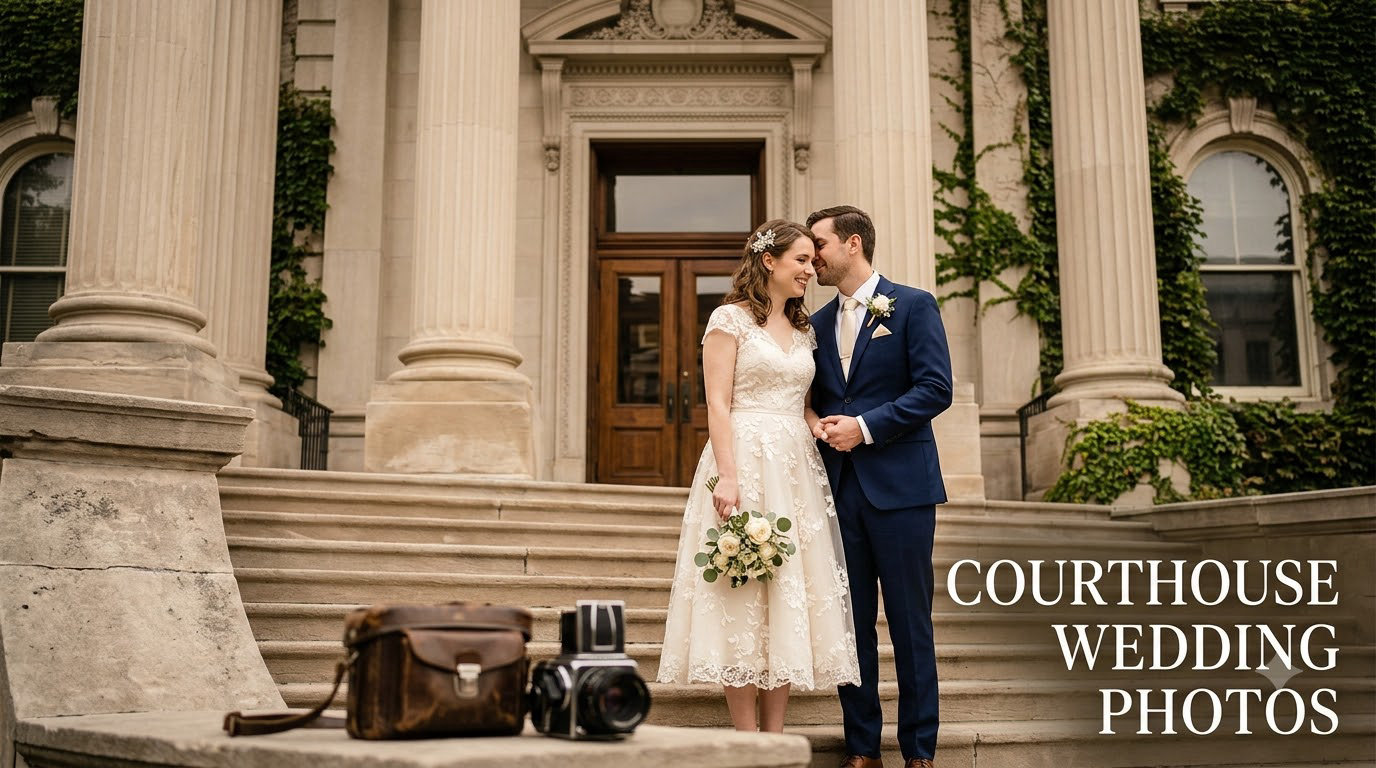
I have photographed over 80 courthouse weddings in the past five years, and I still get teary-eyed every time. There is something about a couple choosing a simple, meaningful civil ceremony that strips away the noise and leaves only love. If you are planning a courthouse wedding, this guide covers everything you need to know to capture beautiful, lasting photos.
Yes, it is cheaper to get married at a courthouse than a traditional venue wedding. Most couples spend between $100 and $500 on the ceremony fee and marriage license combined, compared to thousands for a banquet hall. Add a photographer, and you are still often below what a single venue deposit would cost. The savings are real, and so is the intimacy.
Table of Contents
What to Expect During Your Courthouse Ceremony
A courthouse ceremony is short, focused, and surprisingly emotional. Most civil ceremonies last between 5 and 30 minutes depending on the judge and whether you choose to add personal vows. You will walk into a small courtroom, an officiant will guide you through the legal marriage script, you will exchange rings, sign the marriage license, and that is your wedding.
I have seen grooms who planned to be stoic break down during the vows. I have seen grandmothers crying in the third row. The intimate setting makes every emotion visible, and that is what makes courthouse wedding photos so powerful. Your photographer will usually be allowed to stand at the front of the room or in the back, depending on the judge’s preference.
Family can absolutely attend your courthouse ceremony. Most courthouses allow between 5 and 30 guests in the room, depending on the space. Some couples choose to invite only parents and siblings. Others pack in aunts, uncles, and best friends. Either way, the small guest list keeps the day personal and lets your photographer focus on the people who matter most to you.
The historic architecture alone is worth documenting. Many courthouses were built in the 1800s or early 1900s, with marble staircases, tall windows, and ornate ceilings. I almost always take a few portrait photos using these features as a backdrop. Even if the weather is terrible outside, you can get stunning shots indoors under the rotunda.
What happens during a typical courthouse ceremony
The judge or officiant welcomes you and your guests
You each affirm that you are there of your own free will
You exchange vows (standard legal script or personal)
You exchange rings if you choose
The judge pronounces you married
You sign the marriage license and witness paperwork
The judge signs and files the license on your behalf
The 30/5 Minute Rule and Your Photography Timeline
The 30/5 minute rule is a planning framework I use for every courthouse wedding: budget 30 minutes of buffer time around the 5-minute ceremony for paperwork, getting positioned, and emotional reactions. This padding is critical because you cannot rush a judge, you cannot predict traffic, and you cannot recreate lost moments.
Your photographer should arrive at least 30 minutes before the scheduled ceremony. This window lets them scope the courthouse for lighting, identify the best portrait spots, and check in with the officiant about photography rules. After the vows, give yourselves another 30 minutes for family portraits and a quick couple session before guests scatter.
For full coverage of your day, plan for around three hours of photography. That gives you one hour for the ceremony and immediate family photos, plus two hours for a relaxed portrait session at nearby locations. Some couples prefer shorter two-hour coverage if they keep everything at the courthouse. Both options work, and your photographer can help you decide based on your priorities.
Best Locations for Couple Portraits After the Ceremony
The best couple portrait locations are within walking distance of your courthouse and offer architectural variety, natural light, and a touch of greenery. Downtown areas near historic courthouses are typically rich with all three. I always scout the route from the courthouse exit to nearby parks, bridges, and iconic buildings before the wedding day.
Look for natural light at the courthouse stairs or main entrance right after the ceremony. The marble or stone facades bounce light beautifully and require no extra setup. A wide angle captures the building scale. A 50mm or 85mm lens on a couple in close brings out emotion. Then we walk three blocks to the next spot while your photographer snaps candid walking shots between poses.
Historic hotels, public gardens, fountains, and bridges within five blocks of the courthouse make excellent second and third portrait locations. Public libraries, train stations, and clock towers are also favorites because they add a vintage, meaningful backdrop. Ask your elopement photographer ahead of time what they recommend for your specific courthouse because every downtown has hidden gems.
Popular portrait backdrop ideas
Grand courthouse steps or columns for a classic look
Tree-lined streets for soft, natural portraits
Waterfront or fountains for romantic reflections
Bridges or overpasses for cinematic urban energy
Public art or murals to add color and personality
Family Portrait Tips for Courthouse Weddings
Family portraits at courthouse weddings need to be fast, organized, and intentional because you rarely have more than 20 minutes for the entire set. I always send couples a family shot list template one week before the wedding. We write down every combination they want, from immediate family to grandparents to that one aunt who flew in from across the country.
Designate one person on each side of the family as the wrangler. Their only job is to gather everyone for photos and keep them on schedule. Your photographer should announce combinations clearly and keep momentum moving. With five minutes of focused execution, you can capture 10 to 15 family group combinations including parents, siblings, grandparents, and individual parent couples.
Candid family shots during the walk from the ceremony to your portrait location almost always make the final gallery. The laughter, the hugs, the parent dabbing their eyes while walking behind you. Those unposed moments count as much as any formal portrait and usually end up as prints on the wall.
What to Wear to a Courthouse Wedding
Wear whatever makes you feel like yourself getting married. There is no dress code rule, so use this freedom wisely. Most brides lean toward white or ivory midi dresses, tailored jumpsuits, or vintage-inspired tea-length gowns. Grooms often wear a fitted suit in navy, charcoal, or beige with a tie that matches their partner’s outfit.
Comfort matters more than you think. You will walk several blocks, climb courthouse stairs, and likely stand for portraits. Bring a backup pair of low heels or flats if your dress shoes hurt. For outdoor portraits in cooler months, layer with a tailored coat or cashmere wrap that complements your look. Many brides also carry a small clutch bouquet instead of a full-sized arrangement, which photographs beautifully and is easier to manage during the day.
Avoid logos and bright patterns that distract from your faces. Photographs focus on eye contact and emotion, and bold graphics pull attention away. Solid colors, subtle florals, and classic textures photograph well across all lighting conditions. If you want a personal statement, let it come through your accessories, shoes, or a meaningful piece of jewelry.
Photography Permits and Courthouse Rules You Need to Know
Photography permits are required at some courthouses and not at others, and the rules vary widely by city. In Washington DC, for example, no permit is required to photograph a civil ceremony. In New York City, commercial photography on courthouse steps requires a permit. Always call the clerk’s office at least two weeks before your wedding to confirm the current rules for your specific courthouse.
Most judges allow photography during the ceremony itself, even when signs technically prohibit it. I have photographed over 80 ceremonies without issue by introducing myself, asking the judge’s preference, and following their guidance. The five words your photographer should say are: may I photograph this ceremony? Most judges say yes and add one or two simple rules such as staying in one place or remaining quiet during the vows.
Tripods, flashes, and large setups are usually restricted inside the courtroom. Your courthouse wedding photographer should plan to shoot handheld with available light or a small on-camera flash. Outside the courthouse, all rules disappear. You can use tripods, multiple cameras, family phones, even drones in some locations. Save the elaborate setups for the portrait session after the ceremony.
Quick courthouse photography questions to ask
Is a photography permit required for this courthouse?
Can the photographer stand at the front of the room?
Are flashes allowed during the ceremony?
Is video recording allowed during the legal portion?
Can the photographer use the courthouse steps for portraits without a permit?
How Much Does a Courthouse Wedding Photographer Cost
Courthouse wedding photographers typically charge between $400 and $1,800 for full coverage depending on hours, location, and what is included. One-hour coverage with edited gallery usually starts around $400 to $600. Two-hour coverage runs between $700 and $1,000. Three hours with an engagement session or fine art album can range from $1,200 to $1,800 or higher.
Many elopement photographers now offer dedicated courthouse packages because demand has grown. These packages commonly include two hours of coverage, a digital gallery of edited images, and an online print release. Higher-tier packages add a second shooter, a fine art album, or a 35mm film camera for hybrid coverage.
Tipping is customary but not required. A 15 to 20 percent tip for excellent service is appreciated. If your photographer delivered every image on time and went above and beyond, a Venmo tip or thoughtful review carries similar weight. Many photographers also include gratuity in their package pricing, so check your contract before tipping.
Courthouse Wedding Photography Checklist
Bring your marriage license, valid photo ID for both partners, and any witness paperwork if your state requires it. Some states allow the officiant and one witness. Others require two separate witnesses. Check your local requirements one month and again one week before the ceremony so no surprises show up on the day.
Confirm your courthouse appointment 48 hours in advance, especially because judges occasionally close for training days or holidays. Have your photographer’s contact information saved on your phone. Share the timing, parking instructions, and entry doors with your guests in advance. Bring tissues and water. Bring a small snack for after the ceremony. Bring your vows if you wrote them on paper.
Plan your celebration after the ceremony thoughtfully. Your guests will want somewhere to gather once the legal portion ends. Favorite ideas include a brunch reservation at a nearby cafe, a private dining room, a rooftop picnic, or a small dessert reception at a family home. Many couples photograph the celebration too because the joy of being newly married deserves to be on camera.
Your hour-by-hour timeline
2 hours before: hair and makeup finished, photographer begins getting ready photos
60 minutes before: arrival at courthouse, marriage license verified by clerk
30 minutes before: photographer pre-shoots details, guides family into position
Ceremony time: photographer captures vows, rings, reactions, and first kisses
Immediately after: family portraits inside or at the entrance
30 to 60 minutes after: couple portrait session at 2 to 3 nearby locations
Final 30 minutes: candid celebration, congratulations, and clean exit shots
FAQs
Is it cheaper to get married at a courthouse?
Yes, a courthouse wedding is significantly cheaper than a traditional venue wedding. The marriage license and ceremony fee combined typically range from $100 to $500. Compare that to traditional weddings where venues alone can cost $5,000 to $15,000 or more. Most couples save 80 to 95 percent on their total ceremony costs.
What does a typical courthouse wedding look like?
A typical courthouse wedding is a short civil ceremony lasting 5 to 30 minutes, performed by a judge or officiant in a small courtroom. You exchange vows, rings, and sign the marriage license. Family and a small group of guests usually attend. After the ceremony, you take family portraits and couple portraits around the courthouse and nearby downtown locations.
How long is a courthouse ceremony?
Most courthouse ceremonies last between 5 and 30 minutes. The shortest ceremonies cover only the legal script and signature in about 5 minutes. Longer ceremonies include personal vows, ring exchanges, and sometimes a brief reading or musical piece. Plan for a 30-minute buffer around the scheduled time to account for paperwork, getting positioned, and emotional reactions.
Can you take photos at a courthouse wedding?
Yes, you can take photos at a courthouse wedding. Most judges allow photography during the ceremony even when signs suggest otherwise. Introduce yourself, ask the judge for permission, and follow their guidance. Photography is generally allowed on the courthouse steps and all outdoor areas without restriction. Some courthouses require a permit for commercial photography, so call the clerk two weeks in advance to confirm.
How much should I tip my courthouse wedding photographer?
Tipping your courthouse wedding photographer 15 to 20 percent is customary for excellent service. Many photographers include a gratuity option in their invoice or contract. A thoughtful online review and personal thank-you note carry similar weight if you want to skip the cash tip. Tip based on the quality of service and your budget, never feeling pressured to exceed what feels comfortable.
What do I need to bring to a courthouse wedding?
Bring a valid photo ID for both partners, your marriage license, and any required witness paperwork. Check your state’s requirements for witness numbers at least one week before the ceremony. Bring tissues, water, your written vows if you have them, and your photographer’s contact information. Confirm the courthouse appointment 48 hours in advance because judge schedules can change.
Start Planning Your Courthouse Wedding Photos Today
Courthouse wedding photos succeed when the planning is intentional but the day feels effortless. Lock down the marriage license, pick an officiant, decide on outfits, choose your photographer, and confirm the location three weeks ahead. Then trust the process and let your photographer handle the documentation while you focus on the person standing across from you.
If you are ready to book a photographer for your 2026 courthouse wedding, reach out through our contact form. We help couples plan everything from the timeline to the portrait locations, so your courthouse wedding photos capture every meaningful moment.