
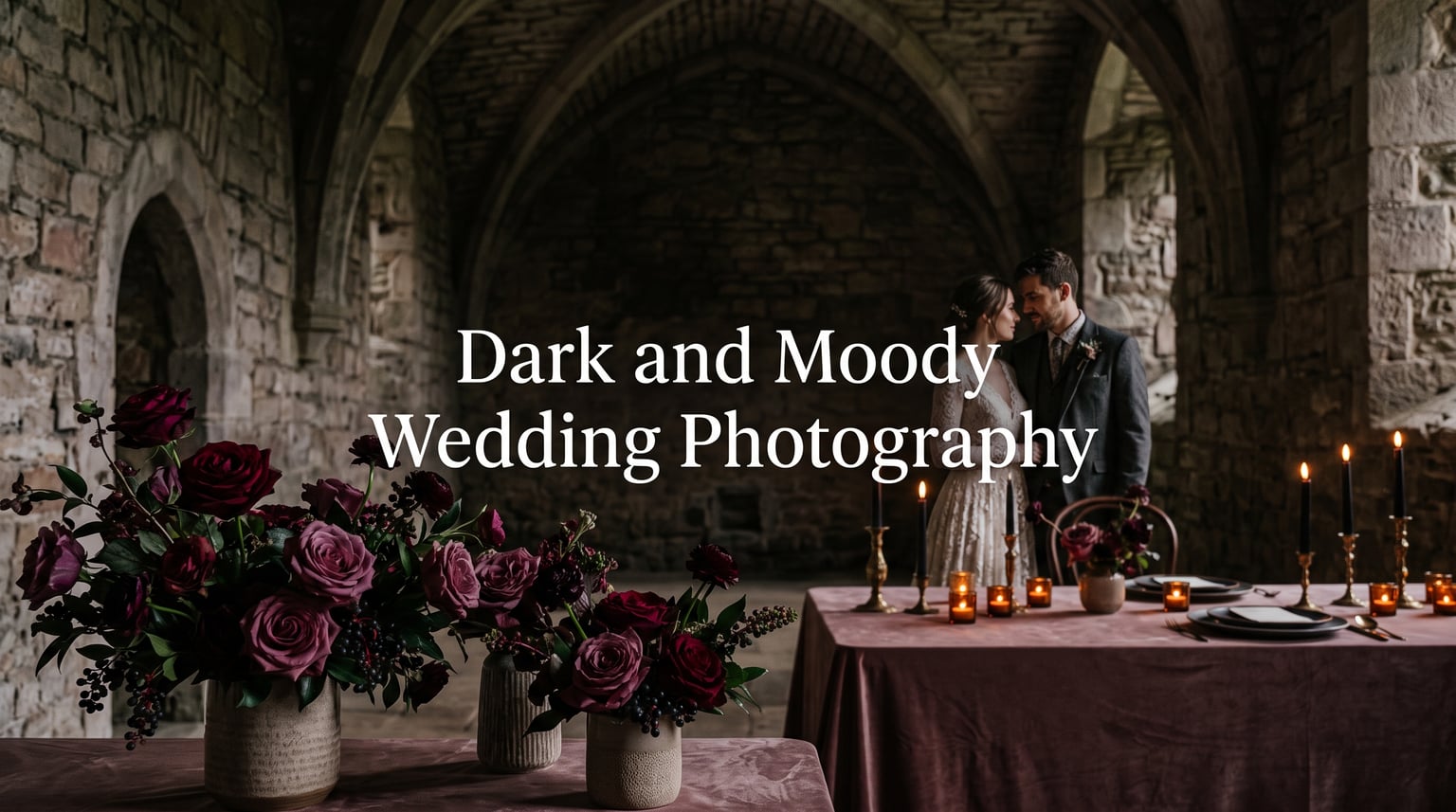
Dark and moody wedding photography is one of the most emotionally charged photography styles you can choose for your wedding day. It uses rich, saturated colors, deep intentional shadows, warm cinematic tones, and high-contrast lighting to transform your moments into images that feel like stills from a beautifully made film.
If you’ve been stopped mid-scroll by a candlelit ceremony portrait or a reception scene where the shadows carry as much emotion as the couple themselves, you already understand the pull of this style. It’s bold. It’s romantic. It makes your images look like they belong in an art gallery rather than a digital album.
In this guide, we’ll walk you through everything you need to know: what the style actually means, how to build a color palette that supports it, which venues photograph best, what florals and decor to choose, how lighting shapes the entire mood, what to wear, how photographers technically achieve the look, and how to decide whether this aesthetic is the right fit for your wedding. By the time you finish reading, you’ll have a clear picture of how to bring this aesthetic to life on your wedding day in 2026.
Table of Contents
What Is Dark and Moody Wedding Photography?
Dark and moody wedding photography is a style defined by deep, warm tones, deliberately placed shadows, high contrast between light and dark areas, and a cinematic editing approach that creates intimate, emotionally rich images. Rather than maximizing brightness and minimizing shadow, photographers working in this style treat shadow as a compositional tool — something to be shaped, not eliminated.
The style draws from a classical painting technique called chiaroscuro, which means “light-dark” in Italian. Renaissance painters used chiaroscuro to give their subjects depth, volume, and emotional weight by placing strong light sources against deep shadows. A dark and moody wedding photographer applies the same principle: one strong, directional light source, with shadow filling in the rest of the frame to create depth and atmosphere.
This is what separates dark and moody photography from images that are simply underexposed or poorly lit. Genuinely moody wedding photography is deeply intentional — you can see the light source, feel the warmth of it, and still find detail in the shadows. Nothing is lost to murkiness. Everything is placed.
The style is frequently described as editorial or cinematic because it approaches each frame with the same intention a film director of photography would bring to a scene. There’s atmosphere. There’s an emotional arc. Each image tells part of a story rather than just documenting a moment in time.
This aesthetic gained significant traction through platforms like Instagram and Pinterest, where dramatic, high-contrast images stood out in feeds dominated by bright pastels and airy whites. In 2026, it’s firmly established as a genuine and lasting wedding photography style with a devoted following among couples who want their wedding images to feel extraordinary rather than conventional.
The key characteristics that define the style include:
Rich, warm color tones — burgundy, amber, forest green, charcoal
Deep, intentional shadows that frame and add dimension to subjects
High contrast between illuminated and shadowed areas
Candlelit, window-lit, and directional light as primary sources
Textured backgrounds: stone walls, exposed wood, velvet, aged plaster
Emotional and candid moments weighted as heavily as posed portraits
Editing that preserves warmth while deliberately deepening shadows
Film-like tonal quality with lifted blacks and pulled-back highlights
Photographers who specialize in this style often describe their approach as “finding the light within the dark.” They don’t flood a scene with light — they locate the one meaningful light source in a room and let shadow do the rest of the work.
Building Your Dark and Moody Color Palette
Your color palette is the foundation of your dark and moody wedding. It shapes how every element of your day photographs — from your florals and table linens to your attire and stationery. Getting the palette right means your photographer has a cohesive visual world to work within from the moment they arrive.
The core of a moody palette lives in what designers call jewel tones: deep, saturated colors that absorb light rather than reflecting it. These colors hold their richness under dramatic lighting and create visual weight in photographs.
Burgundy and deep wine anchor almost every moody wedding palette. They read as richly romantic in photographs, and under candlelight they take on an almost luminous quality. A bouquet of deep burgundy roses against a champagne dress, with dramatic shadow falling across the frame, is one of the most powerful images this style produces.
Emerald and forest green bring an organic, lush quality to the palette. These greens work well in both indoor and outdoor settings, pair naturally with dark florals and textured foliage, and have a depth that holds beautifully in edited images.
Midnight navy and slate replace the whites and creams that dominate brighter aesthetics. Navy table linens, slate bridesmaid dresses, or a charcoal suit on the groom all add visual depth that photographs with extraordinary richness. These neutral darks are the connective tissue that holds a moody palette together.
Deep plum, charcoal, and black work as accent tones throughout. Black taper candles, charcoal stationery with letterpress printing, plum in the florals — these touches create visual weight and cohesion without making the aesthetic feel oppressive.
What to steer clear of: pastels, bright whites, neons, and anything that reflects a significant amount of light. The moody palette needs pigment and depth to hold its character when photographed. A single bright element in an otherwise dark palette can read as a distraction in images.
The metallic choices matter here too. Rather than bright gold or rose gold, moody weddings work best with antique brass, aged copper, and brushed iron. These metals absorb and warm the light rather than bouncing it directly back at the camera, which preserves the controlled atmosphere of the setting.
In practice, the most cohesive moody palettes use three anchoring tones — often a deep red or green, a neutral like charcoal or slate, and a warm metallic accent — and then fill in with texture rather than additional colors. A velvet charcoal table runner with wine-colored tapered candles and antique brass votives carries more visual sophistication than ten competing colors ever could.
Choosing the Perfect Venue for Dark and Moody Wedding Photography
Venue selection might be the single most consequential decision you make if you want genuinely dark and moody wedding photography. The right venue creates the atmosphere before your photographer does anything — and the wrong venue forces them to fight the space all day rather than work with it.
These are the architectural and design characteristics that make a venue work for this style:
Stone, brick, and aged wood architecture. Stone walls absorb light in a way that feels inherently textured and warm. Exposed brick, timber beams, and aged plaster all create surfaces that photograph with depth and character. Historic buildings with years of patina built into their surfaces are ideal.
High ceilings with directional light sources. Tall windows that cast shafts of light across a dark room are one of the most powerful tools in moody photography. The contrast between the illuminated shaft and the surrounding shadow creates drama without any additional setup. If you’ve seen portraits of a bride standing in a single beam of window light in a dark chapel, this is that principle in action.
Controllable ambient lighting. Venues that rely on dimmable chandeliers, Edison string lights, or built-in candlelight give photographers control over the mood throughout the day. Venues with flat, non-dimmable fluorescent overhead lighting are the single biggest obstacle to achieving this style.
Natural texture everywhere. Wood beams, stone floors, copper ceilings, aged plaster walls — these surfaces respond to light in varied, interesting ways that give photographs depth. Modern venues with clean white walls and glass require far more creative effort to adapt for this style.
Venue types that consistently deliver for the dark and moody aesthetic include:
Historic mansions and estates. The grandeur and built-in character of these spaces create an immediate sense of atmosphere. The architectural detail, the patina of age, and the way natural light behaves in rooms designed before electric lighting make these venues a natural home for moody photography.
Converted industrial spaces. Exposed brick, concrete floors, and high industrial ceilings give photographers textured surfaces and shadow-friendly architecture. The raw quality of these spaces contrasts beautifully with the softness of flowers and wedding attire, and that contrast photographs extraordinarily well.
Chapels and cathedrals. Stone construction, high vaulted ceilings, and stained glass that transforms light into colored pools on stone floors — these spaces were built before electric light and they respond to directional lighting in ways that feel almost cinematic without any additional setup.
Wine cellars and barrel rooms. Underground tasting rooms and barrel caves offer intimate warmth, low ambient light, and a natural darkness that photographers can shape beautifully. The warm wood of barrels and the depth of stone walls create a consistently rich backdrop.
Timing matters as much as location. The golden hour in the late afternoon — roughly sixty to ninety minutes before sunset — creates the warm, directional light that moody photography thrives on. An evening reception lit by candles and Edison bulbs after dark gives photographers dramatically more to work with than a midday outdoor ceremony under flat overhead sky.
Florals and Decor That Set the Mood
Florals and decor are where the dark and moody aesthetic becomes most tangible and visual. These are the elements your guests will see and touch, and the elements your photographer will use as compositional anchors throughout the day.
These blooms photograph especially well in this style:
Black dahlias and chocolate cosmos have an almost otherworldly depth that’s hard to achieve with any other flower. They hold their color in low light and add immediate, distinctive drama to any arrangement. If you want your bouquet to stop someone mid-scroll, these are the blooms to reach for.
Deep burgundy and plum roses are reliable anchors for any moody floral design. These roses photograph with incredible richness, especially under candlelight or directional window light. Their velvety petals catch light in ways that create shadow and dimension within a single bloom.
Dusty miller and preserved eucalyptus add silvery-green contrast and texture to dark arrangements. These foliage options read almost grey in shadow, which gives them a cool, muted elegance that complements deep jewel tones without competing with them.
Moody foliage: magnolia leaves, dark ferns, and trailing vines add visual weight to bouquets and table arrangements. They fill space with texture rather than color, which is exactly what a moody arrangement needs.
For decor, the governing principle is the same as the color palette: texture and depth over brightness and shine.
Candles are non-negotiable for this aesthetic. Tapered black or burgundy candles, pillar candles in varied heights, and amber votives scattered throughout the space give photographers dozens of small, warm light sources to work with during the reception. If your budget allows only one major investment in decor beyond the basics, put it into candlelight — it transforms the photography more than almost any other single element.
Table linens in velvet, linen, or jacquard fabrics add tactile richness that photographs beautifully. Velvet catches light differently at every angle, which means it appears to change color and depth as the photographer moves around the table. Midnight blue, charcoal, and deep plum are the most effective linen choices for this style.
Stationery in deep tones — black letterpress, dark watercolor botanicals, wax seals in burgundy or black — signals the aesthetic from the first piece of paper your guests receive and creates additional photo opportunities throughout the day.
Dark wedding cakes are one of the most visually striking elements in this style. A tiered cake finished in deep charcoal or midnight blue with gold leaf accents, or a ganache-dripped cake with dark chocolate tiers and textured black velvet surfaces, becomes a focal point that perfectly embodies the entire aesthetic. Cake portraits in this style are genuinely stunning.
Lighting Techniques That Create the Moody Look
Lighting is the heart of dark and moody wedding photography. More than any other single element — more than venue, florals, or even editing — how light is positioned and managed determines whether images feel genuinely moody or just underexposed.
Chiaroscuro lighting is the foundational technique. Borrowed from Renaissance painting and used extensively in cinema, chiaroscuro uses the dramatic contrast between illuminated and shadowed areas to create depth, volume, and emotional weight in an image. A face half in light and half in shadow. A dress catching the only window in a dim room. A couple silhouetted against a sea of candles. These are chiaroscuro moments, and they form the visual signature of this style.
Directional light — light that originates from one clear source rather than diffusing from every direction — is what makes chiaroscuro work in practice. A single tall window, a doorway, a bank of candles, or an off-camera flash positioned deliberately at an angle all create directional light. This single-source illumination naturally creates shadow on the opposite side of the subject, and that shadow is where the mood lives.
For your venue lighting setup, these specific choices actively support moody photography:
Edison bulb string lights produce the warm amber glow that adds a film-like quality to images. They’re dim enough to preserve shadow while warm enough to flatter skin tones. Strung across a tent ceiling or draped through a barn, they create an ambient background light that’s both romantic and photogenic.
Uplighting in amber, deep purple, or burnt orange positioned at the base of walls creates pools of color and controlled shadow that dramatically alter the feel of a space. A skilled photographer will use the boundary between uplight and ceiling darkness as a compositional tool throughout the reception.
Candlelight at every table — not just the centerpieces but scattered votives, grouped tapers, and varied pillar candles throughout the space — creates dozens of small warm light sources that a photographer can use all night. The flickering quality of candle flame also introduces natural movement into long-exposure images.
The single biggest obstacle to this style is flat, overhead fluorescent lighting. Nothing dismantles the moody aesthetic faster than even, directionless light. If your venue uses this as its primary light source, ask specifically about dimming capability or discuss supplementary lighting options with your photographer well in advance.
What to Wear to a Dark and Moody Wedding
Attire choices make a real difference in how the final photographs look. The good news is that the color palette you’ve already built for your wedding naturally guides what will photograph well in this style.
For the bride: Ivory and champagne tones work significantly better than stark white in moody photography. Pure white can overexpose in high-contrast lighting, pulling detail out of the dress and creating blown-out areas in the frame. Ivory and champagne hold their warmth and tone even under dramatic directional light.
Blush tones — particularly dusty rose, antique blush, and champagne-rose — photograph with a romantic, vintage quality under moody lighting. Non-traditional options like pale sage, silver-grey, or even a deep champagne-gold gown work especially well when the rest of the wedding palette is rich and dark, because the contrast between a soft gown and a dark environment creates the kind of drama this style is known for.
Textured fabrics photograph with extraordinary depth in directional light. Heavily beaded fabric, floral lace, three-dimensional embroidery, and silk that catches light differently from every angle all create images that feel almost painterly. A heavily beaded gown in candlelight is one of the most beautiful subjects in this style.
For the groom and wedding party: Deep suits photograph with far more visual interest than light grey or beige. Charcoal, dark navy, forest green, and black all hold their color and create strong visual contrast in the frame. Deep-toned suits also give the groom’s portraits the same visual weight as the bride’s — which creates more balanced, editorial couple portraits.
Bridesmaid dresses in dusty rose, sage, muted mauve, or deep burgundy all work beautifully in this palette. Avoid bright pastels and light, high-chroma colors that fight against the darker elements.
Accessories contribute more than people expect. Boutonnieres in deep burgundy or moody greenery, tie bars and cufflinks in antique brass or brushed iron, and shoes in deeper tones all contribute to the visual coherence of the overall look.
How to Make Your Photos Look Dark and Moody
Achieving the dark and moody look requires both deliberate in-camera decisions and a specific post-processing approach. If you’re working with a photographer who specializes in this style, understanding these elements helps you have more informed conversations and set clearer expectations during your planning process.
Camera settings for moody wedding photography: Many photographers working in this style start with settings around f/2.2 aperture, 1/250 shutter speed, and ISO 320. This combination lets in enough light to capture important detail while preserving shadow depth rather than overcompensating and losing the darkness that defines the look. A wider aperture like f/2.2 also produces beautiful subject separation from the background, which adds to the cinematic, portrait-quality feel.
Shooting in RAW format rather than JPEG is standard practice for this style. RAW files retain far more image data in the shadows and highlights, giving the editing process significantly more room to shape the final tone without degrading quality.
The editing process is where the distinctive moody look is fully realized. Unlike standard wedding editing — which typically lifts shadows and pulls back highlights to create an even, bright result — moody editing works in a deliberate opposite direction:
Shadows are deepened and controlled, not lifted
Highlights are pulled back to prevent areas from blowing out
Warm tones (orange and red color channels) are boosted
Blues and greens are cooled slightly to create tonal contrast against the warm subjects
The tone curve uses a lifted black point that creates a subtle, film-like fade in the deep shadows
Clarity and texture are applied selectively to add depth to fabric, stone, and wood elements
The 20-60-20 rule is a useful guiding principle for understanding how moody photography balances light and dark. In this context, the ratio refers to the lighting distribution within a frame: roughly 20% of the image lives in deep shadow, 60% occupies the mid-tone range where most of the detail and color lives, and 20% sits in the highlights. This specific balance creates the characteristic richness of the moody style without tipping into true underexposure where meaningful detail is genuinely lost.
When reviewing a photographer’s portfolio to assess whether their moody style is one you love, look specifically for detail in the shadow areas. In great moody photography, you can see the texture of a jacket, the drape of a veil, or the expression on a face even in a shadowed portion of the frame. If the shadows are muddy and featureless, that’s a technique issue rather than an aesthetic choice.
Dark and Moody vs Light and Airy Wedding Photography
Many couples spend considerable time weighing these two dominant wedding photography styles. On forums like Reddit’s wedding planning communities, it’s one of the most frequently debated topics — and for good reason. Both styles are genuinely beautiful. They just create very different visual outcomes and suit very different wedding environments.
Light and airy photography uses bright, even illumination, lifted shadows, soft whites and creams, and a fresh, dreamy quality. It feels hopeful and open, and reads as classically romantic in a traditional sense. As one Reddit user put it: “I personally prefer the brighter ones because they look happier.” That’s a completely valid aesthetic judgment.
Dark and moody photography takes the opposite direction: warm tones, intentional shadow, high contrast, and a dramatic quality that one photographer described as making images “more photojournalistic, telling a story and giving emotion to the photographs.” The result is images that feel weighty, cinematic, and deeply personal.
The clearest decision guide:
Choose dark and moody if your venue has limited or controllable natural light, you love candlelit and golden hour images, your palette uses jewel tones and rich colors, and you want images that feel bold and cinematic rather than soft and bright.
Choose light and airy if your venue has abundant, diffuse natural light, your palette is soft and pastel, you want a fresh and traditionally romantic feeling in your images, and you’re drawn to the classic wedding photo aesthetic.
Trying to achieve a dark and moody result in a bright, white venue with a pastel color scheme puts both you and your photographer in a difficult position. The style works best when the entire wedding environment speaks the same visual language.
Is Dark and Moody Wedding Photography Right for You?
If you feel drawn to images that look like frames from a beautifully made film, you love venues with history and texture, you gravitate toward candlelight and deep florals, and your overall aesthetic leans toward drama and depth — this style is almost certainly the right fit for you.
The couples who get the most extraordinary results from dark and moody photography are those who’ve built their entire wedding environment to support the style. A technically moody photograph taken in a bright modern ballroom with light-colored decor will look like a mistake. The same approach applied to a stone estate with candlelit tables, burgundy florals, and velvet linens will look like a work of art. The difference is context.
Finding the right photographer is the single most important step. Photographers who specialize in this style are deliberate, artistic professionals with a deeply consistent aesthetic. When you look through their portfolios, you should feel a clear, recognizable point of view — not a mixed collection of different looks. The specific version of moody they create matters: some lean darker and more dramatic, others stay warmer and more intimate. Find the photographer whose work makes you genuinely stop and feel something, not just someone who lists moody as a style they offer.
Once you’ve found that photographer, work backwards from their portfolio to build the rest of your wedding. Choose a venue that supports their work. Build a color palette that echoes the tones you love in their images. Select florals and decor that create the atmosphere their photography thrives in. When all of those elements align, the results can be truly extraordinary.
FAQs
Is $4000 a lot for a wedding photographer?
For a dark and moody specialist, $4000 is often the entry point rather than the ceiling. Photographers who have developed a consistent, high-quality moody style typically invest significantly in training, equipment, and editing software. In most major markets, experienced dark and moody photographers range from $3,500 to $7,000 or more. What matters most is not the number itself but whether the photographer’s portfolio consistently delivers the style you want. Paying more for a photographer whose work genuinely moves you is almost always worth it.
How to make your photos look dark and moody?
Achieving dark and moody photos requires three aligned elements: the right lighting (directional, single-source light like a window or candles), the right in-camera settings (aperture around f/2.2, shutter speed around 1/250, ISO around 320, and always shooting RAW), and the right editing approach (deepen shadows, pull back highlights, boost warm tones, shape the tone curve with a lifted black point for a film-like fade). Building a venue environment with dark tones, textured surfaces, and candlelight gives your photographer the best possible material to work with.
What is the 20 60 20 rule in photography?
The 20-60-20 rule refers to the lighting distribution within a photograph: roughly 20% deep shadow, 60% mid-tone, and 20% highlight. In dark and moody wedding photography, this ratio creates the characteristic richness of the style by ensuring that shadow has significant presence without eliminating detail entirely. The 60% mid-tone zone is where most of the color, texture, and facial detail lives — keeping this zone well-exposed is what separates intentional moody photography from images that are simply underexposed.
What to wear to a dark and moody wedding?
For guests attending a dark and moody wedding, rich, deep tones align best with the aesthetic: deep navy, burgundy, forest green, plum, charcoal, and black all work beautifully. For the couple, brides photograph best in ivory, champagne, dusty rose, or pale sage rather than stark white, which can overexpose in high-contrast lighting. Grooms and wedding party members look best in charcoal, deep navy, forest green, or black suits and dresses. Avoid bright pastels, neons, and light-colored outfits that fight against the dark, rich environment.
Bringing It All Together
Dark and moody wedding photography is one of the most rewarding aesthetic choices a couple can make — when it’s done with intention and consistency across every element of the day.
The style works because all of its components speak the same visual language: a venue with texture and atmosphere, a color palette built from deep jewel tones and warm metallics, florals that carry depth and drama, lighting that creates shadow rather than fighting it, and attire that complements rather than competes with the dark, rich environment. When those pieces align, your photographer has everything they need to create images that feel genuinely cinematic.
What makes dark and moody wedding photography endure beyond any single year or trend cycle is the emotional quality it brings to images. These photographs don’t just document your day — they carry the feeling of it. The warmth of candlelight, the weight of shadow, the richness of color: they create images that are as emotionally resonant thirty years from now as they are the day you receive them.
If this style calls to you, trust that instinct. Build your wedding around it, find a photographer who genuinely excels at it, and give every element of your day permission to be exactly as dramatic and beautiful as you’ve imagined.