
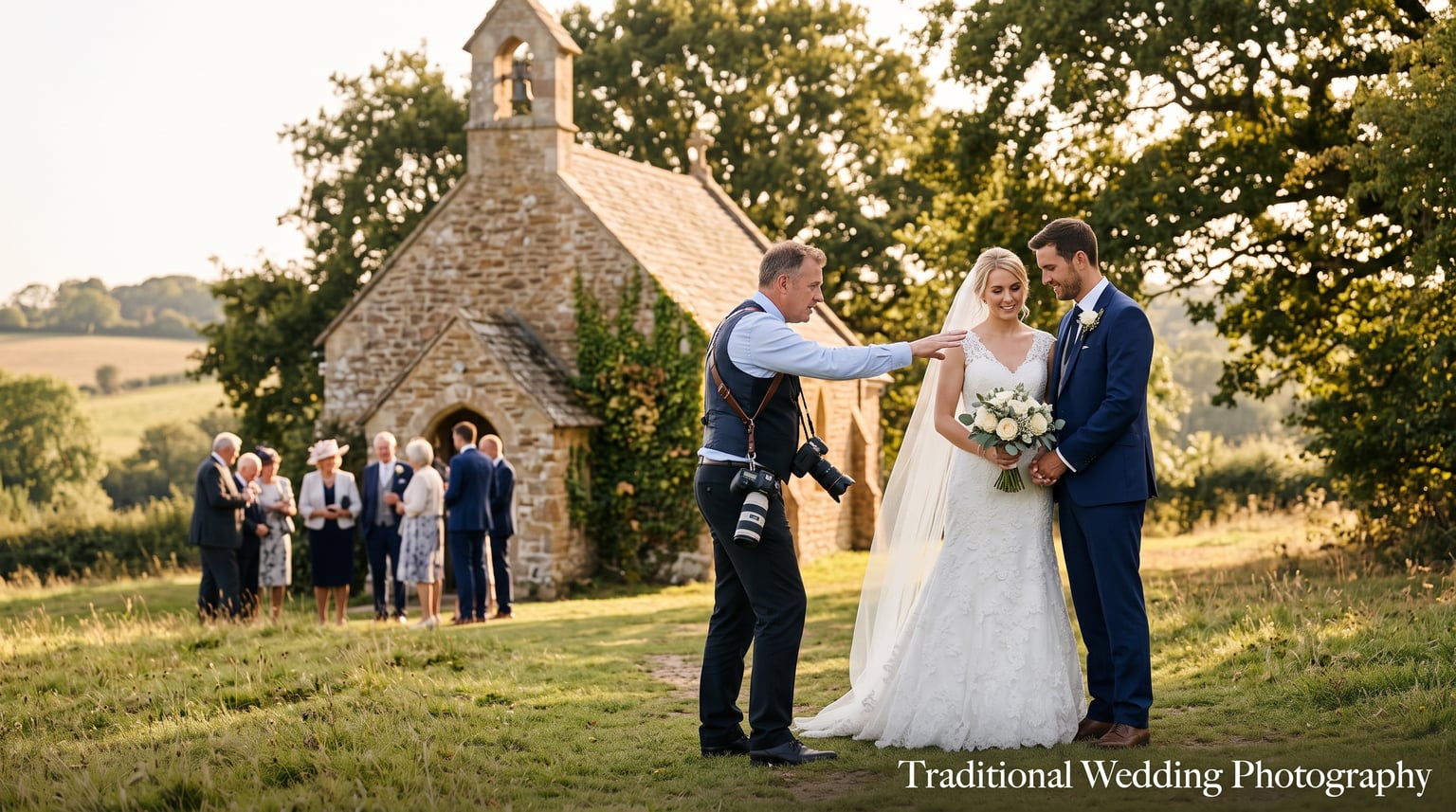
Traditional wedding photography is a photographer-directed style built around staged, formal portraits of the couple and their families, plus structured coverage of the ceremony and reception. The photographer takes clear control of the day, calling the shots, organizing groupings, and producing a set of classic, timeless images that look as right on a mantel today as they will in thirty years.
I have spent over a decade photographing weddings across the Southeast, and I still find myself recommending the traditional approach for a huge slice of my couples. The reason is simple: when the day is over and the cake is gone, the photos are what your family will pass around. Our team has watched albums from 1985 still feel beautiful while albums from 2015 already look dated by some trend. That staying power is what traditional photography is built to deliver.
If you are early in your wedding planning and trying to figure out what style of wedding photography actually fits your day, this guide walks you through everything I tell my own clients. We will cover what traditional wedding photography really means, the exact shots that make up a traditional album, how it differs from candid and documentary styles, and how to know whether it is the right choice for you in 2026.
Table of Contents
What Is Traditional Wedding Photography
Traditional wedding photography is a structured approach where the photographer directs the day, organizes family and couple portraits into posed arrangements, and captures the ceremony and reception through a planned shot list. The result is a classic, timeless album that prioritizes clear, formally composed portraits of the couple, their families, and key wedding moments.
The style is sometimes called classic wedding photography, formal wedding photography, or conventional wedding photography. All of those labels point to the same core idea: the photographer is in charge of how the subjects look, where they stand, and which moments get captured.
When I sit down with couples for a consultation, I explain that traditional wedding photography is less about art and more about coverage. There is a checklist. There is a timeline. There is a series of pre-arranged poses and groupings that ensure nothing important slips through the cracks. The photographer becomes a kind of friendly director, moving people into place, fixing a crooked boutonniere, and making sure grandma can see the camera.
This is the style that produced the wedding albums your parents and grandparents have on their shelves. It is the style the church and temple wedding tradition grew up around. And it remains one of the most requested styles we get, especially for couples who have grandparents flying in or a guest list heavy with extended family.
The defining feature is photographer control. The photographer decides the angle, the lighting, the pose, and the timing. The couple and family follow that direction. In exchange, you get an album full of images where everyone looks their best, all the right people are in the frame, and the moments you specifically wanted are guaranteed to be there.
Key Characteristics of the Traditional Style
Traditional wedding photography has four defining characteristics that set it apart from other styles: posed portraits, a structured timeline, formal group compositions, and a classic lighting and editing approach. Understanding these markers helps you recognize the style in a photographer’s portfolio and decide whether it lines up with what you want.
Posed Portraits and Formal Staging
Posed portraits are the backbone of the traditional style. The photographer arranges the couple, the wedding party, and family members into deliberate compositions rather than capturing them as they naturally interact.
In practice, this looks like a couple standing in front of a beautiful background with the photographer directing head tilts, hand placement, and posture. It looks like the wedding party lined up in a triangle or row. It looks like grandparents seated with the bride and groom standing behind them.
These portraits are not candid. They are carefully built. And that is the point: every face is visible, every smile is genuine, and no one is blinking because the photographer counted down before clicking the shutter.
Structured Wedding Day Timeline
Traditional coverage runs on a planned timeline. The photographer builds a shot list in advance, blocks out time for each set of portraits, and coordinates with the couple, the planner, and the venue to keep everything on schedule.
A typical traditional timeline allocates 20 to 30 minutes for couple portraits, 30 to 45 minutes for family formals, and shorter blocks for the wedding party. The rest of the day follows the natural flow of the ceremony and reception, but with clear checkpoints where the photographer steps in to capture specific moments.
This structure is one of the biggest practical benefits of the traditional style. There are no surprises. You know what you are getting, and you know when it will happen.
Group Compositions and Family Formals
Family formals are the formal group photographs taken shortly after the ceremony. They include immediate family, grandparents, siblings, and any other combinations the couple has requested.
These compositions are arranged by the photographer using standard groupings that ensure everyone is visible and the lighting is even. The photographer works through a list, calling each family unit by name, lining them up, and capturing the shot before moving to the next.
The list is usually built during the engagement period or in the weeks leading up to the wedding. Our team sends every couple a family formal worksheet so nothing important is forgotten on the day.
Lighting and Composition Approach
Traditional wedding photographers tend to favor classic lighting setups and balanced compositions. Soft, even light on faces. Clean backgrounds. Centered or rule-of-thirds framing. Color tones that look natural rather than trendy.
Editing is usually subtle. Skin tones stay true to life, colors are warm but not overdone, and the overall look matches what you would see in a high-end family portrait studio.
This is what gives traditional photos their staying power. They are not chasing the current editing trend. They are designed to look good for decades.
Must-Have Traditional Wedding Photos
Every traditional wedding album includes a core set of photographs that have been considered essential for generations. This list covers the must-have shots our team makes sure to capture at every traditional wedding we photograph.
Getting Ready Shots
The getting ready phase produces some of the most loved photos in the album. The bride having her makeup finalized, the groom adjusting his tie, the dress hanging in the window light, the details of the shoes, the rings, the bouquet.
Traditional photographers typically stage these shots to highlight the details and the quiet anticipation of the morning. The bride looking at herself in the mirror. The father seeing her for the first time. The groom reading a note from his bride.
Ceremony Coverage
The ceremony is photographed from multiple angles with attention to the key religious or cultural moments. The walk down the aisle, the exchange of vows, the rings, the first kiss, the recessional.
Traditional photographers also capture wide shots of the venue, the guests, and the floral arrangements to give the album context. These wide shots matter because they place the personal moments inside the bigger story of the day.
Family Formals
Family formals are the formal group portraits taken right after the ceremony. Standard groupings include the bride with her parents, the groom with his parents, the couple with both sets of parents, siblings, grandparents, and any other important combinations.
A traditional photographer will work through 8 to 15 family combinations in roughly 30 to 45 minutes, depending on the size of the families and how smoothly the groupings come together.
Wedding Party Portraits
The wedding party includes the bridesmaids, groomsmen, flower girls, ring bearers, and any other attendants. Traditional wedding party portraits are usually taken before the ceremony at a separate location or after the ceremony near the altar or a scenic spot.
These shots include the full wedding party together, the bride with her bridesmaids, the groom with his groomsmen, and individual portraits of each attendant if time allows.
Couple Portraits
Couple portraits are the centerpiece of the traditional wedding album. These are the posed images of the bride and groom alone together, captured in flattering light with thoughtful composition.
A traditional photographer typically allocates 30 to 60 minutes for couple portraits, often split between a pre-ceremony session and a post-ceremony session. The result is a set of images that range from the classic straight-on portrait to more relaxed poses that still feel composed.
Reception Key Moments
The reception produces its own essential traditional shots. The entrance of the couple, the first dance, the parent dances, the cake cutting, the toasts, the bouquet toss, and the garter toss if it is part of the celebration.
Traditional reception coverage also includes candid-style detail shots of the tables, the centerpieces, the favors, and the overall room design. These images round out the album and document the full experience.
Traditional Wedding Photography vs Candid and Documentary Styles
Traditional wedding photography focuses on photographer-directed, posed portraits and a planned shot list. Candid wedding photography captures natural, unposed moments with minimal direction. Documentary wedding photography goes further, telling the full story of the day through observed moments without any staging at all.
This is the comparison that confuses most couples. The names sound similar, the portfolios can look similar at first glance, and most photographers offer some combination. Here is how I explain the differences to my own clients.
Comparison of Wedding Photography Styles
- Traditional: Photographer directs poses, follows a planned shot list, prioritizes formal portraits and family formals. Coverage is comprehensive and predictable.
- Candid: Photographer captures natural moments as they happen, with light direction for better light or composition. Coverage is emotional and spontaneous.
- Documentary: Photographer observes and records without directing at all. Coverage is journalistic, focused on storytelling from start to finish.
- Editorial: Photographer combines direction with fashion-inspired posing for magazine-style images. Coverage prioritizes dramatic, stylized shots.
- Fine Art: Photographer uses artistic composition, film, or stylized editing to create gallery-worthy images. Coverage is curated and intentional.
Photographer Role Differences
The biggest practical difference between traditional and candid styles is the photographer’s role. In traditional photography, the photographer runs the show during portrait time. They call out groupings, fix posture, and direct the couple into flattering poses.
In candid photography, the photographer steps back. They capture moments as they happen. They might suggest a better spot for the first look, but they do not arrange the couple into a formal pose.
In documentary photography, the photographer becomes invisible. They do not direct at all. They capture whatever unfolds in front of them.
Coverage Style Differences
Traditional coverage guarantees specific shots. If you want a portrait with both grandmothers, you will get that portrait. If you want a shot of the rings on the bible, that shot will be there.
Candid coverage prioritizes emotion and spontaneity. You get fewer guaranteed portraits but more images of genuine laughter, tears, and surprise. The trade-off is that you might miss a key family combination if the moment does not happen naturally.
Documentary coverage tells the whole story of the day, but with almost no direction. The album reads like a photo essay of the wedding.
Which Style Fits Which Couple
I usually recommend traditional photography for couples with large families, formal ceremonies, or anyone who wants guaranteed portraits with specific people. Candid works for couples who value emotion over formality and are comfortable in front of the camera.
Documentary fits couples who do not want to spend time on portraits and prefer a journalistic record of the day. Many photographers, including our team, blend styles. A traditional photographer might cover the ceremony candidly and shoot the portraits traditionally. A documentary photographer might offer a short portrait session at the end of the night.
Pros and Cons of Traditional Wedding Photography
Traditional wedding photography offers guaranteed coverage of key people and moments, a timeless look, and a structured timeline. The trade-offs are less spontaneity, more time spent on posed portraits, and a style that some couples find too formal.
Every style has real strengths and real weaknesses. I have seen couples thrilled with traditional coverage and others who wished they had gone more candid. Here is the honest breakdown.
Advantages of Traditional Photography
The biggest advantage is certainty. You know the family formals will happen. You know the couple portraits will be beautifully lit. You know the rings, the dress, and the cake will all be documented.
Traditional photos also age extremely well. A traditional album from 2026 will look almost identical to one from 1995. That longevity is a major selling point for couples who care about passing photos down through generations.
Traditional coverage is also easier for camera-shy family members. Grandparents and aunts who hate being photographed tend to relax when someone is clearly in charge. They know exactly where to stand and what to do. That structure removes the awkwardness that candid coverage sometimes creates.
Disadvantages of Traditional Photography
The main disadvantage is time. Traditional coverage requires dedicated blocks for portraits, family formals, and wedding party shots. A 30 to 45 minute family formal session is common, and that time has to come out of the wedding day somewhere.
Traditional photos can also feel stiff to couples who want a more relaxed, emotional album. If you prefer images of laughter and movement over still, posed portraits, traditional coverage might not be your first choice.
Some couples also worry about traditional looking outdated. The honest answer is that traditional photography has not changed much in 40 years because it does not need to. The style is built to last. But if you want trendy editing, dramatic angles, or moody tones, traditional is not the right fit.
What Real Couples Say
On wedding forums, the most common regret from couples is missing key family combinations. Several brides have shared stories of candid-only photographers who simply did not capture the photo with grandma. Other couples complain about too many posed shots that feel awkward.
The most satisfied couples tend to be the ones who matched their photographer’s style to their personality. If you love classic, timeless photos and have a big family, traditional is almost always a win.
When Traditional Wedding Photography Is the Right Choice
Traditional wedding photography is the right choice for couples with formal ceremonies, large families, classic tastes, and a desire for guaranteed coverage of key people and moments. It is especially strong for church weddings, temple weddings, and cultural celebrations with strong traditional roots.
I talk through this decision with every couple I meet. Here is the framework I use to help them decide.
Formal Ceremonies and Religious Traditions
If your ceremony follows a traditional religious format with specific rituals, readings, and moments that matter to your family, traditional photography is a strong fit. The photographer knows exactly what to capture and when to capture it.
Church weddings, temple weddings, and cultural ceremonies all benefit from a photographer who understands the structure of the day and the moments your family expects to see in the album.
Large Families and Multigenerational Guest Lists
Couples with grandparents, large extended families, and many aunts, uncles, and cousins tend to get the most value from traditional coverage. The family formal session ensures everyone who matters gets a portrait with the couple.
If your guest list includes people who may not be around for many more years, traditional photography gives you a guaranteed record of their presence at your wedding.
Classic Taste and Timeless Aesthetic
If you and your partner appreciate classic, timeless design and want an album that looks as good in 30 years as it does today, traditional photography delivers exactly that. The style is built around longevity, not trends.
Couples who love the look of family wedding albums from the 1980s and 1990s almost always end up choosing traditional coverage for themselves.
Wall Prints and Heirloom Albums
Traditional photography produces images that print beautifully. The compositions are clean, the lighting is balanced, and the framing works at any size. If you plan to print large wall portraits or build a printed heirloom album, traditional coverage is the strongest starting point.
Candid and documentary images can also print beautifully, but traditional photos are specifically composed for that purpose.
How to Prepare for Your Traditional Photography Session
Preparing for traditional wedding photography means building a family formal list, briefing your family, confirming the timeline with your photographer, and asking the right questions during your consultation.
I have seen too many couples show up on the wedding day without a clear plan for family formals, which leads to chaos during the most time-sensitive part of the day. Here is how to avoid that.
Build Your Family Formal List Early
Start your family formal list two to three months before the wedding. Walk through your immediate and extended family and list every combination you want captured.
Standard groupings include both sets of parents together, each set of parents separately, siblings, grandparents, and any other meaningful combinations. Bring this list to your final consultation with your photographer so they can plan the timing.
Brief Your Family in Advance
Tell your family ahead of time that there will be a 30 to 45 minute formal photo session after the ceremony. Ask them to stay close to the ceremony space until portraits are complete.
Many wedding delays happen because a key family member wandered off to the cocktail hour before portraits finished. A simple heads-up solves the problem.
Confirm the Timeline
Work with your photographer and your planner to build a realistic timeline. Family formals need at least 30 minutes for average families and 45 minutes or more for large families.
Couple portraits need at least 30 minutes, often split between a first look session and a post-ceremony session. Build that time into your day and protect it.
Ask the Right Questions
During your consultation, ask your photographer how they handle family formals, how many groupings they recommend, and how they keep the session moving. Ask to see a full traditional album from a recent wedding so you understand exactly what you will receive.
Also ask about turnaround time, how images are delivered, and whether prints and albums are included. These details matter when you are choosing the right photographer.
Frequently Asked Questions
What is traditional photography in a wedding?
Traditional photography in a wedding is a photographer-directed style focused on staged, formal portraits of the couple and their families, plus structured coverage of the ceremony and reception through a planned shot list. The photographer organizes groupings, directs poses, and produces classic, timeless images that look as good in 30 years as they do today.
What shots does a traditional wedding photographer take?
A traditional wedding photographer takes getting ready details, ceremony coverage from multiple angles, formal family groupings, wedding party portraits, posed couple portraits, and key reception moments like the first dance, cake cutting, and toasts. The exact list is customized during your consultation and built into a shot list before the wedding day.
Is traditional wedding photography outdated?
Traditional wedding photography is not outdated. The style has remained largely unchanged for decades because it is built for longevity, not trends. Traditional photos from 1985 still look beautiful today, and traditional photos from 2026 will look just as good in 2050. The style is the strongest choice for couples who value timeless images over trendy editing.
How long does traditional wedding photography take?
Traditional wedding photography takes 6 to 10 hours of coverage on the wedding day, depending on the size of the wedding and the number of locations. Within that coverage, family formals usually take 30 to 45 minutes, wedding party portraits take 20 to 30 minutes, and couple portraits take 30 to 60 minutes split across the day.
Traditional vs documentary wedding photography, which is better?
Neither style is objectively better. Traditional wedding photography is better for couples who want guaranteed family portraits, formal coverage, and timeless images. Documentary wedding photography is better for couples who want a journalistic record of the day with no direction at all. Many photographers blend the two styles to give couples both guaranteed portraits and natural storytelling.
Final Thoughts on Traditional Wedding Photography
Traditional wedding photography remains one of the strongest choices for couples who want guaranteed coverage, classic timeless images, and a structured wedding day timeline. If your day includes a formal ceremony, a large family, or a deep appreciation for the classic wedding albums you grew up seeing, the traditional style is built for you. Talk with your photographer about blending traditional coverage with candid moments so your album has both the portraits your family expects and the spontaneous joy of the day.