
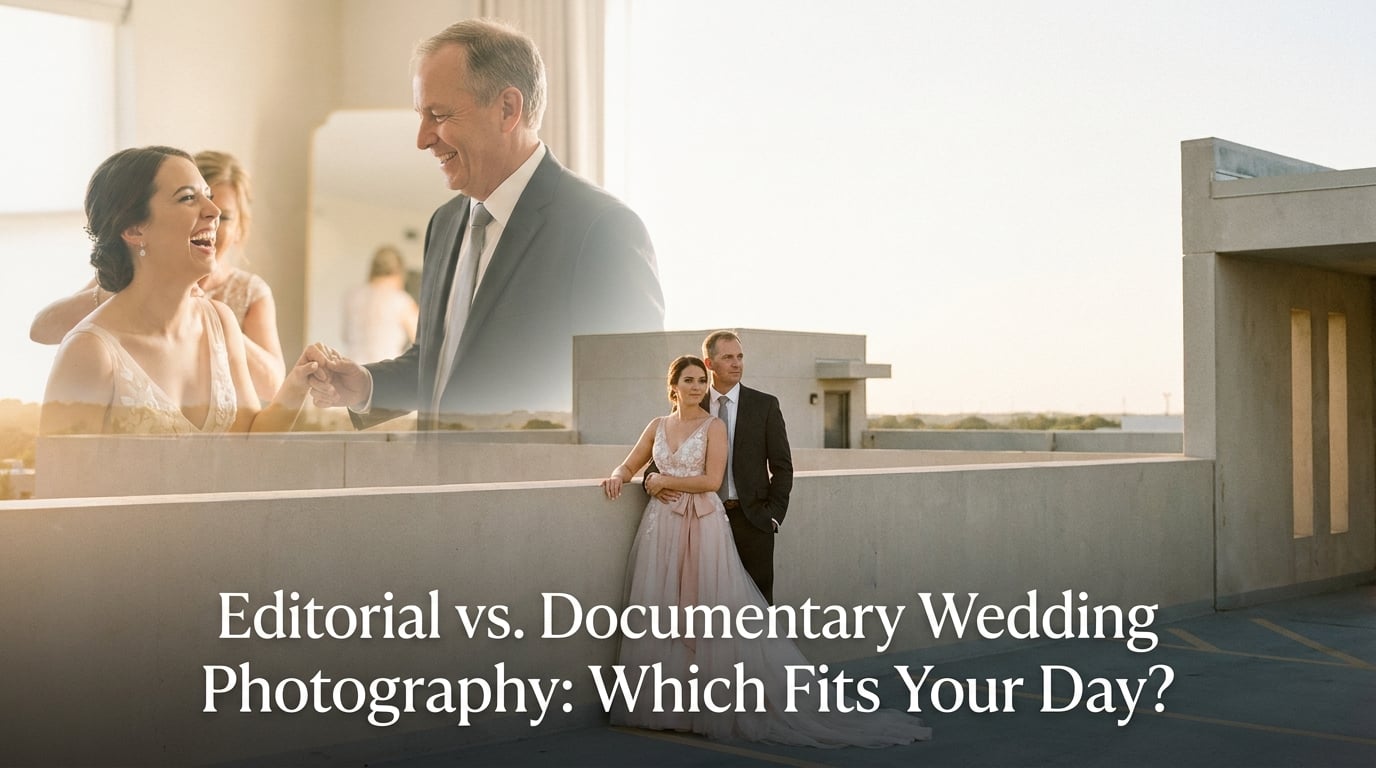
After twelve years of photographing weddings, I have heard this question more than any other: which style is right for us. Editorial vs. documentary wedding photography is the comparison couples stress over most. The truth is, both styles create beautiful images. They just capture two very different things, and the one that fits your day depends on what you actually want to remember.
In this guide I will break down exactly what each style means, show you what it looks like in real weddings, and give you a clear way to decide. No photographer bias. No vague language. Just what I have learned shooting 400+ weddings alongside our team at Kingdom Wedding Photography.
Table of Contents
What Editorial Wedding Photography Actually Means
Editorial wedding photography is a styled, fashion-forward approach built around intentional posing, curated backgrounds, and polished composition. Think of the images you see in Vogue or a high-end bridal magazine. The photographer directs the scene, adjusts small details, and creates something that looks composed and artful.
The goal with editorial photography is not to freeze a moment as it happened. The goal is to create an image that could have happened, and then make it look stunning.
Key Characteristics of Editorial Style
- Directed posing. Your photographer will adjust your hands, your chin, and the drape of your dress.
- Curated locations. Clean walls, dramatic light, architectural lines, or styled details.
- Polished editing. Smoother skin tones, color grading, and consistent aesthetic.
- Fashion influence. Composition rules borrowed from editorial fashion shoots.
- Longer portrait sessions. Expect 30 to 90 minutes of dedicated portrait time.
When I shoot editorial portraits, I am thinking about negative space, leading lines, and where the light falls across the face. A recent bride told me she wanted images that looked like they belonged in a magazine. We spent 45 minutes during golden hour on a rooftop in Nashville and came away with 28 frames she printed at 16×20.
When Editorial Photography Works Best
Editorial shines when you have time built into your timeline for portraits, when your venue has strong visual elements, and when you care deeply about how the images look on a wall. Couples who love fashion, design, or fine art photography tend to lean editorial without realizing it.
It also works beautifully for styled shoots, luxury weddings, and couples planning a magazine-worthy album.
What Documentary Wedding Photography Actually Means
Documentary wedding photography is an observational, photojournalistic approach. The photographer works as a quiet witness to your day, capturing moments as they unfold without directing, posing, or interrupting. The images feel honest because they are honest.
The goal with documentary photography is to record what actually happened, how it felt, and who was there. Nothing is staged.
Key Characteristics of Documentary Style
- No posing. Your photographer blends in and watches for moments.
- Candid everything. Getting ready, ceremony tears, reception dance floors, your grandma laughing at a joke.
- Storytelling focus. The gallery reads like a narrative from start to finish.
- Anticipation. Reading body language and predicting moments before they happen.
- Minimal interruption. You stay present with your guests instead of stepping away for photos.
Our documentary couples often tell me the same thing at the end of the night: I forgot you were there. That is the highest compliment a documentary photographer can receive. I photographed a wedding last fall where the father of the bride cried during his toast. I caught it from across the room with a 70-200mm lens, and the couple said it became their favorite image from the entire day.
When Documentary Photography Works Best
Documentary shines when you want to remember how the day felt, when your timeline is packed, and when you and your guests would rather be together than posing. Couples who value emotion over polish tend to gravitate toward documentary.
It also works beautifully for intimate weddings, elopements, and cultural celebrations where the moments themselves carry the meaning.
Editorial vs. Documentary: A Direct Comparison
Here is how the two styles stack up across the features couples ask about most.
| Feature | Editorial | Documentary |
|---|---|---|
| Posing required | Yes, heavily directed | No, fully candid |
| Time needed for portraits | 30 to 90 minutes | 0 to 15 minutes |
| Editing style | Polished, color-graded, smooth | Natural, true-to-color, minimal retouching |
| Best for | Wall prints, albums, magazine layouts | Emotional storytelling, candid galleries |
| Photographer presence | Active and visible | Quiet and unobtrusive |
| Timeline pressure | Higher (need portrait time) | Lower (works around your day) |
| Couple presence during shoot | Frequent stepping away | Mostly present with guests |
| Captures unplanned moments | Rarely | Always |
The Hybrid Approach: Why Most Modern Couples Choose Both
You can absolutely mix editorial and documentary styles. In fact, most of the couples we work with end up wanting both, and that is exactly what we deliver.
The hybrid approach splits your day into two modes. During getting ready, ceremony, and reception, we work in documentary mode. We capture real moments without interruption. During a dedicated portrait window, we switch to editorial mode and create those magazine-worthy images you want on your wall.
How Hybrid Photography Works in Practice
Here is how it typically plays out. The morning is fully documentary. You are getting ready with your people, and we are capturing it as it unfolds. The ceremony is fully documentary. We move around the edges, anticipate the moments, and stay out of the way.
Then we set aside 30 to 60 minutes for editorial portraits. We pick the best light of the day, scout the cleanest backdrop, and direct you through a series of poses. After that, we go back to documentary for the rest of the night. Speeches, dancing, the cake cutting, the sparkler exit. All candid.
This is the approach most of our couples prefer, and it is what I would choose for my own wedding if I were doing it over.
When Hybrid Is the Right Call
Hybrid photography is right for you if you want wall-worthy portraits and emotional candid moments, if you have a moderate timeline that allows for one portrait session, and if you cannot decide between the two styles. Most couples fall into this category.
Which Style Fits Your Day: A Decision Guide
Still unsure? Here are the clearest signs we use when talking couples through this decision during our initial consults.
Signs Editorial Photography Is Right for You
- You want large wall prints and a magazine-style album.
- You love fashion photography and curated aesthetics.
- Your timeline has 45+ minutes built in for portraits.
- You picked your venue partly because of how it photographs.
- You want to be directed and feel confident being posed.
- Your wedding has a strong visual theme or color palette.
Signs Documentary Photography Is Right for You
- You want to remember how the day felt, not just how it looked.
- You and your guests would rather celebrate than pose.
- Your timeline is tight with little room for portraits.
- You value authentic emotion over polished perfection.
- You do not want to spend hours away from your guests.
- You are planning an intimate wedding or elopement.
Quick Decision Checklist
Ask yourself these three questions:
- What do I want on my wall? A polished portrait or a candid moment? If portrait, lean editorial. If candid, lean documentary.
- How much time do I have for portraits? Under 20 minutes, documentary. Over 45 minutes, editorial. In between, hybrid.
- How do I want to feel during my wedding? Directed and styled, or present and unposed? Your answer tells you everything.
Honest Drawbacks of Each Style
No style is perfect. Here is what I tell couples when they ask for the catch.
Editorial drawbacks: It can feel repetitive if your photographer does not vary the poses. It also takes you away from your guests. And if you do not love being photographed, editorial sessions can feel long and uncomfortable. We have had brides who said the portrait session was the most stressful part of their day.
Documentary drawbacks: You give up control over how you look in every image. Some moments will be unflattering because they are unposed. And documentary relies heavily on the photographer’s skill at anticipating moments. A weak documentary photographer misses half the story.
Both drawbacks are real. The hybrid approach minimizes both, which is why we recommend it so often.
What to Tell Your Photographer During Your Consult
Whichever style you choose, here is what to communicate clearly before booking:
- Show your photographer 5 to 10 images from galleries you love.
- Tell them how much time you have for portraits in your timeline.
- Be honest about whether you enjoy being posed or feel awkward in front of the camera.
- Ask to see a full gallery from a recent wedding, not just the highlight reel.
- Clarify whether they shoot solo or with a second photographer.
These five questions reveal more about fit than any portfolio ever will.
Frequently Asked Questions
What is documentary wedding photography?
Documentary wedding photography is an observational, photojournalistic approach where the photographer captures moments as they naturally unfold, without directing or posing. The focus is on real emotions, candid interactions, and honest storytelling rather than staged images.
What is the difference between editorial and documentary wedding photography?
Editorial wedding photography uses directed posing, curated backgrounds, and polished editing to create magazine-worthy images. Documentary wedding photography captures candid, unposed moments as they happen with minimal photographer intervention. Editorial controls how the image looks, while documentary captures how the moment felt.
Do documentary photographers take family photos and portraits?
Most documentary photographers will include a short, efficient family and couple portrait session as part of a hybrid approach. Pure documentary weddings may skip formal portraits entirely, while a hybrid photographer covers both candid storytelling and a brief portrait window.
Can I mix editorial and documentary styles?
Yes. The hybrid approach is now the most common way couples photograph their wedding. Documentary coverage runs through the day, and editorial portraits happen during a dedicated session. This gives you wall-worthy images plus emotional candid moments.
Which wedding photography style is best?
Neither style is objectively best. Editorial suits couples wanting polished, fashion-forward images for wall prints and albums. Documentary suits couples who want authentic, emotional storytelling. The hybrid approach works for couples who want both.
Is documentary wedding photography right for me?
Documentary is right for you if you want to stay present with your guests, value authentic emotion over polished styling, have a tight timeline, and care more about how the day felt than how each image looks. It is not right for couples who want large wall prints of posed portraits.
The Right Choice Is the One That Matches How You Want to Remember Your Day
Editorial vs. documentary wedding photography is not a real either/or decision. It is a question of what you want your gallery to feel like when you flip through it in twenty years.
If you want to remember how the day looked, go editorial. If you want to remember how the day felt, go documentary. If you want both, and most couples do, go hybrid. The style that fits your day is the one that matches your vision, your timeline, and how you want to be present on your wedding day. Talk to your photographer, share the images you love, and trust the photographer whose past work matches what you want.