
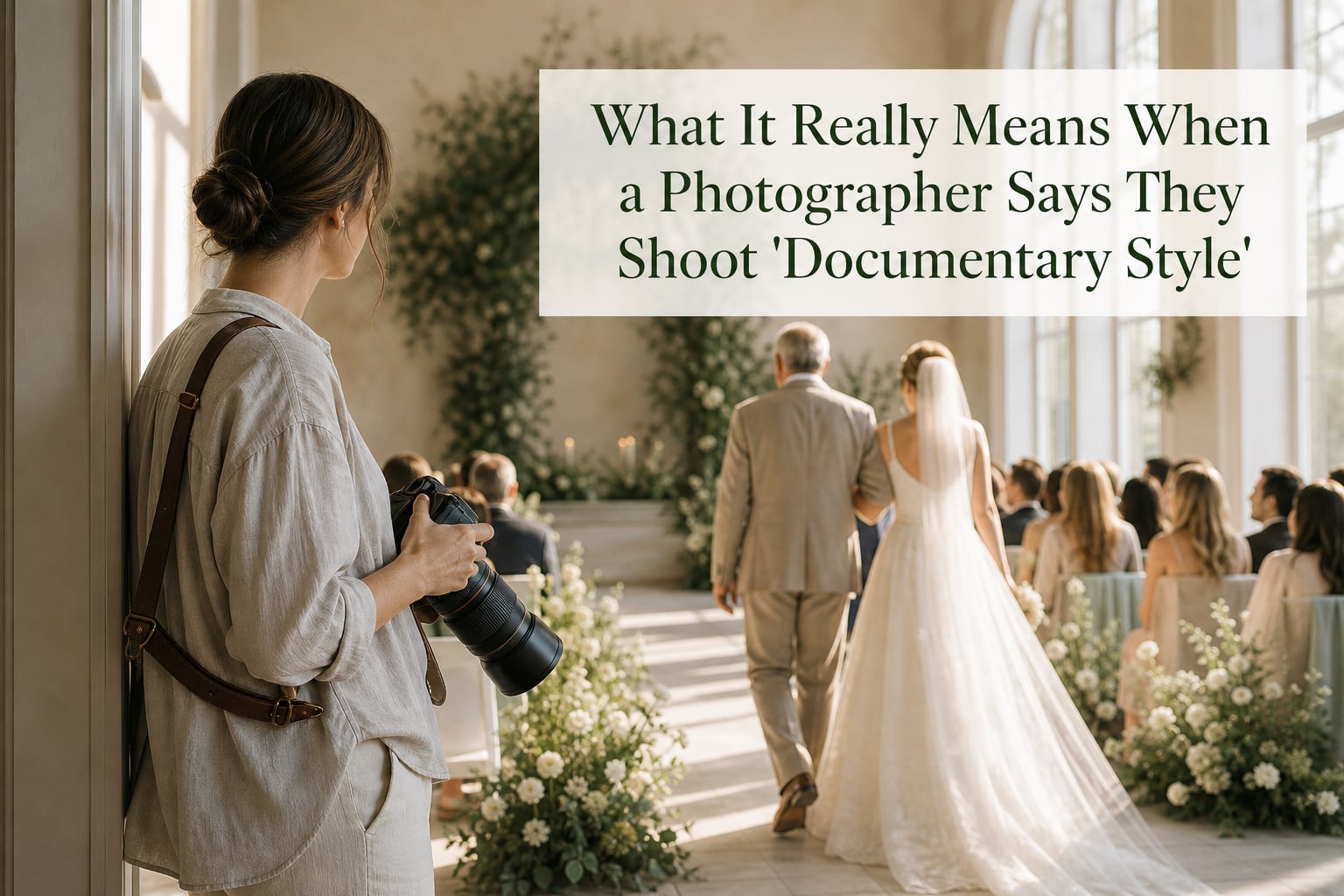
You’ve been scrolling through photographer websites and the phrase keeps popping up: “I shoot documentary style.” It sounds nice. It sounds artsy. But what does it actually mean when a photographer says they shoot documentary style?
After 12 years of photographing weddings with this approach, I can tell you the term gets thrown around more loosely than it should. Some photographers use “documentary” as a marketing buzzword while still directing every pose. Others genuinely live by the philosophy.
Here’s the real definition, the honest distinctions from other styles, and the questions worth asking before you book anyone who claims this label.
Table of Contents
What Documentary Style Photography Actually Means
Documentary style photography is a way of capturing real, unscripted moments as they happen, without posing, staging, or directing the people in front of the camera. The photographer acts as an observer rather than a director.
That’s the core of it. Everything else flows from that single idea.
The roots of this approach sit in photojournalism, the kind of work you see in newspapers and magazines covering real events. Photojournalists don’t ask the president to pose before they take the shot. They anticipate the moment, position themselves well, and capture what’s unfolding.
When wedding photographers borrow that approach, we bring the same hands-off philosophy to your day. We don’t ask you to “do that again so I can get the lighting right.” We don’t rearrange your grandmother next to your sister for a “better” photo. We watch, we wait, and we capture what’s actually happening.
I like to describe it as a fly on the wall with a camera. We’re there, we’re paying attention, but we’re not interfering with the scene.
Key Characteristics That Define Documentary Style Photography
When a photographer is genuinely working in documentary style, several traits show up consistently. Here’s what to look for in portfolios, conversations, and the way they describe their work.
No Direction or Posing
The most obvious marker. A documentary photographer doesn’t say “stand here, look at each other, now smile.” They capture what unfolds naturally between you and your people.
Anticipation and Timing
Without the ability to ask people to repeat moments, the photographer has to predict what’s about to happen. That takes experience. We watch for the glance, the laugh, the tear, the squeeze of a hand, and we’re ready before it arrives.
Storytelling Approach
Documentary coverage tells the story of your day from start to finish. The photographer is thinking about how each image connects to the next. Your gallery should feel like reading a chapter of your life, not a collection of pretty portraits.
Natural Light, Real Settings
Because there’s no time to set up lights and backdrops, documentary photographers rely on available light and the actual environment. The ceremony room as it looked. The reception hall during the toasts. The getting-ready suite with morning light coming through the window.
Emotional Honesty
What you see in a documentary photo is what actually happened. No fake laughs, no staged reactions. The joy, the nerves, the quiet moments, the loud ones, they all show up because they were real.
Minimal Interference
A truly documentary photographer moves quietly, blends in, and rarely interrupts the flow of events. You’ll forget they’re there for stretches of time, which is exactly the point.
Documentary vs. Candid, Lifestyle, and Traditional Photography
This is where most confusion happens. Photographers use these terms in overlapping ways, and couples understandably struggle to tell them apart. Let me break it down clearly.
Documentary Photography
The photographer captures moments as they happen with no interference. There is no posing, no prompting, no staging. The goal is honest documentation of reality.
Candid Photography
Candid means unposed, but it doesn’t necessarily mean the photographer stayed out of the moment. A candid photographer might ask you to walk down the aisle and then photograph you doing it naturally. They may still set up situations and let people react “candidly” within them.
The difference is subtle but real. Documentary work captures moments that would have happened whether the camera was there or not. Candid work often captures reactions to a prompt the photographer created.
Lifestyle Photography
Lifestyle sits between documentary and traditional. The photographer gives some direction, but keeps things loose and natural. They might suggest “sit on this couch together and talk,” then capture what unfolds.
It’s more guided than documentary, but less rigid than traditional posed work. Many family and newborn sessions fall into this category.
Traditional Photography
Traditional photography involves clear direction. The photographer tells you where to stand, how to angle your chin, when to look at each other, when to look at the camera. It produces polished, formal images with everyone looking their best.
There’s nothing wrong with traditional photography. It just isn’t documentary.
Reportage Photography
You’ll sometimes see “reportage wedding photography” used interchangeably with documentary. They’re very close cousins. Reportage emphasizes the storytelling angle even more, treating the wedding as a news event to be covered thoroughly.
Why Couples Choose Documentary Style Wedding Photography
After hundreds of conversations with couples booking us, I’ve heard the same reasons come up again and again. Here’s what draws people to this approach.
You Want to Be Present
The biggest reason couples choose documentary coverage is so they can actually experience their own wedding. They don’t want to spend three hours during the party being dragged around for posed portraits. They want to dance, eat, hug their friends, and soak it in.
Authentic Moments Matter Most
Some couples care deeply about genuine emotion. They want the photo of their dad tearing up during the vows, not a recreation of it later. Documentary photography captures these moments as they happen, when they’re real.
Less Stress, More Enjoyment
Posing for dozens of formal portraits can feel exhausting, especially for camera-shy couples. Documentary work removes that pressure. You get to be yourself, and the camera documents whoever that is.
Storytelling for the Future
Twenty years from now, you won’t remember whether your jaw line looked perfect in the posed portrait. You will remember how it felt when your best friend gave that speech. Documentary photography preserves the feeling.
A Heirloom for Generations
Your grandchildren won’t know your wedding party the way you do. A documentary gallery shows them who was there, what mattered to you, and what your family looked like in motion, in laughter, in tears. That kind of record matters.
What to Expect on Your Wedding Day With a Documentary Photographer
If you’ve never worked with a documentary photographer before, the day feels different than what you might expect. Here’s how it usually unfolds.
During Getting Ready
Your photographer arrives while you and your wedding party are still in robes, sipping coffee, having last-minute laughs. They move quietly through the room, capturing the small moments, the makeup application, the first time your maid of honor sees you in the dress.
Throughout the Ceremony
Your photographer positions themselves in approved spots and captures the ceremony as it happens. They move minimally, often using long lenses so they can stay back. You’ll barely notice them.
Family Formals (Yes, Still a Thing)
Here’s where documentary photographers often get asked: “But what about family photos?” Most of us still do a short list of family formals, because grandparents expect them and aunties want them. The difference is that documentary photographers keep this portion brief, usually 20 to 30 minutes, and then return to observational mode.
Couple Portraits
This is where styles vary most. A purist documentary photographer will suggest taking a short walk together, but won’t pose you heavily. They’ll give light prompts like “walk toward me and talk about how you feel right now,” then capture what happens.
Some couples want more directed couple portraits. That’s fine. Most documentary photographers will happily spend 30 minutes doing classic portraits in addition to their observational coverage.
During the Reception
The reception is where documentary photography shines. Speeches, toasts, dancing, crying on the dance floor, your uncle doing the worm at 10 p.m., all of it gets captured without anyone needing to “do it again for the camera.”
When Documentary Style Might Not Be Right for You
I believe in being honest about this. Documentary style isn’t the best fit for every couple, and a good photographer will tell you that upfront.
You Have a Long Shot List of Must-Have Posed Images
If you have 40 specific family groupings you need captured exactly a certain way, traditional photography serves you better. Documentary photographers won’t promise to check off a long list of formal poses.
You Feel Anxious Without Direction
Some people freeze in front of a camera without clear instructions. If that’s you, the hands-off nature of documentary work might feel uncomfortable. Lifestyle or traditional photography gives you more structure.
You Want Lots of Polished, Magazine-Style Portraits
Documentary portraits are beautiful, but they have a different aesthetic than heavily styled, posed editorial work. If you want that high-gloss, fully directed look, you need a different approach.
Your Venue Has Very Tricky Lighting
Dark churches, reception halls with mixed color lighting, venues without windows, these situations challenge documentary photographers more than traditional ones who carry extensive lighting setups. Discuss this honestly with any photographer you interview.
Questions to Ask Before Hiring a Documentary Photographer
Because the term gets used loosely, you need to verify your photographer truly works this way. Here are the questions I recommend asking.
Will you pose us at all? Honest documentary photographers will tell you exactly how much direction they give and during which parts of the day.
How do you handle family formals? You want to know the time commitment and the approach.
Can I see full galleries from start to finish? A photographer’s best 20 images might look documentary, but their full gallery tells the real story. Ask to see complete weddings.
What happens if a key moment happens while you’re elsewhere? Documentary photographers should have a clear answer about how they stay positioned to catch important moments.
How much of the day will you be photographing? Coverage hours matter. Documentary storytelling requires time to unfold.
The Bottom Line
When a photographer says they shoot documentary style, they’re telling you how they approach your day. They observe more than they direct. They capture moments as they happen. They trust real life to be interesting enough without staging.
It’s not a marketing trick. When done well, it’s a philosophy that produces wedding galleries full of genuine emotion, real laughter, and the kind of images that make you feel something when you flip through them years later.
Ask the hard questions. Look at full galleries. Find a photographer whose actual approach matches what they’re selling. When you do, the results speak for themselves.
If you’re planning a wedding and want to talk about whether documentary style fits your vision, reach out. I’m always happy to walk through how we work and what you can expect from your day.
Frequently Asked Questions
What does documentary style photography mean?
Documentary style photography means capturing real, unscripted moments as they naturally unfold, without posing, staging, or directing the people in front of the camera. The photographer acts as an observer, watching and waiting for genuine moments rather than creating them.
What is a documentary shooting?
A documentary shooting is a photography session where the photographer documents events as they happen in real time, without interfering with or directing the subjects. This approach originated in photojournalism and is now commonly used for weddings, family sessions, and events.
What is a documentary style?
Documentary style is a photography approach focused on truthful representation of real moments, environments, and emotions. The photographer prioritizes observation and authenticity over staging or posing, resulting in images that show what actually happened.
How do you shoot documentary style photography?
To shoot documentary style photography, you anticipate moments before they happen, position yourself in advance, use available light, minimize interaction with subjects, and capture events as they naturally unfold. The key skills are timing, observation, and the discipline to stay quiet and unobtrusive.
How is documentary photography different from candid photography?
Documentary photography captures moments that would have happened whether the camera was there or not, with no prompting from the photographer. Candid photography means unposed images, but the photographer may still create situations or ask subjects to do things, then capture the natural reaction.