
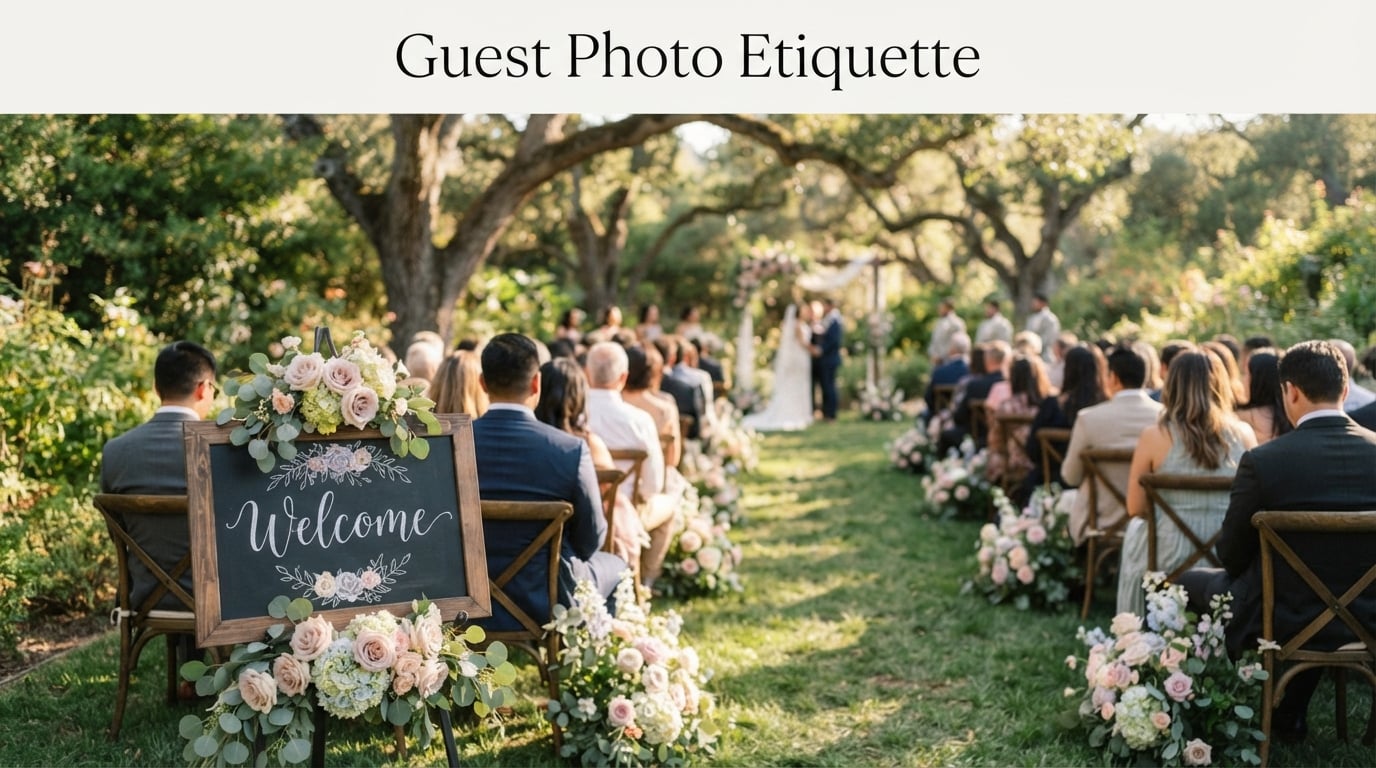
Wedding guest photo etiquette is the set of unwritten rules that helps everyone capture memories without getting in the way of the couple’s professional photographer or stealing the couple’s first look at their own images. I’ve photographed more than 400 weddings over the past decade, and the events that feel most relaxed and joyful almost always have guests who understand a few simple guidelines. This guide walks you through every rule, from the unplugged ceremony to social media posting, so you can be a thoughtful wedding guest in 2026.
If you’re a couple planning your big day, you’ll also find a section on how to communicate these expectations politely without sounding bossy. If you’re a guest wondering whether it’s okay to post that dance floor photo, you’ll get a clear answer. Let’s start with the big picture.
Table of Contents
What Is Guest Photo Etiquette and Why It Matters
Guest photo etiquette is a polite framework for how wedding guests should use cameras, phones, and social media during a wedding. It covers everything from staying seated during the ceremony to waiting for the couple’s blessing before posting online.
Why does it matter so much? A single guest standing in the aisle with an iPad can block a once-in-a-lifetime shot of the first kiss. A phone screen glowing in the third row can distract the photographer during the vows. A candid dance floor photo posted before the newlyweds even get home can take the wind out of their big reveal.
I learned this the hard way at a beach wedding six years ago. Two guests stepped into the surf to grab a closer shot during the vows, and the photographer missed the moment the bride’s father wiped a tear. The couple still talks about that missed photo. Clear etiquette prevents moments like that.
The Unplugged Ceremony: What It Means and How to Ask for One
An unplugged ceremony is a wedding where guests are asked to put away phones, cameras, and tablets for the duration of the ceremony. The couple wants everyone present in the moment, and they want their professional photographer to capture clean shots without screens in the way.
Unplugged ceremonies have become the norm at most weddings I shoot. Roughly 7 out of 10 of my couples in 2026 ask for one, and guest compliance is usually above 90% when the request is clearly communicated.
How do couples ask politely? The most effective approach uses three layers: a small sign at the entrance, an announcement by the officiant, and a note on the wedding website. We’ve seen the best results when all three are used together. A sign alone is easy to miss, an announcement alone catches people who already sat down, and the website reaches the planners and early responders.
If you’re a guest and the couple asks for an unplugged ceremony, respect it. Slip your phone into your bag, keep it silent, and be present. The couple will share professional photos with you later.
Essential Ceremony Photography Rules for Wedding Guests
The ceremony is the most photo-sensitive part of the day. Here are the rules I wish every guest knew before the processional started.
Stay seated during the processional and recessional. Standing up to grab a shot blocks the view of guests behind you and creates a wall of screens in the photographer’s frame. Wait until everyone is seated and the bride has reached the altar before you even think about lifting your phone.
Never step into the aisle. The aisle is reserved for the wedding party, the couple, and the photographer. Stepping into it for any reason is one of the most common etiquette mistakes we see.
Turn off flash and shutter sounds. Flash distracts the couple, washes out professional photos taken at the same moment, and can startle guests nearby. Silent shutter mode is widely available on modern phones, and most cameras have a flash-off setting.
Keep your phone silent. A ringtone during the vows is one of the most awkward things that can happen at a wedding. Use Do Not Disturb mode.
Hold your phone at chest height, not eye level. A screen held high creates a wall of glow in the photographer’s shot. Holding the phone low against your chest lets you see without blocking.
Be brief with video. A 30-second clip is plenty. Long videos drain battery, distract you from being present, and crowd the photographer’s frame.
Reception Photography Guidelines
The reception is more relaxed than the ceremony, but the etiquette still applies. The biggest difference is that the photographer now wants candid shots of guests dancing, laughing, and celebrating, not posed formal photos.
Ask before close-up portraits of other guests. Not everyone loves having their photo taken. A quick “mind if I grab a quick shot?” goes a long way, especially around tables with older relatives or anyone who looks camera-shy.
Avoid flash during toasts and first dances. The same flash rule from the ceremony applies here. Flash during a toast pulls focus from the speaker and creates harsh shadows in the photographer’s images.
Don’t block the dance floor. If you’re filming a dance, step to the side of the floor rather than standing in the middle. The photographer needs a clear sightline for the wide shots the couple will love.
Skip the unflattering angle. We’ve all seen the photo of a guest mid-yawn or with eyes half-closed. If your photo catches someone in a less-than-glamorous moment, delete it or keep it private. Don’t tag or post it.
Share group shots you take. If you grab a great photo of a table of friends or a group on the dance floor, send it to the couple or drop it into the shared album. Those candid moments are gold.
The 2/3 Rule and 30/5 Rule Explained
Two rules come up constantly in wedding photography forums: the 2/3 rule and the 30/5 rule. Most couples and guests have never heard of them, so let me break them down.
The 2/3 rule is a guideline photographers use to position guests for the cleanest ceremony shots. Two-thirds of the guests should be seated before the processional begins, and the remaining third should be settled within the first minute. Photographers use this rule to plan their angles and avoid empty chairs in wide shots.
For guests, the practical takeaway is simple: be in your seat before the music starts. The ceremony begins when the first note plays, and late arrivals show up in the back of every wide shot the photographer takes.
The 30/5 rule is a guest photography guideline. Spend at least 30 seconds of every 5 minutes being fully present with your eyes up and phone down. It’s a gentle reminder that even the most enthusiastic photo-taker should look up, watch the moment, and breathe it in.
At one of my 2026 weddings, a bride told me the 30/5 rule was her favorite gift from the wedding planning process. She said guests who practiced it seemed happier and the candid photos of them were better because they weren’t staring at screens.
Social Media Posting Etiquette for Wedding Guests
Social media is where guest photo etiquette gets tricky. The single most important rule: wait for the couple’s blessing before posting wedding photos online.
Most couples in 2026 share a small number of professional photos within 24 to 48 hours. After that, the door is usually open for guests to post their own. Until then, your photos stay in your camera roll or in the shared album.
Here’s a quick social media checklist we share with every couple we photograph:
Don’t livestream the ceremony. Unless the couple explicitly asked for it, livestreaming is a major breach of trust. It also makes every guest behind you a face on someone else’s feed without their consent.
Avoid unflattering candids of other guests. A drunk cousin, an awkward dance move, a yawning grandmother, none of these belong on a public feed. Delete the photo, save it for the private group chat, or simply don’t take it.
Use the couple’s hashtag if they have one. A wedding-specific hashtag helps everyone find the day’s photos and keeps the feed organized.
Tag the couple, not just the venue or vendors. Tagging the couple lets them see the post and decide if they want to share it further.
Don’t post the couple’s first-look photos before they do. This is the rule guests violate most often. The first look is one of the most emotional moments of the day, and it’s the couple’s story to tell.
Phone Photography Tips for Better Wedding Guest Photos
Modern phones take incredible photos, but a few settings separate a quick snapshot from a frame-worthy image. Here are the tips I share at every engagement session.
Use portrait mode for people, regular mode for groups. Portrait mode blurs the background and makes faces pop, but it struggles with more than two or three people. Switch back to standard mode for tables of six or larger.
Shoot in horizontal orientation. Horizontal photos look better on TVs, framed prints, and most social feeds. Vertical photos work for stories and Reels, but the bulk of your gallery should be horizontal.
Tap to focus on the eyes. Tapping the screen on a face locks focus and exposure on that person, so they stay sharp even if the background is busy.
Use the volume button as a shutter. Pressing the on-screen shutter button jiggles the phone. The volume button gives you a steadier grip and a sharper image.
Shoot in good light whenever you can. Window light, golden-hour outdoor light, and well-lit dance floors all produce better photos than dim indoor corners. Move closer to a light source instead of zooming.
Take more photos than you need, then curate later. Storage is cheap. Take 50 shots of the toast and pick the three best ones. You’ll thank yourself when you’re sorting the album.
Creating a Shared Photo Album for Guests
A shared album is one of the best ways to collect every guest’s perspective in one place. We’ve seen Google Photos shared albums, simple Dropbox folders, and dedicated apps like Wedding Wire’s guest photo feature work beautifully when set up early.
The easiest setup we’ve found: create a Google Photos shared album, generate a QR code that links to it, and print the QR code on table cards or include it in the wedding program. Guests scan the code, drop in their photos throughout the night, and the couple wakes up to hundreds of candid shots.
Another popular option is the I-Spy card. The couple prints a list of small moments to capture, like “a grandparent on the dance floor” or “the wedding rings in a creative spot.” Guests who finish the list get a small prize. It keeps kids and adults engaged and produces a wonderfully varied album.
Whatever method you choose, share the album link on the wedding website, in the program, and at the reception. Guests want to contribute; they just need an easy way to do it.
How to Politely Ask Guests to Follow Photo Rules
If you’re a couple planning an unplugged ceremony or a social media blackout, the wording matters as much as the rule itself. We’ve helped dozens of couples craft polite, clear language over the years, and the same patterns keep working.
Keep it warm and grateful. Lines like “we’re so grateful you’re here to share our day, and we kindly ask that you put your phones away during the ceremony” land softly. Avoid “no phones” or “do not take photos,” which feel like commands.
Explain the reason. A short note like “so our photographer can capture clean shots” or “so we can all be present” gives guests context and makes them want to comply.
Use the officiant for the ceremony announcement. A short line from the officiant at the start of the ceremony reaches every guest at once. Sample script: “The couple has asked for an unplugged ceremony. Please silence your phones and keep them tucked away until the reception.”
Add a sign at the entrance. A tasteful, well-designed sign near the door reinforces the message without nagging. Include a small QR code on the sign for the shared album so guests still feel involved.
Update the wedding website. A dedicated “Photo Etiquette” page on the wedding site reaches the planners and early responders in your guest list. It also serves as a reference point if anyone asks later.
Dealing With Intrusive Guests and Common Mistakes to Avoid
Even with clear rules, a few guests will step out of line. The polite move is to let the wedding coordinator or a member of the wedding party handle it, not the couple.
Common mistakes we see guests make at weddings in 2026 include:
Standing in the aisle for photos. The fix: a polite “the photographer needs this angle, mind stepping back?” from a groomsman or coordinator.
Livestreaming without permission. The fix: a quiet word from a wedding party member asking them to stop. Most guests don’t realize how disruptive livestreaming is.
Posting before the couple. The fix: a single direct message from the couple or a planner asking them to take the post down.
Using flash during key moments. The fix: a wedding coordinator can gently remind guests at the start of the ceremony and during the first dance.
Blocking the photographer’s shot. The fix: the photographer can usually navigate around it, but a quick “let me grab this shot and then you’re up” keeps things friendly.
The throughline in every fix is kindness. Guests don’t usually mean to be intrusive. A warm, brief correction almost always solves the problem without ruining the moment.
Frequently Asked Questions About Guest Photo Etiquette
What is the 2/3 photo rule?
The 2/3 photo rule is a photographer’s guideline for seating during the ceremony. Two-thirds of guests should be seated before the processional begins, and the remaining third should be settled within the first minute. For guests, the practical takeaway is to be in your seat before the music starts so wide ceremony shots look full and clean.
How do you politely tell wedding guests not to take photos?
Use three layers of communication: a small sign at the ceremony entrance, a short officiant announcement at the start, and a clear note on the wedding website. Keep the language warm and grateful, explain the reason in one sentence, and avoid commands like ‘no phones.’ A line such as ‘we kindly ask that phones stay tucked away during the ceremony so we can all be present’ works well.
What does the 30/5 rule mean for weddings?
The 30/5 rule is a guest photography guideline that encourages you to spend at least 30 seconds of every 5 minutes fully present, eyes up and phone down. It keeps you engaged in the moment and produces better candid photos of you because you are not staring at a screen when the photographer captures the room.
What is the number one rule as a wedding guest?
The number one rule as a wedding guest is to be fully present. Put the phone away when the couple asks, stay seated during the ceremony, turn off flash and shutter sounds, and wait for the couple’s blessing before posting any wedding photos online. Everything else flows from that single habit.
Is it rude to post wedding photos before the couple?
Yes, posting wedding photos before the couple has shared theirs is widely considered rude. Most couples in 2026 share professional photos within 24 to 48 hours. Wait until they post first, then share your own photos to your feed, the shared album, or a private group chat.
Final Thoughts on Wedding Guest Photo Etiquette
Wedding guest photo etiquette comes down to one principle: be present, be polite, and let the couple lead. Stay seated during the ceremony, silence your phone, turn off flash, wait for the couple’s blessing before posting online, and contribute to a shared album so your photos end up in one place.
If you’re a couple planning a wedding in 2026, communicate your expectations early, use a sign plus an officiant announcement plus the wedding website, and trust your guests to follow through. The vast majority of guests want to do the right thing. They just need a clear, kind roadmap. That’s what good guest photo etiquette is, and that’s what makes the day feel effortless for everyone.