
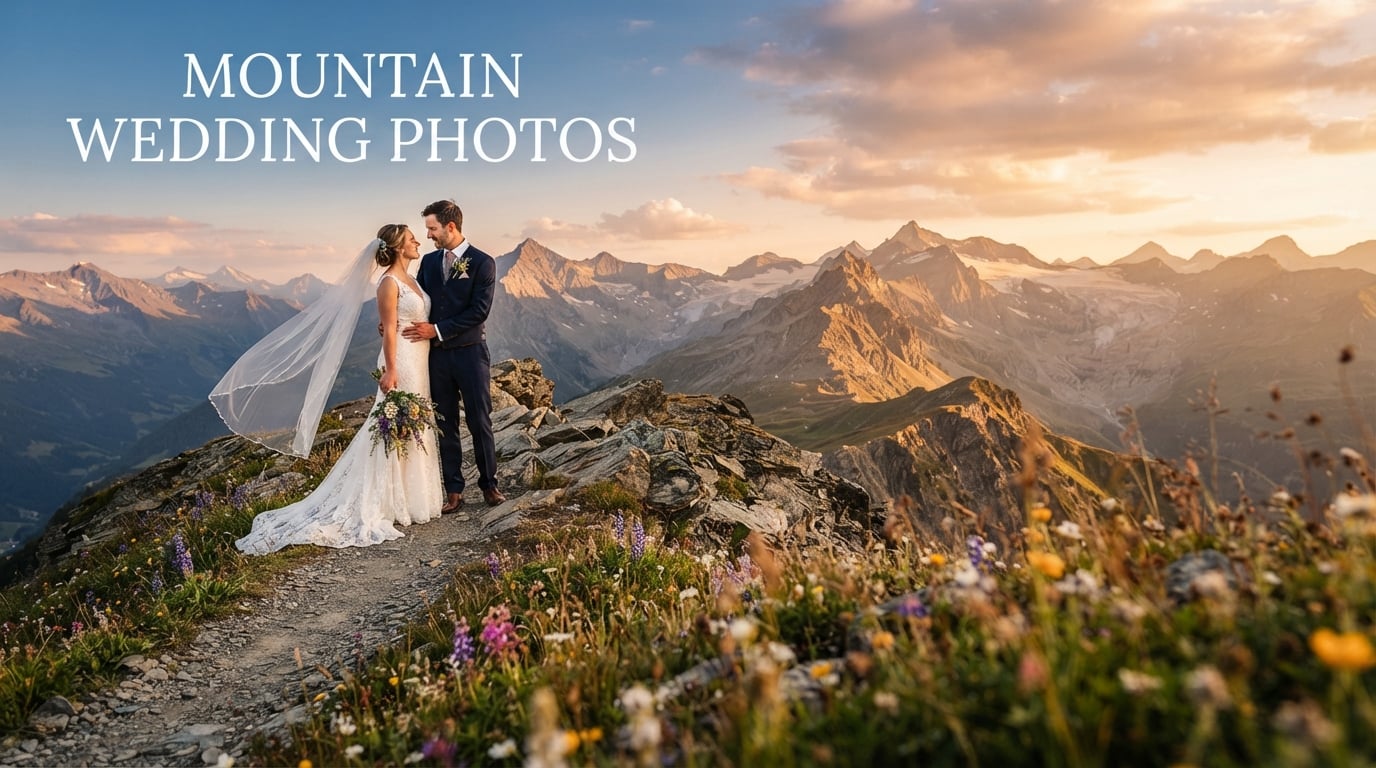
Mountain wedding photos have a way of stopping you mid-scroll. There is something about a couple framed against endless peaks, alpenglow painting the ridgeline, and wildflowers dotting a high meadow that no indoor venue can replicate. Our team has spent years photographing weddings at elevation, and we have learned that capturing mountain wedding photos well takes more than just showing up with a camera.
Whether you are planning an intimate elopement on a windswept summit or a full ceremony in an alpine meadow, this guide breaks down everything that goes into breathtaking mountain wedding photography. We cover location selection, timing, seasonal planning, weather contingencies, posing, attire, and the health considerations that most guides skip entirely.
By the end, you will know exactly how to plan for mountain wedding photos that look like they belong in a magazine.
Table of Contents
Why Mountain Wedding Photos Stand Out
Mountain wedding photos are distinctive because the scenery itself becomes a co-star in every image. Unlike a traditional venue where the background is predictable and controlled, mountains offer layered depth, dramatic scale, and natural light that shifts by the minute.
The mountain wedding aesthetic works because it combines raw wilderness with the intimacy of a wedding day. A couple holding hands on a rocky trail tells a story of adventure. A first kiss with a panoramic valley behind it creates instant emotional weight. Even simple details like a veil catching alpine wind add movement that studio photography simply cannot manufacture.
What makes mountain wedding photography genuinely different from other outdoor settings is the element of scale. When you place two people against a backdrop that stretches for miles, the contrast between human intimacy and vast wilderness is powerful. That visual tension is what draws couples toward mountain settings in the first place.
Choosing the Perfect Mountain Wedding Location
The right location for mountain wedding photos depends on the type of imagery you want. Peaks deliver drama and grandeur. Meadows offer softness and color. Forests provide intimacy and diffused light. Lakes add reflections that double the visual impact of any frame.
Summit and Ridgeline Locations
Summit locations produce the most dramatic mountain wedding photos because the backdrop extends in every direction. These spots work best for small elopements since accessibility is often limited to hiking or off-road vehicles. The payoff is imagery that feels genuinely epic.
Keep in mind that summit locations come with real trade-offs. Wind exposure, temperature drops, and limited shelter mean you need a tight timeline and a photographer experienced with high-elevation shoots.
Alpine Meadows and Valleys
Mountain meadows are forgiving and versatile. They offer wide-open space for larger ceremonies while still delivering that scenic backdrop. Wildflower blooms in mid-summer add natural color that rivals any floral arrangement. Meadows also tend to have more manageable footing, which matters when the wedding party is in formal attire.
Forest and Lake Settings
Forested mountain locations give you something summits cannot: shade. Trees filter harsh sunlight into soft, even light that flatters skin tones in portraits. Lakes double your mountain backdrop through reflection, creating symmetrical compositions that feel almost surreal.
If your mountain wedding includes a mix of formal portraits and wide scenic shots, a location that combines forest edge with open meadow gives your photographer the most range without needing to travel between spots.
Best Times of Day for Mountain Wedding Photos
Golden hour is the single most important factor in mountain wedding photography. The hour after sunrise and the hour before sunset produces warm, directional light that flatters subjects and adds richness to mountain vistas. This is when your photos will look their absolute best.
The Two Golden Hour Windows
Evening golden hour is the more popular choice for mountain wedding photos because it aligns naturally with post-ceremony portraits. As the sun drops lower, shadows lengthen and the light takes on a golden warmth that makes skin glow and mountain ridges turn amber.
Morning golden hour is quieter and often overlooked. If you are willing to schedule a sunrise portrait session, you get the best light of the day with complete privacy. Many adventure couples do a first look or private vow exchange at sunrise, then save the ceremony for later.
Working With Overcast Conditions
Overcast skies are not a problem for mountain wedding photos. In fact, clouds act as a natural softbox that eliminates harsh shadows and produces even, flattering light for portraits. If your photographer knows how to expose for flat lighting, overcast days can yield some of the most consistent results.
The real challenge is dappled light, which happens when sunlight filters unevenly through tree cover. It creates bright spots and dark shadows on faces that are nearly impossible to fix in editing. The solution is simple: move subjects into full shade or full sun, never in between.
Blue Hour for Dramatic Finishes
Blue hour, the period after sunset when the sky turns deep blue, offers a completely different mood. Mountain silhouettes against a gradient sky create moody, cinematic images. This window is brief, usually 20 to 30 minutes, so your photographer should plan the shots in advance.
Best Season for Mountain Wedding Photos
Each season in the mountains produces a completely different look for wedding photos. Understanding the trade-offs helps you choose a date that matches your aesthetic and comfort level.
Summer: Peak Wildflower Season
Summer is the most popular time for mountain wedding photos and for good reason. Warm temperatures, long daylight hours, and blooming wildflowers create ideal conditions. Alpine meadows come alive with color from late June through August in most mountain regions.
The downside of summer is crowds. Popular mountain locations see heavy foot traffic, which means less privacy and more coordination with venue management. Afternoon thunderstorms are also common in mountain ranges like the Rockies, so a morning ceremony or flexible timeline is smart.
Fall: Peak Color and Crisp Light
For many couples, fall is the best season for mountain wedding photos if you want rich, warm imagery. Aspen groves turn gold, understory shifts to amber and red, and the lower angle of autumn sun creates extended golden hour windows. The air is crisp and clear, which improves visibility and sharpness in scenic shots.
Fall color is fleeting. Peak foliage lasts roughly one to two weeks depending on elevation, so you need flexibility in your date or a location with varied elevation that extends the color window. Temperatures also drop quickly in fall, so layering is essential.
Winter: Dramatic and Intimate
Winter mountain wedding photos are stunning and completely different from anything other seasons produce. Snow-covered peaks, frosted pine, and a muted color palette create a clean, minimalist aesthetic. The contrast of a dark suit or white gown against snow is visually striking.
Winter requires serious planning. Road closures, limited daylight, and extreme cold are real factors. Your photographer needs experience shooting in cold conditions because battery life drops fast and lens fogging is a constant battle. For couples who want something unique, the effort is worth it.
Spring: Quiet and Unpredictable
Spring is the wildcard season for mountain wedding photos. Melting snow creates rushing waterfalls and streams that add dynamic elements to your imagery. The mountains are quiet with fewer visitors, which means more privacy at popular locations.
Spring weather is unpredictable. Muddy trails, lingering snow at higher elevations, and fluctuating temperatures make planning harder. If you choose spring, build flexibility into your timeline and have a backup location at lower elevation.
Weather Backup Planning for Mountain Weddings
Mountain weather changes fast and without warning. A clear morning can turn into an afternoon thunderstorm, and temperatures can swing 20 degrees or more in a single day. A solid backup plan is not optional for mountain wedding photos. It is essential.
Start by asking your venue about indoor or covered alternatives. Many mountain venues have lodges, pavilions, or tented areas that work for ceremonies and portraits. If no indoor option exists, identify a nearby lower-elevation location as a contingency.
Embrace weather rather than fighting it. Some of the most memorable mountain wedding photos happen in conditions that seem less than ideal. Fog rolling through a valley adds mystery. Light rain creates reflections and saturated colors. Even a passing storm can produce dramatic cloud formations that make your images stand out from every clear-sky wedding album.
Communicate the plan with your photographer ahead of time. A professional who shoots in the mountains regularly will have strategies for working in wind, rain, and cold. The key is having the conversation early so nobody is scrambling on the day of.
Mountain Wedding Photography Tips
Great mountain wedding photos come from preparation, timing, and knowing how to work with the terrain. Whether you are the couple or the photographer, these tips come straight from real mountain wedding experience.
Scout Locations Before the Wedding Day
Visit your locations at the same time of day you plan to shoot. Light behaves differently at altitude, and a spot that looks perfect at noon might be unworkable at sunset. Pre-visiting helps your photographer plan shot sequences and identify where the best backgrounds will be.
Use the Terrain for Posing
Mountain environments give you natural posing cues. A rocky outcrop becomes a seat. A trail invites walking shots. A ridgeline creates a natural leading line toward the couple. Work with the natural features rather than forcing poses that fight the environment.
One of the most effective techniques in mountain portrait photography is placing the couple small in the frame with the scenery dominating. This emphasizes scale and creates a sense of place that traditional close-ups cannot match.
Manage Dappled Light Proactively
This is the number one technical challenge in forested mountain settings. When sunlight filters through trees, it creates uneven patches of light and shadow across faces. The fix is to move your subjects into consistent light, either full shade or full sun, and position them so the sun is behind them as a backlight.
Coach the Couple for Better Moments
One of the best tips from experienced mountain wedding photographers is to slow everything down. When it comes time for the kiss, tell the couple to hold it for a few extra seconds. Mountain settings invite a slower pace, and pausing allows the photographer to capture genuine moments rather than rushed ones.
Pack the Right Gear
Photographers shooting mountain weddings should bring extra batteries since cold drains them faster. A sturdy tripod handles low-light situations and long exposures near blue hour. Lens cloths are essential because mountain conditions mean dust, moisture, and temperature changes that fog optics.
What to Wear for Mountain Wedding Photos
What you wear directly affects how your mountain wedding photos look. The right clothing complements the natural surroundings, while the wrong choices can clash with organic tones or create practical problems on uneven terrain.
Color Palette
The best colors for a mountain wedding draw from the natural surroundings. Earth tones like sage green, terracotta, warm brown, and deep burgundy complement mountain settings beautifully. Muted jewel tones like forest green, navy, and plum add depth without competing with the scenery.
Neutrals also work well. Cream, champagne, and soft grey let the natural backdrop do the talking while keeping the focus on the couple. Avoid bright neon colors and stark white shirts for the wedding party, as they can look harsh against organic settings.
Layering and Practical Footwear
Mountain temperatures fluctuate dramatically between morning and afternoon, sun and shade. Layers are not just practical, they add visual texture to your photos. A faux fur shawl, a knit cardigan, or a tailored jacket over a dress creates dimension that flat outfits lack.
Footwear matters more than most couples realize. Mountain terrain is uneven, rocky, and often muddy. Many brides swap heels for hiking boots or stylish flats for the portrait session. Your photographer will be moving across the same terrain, so sturdy footwear is a must for everyone.
Altitude and Health Considerations
If your mountain wedding is above 8,000 feet, altitude affects everyone, not just the couple. Guests traveling from lower elevations may experience shortness of breath, headaches, and fatigue. These factors influence both comfort and how people look in photos.
Encourage guests to hydrate heavily starting two days before the event. Provide water at the ceremony and reception. Limit alcohol consumption at altitude since its effects intensify significantly at elevation. Consider scheduling the ceremony for the afternoon rather than early morning so guests have time to acclimate.
Sunscreen and bug spray are must-haves at mountain weddings. UV exposure increases roughly 4 percent for every 1,000 feet of elevation gain. Bug activity peaks in summer months, especially near water and forest edges. Having these essentials available shows thoughtfulness and keeps everyone comfortable enough to enjoy the day.
Frequently Asked Questions
What are the colors for a mountain wedding?
The best colors for a mountain wedding are earth tones and muted jewel tones that complement natural surroundings. Sage green, terracotta, warm brown, deep burgundy, forest green, navy, cream, and champagne all pair beautifully with mountain settings. Avoid neon colors and stark whites that clash with organic backdrops.
What is the best time of day for mountain wedding photos?
Golden hour, the hour after sunrise and the hour before sunset, produces the best light for mountain wedding photos. Evening golden hour aligns naturally with post-ceremony portraits and creates warm, flattering light. Blue hour immediately after sunset offers a dramatic, moody alternative for a different look.
What is the 30 5 rule for weddings?
The 30 5 rule for weddings is a scheduling guideline that suggests allocating 30 minutes for couple portraits and 5 minutes for each family portrait combination. This helps keep the photography timeline realistic and prevents portrait sessions from running long, which is especially important when mountain lighting windows are brief.
How do you take good photos in the mountains wedding?
To take good mountain wedding photos, scout locations at the same time of day you plan to shoot, schedule portraits during golden hour, avoid dappled light by moving subjects into full shade or full sun, coach the couple to slow down and hold moments, and pack extra batteries and lens cloths for mountain conditions.
Capturing Mountain Wedding Photos Worth Keeping
Mountain wedding photos succeed when preparation meets the willingness to embrace whatever the environment gives you. The couples who get the most stunning imagery are the ones who plan for golden hour, choose locations that match their vision, pack for unpredictable weather, and trust their photographer to work with the elements rather than against them.
Every mountain setting is different, and that is exactly what makes this style of wedding photography so rewarding. Whether you are exchanging vows on a quiet ridgeline or celebrating in a wildflower meadow, the mountains provide a backdrop that no venue can replicate.