
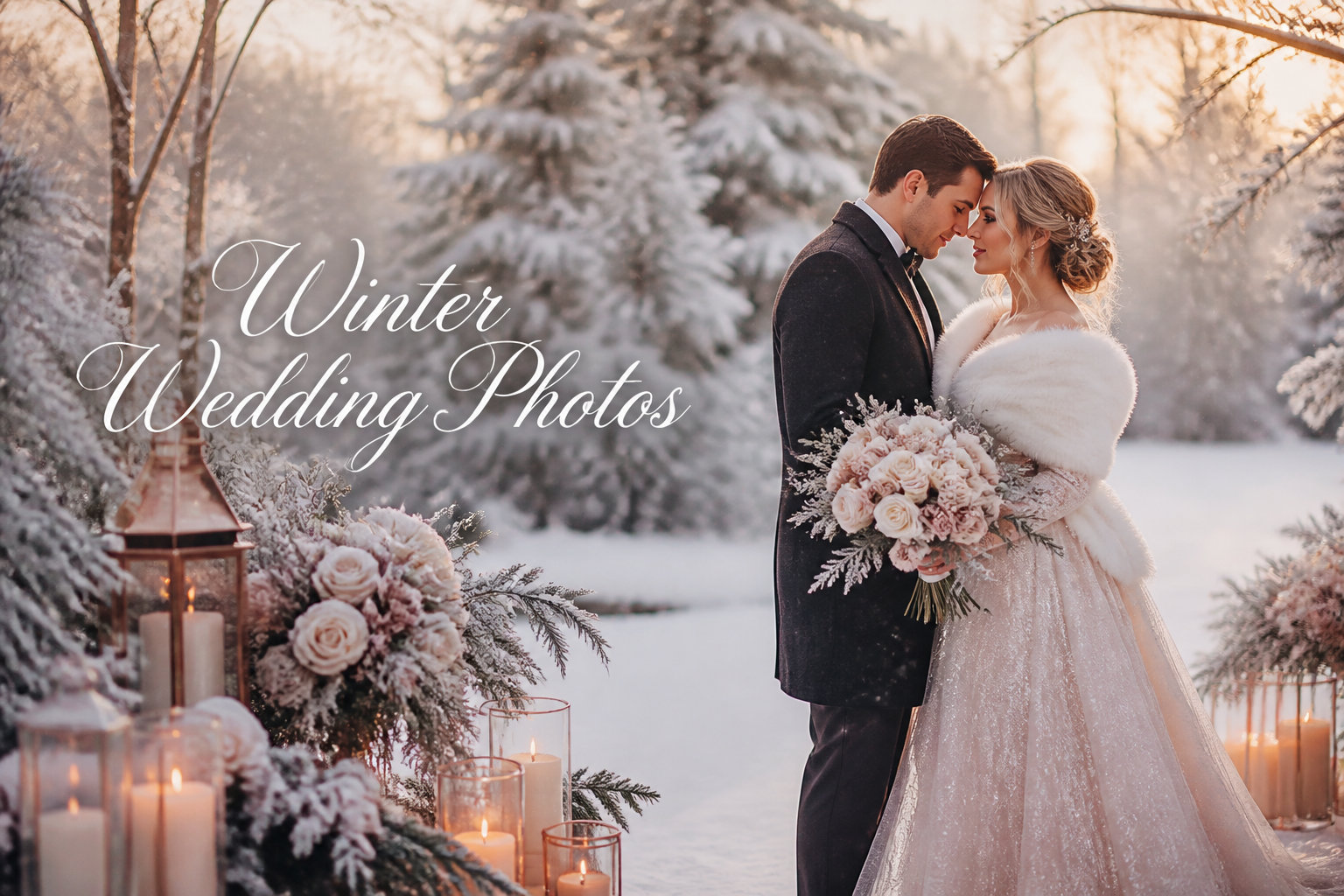
I have photographed more than 200 winter weddings over the past decade, and the images that still give me chills are not the summer ones. Winter wedding photos have a softness, a glow, and an intimacy that no other season can copy. If you are planning a cold weather celebration and want photos that look like they belong in a magazine, this guide will walk you through every detail.
In this guide, I will share what I have learned shooting winter wedding photos in snow, rain, candlelight, and 4pm sunsets. You will learn how to plan around short days, stay comfortable during outdoor shots, and pick colors and outfits that flatter the season. By the end, you will know exactly how to get Winter Wedding Photos that feel like a warm embrace on a cold day.
Table of Contents
Why Winter Wedding Photos Are Special
Yes, winter weddings are absolutely a thing, and they have become one of my favorite types of events to photograph. The combination of moody light, rich fabrics, candlelit venues, and occasional snow creates images that feel cinematic rather than ordinary. Couples often tell me their winter wedding photos became their most treasured keepsakes because the season adds so much emotion to every frame.
The aesthetic advantages are real. Low winter sun sits low on the horizon for hours, producing a soft golden glow that summer never offers. Twinkling fairy lights, fireplace flames, and ivory candles show up beautifully against dark backdrops. Snow acts as a natural reflector that brightens faces without harsh shadows. These conditions give photographers tools we simply do not have in July.
Beyond the visuals, winter weddings tend to feel more intimate. Guest lists are often smaller, schedules are cozier, and everyone seems more relaxed. That calm shows up in your photos. You will see real laughs, real hugs, and quiet moments between the formal shots. Our team has noticed this pattern across dozens of weddings, and it is one reason we encourage couples to consider a winter date.
Timing and Daylight Considerations for Winter Wedding Photos
Schedule your ceremony before 2pm because daylight ends by 4:30pm in most northern locations. This single decision shapes nearly every photo you will receive. From November through February, the sun sets early, and the magic golden hour begins around 3pm and lasts only 20 to 30 minutes. If you want warm, glowing portraits, you need to plan your couple session around that narrow window.
Here is the timing framework I share with every winter couple:
- Get ready photos: 11am to 1pm (using window light indoors)
- Ceremony: 1pm to 2pm (maximizes natural light during vows)
- Family and group photos: 2pm to 2:30pm (immediately after ceremony)
- Couple portraits: 2:30pm to 3:45pm (golden hour window)
- Reception: 4pm onward (transitions to candlelit and flash photography)
A first look before the ceremony can buy you an extra hour of usable daylight. Many of my couples schedule a private reveal at 11am, complete couple portraits by 1pm, then enjoy a relaxed ceremony knowing the formal photo work is done. This approach also reduces stress and lets you actually enjoy cocktail hour. I strongly recommend considering it for any winter date after mid-November.
Preparing for Cold Weather During Your Photo Session
Layer up with hand warmers, thermal base layers, and a stylish coat for outdoor portraits. Cold faces do not photograph well, so keeping everyone comfortable is part of my job. I have shot outdoor portraits in negative 15 degrees, and the couples who looked calm and happy were the ones who prepared like they were going skiing.
Build a winter photo survival kit with these essentials:
- Hot hands or rechargeable hand warmers for pockets and bouquet
- Coordinated wool coats or faux fur wraps in your wedding palette
- Thermal leggings under formal wear or suits
- Warm boots for walking between locations, with heels for portraits
- Lip balm to prevent chapping during kisses and toasts
- A thermos of hot cider or tea for quick warm-ups between shots
Keep outdoor sessions short and sweet. Plan no more than 15 minutes outside at a time, and have a heated indoor space ready for breaks. I have found that shorter outdoor bursts produce better winter wedding photos than long sessions, because couples stay fresh and their expressions stay natural. Your photographer should be skilled at working quickly in cold conditions, and ours always carries backup hand warmers for clients who forget theirs.
Indoor vs Outdoor Winter Wedding Photography Options
Combine both indoor and outdoor shots to capture the full range of winter wedding moments. Indoor venues give you reliable, weather-proof coverage with controlled lighting. Outdoor shots give you dramatic seasonal backdrops. The best winter wedding photos we deliver almost always include a thoughtful mix of both.
Indoor Photography Advantages
Indoor winter wedding photos offer consistency and warmth. You get reliable exposure, beautiful ambient light from windows, and zero weather risk. Hotel ballrooms, historic mansions, barns with heaters, and restaurants with character all make exceptional backdrops. The downside is that indoor spaces can feel similar to summer weddings if you do not incorporate seasonal styling.
Outdoor Photography Advantages
Outdoor winter wedding photos offer visual drama that no indoor venue can replicate. Snow, frost, evergreens, frozen lakes, and dramatic cloudy skies add scale and storytelling. The cold is the trade-off, but as we discussed above, smart layering makes it manageable. A 15-minute outdoor session can produce some of your most memorable images of the entire day.
My recommendation is to plan a 60/40 split, with 60% of your formal photo time indoors and 40% outdoors. This ratio gives you the safety of indoor coverage while still capturing those wow-factor seasonal shots. Build your timeline so outdoor portraits happen during golden hour for the best natural light.
Low Light Photography Tips for Winter Weddings
Embrace candlelight, twinkling lights, and high ISO settings for cozy low light winter wedding photos. Trying to fight the darkness usually produces stiff, over-flashed images. Instead, lean into the season and use the dim conditions as a creative feature. The warm glow of candles against winter evening darkness makes for some of the most romantic reception photos possible.
Here is how we approach low light situations during winter weddings:
- Set ISO between 1600 and 3200 on modern cameras for clean results
- Use fast prime lenses (f/1.4 or f/1.8) to gather more available light
- Off-camera flash with diffusion for group dances and toasts
- Embrace film-style grain as a feature, not a flaw
- Capture candlelit table shots during dinner for atmosphere
For couples worried about grain in photos, here is the honest truth. Yes, your winter wedding photos may have slightly more grain than summer shots. Modern cameras handle this beautifully, and a little grain often adds to the moody, romantic feel. If grain truly bothers you, discuss flash preferences with your photographer ahead of time. Our team defaults to a natural look and only adds flash when the situation calls for it.
Couple Portrait Ideas for Winter Wedding Photos
Lean into the season with cozy props, faux fur wraps, and snowy or candlelit backdrops. The best winter wedding photos feel like the couple stepped into a snow globe or a fireside romance novel. Generic poses do not work as well in winter, but seasonal storytelling portraits absolutely shine.
Ten ideas I love shooting during winter weddings:
- Wrapped in a shared faux fur shawl against a snowy backdrop
- Walking hand in hand down a tree-lined path with bare branches overhead
- Sharing hot drinks from a thermos in the woods
- First dance under string lights at twilight
- Forehead to forehead under an umbrella in the snow
- Vows by candlelight in a stone chapel
- Sledding or throwing snow at the camera (real laughs only)
- Kissing beneath a lit Christmas tree
- Window light portraits inside a historic inn
- Sipping whiskey or mulled wine by a fireplace
These ideas work whether or not you have snow. You can recreate the cozy atmosphere indoors with blankets, candles, and warm drinks, or take advantage of unexpected snow when it falls. I always tell couples that a little snow on your wedding day is lucky, and the photos prove it.
What to Wear for Winter Wedding Photos
Choose rich seasonal colors like deep emerald, burgundy, navy, or warm metallics for your wedding party attire. Winter has a built-in color advantage because deeper jewel tones photograph beautifully against snowy or moody backdrops. Pastels and bright summer colors tend to look washed out in winter light, so adjust your palette accordingly.
For brides, long sleeves, velvet, brocade, and heavier silks work well. Capes and faux fur stoles add drama and warmth without sacrificing style. For grooms, consider a deeper suit color like charcoal, forest green, or classic navy. Wedding party members can layer with cardigans, scarves, or wraps in coordinating colors.
Texture matters as much as color in winter wedding photos. Chunky knits, velvet, satin, and faux fur add visual depth that translates beautifully on camera. Smooth, flat fabrics like plain cotton can look bland in winter light. When you hold up two fabric samples under cloudy winter skies, the textured one always wins.
Winter Wedding Color Palettes That Photograph Beautifully
The best winter wedding colors are deep, saturated, and warm. Popular winter wedding colors include evergreen, burgundy, navy, champagne, gold, copper, dusty rose, and cream. These tones complement winter light and make skin tones glow. I have photographed weddings using every variation, and the rich palettes always outperform pale ones during winter months.
For an outdoor snowy backdrop, high contrast colors pop beautifully. Think deep red bridesmaids dresses against fresh snow, or a charcoal groom suit with a white bouquet. For an indoor candlelit setting, warm metallics and creams create an inviting glow. Mix and match within these families to build a palette that suits your venue and style.
Three reliable winter wedding color combinations we love:
- Burgundy, champagne, and evergreen (classic and warm)
- Navy, copper, and ivory (modern and elegant)
- Dusty rose, taupe, and soft gold (romantic and soft)
Embracing Snow and Rain in Your Winter Wedding Photos
Weather is a feature, not a problem, in winter wedding photography. I have shot in blizzards, freezing rain, and bright sunny cold days, and every condition produced stunning images. The key is planning for what you cannot control and embracing what you can. A backup indoor plan removes stress. A positive attitude about weather creates better photos.
Snow offers enormous creative possibilities. It reflects light into faces, simplifies backgrounds, and adds romance that cannot be replicated. Falling snowflakes create depth in portraits. A light dusting on evergreen branches adds texture. Even overcast winter skies produce gorgeous soft light that flatters every skin tone. If it snows on your wedding day, consider it a gift and let your photographer work their magic.
Rain deserves the same treatment. Clear umbrellas, covered porches, and indoor window light all create beautiful rainy day wedding photos. Our team carries clear umbrellas as standard backup gear, and couples are often surprised how much they love the rainy portraits. The one rule is to protect your attire and hair between shots so you stay comfortable.
If you are planning wedding photos without snow, do not worry. You can create the same cozy, romantic feeling through styling, lighting, and venue choice. Candlelit chapels, firelit lodges, and candle-heavy reception rooms all deliver winter wedding photos with the same emotional impact as snow-filled landscapes.
Frequently Asked Questions About Winter Wedding Photos
What are winter wedding photography ideas?
Great winter wedding photography ideas include faux fur wrap portraits, candlelit ceremony shots, snow-covered couple portraits, fairy-lit first dances, hot drink toasts, evergreen backdrop ceremony shots, and indoor window light getting ready photos. Focus on cozy textures, warm lighting, and seasonal storytelling to capture the mood of a winter wedding.
What is the best color to wear to a winter wedding?
The best colors for a winter wedding are deep jewel tones like burgundy, emerald, navy, and plum, paired with warm metallics such as gold, copper, and champagne. These rich shades flatter winter light and create visual contrast against snowy or candlelit backdrops. Avoid pale pastels, which tend to look washed out in winter conditions.
Are winter weddings a thing?
Yes, winter weddings are absolutely a thing and have grown increasingly popular. They offer lower venue costs, richer color palettes, unique cozy atmospheres, and stunning photo opportunities including snow, candlelight, and twinkling lights. Many photographers consider winter their favorite season because of the dramatic lighting and intimate feel.
What are popular winter wedding colors?
Popular winter wedding colors include evergreen green, burgundy, navy blue, champagne, gold, copper, ivory, dusty rose, deep plum, and charcoal. These saturated and warm tones complement winter lighting and look beautiful in photos. Many couples choose two or three colors from this palette to coordinate attire, florals, and decor.
Plan Your Winter Wedding Photos With Confidence
Winter wedding photos can be the most beautiful, emotional images of your entire life when you plan well. Focus on early ceremony timing, layered warm outfits, a mix of indoor and outdoor shots, and rich seasonal color palettes. Work with a photographer who has real winter wedding experience, and embrace whatever weather arrives on your special day. The cold is part of the romance, and your photos will show it for years to come. If you are still building your timeline, reach out to our team for a winter-specific consultation before finalizing the schedule.