
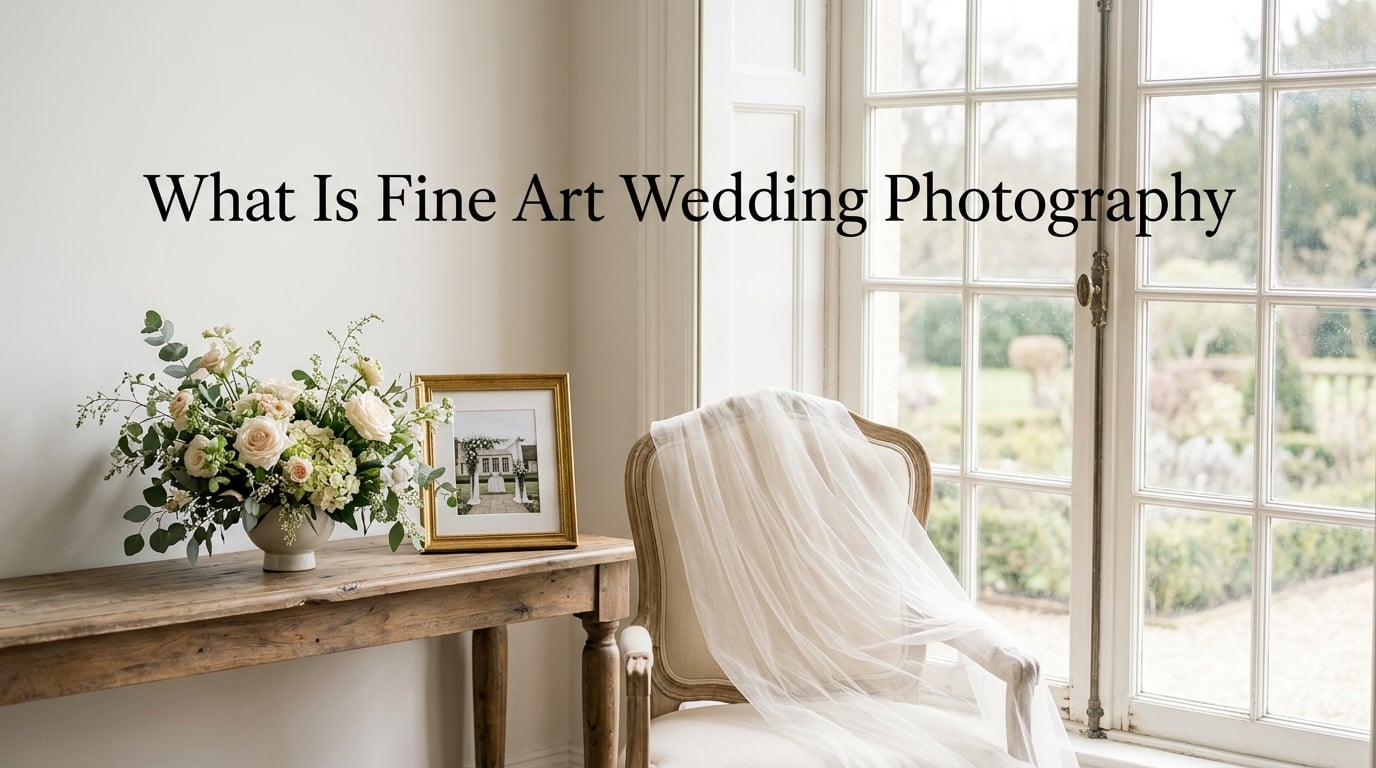
Fine art wedding photography is an intentional, artistic way of photographing a wedding. Rather than simply recording what happens, the photographer uses a distinct point of view, considered composition, soft lighting, and emotional storytelling to make images that feel personal and artful.
The phrase can sound vague, especially because it appears in so many portfolios. This guide explains what the style means in practice, how it differs from documentary and editorial work, and what to look for when deciding whether it suits your wedding.
The short answer: Fine art wedding photography treats the wedding day as both a real event and a creative medium. The photographer documents genuine moments while making deliberate choices about light, framing, color, movement, and direction.
Table of Contents
Fine art wedding photography is an intentional interpretation of a wedding day
Fine art wedding photography is not defined by one camera, one preset, or a single “light and airy” look. It is defined by authorship: the photographer has an artistic vision and makes purposeful decisions that shape how the day is seen.
That does not mean the photographs are artificial or detached from reality. It means a quiet exchange after the ceremony, a flower arrangement near a window, or the movement of a dress can be noticed and arranged in a way that carries mood as well as information.
In practical terms, a fine art photographer watches for clean backgrounds, balanced shapes, flattering light, and small visual connections. They may move a chair from a distracting corner, turn a bouquet toward the window, or suggest where a couple should stand so the scene feels calm and cohesive.
The goal is usually an image that remains satisfying beyond the moment it was made. Couples often describe that result as timeless, but “timeless” is not a filter; it comes from thoughtful choices that keep attention on expression, relationship, and form.
Fine art photography comes from a photographer’s point of view
Two photographers can stand in the same room and make very different images. One may prioritize the sequence of events, while the other pauses on the line of a veil, the texture of paper stationery, or a pocket of soft natural light that turns an ordinary interaction into a composed photograph.
That point of view is why a photographer’s portfolio matters more than a label. Fine art work should show a recognizable sensibility across different venues, weather conditions, and wedding sizes rather than only in a handful of styled images.
Fine art wedding photography uses five recognizable characteristics
The style can be broad, yet several traits appear often in strong fine art wedding galleries. Think of these as signs of an intentional photography process, not rules every image must follow.
1. Thoughtful composition gives each frame a clear focus
Composition is how visual elements sit within the frame. A fine art photographer may use negative space, symmetry, repeating lines, foreground detail, or a wide composition to guide your eye directly to the people and feeling that matter.
A simple example is a bride standing near a window. A quick record might place her in the center with the whole room visible, while a composed frame may use the window light, curtain, and open space around her to make the portrait feel quieter and more dimensional.
2. Soft light supports a gentle, dimensional mood
Soft lighting is common because it reveals skin tone and fabric without harsh contrast. Natural light is often favored, though the key is not whether the source is a window or a flash; it is whether the light fits the intended feeling of the image.
On a bright afternoon, that may mean moving portraits into open shade or positioning a couple so light wraps gently across their faces. At an evening reception, it can mean using added light with restraint so the atmosphere still feels like the celebration guests experienced.
3. Direction creates images without erasing real emotion
Fine art coverage usually includes more direction than a purely documentary approach. Direction may be as small as asking someone to slow down while fastening an earring, turn their shoulders toward the light, or repeat a natural movement when a meaningful moment happened too quickly.
Good direction is not about making every second look posed. It gives people a useful starting point, then leaves space for their expressions, touch, laughter, and nerves to happen naturally.
Helpful perspective: A photographer can direct a portrait and still capture a true response. The question is whether the direction helps you look and feel like yourselves, not whether every photo was made without any guidance.
4. A restrained palette and editing style make a gallery feel coherent
Many fine art galleries have soft natural images, gentle highlights, and colors that feel refined rather than loud. Film photography wedding work and digital work using film emulation are both common, but film is a medium, not a membership card for the style.
Editing should support the scene instead of covering it up. Look for consistent skin tones, believable whites in dresses and florals, and a color grading approach that holds together from getting ready through the reception.
Some artists make brighter, airy images; others favor more shadow, grain, or saturated color. Fine art does not have to be pale, beige, or pastel. What matters is that the treatment feels deliberate and serves the photographer’s artistic vision.
5. Small details and emotional moments share the story
Fine art photography gives attention to details, but those details have a role in the narrative. An invitation suite, a hand-written note, a family heirloom, or a table setting can set the visual tone and anchor memories that might otherwise blur together.
At the same time, the work should not become a catalog of objects. A storytelling wedding photographer connects the atmosphere to people: the hands holding the note, the reaction to a speech, the pause before walking down the aisle, and the ease that arrives later on the dance floor.
Fine art differs from documentary, editorial, lifestyle, and traditional styles by degree of direction
Wedding photography styles overlap more than labels suggest. Many skilled photographers combine approaches throughout a wedding day, so use these distinctions as a way to discuss priorities rather than as fixed boxes.
Documentary wedding photography records events with minimal intervention
Documentary wedding photography centers on observation. The photographer generally does not arrange moments or interrupt events, so the result can feel immediate, spontaneous, and closely tied to the actual flow of the day.
Fine art work may include documentary moments too, especially during vows, speeches, and candid interactions. The difference is that a fine art photographer also actively seeks or creates visually intentional conditions when time and circumstances allow.
Editorial wedding photography prioritizes polish and fashion influence
An editorial style wedding often looks inspired by magazines: confident posing, strong styling, dramatic framing, and a polished sense of fashion. It can overlap with fine art work, particularly in portraits and detail images.
The distinction is emphasis. Editorial work may put more weight on bold pose and visual impact, while fine art photography often puts equal weight on softness, atmosphere, and the emotional thread of the day.
Lifestyle and traditional coverage prioritize different kinds of clarity
Lifestyle photography tends to guide people into an activity or interaction, then lets the resulting connection unfold. It is usually relaxed and personable, which makes it a natural companion to fine art portraits.
Traditional coverage often prioritizes complete group portraits, familiar poses, and clear documentation. Those photographs remain useful and meaningful; a fine art photographer may make them as well, then bring more composition and mood to selected frames.
Do not choose by label alone: “Fine art,” “editorial,” and “documentary” are not regulated terms. Ask to see full wedding galleries and talk through how the photographer works when light, timing, or weather change.
A genuine fine art fit is visible in consistent full galleries
Couples on photography forums often ask whether “fine art” has become a buzzword. The concern is reasonable: anyone can use the phrase, and a beautiful social-media grid does not show how someone handles a full, fast-moving wedding day.
The best way to assess the work is to look for consistency. Review more than highlight images and notice whether the photographer creates balanced, emotionally present photographs in indoor rooms, difficult midday light, crowded receptions, and unpredictable weather.
A full gallery shows the work between the hero shots
A portfolio’s strongest portraits may be excellent, but a full gallery reveals whether preparations, family photographs, ceremony moments, and reception images receive the same care. You are looking for a visual story that remains coherent when conditions are less controlled.
Pay attention to how people look in the images. Natural interaction, relaxed hands, and expressions that feel unforced suggest direction was handled with care rather than imposed in a way that made the couple self-conscious.
Specific questions reveal a photographer’s working process
Ask how the photographer approaches portraits when there is rain, hard sun, a tight timeline, or a dark venue. A clear answer shows not only technical experience but also whether their creative expression can adapt to real conditions.
Ask how much direction they give and when they step back. A useful answer might describe gentle prompts during couple portraits, quiet observation during the ceremony, and a plan for family groupings that keeps the experience moving.
It also helps to ask what they notice first when entering a space. A photographer who can explain how they evaluate light, background, color, and movement is giving you a window into the intentional process behind their photographs.
Style compatibility matters more than a popular look
There is a clientele for nearly every visual approach. If you want lively, imperfect, fast-paced pictures with almost no intervention, a documentary specialist may fit better than someone whose process needs a few calm portrait windows.
If you value fine art prints, an heirloom album, carefully observed details, and portraits that feel composed but still human, fine art wedding photography may be a strong match. The right choice is the one whose working style lets you experience your wedding comfortably.
A fine art wedding day includes collaboration without constant posing
Most fine art photographers prepare before the wedding by learning which people, objects, and moments carry the most meaning to you. They may suggest a timeline with breathing room around portraits, details, and transitions because rushed photography rarely leaves room for careful composition.
During the day, you can expect a mix of presence and observation. The photographer may take charge briefly when arranging family portraits or guiding you into good light, then become less visible during vows, toasts, meals, and dance-floor moments.
The best experience does not feel like a day-long photo shoot. It feels like practical, calm guidance at points where it helps, paired with enough space to be with your people.
Fine art wedding photography means artful choices that preserve the feeling of the day
Fine art wedding photography is an intentional approach built on artistic vision, considered composition, expressive light, and real emotional connection. It can borrow from documentary, editorial, lifestyle, and traditional coverage, but its defining feature is a photographer who makes purposeful visual choices throughout the story.
When reviewing photographers, move past the label and study complete galleries. Choose the person whose images feel like the version of your day you want to remember and whose process sounds comfortable for the way you want to live it.
Fine art wedding photography questions, answered
What is fine art wedding photography?
Fine art wedding photography is an intentional, artistic approach that combines real wedding moments with deliberate choices about composition, light, color, direction, and storytelling. The aim is not only to document what happened, but to create photographs with a clear personal point of view.
How is fine art wedding photography different from documentary?
Documentary wedding photography mainly observes events with minimal interruption. Fine art wedding photography also values candid moments, but it usually adds more intentional framing, gentle direction, attention to light, and visual styling when appropriate. Many photographers blend both approaches during a wedding.
Why is everyone suddenly a fine art wedding photographer?
The term is widely used because couples respond to artistic, polished wedding imagery, and it is not a regulated professional title. Instead of relying on the label, review complete galleries, ask about the photographer’s process, and look for a consistent approach across real wedding conditions.
What are the characteristics of fine art photography?
Common characteristics include intentional composition, soft or expressive light, a consistent editing approach, curated detail photographs, gentle direction, and emotional storytelling. A distinct artistic vision is the thread that connects these characteristics across a full wedding gallery.
What does it mean if you call yourself a fine art wedding photographer?
It means you describe your work as an authored, artistic interpretation of a wedding rather than simple event documentation. That claim has substance when the photographer can show consistent full galleries and explain how their choices about light, composition, direction, and editing support the story.